

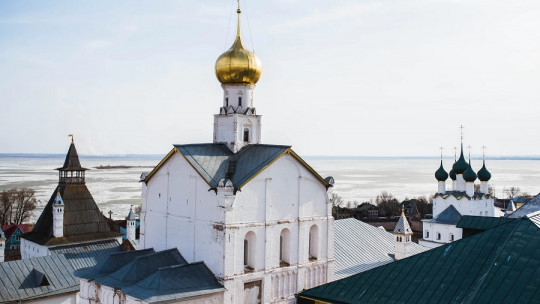
Long before Russia became a sprawling empire of tsars and revolutionaries, its vast forests, frozen rivers, and endless steppes were populated by creatures that defied the laws of nature. There were witches whose houses walked on chicken legs, birds whose feathers glowed like flames, immortal sorcerers who hid their souls in needles, and heroes who could single-handedly defeat entire armies. These weren’t just bedtime stories told to children—they were the myths and legends that shaped Russian cultural identity, reflected deep philosophical beliefs about good and evil, and provided moral frameworks for navigating a harsh and unforgiving world. Russian folklore is among the richest and most distinctive in Europe, drawing from ancient Slavic paganism, Byzantine Christianity, Mongolian influences from the Golden Horde period, and the unique character of Russian peasant life over centuries.
What makes Russian legends particularly fascinating is their moral ambiguity and psychological complexity. Unlike Western European fairy tales where good and evil are often clearly delineated, Russian folklore embraces contradiction and nuance. The witch Baba Yaga might devour children in one tale and provide crucial help to heroes in another. The beautiful maiden might be a shape-shifting frog. The youngest, seemingly weakest brother invariably proves to be the true hero, not through strength but through kindness, cleverness, and maintaining his moral compass when others would compromise. These stories don’t offer simple lessons about being obedient or nice—they explore deeper themes about the nature of death and immortality, the relationship between humans and the wild natural world, the importance of cleverness over brute force, and the rewards that come to those who show compassion even when it seems foolish to do so.
Russian legends also reflect the nation’s geography and climate in profound ways. The endless forests become settings for transformation and danger, places where the normal rules don’t apply and where humans must negotiate with forces beyond their control. Winter is personified as a powerful, often deadly character—not merely weather but a living presence that tests human resilience. The isolation of peasant life in vast territories appears in stories where heroes journey for “three times nine kingdoms” (meaning impossibly far) to find what they seek. Over 600 Russian fairy tales have been documented, collected largely in the 19th century by folklorist Alexander Afanasyev, whose work paralleled the Brothers Grimm in Germany. These stories inspired some of Russia’s greatest artists—Stravinsky based his revolutionary ballet The Firebird on these legends, painters like Viktor Vasnetsov created iconic visual interpretations, and composers like Mussorgsky and Rimsky-Korsakov drew heavily on folkloric themes.
Understanding these legends offers insight not just into Russian culture but into universal human concerns expressed through a distinctly Russian lens. They ask questions that remain relevant: How do we maintain our humanity when faced with cruelty? What’s the relationship between mortality and meaning? Can cleverness triumph over power? How do we navigate a world that’s neither entirely good nor entirely evil but somewhere in between? The ten legends explored here represent the most iconic, influential, and culturally significant stories from Russia’s folkloric tradition—tales that have been told and retold for centuries, that continue to inspire contemporary art and literature, and that reveal something essential about the Russian soul and the human condition more broadly.
https://www.youtube.com/watch?v=Zbmghob-A6o
1. Baba Yaga: The Ambiguous Witch
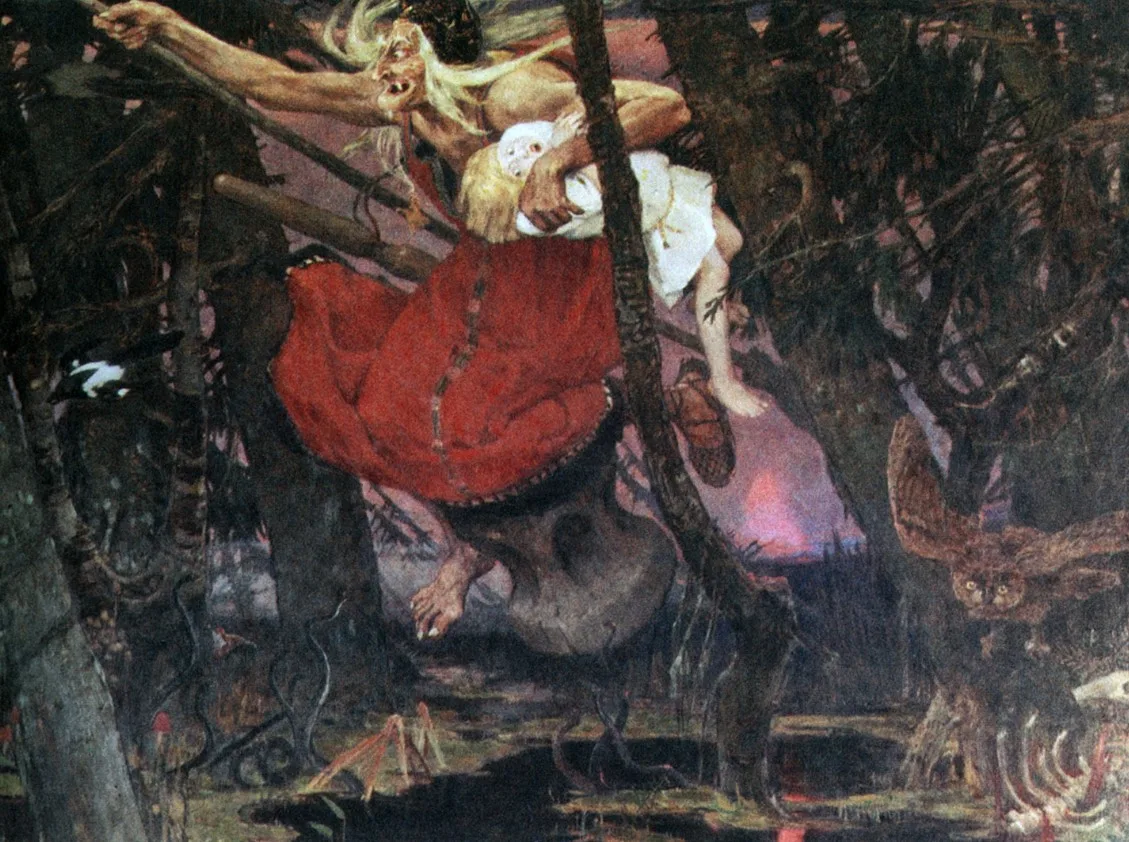
Baba Yaga is perhaps the most famous figure in Russian mythology, instantly recognizable even to those with only passing familiarity with Slavic folklore. She appears as an old, wild woman with iron teeth who lives deep in the forest in a hut that stands on chicken legs and rotates to face or turn away from visitors. She flies through the air in a giant mortar, steering with a pestle and sweeping away her tracks with a broom. The fence around her hut is decorated with human skulls whose eye sockets glow at night, and she’s often accompanied by invisible servants who obey her commands.
What makes Baba Yaga endlessly fascinating is her dual nature—she is neither purely evil nor benevolent. In some tales, she’s a cannibalistic hag who tries to cook and eat children, particularly those who wander into the forest or fail to show proper respect. In other stories, she’s a wise woman who tests heroes and, if they prove worthy through politeness, cleverness, or completing tasks, provides them with magical gifts, crucial information, or help on their quests.
| Baba Yaga as Villain | Baba Yaga as Helper |
| Kidnaps children to eat them | Tests heroes and rewards the worthy |
| Guards forbidden knowledge jealously | Provides magical gifts and guidance |
| Represents death and danger | Serves as initiation figure for maturity |
| Punishes trespassers and the disrespectful | Helps those who show respect and cleverness |
One of the most famous Baba Yaga tales involves a young girl named Vasilisa whose cruel stepmother sends her to Baba Yaga’s hut to fetch fire, hoping the witch will kill her. Vasilisa survives through a combination of politeness, completing impossible tasks, and help from a magical doll her deceased mother gave her. In another tale, a brother named Ivan encounters three Baba Yaga sisters while searching for a princess, and he must outwit them to survive and complete his quest.
The deeper meaning of Baba Yaga relates to several interconnected themes:
– Nature’s ambivalence – She embodies the forest itself, dangerous but also providing resources for those who know how to navigate it properly
– Rite of passage – Encounters with Baba Yaga serve as initiation rituals where young people must face fear and prove their worthiness to reach adulthood
– Feminine power – She represents female power outside patriarchal control, wild, autonomous, and answerable to no one
– Death and renewal – Her association with bones, skulls, and the wilderness connects her to death, but also to transformation and rebirth
– The importance of respect – Heroes survive not through strength but through showing proper deference to forces beyond their understanding
2. The Firebird: Symbol of Quest and Destiny
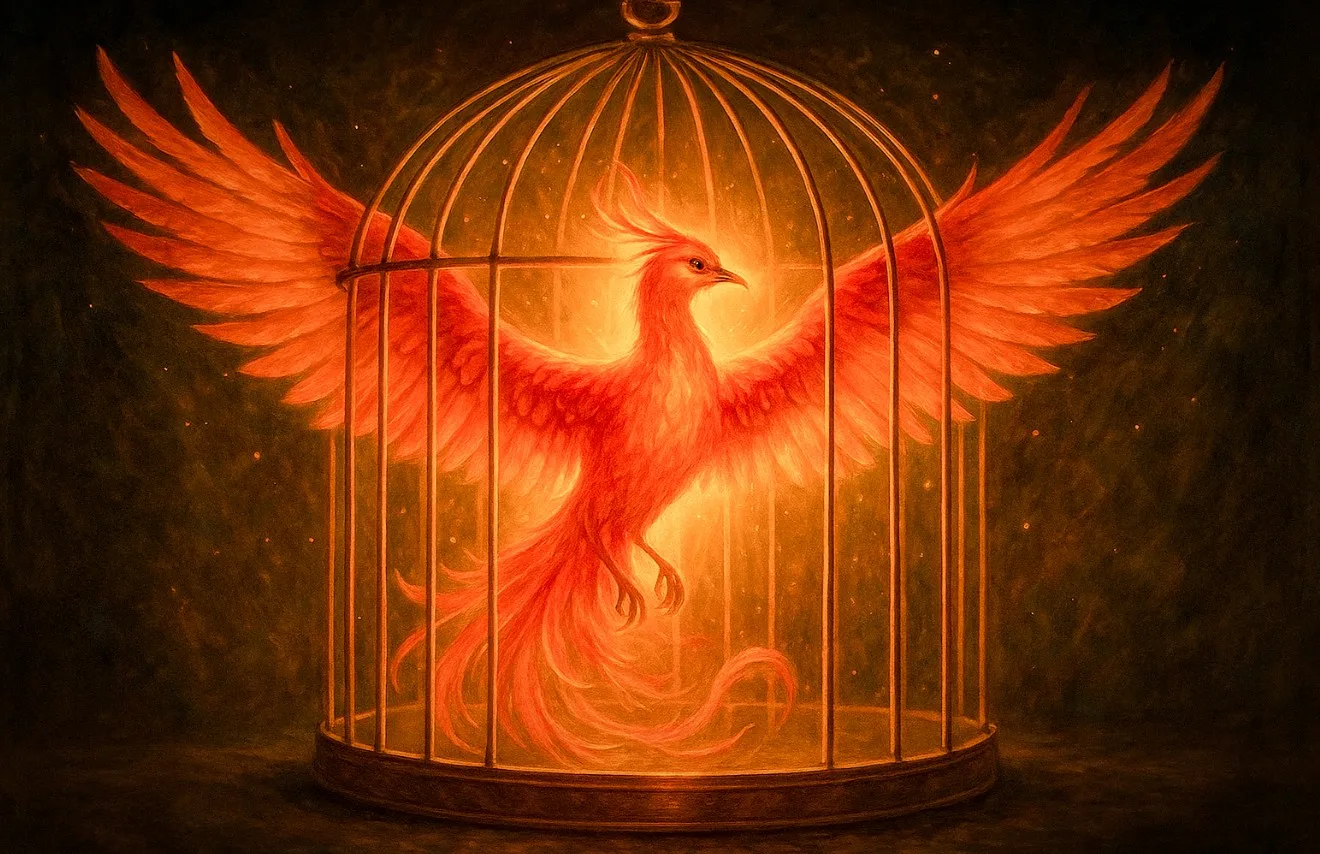
The Firebird is a magical glowing bird whose feathers shine like flames, appearing in numerous Russian fairy tales and becoming one of the most recognizable symbols of Russian culture. The creature is described as having luminous plumage that lights up darkness, and even a single fallen feather can illuminate an entire room with golden-red radiance. The Firebird represents both blessing and curse—capturing it brings glory but also sets off dangerous chains of events that transform the hero’s life forever.
The Firebird appears in several major tale cycles, most famously in “Ivan Tsarevich, the Firebird and the Gray Wolf.” In this story, a Firebird repeatedly steals golden apples from the tsar’s garden. The tsar sends his three sons to capture it, and the youngest, Ivan, sets off on the quest. Along the way, his horse is eaten by a Gray Wolf, who takes pity on him and becomes his companion and magical transportation. The Wolf helps Ivan not only find the Firebird but also win a beautiful princess and a horse with a golden mane, though Ivan’s jealous older brothers betray and kill him—until the loyal Wolf resurrects him with the water of life and death.
In stories involving Baba Yaga, the Firebird sometimes appears as a rescue creature, responding to magical horns and carrying heroes away from danger on its back. The connection between these two legendary figures—the ancient witch and the radiant bird—suggests complementary forces in Russian cosmology: earthbound darkness and celestial light, danger and salvation, the wild forest and the soaring heavens.
The Firebird’s symbolic significance encompasses multiple layers:
– The dangerous nature of desire – Pursuing something beautiful and extraordinary sets off chains of events that transform lives, often at great cost
– Hope and inspiration – Its glowing feathers represent beauty, wonder, and the possibility of magic in a harsh world
– The quest itself – The Firebird is less important than what the hero becomes while pursuing it
– Eternal life and renewal – Associated with phoenix-like qualities, representing immortality and unquenchable light
– National symbol – It became an emblem of Russian culture itself—beautiful, mysterious, and just beyond reach
Stravinsky’s 1910 ballet The Firebird introduced this legend to worldwide audiences and cemented its place in global cultural consciousness. The ballet tells of Ivan encountering the Firebird in an enchanted garden, capturing and then releasing it in exchange for a magical feather that later saves him from the sorcerer Koschei the Deathless.
3. Koschei the Deathless: The Immortal Villain
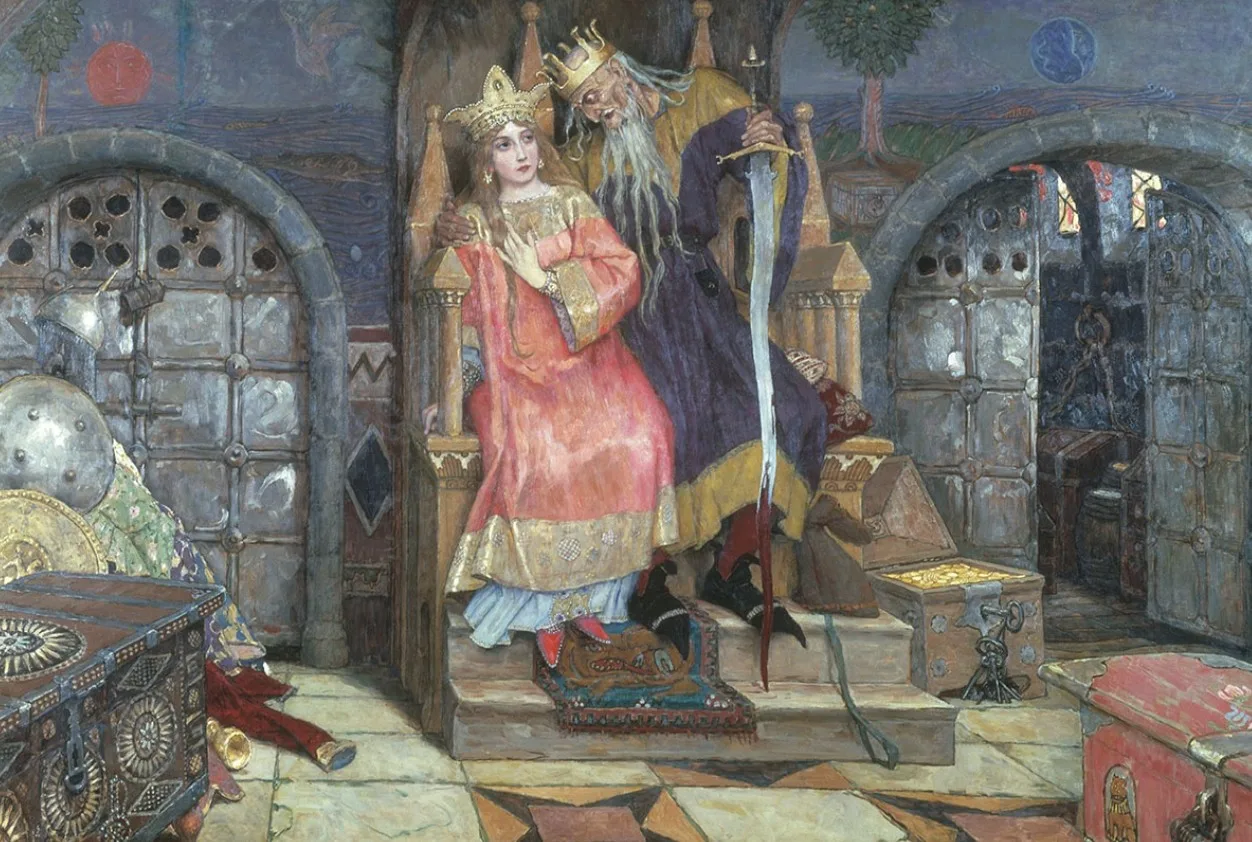
Koschei the Deathless is one of the most terrifying antagonists in Slavic folklore—an ancient sorcerer who has achieved immortality through dark magic by separating his soul from his body. He appears as a skeletal, wizened figure in some tellings or as a powerful, imposing sorcerer in others, but his defining characteristic is his literal inability to die through conventional means. He kidnaps princesses, terrorizes kingdoms, and seems invincible because he has hidden his death in an elaborate series of nested objects far from his body.
The most famous tale tells of Prince Ivan Tsarevich, who marries the warrior princess Marya Morevna. Marya keeps a mysterious locked closet in her castle and warns Ivan never to open it. But curiosity overcomes him, and he discovers a decrepit old man bound with twelve chains. The prisoner begs for water, and the compassionate Ivan provides him with twelve barrels. With each barrel, the man grows stronger, until he reveals himself as Koschei the Deathless, breaks his chains, and kidnaps Marya in a whirlwind of dark magic.
Ivan pursues them across impossible distances, dying and being resurrected multiple times through magical intervention. Marya eventually reveals the secret of Koschei’s immortality—the elaborate hiding place of his death:
– His death lies in a needle
– The needle is inside an egg
– The egg is inside a duck
– The duck is inside a hare
– The hare is inside a chest
– The chest is buried under an oak tree on a remote island
Only by obtaining this needle and breaking it can Koschei be killed. Ivan succeeds with help from various animals he had previously shown kindness to—a bear, an eagle, a pike—demonstrating the tale’s moral that compassion brings unexpected rewards. When the needle finally breaks, Koschei dies instantly, crumbling to dust, and Ivan rescues Marya.
The legend of Koschei explores profound philosophical themes:
– The futility of escaping death – Despite elaborate precautions and dark magic, death ultimately finds everyone
– Separation of soul and body – The idea that immortality requires removing one’s essential humanity and becoming something less than human
– The price of power – Koschei’s immortality comes with isolation, cruelty, and the loss of everything that makes life meaningful
– Compassion as true strength – Ivan’s kindness to animals proves more powerful than Koschei’s ancient sorcery
4. Vasilisa the Beautiful and Her Magical Doll
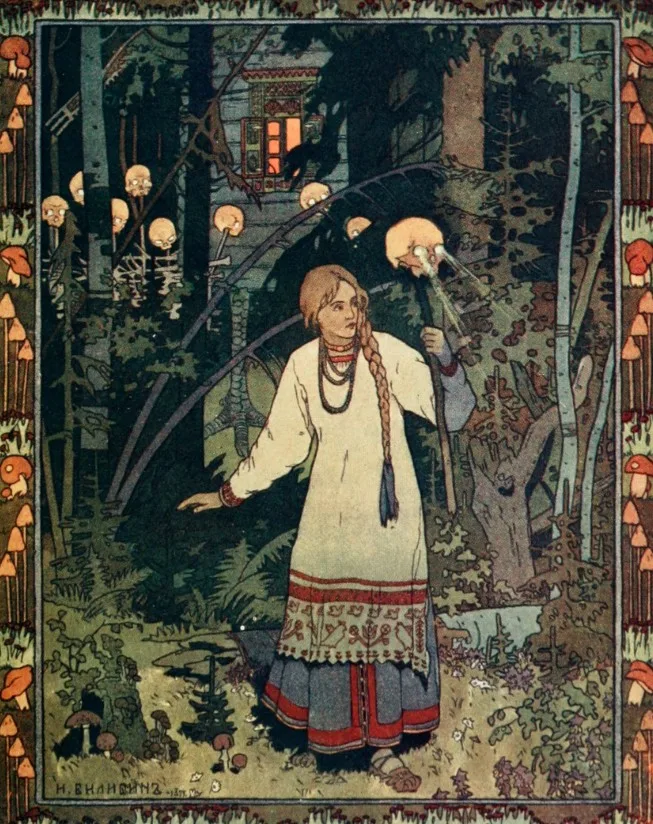
Vasilisa the Beautiful is one of Russia’s most beloved fairy tales, often described as the Russian Cinderella, though with distinctly darker and more magical elements. Vasilisa’s mother dies when she’s young, leaving her a magical doll with the instruction to feed it and seek its counsel in times of trouble. The doll contains her mother’s blessing and protection, representing the power of maternal love transcending death.
When Vasilisa’s father remarries, her stepmother and stepsisters treat her cruelly, giving her impossible amounts of work while they sit idle. One day, the fire goes out in their home, and the stepmother deliberately extinguishes all other sources of flame. She then sends Vasilisa into the forest to fetch fire from Baba Yaga, fully expecting the witch to kill the girl and rid the household of her.
Vasilisa takes her magical doll, which guides and comforts her on the dangerous journey through the dark forest. When she reaches Baba Yaga’s hut with its skull-topped fence glowing with fire, Vasilisa survives through a combination of politeness, hard work, and the doll’s magical assistance. Baba Yaga assigns her seemingly impossible tasks:
– Separate spoiled corn from good corn in a single night
– Separate poppy seeds from dirt with perfect accuracy
– Cook elaborate meals and clean the entire enormous hut
– Complete all tasks while answering Baba Yaga’s dangerous questions correctly
The magical doll completes the physical tasks while Vasilisa sleeps, allowing her to face Baba Yaga refreshed each morning. When Baba Yaga asks how she accomplished such feats, Vasilisa credits her mother’s blessing. Baba Yaga, who despises blessings and the light they represent, immediately tells Vasilisa to leave but gives her a skull with glowing eyes to take home as her fire.
When Vasilisa returns, the skull’s burning gaze follows her cruel stepmother and stepsisters throughout the house, and by morning they have been reduced to ashes—punished by the very fire they sent her to fetch. Vasilisa is then free to live her own life, eventually marrying the tsar and becoming tsarina.
The story carries multiple layers of meaning:
– Maternal blessing as protection – A mother’s love provides spiritual armor against evil
– Inner resources – The doll represents Vasilisa’s own inner strength and wisdom
– Maintaining character under oppression – Kindness and hard work matter even when treated unjustly
– Supernatural justice – When human justice fails, cosmic forces restore balance
– The ordeal as transformation – Vasilisa’s trials mature her from girl to woman
5. Ivan Tsarevich and the Gray Wolf
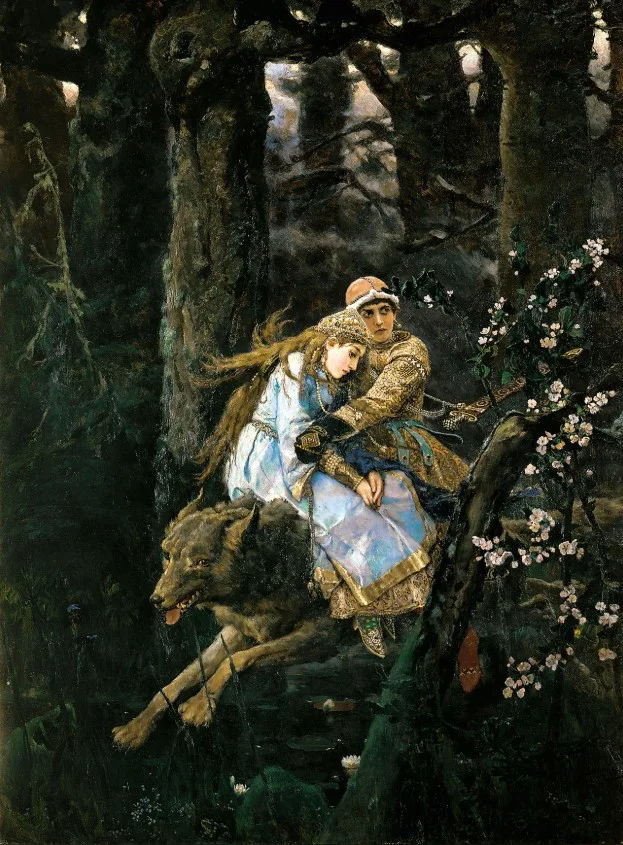
This tale is one of the most popular Russian legends, combining themes of loyalty, betrayal, death, and resurrection into an epic adventure that tests the bonds between human and magical animal. Tsar Berendey possesses a garden with a tree bearing golden apples, but each night, the Firebird steals them. The tsar sends his three sons to catch the thief. The two older brothers fall asleep at their posts, but the youngest, Ivan Tsarevich, stays vigilant and manages to grab one glowing feather from the Firebird’s tail before it escapes.
The tsar then commands his sons to capture the living Firebird. Ivan travels far into unknown lands until he stops to rest, and a Gray Wolf emerges from the forest and devours his horse. Ivan is devastated, and the Wolf, feeling remorse for this act, offers to help him. The Wolf becomes Ivan’s magical companion and transportation, carrying him on his back faster than any horse could run, covering vast distances in moments.
The quest expands far beyond the Firebird as the Wolf helps Ivan obtain three treasures:
– The Firebird from Tsar Dolmat’s palace, which the Wolf retrieves while Ivan waits
– A horse with a golden mane from Tsar Afron’s kingdom, though Ivan foolishly tries to take its golden bridle too and gets caught
– Princess Elena the Beautiful from the distant kingdom, with whom Ivan falls deeply in love
Through clever substitutions—the Wolf transforms himself into replicas of the treasures—Ivan manages to keep all three prizes and return home. However, Ivan’s older brothers, consumed by jealousy, murder him and steal his prizes. They threaten Elena to remain silent about their crime, dividing the treasures between themselves.
The loyal Gray Wolf finds Ivan’s body and resurrects him using water of life and death obtained from a helpful raven. Ivan returns home, exposes his brothers’ treachery before the entire court, and marries Elena. The Gray Wolf, having fulfilled his duty, returns to the forest, though the bond between them remains unbroken.
| Traditional Hero Traits | Ivan Tsarevich’s Actual Qualities |
| Physical strength | Persistence and endurance |
| Combat prowess | Kindness to magical creatures |
| Cunning strategy | Trusting loyalty |
| Independence | Accepting help from unlikely sources |
The story emphasizes classic Russian folkloric themes: the superiority of the youngest son, the power of loyalty transcending species, the treachery of those closest to you, and the ultimate triumph of goodness through magical intervention and supernatural justice.
6. Sister Alyonushka and Brother Ivanushka
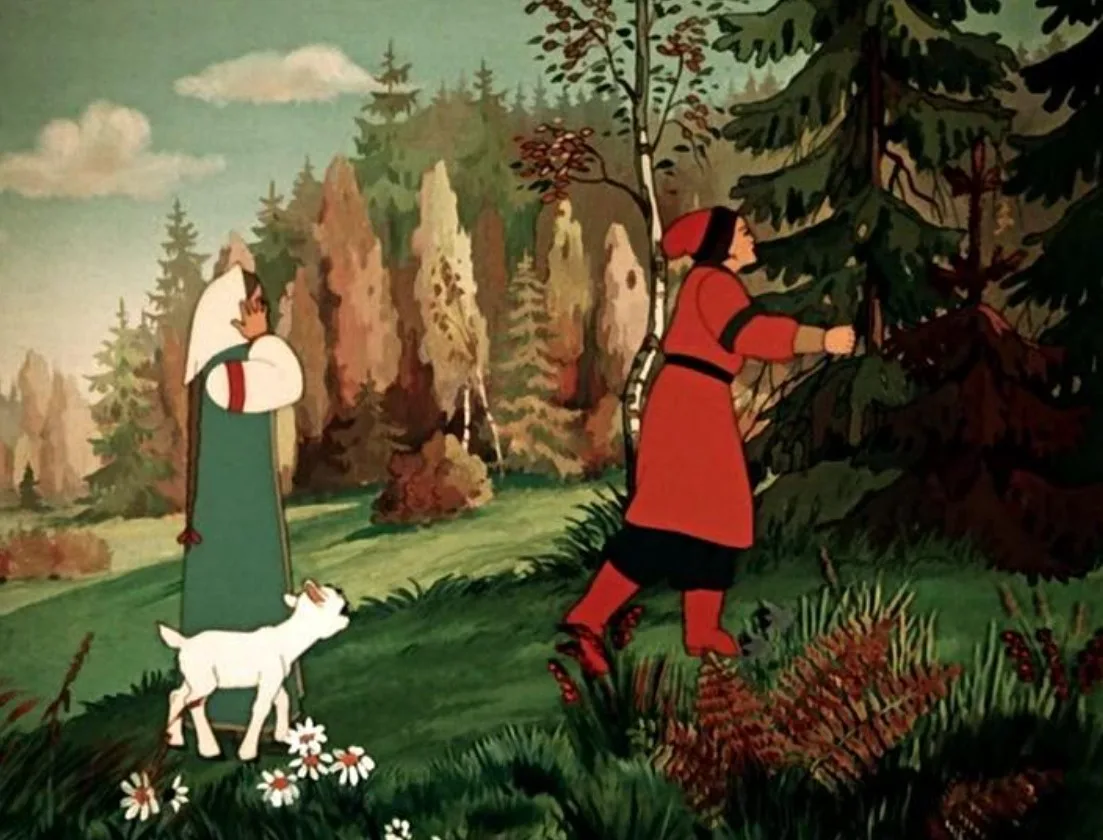
This tragic tale warns about the consequences of disobedience and giving in to temptation, while also exploring themes of sibling devotion and the transformative power of love. Alyonushka and her younger brother Ivanushka are orphans traveling alone through the countryside, relying only on each other in a harsh world. As they walk under the scorching sun, Ivanushka becomes desperately thirsty.
They pass several bodies of water, but each time Alyonushka warns him not to drink:
– “Don’t drink from the cow’s hoofprint or you’ll become a calf”
– “Don’t drink from the horse’s hoofprint or you’ll become a foal”
– “Don’t drink from the goat’s hoofprint or you’ll become a kid”
But the heat and thirst become unbearable. Despite his sister’s increasingly desperate warnings, Ivanushka drinks from a goat’s hoofprint filled with water. He immediately transforms into a little goat, and no amount of tears or regret can reverse the transformation. Alyonushka weeps bitterly but accepts her fate, continuing to care for her brother in his animal form with the same devotion she showed when he was human.
Eventually, a kind tsarevich sees them, is moved by Alyonushka’s beauty and gentle nature with the goat, and falls in love with her. He marries her and welcomes the goat-brother into his palace, where they live happily. But a wicked witch, jealous of their happiness, tricks Alyonushka while she bathes in the sea. The witch ties a stone around her neck and throws her into the depths, then transforms herself to look exactly like Alyonushka and takes her place in the palace.
The little goat knows something is terribly wrong. The false Alyonushka is cold and cruel, nothing like his loving sister. He keeps running to the seashore, calling plaintively to his sister beneath the waves. One day, the tsarevich follows the goat and hears an answering voice from beneath the sea—Alyonushka singing back to her brother, held alive by magic but unable to free herself.
The tsarevich has the sea searched and finds his true wife alive, the stone around her neck keeping her anchored but also somehow preserving her life. He rescues her, and the witch is executed for her crimes. With Alyonushka’s return, the enchantment breaks and Ivanushka transforms back into a boy, the consequences of his disobedience finally lifted by his sister’s rescue and the restoration of true love.
The tale teaches multiple lessons about the consequences of ignoring wise counsel, the unbreakable bonds of family love, the presence of evil disguised as good, and the triumph of authentic love over deception and dark magic.
7. The Frog Princess

The Frog Princess is a shape-shifting tale that explores themes of hidden worth, patience, the danger of judging by appearances, and the consequences of acting without full understanding. A tsar decides his three sons should marry and devises an unusual test: each prince must shoot an arrow into the air, and wherever it lands, he must marry the woman who finds it, regardless of her station or appearance.
The eldest son’s arrow lands at a nobleman’s house and is found by his daughter. The middle son’s arrow lands at a merchant’s house and is found by his daughter. But the youngest son Ivan’s arrow lands in a swamp and is retrieved by a frog who speaks with human intelligence and reason. Bound by the terms of his father’s decree and his own honor, Ivan must marry the frog, though he despairs at his fate.
The tsar tests his new daughters-in-law with challenges to prove their worthiness:
– Baking the finest bread
– Weaving the most beautiful carpet
– Appearing at a royal ball in suitable finery
Each time, Ivan despairs, convinced his frog-wife cannot possibly compete with his brothers’ human wives. But the frog tells him to go to sleep and not worry. During the night, she sheds her frog skin and becomes Vasilisa the Wise, a beautiful princess with powerful magical abilities. She uses her magic to complete each task magnificently—her bread surpasses all others, her carpet displays impossible artistry, and when she appears at the ball, her beauty and grace make every other woman seem ordinary by comparison.
At the ball, Vasilisa the Wise performs magical dances. When she waves her right sleeve, a lake appears. When she waves her left sleeve, white swans swim upon the lake. Ivan, watching in amazement, realizes the truth. He sneaks out, finds the discarded frog skin, and thinking he can prevent her transformation back, burns it in the fire.
When Vasilisa discovers what he’s done, she weeps bitterly and explains that she was cursed by her father, Koschei the Deathless, to live as a frog for three years. If Ivan had just waited three more days, the curse would have been broken permanently and completely. But by burning the skin prematurely, he has violated the terms of the enchantment. Now she must return to her father’s realm “beyond thrice-nine lands, in the thrice-tenth kingdom”—an impossibly distant place—and become his prisoner once more.
She vanishes instantly, and Ivan realizes his terrible mistake. He must now embark on a long, perilous quest to find Koschei’s kingdom, facing numerous trials and relying on help from magical animals, grateful for his past kindness. He eventually reaches Koschei’s realm, defeats the immortal sorcerer using the same method from other tales (finding the needle that contains his death), and frees Vasilisa forever.
The tale emphasizes patience, trust in what we don’t fully understand, looking beyond surface appearances to see true worth, and the serious consequences of acting impulsively without comprehending the full situation or respecting the natural timing of transformations.
8. Morozko (Father Frost)

Morozko, also known as Father Frost or Ded Moroz, is the personification of winter in Russian folklore—a powerful spirit who tests humans during the brutal cold months. The tale bearing his name is another stepmother story that contrasts the fates of a kind, mistreated daughter and her cruel, spoiled stepsister, revealing how character is tested and revealed under extreme conditions.
A peasant lives with his second wife, his gentle daughter Nastya (sometimes called Marushka) from his first marriage, and his new wife’s terrible daughter Marfusha. The stepmother treats Nastya like a slave, giving her all the hardest work while spoiling her own lazy, cruel daughter. Eventually, unable to bear Nastya’s presence or her husband’s lingering affection for his first daughter, the stepmother forces the weak-willed father to take Nastya deep into the winter forest and abandon her, expecting her to freeze to death in the bitter cold.
The father, ashamed but unable to defy his wife, leaves Nastya in the forest during the harshest part of winter. As she sits freezing beneath a tree, resigned to her fate, Morozko—the spirit of winter frost—appears to her. He asks repeatedly, in increasingly severe tones: “Are you warm, maiden? Are you warm, fair one?”
Despite freezing and in danger of dying, Nastya answers politely each time: “I am warm, Father Frost. I am quite warm.” Her courtesy and endurance in the face of suffering, her refusal to complain even when facing death, impresses Morozko. He rewards her with magnificent gifts:
– A chest filled with beautiful clothes and jewels
– Warm furs to protect her from the cold
– Safe passage back home
– His blessing and protection
When Nastya returns home alive and laden with treasures, the stepmother is shocked. Realizing that Morozko rewards those who meet his test, she immediately demands that her husband take her own daughter Marfusha to the same spot in the forest, certain she’ll return with even greater rewards.
But when Morozko appears to Marfusha and asks if she’s warm, she responds rudely and complainingly: “Are you blind? Can’t you see I’m freezing? Go away and stop bothering me!” With each repetition of his question, she becomes more belligerent and insulting. Morozko, offended by her rudeness and lack of endurance, freezes her to death. When the parents return to collect her, they find only a frozen corpse.
The tale teaches about endurance, politeness even in extremity, the importance of respectful behavior toward forces beyond human control, and the idea that character is revealed through how one behaves under pressure. It also reflects the harsh reality of Russian winter—a genuine life-or-death test that required specific character traits for survival.
9. The Tale of Tsar Saltan

The Tale of Tsar Saltan is one of the most elaborate and beloved Russian fairy tales, famously adapted into verse by Alexander Pushkin and later into an opera by Nikolai Rimsky-Korsakov featuring the famous “Flight of the Bumblebee” musical piece. The story combines themes of jealousy, transformation, exile, and eventual reunion in an epic narrative spanning years and fantastic transformations.
Three sisters sit spinning one evening, and each declares what she would do if she became tsarina. The first says she’d prepare a magnificent feast for the whole world. The second says she’d weave linen for the entire world. But the youngest and most beautiful says she would bear the tsar a mighty hero son. Tsar Saltan, passing by and overhearing this conversation, decides to marry the youngest sister. He makes the first sister the royal cook and the second the royal weaver, but these older sisters, along with their mother the evil Babarikha, become consumed with jealous hatred toward their younger sister.
When the tsar goes to war, his young wife gives birth to a miraculous son. But the jealous sisters intercept the letter announcing the birth, replacing it with one claiming the tsarina has given birth to a monster. They intercept the tsar’s response as well, replacing his message to wait for his return with orders to seal mother and child in a barrel and throw them into the sea.
The tsarina and her infant son drift in the sealed barrel across the ocean. The boy, named Gvidon, grows supernaturally fast while in the barrel—by the time the barrel washes ashore on a remote island, he’s already a young man. He fashions a bow and arrow, and his first act is to save a swan from a pursuing hawk. The grateful swan, who is actually an enchanted princess, promises to help him.
The swan uses her magic to transform the deserted island into a prosperous kingdom with a magnificent city. She provides Gvidon with everything he needs to rule wisely and well. When merchants from his father’s land visit the island, Gvidon asks about Tsar Saltan, and they describe the tsar’s continued grief over his lost wife and son. Three times, Gvidon wishes to visit his father’s kingdom, and each time the swan transforms him into different insects so he can travel there unseen:
– First as a mosquito
– Second as a fly
– Third as a bumblebee
During each visit, he overhears his aunts and grandmother telling the tsar about supposed marvels in distant lands, trying to distract him from visiting Gvidon’s island. But eventually, Tsar Saltan comes to the island kingdom himself, discovers the truth about his wife and son, and the family is joyfully reunited. The evil sisters and Babarikha are punished for their treachery, and Gvidon marries the swan princess, who transforms into her true form.
The tale explores themes of jealousy’s destructive power, the protection of innocence, truth eventually revealed, gratitude rewarded, and the idea that one good deed—saving the swan—can transform an entire destiny.
10. Sadko and the Sea King

Sadko is a unique Russian legend because its protagonist is not a prince or peasant but a gusli player—a musician who plays the traditional Russian stringed instrument. The tale, which originated in the medieval trading city of Novgorod, combines historical elements with mythology and explores themes of art’s power, the relationship between the human and natural worlds, and the choice between wealth and home.
Sadko is a poor but talented gusli player who performs at feasts for wealthy merchants, but despite his skill, he remains poor and unappreciated. One day, feeling dejected, he sits by Lake Ilmen playing his gusli, and his beautiful music attracts the attention of the Sea King himself, who emerges from the depths. The Sea King, enchanted by Sadko’s playing, promises him great wealth if he continues to perform for him.
Following the Sea King’s instructions, Sadko makes a bet with the wealthy merchants of Novgorod that he can catch golden fish in Lake Ilmen. The merchants, thinking this impossible, wager their wealth against him. But when Sadko casts his nets, he pulls up not ordinary fish but golden ones, just as the Sea King promised. The merchants must pay their debt, and suddenly Sadko becomes one of the richest men in Novgorod.
Now a wealthy merchant himself, Sadko builds ships and travels far, trading successfully for years. But on one voyage, his ships become mysteriously stuck in the middle of the ocean, unable to move despite favorable winds. Sadko realizes the Sea King is demanding payment for his earlier gift. He takes his gusli and goes beneath the waves to the Sea King’s underwater palace.
The Sea King demands that Sadko play music for him, and Sadko’s playing is so beautiful that the Sea King begins to dance. But when the Sea King dances, tremendous storms arise on the surface, destroying ships and drowning sailors. Sadko realizes his music is causing destruction in the human world and must find a way to stop playing without offending the Sea King.
Through cleverness, Sadko breaks his gusli strings, making it impossible to continue playing. The Sea King, though disappointed, offers Sadko the choice of any of his daughters as a bride if he stays in the underwater kingdom. Sadko is tempted by the beautiful sea maidens, but a vision of Saint Nicholas warns him that if he stays and marries one of the Sea King’s daughters, he’ll never return to the human world.
Sadko chooses wisely—he goes through the motions of choosing a bride but picks the plainest maiden, and through this act of humility and the saint’s intervention, he’s returned to the surface near Novgorod. He returns to his wife and city, keeping his wealth but having learned that no amount of riches can replace home, and that art has power not just to bring wealth but to move even supernatural beings—though such power must be wielded responsibly.
The legend uniquely features a non-noble protagonist succeeding through artistic talent rather than physical prowess or royal birth, and it grapples with the responsibilities that come with power, the seductive danger of the otherworld, and the importance of choosing human connections over supernatural temptations.
Common Themes in Russian Legends
Across these ten legends, several recurring themes emerge that reveal core values and beliefs in Russian folklore. The triumph of the youngest or underestimated appears repeatedly—Ivan Tsarevich, the third son, consistently proves more worthy than his stronger, seemingly more capable older brothers. This reflects a folk wisdom that true worth comes not from obvious advantages but from character qualities like kindness, cleverness, persistence, and moral integrity.
Another persistent theme is the importance of proper behavior toward supernatural forces. Whether facing Baba Yaga, Morozko, or the Sea King, characters who show respect, politeness, and appropriate deference survive and prosper, while those who are rude or dismissive face terrible consequences. This reflects a worldview where humans exist within a broader cosmos of powerful forces that must be approached with humility and wisdom rather than arrogance.
The legends also emphasize that kindness to creatures, even insignificant ones, brings unexpected rewards. Ivan’s compassion toward animals helps him defeat Koschei. Sadko’s music pleases supernatural beings. This reciprocity between humans and nature, between the powerful and the seemingly weak, suggests an interconnected world where no act of kindness is truly wasted.
Shape-shifting and transformation appear constantly—the frog princess, Ivanushka turning into a goat, the swan princess, Gvidon’s insect transformations. These metamorphoses suggest that surface appearances mask deeper realities, and that patient observation and trust are required to see true nature. They also reflect the transformative power of experience itself—heroes are changed by their ordeals, emerging as different people than they were at the beginning.
Finally, these legends embrace moral ambiguity rather than absolute good and evil. Baba Yaga helps and hinders. The Gray Wolf devours Ivan’s horse but becomes his greatest ally. Even villains like Koschei have tragic dimensions—his immortality is as much curse as blessing. This nuanced morality reflects the complexity of real life and the Russian folk wisdom that the world resists simple categories.
FAQs About Russian Legends
Why do so many Russian fairy tales feature the “third son” or youngest child as the hero?
The youngest child as hero is one of the most persistent patterns in Russian folklore, and it reflects several important cultural values and psychological insights. In traditional Russian society, the eldest son typically inherited property and position, giving younger sons fewer material advantages. The fairy tale pattern inverts this social reality, offering a form of wish fulfillment where those with fewer worldly advantages prove themselves through character rather than birthright. This reflects a deeply egalitarian strain in Russian folk culture—the belief that true worth comes from inner qualities rather than social position. The youngest son in Russian tales typically succeeds not through strength or intelligence alone but through a combination of kindness, persistence, respect for others, and maintaining moral integrity when others would compromise. While older brothers are often shown as stronger, more worldly, or more clever in conventional ways, they fail because they lack these essential character qualities. The youngest brother shows compassion to animals, respects supernatural beings like Baba Yaga, trusts unlikely allies like the Gray Wolf, and maintains his moral compass even when it seems disadvantageous. Psychologically, the pattern also reflects universal human experience—younger children in families often develop different survival strategies than older siblings, relying more on charm, adaptability, and emotional intelligence rather than direct confrontation or assertion of authority. The tales validate these “softer” approaches as equally or more valuable than conventional power. Additionally, the youngest child occupies a liminal position—no longer the baby but not yet fully adult, still learning and growing—making them ideal protagonists for transformative adventures. They’re at the threshold of adulthood, and their adventures serve as rites of passage that complete their maturation. The pattern sends a message that resonated deeply with Russian peasants: humble origins and lack of obvious advantages don’t determine destiny—character, kindness, and maintaining your humanity in harsh conditions are what truly matter.
How do Russian legends differ from Western European fairy tales like those collected by the Brothers Grimm?
While Russian legends and Western European fairy tales share some common motifs—wicked stepmothers, magical transformations, impossible quests—they differ in tone, moral complexity, and cultural values in significant ways. Russian legends embrace moral ambiguity more fully than their Western counterparts. Characters like Baba Yaga can be both villain and helper, sometimes within the same tale. She might test heroes severely, even threateningly, but reward those who pass her tests with crucial help. Western witches, by contrast, are typically unambiguously evil. This ambiguity reflects a Russian worldview that recognizes life’s complexity—people and situations rarely fall into neat categories of good and evil. Another key difference lies in the role of cleverness versus goodness. Western European tales often emphasize moral goodness, obedience, and purity as the paths to reward. Russian tales certainly value kindness and moral character, but they also celebrate cleverness, adaptability, and the ability to navigate complex, dangerous situations through wit rather than simple virtue. Heroes must often outwit supernatural beings, make strategic choices, and demonstrate practical intelligence alongside moral character. The natural world plays a different role as well. In Russian legends, nature is more actively supernatural and requires negotiation rather than conquest. The forest is filled with spirits, magical creatures, and transformative possibilities. Baba Yaga’s forest isn’t just dangerous—it’s alive with agency and intelligence. Western tales often feature nature as a setting for human drama, while Russian tales make nature itself a character with its own motivations and rules. Russian legends also place greater emphasis on endurance and surviving harsh conditions. This reflects the brutal Russian climate and the historical reality of peasant life—survival required extraordinary resilience. Tales like Morozko literally test characters’ ability to endure freezing conditions with grace. Western tales include hardship, but Russian tales often feature suffering as a test of character that must be borne with dignity. Finally, Russian tales show greater skepticism toward authority and social hierarchy. Tsars are often foolish or easily deceived. True worth comes from character rather than birth. Peasants and princes are equally likely to be heroes or villains. This reflects both the egalitarian strains in Russian folk culture and perhaps a subtle resistance to autocratic power—in fairy tales, at least, the humble could triumph and the powerful could fall.
Why are magical animals so common and important in Russian legends?
Magical animals appear constantly in Russian folklore—the Gray Wolf, the Firebird, helpful bears and eagles, talking frogs, and countless others—and their prominence reflects several layers of cultural meaning and practical wisdom. At the most basic level, this reflects the reality of traditional Russian life where survival depended on deep knowledge of animal behavior and the natural world. Peasants and hunters spent their lives in close proximity to animals, developing profound respect for animal intelligence and capabilities. The prevalence of magical animals in folklore acknowledges this reality while elevating it to mythological significance. More deeply, magical animals often represent forces of nature that humans must learn to work with rather than dominate. The Gray Wolf who devours Ivan’s horse and then becomes his greatest ally embodies this perfectly—nature takes from humans but also gives, and wisdom lies in accepting this exchange and building relationships of reciprocity rather than trying to control or conquer. This stands in contrast to some Western traditions where humans are positioned as masters over nature. In Russian tales, successful heroes negotiate with nature and treat it with respect. Magical animals also frequently serve as reward for kindness and compassion. Heroes who feed hungry animals, help injured creatures, or show mercy when they could kill are later helped by these same animals or their relatives. This creates a moral universe where compassion has practical consequences—kindness creates alliances that prove crucial in moments of crisis. Ivan defeats Koschei because animals he’d helped retrieve the egg containing the sorcerer’s death. This teaches that no act of kindness is wasted, and that treating all creatures with respect creates a web of reciprocal obligations. Psychologically, magical animals can represent aspects of the self or instinctual wisdom. The Gray Wolf might symbolize instinctual knowledge and survival capabilities that humans need but have suppressed. The Firebird represents aspiration and the pursuit of beauty. Animals in dreams and fairy tales often embody psychological qualities that the conscious mind hasn’t fully integrated. Finally, the transformation of animals into humans and vice versa (the Frog Princess, Ivanushka becoming a goat) suggests the permeable boundary between human and animal nature in Russian cosmology. Humans aren’t fundamentally different from animals but rather exist on a continuum of being, capable of moving along that continuum through magic, curse, or transformation.
What role did these legends play in traditional Russian society?
Russian legends served multiple crucial functions in traditional peasant society, going far beyond simple entertainment. They were vehicles for moral education, teaching children and reinforcing adults in values that communities deemed essential for survival and social cohesion. Stories like Morozko taught endurance and politeness even in extremity. Tales of Ivan Tsarevich taught that kindness to others brings unexpected rewards. The recurring theme of youngest children succeeding through character rather than advantages provided hope to those with few material resources. These weren’t abstract lessons but practical wisdom for surviving harsh conditions and complex social situations. The tales also served as psychological preparation for life’s challenges and transitions. Many Russian legends function as rites of passage narratives—young people facing terrifying tests, making difficult choices, and emerging transformed into adults. Vasilisa’s ordeal with Baba Yaga prepares her for independent adulthood. Ivan’s quest for the Firebird transforms him from naïve youngest son to capable hero. By hearing these stories repeatedly, children internalized models for handling fear, making moral choices under pressure, and understanding that transformation often requires passing through danger and uncertainty. During long winter nights when peasant families were confined indoors for months, storytelling was a crucial form of entertainment and social bonding. Telling these tales reinforced family and community connections, transmitted cultural knowledge across generations, and provided a shared imaginative world that strengthened group identity. The tales also encoded practical survival knowledge. Understanding which berries were poisonous, how to read weather signs, how to navigate forests—all this might be woven into story form, making crucial information memorable and engaging. Additionally, the tales provided a form of psychological and spiritual comfort in difficult lives. They suggested that despite hardship, injustice, and suffering, cosmic forces ultimately rewarded good and punished evil. They offered hope that current difficulties weren’t the end of the story—transformation and reversal of fortune were possible. The supernatural elements acknowledged that life contained mysteries and forces beyond human control, which needed to be approached with respect and humility. Finally, for adults, the tales provided a safe space to explore forbidden thoughts about authority, social hierarchy, and justice. While direct criticism of tsars or nobles was dangerous, fairy tales could feature foolish rulers and triumphant peasants, offering a form of imaginative resistance to oppression.
Are these legends still culturally relevant in modern Russia?
Yes, these legends remain remarkably vibrant in contemporary Russian culture, though their meanings and uses have evolved. Russian children still grow up hearing these tales, often from animated films, illustrated books, and television adaptations. Characters like Baba Yaga, the Firebird, and Koschei the Deathless remain instantly recognizable to Russians of all ages. Ded Moroz (Father Frost/Morozko) has become the Russian equivalent of Santa Claus, a central figure in New Year celebrations who brings gifts to children—showing how folklore evolves to serve new cultural functions. In literature, art, and music, these legends continue to inspire creative work. Contemporary Russian authors regularly reference and reinterpret folklore in their novels and stories. Artists create new visual interpretations. Musicians and composers continue drawing on these themes—Stravinsky’s Firebird remains a staple of classical repertoire worldwide, while Russian rock and pop musicians incorporate folkloric imagery. The legends also serve nationalistic and identity functions in modern Russia. Particularly during times of political tension with the West, emphasizing distinctive Russian cultural heritage becomes important for asserting national identity and continuity with the past. Folklore provides a sense of cultural rootedness that predates Soviet communism and connects contemporary Russians with centuries of tradition. Educational institutions in Russia still teach these tales as part of cultural literacy, ensuring each generation learns the stories that shaped Russian civilization. However, modern interpretations sometimes shift the meanings. Soviet-era versions often emphasized collectivism and class struggle, sometimes awkwardly grafted onto traditional tales. Post-Soviet interpretations sometimes reclaim older spiritual or nationalist dimensions. Interestingly, these legends have also found new international audiences through globalization. Video games, fantasy literature, and films now feature Baba Yaga, Slavic mythology, and Russian folkloric themes for worldwide audiences. This global recognition reinforces Russian pride in their cultural heritage while also sometimes generating concern about appropriation or misrepresentation of sacred cultural material. For Russians living abroad, these tales provide connection to homeland and heritage, teaching children about Russian identity even when raised in other countries. The moral lessons embedded in the tales—endurance, kindness, respect for forces beyond oneself, the importance of character over advantage—remain relevant regardless of historical period or political system, ensuring these stories continue resonating across generations.
How accurate are modern retellings and adaptations of these legends?
Modern retellings and adaptations of Russian legends vary enormously in their fidelity to original sources, and “accuracy” itself is a complex concept when dealing with oral folklore that existed in hundreds of regional variations before being written down. The versions we consider “original” are themselves just particular recorded instances of tales that varied with each telling. Alexander Afanasyev’s 19th century collection, which documented over 600 Russian fairy tales, is often treated as authoritative, but even these are specific versions chosen from many variants. That said, some patterns in modern adaptation are worth noting. Soviet-era retellings often sanitized or ideologically adjusted tales to emphasize collective action, downplay magical or religious elements, and sometimes add explicit moral lessons about working for the common good. Wicked characters might be explicitly identified with class enemies, and resolutions sometimes emphasized social justice over individual triumph. These politically motivated changes altered the tales’ original complexity and ambiguity. Disney and Western adaptations tend to simplify moral dimensions, making characters more clearly good or evil and often removing the darker, more ambiguous elements. Baba Yaga, for instance, might become a purely evil witch rather than the complex, sometimes-helpful figure of folklore. Romantic subplots are often emphasized or invented, and endings made more conventionally “happy” with less of the bittersweet or tragic elements some Russian tales contain. Contemporary fantasy literature and games drawing on Russian folklore sometimes take significant creative liberties, using folkloric figures as starting points for entirely new stories. Baba Yaga appears in countless modern contexts—from Marvel comics to Neil Gaiman novels to video games—often retaining only surface characteristics while being embedded in completely different narrative frameworks. This creates familiarity with the names and imagery but potentially distorts understanding of the original tales’ meanings. Children’s book adaptations typically age-appropriate the material, removing genuinely frightening elements, graphic violence, or disturbing transformations. While this makes tales accessible to young readers, it can strip away the genuine terror and danger that made the original tales psychologically powerful. However, some modern Russian retellings deliberately recover older, darker versions, sometimes explicitly rejecting Soviet sanitization and returning to more complex, ambiguous pre-revolutionary variants. There are also scholarly efforts to document regional variations and understand how tales changed across time and geography. For anyone seriously interested in these legends, the best approach is reading multiple versions—including scholarly translations of 19th century collections, modern Russian retellings, and comparative folklore studies—to understand both the tales’ consistent core elements and their remarkable variability across time, region, and cultural context.
What can these Russian legends teach contemporary readers?
Despite originating centuries ago in a vastly different cultural context, Russian legends offer surprisingly relevant wisdom for contemporary life. Perhaps most importantly, they teach about navigating moral complexity in a world that rarely presents clear-cut choices between good and evil. Baba Yaga embodies this perfectly—she’s neither pure villain nor pure helper, and heroes must learn to approach her with respect, complete her tasks, and accept her gifts without assuming she fits neatly into conventional moral categories. This reflects real-world experience far better than simplistic good-versus-evil narratives. We regularly encounter people, institutions, and situations that contain both helpful and harmful elements, and we must learn to navigate them with wisdom rather than categorical thinking. The legends also teach about resilience and enduring hardship with dignity. Tales like Morozko aren’t about escaping suffering but about how one bears it—Nastya survives freezing conditions through maintaining grace and politeness even when facing death. In an era of instant gratification and comfort-seeking, these tales remind us that character is forged through difficulty and that how we conduct ourselves under pressure matters more than avoiding pressure entirely. The recurring theme of kindness bringing unexpected rewards offers a profound lesson about interconnection and reciprocity. Heroes who show compassion to animals, respect to strange old women, or mercy to enemies create networks of obligation and goodwill that later save their lives. This isn’t naive optimism but hard-headed practical wisdom—treating others well, even when it seems to bring no immediate benefit, creates social capital and unexpected alliances. In our individualistic age, this reminds us that we exist in webs of relationship where kindness has ripple effects. The shape-shifting and transformation motifs teach about looking beyond surface appearances and remaining open to hidden potential. The frog is actually a princess. The youngest, dismissed brother becomes the hero. The apparently worthless magical doll saves Vasilisa’s life. These tales counsel against judging too quickly based on initial impressions and remind us that present circumstances don’t determine future possibilities—transformation is always potentially at hand. The legends’ emphasis on cleverness alongside goodness offers practical wisdom. Succeeding in life requires more than good intentions—it requires strategic thinking, adaptability, and intelligence. Heroes must outsmart supernatural opponents, navigate impossible situations, and make difficult choices with imperfect information. Pure-hearted foolishness isn’t rewarded; wisdom that combines moral character with practical intelligence is. Finally, these tales acknowledge life’s genuine terror and danger while maintaining that meaning and hope exist even in darkness. They don’t pretend the world is safe or fair. Characters face real threats—abandonment, transformation into animals, murderous relatives, deadly cold, immortal sorcerers. Yet through courage, character, and sometimes magical intervention, they survive and triumph. This offers a more robust foundation for hope than stories that deny hardship—these tales say “yes, life contains genuine darkness and danger, and yes, you can still find meaning, love, and victory within it.”
By citing this article, you acknowledge the original source and allow readers to access the full content.
PsychologyFor. (2025). The 10 Best Russian Legends (With Explanation and Meaning). https://psychologyfor.com/the-10-best-russian-legends-with-explanation-and-meaning/