


I have a complicated relationship with Freud. Every psychologist does, really. You can’t study psychology without encountering him—he’s unavoidable, foundational, the person who essentially invented the idea that we have an unconscious mind influencing everything we do. But he was also wrong about a lot of things. Spectacularly, confidently wrong in ways that set the field back in some respects.
I spent years in graduate school learning why Freud was outdated, why his theories about women were misogynistic nonsense, why his emphasis on sexuality was reductive, why psychoanalysis as he practiced it was inefficient compared to evidence-based treatments. And all of that’s true. But here’s what’s also true: Sigmund Freud fundamentally changed how humans think about themselves. Before Freud, there was no widespread concept of the unconscious. People didn’t think about childhood experiences shaping adult personality. They didn’t examine slips of the tongue for hidden meaning or consider that dreams might reveal repressed desires.
Freud is often called the father of psychoanalysis, and that designation is accurate even if some of his children have spent decades rebelling against him. His theories on the unconscious mind, the structure of personality, and human development revolutionized psychology and influenced everything from literature to film to how we talk about ourselves in casual conversation. When someone says “Freudian slip” or talks about being “in denial,” they’re using concepts Freud introduced.
I still reference Freud regularly in my clinical work, though probably not in ways he’d recognize or approve. I don’t interpret every dream as wish fulfillment or see Oedipal complexes everywhere. But the fundamental insight that much of what drives human behavior happens outside conscious awareness? That’s Freudian, and it’s correct. The idea that early experiences shape adult patterns in ways we don’t fully recognize? Also Freudian, also basically right even if the specific mechanisms he proposed need revision.
So when patients ask me about Freud—which they do, because he’s the psychologist everyone’s heard of—I give them the complicated answer. He was brilliant and wrong, revolutionary and limited by his era’s prejudices, insightful and wildly overconfident. And if you want to grasp where modern psychology came from and why we think about minds the way we do, you need to read him. Not to accept everything uncritically, but to see how these ideas developed.
I’m going to walk you through ten of Freud’s most important books. Not necessarily his best books or the ones I agree with most, but the ones that mattered most for the development of psychology and psychoanalysis. Some of these are readable and genuinely fascinating. Others are dense and dated. All of them contain ideas that shaped how we understand human psychology, for better and worse.
Top 10 Sigmund Freud Books
Verified Top Picks- 1
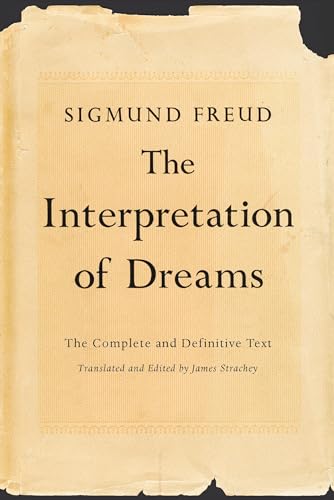 Sigmund Freud The Interpretation of Dreams (1900) The founding work of psychoanalytic dream theoryCHECK TODAY'S PRICE
 - 2
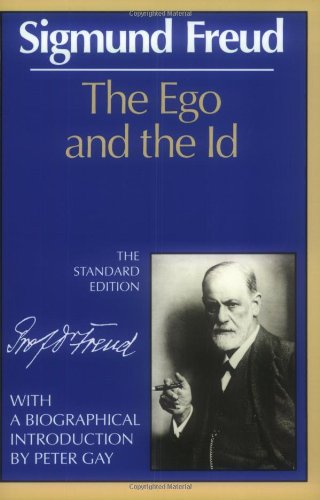
 Sigmund Freud The Ego and the Id (1923) Freud's structural model of the psycheCHECK TODAY'S PRICE
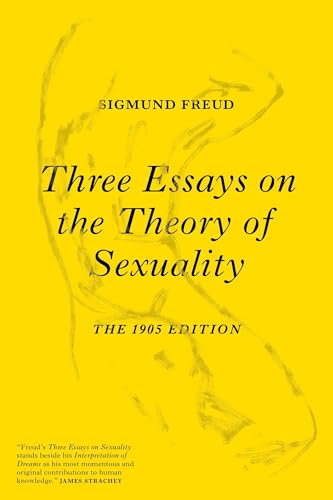
 - 3Sigmund Freud Three Essays on the Theory of Sexuality (1905) Freud's theory of psychosexual developmentCHECK TODAY'S PRICE
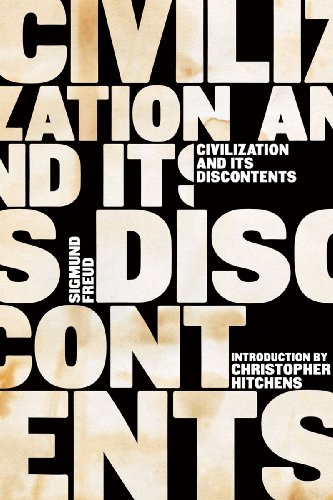
- 4Sigmund Freud Civilization and Its Discontents (1930) Freud on society, repression, and the death driveCHECK TODAY'S PRICE
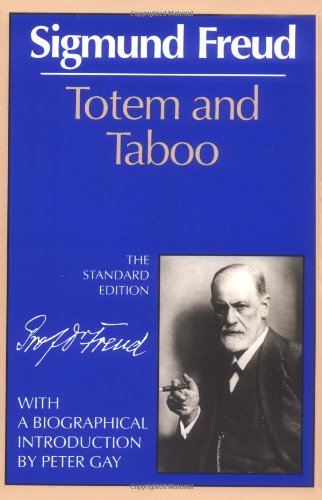
- 5Sigmund Freud Totem and Taboo (1913) Psychoanalysis applied to religion and cultureCHECK TODAY'S PRICE
- 6Sigmund Freud The Future of an Illusion (1927) Freud's critique of religious beliefCHECK TODAY'S PRICE
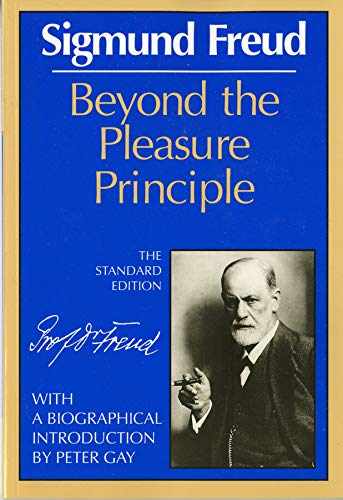
- 7Sigmund Freud Beyond the Pleasure Principle (1920) Introducing the death drive and repetition compulsionCHECK TODAY'S PRICE
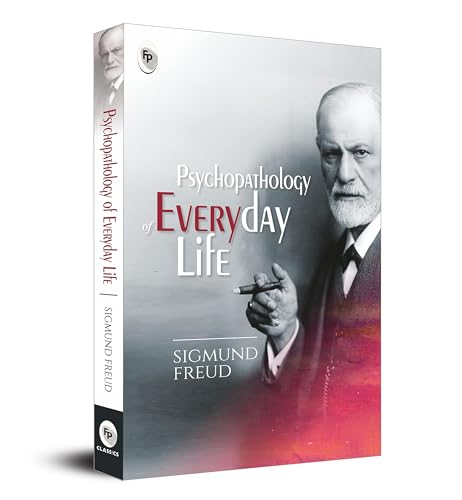
- 8Sigmund Freud The Psychopathology of Everyday Life (1901) Slips, mistakes, and the unconscious in daily lifeCHECK TODAY'S PRICE
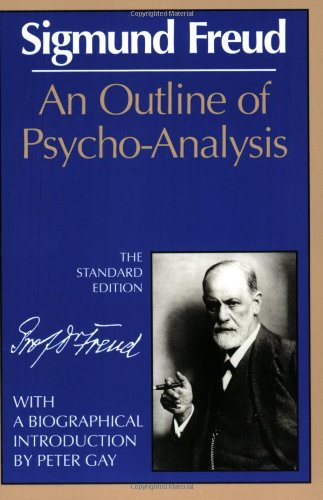
- 9Sigmund Freud An Outline of Psychoanalysis (1940) Freud's final synthesis of his theoryCHECK TODAY'S PRICE
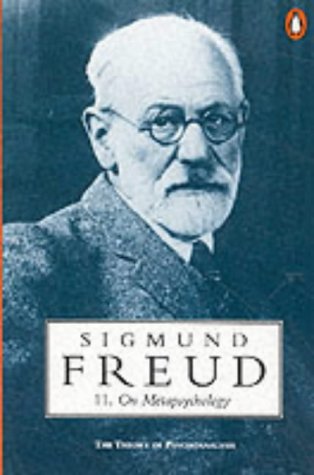
- 10Sigmund Freud On Metapsychology Freud's core theoretical papers on the mindCHECK TODAY'S PRICE
The Book That Started Everything
1. The Interpretation of Dreams (1900)

The Interpretation of Dreams is Freud’s magnum opus, the book he considered his most significant contribution. Published in 1900 (though dated 1899), it introduced the groundbreaking concept that dreams are a form of wish fulfillment deeply connected to unconscious desires.
Before this book, dreams were considered random neural firing, messages from gods, or indigestion. Freud argued something radically different: dreams have meaning. They’re the “royal road to the unconscious,” revealing repressed thoughts and desires in disguised form. The unconscious mind, which Freud saw as largely sexual and aggressive in nature, expresses itself through dreams when the conscious mind’s defenses are lowered during sleep.
Freud explores dream symbolism extensively in this book, arguing that dreams work through condensation (multiple thoughts compressed into single images) and displacement (emotional significance shifted from important elements to trivial ones). He distinguishes between manifest content (what you remember about the dream) and latent content (the hidden unconscious meaning).
I work with dreams regularly in therapy, though not in the strictly Freudian way. When a patient describes a recurring dream, I don’t immediately assume it’s sexual wish fulfillment. But the basic premise that dreams reflect psychological material we’re struggling with unconsciously? That’s held up remarkably well. The patient dreaming repeatedly about being unprepared for an exam isn’t literally worried about school—they’re anxious about being evaluated or found inadequate in some current life area.
The book is long and meandering by modern standards. Freud includes extensive dream analysis, some of which feels dated or overinterpreted. But it’s worth reading for anyone serious about depth psychology because it established the foundation for everything that came after. Even approaches that reject Freud’s specific theories still accept his basic premise that unconscious processes matter.
What’s fascinating historically is how revolutionary this was. Freud was arguing that your dreams mean something about who you are, what you want, what you’re afraid of. That your conscious understanding of yourself is incomplete. That there’s a whole other layer of mental activity happening beneath awareness. This idea—that we don’t fully know ourselves, that our conscious explanations for our behavior might be rationalizations—fundamentally changed human self-perception.
Books About Personality Structure
2. The Ego and the Id (1923)

In The Ego and the Id, Freud presents his structural model of the psyche, dividing it into three components: the id, ego, and superego. This work builds on his earlier ideas about the unconscious and provides a framework that’s become so embedded in popular culture that people reference it without knowing the source.
The id is the primitive, instinctual part of personality operating on the pleasure principle. It wants what it wants immediately without concern for reality or consequences. It’s the newborn screaming for food, the adult impulse to punch someone who’s annoying you, the sexual and aggressive drives that civilization requires us to control.
The ego develops as we learn that we can’t always get what we want when we want it. It operates on the reality principle, mediating between id impulses and external reality. The ego is the part of you that delays gratification, makes plans, thinks through consequences. It’s reason and problem-solving.
The superego is the internalized voice of parental and societal moral standards. It’s the conscience, the part that judges and criticizes, the source of guilt when we violate our ethical standards. The superego can be harsh and punishing, demanding perfection that’s impossible to achieve.
Mental health in Freud’s model involves balance between these three structures. Too much id dominance and you’re impulsive and antisocial. Too much superego control and you’re rigid, guilty, unable to enjoy anything. The ego’s job is managing the conflict between id impulses and superego restrictions while dealing with external reality.
I don’t use Freudian language constantly in therapy, but this structural model is genuinely useful for conceptualizing internal conflict. The patient who’s torn between wanting to quit their soul-crushing job (id) and feeling they should be grateful for stable employment (superego) while trying to figure out what’s actually realistic (ego)—that’s id/ego/superego conflict even if I don’t call it that.
The book itself is dense and theoretical. It’s not where you start with Freud. But it’s essential for grasping how psychoanalytic theory conceptualizes personality structure and mental conflict.
3. Three Essays on the Theory of Sexuality (1905)

This is probably Freud’s most controversial work, and it caused scandal when published. In it, Freud outlines his theories on human sexuality, including psychosexual development, sexual perversions, and the Oedipus complex. He argues that sexuality is a fundamental force in human behavior and that sexual development begins in infancy.
Freud proposed stages of psychosexual development—oral, anal, phallic, latency, and genital—each associated with different erogenous zones and developmental tasks. He believed that how these stages are navigated determines adult personality. Problems at any stage create fixations that manifest in adult behavior and neurosis.
The Oedipus complex—the idea that young boys sexually desire their mothers and see fathers as rivals—is introduced here. For girls, the analogous process involves penis envy and a shift from mother to father as love object. These concepts are widely rejected now, and rightly so. Freud’s theories about female sexuality were particularly problematic, rooted in his era’s patriarchal assumptions.
But here’s what Freud got right, even if his specific formulations were wrong: sexuality matters psychologically and it develops throughout childhood. The idea that children are sexual beings (in a developmental sense, not an adult sense) was shocking in Victorian culture that idealized childhood innocence. Freud argued—correctly—that sexual feelings and awareness exist from infancy, they just manifest differently than adult sexuality.
He also recognized that much sexual behavior exists on a spectrum and that what his culture labeled “perversion” was often just variation. While he still pathologized homosexuality (a view psychology has rightfully abandoned), he was more progressive than most of his contemporaries in recognizing sexual diversity.
I don’t work with Freud’s psychosexual stages directly in therapy. But the general principle that early relationships—particularly with parents—shape adult intimate relationships and that sexuality is psychologically complex rather than just biological? Those insights remain valuable even when the specific theory needs revision.
Books About Culture and Society
4. Civilization and Its Discontents (1930)

Civilization and Its Discontents explores the tension between individual desires and the constraints society imposes. Freud argues that civilization, while providing order and security, also represses human instincts, leading to frustration and neurosis. We gain safety through civilization but we lose freedom, and that loss creates inevitable psychological suffering.
Freud sees humans as fundamentally driven by aggressive and sexual impulses that society must control for civilization to function. We can’t all act on every impulse—that would be chaos. So we internalize restrictions, develop superegos that punish us for even thinking forbidden thoughts, and redirect our drives into socially acceptable channels through sublimation.
But this comes at a cost. The repression required for civilization creates guilt, anxiety, and what Freud calls “discontent.” We’re perpetually frustrated by the gap between what we want and what society permits. The book is pessimistic about the possibility of human happiness—Freud sees suffering as inevitable given the conflict between instinct and civilization.
This resonates strongly with modern psychology even if we don’t accept all of Freud’s specific claims. We do see constant tension between individual desires and social demands. The patient who’s exhausted by performing social roles that don’t fit who they actually are. The person who’s achieved conventional success but feels dead inside because they’ve repressed authentic desires for decades. These are variations on Freud’s theme about civilization’s psychological costs.
The book is relatively short and more accessible than some of Freud’s other work. It’s philosophical and sweeping, examining human nature and social organization at a broad level. For anyone interested in the psychological dimensions of social life or why humans seem persistently unhappy despite material progress, this book offers provocative insights.
5. Totem and Taboo (1913)

In Totem and Taboo, Freud applies psychoanalytic theory to anthropology, examining the origins of religion, social structures, and taboo systems in what he called “primitive societies.” This is where Freud goes full speculative anthropology, and honestly, a lot of it is problematic by modern standards.
Freud suggests that totemic practices and taboos are rooted in unconscious psychological mechanisms—specifically, unresolved Oedipal conflicts projected onto cultural practices. He proposes that religion originates from guilt over a primal patricide, where sons banded together to kill the dominant father, then felt so guilty they created religious rituals to atone.
The anthropology here is largely debunked. Freud relied on secondhand accounts of “primitive” cultures and made sweeping generalizations that don’t hold up to actual ethnographic research. His evolutionary assumptions and his characterization of non-Western cultures as developmentally earlier stages of civilization are dated and offensive.
But the book is historically important because it represents Freud’s attempt to apply psychoanalytic principles beyond individual psychology to culture and social development. He’s arguing that the same unconscious processes operating in individuals also shape collective cultural practices. That’s an interesting idea even when the specific application is flawed.
I don’t recommend this book for clinical insights—it’s not particularly useful for therapy. But for understanding the scope of Freud’s ambitions and how psychoanalytic theory tried to explain everything from individual neurosis to the origins of civilization, it’s revealing. Just read it with awareness of its limitations and historical context.
6. The Future of an Illusion (1927)

In The Future of an Illusion, Freud critiques religion as an illusion—a psychological defense mechanism created by the human need for security and protection. He sees religious beliefs as products of the unconscious, ways to cope with feelings of helplessness and fear of death.
Freud argues that humans create father-god figures to protect them psychologically just as their actual fathers protected them in childhood. Religion offers consolation for suffering, explanation for death, and moral structure. But these comforts come at the cost of accepting beliefs that have no factual basis.
Freud is dismissive of religion in ways that many find offensive, and he’s certainly reductive. Reducing all religious experience to neurotic defense mechanisms misses genuine spiritual and communal dimensions of faith. But he’s asking legitimate questions about the psychological functions religion serves and why humans across all cultures develop religious beliefs.
This matters clinically because many patients struggle with religious questions. They’ve rejected childhood faith but feel guilty or unmoored. They maintain religious practice that feels hollow because it’s based on obligation rather than genuine belief. They’ve had profound spiritual experiences they can’t integrate with rational worldview.
Freud provides framework for examining religious beliefs psychologically without requiring you to accept or reject them theologically. You can think about what psychological needs your faith meets, what anxieties it manages, what functions it serves—and that examination can deepen faith or clarify doubts depending on what you discover.
The book is relatively short and provocative. Read it if you’re interested in psychology of religion or if you’re wrestling with questions about the role of faith in your own life.
Books About Motivation and Drives
7. Beyond the Pleasure Principle (1920)

In Beyond the Pleasure Principle, Freud revises his earlier theories about human motivation. Initially, he believed humans were primarily driven by the pleasure principle—seeking pleasure and avoiding pain. In this book, he introduces the concept of the death drive (Thanatos), which counterbalances the life drive (Eros).
Freud proposes that humans are driven not only by pursuit of pleasure but also by an unconscious desire for self-destruction and return to an inorganic state. This sounds bizarre, but Freud was trying to explain phenomena that his earlier pleasure-principle theory couldn’t account for—why do trauma survivors relive painful experiences? Why do people repeat self-destructive patterns? Why do humans engage in behaviors that clearly cause suffering?
His answer: there’s a fundamental drive toward dissolution and death operating alongside the drive toward life and connection. This manifests in repetition compulsion—the tendency to repeat painful experiences—and in aggressive and self-destructive behaviors.
The death drive concept remains controversial even among psychoanalysts. Many reject it as too speculative. But it’s an attempt to grapple with genuine clinical phenomena. I see patients constantly who seem driven to recreate painful dynamics. The woman who keeps choosing emotionally unavailable partners like her father. The man who sabotages relationships right when they’re going well. Are they unconsciously seeking death or dissolution? Maybe not literally, but something is driving them to repeat painful patterns despite conscious desires to change.
The book introduces important concepts like repetition compulsion—the tendency to repeat traumatic experiences in attempts to master them—which remains clinically useful. The specific theory about death drives is debatable, but Freud’s recognition that human motivation is more complex than simple pleasure-seeking matters.
Books About Everyday Psychology
8. The Psychopathology of Everyday Life (1901)

The Psychopathology of Everyday Life examines seemingly trivial mistakes people make daily—slips of the tongue (Freudian slips), forgetting things, misplacing objects. Freud argues these occurrences aren’t random accidents but manifestations of repressed thoughts and desires.
When you call your new partner by your ex’s name, that’s not just a brain glitch—it’s your unconscious revealing something about unresolved feelings. When you “forget” an appointment you didn’t want to attend, the forgetting isn’t accidental—it’s your unconscious protecting you from something you consciously felt obligated to do but didn’t actually want.
This is where Freud’s ideas entered popular culture most thoroughly. Everyone knows what a “Freudian slip” is—when what you meant to say gets replaced by what you’re unconsciously thinking. The concept that these small errors reveal hidden truth has become common wisdom.
And honestly, there’s something to it. Not in the rigid way Freud applied it—not every slip means something deep and sexual. But the general principle that errors often reflect competing intentions, that what we forget or misremember tells us something about our priorities and conflicts—that holds up clinically.
The patient who consistently “forgets” to do therapy homework isn’t just disorganized. Something in them is resisting the work, and that resistance is worth examining. The person who keeps losing their wedding ring isn’t just careless—maybe there’s ambivalence about marriage they’re not consciously acknowledging.
The book is accessible and full of examples from Freud’s own life and clinical practice. It’s entertaining reading even if you’re skeptical about specific interpretations. And it demonstrates how psychoanalytic thinking applies unconscious processes to every aspect of daily life, not just dramatic symptoms or dreams.
Books That Synthesize Freud’s Thought
9. An Outline of Psychoanalysis (1940)

Written toward the end of Freud’s life, An Outline of Psychoanalysis is a concise summary of his key ideas and the principles of psychoanalysis. Freud attempts to provide an overview of mental structure, the nature of mental disorders, and the techniques used in psychoanalytic therapy.
This book serves as an introduction to Freud’s mature thought, covering the structural model (id, ego, superego), the role of repression in mental illness, and the significance of psychoanalytic therapy in accessing the unconscious. It’s more accessible than many of his other works because it’s deliberately organized as a systematic overview rather than exploring one topic in exhaustive detail.
For readers wanting to grasp Freudian theory without reading thousands of pages, this outline provides efficient entry. It won’t give you the nuance or the development of his thinking over time, but it covers the essential concepts clearly.
The book is unfinished—Freud died before completing it—which gives it a somewhat fragmentary quality. But what exists is valuable for seeing how Freud synthesized his life’s work into core principles at the end of his career.
10. On Metapsychology (1915-1917)
On Metapsychology is a collection of Freud’s theoretical essays expanding on psychoanalytic concepts and discussing foundations of psychoanalytic theory. The book covers the nature of the psyche, development of the unconscious, and the relationship between psychic energy and mental processes.
This is advanced theoretical material. Freud explores concepts like instincts and their vicissitudes, repression, the unconscious, and mourning and melancholia. He’s building the theoretical architecture underlying psychoanalytic practice rather than discussing clinical application directly.
The essays on mourning and melancholia are particularly significant because they distinguish between normal grief (mourning) and pathological depression (melancholia). Freud argues that melancholia involves anger toward the lost object that gets turned inward against the self, creating the self-hatred characteristic of depression. This insight remains clinically relevant—depression often involves internalized anger and harsh self-criticism.
Unless you’re seriously studying psychoanalytic theory, you probably don’t need to read this entire collection. But the essays are intellectually rigorous and they reveal how Freud conceptualized the mechanisms underlying the phenomena he observed clinically. For anyone pursuing advanced study in psychoanalysis or the history of psychology, these essays are essential.
FAQs About The 10 Most Important Books by Sigmund Freud
Which Freud book should I read first?
The Interpretation of Dreams or The Psychopathology of Everyday Life are good starting points. Dreams is Freud’s most important work and establishes foundational concepts, but it’s long and dense. Psychopathology is shorter, more accessible, and demonstrates how psychoanalytic thinking applies to everyday experience. For a quick overview, An Outline of Psychoanalysis summarizes his core ideas efficiently.
Is Freud still relevant to modern psychology?
Yes and no. Many of Freud’s specific theories have been rejected or heavily revised—his ideas about female sexuality, his emphasis on sex as primary motivator, his treatment techniques. But his fundamental insights remain influential: the unconscious matters, childhood experiences shape adult patterns, psychological defenses operate outside awareness, dreams and errors reveal hidden conflicts. Modern therapy doesn’t look like Freudian psychoanalysis, but his core concepts persist in modified forms across many therapeutic approaches.
Why are Freud’s theories about women considered problematic?
Freud’s theories about female sexuality were rooted in patriarchal Victorian assumptions. His concepts like penis envy, the idea that women are essentially incomplete men, and his views on female psychology reflected his era’s sexism. He saw women as developmentally inferior to men, driven by envy of male anatomy, and fundamentally masochistic. These ideas have been thoroughly rejected. Feminist psychologists have critiqued Freud extensively for projecting male psychology onto women and pathologizing normal female development.
Did Freud get anything right about sexuality?
Yes—Freud recognized that sexuality is psychologically complex, develops throughout life starting in childhood, exists on a spectrum, and profoundly influences behavior. He challenged Victorian repression and argued that sexual feelings and awareness are normal human experiences. While his specific theories about psychosexual stages and the Oedipus complex are largely rejected, his general insight that sexuality matters psychologically and shouldn’t be completely repressed was progressive for his era and remains valid.
What is the unconscious mind according to Freud?
For Freud, the unconscious is the part of mind containing thoughts, memories, desires, and impulses outside conscious awareness but still influencing behavior. It’s largely composed of repressed material—things pushed out of consciousness because they’re threatening or unacceptable. The unconscious operates according to different rules than conscious thought—it’s timeless, contradictory, symbolic, driven by wish fulfillment rather than reality. Accessing unconscious material through dreams, free association, or slips reveals hidden conflicts driving symptoms and behavior.
What are the id, ego, and superego?
These are the three structures of personality in Freud’s model. The id is primitive instinct operating on the pleasure principle, demanding immediate gratification. The ego is reason and reality-testing, mediating between id impulses and external reality. The superego is internalized moral conscience, imposing ethical standards and creating guilt when violated. Mental health involves balance—too much id creates impulsivity, too much superego creates rigid guilt, and the ego must manage conflict between them while dealing with reality.
Why did Freud think dreams are important?
Freud called dreams the “royal road to the unconscious” because he believed they reveal repressed desires in disguised form. During sleep, the conscious mind’s defenses weaken, allowing unconscious material to emerge symbolically. By interpreting dreams, Freud thought analysts could access patients’ hidden conflicts and desires. While modern psychology doesn’t accept all of Freud’s specific dream theory, the general idea that dreams reflect psychological concerns we’re processing unconsciously remains clinically useful.
What is repression in Freudian theory?
Repression is the unconscious defense mechanism where threatening thoughts, memories, or desires are pushed out of conscious awareness. Unlike suppression (consciously choosing not to think about something), repression happens automatically and unconsciously. Repressed material doesn’t disappear—it continues influencing behavior, creating symptoms, appearing in dreams. Freud believed bringing repressed material to consciousness through analysis could relieve neurotic symptoms. The concept remains influential even though modern understanding of memory and trauma has complicated the picture.
How does Freud’s work influence therapy today?
Most modern therapy doesn’t look like classical Freudian psychoanalysis (lying on couches for years discussing dreams and childhood). But Freudian concepts persist in modified forms: the therapeutic relationship matters, unconscious processes influence behavior, insight into patterns is valuable, childhood experiences shape adult functioning. Psychodynamic therapy—which evolved from psychoanalysis but is shorter and more focused—remains an evidence-based treatment. Even cognitive-behavioral therapy, which seems opposed to psychoanalysis, addresses automatic thoughts (unconscious cognitions) and learned patterns (conditioning shaped by experience).
Should I read Freud if I’m interested in psychology?
If you’re seriously interested in psychology’s history and intellectual foundations, yes. You can’t fully grasp where modern psychology came from without encountering Freud. Start with more accessible works like The Psychopathology of Everyday Life or Civilization and Its Discontents rather than diving into dense theoretical texts. Read with awareness that many specific theories have been revised or rejected, but appreciate the revolutionary insights about unconscious processes, psychological defense mechanisms, and the complexity of human motivation that remain influential.
Use this citation format to reference the article clearly and help readers find the original source.
PsychologyFor. (2026). The 10 Most Important Books by Sigmund Freud. PsychologyFor. https://psychologyfor.com/the-10-most-important-books-by-sigmund-freud/