

See more of our articles in your search results.
Talking about self-harm requires care, precision, and non‑judgment. Many people use self‑injury to cope with unbearable feelings, numbness, or memories; others engage in patterns that harm the body indirectly (through substances or food) even when they do not consciously intend to die. Clinicians distinguish between non‑suicidal self‑injury (NSSI)—deliberate damage to one’s body tissue without lethal intent—and suicidal behavior, but the boundary can blur in moments of crisis. The safest way to approach this topic is with compassion, accurate language, and a clear emphasis on help‑seeking and effective treatment. The aim of this guide is educational: to outline ten major categories of self‑harm behaviors and the psychiatric or developmental conditions most often associated with them, explain why these behaviors emerge, and detail practical, evidence‑aligned pathways to care for individuals and families.
Before going further, a crucial safety note: if there is current intent to end life, or if a person is unable to commit to immediate safety, emergency evaluation is the priority. In all other cases—where someone is using self‑injury to cope but does not want to die—the same rule of care applies: confidentiality with support, no shaming, and a fast link to skilled treatment. With that frame, we can look closely at the patterns clinicians see and the disorders most often linked, so readers can recognize risk, reduce stigma, and find the right kind of help sooner.
What clinicians mean by self‑harm (and what they don’t)
Self‑harm is an umbrella term. In clinical practice, it commonly includes NSSI (e.g., cutting, burning, hitting oneself, interfering with wound healing) and certain body‑focused repetitive behaviors (BFRBs), such as hair‑pulling and skin‑picking, which sit on an obsessive–compulsive spectrum. It can also include indirect forms—substance misuse, disordered eating, or reckless risk‑taking—when those behaviors function as self‑punishment or relief from distress. By contrast, culturally sanctioned body modification (tattoos, piercings) is not considered self‑harm unless explicitly used to regulate overwhelming emotion or to punish oneself. Intent, function, and context determine whether a behavior counts as self‑harm in care planning.
Two important distinctions reduce confusion. First, NSSI is defined by the absence of lethal intent; suicidal behavior includes intent to die. Second, some self‑injury reflects neurodevelopmental differences (e.g., self‑injurious behavior in autism or intellectual disability), where physiological arousal, sensory processing, or communication challenges drive the behavior more than mood or trauma. These distinctions matter because they point to different treatments, even when first‑line safety steps overlap.
Why people self‑harm: functions that make sense of the behavior
Most self‑injury serves a function that “works” in the short term. Common functions include acute emotion regulation (reducing anger, anxiety, or shame), ending dissociation or numbness (feeling “real” again), self‑punishment (when guilt or worthlessness is high), communicating distress when words fail, and interrupting intrusive memories. For others, repetitive behaviors (pulling, picking) relieve tension or correct a sensory “not right” feeling. Understanding the function is the first step to replacing self‑harm with safer, effective skills. Modern therapies assess function directly and then teach tailored alternatives—cooling strategies, paced breathing, sensory grounding, urge surfing, distress‑tolerance kits, and values‑based problem solving—so relief comes without injury.
How many of these have you been "meaning to read" for months?
- 1
 TarcherThe Artist's Way30th Anniversary EditionListen Free On Audible
 - 2
 New Harbinger PublicationsThe Dialectical Behavior Therapy Skills WorkbookPractical DBT Exercises for Learning Mindfulness, Interpersonal Effectiveness, Emotion Regulation...Listen Free On Audible
 - 3
 New Harbinger PublicationsAdult Children of Emotionally Immature ParentsHow to Heal from Distant, Rejecting, or Self-Involved ParentsListen Free On Audible
1) Cutting and carving
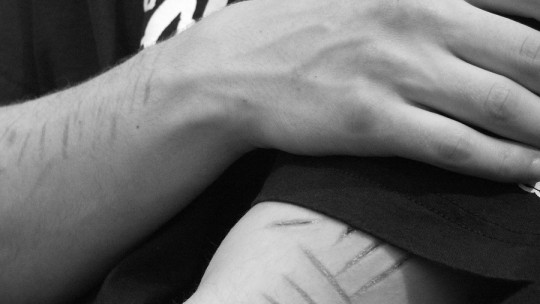
Cutting or carving the skin is among the most reported forms of NSSI. It often appears in adolescence or young adulthood and may cluster with perfectionism, high self‑criticism, or a history of invalidation. The acute relief can be compelling because visible, controllable pain temporarily eclipses chaotic internal pain or numbness. Medical risk varies by depth and location; infection and scarring are common long‑term concerns.
Common associations: major depressive disorder, post‑traumatic stress disorder (PTSD) and complex trauma histories, borderline personality disorder (BPD) traits (emotion dysregulation, chronic emptiness), anxiety disorders, and dissociative symptoms. Cutting can co‑occur with eating disorders and substance use, especially when self‑punishment is central. Treatment targets emotion regulation and self‑compassion while building competing coping skills; family involvement reduces secrecy and shame.
2) Burning
Burning (e.g., with heated objects or caustic substances) is less prevalent than cutting but follows similar functions: relief from intolerable affect or derealization, and self‑punishment. It can occur in waves during trauma anniversaries or after interpersonal ruptures. Risks include scarring, infection, and tissue damage requiring surgical care.
Common associations: PTSD/complex trauma, depressive disorders, BPD traits, and sometimes obsessive–compulsive features when rituals drive the act. Because burns can be medically serious, safety planning includes wound care education and rapid access to alternatives that deliver strong sensory input (e.g., temperature‑based coping that is medically safe) while therapy targets the underlying triggers.
3) Hitting, punching, or head‑banging
Some individuals punch walls, hit themselves, or bang their heads during peaks of anger, self‑loathing, or panic. For others, the behavior has a rhythmic, tension‑release quality. It is encountered across genders and may be under‑recognized in boys and men because it is mistaken for “externalizing” only.
Common associations: depressive disorders (especially with irritability), substance use disorders (lowered inhibition), BPD traits, ADHD (impulse control difficulties), and in neurodevelopmental conditions when sensory overload or communication barriers fuel the behavior. Treatment blends impulse‑control skills, alternative discharge outlets (safe impact activities), and emotion labeling, plus environmental changes that remove “easy” routes to harm.
4) Scratching, gouging, and interfering with wound healing
Repetitive scratching or gouging, as well as reopening wounds, can prolong injury and risk infection. The behavior may start as a response to itch, shame about prior scars, or an urge to “correct” imperfection, then become a cycle that is hard to stop. The sight of blood or the sensation of tenderness can anchor dissociated states, which unintentionally rewards the pattern.
Common associations: depression and anxiety, BPD traits, obsessive–compulsive disorder (OCD) features (not‑right experiences, rituals), body dysmorphic concerns, and trauma histories. Interventions often combine habit‑reversal methods (competing responses, stimulus control), distress‑tolerance skills, and targeted trauma or mood treatments to reduce the urge at its source.
5) Biting (self‑bite)
Self‑biting appears in two broad contexts. In emotion‑driven NSSI, it functions like other tissue‑damaging acts—relief, grounding, or self‑punishment. In neurodevelopmental contexts (autism spectrum disorder, intellectual disability), self‑bite can be a response to sensory extremes, pain, or communication frustration, and may be more automatic or stereotyped.
Common associations: depressive and trauma‑related disorders (when emotion regulation drives the act), autism and intellectual disability (when arousal modulation or communication is central), and occasionally psychosis (when command hallucinations are present). Treatment ranges from autism‑informed behavioral supports and sensory regulation plans to emotion‑focused psychotherapy and medication for co‑occurring conditions.
6) Hair‑pulling (trichotillomania)
Trichotillomania is a body‑focused repetitive behavior characterized by recurrent hair‑pulling leading to hair loss and distress. People describe rising tension or an itch‑like urge followed by relief; awareness can vary from focused to automatic pulling while reading or thinking. Though not always framed as “self‑harm” by those who live with it, its consequences can feel punishing and shame‑laden.
Common associations: BFRB/OCD spectrum conditions, anxiety disorders, depressive symptoms secondary to shame or concealment, and perfectionism. First‑line care is behavioral—habit reversal training (HRT), stimulus control, and acceptance‑based strategies—sometimes augmented by medication for OCD‑spectrum symptoms. Self‑compassion and peer support reduce isolation.
7) Skin‑picking (excoriation disorder)
Excoriation disorder involves recurrent picking at skin, scabs, or perceived imperfections, causing lesions and impairment. Like hair‑pulling, it often includes premonitory sensations and relief followed by shame. Triggers include stress, boredom, and perceived skin irregularities; mirrors and bright lights can be environmental cues.
Common associations: BFRB/OCD spectrum, anxiety and depressive disorders, and body dysmorphic preoccupations. Evidence‑based care mirrors trichotillomania: HRT, stimulus control (covering mirrors, wearing gloves at high‑risk times), and acceptance/commitment techniques. Dermatologic co‑management supports healing and reduces shame loops.
8) Disordered eating as self‑harm (restriction, bingeing, purging, compulsive exercise)
Eating disorders are distinct diagnoses, yet for many people the behaviors serve self‑punitive or numbing functions that overlap with self‑harm—controlling appetite or weight to regulate emotion, using fullness or emptiness to quiet distress, or purging to relieve tension. Over‑exercise can become a hidden form of self‑punishment disguised as “health.” Medical risks are significant across all forms.
Common associations: anorexia nervosa, bulimia nervosa, binge‑eating disorder, other specified feeding or eating disorders (OSFED), trauma histories, perfectionism, anxiety, depression, and OCD spectrum features. Treatment is multidisciplinary: medical monitoring, nutrition therapy, evidence‑based psychotherapy (FBT, CBT‑E, DBT‑ED), and medication for co‑occurring conditions. Framing the behavior’s function (not just weight) is crucial for change.
9) Substance misuse and risky behaviors (indirect self‑harm)
Alcohol and drug misuse, reckless driving, unprotected sex in high‑risk contexts, or deliberate exposure to danger can function as indirect self‑harm: a way to escape pain, punish oneself, or communicate despair without words. People may not label these as “self‑injury,” yet the risk profile and psychological functions are similar.
Common associations: substance use disorders (often with depression, PTSD, or BPD traits), bipolar disorder (impulsivity during episodes), ADHD (risk‑taking), and conduct problems. Effective interventions combine motivational interviewing, contingency management, trauma‑informed care, DBT skills for impulsivity, and medications for addiction and mood stabilization when indicated.
10) Digital self‑harm
Digital self‑harm refers to posting or sending hurtful content about oneself online, anonymously or under one’s own name, to elicit punishment, peer responses, or a sense of control over anticipated rejection. It can be invisible to adults and is linked to cyberbullying cycles.
Common associations: depressive symptoms, anxiety and social anxiety, trauma from bullying, BPD traits (sensitivity to rejection), and identity stress. Support focuses on emotion regulation, social problem‑solving, digital boundaries, parent/caregiver involvement for youth, and addressing underlying worthlessness narratives. Schools and families play a key role in disrupting harm–response loops.
Associated disorders at a glance
Across categories, the conditions most frequently co‑occurring with self‑harm include depressive disorders; trauma‑ and stressor‑related disorders (PTSD, complex PTSD); anxiety disorders; borderline personality disorder traits (emotion dysregulation, fear of abandonment, chronic emptiness); eating disorders; substance use disorders; OCD spectrum conditions and BFRBs; bipolar spectrum disorders; dissociative symptoms; autism spectrum disorder and intellectual disability (especially for self‑injurious behaviors tied to arousal and sensory processing); and, less commonly, psychotic disorders when voices or delusional beliefs command harm. Assessment should always screen across these domains, because treating the driver condition reliably reduces self‑harm urges.

Assessment and differential diagnosis: what a good evaluation includes
A thorough clinical assessment covers the “4 F’s”: form (exact behaviors, frequency, medical risk), function (relief, punishment, grounding, communication), factors (triggers, settings, substance use, sleep), and fallout (scarring, shame, role impairment). It distinguishes NSSI from suicidal intent, screens for trauma, mood, anxiety, OCD spectrum, eating and substance use disorders, and considers neurodevelopmental conditions. For youth, family dynamics and peer context (bullying, social media) are critical. Medical evaluation addresses wound care, infection risk, pain, and scarring, and rules out dermatologic or neurologic contributors when relevant.
Clinicians then co‑create a safety and skills plan that fits the person’s function, values, and environment. This typically includes brief stabilization skills, identification of early‑warning signs, crisis contacts, means‑restriction/environmental changes, and a first step into evidence‑based psychotherapy. Medication targets driver conditions (e.g., SSRIs/SNRIs for depression, prazosin for trauma‑related nightmares, naltrexone in some repetitive behaviors, mood stabilizers when bipolar spectrum is present), always within a broader psychosocial plan.
Evidence‑based treatments that work
Multiple therapies reduce self‑harm across diagnoses. Dialectical behavior therapy (DBT) has the strongest evidence for reducing NSSI and suicide attempts, especially when emotion dysregulation and interpersonal sensitivity are central. DBT teaches mindfulness, distress tolerance, emotion regulation, and interpersonal effectiveness, with phone coaching and clear crisis plans. Mentalization‑based treatment (MBT) improves understanding of one’s own and others’ minds, reducing impulsive, dysregulated actions. Cognitive behavioral therapy (CBT) and problem‑solving therapy help people map triggers and practice alternatives; exposure‑based approaches address trauma and OCD spectrum drivers; acceptance and commitment therapy (ACT) strengthens values‑based action under discomfort.
For BFRBs (trichotillomania, excoriation), first‑line care is behavioral: habit reversal training, stimulus control, and acceptance/commitment components. For eating disorders, CBT‑E and DBT‑ED are central; for adolescents with anorexia or bulimia, family‑based treatment (FBT) is first‑line. For trauma, trauma‑focused CBT, EMDR, or other phase‑based trauma therapies reduce triggers that feed self‑harm. Integrated treatment for co‑occurring substance use and mood/PTSD (e.g., Seeking Safety, DBT‑SUD) cuts risk while supporting sobriety. Across modalities, the theme is the same: learn to ride waves without injury, and build a life worth staying for.
Safety planning: turning insight into immediate protection
A practical safety plan translates therapy into daily life. Core elements include: personal warning signs; internal coping strategies (breathing cadence, grounding, cold‑water facial splash, movement, sensory tools); social settings and people who help you ride urges (with scripts for asking support); professional supports (therapist, urgent care pathways); and environmental changes (locking away or removing high‑risk items, using wound‑care alternatives, altering mirror/lighting cues for pick/pull). Plans are written, shared with trusted others, and rehearsed. For teens, parents co‑create and implement means‑safety steps with empathy and clear limits.

What loved ones can do (and avoid)
Family and friends can be powerful buffers. Do: stay calm; validate pain without interrogating; ask how to help (“Do you want company, distraction, or space?”); reduce shame by separating the person from the behavior; help with logistics (appointments, rides, meals); and hold kind boundaries around safety. Don’t: lecture, threaten, or demand promises; minimize (“others have it worse”); or inadvertently reinforce secrecy by reacting with shock. Compassion with structure—“I’m here, and we’ll follow the plan”—is the most protective stance. For youth, caregivers should partner with clinicians on means safety and routines while respecting privacy around therapy content.
Language matters
Use non‑stigmatizing, precise terms: “non‑suicidal self‑injury,” “self‑injurious behavior,” “body‑focused repetitive behavior,” “associated conditions,” and “urges” or “behaviors” rather than identity labels. Avoid sensational details; focus on functions, safety, and skills. People are not their behaviors; they are individuals using the best tools they have—tools that treatment can improve.
When to seek urgent help
Immediate help is needed if: there is current suicidal intent or a plan; injuries require medical attention; substances are involved and judgment is impaired; voices or beliefs command self‑harm; or a person cannot commit to a safety plan. In those cases, urgent evaluation via local emergency services or crisis lines is appropriate. Otherwise, seek timely outpatient care with clinicians experienced in NSSI, BFRBs, eating disorders, or trauma—and involve supportive others as consent allows.
FAQs about The 10 Types Of Self-harm And Associated Disorders
Is self‑harm always a suicide attempt?
No. Many people use self‑injury without intending to die; it functions to regulate emotion, end numbness, or express pain. Still, risk can change quickly, so safety planning and regular check‑ins about suicidal thoughts are essential.
Why does self‑harm seem to “work” in the moment?
It can rapidly shift attention from internal pain to controllable physical sensation, release tension, or end dissociation. The short‑term relief reinforces the behavior, even as long‑term costs grow. Therapy teaches safer skills that meet the same need.
Is hair‑pulling or skin‑picking really self‑harm?
They are classified as body‑focused repetitive behaviors on the OCD spectrum. Some people don’t experience them as self‑punishment, but as urge‑driven habits that relieve tension. Because they damage tissue and cause distress, they are treated alongside self‑harm in many clinics.
Which diagnoses are most linked to cutting?
Depression, PTSD/complex trauma, borderline personality disorder traits, anxiety, and dissociation are common. Eating disorders and substance use can co‑occur. A good assessment looks across these domains and treats the drivers, not just the cuts.
What helps family members support without enabling?
Validate feelings, help with access to care, collaborate on means safety, and reinforce use of coping skills. Set boundaries around aggression or manipulation and protect your own wellbeing—burned‑out caregivers can’t be effective allies.
Does talking about self‑harm increase it?
Open, non‑graphic, non‑judgmental discussion paired with problem solving and support reduces risk. Avoiding the topic increases shame and secrecy. The key is to focus on function, safety, and help, not on specific methods.
Which therapies have the best evidence?
DBT leads for NSSI and suicide risk, MBT for relational dysregulation, CBT/ACT for mood and anxiety drivers, HRT for BFRBs, trauma‑focused care for PTSD, and CBT‑E/FBT/DBT‑ED for eating disorders. Integrated approaches work best when conditions co‑occur.
Can medication stop self‑harm?
Medication can reduce underlying drivers—depression, anxiety, intrusive trauma symptoms, OCD spectrum urges, mood instability—but it is most effective when combined with psychotherapy and skills practice.
Is self‑harm only a teen issue?
It peaks in adolescence but occurs across the lifespan. Adults may present differently (substances, digital self‑harm, concealed injuries). Older adults require careful suicide screening because medical frailty increases risk.
What’s the first step if I’m using self‑injury to cope?
Tell one safe person and ask for help finding a clinician experienced with self‑harm. Create a basic safety plan (early signs, coping list, contacts, means safety). You do not have to navigate this alone, and effective treatments exist.
Use this citation format to reference the article clearly and help readers find the original source.
PsychologyFor. (2025). The 10 Types of Self-Harm and Associated Disorders. PsychologyFor. https://psychologyfor.com/the-10-types-of-self-harm-and-associated-disorders/