

See more of our articles in your search results.
Choosing the right condom is a genuine health decision — and yet most people make it almost entirely by accident. They grab whatever brand is closest on the shelf, or default to the one they used years ago, without considering that condoms vary significantly in material, thickness, fit, lubrication, and overall reliability. That gap between what’s available and what people actually know matters: it can mean discomfort during sex, reduced sensation, inconsistent use, and in the worst cases, protection failures that could have been prevented.
Sexual health and psychological wellbeing are more closely connected than many people realize. When individuals feel confident about their protection — when they’re not silently anxious about whether a condom will hold, or distracted by physical discomfort — real intimacy becomes possible. Conversely, uncertainty about protection quality can quietly undermine sexual relationships, encourage avoidance, and generate persistent background stress. Finding a condom that actually works for your body is not a trivial preference — it’s a meaningful part of sexual and emotional wellbeing.
This guide is built on research, expert reviews, and aggregated user experience data to identify the condom brands that consistently deliver on safety, comfort, and reliability. Whether you have latex sensitivity, need specific sizing, prioritize ultra-thin sensation, prefer ethically sourced products, or simply want to know which brand is most likely to work well — you’ll find a clear, practical answer here. This article is educational and informational only and is not a substitute for professional medical or sexual health advice.
Top 3 Condoms Trusted by Thousands
Verified Top Picks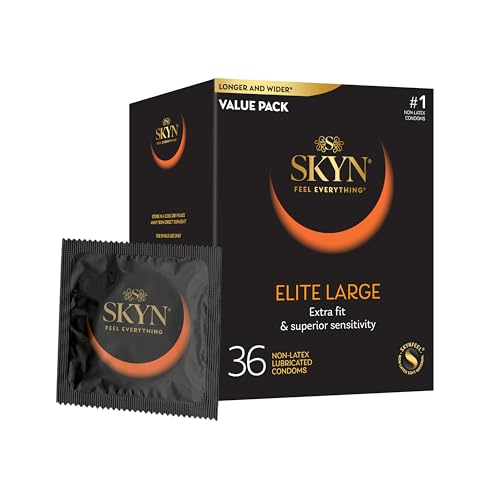
What Actually Makes a Condom Reliable — and Worth Choosing?
A reliable condom is one that you’ll use correctly and consistently — because the best condom in the world, used inconsistently, provides far less protection than a solid option used every single time. Before evaluating brands, it helps to understand the core variables that determine whether a condom performs well in practice.
Material quality is foundational. High-grade latex provides elasticity, strength, and a long record of efficacy. Polyisoprene and polyurethane are synthetic alternatives for people with latex sensitivity — and when manufactured well, they match or exceed latex in both protection and sensation. What separates reputable manufacturers from lower-tier ones is that they electronically test every individual condom for holes and structural weaknesses, not just random batch samples.
Thickness involves real trade-offs. Thinner materials transmit more sensation — that part is accurate. But a poorly made thin condom tears more easily than a well-made standard one. What premium brands achieve is manufacturing thinness without sacrificing structural integrity, which requires superior materials and precise production control. That’s the quality gap that explains why pricing differences exist.
Fit is the most commonly underestimated variable. Standard condoms have a nominal width of around 52–54mm, but human anatomy doesn’t conform to a single size. Condoms that are too tight restrict circulation, cause discomfort, and are more likely to tear. Condoms that are too loose slip during use — which undermines protection entirely. Correct fit isn’t a comfort preference; it’s a functional requirement that directly affects both protection and consistent use.
Lubrication affects friction, comfort, and durability. Insufficient lubrication increases the risk of breakage and reduces comfort for both partners. Water-based lubricants work with all condom types but dry faster. Silicone-based lubricants last longer but cannot be used with silicone toys. Oil-based lubricants should never be used with latex — they degrade the material significantly. Quality condoms come pre-lubricated in appropriate quantities, and the lubricant formulation affects both feel and longevity.
| Selection Factor | Why It Matters for Protection and Comfort |
|---|---|
| Material (latex vs. synthetic) | Determines compatibility for latex-sensitive users; affects heat transfer and sensation |
| Thickness | Impacts sensation; premium thin options maintain strength through manufacturing quality |
| Fit and sizing | Affects both effectiveness and comfort; wrong size increases failure and inconsistent use risk |
| Lubrication type and amount | Reduces friction-related breakage; wrong lubricant type can degrade latex |
| Regulatory compliance (FDA / CE) | Ensures consistent quality testing; non-compliant products carry measurably higher failure risk |
LifeStyles Skyn: The Non-Latex Gold Standard

LifeStyles Skyn consistently ranks as the top overall condom recommendation across independent professional reviews and large-scale user feedback pools — and the reasons are specific and well-documented. Made from polyisoprene, a synthetic rubber that’s softer and more thermally conductive than natural latex, Skyn addresses latex sensitivity while delivering a sensation profile that a significant proportion of users describe as transformative. “I’ll never go back to latex” appears repeatedly across independent review platforms, and it reflects a real qualitative difference, not marketing.
What separates polyisoprene from standard latex is how it behaves against skin. Polyisoprene warms to body temperature more readily and transfers heat more effectively, creating a closer-to-skin sensation that latex cannot replicate at comparable thickness. The material is inherently softer, eliminating the plasticky texture that many users find distracting with conventional condoms. Despite being thinner than many latex products, Skyn maintains excellent structural integrity — long-term users reporting low breakage rates over years of consistent use.
The Skyn product line offers meaningful variety within the non-latex category: the original Skyn for reliable baseline performance, Skyn Elite for increased thinness and sensitivity, Skyn Intense Feel with added texture, and Skyn Large for above-average anatomy. That internal range addresses what was historically a serious gap in the market — latex-sensitive individuals previously had very limited options and almost no variety.
Accessibility reinforces Skyn’s value. It’s widely available in drugstores, supermarkets, and online at mid-range pricing, not as a specialty import. Packaging opens cleanly and reliably. For anyone who hasn’t yet found a condom they’re genuinely comfortable with — and particularly for those with latex sensitivity — Skyn remains the benchmark against which most alternatives are measured.
Durex: Global Reliability and a Product Range That Actually Covers the Spectrum

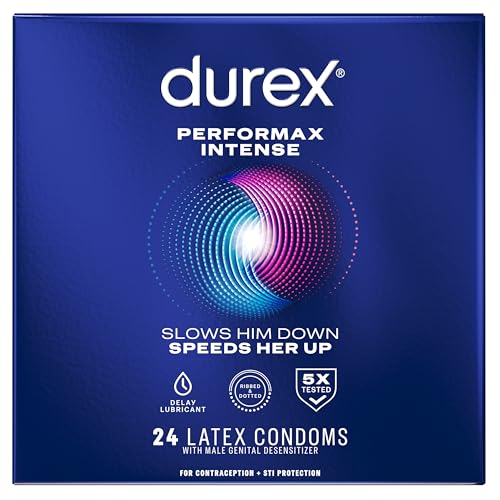
Durex is one of the world’s largest condom manufacturers, and their longevity in the market reflects something real: consistent quality, rigorous testing, and a product range that addresses diverse needs under one trusted brand. What distinguishes Durex from many competitors isn’t a single breakthrough product — it’s the breadth of well-executed options available in most retail environments globally.
Durex Avanti Bare Real Feel is their polyisoprene offering and the most direct competitor to LifeStyles Skyn. User feedback generally positions the two as comparable in sensation quality, with some noting Durex fits slightly tighter — which may be an advantage or disadvantage depending on anatomy. For latex-sensitive individuals who want an alternative to Skyn, Avanti Bare is the closest equivalent in terms of material performance and widespread availability.
Durex Extra Safe takes a different approach: reinforced construction, electronic testing, and additional internal lubrication, aimed specifically at people whose primary concern is protection reliability over maximum sensation. The trade-off in feel is real, but so is the psychological benefit — for individuals whose anxiety about protection failure is itself disruptive to sexual experience, removing that variable has genuine value that marginal sensation differences don’t offset.
Durex Invisible, marketed at 0.02mm thickness, earns consistently strong reviews for delivering noticeably enhanced sensation without the elevated breakage rates that characterize cheap ultra-thin options. Durex also provides sizing guidance on their website, helping users identify the correct fit — a practical support that addresses one of the most common sources of condom dissatisfaction. Quality control across the Durex line is a genuine brand strength; defect pattern reports are rare relative to market share.
ONE Condoms: Innovation and the Case for Better Sizing

ONE Condoms has built its identity on two commitments that the rest of the industry has historically underserved: thoughtful design and genuinely inclusive sizing. Their central argument — that standard, large, and extra-large don’t actually cover human anatomical variety — is well supported by user experience data and has driven real product innovation.
ONE Legend is their large-size flagship, and it’s consistently cited in independent reviews as one of the most satisfying large condoms available. Users who have struggled with standard brands — experiencing restricted circulation, discomfort at the base, or recurring breakage despite correct use — report that Legend finally fits correctly. Proper fit is not a comfort preference; it is a functional safety variable. A condom worn in the right size is more effective, more comfortable, and significantly more likely to be used consistently.
ONE Vanish achieves ultra-thin performance using natural latex in a minimal-thickness profile. The name reflects the goal: protection that you know is there but that doesn’t dominate the sensory experience. For users who find that the psychological awareness of wearing a thick condom is itself disruptive to intimacy, Vanish addresses that without requiring a switch to synthetic materials.
The most distinctive product is myONE — a custom sizing system offering 60 distinct width-and-length combinations ordered based on individual measurements. This is remarkable not as novelty but as practical problem-solving for the meaningful portion of people for whom standard and large sizing consistently fails. Custom ordering carries a price premium, but for users who have never found a genuinely comfortable fit through conventional retail channels, the investment resolves a real problem.
Trojan: What America’s Most Available Brand Actually Delivers

Trojan dominates the American condom market, and that dominance is partly self-reinforcing: they’re stocked in virtually every drugstore, gas station, health clinic, and vending machine across the country. When protection is needed immediately and specific brands aren’t available, Trojan is almost certainly obtainable. That accessibility has genuine practical value — consistent use is the single most important protection variable, and a readily available option supports that goal.
An honest assessment, however, is important for informed decision-making. Standard Trojan condoms receive mixed feedback on breakage rates, with a noticeable pattern across independent reviews of higher failure frequency relative to LifeStyles, Durex, and ONE. Some users report faster lubricant depletion during use, which increases friction-related failure risk. This isn’t universal — many users report years of successful use — but the pattern across multiple independent sources is consistent enough to be worth considering when selecting a regular-use brand.
Trojan Magnum is culturally iconic as the go-to large-size option, though user feedback is more nuanced. Some report a genuinely better fit; others find it is not meaningfully larger than standard Trojans, and that ONE Legend or Durex XXL better serve above-average anatomy. Brand recognition and actual performance don’t always align precisely.
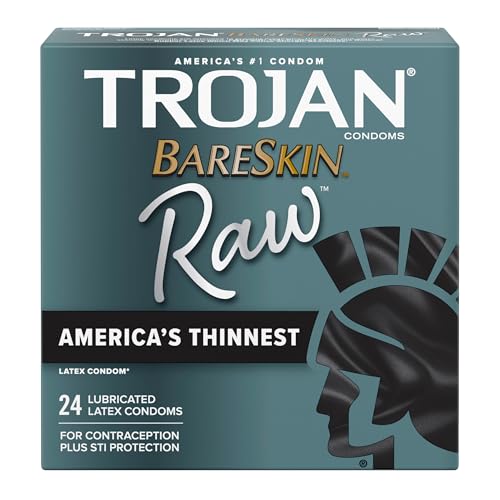
Trojan BareSkin, their ultra-thin variant, receives considerably better reviews than the standard line — suggesting the brand is capable of higher manufacturing quality when material investment is prioritized. As a backup or emergency option, Trojan meets FDA standards and performs the essential protective function. For establishing a preferred regular-use brand, the alternatives on this list generally offer stronger performance-to-price ratios.
Kimono MicroThin: When Sensation Is the Priority

Kimono occupies a specific premium position: maximum sensation for latex users who want thinness without compromising structural reliability. The brand originated in Japan, where consumer expectations around condom quality and thinness are among the most demanding globally — and that manufacturing heritage is reflected in measurably thinner-than-average latex with maintained strength.
Kimono MicroThin is their flagship. The sensation difference relative to standard condoms is real and consistently reported across independent user reviews. Users for whom standard condoms reduce sensation to a degree that affects sexual experience — or that creates a psychological barrier to consistent use — report that MicroThin restores meaningful sensation while maintaining protective reliability. Long-term users report years of consistent use without breakage incidents. Premium thin condoms achieve their thinness through superior latex quality and manufacturing precision, which is what separates them from cheap thin alternatives that do tear easily.
The fit profile runs snugger than average, which works well for users with average to slightly-below-average girth. That snug fit enhances sensation transmission and reduces movement during use. However, users who need true large sizing should look elsewhere — the same snugness that benefits some users creates uncomfortable restriction for others. Knowing your sizing needs before investing in premium condoms prevents a frustrating and expensive mismatch.
Pricing is Kimono’s main barrier: noticeably higher per-condom cost than mainstream brands. For users whose current condoms reduce pleasure to the point of affecting sexual engagement or the likelihood of consistent use, that price difference is a justified functional investment. For users satisfied with mid-range options, the premium may not be necessary.
LELO HEX: Structural Engineering Applied to Condom Design

LELO HEX brings genuine structural innovation to a product category that has changed remarkably little in decades. The defining feature — 350 hexagonal cells molded into the latex surface — is not aesthetic. It is a functional engineering response to a real problem: how to make a condom thinner and more sensation-transmitting without reducing structural integrity.
The hexagonal web distributes stress across the material more efficiently than a uniform flat surface. When pressure concentrates in one area, surrounding hexagonal cells flex and absorb force, reducing the risk of localized tearing. HEX achieves thinness through structural design rather than purely through material reduction — a meaningfully different approach that produces a different performance profile than conventional thin condoms.
Users consistently report two specific functional benefits: exceptional positional stability during vigorous activity, and reduced slippage without requiring a tighter fit. The hexagonal pattern creates subtle friction against skin that keeps the condom correctly positioned without the discomfort of a genuinely tight condom. For users who have experienced bunching or slipping with standard options, this solves a real and frustrating problem.
The hexagonal texture is not perceptible during use — users report better overall sensation than standard flat latex, not a ridged or unusual feeling. Pricing is premium without reaching the highest tier. Physical retail availability is limited, making online ordering the most reliable channel. LELO’s broader reputation for quality in intimate products translates genuinely into their condom manufacturing.
FC2 Internal Condom: Protection That the Receptive Partner Controls

FC2 is an internal condom — a fundamentally different category of protection. Made from nitrile (a latex-free material), it is inserted into the vagina before sex rather than worn on the penis. This single structural difference shifts control over protection to the receptive partner, with significant implications for autonomy, relationship dynamics, and consistent protective use in a range of real-world situations.
The autonomy dimension matters and is often underappreciated in mainstream sexual health education. Receptive partners can insert FC2 hours before sexual activity, removing the interruption of condom application from the flow of intimacy. In relationships where negotiating external condom use is difficult, inconsistent, or emotionally fraught, internal condoms provide meaningful protective agency that external options cannot replicate. From a sexual health and psychological wellbeing perspective, this is a substantive benefit — not a minor convenience.
The sensation profile differs from external condoms, and many users actively prefer it. Because nitrile lines the vaginal canal rather than tightly encasing the penis, neither partner experiences significant constriction. Multiple users report that partners who consistently described sensation loss with external condoms had no complaints with FC2. The physics of movement inside the condom rather than with it creates a different friction dynamic that many find more natural.
A genuine learning curve exists. Proper insertion takes practice, and the external ring requires adjustment both physically and psychologically. In the US, FC2 currently requires a prescription, though telehealth services make this straightforward to obtain, and insurance often covers the cost. Users who move through the initial learning phase frequently become committed advocates for internal condoms as a regular option.
Sustain Natural: Ethical Sourcing and Chemical-Conscious Protection

BUY SUSTAIN NATURAL CONDOMS HERE
Sustain Natural addresses a growing segment of consumers who want protection that is both effective and aligned with their values around chemical exposure, labor practices, and environmental impact. Their condoms use Fair Trade certified natural latex, processed without nitrosamines, and packaged in sustainably sourced materials.
The nitrosamine question deserves honest framing. Some latex manufacturing processes produce nitrosamines as byproducts — compounds associated with health concerns at higher exposure levels. The actual risk from condom use is likely minimal, but it is not categorically zero. Sustain’s manufacturing process eliminates nitrosamine formation through alternative processing. For consumers who apply a precautionary approach to chemical exposure across their personal care products, this is a legitimate consideration rather than marketing language.
Fair Trade certification provides third-party verified assurance about labor conditions and fair compensation in latex cultivation — physically demanding work often done in poor conditions in conventional supply chains. For consumers who extend ethical sourcing consideration beyond food and clothing, this certification is backed by audited standards, not brand claims alone.
Performance-wise, Sustain condoms are reliable and functional without being exceptional in sensation or thinness. They’re standard-thickness latex without ultra-thin or specialty design features. The value proposition is ethical production and chemical-conscious manufacturing rather than performance leadership. Sustain also donates a percentage of profits to women’s health and reproductive rights organizations — adding a social impact dimension for consumers who want their purchases to support broader systemic change.
P.S. Condoms: Vegan, Ultra-Thin, and Designed with Intention

P.S. Condoms originated in Sweden with a specific product brief: vegan-certified, ultra-thin, and designed to a standard that appeals to both ethically motivated and sensation-focused consumers simultaneously. On all three counts, the brand delivers credibly.
The vegan certification resolves a genuine inconsistency for people applying vegan principles consistently across their personal care choices. Most latex condoms use casein — a milk protein — during manufacturing. P.S. uses alternative processing that achieves equivalent material performance without animal-derived inputs, verified through third-party certification rather than self-declaration. This matters to users who’ve discovered that standard condoms are technically non-vegan and want a verified alternative.
Thinness is where P.S. particularly stands out among ethical brands. They rank among the thinnest condoms available globally — comparable to premium Japanese manufacturers — and user reviews consistently report sensation meaningfully superior to standard latex. Breakage reports are rare, confirming that the ultra-thin profile is achieved through quality rather than at the expense of it.
The packaging reflects deliberate design: minimalist Swedish aesthetic on individual foil packets. This may seem secondary, but presentation shapes the psychological experience of sexual health products. Products that feel premium reduce the stigma some people associate with condom use, which has real downstream effects on consistent protective behavior. Main limitations are price — among the highest on this list — and US availability being primarily online. For the specific consumer profile they target, P.S. delivers on every stated promise.
Glyde: Certified Vegan, Fair Trade, and Honestly Reliable

Glyde occupies a distinct and coherent identity in the market: a brand that combines vegan certification, Fair Trade latex sourcing, sizing variety, and charitable giving into a unified value proposition. For consumers who approach purchasing as an expression of values, Glyde offers more independently verified ethical alignment than almost any competitor.
Both certifications — vegan and Fair Trade — are backed by third-party auditing, not brand marketing claims. No animal-derived casein in processing. Verified fair wages and safe working conditions for latex workers. These are standards enforced by external certifying bodies, which is a meaningful distinction for consumers who’ve learned to read ethical marketing critically.
The Glyde line includes three sizing variants: Ultra (standard), Maxi (larger), and Slimfit (smaller) — acknowledging anatomical diversity even within a brand whose core identity is ethical production. Users report solid, reliable performance: low breakage rates, adequate lubrication, no unusual odor or material issues. Glyde is not ultra-thin or structurally innovative — the value proposition is ethical production plus reliable protection, and it delivers on both without overpromising.
Pricing is moderate — higher than Trojan or Durex, lower than P.S. or Kimono. Availability spans online retailers, natural food stores, and progressive pharmacies. A percentage of profits supports reproductive health access in underserved communities globally. For consumers whose selection criteria include documented ethical production, Glyde is the most comprehensively certified option readily available.
How to Find the Right Condom for Your Body and Situation
With eleven quality options covering different materials, sizes, sensations, and values, the real challenge is knowing where to start. The most efficient approach is identifying non-negotiable requirements first, then using those as filters before reaching for a brand.
- Identify material constraints first. Latex sensitivity immediately narrows the field to LifeStyles Skyn, Durex Avanti Bare, FC2, or polyurethane options. Ethical sourcing priorities move Sustain, Glyde, or P.S. to the front. Eliminating mismatches early saves time and money.
- Determine sizing needs honestly. If standard condoms consistently feel tight, restrict circulation, or break with correct use, larger sizing is a functional need — not a preference. ONE Legend, Durex XXL, or custom myONE sizing address this. If condoms frequently slip, snug-fit options may serve better.
- Assess sensation priorities. If reduced sensation with standard condoms affects sexual engagement or the likelihood of consistent protection use, prioritizing ultra-thin options — Kimono MicroThin, P.S., Durex Invisible, or Skyn Elite — is a practical decision rather than a luxury one.
- Factor in consistent availability and realistic budget. The best condom is the one that’s consistently on hand when needed. A premium brand that runs out and isn’t reordered provides less real-world protection than a reliable mid-range option always in stock. Mainstream availability of Skyn and Durex supports consistent use for many people.
- Experiment deliberately before committing. Buy small quantities of two or three well-rated options that match your profile. Bodies respond differently to material, thickness, and fit. What reviewers consistently praise may not suit your specific anatomy. Structured experimentation is faster than guessing.
If you’re in an established relationship, discussing preferences with a partner is worth the brief awkwardness the conversation might initially carry. Protection is a shared concern, and finding a mutually comfortable option improves both the consistency of use and the quality of shared intimacy — two outcomes that genuinely reinforce each other.
FAQs About Condom Brands and How to Choose
Are more expensive condoms actually safer than cheaper ones?
Price correlates with quality within this category, but the relationship isn’t absolute. Premium brands like Kimono, LELO HEX, and P.S. achieve measurably thinner designs with maintained strength — which requires superior manufacturing — and that quality justifies higher pricing. Mid-range options like LifeStyles Skyn and Durex deliver excellent protection and user satisfaction without premium costs. The real risk exists at the bottom of the price range: very cheap condoms from unknown manufacturers or poorly regulated markets carry meaningfully higher defect and failure rates. Within the tier of reputable brands meeting FDA or CE standards, the “best” choice depends on your specific needs and anatomy rather than simply on price. The most expensive option is not universally superior; the correctly matched option for your body and situation is.
What are the best condom options for people with latex allergies?
Latex allergy is more common than many people realize, and high-quality non-latex alternatives exist across multiple price points. Polyisoprene condoms — LifeStyles Skyn and Durex Avanti Bare being the most widely available — provide latex-free protection with sensation that many users prefer over standard latex. Polyisoprene is structurally similar to natural rubber but lacks the proteins responsible for allergic reactions. FC2 internal condoms are made from nitrile, also completely latex-free, and provide an entirely different protection method. Before assuming latex is the sole cause of irritation, it’s worth ruling out reactions to lubricants or spermicidal coatings, which can also cause burning or inflammation. If symptoms occur during or after condom use, switching to polyisoprene options is the most practical first step — the vast majority of latex-sensitive people can use them without issue.
How do you figure out which condom size is right?
Sizing is determined primarily by girth — circumference — not length, since condoms are elastic and accommodate length variation without significant issue. To determine the right fit, measure erect girth at the widest point with a flexible tape measure or a strip of paper. Standard condoms typically have a nominal width of 52–54mm, suitable for average circumference. Snug-fit options run 49–51mm for smaller anatomy. Large sizing begins around 56–58mm; extra-large extends to 60mm and above. Brands like myONE by ONE Condoms offer detailed charts that convert circumference measurements to the optimal condom width. A correctly fitting condom stays in place, doesn’t restrict circulation, and doesn’t slip during use. If yours does any of these things consistently, sizing is almost certainly the variable to address first.
Do ultra-thin condoms really break more often?
Not when manufactured by reputable brands — and that distinction is critical. Premium ultra-thin condoms from established manufacturers like Kimono, LELO HEX, and Skyn Elite achieve thinness through superior materials and precise engineering that preserves structural integrity. Cheap ultra-thin condoms from lower-quality producers do carry higher breakage risk because they sacrifice durability without the manufacturing quality to compensate. User error, however, is responsible for significantly more breakage across all condom types than material thickness. Common causes include expired products, storage in wallets or hot environments (which degrade latex), rough package opening, using oil-based lubricants with latex, and not leaving space at the tip. When premium thin condoms are used and stored correctly, their breakage rates are comparable to well-made standard options.
Should condoms with spermicide be chosen for extra protection?
Current guidance from the CDC and WHO advises against spermicide-coated condoms, and the reasoning is worth understanding clearly. The spermicide used in most coated condoms is nonoxynol-9, once believed to add meaningful protection but now understood to offer negligible additional pregnancy prevention beyond the condom itself. More significantly, nonoxynol-9 can irritate vaginal and anal tissues, potentially disrupting mucosal barriers in a way that may actually increase STI transmission risk — the opposite of the intended effect. It can also trigger yeast infections, bacterial vaginosis, and allergic reactions in sensitive individuals. If additional contraceptive protection is desired beyond condoms, hormonal contraceptives or other evidence-based methods are more effective and considerably safer. Check packaging if unexplained irritation has occurred — many people don’t initially realize their condoms contain spermicide.
What is the safest way to store condoms without damaging them?
Proper storage matters more than most people realize and is one of the most common overlooked causes of condom failure. Condoms should be kept in cool, dry locations away from direct sunlight and heat — temperatures above approximately 38°C (100°F) measurably degrade both latex and synthetic materials over time. Wallets, cars, and back pockets are among the worst storage locations despite being extremely common ones: friction, body heat, and temperature fluctuations weaken material integrity even when packaging appears intact. Bedroom nightstands or drawers are ideal. Keep condoms in their original foil packaging until use — the wrapper protects against environmental damage and physical stress. Check expiration dates regularly; materials weaken even with perfect storage. For portable needs, a small hard case designed specifically for condom storage is preferable to loose placement in a bag.
What should be done immediately if a condom breaks during sex?
Stop, withdraw carefully, and remove the broken condom. If continuing, use a new condom. For pregnancy prevention: if intercourse occurred during a potentially fertile window and no hormonal contraception is in use, emergency contraception should be accessed as quickly as possible. Levonorgestrel-based options (Plan B and equivalents) work best within 24 hours and retain effectiveness up to 72 hours; ulipristal acetate extends the effective window to 120 hours. Both are available without a prescription in most countries. For STI risk: if either partner’s status is unknown or if a known STI is present, consulting a healthcare provider promptly about appropriate testing timelines and whether post-exposure prophylaxis is indicated for specific infections is the appropriate step. Afterward, investigate the likely cause of breakage — wrong sizing, expired product, insufficient lubrication, improper storage — and address that variable before the next use. This article is educational only and is not a substitute for professional medical advice.
Can internal condoms be used alongside other forms of contraception?
Yes — internal condoms can be used as a standalone barrier method or in combination with hormonal contraception for dual protection against both STIs and pregnancy. Like external condoms, FC2 internal condoms provide a physical barrier that reduces STI transmission risk, which hormonal contraception does not address at all. It’s important to note that internal and external condoms should not be used simultaneously — layering two barrier methods creates friction between the materials that increases the risk of both failing. FC2 is approved for vaginal use; use for anal sex is practiced but not formally approved by regulatory bodies in most countries, and the technique differs. For specific guidance about combining contraceptive methods, consulting a healthcare provider or sexual health clinic provides individualized recommendations that general educational content cannot replace.
Use this citation format to reference the article clearly and help readers find the original source.
PsychologyFor. (2026). The 11 Best Condom Brands: What to Look for and How to Choose. PsychologyFor. https://psychologyfor.com/the-11-best-condom-brands/