

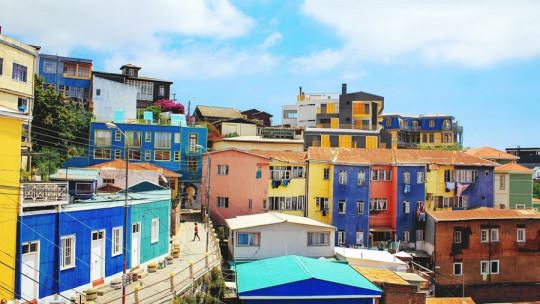
Chile is the longest country in southern America and one of the countries of which the ancient Inca empire was part; Due to its location and history, its society is the product of an important mix of cultures and lineages.
In this article you will find a list of the most common surnames in Chile which explains the meaning and origin of these words associated with the family.
The most frequent surnames in Chile
In Chile there are many traces of the indigenous world before the arrival of the conquerors, although today we can see the influence of Spanish culture in this territory in the names of the people who live here.
To get closer to Chilean culture, in this article we bring the most common surnames in Chile that demonstrate the passage of time in this land and the mix of its cultures.
1. Alvarado
It comes from the Germanic name ‘Allawarja’ which means ‘he who guards’ but it is also associated with the Latin word ‘albus’ which literally translates as ‘white’.
2. Warrior
It is an old Spanish word that referred to a dynasty of soldiers in a family.
3. Farias
It is a derivation of the word lighthouse. But it is believed that it was also a name for watchtowers in the Middle Ages.
4. Jara
It is said that it is a surname of Arab and Syrian origin, it arrived in Spain with the conquest of the Muslims. It means ‘hammer grip’.
5. Donoso
It was an adjective to describe a person’s beauty and attractive personality. It means ‘provided with qualities’.
6. Red
It comes from the Latin word ‘rubeus’ which means both blonde and red. Others point out that it comes from russeus which translates as embodied or very alive.
7. Muñoz
It is a patronymic name that means ‘son of Muno’. It comes from an ancient word that refers to ‘walling’.
8. Medina
It comes from the proper name of a city in Saudi Arabia and was a reference to name other cities.
9. Poblete
It has its origin in the Latin root ‘populetum’, which means ‘grove of elms’.
10. Pine
It is a toponymic surname, which refers to the pine trees and the people who lived near them.
11. Bull
Despite what one may believe at first impression. This surname is a name for high lands. It comes from the Spanish root ‘tor-‘ or ‘tur’
12. Carvajal
It comes from a Leonese term: ‘carvajo’ and refers to oak trees.
13. Busts
It is a surname of Basque origin and is a reference to people when they got wet, like ‘bustituá or wet’.
14. Quezada
It is thought to be a surname that comes from southern Iran and popularized by Emperor All Sri Abuett Du Falternum. Its meaning is ‘the hill of sand’.
15. Cardenas
It is the feminine plural word for ‘cardeno’, which means ‘violet blue’.
16. Godoy
It is a surname that has its roots in the Greek language and means ‘the place of the Goths’ that is, a reference to the territories that the Arabs conquered.
17. Valdes
It is a surname that comes from Asturias, as a toponymic name that refers to the capital of the council of Valdés.
18. Lakes
It comes from the Aragonese language and refers to the concavities that are filled with water.
19. Leiva
It is a toponymic surname that refers to the population of La Rioja.
20. Saez
It is one of the variations of the masculine name Sancho, which comes from the Latin ‘Sanctus’.
21. Pena
It means ‘stone or rock’ and is a toponymic surname that was given to people who lived near rocky areas.
22. Saavedra
It has two toponymic references. One from the Low-Latin word ‘sala’ meaning ‘an old room’. It also refers to Sita, a place in the province of Ourense.
23. Guzman
It is a geographical surname, since it was a way of calling people who were originally from the village of Guzmán in the province of Burgos, in Spain.
24. Pizarro
It is another geographical name that was given to people who came from the town of Pizarro, in the province of Cáceres.
25. Rosemary
This is a way of referring to the people who made a pilgrimage to Rome during the Middle Ages.
26. Arriagada
It is a surname of Navarrese origin, it comes from the Basque word that means ‘agate stone’.
27. Gallardo
It comes from the Gallic word ‘gal’ which means ‘strong’, ‘robust’ or ‘stocky’. It is constituted as a French surname ‘Gaillard’.
28. Zúñiga
It comes from the Basque word ‘estugune’, which refers to ‘narrow channel’.
29. Gonzalez
It comes from the proper masculine name ‘Gonzalo’, which is changed to a patronymic surname such as ‘son of Gonzalo’.
30. Ortiz
It is a patronymic surname that refers to ‘son of Ortún’, which means ‘he who is lucky’.
31. Vera
It is a geographical surname that brings together all the people who come from various places in Spain with this same name.
32. Fields
It is related to the place where people lived near the green fields. It comes from the Latin ‘campus’ which means ‘large piece of land’.
33. Garcia
It is a Spanish proper name that is also used as a surname. It comes from the Basque ‘artz or hartz’ which means ‘bear’.
34. Inostroza
Many think that this surname originated by mistake in Chile, since It may be a misspelling of the surname ‘Hinestrosa’ which comes from a town in the Castellano-Leonesa province of Burgos.
35. Figueroa
It is a surname that derives from the Spanish ‘higuera’ and the Portuguese figueira’. Which literally translates as ‘fig tree’.
36. Miranda
It means ‘he who is charming and admired’, coming from the Latin word ‘mirandus’.
37. Gomez
It originally comes from the German word ‘gumaz’, which means ‘man’. It was later derived as a proper name ‘Gome or Gomo’.
38. Nunez
It is one of the variants of the Latin word ‘Nonius’, which means ‘the ninth’, so it is a reference to the ninth son of a family.
39. Rivera
It comes from ancient Spanish and is the way to describe torrents of water or mountain rivers.
40. Valdivia
It is a toponymic surname that comes from the Ibia Valley in Palencia. Whose meaning in the Basque language is ‘hillside ford’.
41. Courteous
It comes from the French word ‘curteis’, which indicated a kind person who denoted very good education.
42. Kings
It has two possible origins. One as a nickname for those who worked for the king or in the royal households and for those who were born on Three Kings’ Day.
43. Tapia
Its origin is that of a pre-Roman word that meant ‘fenced’. That is, a wall that was used to surround land.
44. Vargas
Its meaning is ‘hut or slope’ and comes from a Cantabrian word ‘varga’.
45. Sanchez
This is one of the variations of Sancus, an ancient Roman god that represented loyalty.
46. Fernandez
It comes from the proper name Fernando, a Spanish variant of an originally German name. Whose meaning is ‘the brave traveler’.
47. Valenzuela
It is one of the variants for the name ‘son of a Basque’. It is derived from the name ‘Velasco’ which in old Spanish means ‘crow’.
48. Alarcón
It is a toponymic surname from a region of the same name located in Spain. It is believed that it could have originated from the Arabic word ‘al-‘urqub’, which means ‘turn of the road’.
49. Gutierrez
It comes from the Germanic name ‘Walter’, which was derived from this Spanish variant. Its meaning is ‘he who is the leader of an army’.
50. Flowers
It originates from the Latin proper name ‘florus’, which in turn derives from the words ‘flos or floris’, which refers to flowers.
51. Castro
This surname is related to an old Roman structure that served as offensive buildings. These were found in Spain and come from the Latin ‘castrum’, which was later taken as a toponymic surname by nearby settlers.
52. Farias
It originally comes from the Portuguese ‘Faria’, which is a derivation for ‘lighthouse’. An old name for guard buildings.
53. Morales
This is a reference that was made in the fields where blackberries were planted or for the forests where it occurred naturally.
54. Rodriguez
It is a patronymic surname from Rodrigo, which means ‘children of Rodrigo’. It can also be translated as ‘powerful because of his fame’.
55. Sepulveda
This surname comes from the Latin root ‘sepultare’, which is the place where graves were made.
56. Contreras
It has two origins. One that comes from the Latin ‘contraria’, which refers to a ‘surrounding region’. Another origin is that of a topographic surname for people who come from the Conteraras region, in the province of Burgos.
57. Perez
It is a patronymic surname that means ‘son of Peter’. Which arises from the Greek root ‘petros’ which means ‘stone’.
58. Soto
It is an old Spanish name that refers to bushes.
59. Diaz
It is a patronymic surname that comes from ‘Diego’, which in turn derives from the Hebrew name ‘Ya’akov’. Its meaning is ‘held by the heel’.
60. Martinez
It is one of the variants of Martin, which comes from the Latin ‘Martinus’, which can be translated as ‘consecrated to the god Mars’.
61. Benavides
It is a French surname that originates from two words ‘bonne’ and ‘vie’, which together mean ‘good life’.
62. New
It is a toponymic surname with the same name and comes from the Latin ‘nonus’, which means new. So it translates as ‘new town’.
63. Castle
It was very popular in the Iberian Peninsula when it was under Roman control. It comes from the Latin word ‘castellum’.
64. Lopez
It derives from the Latin ‘lupus’, which became a proper name like ‘Lope’, but retaining its meaning: ‘wolf’.
65. Hernandez
It comes from the German proper name ‘Firthunands’, which led to the Spanish variant ‘Hernando’ or ‘Fernando’. Its meaning is ‘the bold peacemaker’.
66. Silva
It comes from the Spanish word ‘selva’, a toponymic surname for people who lived near jungles.
67. Towers
It derives from the Spanish word ‘tower’, becoming its plural. It is a surname given to people who lived near a tower or worked in one.
68. Vasquez
It is another of the variants for ‘son of a Basque’. Which is a toponymic surname for those who came from the Basque region.
69. Herrera
It started out as a nickname for people who worked with metals. It comes from the Latin ‘ferrum’ which means ‘iron’.
70. Espinoza
It is the feminine variant of the homonymous word ‘prickly’. So it refers to a plant that has thorns.
71. Alvarez
It has its origin in the Norse language ‘Álvaro’, which translates as ‘the warrior and sleeping elf’.
72. Santana
It is a surname that has no meaning of its own. It was awarded to orphans who came from the Hospice of Las Palmas de Gran Canaria, which was under the religious protection of Santa Ana.
73. Loyola
It is a word that is composed of two Basque words: ‘lo(h)i’, which means ‘mud’ and ‘ol(h)a’ which is a suffix for ‘everyone’s place’.
74. Carrasco
It comes from a vulgar Spanish word for the kermes oak, a very characteristic shrub for its bright green leaves that last all year round.
75. Vega
It comes from the Spanish word ‘vaica’, which refers to fertile and large lands.
76. Vergara
It comes from the Basque language ‘Bergara’, a toponymic name for the ‘Guipuzcoan’ population Its meaning is ‘elevated garden among brambles’.
77. Riquelme
It is a surname that has a Germanic origin, which means ‘one who is protector’ or ‘one who possesses wealth’.
78. Bravo
It was an old Castilian nickname for people with a bad character. But then it became a nickname for those who were brave.
79. Olive Groves
It comes from the Spanish word ‘olivar’, which refers to olive groves.
80. Sandoval
It comes from two Latin words: ‘saltus’ which refers to ‘forest or clearing’ and ‘novalis’ which means ‘untilled land’.
81. Orellana
This name comes from two Basque words: ‘oro’, which means ‘oats’ and ‘llana’, which can mean ‘abundance’.
82. Molina
It is a nickname that derives from those who worked as millers or for those who owned a mill.
83. Jaramillo
It comes from the Spanish form for the Hebrew word: ‘jrm’, which means ‘the consecrated one’ or ‘the dedicated one’.
84. Garrido
It is said to be a Spanish distortion for ‘warrior’, a nickname for people who had a lot of experience in fighting or battles.
85. Navarro
Its meaning is ‘plain that is full of forests’. It is a toponymic surname to refer to all people who come from Navarra.
86. Salazar
It is a Basque variant of the surname ‘Saavedra’, as well as an adaptation to Spanish for the Basque ‘Zaraitzu’.
87. Henriquez
It has its origins in the Germanic proper name ‘Henricus’. Composed of the words ‘haim’, which means ‘home or homeland’ and ‘ric’ which means powerful.
88. Aguilera
It comes from the Spanish noun ‘eagle’ and means ‘place where eagles live’.
89. Lizama
It may come from the Spanish words: ‘leiza’ and ‘ama’, which means ‘the place that is at the top’.
90. Duarte
It is a patronymic surname that means ‘son of Eduardo’. Name that derives from Old English and means ‘the rich guardian’.
91. Vine
It is a surname that is associated with grape vines.
92. Escobar
It is a toponymic name that refers to some mountains that exist in the province of León.
93. Salinas
It is an occupational surname for people who worked in salt mines or who sold salt as merchants.
94. Caceres
It is its own geographical surname, which comes from the Extremaduran province of Cáceres.
95. Vidal
It originated from the Latin word ‘Vitalis’, which refers to a person who is full of life, energy or is very lively.
96. Moreno
It has its roots in the Latin word ‘maurus’, which has two meanings: a nickname for people with dark skin or for those who came from Mauritania.
97. Ruiz
It is one of the nicknames given to those named Ruy, a diminutive of Rodrigo. So its meaning is ‘son of Ruy’.
98. Palm
It is a Roman word that was used to name long, strong trees with flat branches.
99. Jimenez
It is a patronymic surname that means ‘son of Jimeno’. This is a variant of the name ‘Simón’, which comes from the Basque ‘seme’ which means ‘son’.
100. Sanhueza
Its meaning in Old Spanish is ‘raspberry’, but it also refers to the Sangüesa region in Navarra.
101. Bastias
There is no exact origin of this surname, but it is believed that it may come from France, after the storming of the Bastille, which was later degraded to Bastias.
102. Navarrete
It is a toponymic surname belonging to all the people who came from Navarrete.
103. Ortega
It is a vulgar form for the word ‘nettle’, a very popular plant due to its poisonous characteristics.
104. Bustamante
It refers to a town in Cantabria, derived from the old Spanish word ‘busto’, which refers to the grassland that cows eat.
105. Avendaño
It comes from the Basque word ‘arandanal’, which means ‘place of blueberries’.
106. Acevedo
It comes from the Portuguese ‘Azevedo’, which means ‘holly forest’ Over time the Spanish variant ‘Acevedo’ was created.
107. Sources
It is a toponymic surname to refer to people who lived near natural water sources.
108. Araya
It comes from the Basque word ‘araya’ or ‘araia’, which means ‘beautiful valley’.
109. Acuña
It has two roots: Galician ‘A Cunha’, and Italian ‘Acusani’ or ‘Accusani’, which refers to a city in Portugal.
110. Nicked
It is a very common surname in Spain and comes from the Spanish ‘mellado’, which means ‘he who has no teeth’. So it became a nickname for those who did not have dentures.
With these surnames we can see the great Spanish influence that it had in many places in Latin America.
By citing this article, you acknowledge the original source and allow readers to access the full content.
PsychologyFor. (2025). The 110 Most Common Surnames in Chile (and Their Meaning). https://psychologyfor.com/the-110-most-common-surnames-in-chile-and-their-meaning/