


See more of our articles in your search results.
Someone asked me recently what the fastest way to become smarter is. I paused, thinking about all the complex therapeutic techniques, cognitive exercises, and neuroplasticity research I could cite. But honestly? The simplest answer is also the truest one: read the right books. Not just any books—though reading broadly has its own value—but books that fundamentally change how you think, challenge your assumptions, and expand your cognitive frameworks.
I’ve spent decades studying human cognition, working with patients to develop their mental capacities, and continuously learning about how our brains process, retain, and utilize information. And here’s what I’ve discovered: intelligence isn’t a fixed trait you’re born with, it’s a capability you develop. Every time you expose your brain to new ideas, complex concepts, or different ways of thinking, you’re literally building new neural pathways. You’re making yourself smarter in measurable, meaningful ways.
But let’s be clear about what “smarter” means. I’m not talking about memorizing facts to impress people at dinner parties. I’m talking about developing critical thinking skills, understanding cognitive biases, learning how to learn more effectively, and expanding your worldview. Real intelligence is about how flexibly and effectively you can think, not how much trivia you’ve accumulated. The books I’m about to share don’t just fill your head with information—they change how your brain processes that information.
Through my years of practice, I’ve recommended countless books to patients, students, and colleagues. Some books are forgettable. Others are transformative. The twelve I’m sharing today fall firmly in the second category. These are books that have shaped my own thinking, that I’ve seen change how people approach problems, make decisions, and understand themselves and the world around them. Each one offers something unique, whether it’s insight into human psychology, tools for better thinking, or perspectives that challenge conventional wisdom.
What I love about this particular selection is the diversity. You’ll find books about cognitive science, behavioral economics, human history, memory, and decision-making. Some are deeply scientific, others more philosophical. Some are dense and require careful reading, others are surprisingly accessible and entertaining. But all of them will make you think differently. And thinking differently? That’s the foundation of becoming genuinely smarter. Let me walk you through each one and explain why it deserves a place on your reading list.
Top 12 Critical Thinking & Human Behavior Books
Verified Top Picks- 1
 Daniel Kahneman Thinking, Fast and Slow Nobel-winning insights into the two systems that drive human thoughtCHECK TODAY'S PRICE
 - 2
 Yuval Noah Harari Sapiens: A Brief History of Humankind A groundbreaking survey of the history and biological evolution of humankindCHECK TODAY'S PRICE
 - 3
 Rolf Dobelli The Art of Thinking Clearly Essential cognitive errors explained to help you make better decisionsCHECK TODAY'S PRICE
 - 4
 Joshua Foer Moonwalking with Einstein The art and science of remembering everything and mental athletic trainingCHECK TODAY'S PRICE
 - 5
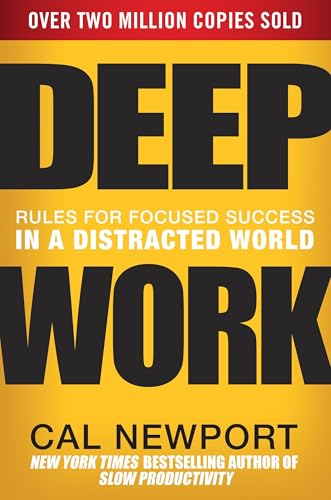 Cal Newport Deep Work Rules for focused success and high productivity in a distracted worldCHECK TODAY'S PRICE
 - 6
 Robert Cialdini Influence: The Psychology of Persuasion The classic science and universal principles behind why people say yesCHECK TODAY'S PRICE
 - 7
 Carl Sagan The Demon-Haunted World Science as a candle in the dark against pseudoscience and deceptionCHECK TODAY'S PRICE
 - 8
 Adler & Van Doren How to Read a Book The classic guide to intelligent reading and deep analytical comprehensionCHECK TODAY'S PRICE
 - 9
 Dan Ariely Predictably Irrational The hidden forces that shape our everyday decisionsCHECK TODAY'S PRICE
 - 10
 Adam Grant Originals How non-conformists champion new ideas and change the worldCHECK TODAY'S PRICE
 - 11
 Thaler & Sunstein Nudge Improving decisions about health, wealth, and happiness through choice architectureCHECK TODAY'S PRICE
 - 12
 Hans Rosling Factfulness Ten reasons we're wrong about the world and why things are better than you thinkCHECK TODAY'S PRICE
Thinking, Fast and Slow by Daniel Kahneman

If I could only recommend one book about how human thinking actually works, this would be it. Daniel Kahneman, a Nobel Prize-winning psychologist, spent his career studying how we make decisions and where we systematically go wrong. This book introduces the concept of two thinking systems: System 1, which is fast, intuitive, and emotional, and System 2, which is slow, deliberate, and logical.
What makes this essential reading is how it reveals the countless cognitive biases that shape our judgments without us realizing it. You think you’re making rational decisions based on facts and logic. But Kahneman shows you, with decades of research backing him up, that most of your decisions are driven by mental shortcuts and biases. The anchoring effect, availability heuristic, confirmation bias—these aren’t just academic concepts. They’re forces actively shaping every decision you make.
I use concepts from this book in therapy constantly. When patients catastrophize or make assumptions that aren’t supported by evidence, we often trace it back to System 1 thinking running unchecked. Learning to recognize when you’re operating on intuition versus deliberate analysis is transformative. It doesn’t mean System 1 is bad—intuition has its place—but knowing which system you’re using and when to engage more careful thinking makes you measurably smarter in practical ways.
The book is dense. Kahneman doesn’t dumb things down. But every page offers insights that will change how you understand your own mind. You’ll start catching yourself making the exact errors he describes. And that awareness? That’s the beginning of thinking more clearly.
Sapiens: A Brief History of Humankind by Yuval Noah Harari

This book fundamentally changed how I think about human existence. Harari takes you on a journey through the entire history of our species, from insignificant apes to the dominant force on the planet. But this isn’t just a history lesson. It’s a profound examination of what makes us human, how we’ve shaped the world, and what fiction we’ve collectively agreed to believe.
What do I mean by fiction? Harari argues that our ability to believe in shared myths—money, nations, religions, human rights—is what allowed us to cooperate in large numbers and build complex civilizations. These aren’t physical realities. They’re stories we’ve agreed to treat as real. Once you see this, you can never unsee it. You start questioning everything you’ve taken for granted about how society works.
From a psychological perspective, Sapiens is brilliant because it forces you to think beyond individual human experience and consider our species as a whole. It contextualizes so many of our behaviors, anxieties, and drives within our evolutionary history. Why are we so concerned with status? Why do we struggle with work-life balance? Why are we never quite satisfied? Harari provides evolutionary and historical context that makes these struggles make sense.
The cognitive expansion this book provides is immense. You’ll think about agriculture, capitalism, science, and empire in completely new ways. It’s the kind of book that makes you smarter by giving you frameworks for understanding massive, complex systems. And understanding systems is a crucial component of intelligence.
The Art of Thinking Clearly by Rolf Dobelli

If Kahneman’s book is a comprehensive textbook on cognitive biases, Dobelli’s is the practical field guide. This book presents 99 cognitive errors and biases, each in a short, digestible chapter with clear examples of how it plays out in real life. It’s accessible, engaging, and immediately applicable.
What I appreciate about this book is its structure. You can read it straight through or jump to chapters that address thinking errors you recognize in yourself. Dobelli doesn’t just describe these biases abstractly—he shows you exactly how they cost you money, damage relationships, and lead to poor decisions. The sunk cost fallacy, social proof, the halo effect—each chapter illuminates another way your brain misleads you.
I often assign specific chapters to patients as homework. Someone struggling with relationship decisions might read about the confirmation bias and start noticing how they selectively gather evidence to support their preexisting beliefs. Someone making career choices might benefit from understanding the sunk cost fallacy and why continuing to invest in something just because you’ve already invested doesn’t make logical sense.
This book makes you smarter by making you skeptical of your first impressions and intuitive judgments. It trains you to pause and ask: “What bias might be at play here? What am I not seeing?” That metacognitive awareness—thinking about your thinking—is a hallmark of intelligence. Dobelli gives you a comprehensive toolkit for developing it.
Moonwalking with Einstein by Joshua Foer

Memory seems like it should be a fixed capacity, right? You either have a good memory or you don’t. Joshua Foer proves that assumption completely wrong. This book chronicles his journey from journalist covering the U.S. Memory Championship to actually winning that championship a year later. It’s part memoir, part investigation into the nature of memory, and entirely fascinating.
What Foer discovers—and shares in accessible, entertaining prose—is that memory is a skill you can develop. The ancient Greeks knew this. Memory champions know this. But somehow modern society has forgotten it. He learns elaborate memory techniques, explores the neuroscience of how memory works, and demonstrates that with the right training, anyone can develop a truly remarkable memory.
From a psychological standpoint, this book is important because memory is foundational to intelligence. You can’t think deeply about complex topics without being able to hold relevant information in your mind. You can’t learn effectively if you can’t remember what you’ve studied. Improving your memory literally expands your cognitive capacity.
But beyond the practical techniques—which are genuinely useful—the book explores deeper questions about memory’s role in identity and human experience. In an age where we outsource our memory to smartphones, Foer asks what we lose when we stop exercising this fundamental cognitive capability. It made me rethink my relationship with technology and memory in ways that have lasting impact.
Deep Work by Cal Newport

In a world of constant distraction, the ability to focus deeply is becoming increasingly rare and increasingly valuable. Cal Newport argues that deep work—the ability to focus without distraction on cognitively demanding tasks—is the superpower of the 21st century. This book explains why deep work matters and provides concrete strategies for cultivating it.
I see the impact of fragmented attention in my practice constantly. Patients struggle to read books, complete projects, or think through complex problems because their attention has been fractured by social media, email, and endless notifications. They’re not less intelligent than previous generations—they’re just operating in an environment that makes sustained focus nearly impossible.
Newport’s book is part diagnosis of the problem and part prescription for solving it. He distinguishes between deep work and shallow work, explains why our brains aren’t meant for constant task-switching, and provides practical routines and philosophies for protecting your cognitive resources. The ability to focus is a skill that can be trained, and this book gives you the roadmap.
What makes you smarter isn’t just what you know—it’s your capacity to engage deeply with complex material and produce meaningful output. Newport shows you how to create the conditions for that engagement. I’ve implemented many of his suggestions in my own life, from scheduling deep work blocks to radically reducing digital distractions. The impact on both productivity and the quality of my thinking has been substantial.
Influence: The Psychology of Persuasion by Robert Cialdini

Understanding how persuasion works doesn’t just make you better at convincing others—it makes you dramatically smarter about when others are trying to convince you. Robert Cialdini spent years studying the psychology of compliance and distilled his findings into six core principles: reciprocity, commitment and consistency, social proof, authority, liking, and scarcity. These principles operate below our conscious awareness, triggering automatic responses that bypass rational analysis.
What makes this book essential is how Cialdini combines rigorous research with compelling real-world examples. You’ll learn why free samples are so effective, why we struggle to walk away from bad investments, and why scarcity creates urgency. More importantly, you’ll start recognizing these techniques when they’re being used on you.
From a mental health perspective, understanding persuasion is crucial for maintaining autonomy and making decisions aligned with your actual values rather than someone else’s agenda. I’ve had patients who struggled with boundary-setting because they were unconsciously responding to reciprocity pressure. Once they understood the principle—that receiving creates obligation—they could recognize it and resist it.
This book makes you smarter by revealing the invisible architecture of influence surrounding you constantly. Advertisers, politicians, salespeople, even well-meaning friends deploy these principles. When you can see the machinery, you’re free to decide whether to go along or resist. That conscious choice is intelligence in action.
The Demon-Haunted World by Carl Sagan

Carl Sagan was passionate about scientific thinking as an antidote to superstition, pseudoscience, and fuzzy thinking. This book, written near the end of his life, is his passionate defense of skepticism and critical thinking. Sagan argues that in an age of increasing technological complexity and decreasing scientific literacy, the ability to think scientifically isn’t optional—it’s essential for democracy and human flourishing.
What I love about this book is Sagan’s balanced approach. He’s not coldly dismissive of human longing for meaning or wonder. He simply argues that real understanding provides deeper satisfaction than comfortable illusions. He introduces the “baloney detection kit”—a set of tools for evaluating claims and avoiding deception. These tools are practical, accessible, and immediately useful.
In my practice, I encounter magical thinking regularly. Not just obvious superstitions, but subtle cognitive distortions where people believe things without evidence because they want them to be true. Sagan’s book provides a compassionate framework for questioning beliefs and requiring evidence. Scientific thinking isn’t about being cynical—it’s about being curious and demanding that extraordinary claims come with extraordinary evidence.
This book makes you smarter by training your skepticism without making you closed-minded. You learn to ask better questions, evaluate sources, understand how science works, and distinguish between what we know and what we wish to be true. In an era of misinformation, these skills are more valuable than ever.
How to Read a Book by Mortimer J. Adler and Charles Van Doren

Yes, a book about reading books. It sounds almost comical, but this might be the most practically valuable book on this list. Most people think reading is a simple, uniform skill you master in elementary school. Adler and Van Doren demonstrate that there are actually multiple levels of reading, from elementary to inspectional to analytical to syntopical, and most people never progress beyond basic comprehension.
The book teaches you how to actively engage with texts, how to determine what kind of reading different books require, and how to extract maximum value from your reading time. It’s particularly valuable for reading difficult books—philosophy, science, complex literature—where passive reading leaves you confused and frustrated.
I recommend this book to patients who want to learn more effectively. It’s also crucial for anyone doing research or needing to synthesize information from multiple sources. The syntopical reading section—how to read multiple books on the same topic and construct your own understanding—is brilliantly useful for deep learning.
What makes you smarter isn’t just reading more books. It’s reading better, engaging more deeply, and actually understanding and retaining what you read. This book gives you the methodology to do that. After reading it, every other book on this list will yield more value because you’ll know how to approach it strategically.
Predictably Irrational by Dan Ariely

Dan Ariely’s research in behavioral economics reveals that humans aren’t just occasionally irrational—we’re predictably irrational in consistent, measurable ways. This book explores the hidden forces that shape our decisions, from the power of “free” to the influence of expectations to the impact of social norms versus market norms.
What makes Ariely’s work fascinating is his experimental approach. He doesn’t just theorize—he designs clever experiments that reveal our biases in action. You’ll learn why we overvalue things we own, why we procrastinate even when it costs us, and why placebos work even when we know they’re placebos.
This book complements Kahneman’s work but with more focus on social and economic behavior. I use Ariely’s research frequently when discussing decision-making with patients. Someone struggling with spending habits might benefit from understanding how “free” triggers irrational decisions. Someone struggling with procrastination needs to understand that our present self and future self have different priorities, and we consistently underestimate how much our future self will want to procrastinate too.
Becoming smarter means recognizing your irrational patterns and building systems that account for them. You can’t reason your way out of being human, but you can design your environment and choices to mitigate your predictable irrationality. Ariely shows you how.
Originals by Adam Grant
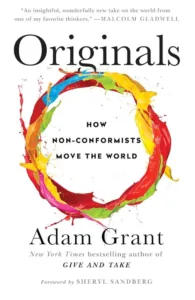
Adam Grant studies organizational psychology, and this book explores how non-conformists move the world forward. Original thinkers aren’t necessarily more creative or intelligent than everyone else—they just think and act differently in specific ways. Grant breaks down what makes people capable of generating and championing novel ideas.
What’s surprising about his findings is that originals aren’t the wild risk-takers you might imagine. They actually fear failure as much as anyone. What distinguishes them is how they manage that fear and persist through obstacles. They generate lots of ideas rather than waiting for one perfect one. They seek feedback from peers rather than superiors. They know when to conform and when to rebel.
This book is valuable for anyone who wants to think more creatively or bring new ideas into the world. Grant provides concrete strategies backed by research rather than vague inspiration. You’ll learn about the optimal timing for innovation, how to build alliances for change, and why being anxious can actually fuel original thinking while being apathetic kills it.
Intelligence isn’t just about understanding existing ideas—it’s about generating new ones. This book teaches you the psychology and strategy of original thinking in ways you can immediately apply to work, relationships, or personal projects.
Nudge by Richard Thaler and Cass Sunstein

Thaler and Sunstein explore how small changes in how choices are presented—nudges—can dramatically influence decisions without restricting freedom. This book sits at the intersection of psychology, economics, and public policy, examining how we can design better choice architecture to help people make decisions aligned with their own goals.
The concept of nudging reveals that humans aren’t the rational actors traditional economics assumed. We’re influenced by defaults, framing effects, and the structure of our choices. But rather than seeing this as a flaw to bemoan, Thaler and Sunstein show how we can use these insights beneficially. Automatic enrollment in retirement plans increases savings. Better food placement in cafeterias improves nutrition. Opt-out organ donation systems save lives.
From a psychological perspective, this book is crucial because it demonstrates that willpower and knowledge aren’t enough. You can understand perfectly well that you should save for retirement, exercise regularly, and eat healthily, but if your environment isn’t structured to support those choices, you’ll struggle. Nudge teaches you to design your own choice architecture.
I help patients implement personal nudges constantly. Putting your phone in another room nudges you toward better sleep. Having exercise clothes ready nudges you toward working out. Making healthy food more visible and convenient nudges better eating. This book makes you smarter by teaching you that intelligence includes designing environments that support your goals rather than relying solely on self-discipline.
Factfulness by Hans Rosling

Hans Rosling spent his career trying to correct people’s dramatically pessimistic and inaccurate views about the state of the world. This book presents ten instincts that distort our perspective—from the gap instinct that makes us see everything as divided into two groups to the negativity instinct that makes us notice bad news more than gradual improvement.
What’s remarkable about Factfulness is how comprehensively wrong most people are about basic facts regarding global health, poverty, education, and progress. Highly educated people consistently perform worse than random chance when answering questions about the world. Why? Because our instincts, combined with media coverage that focuses on dramatic negative events, create a distorted worldview.
Rosling provides data-driven reality checks and teaches you how to ask better questions and seek more accurate information. The result is what he calls a fact-based worldview—not naively optimistic, but accurate. The world has serious problems, but it’s also dramatically better than it was, and understanding that progress is crucial for maintaining motivation to continue improving.
This book makes you smarter by revealing how profoundly your instincts mislead you about basic facts. Once you understand these instincts—the negativity instinct, the fear instinct, the size instinct—you can compensate for them and see the world more clearly. Clear seeing is fundamental to intelligence.
FAQs about the Best Books to Be Smarter
Can reading books actually make you smarter?
Yes, absolutely. Reading, particularly books that challenge your thinking and introduce new concepts, literally changes your brain. Each time you learn something new or think through complex ideas, you create and strengthen neural pathways. Reading expands your vocabulary, improves your ability to understand different perspectives, enhances your critical thinking skills, and increases your knowledge base. The key is reading actively and engaging with material that pushes you beyond your current understanding. Passively reading easy material won’t challenge your brain much, but tackling complex, well-written books creates the cognitive demand that drives intellectual growth.
How should I read these books to get the most benefit?
Read actively, not passively. Take notes, highlight key passages, and pause to reflect on how concepts apply to your own life. Don’t just consume information—engage with it critically by questioning assumptions, connecting ideas to what you already know, and considering counterarguments. For dense books like “Thinking, Fast and Slow,” you might read slowly, tackling one chapter at a time and giving yourself space to absorb the material. For more accessible books, you might read straight through and then revisit sections that particularly resonated. Consider discussing these books with others, as conversation deepens understanding and reveals perspectives you might miss alone.
Do I need to read all twelve books to become smarter?
No, you don’t need to read all twelve, but each offers unique value. Start with whichever topics interest you most or address areas where you want to develop. If you struggle with decision-making, start with Kahneman or Ariely. If you want historical perspective, begin with Harari or Rosling. If focus is your challenge, Deep Work is your starting point. Reading even one or two of these books thoughtfully will expand your thinking significantly. Quality of engagement matters more than quantity. One book read deeply and applied practically does more for your intelligence than twelve books skimmed superficially.
Are these books too difficult for someone without a psychology or science background?
Most of these books are written for general audiences and don’t require specialized background knowledge. Harari, Dobelli, Foer, and Ariely are particularly accessible and entertaining. Kahneman and Thaler are denser but still readable with attention and patience. Part of becoming smarter is stretching yourself to understand material that initially seems challenging. If you encounter concepts you don’t understand, that’s normal—look them up, reread passages, or supplement with simpler explanations. The effort you invest in understanding difficult material is precisely what develops your cognitive capabilities.
How long will it take to read all these books?
It depends on your reading speed and available time, but most people could read all twelve in 6-12 months at a pace of one book per month. However, rushing through them defeats the purpose. The goal isn’t to finish quickly but to genuinely absorb and integrate the ideas. Some people prefer reading multiple books simultaneously, others focus on one at a time. Some books warrant slower reading and rereading. Kahneman and Adler/Van Doren particularly benefit from careful study rather than rapid consumption. Create a reading schedule that allows for reflection and application, not just completion.
Can I listen to these books as audiobooks instead of reading them?
Yes, though some books work better in audio than others. Narrative books like “Moonwalking with Einstein” and “Sapiens” are excellent as audiobooks. Books with complex diagrams, dense concepts, or material you’ll want to reference, like “Thinking, Fast and Slow” or “How to Read a Book,” are better in physical or digital text format where you can highlight and revisit passages. Many people effectively combine formats, listening during commutes and reading physical copies for deeper study. The key is engaging actively with the material regardless of format. Take notes, pause to reflect, and revisit sections rather than letting the content wash over you passively.
Will these books help with practical intelligence or just academic knowledge?
These books are intensely practical. They’re not about accumulating trivia but about developing thinking skills you use constantly. Understanding cognitive biases helps you make better decisions about money, relationships, and career. Learning about influence helps you resist manipulation. Developing focus helps you accomplish meaningful work. Understanding memory techniques helps you learn more effectively. Every book on this list has direct applications to everyday life. The difference between academic knowledge and practical intelligence is whether you apply what you learn, and these books are specifically designed to be applicable.
What order should I read these books in?
There’s no single correct order, but I’d suggest starting with “The Art of Thinking Clearly” or “Predictably Irrational” as accessible introductions to cognitive biases and decision-making. Follow with “Thinking, Fast and Slow” for deeper understanding of the same themes. Read “How to Read a Book” early in your journey to improve how you approach all subsequent reading. “Deep Work” works well early too, as it helps you create the focus necessary for engaging with the other books. Save denser books like “Influence” and “Nudge” for when you’ve built momentum. “Sapiens” and “Factfulness” can go anywhere as they’re engaging and provide broader perspective. “Moonwalking with Einstein” and “Originals” work well as breaks between heavier material.
Are there books I should read after completing these twelve?
Absolutely. These twelve provide an excellent foundation, but learning never stops. After these, consider “The Righteous Mind” by Jonathan Haidt for understanding moral psychology, “Antifragile” by Nassim Taleb for thinking about resilience and uncertainty, “The Structure of Scientific Revolutions” by Thomas Kuhn for understanding how knowledge progresses, and “Gödel, Escher, Bach” by Douglas Hofstadter for exploring consciousness and cognition. You might also explore classic philosophy, literature, and science writing. The goal isn’t to finish learning but to develop a continuous practice of reading that challenges and expands your thinking.
Can these books help with mental health and emotional intelligence too?
Yes, many of them directly support mental health and emotional intelligence development. Understanding your cognitive biases helps you recognize distorted thinking patterns common in anxiety and depression. Learning about influence and persuasion improves your ability to maintain boundaries and resist social pressure. Deep Work addresses the attention fragmentation that contributes to anxiety. Originals explores managing fear and anxiety while pursuing meaningful goals. While these aren’t therapy or replacements
Use this citation format to reference the article clearly and help readers find the original source.
PsychologyFor. (2026). The 12 Best Books to Be Smarter. PsychologyFor. https://psychologyfor.com/the-12-best-books-to-be-smarter/