


Your thoughts are already three arguments ahead of the conversation you are supposedly having, and by the time you notice, the actual moment has slipped by unnoticed. That constant mental drift, replaying yesterday and rehearsing tomorrow, is exhausting in a way that rarely gets named directly. Mindfulness is the trained ability to notice that drift and return attention to what is actually happening right now, and it turns out to be a skill almost anyone can build. It is not magic.
The frustrating part is that most advice about mindfulness stays frustratingly vague, telling you to “be present” without ever explaining how that actually works moment to moment. Real change tends to come from sustained mindfulness practice guided by someone who has already mapped the terrain, whether that person is a clinical researcher, a Buddhist monk, or a skeptical journalist who tried mindfulness reluctantly and kept a careful record of what happened. The right book can function almost like that guide, translating an abstract idea into specific, repeatable steps you can actually follow. Pick the wrong one, though, and mindfulness starts to feel like one more thing you are failing at.
So which books actually teach mindfulness in a way that sticks?
This guide reviews the 12 best mindfulness books available today, organized by the specific problem or skill each one addresses best.
The 12 Best Mindfulness Books
Verified Top Picks- 1
 Jon Kabat-Zinn Wherever You Go, There You Are: Mindfulness Meditation in Everyday Life The classic, accessible handbook defining mindfulness as nonjudgmental present-moment attentionCHECK TODAY'S PRICE
 - 2
 Jon Kabat-Zinn Full Catastrophe Living The complete eight-week clinical MBSR curriculum for navigating stress, chronic pain, and illnessCHECK TODAY'S PRICE
 - 3Thich Nhat Hanh The Miracle of Mindfulness: An Introduction to Meditation Practical Zen wisdom transforming ordinary daily chores into profound mindfulness practiceCHECK TODAY'S PRICE
- 4Bhante Henepola Gunaratana Mindfulness in Plain English The definitive, jargon-free guide to Theravada Vipassana insight meditation practiceCHECK TODAY'S PRICE
- 5Dan Harris 10% Happier A skeptical journalist's relatable account of taming the voice in his head and reducing stressCHECK TODAY'S PRICE
- 6Andy Puddicombe The Headspace Guide to Meditation and Mindfulness A former Buddhist monk distills meditation into an accessible ten-minute daily routineCHECK TODAY'S PRICE
- 7Tara Brach Radical Acceptance: Embracing Your Life With the Heart of a Buddha Blending clinical psychology with Buddhist practice using the four-step RAIN protocolCHECK TODAY'S PRICE
- 8Eckhart Tolle The Power of Now: A Guide to Spiritual Enlightenment A philosophical exploration of disentangling identity from constant mental narrationCHECK TODAY'S PRICE
- 9Mark Williams & Danny Penman Mindfulness: An Eight-Week Plan for Finding Peace in a Frantic World A structured, milestone-based program adapting MBCT techniques for general stress reliefCHECK TODAY'S PRICE
- 10Chade-Meng Tan Search Inside Yourself Applying mindfulness and emotional intelligence to corporate leadership and performanceCHECK TODAY'S PRICE
- 11Williams, Teasdale, Segal & Kabat-Zinn The Mindful Way through Depression Clinical MBCT protocols designed to interrupt depressive rumination and prevent relapseCHECK TODAY'S PRICE
- 12Christopher Germer The Mindful Path to Self-Compassion Pairing mindful awareness with deliberate self-kindness to overcome harsh self-criticismCHECK TODAY'S PRICE
What Makes a Mindfulness Book Genuinely Useful?
The strongest books in this genre share one trait: they translate abstract awareness into concrete, repeatable exercises rather than simply repeating the instruction to “pay attention” without further guidance.
Some readers respond better to clinical structure, step-by-step scripts grounded in Mindfulness-Based Stress Reduction or cognitive therapy research. Others need narrative and philosophy, writing that reframes an entire worldview rather than offering a checklist. Neither approach is inherently superior. Jon Kabat-Zinn’s secularized, research-backed mindfulness sits at one end of that spectrum, while traditional Buddhist teachers like Thich Nhat Hanh sit closer to the other, and most readers benefit from sampling both rather than committing to just one lane.
- Look for books that translate awareness into concrete, repeatable exercises rather than vague encouragement.
- Match clinical, research-based titles to readers who want structure, and philosophical titles to readers who want reframing.
- Expect honest books to admit that consistent mindfulness practice is genuinely difficult at times, not effortless.
The 12 Best Mindfulness Books to Read This Year
The following selection spans clinical stress-reduction programs, traditional Buddhist teaching, and workplace-focused mindfulness training, covering the range of approaches worth exploring depending on your specific goals.
1. Wherever You Go, There You Are: Mindfulness Meditation in Everyday Life — Jon Kabat-Zinn
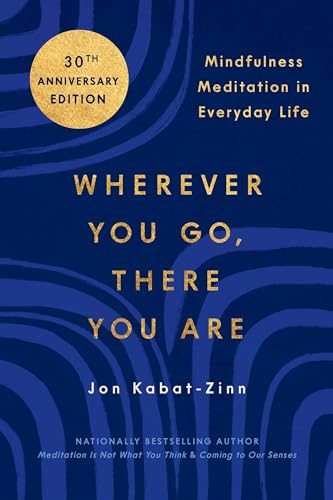
Wherever You Go, There You Are by Jon Kabat-Zinn, the scientist who founded the Mindfulness-Based Stress Reduction program, distills mindfulness into its simplest possible definition: paying attention, on purpose, in the present moment, without judgment.
Short, standalone chapters make this an easy book to return to for years rather than read once and shelve. That structure quietly mirrors the practice itself, brief returns to attention rather than one dramatic breakthrough.
- Defines mindfulness in plain, secular language accessible to total beginners.
- Uses short chapters ideal for building a habit gradually over time.
- Grounds every idea in Kabat-Zinn’s own clinical MBSR research.
2. Full Catastrophe Living: Using the Wisdom of Your Body and Mind to Face Stress, Pain, and Illness — Jon Kabat-Zinn

Full Catastrophe Living is Kabat-Zinn’s comprehensive clinical manual, built directly on the eight-week Mindfulness-Based Stress Reduction curriculum used in hospitals worldwide to help patients manage chronic pain and illness.
Unlike his shorter titles, this one includes detailed body scan scripts and structured weekly exercises. Readers managing a genuine medical condition alongside stress typically get more practical value here than from lighter, more inspirational books.
- Presents the full MBSR curriculum Kabat-Zinn developed for medical patients.
- Includes detailed body scan and breathing scripts, not general encouragement alone.
- Addresses chronic pain and illness specifically within a mindfulness framework.
3. The Miracle of Mindfulness: An Introduction to the Practice of Meditation — Thich Nhat Hanh
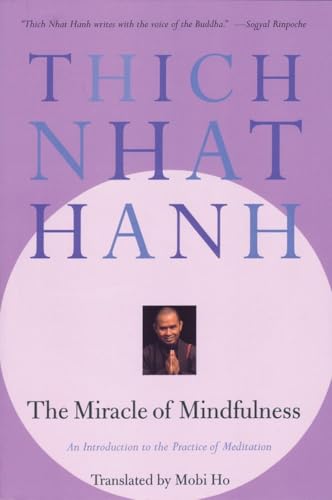
The Miracle of Mindfulness by Zen master Thich Nhat Hanh was originally written as a letter to a fellow monk working under wartime stress in Vietnam, which explains its unusually grounded, practical tone.
Hanh insists that washing dishes can become genuine practice, not a chore to rush through. That single reframe, mundane task as meditation rather than obstacle, has quietly shaped nearly every mindfulness book written since.
- Teaches that ordinary daily tasks can become genuine mindfulness practice.
- Written originally as a wartime letter, giving it unusual practical urgency.
- Requires no cushion, timer, or dedicated meditation space to begin.
4. Mindfulness in Plain English — Bhante Henepola Gunaratana
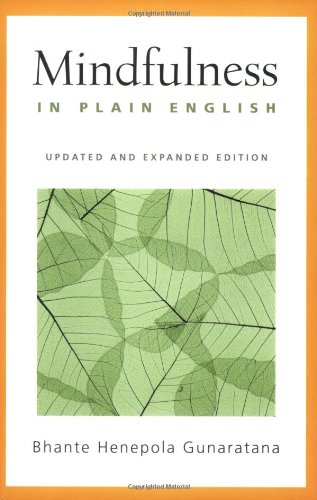
Mindfulness in Plain English by Sri Lankan monk Bhante Henepola Gunaratana translates traditional Theravada insight meditation, vipassana, into direct, jargon-free instructions without softening the underlying difficulty.
Jon Kabat-Zinn himself has called it a masterpiece, and that praise holds up well. Unlike lighter titles on this list, Gunaratana does not shy away from describing the genuinely uncomfortable stretches of sustained attention training.
- Translates traditional vipassana insight meditation into clear, modern English.
- Does not minimize the difficult, uncomfortable stretches of sustained practice.
- Respected across both secular and traditional Buddhist mindfulness communities.
5. 10% Happier: How I Tamed the Voice in My Head, Reduced Stress Without Losing My Edge, and Found Self-Help That Actually Works — Dan Harris
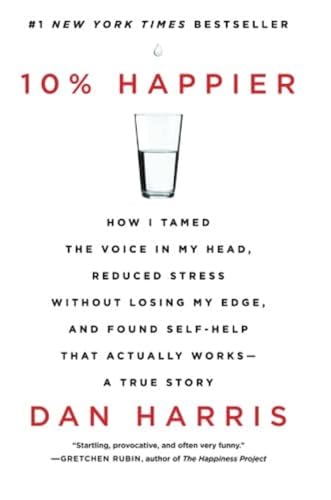
10% Happier by journalist Dan Harris chronicles his own skeptical, occasionally reluctant journey into mindfulness after suffering an on-air panic attack, offering a refreshingly unromantic account for readers who distrust spiritual language.
Harris repeatedly insists mindfulness will not make you a monk or eliminate ambition, just make you moderately calmer under pressure. That modest, unglamorous promise is exactly why the book resonates with so many skeptical readers.
- Offers a skeptical, journalist’s-eye account of starting a mindfulness practice.
- Sets realistic expectations rather than promising dramatic spiritual transformation.
- Appeals directly to readers who distrust typical self-help language.
6. The Headspace Guide to Meditation and Mindfulness — Andy Puddicombe
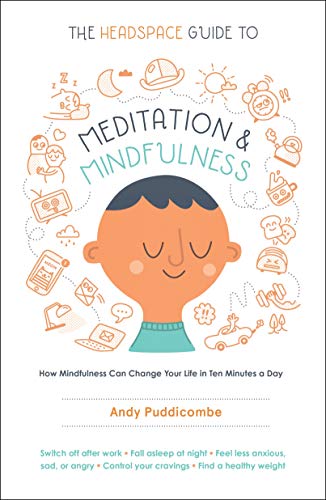
The Headspace Guide to Meditation and Mindfulness by former Buddhist monk Andy Puddicombe compresses mindfulness into an approachable ten-minute daily routine, explained through clear, non-technical analogies.
Puddicombe’s years spent training as a monk in Tibet, Nepal, and Russia give the book genuine credibility, while the tone stays light and conversational throughout, closer to a friendly chat than a formal manual.
- Breaks practice into a manageable ten-minute daily routine.
- Uses simple analogies instead of technical Buddhist or clinical vocabulary.
- Draws credibility from Puddicombe’s years training as an ordained Buddhist monk.
7. Radical Acceptance: Embracing Your Life With the Heart of a Buddha — Tara Brach
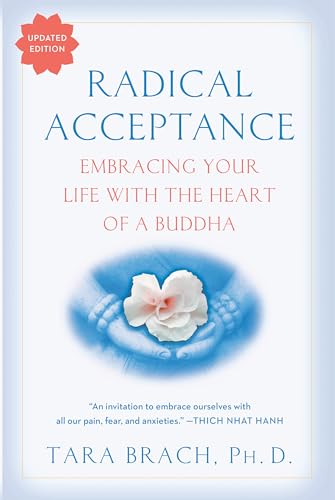
Radical Acceptance by psychologist Tara Brach blends clinical therapy training with Buddhist mindfulness practice, focusing specifically on how self-judgment and shame block genuine presence far more than external circumstances do.
Brach’s RAIN technique, recognize, allow, investigate, nurture, gives readers a repeatable structure for meeting difficult emotions with mindful awareness instead of immediately trying to suppress or fix them.
- Introduces the RAIN technique for meeting difficult emotions mindfully.
- Draws on Brach’s forty years of clinical therapy experience with real patients.
- Argues self-judgment blocks presence more than external stress itself.
8. The Power of Now: A Guide to Spiritual Enlightenment — Eckhart Tolle

The Power of Now by spiritual teacher Eckhart Tolle approaches presence from a more philosophical, less clinical angle than most titles on this list, arguing that psychological suffering exists almost entirely in relation to past and future thought.
Tolle’s central claim, that identifying too closely with the thinking mind creates unnecessary suffering, resonates with some readers and feels abstract to others. Either way, it remains one of the bestselling mindfulness-adjacent books ever published.
- Frames psychological suffering as rooted in past and future mental narration.
- Uses accessible, dialogue-style writing rather than academic or clinical structure.
- Appeals to readers drawn to spiritual framing rather than purely secular mindfulness.
9. Mindfulness: An Eight-Week Plan for Finding Peace in a Frantic World — Mark Williams and Danny Penman
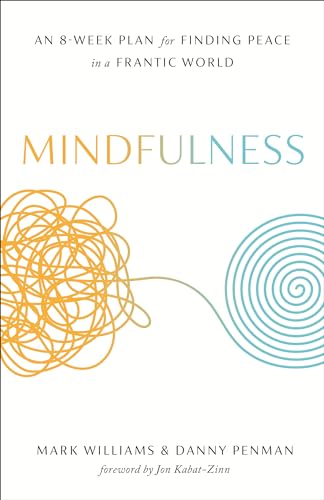
This structured guide by psychologist Mark Williams and journalist Danny Penman translates the same clinical protocol behind Mindfulness-Based Cognitive Therapy into an eight-week, self-guided program complete with daily exercises.
It reads more like a course than a philosophy book, with clear weekly milestones rather than open-ended encouragement. Readers who want structure over inspiration tend to prefer this over more narrative mindfulness titles.
- Structures practice as a clear eight-week program with daily exercises.
- Adapts clinical Mindfulness-Based Cognitive Therapy techniques for general readers.
- Suits readers who want a course format rather than open-ended philosophy.
10. Search Inside Yourself: The Unexpected Path to Achieving Success, Happiness (and World Peace) — Chade-Meng Tan
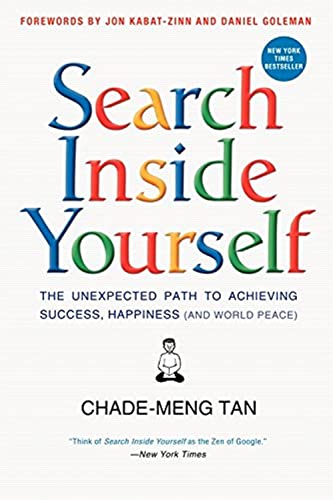
Search Inside Yourself by former Google engineer Chade-Meng Tan grew out of a mindfulness and emotional intelligence course he built for Google employees, applying contemplative practice directly to workplace performance and leadership.
The book leans heavily on Daniel Goleman’s emotional intelligence research, translating self-awareness and self-regulation into corporate-friendly language without losing the underlying contemplative substance.
- Applies mindfulness specifically to workplace performance and leadership.
- Builds on emotional intelligence research to structure self-awareness training.
- Grew directly out of a real internal Google training program.
11. The Mindful Way through Depression: Freeing Yourself from Chronic Unhappiness — Mark Williams, John Teasdale, Zindel Segal, and Jon Kabat-Zinn

Written by the four researchers who developed Mindfulness-Based Cognitive Therapy, this book explains why standard willpower-based approaches to depression often backfire, and how mindful awareness interrupts the rumination cycle instead.
Because it directly addresses clinical depression, this title carries more explicit therapeutic framing than most books on this list, including guided meditation practices designed specifically to prevent depressive relapse.
- Explains the clinical mechanism behind Mindfulness-Based Cognitive Therapy.
- Targets rumination cycles that maintain depression rather than surface symptoms alone.
- Written by the actual researchers who developed the underlying clinical protocol.
12. The Mindful Path to Self-Compassion: Freeing Yourself from Destructive Thoughts and Emotions — Christopher Germer

The Mindful Path to Self-Compassion by clinical psychologist Christopher Germer pairs mindful awareness with deliberate self-kindness, arguing that noticing difficult emotions is only half the work; responding to them without harsh self-criticism is the other half.
Germer draws on decades of clinical practice and contemplative teaching to combine both skills into a single, coherent framework rather than treating mindfulness and compassion as separate, unrelated practices.
- Combines mindful awareness with deliberate self-kindness practice.
- Addresses harsh self-criticism as a distinct target alongside general awareness.
- Grounds recommendations in decades of clinical psychology and contemplative teaching.
Which Core Mindfulness Techniques Do These Books Teach?
A handful of core mindfulness techniques repeat across nearly every book on this list, and recognizing them helps you match a specific title to the specific skill you actually want to build.
Breath-focused attention anchors almost every tradition represented here, from Thich Nhat Hanh’s mindful breathing to the structured breath exercises in Mark Williams and Danny Penman’s eight-week program. Body scanning, moving attention slowly through physical sensation from head to toe, forms the backbone of Kabat-Zinn’s MBSR curriculum and reappears in slightly different form throughout Gunaratana’s vipassana instruction. Both techniques share a common purpose: giving the wandering mind something concrete to return to, rather than asking it to simply “calm down” through sheer effort.
Cognitive defusion, noticing a thought as a mental event rather than an objective fact, shows up explicitly in the Mindfulness-Based Cognitive Therapy protocol behind The Mindful Way through Depression. It is worth noting that these techniques are not interchangeable. Someone struggling primarily with rumination will likely get more from cognitive defusion training than from body scanning alone, at least as a starting point.
- Breath-focused attention gives the wandering mind a concrete anchor point.
- Body scanning trains attention through physical sensation rather than pure thought observation.
- Cognitive defusion treats thoughts as mental events, not objective facts, reducing rumination.
How Does Mindfulness-Based Cognitive Therapy Differ From General Mindfulness?
Mindfulness-Based Cognitive Therapy, or MBCT, is a specific clinical protocol developed by researchers Mark Williams, John Teasdale, and Zindel Segal, combining traditional mindfulness training with cognitive therapy techniques designed to prevent depressive relapse.
General mindfulness books, including Kabat-Zinn’s foundational titles, focus broadly on present-moment awareness applicable to almost any source of stress. MBCT narrows that focus considerably, targeting the specific rumination patterns that pull people back into depressive episodes after they have already recovered from an initial one. Jon Kabat-Zinn himself contributed to The Mindful Way through Depression, which explains the clinical reasoning behind MBCT in language accessible to general readers rather than clinicians alone.
The distinction matters practically. Someone dealing with everyday work stress will likely get more mileage from a general mindfulness book. Someone with a history of recurring depression, however, may benefit specifically from MBCT’s structured relapse-prevention framework, ideally alongside guidance from a trained therapist rather than self-administered entirely from a book.
- MBCT specifically targets rumination patterns linked to depressive relapse.
- General mindfulness books address broad present-moment awareness for everyday stress.
- Readers with recurring depression may benefit from MBCT alongside a trained therapist.
Common Misconceptions About Mindfulness These Books Correct
Popular culture has attached considerable confusion to mindfulness, and several books on this list push back directly against the most persistent myths.
The most common misconception claims mindfulness requires emptying the mind of thought entirely. Nearly every serious teacher represented here, including Gunaratana and Kabat-Zinn, explicitly rejects that framing. Thoughts will keep arising regardless; the actual practice is noticing them and gently returning attention, not achieving total mental silence. A second myth assumes mindfulness is inherently religious and therefore incompatible with secular, evidence-based approaches. Dan Harris built an entire book around proving otherwise, approaching the practice as a skeptical journalist rather than a spiritual seeker.
A third misconception treats mindfulness as a quick fix that works identically for everyone within days. Research behind titles like Search Inside Yourself suggests benefits compound gradually with consistent practice rather than arriving all at once. Overpromising sets people up to quit exactly when consistency would have started paying off, which is a genuinely common and avoidable pattern.
- Mindfulness does not require emptying the mind; noticing and returning attention is the actual practice.
- Secular approaches from writers like Dan Harris prove mindfulness needs no religious framing.
- Benefits compound gradually with consistent practice, not instantly within days.
How Can You Build a Consistent Mindfulness Practice?
Reading about mindfulness and actually practicing it are two entirely different activities, and the gap between them is where most people quietly give up within the first month.
Andy Puddicombe’s ten-minute structure exists specifically to lower that barrier, since a shorter, non-negotiable commitment survives busy weeks far better than an ambitious hour-long session that gets skipped entirely. Mark Williams and Danny Penman’s eight-week format offers a related solution: clear weekly milestones rather than an open-ended, potentially endless commitment with no visible progress markers. Dan Harris, characteristically blunt, admits that motivation fades quickly for almost everyone, and that consistency depends far more on removing friction than on willpower alone.
A realistic approach borrows from all three. Choose a fixed, short time slot. Expect to miss days occasionally. Return without treating the lapse as failure, since brief, repeated practice appears to matter more for lasting behavioral change than occasional marathon sessions ever do.
- Choose a specific, short daily time slot rather than an idealized long session you will likely skip.
- Use a structured program with clear milestones if open-ended practice feels directionless.
- Expect occasional lapses, and resume without treating them as evidence of failure.
When Should Mindfulness Be Paired With Professional Mental Health Support?
Mindfulness helps enormously with everyday stress, but it is not designed to replace treatment for clinical depression, trauma, or severe anxiety, and knowing that distinction protects readers from unnecessary disappointment.
Books like The Mindful Way through Depression exist precisely because general mindfulness alone sometimes is not enough for people with a history of recurrent depressive episodes. If sitting quietly with your thoughts consistently triggers intense distress, flashbacks, or panic rather than gradual calm, that pattern deserves a conversation with a licensed therapist rather than continued unsupervised practice. Trauma-sensitive mindfulness exists as a specific clinical approach for exactly this reason, since standard instructions can occasionally intensify symptoms rather than soothe them for trauma survivors.
There is no failure in needing both a good book and a good clinician. Seeking professional support alongside a personal practice is a sign of self-awareness, not weakness, and several authors on this list, including Christopher Germer and Tara Brach, built their careers on exactly that integration between clinical training and contemplative practice.
- Mindfulness supplements but does not replace treatment for clinical depression or trauma.
- Intense distress during practice, rather than gradual calm, is a signal to consult a therapist.
- Trauma-sensitive approaches exist because standard instructions can sometimes intensify trauma symptoms.
Which Book Should You Start With Based on Your Goals?
Choosing where to begin depends heavily on whether your goal is general stress relief, workplace performance, clinical depression prevention, or spiritual depth.
Readers who want the most foundational, research-backed starting point should choose Wherever You Go, There You Are, since nearly every other book on this list assumes some familiarity with Kabat-Zinn’s basic framework. Readers who want structure over open-ended philosophy should choose Mindfulness: An Eight-Week Plan instead, given its clear weekly milestones and daily exercises.
Professionals interested in applying mindfulness at work specifically should prioritize Search Inside Yourself, since it was built directly for a corporate context rather than adapted after the fact. Anyone with a history of recurring depression should discuss The Mindful Way through Depression with a therapist rather than working through it entirely alone, given its clinical framing.
Readers drawn to more spiritual or philosophical framing, rather than clinical language, tend to gravitate toward The Power of Now, even though its abstractions require patience some readers find rewarding and others find frustrating. There is no universally correct starting point here. Matching the book to your actual goal matters more than picking whichever title happens to be trending.
| Reader Goal | Best Starting Book |
|---|---|
| Foundational, research-backed practice | Wherever You Go, There You Are |
| Structured, milestone-based program | Mindfulness: An Eight-Week Plan |
| Workplace and leadership application | Search Inside Yourself |
| Depression relapse prevention | The Mindful Way through Depression |
FAQs about the Best Mindfulness Books
What is the best mindfulness book for a complete beginner?
Jon Kabat-Zinn’s Wherever You Go, There You Are works well as a first book, since it defines mindfulness in plain language without assuming prior meditation experience. Andy Puddicombe’s Headspace Guide is another strong beginner option, since it breaks practice into a manageable ten minutes a day rather than an intimidating open-ended commitment. Readers who want something more structured, with clear weekly milestones instead of a looser collection of essays, often prefer Mark Williams and Danny Penman’s eight-week program. Any of the three provides a solid, honest starting point without unnecessary jargon.
Is mindfulness the same thing as meditation?
Not exactly, though the two overlap significantly. Meditation typically refers to a formal, seated practice done for a specific period of time, while mindfulness describes a broader quality of attention that can be applied during any activity, walking, eating, or washing dishes, as Thich Nhat Hanh’s writing demonstrates repeatedly. Most books on this list teach both together, using seated meditation as a training ground for the kind of present-moment awareness you then carry into ordinary daily activities outside of formal practice sessions.
Can mindfulness books actually help with anxiety and depression?
They can help meaningfully, particularly books built on clinically tested protocols like Mindfulness-Based Cognitive Therapy, described in The Mindful Way through Depression. That said, mindfulness books work best as a complement to professional treatment rather than a replacement for it, especially for moderate to severe anxiety or depression. If symptoms are significantly interfering with daily functioning, work, or relationships, consulting a licensed therapist alongside any reading is a reasonable and often necessary next step, not a sign that the book has failed you.
How long does it take to notice real benefits from mindfulness practice?
Some effects, like a modest reduction in reactive stress, can appear within a few weeks of consistent daily practice. Deeper changes in emotional regulation and rumination patterns generally take longer, often several months of sustained effort rather than weeks. Several authors on this list, including Dan Harris, are explicit about this timeline precisely to prevent readers from expecting dramatic transformation after a handful of sessions. Consistency matters considerably more than intensity, and progress rarely moves in a perfectly straight line.
What is the difference between secular mindfulness and traditional Buddhist mindfulness?
Secular mindfulness, as taught by Jon Kabat-Zinn and researchers behind programs like MBSR and MBCT, strips away religious and metaphysical context while preserving the core attention-training mechanics. Traditional Buddhist teaching, as found in Bhante Gunaratana’s or Thich Nhat Hanh’s writing, retains the original philosophical framework and ethical teachings surrounding the practice. Neither approach is objectively superior. Some readers find the secular framing more accessible for a science-oriented worldview, while others find the traditional context adds meaning and depth that a purely clinical presentation leaves out entirely.
Can mindfulness be applied specifically at work or in leadership roles?
Yes, and Search Inside Yourself by Chade-Meng Tan was written specifically for that purpose, growing out of an internal training program originally developed for Google employees. The book applies mindfulness and emotional intelligence research directly to workplace communication, decision-making under pressure, and leadership presence. Many organizations have since adapted similar programs, suggesting the underlying skills translate reasonably well beyond the original context. That said, workplace mindfulness training works best as a genuine skill-building practice rather than a superficial wellness perk disconnected from real organizational culture.
Bibliography
- Brach, T. (2004). Radical Acceptance: Embracing Your Life With the Heart of a Buddha. Bantam.
- Germer, C. K. (2009). The Mindful Path to Self-Compassion: Freeing Yourself from Destructive Thoughts and Emotions. The Guilford Press.
- Gunaratana, B. H. (1996). Mindfulness in Plain English (Revised and Expanded Edition). Wisdom Publications.
- Hanh, T. N. (1999). The Miracle of Mindfulness: An Introduction to the Practice of Meditation. Beacon Press.
- Harris, D. (2014). 10% Happier: How I Tamed the Voice in My Head, Reduced Stress Without Losing My Edge, and Found Self-Help That Actually Works. Dey Street Books.
- Kabat-Zinn, J. (2013). Full Catastrophe Living: Using the Wisdom of Your Body and Mind to Face Stress, Pain, and Illness (Revised Edition). Bantam.
- Kabat-Zinn, J. (2023). Wherever You Go, There You Are: Mindfulness Meditation in Everyday Life. Hachette Go.
- Puddicombe, A. (2016). The Headspace Guide to Meditation and Mindfulness. St. Martin’s Griffin.
- Tan, C.-M. (2012). Search Inside Yourself: The Unexpected Path to Achieving Success, Happiness (and World Peace). HarperOne.
- Tolle, E. (2004). The Power of Now: A Guide to Spiritual Enlightenment. New World Library.
- Williams, M., and Penman, D. (2012). Mindfulness: An Eight-Week Plan for Finding Peace in a Frantic World. Rodale Books.
- Williams, M., Teasdale, J., Segal, Z., and Kabat-Zinn, J. (2007). The Mindful Way through Depression: Freeing Yourself from Chronic Unhappiness. The Guilford Press.
Use this citation format to reference the article clearly and help readers find the original source.
PsychologyFor. (2026). The 12 Best Mindfulness Books. PsychologyFor. https://psychologyfor.com/the-12-best-mindfulness-books/