

See more of our articles in your search results.
Unlike other religions that have followers in a large number of countries, Hindu gods are worshiped mostly in India, where their legends originated 4,000 years ago, in the Indus Valley.
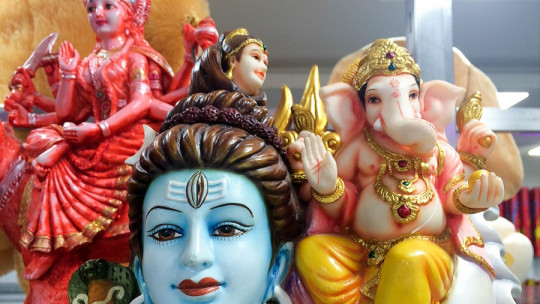
One of the most interesting differences in relation to other cultures is that Hindu gods are worshiped in daily life; They are not seen as abstract figures but as an intrinsic part of families and the community. Let’s see what they are the most representative Hindu gods of Hinduism and what is its associated mythology.
The most important Hindu gods
Hindu mythology has approximately more than 30 million gods, but obviously there are some deities that are more renowned than others and are more worshiped throughout India. Here we will review the best-known Hindu gods
1. Brahma
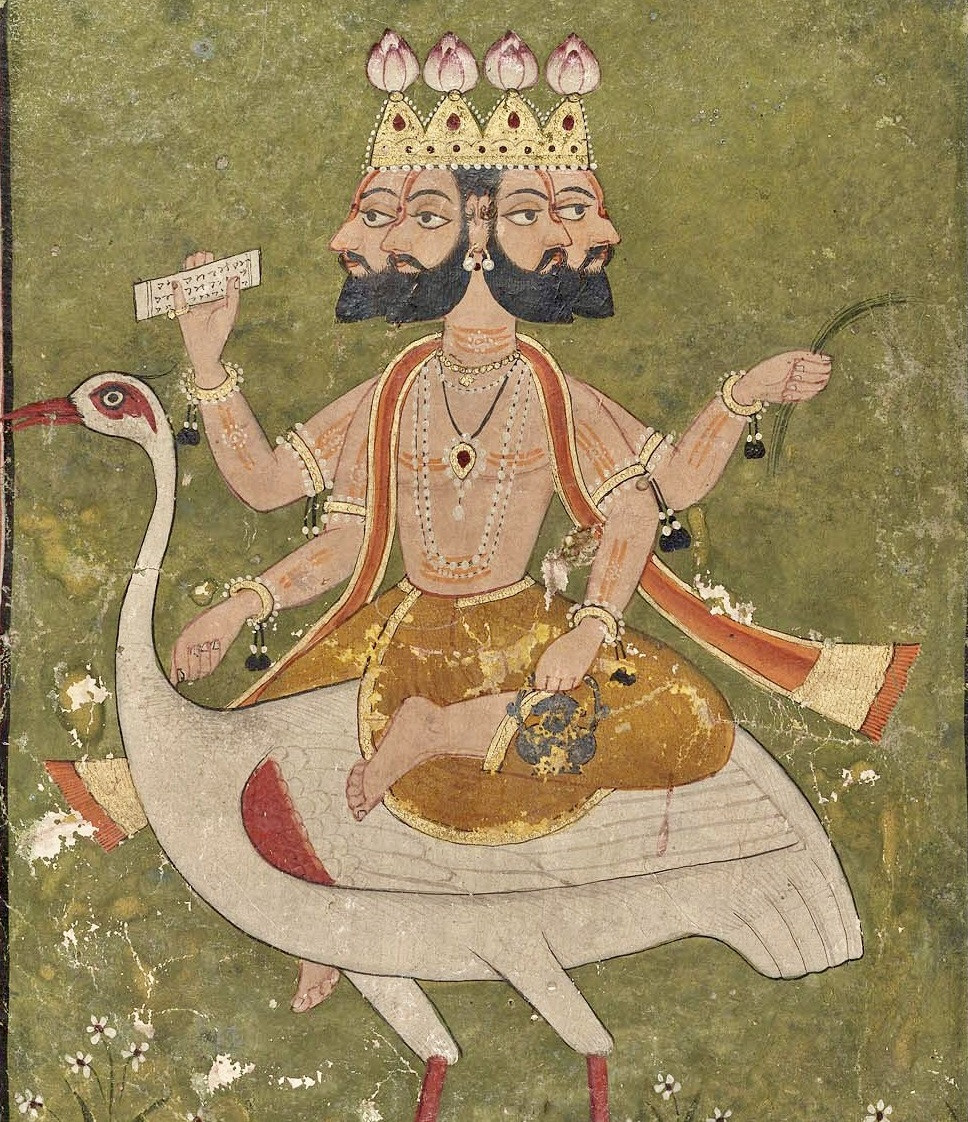
The supreme creator of the universe for Hindus is the god Brahma, who can inhabit both living beings and inanimate objects. Two other Hindu gods are derived from this god, called Deva and Devi, which represent one or more aspects of him.
So, Brahma is the creator and the first of the Hindu gods, responsible for creating everything known to man. It symbolizes a source of wisdom and represents intelligence.
How many of these have you been "meaning to read" for months?
- 1
 Irvin D. YalomThe Gift of Therapy85 practical, warm clinical insights from a master therapistListen Free On Audible
- 2
 Lori GottliebMaybe You Should Talk to SomeoneA bestselling memoir on the shared humanity of therapist and clientListen Free On Audible
- 3
 Oliver SacksThe Man Who Mistook His Wife for a HatUnforgettable clinical case studies on perception and identityListen Free On Audible
In the images it is represented with four faces which indicate his great capacity for knowledge, and four hands as a sign of the various aspects of the human personality: mind, intellect, ego and conscience.
2. Vishnu
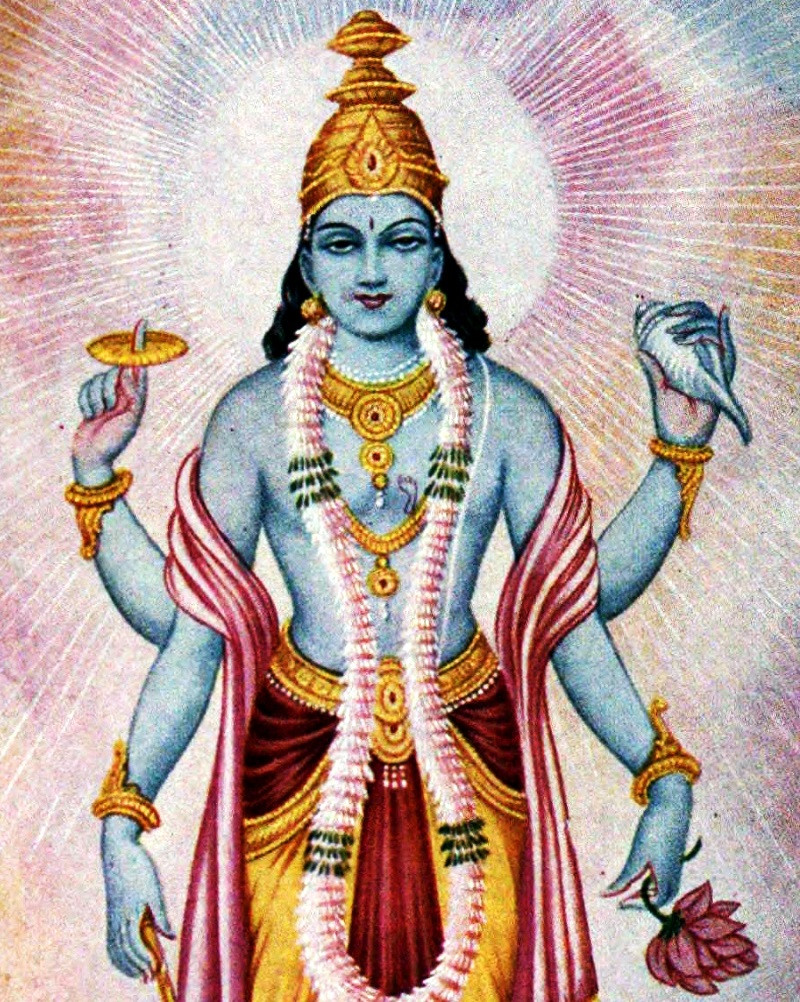
Vishnu, the Preserver, is one of the most aesthetically beautiful Hindu Gods and appreciated by the Hindu community. He is the Preserver in view of which symbolizes order, peace, and universal love Its purpose is precisely to maintain these values in the world and that is why it motivates its followers to be compassionate and kind people with their peers. This deity is usually represented with blue skin.
After Brahma, Vishnu turns out to be the second of the Hindu gods of the main trilogy, and Shiva is the third deity.
3. Shiva
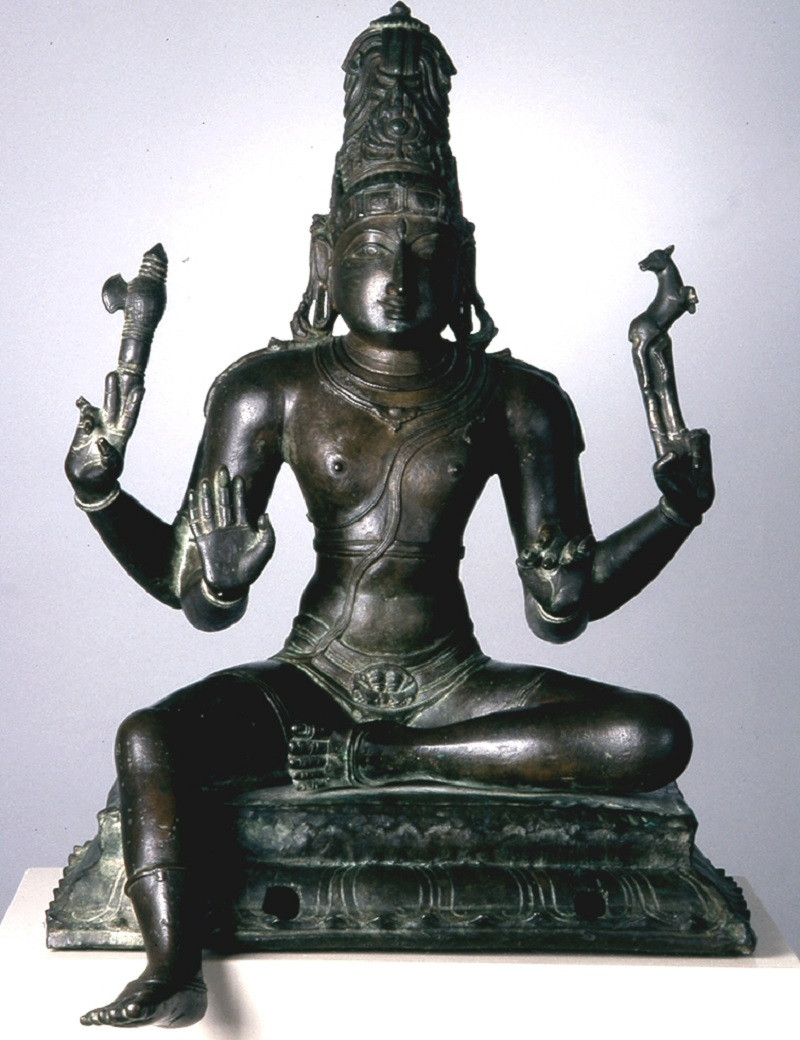
As mentioned above, Shiva is the third deity in the trinity of Hindu Gods, known as The Destroyer.
It represents the other side of the Universe with respect to Vishnu. One is the beginning of life, the other is the end. But the end seen as the possibility of everything arising again, For there to be life, there must also be death This is how it should be understood in Hindu philosophy, as a positive energy for the balance of the universe.
Shiva is also recognized as the God of Dance, an art that for Hindus has great religious and spiritual significance. The snake around his neck symbolizes life energy He has 19 reincarnations.
4. Lakshmi
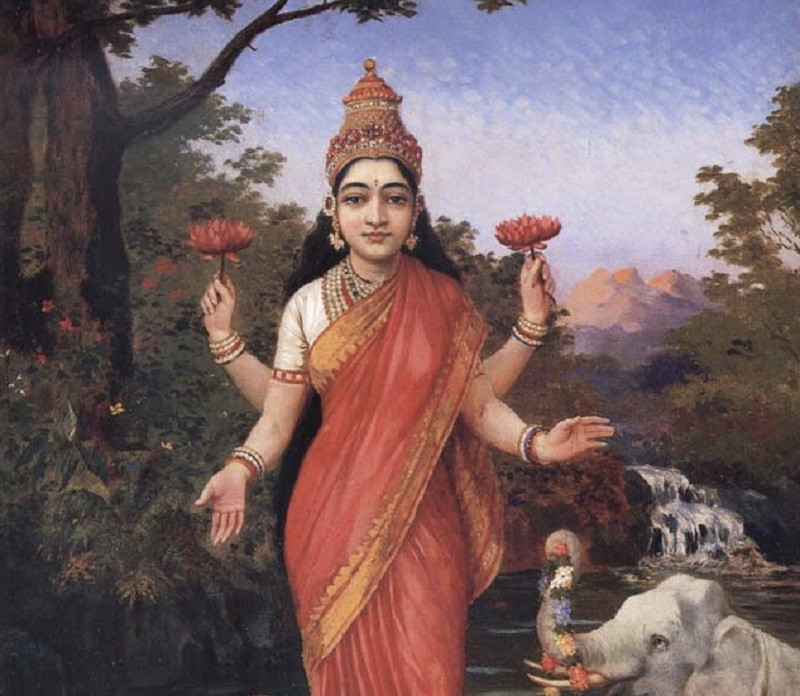
She is the wife of Vishnu, considered the goddess of fortune and beauty. She turns out to be one of the deities to whom the most homage is paid in the homes and businesses of India.
Hindu mythology tells a magnificent love story between Lakshmi and Vishnu. It is said that when one is reincarnated the other does so in the same way to stay together.
To Goddess Lakshmi She is represented as a beautiful woman with four arms and rising in a lotus flower and live where there is industry, courage and virtue.
5. Krishna
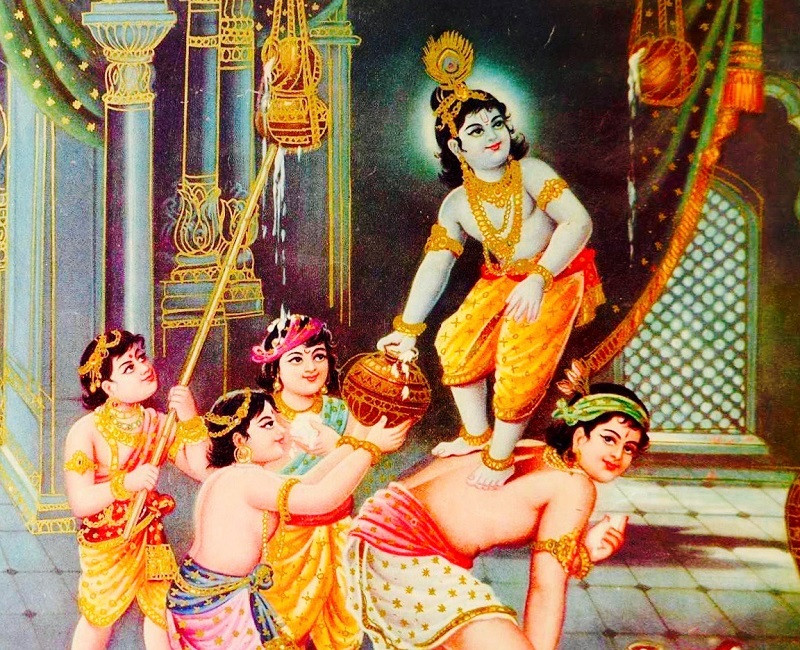
Krishna is another of the Hindu gods that the inhabitants of South Asia love the most. According to Hindu mythology she is represented as a hero, leader, teacher and friend. That is why she is called the dweller of hearts.
If we take a trip throughout India, we will be able to see a large number of sculptures and works of art that present him in human form, almost always playing a flute, because he is a very lover of music. Krishna is said to be endowed with love, and has the power to destroy pain and sins.
6. Ganesha
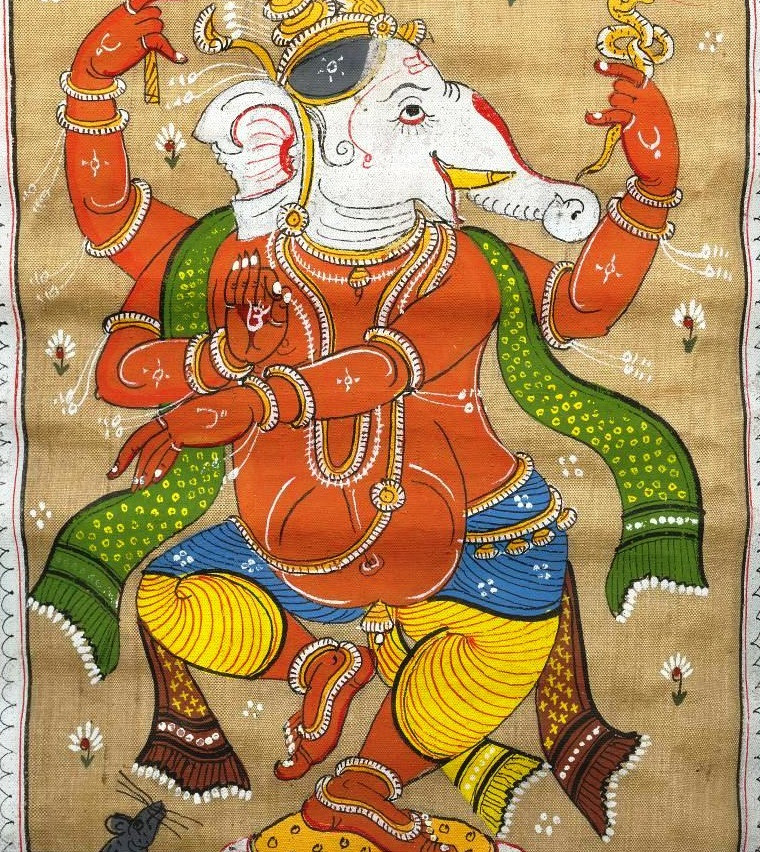
Son of Shiva and his spouse Parvati, Ganesha joins Krishna and Hanuman as one of the most popular Hindu Gods in the Indian subcontinent.
It has an elephant head with a human body, and he is considered the destroyer of obstacles and a messenger of good news. He is related to art and science, and it is even said that he is the god of intelligence.
One of the most frequent religious practices among the Hindu population is to pray to Ganesha before getting married, or when a project is going to be carried out.
7. Branch
Protagonist of one of the most famous works of Hindu literature, the Ramayana text, Rama represents an exemplary man with all his virtues: courage, kindness, devotion and piety. His function is to destroy evil and fight for good things.
He is the second most important avatar of Vishnu and his story has antecedents in Indian tribal heroes who existed thousands of years ago. He is considered a King and a God.

8. Hanuman
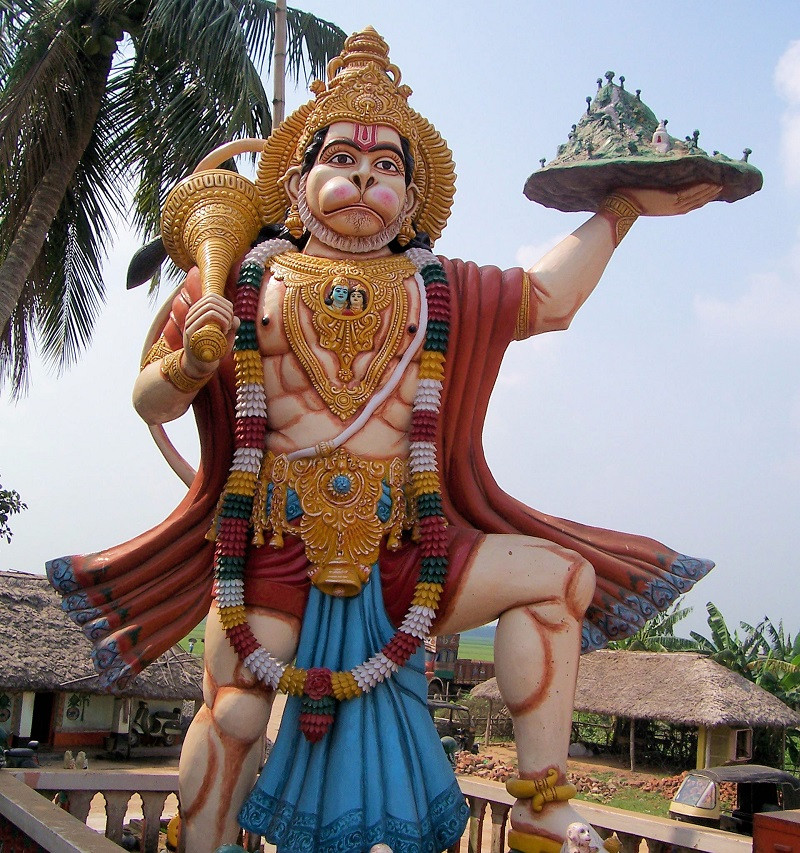
It represents a symbol of strength and perseverance. Hindus invoke it in difficult times, considering that it represents energy and courage. He is known as the Monkey King because of its ape-like shape.
Hanuman is also a very popular deity in India (and the world). In Hindu mythology his fame originates through his great loyalty to the God Rama, of whom he is a devotee and fellow fighter.
He is also a scholar who knows all the grammars and sacred books, but of such humility that he never boasts about his knowledge.
9. Saraswati
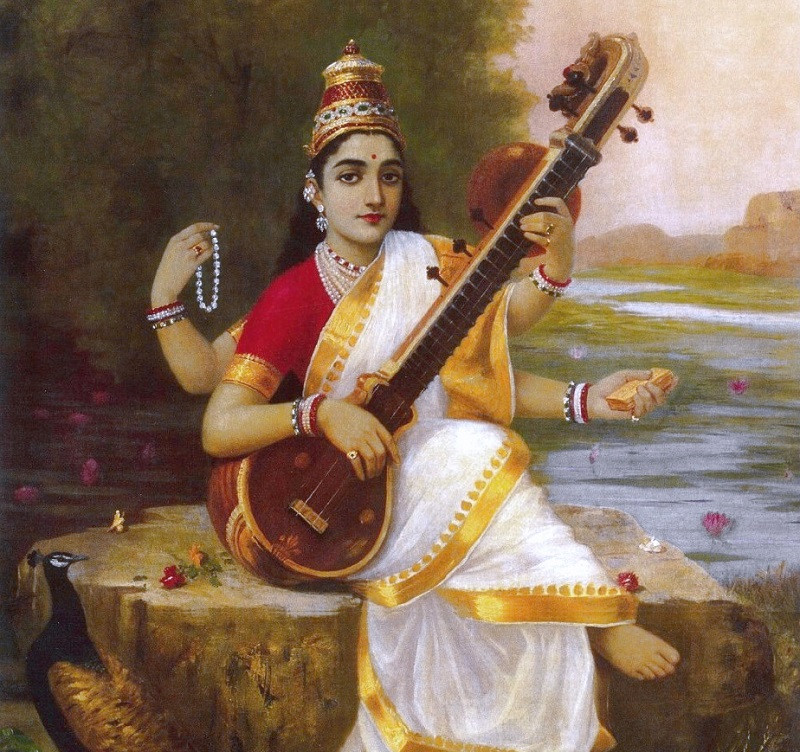
The images show her as a beautiful woman playing the zither on a lotus flower. Her clothes are modest, revealing her predilection for knowledge and sensitivity.
Of all the Gods of the Hindu pantheon, Saraswati is the one who represents creativity, music and the arts, that is why she is known as the Goddess of Knowledge. Believers often invoke it to improve their ability to understand and learn from it during times of study.
10. Kali
It symbolizes the dark side in harmony with the positive side. It is dual in nature and She is shown more as a destroyer of demons than as a ruthless and hostile being
Compared to other Hindu gods who possess goodness and good values, Goddess Kali is believed to have been born from the wrath of Shiva and therefore represents a destructive force. That’s why she is also known as The Dark Mother.
The image of the Goddess shows a strong woman with a necklace made from the skulls of her enemies defeated in combat. She is said to symbolize the death of the ego and the temporary condition of the human body.

11. Durga
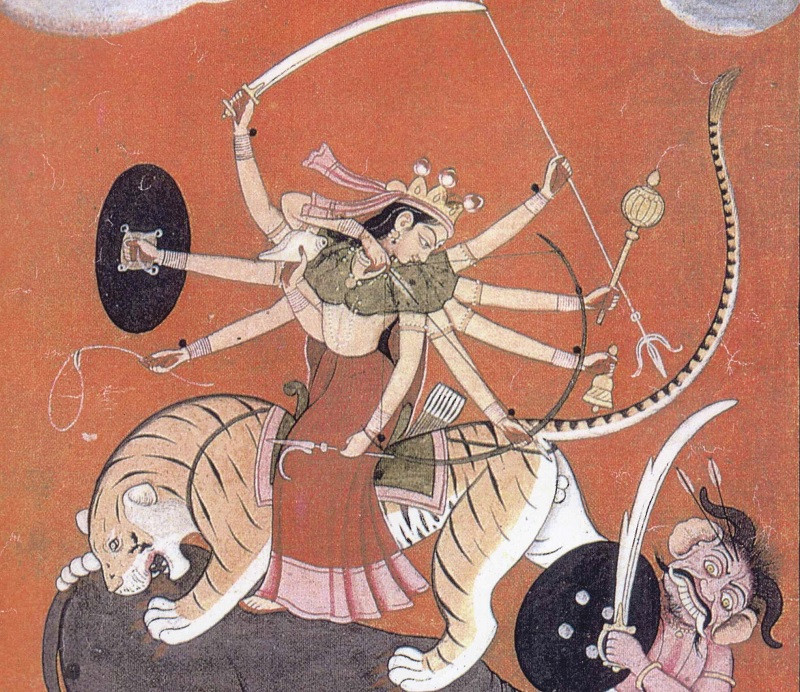
In Hinduism, The deity Durga is associated with concepts such as protection, motherhood, strength and wars, being seen as an entity that looks after the well-being of others, resorting to violence when necessary. For this reason, it has great importance in events such as wars, since it is assumed that it fights to try to restore peace through the submission of agents of demonic influence that sow chaos. In that same sense, Hindus consider her a defender of the most vulnerable.
She is represented as a woman on the back of a tiger or a lion, with many arms and holding a weapon in each of them. The set of stories that narrate the deeds of the deities explain that Durga is created by the gods to put an end to the demon Mahishasura, who can only be defeated by a woman.
12. Yamuna
Yamuna is a goddess associated with a river of the same name and exercises its power throughout the Ganges River, where it collects the sacrificial elements poured into its waters. She is the daughter of the Sun god, Surya, and the cloud goddess, Sanjna. Hindus believe that drinking the water of the river with its name allows you to eliminate sin, which is why it is a place of pilgrimage and the second river with the greatest religious significance in India after the Ganges.
She is represented as a woman riding a turtle and lying down with a container full of water.

Use this citation format to reference the article clearly and help readers find the original source.
PsychologyFor. (2024). The 12 Main Hindu Gods, and Their Symbolism. PsychologyFor. https://psychologyfor.com/the-12-main-hindu-gods-and-their-symbolism/