

See more of our articles in your search results.
There’s a particular kind of restlessness that comes from wanting to understand a culture more deeply than a guidebook or a documentary ever could. Maybe you’ve traveled through Spain or Latin America and felt like you were only skimming the surface. Maybe a professor once mentioned Don Quixote in passing and you nodded, quietly aware you’d never actually opened it. That gap between cultural familiarity and genuine understanding is real, and it’s more common than most people admit out loud.
Literature closes that gap in a way almost nothing else can, because it doesn’t just describe a culture’s values — it lets you inhabit them from the inside, sentence by sentence. Spanish literature spans over eight centuries of human experience, wrestling with obsession, grief, faith, colonialism, and identity in ways that still feel startlingly relevant. Cognitive psychologist Jerome Bruner, whose research on narrative psychology reshaped how scholars understand storytelling’s role in human cognition, argued that we don’t just process the world logically — we organize meaning through narrative structure. That’s precisely why a five-hundred-year-old Spanish novel can still rearrange how a modern reader thinks about their own life.
But where do you actually start with a tradition this vast?
This guide ranks the 15 best works of Spanish literature, tracing the tradition from medieval Spain through the Latin American Boom, while unpacking the psychological and cultural forces — shaped by figures like Harold Bloom and Edith Grossman — that made each one endure.

How many of these have you been "meaning to read" for months?
- 1
 TarcherThe Artist's Way30th Anniversary EditionListen Free On Audible
 - 2
 Spiegel & GrauCodependent No MoreHow to Stop Controlling Others and Start Caring for Yourself (Revised and Updated)Listen Free On Audible
 - 3
 TarcherperigeeSet Boundaries, Find PeaceA Guide to Reclaiming YourselfListen Free On Audible
What Makes a Work “The Best” in Spanish Literature?
Ranking literature is subjective by nature, but certain criteria consistently separate enduring classics from merely popular books of their moment. A work’s literary canon status usually depends on innovation, influence, and staying power across generations of readers who share almost nothing else in common.
Innovation matters enormously here. Cervantes didn’t just write an entertaining story about a delusional knight — he essentially invented techniques, like unreliable narration and metafictional commentary, that novelists are still borrowing four centuries later. Literary critic Harold Bloom, whose work on the Western literary canon remains controversial but influential, placed Cervantes alongside Shakespeare as one of the two writers who most fundamentally shaped how later authors understood human character on the page.
Influence radiates outward too, often in ways contemporary readers don’t immediately recognize. Gabriel García Márquez’s blend of the mundane and the miraculous didn’t just win him the Nobel Prize; it created an entire literary movement, magical realism, that reshaped fiction worldwide from Toni Morrison to Salman Rushdie. A work earns “best of” status partly by becoming a foundation other writers build on, whether they credit it explicitly or not.
Finally, there’s simple staying power — the test of whether a book still says something true decades or centuries after publication. Some bestsellers evaporate within a generation. The works on this list haven’t, and that persistence alone tells you something.
Why Reading Spanish Literature Builds Emotional and Cultural Insight
Spanish-language literature offers something distinct from other major traditions: an unusually direct engagement with mortality, honor, and communal identity, often rendered with startling emotional bluntness. Reading it builds a kind of cross-cultural empathy that secondhand descriptions of Hispanic culture simply can’t replicate.
Consider how differently death gets treated across these texts compared to more sanitized literary traditions. Juan Rulfo’s Pedro Páramo takes place almost entirely among the dead, blurring memory and haunting in ways that reflect genuinely distinct cultural attitudes toward mortality found across much of Mexico and Latin America. Readers unfamiliar with that worldview often describe the experience as disorienting at first. That disorientation, oddly enough, is exactly the point — it signals you’re encountering something genuinely foreign to your usual frame of reference, not just a familiar story wearing different clothes.
There’s also a documented psychological benefit to sustained literary reading that goes beyond cultural exposure. Research into what’s sometimes called narrative transportation suggests that becoming absorbed in a well-constructed story measurably increases empathy and perspective-taking ability, effects that seem to persist well beyond the reading session itself.
None of this requires fluency in Spanish, either. Excellent English translations exist for nearly every title on this list, including Edith Grossman’s widely celebrated rendering of Don Quixote, which preserved the novel’s humor without flattening its psychological complexity into something simpler than it actually is.
The Medieval and Golden Age Foundations of Spanish Literature
Spanish literature’s earliest landmark works established themes — honor, deception, social mobility — that the tradition never fully abandoned. Two texts in particular laid this groundwork centuries before the novel as we know it existed.
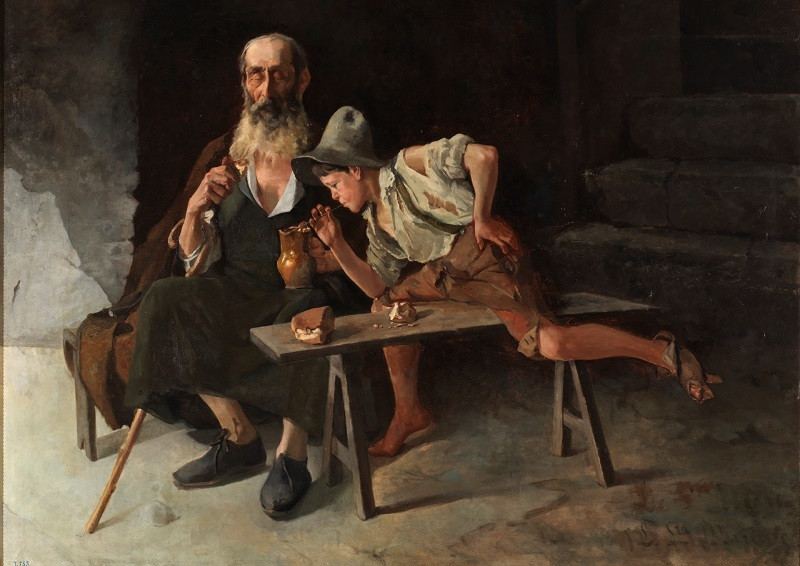
La Celestina, written by Fernando de Rojas and published in 1499, straddles medieval and Renaissance sensibilities in a dialogue-driven tragicomedy about manipulation, desire, and class. Its title character, an aging procuress who manipulates young lovers for profit, remains one of literature’s most psychologically complex antagonists — self-interested, occasionally sympathetic, and disturbingly persuasive. The book essentially predicted the moral ambiguity that would define serious literary fiction for the next five centuries.
Lazarillo de Tormes, published anonymously in 1554, introduced the picaresque genre to the world: a first-person narrative following a poor, resourceful protagonist navigating a corrupt society through wit rather than virtue. Its unnamed author’s decision to critique the Catholic Church so directly likely explains the anonymous publication, given the very real danger such criticism carried during that era. The novel’s plain, unglamorous depiction of poverty distinguished it sharply from the idealized chivalric romances popular at the time — the very genre Cervantes would later satirize so devastatingly.
Lope de Vega’s Fuenteovejuna, a 1619 play dramatizing a village’s collective uprising against a tyrannical overlord, introduced something genuinely radical for its era: a heroic protagonist that wasn’t a single noble individual but an entire community acting in unified defiance. That structural choice alone makes it worth studying, regardless of one’s interest in seventeenth-century Spanish politics.
Don Quixote: Why It Remains Spanish Literature’s Defining Masterpiece
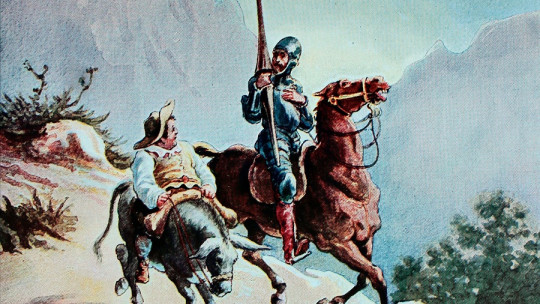
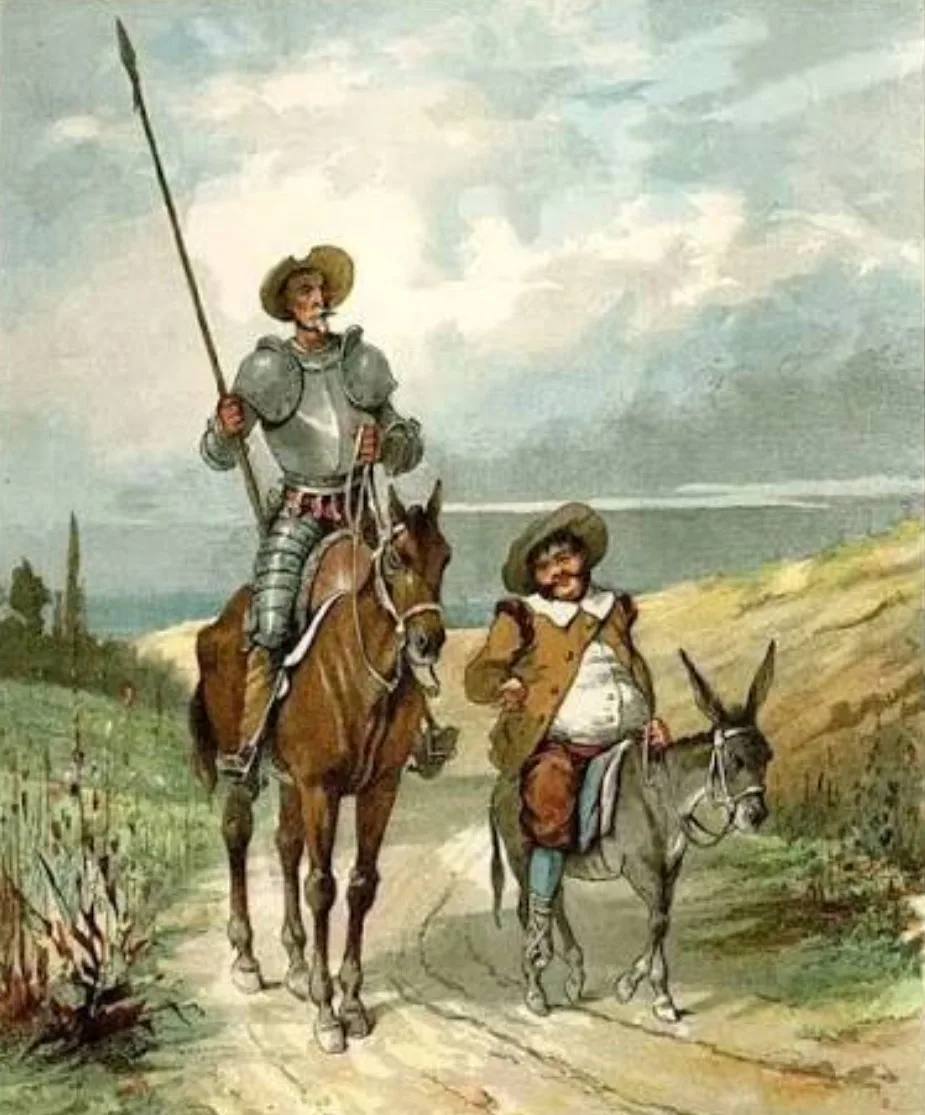
Miguel de Cervantes published Don Quixote in two parts, in 1605 and 1615, creating what scholars widely regard as the first modern novel and arguably the most influential book ever written in Spanish. Its central conceit — an aging man so consumed by chivalric romance novels that he loses his grip on reality — sounds almost like a modern case study in delusion, yet the book treats its protagonist with remarkable tenderness rather than mere mockery.
What makes the novel psychologically fascinating is its treatment of self-constructed identity. Alonso Quixano doesn’t simply lose his mind; he deliberately reconstructs himself as Don Quixote, choosing meaning and purpose over a mundane existence that offered him neither. Scholar Américo Castro, whose foundational studies on Cervantes reshaped how academics understand the author’s engagement with converso identity and religious tension in Spain, argued that Cervantes embedded genuine philosophical questions about truth and perception beneath the novel’s comic surface.
Sancho Panza’s gradual transformation deserves equal attention. He begins as a simple, practical foil to his master’s fantasy, yet by the novel’s second part he’s absorbed enough of Quixote’s idealism to defend it himself, even as Quixote begins questioning his own delusions. That mutual influence between two radically different minds anticipates psychological insights about identity and social contagion that wouldn’t be formally studied for centuries.
The novel’s satirical target — chivalric romance — has long since faded from cultural relevance. What survives instead is something stranger and more durable: a meditation on how much of identity is chosen narrative rather than fixed fact.
The Realist Novel Tradition in Nineteenth-Century Spain
Spain’s nineteenth century produced dense, socially ambitious novels that mapped entire cities and social classes with almost scientific precision. Two works from this period remain essential reading for anyone serious about the tradition.
Benito Pérez Galdós’s Fortunata y Jacinta, published in 1887, follows two women — one working-class, one bourgeois — bound together by their love for the same unreliable man, against the sprawling backdrop of Madrid society. Galdós’s social realism rivals Balzac and Dickens in scope, but his psychological interiority, particularly in depicting Fortunata’s obsessive devotion, feels remarkably modern for a book approaching its 140th anniversary.
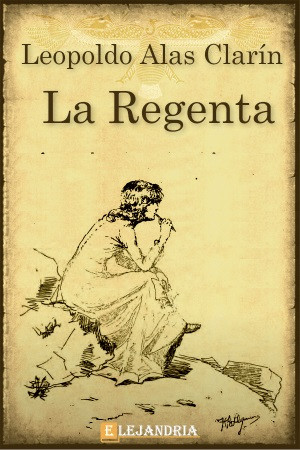
Leopoldo Alas, writing under the pen name Clarín, published La Regenta in 1884 and 1885, a novel often compared to Madame Bovary for its unsparing portrait of a provincial woman trapped in a suffocating marriage and pursued by a manipulative priest. The novel’s dissection of repressed desire within a rigidly religious, gossip-driven small town remains uncomfortably sharp, and its unflinching critique of clerical hypocrisy caused genuine scandal upon publication.
Both novels share a preoccupation with women constrained by social expectation, rendered with a psychological granularity that distinguishes Spanish realism from some of its more moralizing European counterparts. Neither author lets easy judgment substitute for genuine understanding of their characters’ impossible positions.
Federico García Lorca and the Poetry of Spanish Identity
Federico García Lorca remains, for many readers, the emotional center of modern Spanish literature, blending folk tradition with modernist experimentation until the two became inseparable. His work channels something scholars call duende — an untranslatable Spanish concept describing the raw, almost dangerous emotional intensity found in flamenco, bullfighting, and, in Lorca’s hands, poetry itself.
Romancero Gitano, published in 1928 and known in English as Gypsy Ballads, transformed Andalusian folk balladry into something startlingly modern, fusing surrealist imagery with the rhythms of traditional Spanish song. The collection made Lorca famous almost overnight, even as he grew privately frustrated that audiences reduced his broader artistic range to just this one, more accessible book.
La casa de Bernarda Alba, written in 1936 and published posthumously in 1945 after Lorca’s execution during the Spanish Civil War, depicts a tyrannical mother enforcing years of mourning-driven isolation on her five daughters. The play’s suffocating atmosphere functions as a devastating metaphor for repression under authoritarianism, though Lorca never lived to see it performed. Its final act builds toward a tragedy that feels both inevitable and, somehow, still shocking on every rereading.
Lorca’s murder by Nationalist forces just weeks into the Civil War transformed him into something beyond a literary figure — a martyr whose unmarked grave still haunts Spanish cultural memory nearly ninety years later.
Miguel de Unamuno and the Existential Spanish Novel
Miguel de Unamuno approached fiction as a philosopher first, using narrative as a vehicle for wrestling with mortality, faith, and free will rather than plot for its own sake. His work anticipated existentialist literature that would later flourish across Europe under writers like Sartre and Camus.
Niebla, published in 1914, follows Augusto Pérez, a man who eventually confronts his own author within the novel itself, demanding to know whether he actually possesses free will or exists purely as Unamuno’s fictional puppet. This astonishing metafictional confrontation predates postmodern narrative experimentation by decades, and its central question about determinism versus autonomy reads as strikingly contemporary given how much modern psychology and neuroscience continue debating free will today.
Unamuno coined the term “nivola” specifically to describe this book, refusing to call it a conventional novel because he felt it broke too many established rules of the form. That’s a small detail, admittedly. It says a great deal about how seriously he took formal experimentation, though — refusing existing categories rather than forcing his ideas into an ill-fitting box.
The Latin American Boom and the Rise of Magical Realism
The mid-twentieth century witnessed an extraordinary flowering of Latin American fiction that permanently altered global literature, a movement retrospectively named the Latin American Boom. Two works from this era stand as its most essential achievements.
Gabriel García Márquez’s Cien años de soledad, published in 1967, chronicles seven generations of the Buendía family in the fictional town of Macondo, blending historical Colombian trauma with dreamlike, impossible events treated as perfectly ordinary. The novel’s genius lies in its tonal commitment: ghosts, prophecies, and levitating priests receive the same matter-of-fact narration as war and marriage, forcing readers to accept an entirely different logic governing reality. Novelist and essayist Carlos Fuentes, a central figure of the Boom generation himself, argued that García Márquez’s achievement was making Latin American history feel mythic without ever losing its grounding in genuine political and social critique.
Juan Rulfo’s Pedro Páramo, published in 1955, exerted an outsized influence on García Márquez despite being a slim, spare novel compared to the sprawling epic that followed it. The book follows a man searching for his father in a ghost town literally populated by the dead, using fragmented, nonlinear structure to disorient readers the same way its protagonist becomes disoriented. Its influence on subsequent Latin American fiction is difficult to overstate, given how thoroughly García Márquez himself credited it as foundational to his own approach.
Borges, Cortázar, and the Reinvention of Narrative Form
Jorge Luis Borges never wrote a traditional novel, choosing instead to compress entire philosophical universes into short stories rarely exceeding twenty pages. His 1944 collection Ficciones remains one of the most influential works in world literature, built around labyrinths, infinite libraries, and recursive time that anticipated ideas later explored in postmodern theory and even theoretical physics.
Borges’s stories function almost like thought experiments dressed in narrative clothing, and their influence on writers from Italo Calvino to Umberto Eco is difficult to overstate. Literary theorist Ian Watt, best known for tracing the historical rise of the novel form, noted that Borges effectively dismantled conventional narrative expectations decades before postmodernism became a recognized literary movement, doing so with startling economy rather than sprawling experimentation.
Julio Cortázar’s Rayuela, published in 1963 and translated as Hopscotch, pushed structural experimentation even further by offering readers two entirely different reading orders — one linear, one that jumps between chapters according to a numbered sequence at the book’s start. The novel follows Horacio Oliveira through Paris and Buenos Aires in a fragmented, jazz-influenced style that mirrors his own psychological restlessness and inability to settle into a fixed identity or place.
Together, Borges and Cortázar essentially gave permission to an entire generation of writers to abandon linear storytelling altogether, proving that formal experimentation could deepen emotional impact rather than merely showcasing cleverness for its own sake.
The 15 Best Works of Spanish Literature, Ranked
This ranking weighs historical influence, psychological depth, and lasting relevance across the full Spanish-language tradition, from medieval Spain through the twentieth-century Latin American Boom.
- Don Quixote (Miguel de Cervantes, 1605/1615) — the foundational text of the modern novel and Spanish literature’s single most influential work.
- Cien años de soledad (Gabriel García Márquez, 1967) — the defining achievement of magical realism and the Latin American Boom.
- Ficciones (Jorge Luis Borges, 1944) — a philosophically dense short story collection that reshaped global narrative form.
- La casa de Bernarda Alba (Federico García Lorca, 1936/1945) — a devastating final play on repression, mourning, and authoritarian control.
- Pedro Páramo (Juan Rulfo, 1955) — a haunting, fragmented ghost story that shaped an entire generation of Latin American writers.
- Rayuela (Julio Cortázar, 1963) — a structurally radical novel offering readers multiple paths through the same story.
- Fortunata y Jacinta (Benito Pérez Galdós, 1887) — a richly detailed social realist portrait of nineteenth-century Madrid.
- La Regenta (Leopoldo Alas “Clarín,” 1884/1885) — an unflinching study of repressed desire in provincial Spanish society.
- Romancero Gitano (Federico García Lorca, 1928) — a landmark poetry collection fusing folk tradition with modernist innovation.
- Niebla (Miguel de Unamuno, 1914) — an existentialist novel confronting free will through startling metafictional structure.
- La Celestina (Fernando de Rojas, 1499) — the foundational dialogue-drama that introduced moral ambiguity to Spanish literature.
- Lazarillo de Tormes (Anonymous, 1554) — the originating text of the picaresque genre, still strikingly relevant.
- Fuenteovejuna (Lope de Vega, 1619) — a radical Golden Age drama centering collective, communal heroism.
- Platero y yo (Juan Ramón Jiménez, 1914) — a lyrical prose-poem meditation on companionship, loss, and rural Andalusia.
- Rimas (Gustavo Adolfo Bécquer, 1871) — a posthumously published poetry collection foundational to modern Spanish lyric verse.
Rankings like this always invite disagreement among devoted readers, and that’s genuinely fine. Part of what makes a literary canon meaningful is the ongoing argument about what belongs in it, not a final, settled verdict nobody’s allowed to question.
How These Works Reflect Universal Psychological Themes
Despite spanning eight centuries and two continents, these fifteen works circle back repeatedly to a handful of shared psychological preoccupations. Recognizing these patterns deepens appreciation for why the tradition holds together as coherently as it does.
| Recurring Theme | Representative Works |
| Identity constructed through narrative | Don Quixote, Niebla, Rayuela |
| Repression and social confinement | La Regenta, La casa de Bernarda Alba |
| Mortality and haunting memory | Pedro Páramo, Cien años de soledad |
The recurring fascination with self-constructed identity deserves special attention, since it appears across radically different eras and genres. Whether it’s Quixote reinventing himself through fiction or Cortázar’s Oliveira drifting between cities and selves, Spanish-language literature returns obsessively to the question of how much identity is discovered versus deliberately built.
Repression, too, surfaces again and again, particularly regarding women constrained by religious or familial authority. Galdós, Clarín, and Lorca each approached this theme from different angles and eras, yet arrived at remarkably similar psychological insights about what happens when authentic desire collides with rigid social expectation.
Grief and mortality round out the pattern, treated with a directness that some other literary traditions tend to soften. Rulfo’s ghost-populated Comala and García Márquez’s cyclical Buendía tragedies both insist that the dead remain active participants in the living world, an idea rooted as much in cultural tradition as in literary invention.
How to Start Reading Spanish Literature as a Beginner
Diving into an eight-century tradition can feel overwhelming, so a deliberate, manageable entry point matters more than attempting everything at once. Starting with the right translation and the right order genuinely changes the experience.
- Begin with Cien años de soledad if you want an immediately immersive, emotionally accessible entry point into the tradition’s most celebrated modern achievement.
- Choose Edith Grossman’s translation of Don Quixote specifically, since it’s widely considered the most readable modern English version available.
- Read short story collections like Ficciones before longer novels if committing to a full book feels daunting at first.
- Pair Lorca’s poetry with recordings of flamenco or Spanish folk music to better grasp the cultural rhythm underlying his verse.
- Join a discussion group or online forum, since these particular texts genuinely reward conversation and differing interpretations.
Give yourself permission to read slowly, especially with denser works like Rayuela or La Regenta. Some books resist rushing. That resistance, in the end, is usually where the real reward is hiding.
FAQs about the Best Works of Spanish Literature
What is considered the greatest work of Spanish literature of all time?
Don Quixote by Miguel de Cervantes is overwhelmingly regarded as the single greatest and most influential work in Spanish literary history, often cited alongside Shakespeare’s plays as one of the two most important literary achievements in Western literature. Published in two parts in 1605 and 1615, it’s widely credited as the first modern novel due to its psychological depth, self-aware narrative techniques, and its blending of comedy with genuine philosophical inquiry. Its influence extends across virtually every subsequent Spanish-language writer, many of whom reference or directly respond to it in their own work. While personal preference always plays a role in these rankings, and some readers gravitate more toward twentieth-century works like Cien años de soledad, Don Quixote’s historical significance and continued relevance keep it at the top of nearly every serious academic and literary ranking.
Should “Spanish literature” include Latin American authors, or only writers from Spain?
This is genuinely debated among scholars and general readers alike, and there’s no single universally accepted answer. Strictly speaking, “Spanish literature” sometimes refers only to literature produced within Spain itself, while “Spanish-language literature” or “Hispanic literature” more accurately describes the broader tradition spanning Spain and Latin America. In practice, most general readers and even many academic courses use “Spanish literature” more loosely to include celebrated Latin American authors like García Márquez, Borges, and Cortázar, given their shared language and deep literary influence on one another. This article follows that broader, more common usage, since excluding the Latin American Boom would mean leaving out some of the most globally influential works ever written in Spanish.
Do I need to read these books in Spanish to appreciate them fully?
Reading in the original Spanish does offer certain advantages, particularly for poetry, where rhythm, wordplay, and sound carry meaning that translation can only approximate rather than fully replicate. That said, excellent English translations exist for every work discussed here, and skilled translators like Edith Grossman have produced versions widely praised by scholars and general readers alike for preserving both meaning and tone remarkably well. For prose works especially, a strong translation typically retains the vast majority of a novel’s emotional and psychological impact. Readers without Spanish fluency shouldn’t feel discouraged from engaging with this tradition; waiting until you achieve fluency before starting means potentially waiting years to encounter literature that’s genuinely worth experiencing sooner.
Why does magical realism appear so frequently in Latin American literature specifically?
Magical realism emerged partly as a literary response to Latin America’s turbulent political history, colonial legacy, and complex blending of indigenous, African, and European cultural traditions, all of which shaped a worldview where the boundary between the miraculous and the mundane felt genuinely less rigid than in more secular, rationalist European traditions. Writers like García Márquez drew directly from oral storytelling traditions common in rural Colombia, where fantastical elements were narrated with the same seriousness as verifiable historical events. The style also functioned as a subtle form of political and social commentary, allowing authors to address censorship-sensitive topics through metaphor and allegory rather than direct confrontation. This combination of cultural tradition, oral storytelling influence, and political necessity helps explain why the style flourished so distinctly in this particular region and era.
What’s the difference between the Spanish Golden Age and the Latin American Boom?
The Spanish Golden Age refers roughly to the sixteenth and seventeenth centuries, a period of extraordinary literary and artistic output in Spain that produced Cervantes, Lope de Vega, and numerous other foundational writers, largely coinciding with Spain’s political and colonial power at its historical peak. The Latin American Boom, by contrast, describes a specific literary explosion during the 1960s and 1970s, when writers like García Márquez, Cortázar, Vargas Llosa, and Fuentes gained massive international recognition, largely for fiction blending experimental narrative techniques with distinctly Latin American political and cultural themes. Though separated by roughly three centuries, both periods share a a common thread: each represents a moment when Spanish-language literature achieved outsized global influence relative to the political power of the countries producing it at the time.
Are any of these works considered controversial or banned historically?
Several works on this list faced genuine controversy or censorship during their original publication periods. La Regenta scandalized conservative Spanish society upon release due to its unflinching critique of clerical hypocrisy and its frank depiction of a woman’s repressed sexual desire within marriage. Lazarillo de Tormes was placed on the Spanish Inquisition’s index of prohibited books specifically because of its sharp criticism of Catholic clergy, forcing its author to remain anonymous even centuries later. Federico García Lorca’s work, meanwhile, faced a different kind of suppression entirely: his writings were effectively banned in Spain for years following his execution during the Spanish Civil War, since the Franco regime viewed him as both politically and socially subversive. These historical controversies often reveal exactly what made a given work genuinely significant in its time.
How long would it take to read all fifteen of these works?
The time commitment varies enormously depending on each book’s length and structural complexity. Shorter works like Rimas, Platero y yo, or individual Borges stories from Ficciones can realistically be read within a few sittings each, while denser novels like Don Quixote, Cien años de soledad, or Fortunata y Jacinta typically require several weeks of sustained, attentive reading given their length and narrative density. A motivated reader tackling one book every two to three weeks could reasonably work through this entire list within roughly a year, allowing adequate time to absorb rather than rush through denser texts like Rayuela or La Regenta. Reading alongside supplementary historical or biographical context, particularly for works tied closely to specific political moments like the Spanish Civil War, tends to deepen comprehension significantly and is generally worth the extra time investment.
Why is Federico García Lorca considered so important to Spanish poetry specifically?
Lorca occupies a uniquely central position in Spanish literature because he successfully merged Andalusian folk tradition with sophisticated modernist technique, creating poetry that felt simultaneously ancient and startlingly new to readers of his era. His concept of duende, describing an intense, almost dangerous emotional authenticity found in flamenco and other traditional Spanish art forms, became a foundational idea not just in poetry but across broader discussions of artistic authenticity generally. His brutal execution during the earliest weeks of the Spanish Civil War, at just thirty-eight years old, transformed him into a powerful symbol of artistic and political martyrdom, ensuring his cultural significance extended well beyond his purely literary achievements. Decades of subsequent censorship under Franco’s regime only intensified his mythic status once his work became widely available again after Spain’s transition to democracy.
Bibliography
- Bruner, J. (1986). Actual Minds, Possible Worlds. Harvard University Press.
- Bloom, H. (1994). The Western Canon: The Books and School of the Ages. Harcourt Brace.
- Castro, A. (1966). Cervantes y los casticismos españoles. Alfaguara.
- Watt, I. (1957). The Rise of the Novel: Studies in Defoe, Richardson and Fielding. University of California Press.
- Fuentes, C. (1969). La nueva novela hispanoamericana. Editorial Joaquín Mortiz.
- Cervantes, M. de. (2003). Don Quixote (E. Grossman, Trans.). Ecco. (Original work published 1605/1615).
- García Lorca, F. (1994). Collected Poems (C. Maurer, Ed.). Farrar, Straus and Giroux.
- Instituto Cervantes. (2023). Historia de la Literatura Española. Instituto Cervantes Publications.
- Real Academia Española. (2022). Diccionario Biográfico de Autores Españoles. RAE.
Use this citation format to reference the article clearly and help readers find the original source.
PsychologyFor. (2026). The 15 Best Works of Spanish Literature. PsychologyFor. https://psychologyfor.com/the-15-best-works-of-spanish-literature/