

See more of our articles in your search results.
He Myers-Briggs indicator It is one of the most popular personality tests today, among other things, because of the ambitious nature of its proposal.
Unlike what happens with other personality measurement instruments, which measure very specific aspects about our patterns of behavior and thinking, the Myers-Briggs Indicator was developed to explore the most important and unique aspects that would serve to describe the way of being of each individual through 16 personality types.
The latter means that the Myers-Briggs Indicator was created with the intention of describing personality in a global way, instead of measuring very specific aspects of people’s way of being. This idea, based on what is often known as “holistic” approaches, is very attractive to many people who see this personality test. a way of knowing the most essential things about people, what defines them in a more complete sense
However, today the Myers-Briggs Indicator has critics who point to the validity and usefulness of the test and, consequently, of the 16 personality types it proposes. Let’s see what the defense and negative criticism of this personality classification system is based on.
What is the Myers-Briggs Indicator?
The MBTI, as it is known in English, is a personality test based on the work of Carl Gustav Jung and the personality types he proposed.
How many of these have you been "meaning to read" for months?
- 1
 S&S/Simon ElementProtocolsAn Operating Manual for the Human BodyListen Free On Audible
 - 2
 Undercover Publishing HouseStop Letting Everything Affect YouHow to break free from overthinking, emotional chaos, and self-sabotage.Listen Free On Audible
 - 3
 Grand Central PublishingIn the Shadow of EightSurviving the Reality of My ChildhoodListen Free On Audible
The Myers-Briggs Indicator borrows 8 of the psychological functions that Jung used to theorize about different personality types and proposes a system of questions that serve to study the way in which people’s preferences and way of being conform to these categories.
If you want to know more about these ideas from Carl Jung, you can read this article:
How does the MBTI work?
The Myers-Briggs Indicator uses four dichotomies with two extremes each to study personality. These factors are the following:
Each person responds to the questions posed in the test by reflecting on their way of being, thinking and feeling, which makes this a measurement tool based on introspection. From these answers, The data obtained is grouped and in this way it is established which of the 16 personality types It serves to better describe one’s way of being and preferences.

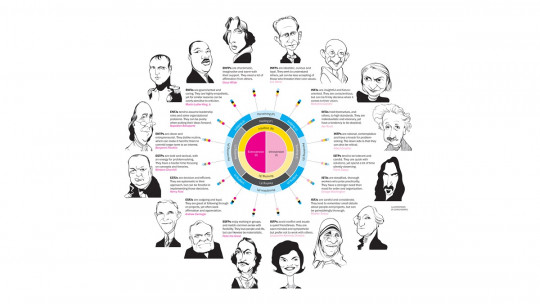
The 16 personality types
From the crossing of data from these 8 variables established in the 4 dichotomies, the 16 personality types of the Myers-Briggs Indicator are formulated. They are the following.
1. ESTJ (Extraverted Sensing Thinking Judging)
People who like to have control over what happens around them they always look for a way to make everything work as it should and, if necessary, they implement it themselves.
2. ESTP ((Extraverted Sensing Thinking Perceiving)
People who belong to this category are spontaneous, happy and active but like what happens with ESTJs, they tend to exert dominance over others, in this case through their observation skills and their charisma.
3. ESFJ (Extraverted Sensing Feeling Judging)
These are people who are very dedicated to caring for the needs of others, especially if they are part of your close circle: family and friends. That is why whenever they can, they lend their help and ensure that their close social circles always remain stable and in good health. That is why they tend to avoid strong conflicts from appearing and are diplomatic when there are clashes of interests.
4. ESFP (Extraverted Sensing Feeling Perceiving)
These are happy and spontaneous people who enjoy entertaining themselves and others Fun is one of the most important pillars of their lives, and they are friendly and have a warm temperament. They love novelty and talking about personal experiences.
5. ISTJ (Introverted Sensing Thinking Perceiving)
A personality type defined by their strong sense of morality and duty They like to plan and implement systems of rules that allow teams and organizations to function with clear logic and order. They place great value on norms and the need for reality to correspond to how things should be. Although they are introverted people, they do not shy away from interacting with others.
6. ISTP (Introverted Sensing Thinking Perceiving)
These are reserved people, oriented towards action and practical solutions to day-to-day problems They are also defined by their tendency towards logical thinking and their spontaneity and autonomy. They like to explore environments and discover ways in which they can be interacted with.
7. ISFJ (Introverted Sensing Feeling Judging)
They are people defined mainly by their desire to protect and help others and, ultimately, to be trustworthy to others. They strive to do everything that is expected of them, but they do not have high aspirations nor are they very ambitious. They tend to think that it is bad to ask for compensation or raises in exchange for the sacrifices they make when working, since this should be a goal in itself.
8. ISFP (Introverted Sensing Feeling Perceiving)
People who live totally in the here and now, in constant search for novelty and sensorially stimulating situations They are reserved, but also happy, spontaneous and warm with their friends. They have a special talent in the world of the arts.
9. ENTJ (Extraverted Intuitive Thinking Judging)
This is one of the 16 personality types most related to leadership and assertiveness People described by this category are communicative, have agile and analytical thinking, and are predisposed to leading teams and organizations. They adapt well to change and make their strategies adapt whenever the environment changes. In addition, they almost always know how to explain their projects or stories in a way that is of interest to others, which makes them very suitable salespeople.
10. ENTP (Extraverted Intuitive Thinking Perceiving)
People especially moved by curiosity and challenges that to be solved require facing intellectually stimulating questions. Their mental agility and their ability to detect logical inconsistencies make them people predisposed to be interested in science or philosophy. Furthermore, their tendency to be competitive makes them very active people during the day, always trying to come up with innovative solutions to complex problems.
11. ENFJ (Extraverted Intuitive Feeling Judging)
People who constantly learn about all areas of knowledge (or a good part of them) and help others learn, guiding them in their own evolution. They like to offer guardianship and advice, and are very good at influencing the behavior of others. They focus on their values and ideals and do everything possible to improve the well-being of the greatest number of people through their ideas and actions.
12. ENFP (Extraverted Intuitive Feeling Perceiving)
One of the 16 personality types with the greatest propensity for creative thinking, the arts and sociability. They are happy, enjoy interaction with other people, and act with their position as part of a “whole” of humanity in mind, and are not individualistic. In fact, they often get involved in collective tasks to help others, thinking about the social impact of their actions. However, they are also easily distracted and often postpone tasks that they consider boring or too simple and routine.
13. INTJ (Introverted Intuitive Thinking Judging)
A personality type oriented toward solving specific problems based on analytical reasoning Those described by this category are people who are very focused on their own ideas and theories about how the world works, which means that they analyze their environment by focusing on their ideas about how it operates. They are aware of their own abilities and trust their own judgment, even if this goes against some superiors.
It is very common for them to become experts in a very specific area of knowledge, since they like to have enough knowledge about something to be able to take into account all the factors that come into play in its operation and, from there, know what can be done or what will happen in the future.
14. INTP (Introverted Intuitive Thinking Perceiving)
One of the 16 personality types most defined by the propensity to reflect These people like theories that can explain everything that can happen in a system, and their tendency toward perfectionism causes them to correct others on multiple occasions. They value accuracy in theoretical terms more than pragmatism and solving specific problems.
15. INFJ (Introverted Intuitive Feeling Judging)
Very sensitive, reserved people driven by very defined ideals and who, furthermore, feel the need to ensure that others also benefit from these ideals. This makes them prone to both reflection and action, which can involve so much work that they become overloaded by having too many responsibilities. They show a great ability to successfully interpret the mental states of others and try to use this information to help them before the other person asks them to.
16. INFP (Introverted Intuitive Feeling Perceiving)
Less moralistic than INFJs, INFPs also care deeply about helping others from their position as reserved people. They show an aesthetic and artistic sensitivity that makes them creative.
Criticisms of the Myers-Briggs Indicator
There are numerous researchers and academics who deny the idea that the MBTI has any value for science, basically because it is based on ideas (those of Carl Jung) that were not born through the use of the scientific method and because, in addition, They consider that the 16 personality types are too ambiguous and abstract enough to be used to predict patterns of thought or behavior.
That is, anyone could read the descriptions of these personality categories and see themselves reflected in many of them at the same time, as they are so general. This phenomenon is an example of the Forer effect, according to which when personality categories are sufficiently ambiguous, anyone can come to identify with them to the point of believing that they fit well with their way of being and not with that of others. In turn, this is a case of confirmation bias.
So… not useful?
The problem of the ambiguity of the personality categories with which the Myers-Briggs indicator works also occurs in a similar way, for example, in Carl Jung’s personality proposal. It is assumed that a personality model has to lay the foundations to be able to isolate relevant psychological variables and that in certain research have a certain predictive value (that is, to clear up doubts about what is going to happen, for example, if a person with high levels of neuroticism starts working in a public-facing environment with a lot of pressure.
When the popularity of a personality model is based on the Forer effect, one should expect little of its usefulness as a research tool, because everyone is capable of identifying with practically any type of personality and the final result will depend on little factors. important, like the description of personality style read above, for example.
That is why, although the Myers-Briggs Indicator continues to be used in organizational contexts to select personnel or assess the possibility of someone being promoted, in the field of research this tool has been so harshly criticized that its use is a rarity.
Now, that does not mean that, in its own way, there can be certain uses for the Myers-Briggs indicator. For example, the possibility of inspiring us, making us reflect on how our personality is structured and how these aspects of personality relate to each other.
Use this citation format to reference the article clearly and help readers find the original source.
PsychologyFor. (2024). The 16 Personality Types (and Their Characteristics). PsychologyFor. https://psychologyfor.com/the-16-personality-types-and-their-characteristics/