


Psychoanalysis changed how the modern world thinks about itself. Before Freud sat with his patients in Vienna and began listening — really listening — to the hidden logic beneath their suffering, the interior life was largely a mystery, something endured rather than explored. What emerged from that act of attentive curiosity was not just a clinical method but an entire way of understanding human beings: the unconscious, repression, transference, desire, the self divided against itself. More than a century later, that tradition continues to generate ideas that are indispensable to psychology, philosophy, literature, and any serious attempt to understand why people feel and behave as they do.
The best psychoanalysis books are not just textbooks to be consulted. They are encounters — sometimes challenging, often revelatory, occasionally transformative. Reading Freud’s Interpretation of Dreams is to watch a brilliant mind build an entirely new architecture for understanding human experience. Reading Winnicott is to feel suddenly seen, as if someone has finally found words for something you felt but could never articulate. Reading Klein is to descend into the earliest, most primitive layers of the mind and return with a new respect for the ferocity of infant emotional life. Reading Lacan is to have your assumptions about language, identity, and desire productively destabilized.
This list gathers 18 essential works spanning the full arc of psychoanalytic thought — from Freud’s foundational texts to object relations, ego psychology, Lacanian theory, attachment-informed psychoanalysis, and contemporary clinical practice. Whether you are a curious newcomer, a psychology student, a practicing clinician, or a reader who simply wants to understand the human mind more deeply, these are the books that belong on your shelf.
1. The Interpretation of Dreams — Sigmund Freud (1900)
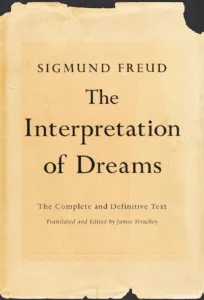
If there is a single book that launched psychoanalysis as a discipline, it is this one. The Interpretation of Dreams is the work in which Sigmund Freud laid out his most audacious claim: that dreams are not random neural noise but meaningful communications from the unconscious, disguised by the work of condensation, displacement, and secondary revision. The dream, in Freud’s formulation, is the “royal road to the unconscious” — the most direct window available to the analyst (and the dreamer) into the hidden desires, conflicts, and wishes that drive so much of human behavior.
Published in 1899 but dated 1900 — a deliberate choice to mark its significance as a work for a new century — the book moves from a critique of existing dream theories through Freud’s own clinical material (including his famous self-analysis and the Irma dream), to the theoretical architecture of primary and secondary process thinking, wish fulfillment, and the topographical model of the mind (unconscious, preconscious, conscious). It is a dense, sprawling, sometimes difficult work, but it repays patient reading with insight at every turn.
Best for: anyone beginning their journey into psychoanalytic thought, students of psychology, philosophy, and literary theory.
2. The Ego and the Id — Sigmund Freud (1923)
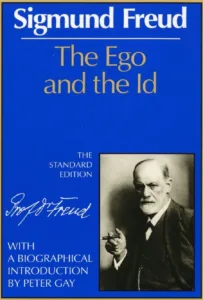
By 1923, Freud had revised his model of the mind — the topographical model of unconscious, preconscious, and conscious was no longer sufficient to explain what he was encountering clinically. The Ego and the Id introduced the structural model: id, ego, and superego. This shift was not merely a terminological update; it represented a fundamental reconception of how the mind organizes itself and how conflict arises within it.
The id is the reservoir of instinctual drives — Eros (the life and love drive) and Thanatos (the death drive), operating on the pleasure principle, seeking immediate satisfaction without regard for reality. The ego is the mediator, operating on the reality principle, negotiating between the id’s demands, the external world’s constraints, and the superego’s moral imperatives. The superego is the internalized voice of parental and cultural authority — the source of guilt, conscience, and the relentless self-criticism that Freud saw as a central feature of neurosis and depression.
This is a short, precise, and enormously influential work. Understanding it is prerequisite to understanding almost everything that followed in psychoanalytic theory.
Best for: building foundational knowledge of Freudian metapsychology before moving to later theorists.
3. Studies on Hysteria — Sigmund Freud and Josef Breuer (1895)
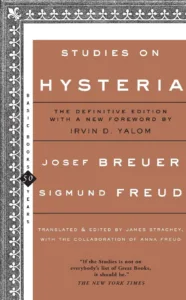
Studies on Hysteria is where psychoanalysis was born. Co-authored with Josef Breuer, this work presents five case studies — including the famous Anna O., whose treatment introduced the concept of the “talking cure” — and develops the foundational idea that hysterical symptoms are caused by the repression of emotionally charged memories that have been prevented from discharge. The therapeutic task, in this early model, was to help the patient bring the repressed memory into consciousness, express the associated emotion (abreaction), and thereby dissolve the symptom.
Reading this book today is a genuinely historical experience. You are present at the moment when clinical listening became a method — when a physician first sat down and committed to understanding rather than simply categorizing what a patient described. The cases are vivid, humanly complex, and surprisingly moving. Anna O., Elisabeth von R., Emmy von N. — these are not diagnostic curiosities but whole people, encountered with unusual depth and care.
The disagreements that would eventually separate Freud and Breuer are already visible here — Freud pushing toward the sexual etiology of neurosis that Breuer was reluctant to accept. That tension is part of what makes the book so alive.
Best for: anyone wanting to understand psychoanalysis from its origin point; historians of medicine and psychology.
4. Civilization and Its Discontents — Sigmund Freud (1930)
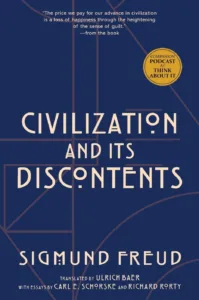
Of Freud’s broader cultural writings, Civilization and Its Discontents is the most enduring and the most frequently read outside clinical circles. Written in 1929, in the shadow of World War I and with another catastrophe gathering on the horizon, it applies psychoanalytic reasoning to the fundamental tension between individual desire and social existence: civilization requires the renunciation of instinctual satisfaction — aggression, libidinal freedom — in exchange for the security and cooperation that social life provides. The result, Freud argued, is an irreducible unhappiness at the heart of the civilized condition.
The argument is elegant, provocative, and shot through with a kind of stoic lucidity about human nature that feels both deeply pessimistic and strangely liberating. Freud does not offer a solution — he does not believe one exists — but he offers clarity: the guilt and discontent that civilization generates are not accidents or failures to be corrected; they are the price of the civilization itself.
Best for: readers interested in the intersection of psychoanalysis, culture, and philosophy; accessible entry point for non-specialists.
5. The Ego and the Mechanisms of Defence — Anna Freud (1936)

Anna Freud’s contribution to psychoanalytic theory is often undervalued in the shadow of her father’s fame, but The Ego and the Mechanisms of Defence is a genuinely foundational work. Where Sigmund Freud focused primarily on the id and its instinctual pressures, Anna Freud turned her systematic attention to the ego — and specifically to the ways it protects itself from anxiety through a range of unconscious defensive operations.
The ten mechanisms she described and organized — including repression, regression, reaction formation, isolation, undoing, projection, introjection, turning against the self, reversal, and sublimation — became the bedrock of psychoanalytic clinical observation and remain central to psychological assessment and therapy today. Her clinical examples, drawn largely from child analysis, are clear and illuminating. The book launched the tradition of ego psychology that would dominate American psychoanalysis for much of the twentieth century.
The concept of defense mechanisms, as codified by Anna Freud, permeated far beyond psychoanalysis into mainstream psychology and everyday language — most people have heard of projection, repression, or rationalization without realizing their origin in this tradition.
Best for: clinicians, psychology students, and anyone interested in the psychology of self-protection and anxiety management.
6. Envy and Gratitude — Melanie Klein (1957)
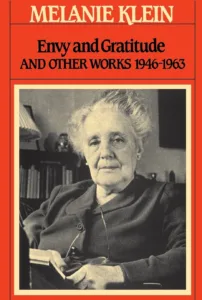
Melanie Klein’s work is not easy reading — it plunges into the deepest, most primitive layers of mental life and finds there a world of violent emotion, splitting, projection, and the infant’s struggle to integrate love and hate toward the same object. Envy and Gratitude, published late in her career, represents the culmination of her theoretical development and introduces what she considered her most important and original contribution: the concept of primary envy.
Klein argued that the breast — as the first object of the infant’s experience — is also the first object of envy: the infant, recognizing the goodness of the breast as something outside itself, attacks that goodness precisely because it is not the infant’s to possess. This envious attack on the good object, Klein proposed, is a primary source of destructiveness and a significant obstacle to psychological development and to psychoanalytic treatment. Gratitude — the capacity to receive goodness without immediately needing to destroy or possess it — is its counterweight and, in Klein’s framework, the foundation of psychological health.
Klein’s work fundamentally shaped object relations theory, influenced Donald Winnicott, Wilfred Bion, and generations of British and South American analysts, and remains essential reading for anyone working clinically in a psychodynamic tradition.
Best for: clinicians, advanced students, readers interested in the object relations tradition.
7. Playing and Reality — Donald Winnicott (1971)

Donald Winnicott’s Playing and Reality contains some of the most beautiful and genuinely useful ideas in all of psychoanalytic literature. Winnicott — a pediatrician turned psychoanalyst who maintained throughout his career a distinctive warmth and accessibility — developed here his concept of the transitional object and transitional phenomena: the teddy bear, the blanket, the corner of a beloved cloth that an infant clutches. These are, for Winnicott, not merely comforting props but the first instances of creative living — the space between the purely subjective inner world and the purely objective external world, a third space that he called the potential space.
This potential space — neither fully inner nor fully outer — is also, in Winnicott’s framework, the space in which all creative experience, play, cultural life, and psychotherapy takes place. The implications are profound: therapy is not the analyst telling the patient things, but two people playing together in a protected space, which is how development and healing occur. The book also contains Winnicott’s famous distinction between the true self and the false self — the authentic core of a person versus the compliant facade constructed to meet the expectations of an insufficiently attuned environment.
Best for: clinicians, anyone interested in creativity, culture, and the nature of the self; among the most accessible of the British object relations writers.
8. Learning from Experience — Wilfred Bion (1962)
Wilfred Bion is one of the most demanding and most rewarding writers in the entire psychoanalytic canon. Learning from Experience introduces the concept for which he is perhaps best known: container and contained. Bion proposed that the infant’s unprocessed, overwhelming emotional experiences — what he called beta elements — are projected into the mother (or primary caregiver), who processes and metabolizes them through her reverie (her capacity for empathic containment), and returns them to the infant in a more manageable, thinkable form (alpha elements). This containment process is the prototype for all subsequent learning and thinking.
The implications for psychotherapy are radical: the therapist’s job is not primarily to interpret but to provide a containing function — to receive the patient’s projected experiences, tolerate them, process them, and return them in a form the patient can use. Bion’s model of the mind as fundamentally relational and his insistence that thinking itself is born from the management of emotional experience profoundly influenced the relational and intersubjective turns in contemporary psychoanalysis.
Bion’s writing is notoriously compressed and abstract; this book is short but requires slow, patient engagement. The rewards — conceptual tools that genuinely expand clinical thinking — are considerable.
Best for: clinicians and advanced students; particularly essential for those working with severely disturbed or psychotic patients.
9. The Four Fundamental Concepts of Psychoanalysis — Jacques Lacan (1964)

Jacques Lacan is the most controversial and the most intellectually generative figure in the post-Freudian psychoanalytic tradition. His seminars — delivered over decades at the École Normale Supérieure and elsewhere — constituted an elaborate, demanding, and often deliberately obscure return to Freud through the lens of structural linguistics, topology, and philosophy. The Four Fundamental Concepts of Psychoanalysis (Seminar XI) is widely considered the most accessible entry point into Lacanian thought and the place where his ideas achieve their most focused and clinically relevant expression.
The four concepts of the title are: the unconscious (reconceived as “structured like a language”), repetition (the compulsion to repeat that drives the subject in circles around its fundamental lack), the drive (and its relationship to the object a — Lacan’s enigmatic term for the cause of desire), and transference (reconceived not as a distortion but as the very engine of the analytic encounter). Each concept is given a rigorous, linguistically-grounded reformulation that distances Lacan sharply from the ego psychology he considered a betrayal of Freud’s discovery.
Best for: those with some prior psychoanalytic reading; essential for clinicians and scholars working in a Lacanian tradition; rewarding for philosophers and literary theorists.
10. Psychoanalytic Diagnosis — Nancy McWilliams (1994, 2nd ed. 2011)
If you could own only one book for understanding personality from a psychoanalytic perspective, this would be it. Nancy McWilliams’ Psychoanalytic Diagnosis is that rare combination: theoretically rigorous, clinically nuanced, and written in prose so clear and warm that it reads with the quality of a wise mentor speaking directly to you. McWilliams guides the reader through the psychoanalytic conception of personality levels (neurotic, borderline, and psychotic organization), character styles (depressive, masochistic, paranoid, obsessive, hysterical, narcissistic, and more), and the diagnostic formulation process.
What distinguishes McWilliams’ approach is her fundamental humanity toward each character style. She is never reductive. Paranoid people, she shows, are often people who have had genuine reason to be afraid; obsessive people are often trying to manage overwhelming anxiety through control; narcissistic presentations frequently conceal a fragile and terrified inner life. Each chapter leaves the reader not just more knowledgeable but more compassionate — toward their patients, toward the people in their lives, and sometimes toward themselves.
The second edition integrates developments from relational psychoanalysis, attachment theory, and neuroscience, keeping the work current without abandoning its foundational depth.
Best for: clinicians and trainees at all levels; the single most recommended psychoanalytic clinical text in English.
11. An Unquiet Mind — Kay Redfield Jamison (1995)
Not a psychoanalytic text in the strict theoretical sense, but an essential book for anyone working within any depth psychological tradition. Kay Redfield Jamison — one of the world’s foremost researchers on bipolar disorder and a professor of psychiatry at Johns Hopkins — wrote this memoir of her own experience with Bipolar I disorder with the precision of a scientist and the language of a poet. The result is one of the most powerful first-person accounts of severe mental illness ever written: of the seductive brilliance of hypomania, the absolute annihilation of depression, the complex experience of medication and the resistance to accepting treatment, and the lifelong project of integrating a difficult neurology into a meaningful life.
Jamison’s reflections on the therapeutic relationship — on what psychotherapy gave her that medication could not, and on the irreplaceable quality of feeling genuinely understood by another person — are among the most articulate accounts of what depth psychological work offers that exist in print. She writes about her analyst with a gratitude that illuminates, from the patient’s side, exactly what good psychoanalytic therapy aims to provide.
Best for: clinicians, anyone living with a mood disorder, readers interested in the intersection of psychiatry, psychoanalysis, and literature.
12. The Body Keeps the Score — Bessel van der Kolk (2014)

Bessel van der Kolk’s The Body Keeps the Score does not belong to the classical psychoanalytic tradition, but it belongs on this list because it represents one of the most important convergences between neuroscience, trauma research, and depth psychological practice in contemporary literature. Van der Kolk, a trauma psychiatrist who has studied and treated PTSD for decades, argues that trauma is not primarily a story — it is a body experience, encoded in the nervous system and held in somatic memory in ways that verbal, insight-oriented psychotherapy alone often cannot reach.
The book synthesizes research on traumatic memory, the neurobiology of the stress response, dissociation, and the limits of purely verbal psychotherapy, while also introducing a range of body-based, mindfulness-based, and experiential approaches — EMDR, somatic experiencing, yoga, theater, and neurofeedback — that have emerged from this recognition. For clinicians trained in psychoanalytic or psychodynamic traditions, this book productively challenges the assumption that language is always the primary vehicle of therapeutic change and asks how bodily experience, not just narrative, must be addressed in trauma treatment.
Best for: clinicians working with trauma; general readers interested in the mind-body relationship; anyone seeking to understand how trauma lives in the body.
13. The Analysis of the Self — Heinz Kohut (1971)
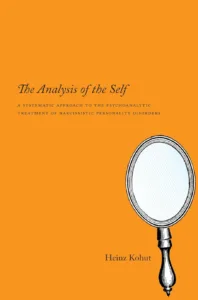
Heinz Kohut’s The Analysis of the Self inaugurated the tradition of self psychology — a fundamental departure from classical drive theory toward a framework centered on the development, cohesion, and vulnerabilities of the self. Where Freud’s classical model saw neurosis as the product of conflict between drive-based impulses and repressive forces, Kohut saw it as rooted in deficits in the self’s development — failures in the empathic mirroring and idealization experiences that the developing child requires from its caregivers (selfobjects, in Kohut’s terminology) to build a cohesive, vital, and resilient sense of self.
Narcissistic disorders — previously considered largely untreatable by analytic means — became, in Kohut’s framework, comprehensible and analytically accessible. The grandiose self and the idealized parent imago are not pathological formations to be demolished but developmental structures that, when met with empathic attunement rather than interpretation from a position of neutrality, can be gradually transformed into mature ambition and idealized goals. Kohut’s emphasis on empathy — not as a therapeutic technique but as the analyst’s primary instrument of observation — fundamentally changed clinical psychoanalysis and continues to influence relational and humanistic approaches.
Best for: clinicians; particularly relevant for work with narcissistic presentations and self-esteem disturbances.
14. Freud and Beyond — Stephen Mitchell and Margaret Black (1995)
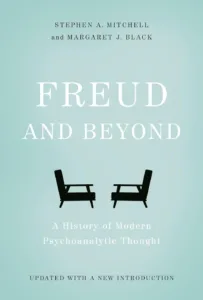
Stephen Mitchell was the central figure in the development of relational psychoanalysis — the most influential current within contemporary American psychoanalytic practice — and Freud and Beyond, co-authored with Margaret Black, is the clearest and most comprehensive map of the theoretical landscape of post-Freudian psychoanalysis available in a single volume. The book traces the development of psychoanalytic thought from Freud through object relations (Klein, Winnicott, Fairbairn, Balint), ego psychology (Anna Freud, Hartmann), self psychology (Kohut), interpersonal psychoanalysis (Sullivan, Fromm), and relational approaches, showing how each school emerged in response to the limitations of its predecessors.
Mitchell’s own contribution — the relational model — holds that the primary human motivation is not drive discharge but the search for relationship, and that the analytic encounter is always a two-person field, shaped by the mutual subjectivities of analyst and patient alike. This was a significant departure from classical anonymity and neutrality, and it opened psychoanalysis to dimensions of clinical engagement that the classical model had systematically excluded.
Best for: the single best orientation text for anyone wanting to understand the full breadth of psychoanalytic theory; essential for trainees and students.
15. Attachment Theory and Psychoanalysis — Peter Fonagy (2001)

Peter Fonagy’s Attachment Theory and Psychoanalysis is a landmark work in the integration of two traditions that, for much of the twentieth century, maintained an uncomfortable distance from one another. John Bowlby — the founder of attachment theory — was a trained psychoanalyst who found himself increasingly at odds with the Kleinian mainstream, and his attachment model was largely dismissed by the analytic establishment despite its profound empirical support.
Fonagy, one of the most prolific and influential contemporary psychoanalytic researchers, undertook the systematic project of rebuilding the bridge. This book examines how attachment theory and psychoanalytic theory can inform and enrich each other, using the concept of mentalization — the capacity to understand behavior in terms of underlying mental states, intentions, and emotions — as the integrating framework. Mentalization, Fonagy argues, develops within secure attachment relationships and is compromised by early relational trauma; its development and restoration are central goals of psychoanalytic psychotherapy. This framework has since become enormously influential in the treatment of borderline personality disorder and complex trauma.
Best for: clinicians, researchers, and students interested in attachment theory, mentalization-based treatment, and the empirical foundations of psychoanalytic practice.
16. The Language of Psychoanalysis — Jean Laplanche and Jean-Bertrand Pontalis (1967)
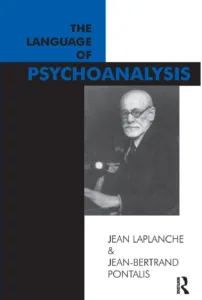
Not a book to be read from cover to cover but a volume that every serious student of psychoanalysis should keep within arm’s reach. Jean Laplanche and Jean-Bertrand Pontalis — both trained analysts working in the French tradition influenced by Lacan and Laplanche’s own original reformulations — compiled this comprehensive dictionary of psychoanalytic concepts with extraordinary rigour and depth. Each entry is not merely a definition but a genealogy: the concept’s origin in Freud’s text, its subsequent development, the controversies it generated, and its current status across different theoretical traditions.
To look up “transference” or “projection” or “primary narcissism” in this volume is to receive a sophisticated scholarly account that simultaneously clarifies, complicates, and contextualizes the concept. It is indispensable for navigating the often divergent terminologies of different psychoanalytic schools — where the same word (say, “object”) can mean significantly different things to a Kleinian, a Lacanian, and an ego psychologist.
Best for: students, researchers, clinicians, and scholars at any level; particularly valuable for those reading primary psychoanalytic texts in translation.
17. Psychoanalytic Psychotherapy — Nancy McWilliams (2004)

If Psychoanalytic Diagnosis is the book that teaches you to understand your patients, McWilliams’ companion volume Psychoanalytic Psychotherapy is the book that teaches you how to be with them. This is a clinical guide to the practice of psychoanalytic therapy — not a manual in the behaviorist sense, but a deeply thoughtful account of the therapeutic relationship, the use of the therapist’s own subjectivity, the handling of transference and countertransference, interpretation, the frame, termination, and the management of particularly challenging clinical situations.
McWilliams writes with a characteristic combination of intellectual breadth and personal warmth that makes even the most technically complex ideas feel humanly grounded. She is honest about the messiness of clinical work — about the uncertainty, the inevitable mistakes, the moments when the therapist does not know what they are doing. This honesty, far from undermining the book’s authority, enhances it enormously. It is the book that trainee therapists most often describe as the one that finally made them feel they could do this work.
Best for: trainees and clinicians at all stages; the companion to Psychoanalytic Diagnosis that completes the foundational reading for any psychodynamic practitioner.
18. The Discovery of the Unconscious — Henri Ellenberger (1970)
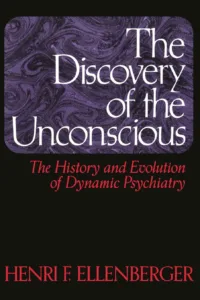
Henri Ellenberger’s monumental The Discovery of the Unconscious is one of the great works of intellectual history — a comprehensive account of the origins of dynamic psychiatry and psychoanalysis from the late eighteenth century through the major schools of the twentieth. Ellenberger traces the development of ideas about the unconscious from Mesmer and animal magnetism through Janet, Flournoy, and Charcot to Freud, Adler, Jung, and beyond, placing each figure in their full cultural, intellectual, and biographical context.
What emerges from this scrupulous historical account is a picture of psychoanalysis that is more complex, more contested, and more fascinating than any hagiographic treatment allows. Ellenberger documents Freud’s debts to his predecessors, the multiple independent convergences on similar ideas, and the ways in which institutional and personal factors shaped the history of the field as much as purely intellectual ones. The chapter on Freud alone — a meticulous, sympathetic, but rigorously critical intellectual biography — is worth the price of the entire book.
This is not light reading — at nearly 1,000 pages, it is an investment. But for anyone who wants to understand where psychoanalysis came from, what problems it was invented to solve, and how it relates to the broader tradition of Western thought about the mind, there is no substitute.
Best for: scholars, historians, advanced students, and anyone who wants to understand psychoanalysis within its full intellectual and historical context.
FAQs about Psychoanalysis Books
What is the best psychoanalysis book for beginners?
For most beginners, the best entry point is not Freud’s original texts — which can be dense and require contextual knowledge — but an accessible secondary text that maps the landscape. Nancy McWilliams’ Psychoanalytic Diagnosis is widely recommended for its clarity, warmth, and clinical applicability. Stephen Mitchell and Margaret Black’s Freud and Beyond offers the best single-volume orientation to the full range of psychoanalytic theory. For Freud himself, Civilization and Its Discontents is the most readable starting point among his own works. Winnicott’s Playing and Reality is also highly accessible and rewarding for non-specialists. The key is finding an author whose voice engages you — psychoanalysis is a tradition that rewards being read rather than merely studied.
What is the difference between psychoanalysis and psychodynamic therapy?
Psychoanalysis, in its classical form, involves high-frequency sessions (three to five per week), use of the couch, free association, and a focus on the systematic analysis of unconscious conflicts, transference, and deep characterological patterns. Psychodynamic therapy is a broader term for therapies derived from psychoanalytic principles but typically practiced at lower frequency (once or twice weekly, face-to-face), with more structured goals and a more conversational style. Both approaches emphasize the unconscious, the therapeutic relationship, early developmental experiences, and the exploration of patterns that repeat across relationships and contexts. Most practicing psychoanalytic therapists today practice psychodynamic therapy rather than classical psychoanalysis, and the evidence base supports psychodynamic therapy’s effectiveness across a wide range of presentations.
Is psychoanalysis still relevant today?
Absolutely — though its relevance takes different forms than Freud might have anticipated. Classical psychoanalytic theory has evolved enormously through object relations, self psychology, attachment theory, relational psychoanalysis, and mentalizing frameworks. The core psychoanalytic insights — that much of mental life operates outside conscious awareness, that early relationships shape emotional and relational patterns, that the therapeutic relationship is itself a vehicle for healing, and that symptoms carry meaning — remain central to contemporary clinical psychology and psychiatry. Empirical research on psychodynamic therapy has expanded significantly, with meta-analyses supporting its effectiveness for depression, anxiety, personality disorders, and complex trauma. Psychoanalytic ideas also continue to influence literature, film, cultural theory, and neuroscience research on memory, emotion, and attachment.
Can I read psychoanalysis books without any prior knowledge?
Yes, though the degree of prior knowledge needed varies significantly by text. Freud’s own writings vary widely in accessibility — Civilization and Its Discontents and many of his case studies require no specialist knowledge, while theoretical works like The Ego and the Id benefit from some preparatory reading. Secondary texts by authors like McWilliams, Mitchell, and Fonagy are deliberately written to be accessible and are excellent starting points. Winnicott’s essays are widely regarded as unusually readable. Lacan and Bion, by contrast, are among the most demanding writers in any discipline and are generally better approached after some grounding in the broader tradition. Starting with secondary texts and biographical accounts — like Ellenberger’s Discovery of the Unconscious — before moving to primary sources is a strategy that pays dividends.
Which psychoanalysis books are most useful for therapists in training?
For clinical trainees, the most immediately useful reading tends to combine theoretical grounding with clinical applicability. McWilliams’ two books — Psychoanalytic Diagnosis and Psychoanalytic Psychotherapy — are universally recommended for psychodynamic trainees and remain the most practically useful pair available. Fonagy’s Attachment Theory and Psychoanalysis grounds the relational dimensions of clinical work in empirical developmental research. Winnicott’s essays — particularly from Playing and Reality and The Maturational Processes and the Facilitating Environment — are invaluable for understanding the developmental foundations of clinical work. Mitchell and Black’s Freud and Beyond provides the theoretical map. Bion’s Learning from Experience is challenging but transforms clinical thinking about the therapist’s emotional function. Together, these form a strong foundation for any psychodynamic training program.
Are there psychoanalysis books that are also enjoyable to read as literature?
Several psychoanalytic works transcend the clinical and reach the literary. Freud himself was awarded the Goethe Prize for his prose, and works like Civilization and Its Discontents and his case studies — particularly Dora, the Rat Man, and the Wolf Man — read as gripping narratives as much as clinical accounts. Winnicott’s essays have a poetic quality and a warmth that makes them genuinely moving. Kay Redfield Jamison’s An Unquiet Mind is memoir literature of the highest order. Adam Phillips — the British psychoanalyst and literary critic — writes some of the most elegant prose in contemporary psychology, and any of his essay collections (particularly On Kissing, Tickling and Being Bored) reward reading for their style as much as their content. Psychoanalysis and literature have always been in dialogue, and the best psychoanalytic writing reflects that inheritance.
Bibliography
- Freud, S. (1900). The Interpretation of Dreams. Standard Edition, Vols. IV–V. Hogarth Press.
- Freud, S. (1923). The Ego and the Id. Standard Edition, Vol. XIX. Hogarth Press.
- Freud, S., & Breuer, J. (1895). Studies on Hysteria. Standard Edition, Vol. II. Hogarth Press.
- Freud, S. (1930). Civilization and Its Discontents. Standard Edition, Vol. XXI. Hogarth Press.
- Freud, A. (1936). The Ego and the Mechanisms of Defence. Hogarth Press.
- Klein, M. (1957). Envy and Gratitude and Other Works 1946–1963. Hogarth Press.
- Winnicott, D. W. (1971). Playing and Reality. Tavistock Publications.
- Bion, W. R. (1962). Learning from Experience. Heinemann.
- Lacan, J. (1964/1973). The Four Fundamental Concepts of Psychoanalysis (Seminar XI). W.W. Norton & Company.
- McWilliams, N. (2011). Psychoanalytic Diagnosis (2nd ed.). Guilford Press.
- Jamison, K. R. (1995). An Unquiet Mind. Alfred A. Knopf.
- van der Kolk, B. (2014). The Body Keeps the Score. Viking.
- Kohut, H. (1971). The Analysis of the Self. International Universities Press.
- Mitchell, S. A., & Black, M. J. (1995). Freud and Beyond. Basic Books.
- Fonagy, P. (2001). Attachment Theory and Psychoanalysis. Other Press.
- Laplanche, J., & Pontalis, J.-B. (1967/1973). The Language of Psychoanalysis. Norton.
- McWilliams, N. (2004). Psychoanalytic Psychotherapy. Guilford Press.
- Ellenberger, H. F. (1970). The Discovery of the Unconscious. Basic Books.
Use this citation format to reference the article clearly and help readers find the original source.
PsychologyFor. (2026). The 18 Best Psychoanalysis Books. PsychologyFor. https://psychologyfor.com/the-18-best-psychoanalysis-books/