


See more of our articles in your search results.
There have been many cities that have been founded throughout the history of humanity. The first cities in history were a consequence of human beings stopping going from one place to another to survive and starting to work the land, establishing a fixed place of residence.
As these towns grew in size and population, their economic activities and social hierarchies changed, and the first cities proper were founded.
Next Let’s see how the first cities in History appeared in addition to seeing 20 of the oldest, some of them still inhabited.
What are the first cities in History?
For millennia, human beings were nomadic and fed on what they found while living in different regions, such as fruits and animals to hunt, but when they ran out, they had to change regions again.
This changed in the Neolithic with the appearance of agriculture, causing humans to cultivate the land and raise animals, which made their diet more stable. Thus, the first sedentary human groups began to emerge and the first fixed settlements were formed around 3000 BC.
How many of these have you been "meaning to read" for months?
- 1
 Beacon PressMan's Search for MeaningGreat product!Listen Free On Audible
- 2
 Thomas NelsonMaking Peace with What I Can’t ControlFind Relief from the Exhaustion of Overthinking, Trying to Fix Others, and Wanting to Figure It A...Listen Free On Audible
- 3
 Hay HouseThe Let Them TheoryA Life-Changing Tool That Millions of People Can't Stop Talking AboutListen Free On Audible
The first cities in history emerged in a very specific geographic space, in what is now Iraq: the Tigris and Euphrates basin. Thanks to the natural conditions of that region, the people who lived in the area were able to develop extensive agricultural and manufacturing activity that also led them to innovate planting and production techniques.
People work on one thing, specializing, and to improve production and communications, a complex network of channels was developed. It is also that place where writing was invented to improve economic operations.
Over time, What were originally modest, primitive and unsafe towns became authentic urban centers with stone buildings, walls and even palaces. Naturally this did not happen overnight, but as the first towns grew and took up space from the countryside, the economic activities of the town changed, social hierarchies were also created and, consequently, the first states such as Ancient Mesopotamia appeared.
The 20 oldest cities
Below we will see 20 very ancient cities, some still inhabited today.
1. Çatalhöyük, Türkiye (7500 BC)
Çatalhöyük is a city located in what is now Turkey and is believed to have been established around 7500 BC It was found in the late 1950s and restored in 1960, being a true anthropological wonder due to how well preserved it is.
Its inhabitants accessed their houses through the roofs, using ladders that went from one level to another, and grew all types of food, including three varieties of wheat, fruits and nuts, the surplus of which they stored in their homes.
2. Uruk, Iraq (5000 BC)
The Mesopotamian city of Uruk is located next to the Euphrates, modern-day Iraq. It is believed that its foundation is close to 5000 BC, with its period of splendor being between 4000 BC and 3,200 BC period in which it reached a population of 65,000 inhabitants. This city was so important that it gave its name to a period of Mesopotamian history (Uruk period).
3. Argos, Greece (5000 BC)
Argos is believed to be the oldest urban settlement on the European continent It is located on the Peloponnese peninsula near Turkey and may have been inhabited for more than 9,000 years. Today, despite its great past, it is an unimportant city in Greece, quite small and without much economic importance, although its archaeological settlements give it a certain tourist value.

4. Byblos, Lebanon (5000 BC)
Byblos is about 7,000 years old, being probably the oldest city that is still inhabited This city is a mandatory stop to understand the origins of the Phoenician culture, which is why its archaeological settlements are a World Heritage Site.
5. Athens, Greece (4000 BC)
Athens is a very ancient European city whose origins date back to 4000 BC. In its history there are many episodes of resurgences, falls and periods of splendor in front of other Greek cities and, also, as the cultural, political and economic capital of Greece thanks to its central position in the region.
This specific city It is considered by many to be the origin of what would become Western civilization over time
6. Aleppo, Syria (4000 BC)
Aleppo was founded around 4000 BC and has been controlled by several civilizations such as the Sassanids, Arabs, several Christian states, Mongols, Romans… It is probably the oldest city in Syria that still has inhabitants although the Civil War in that country is leaving it practically in ruins.
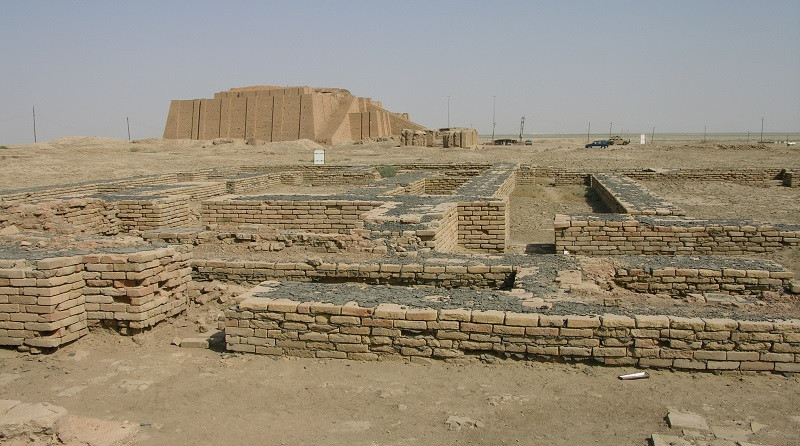
7. Ur, Iraq (3800 BC)
Ur is another important city in Mesopotamia, believed to have been founded in 3800 BC and located near the mouth of the Euphrates River. At its peak it had about 200,000 inhabitants, who could visit one of the most important temples of the Mesopotamian culture, the ziggurat of Ur
8. Luxor, Egypt (3200 BC)
Luxor, formerly called Thebes in ancient Egyptian times, was one of the most important cities in Africa and capital of the Egyptians in the Old Kingdom Its location on the banks of the Nile made it a prosperous and wealthy city that, today, preserves many vestiges of Cleopatra’s ancient homeland and was known as the City of a Hundred Gates and the City of Palaces.
9. Ray, Iran (3000 BC)
Ray is located in present-day Iran and was founded in 3000 BC. It was one of the most important cities of the Parthian empire and has currently been practically swallowed up by modern Tehran, the capital of Iran.
10. Jericho, Palestine (3000 BC)
Jericho has been inhabited since 9000 BC, although its foundation as a city dates back to 3000 BC. This city has the oldest military fortifications, even before its own foundation (6000 BC). Jericho has been very important in biblical mythology this being the place where the Jews are said to have returned after being freed from being slaves in Egypt and led by Moses.

11. Beirut, Lebanon (3000 BC)
Beirut, the current capital of Lebanon, is more than 5,000 years old. It was conquered by the Romans who built some important baths and other monuments, although today only a few ruins remain. It was also part of the Canaanite civilization and, later, both Muslims and Christians lived there
12. Jerusalem, Israel (3000 BC)
Jerusalem is a peculiar city, since its exact foundation is mixed with mythology and archaeological remains. It was probably founded around 3000 BC but It ended up being destroyed by the Babylonians and little remains of the first Jerusalem apart from Solomon’s temple
The fact that several faiths have considered it a holy city has not helped, since religious wars have made the place a tense and unstable territory. However, its archaeological and architectural wealth demonstrates the great cultural wealth resulting from the influence of different peoples.
13. Mohenjo Daro, Pakistan (2600 BC)
Mohenjo Daro was part of the Indus Valley civilization and, in addition to being the largest city in the region, it was an important urban center in ancient times. It is known for having had very sophisticated engineering and urban planning that is surprising as it surpasses that of many of the cities founded in recent times.
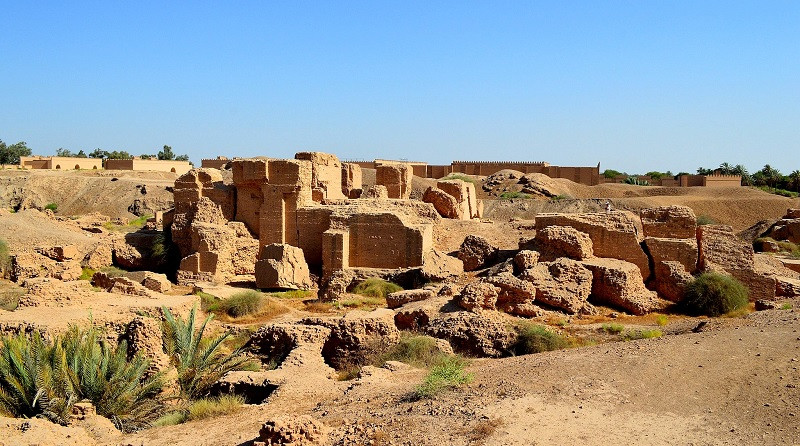
14. Babylon, Iraq (2300 BC)
You cannot talk about ancient cities without mentioning possibly the most famous of all: Babylon Founded in 2300 BC, it achieved independence after the Sumerian Renaissance period and became the capital of a great empire.
During the reign of Nebuchadnezzar II this city became an urban beauty with its Colgate Gardens, one of the wonders of the ancient world.
15. Erbil, Iraq (2300 BC)
Although remains have been found that suggest that the region has been inhabited since 5000 BC, the consensus has established that its foundation dates back to 2300 BC Erbil or Arbela is one of the main cities of Kurdistan, inhabited by Mongols, Arabs, Babylonians and many more people from the region. Its citadel has already turned 8,000 years old and is considered the cultural capital of the Kurdish Iraqis
16. Kirkuk, Iraq (2200 BC)
Kirkuk is located where a very ancient city, Arrapha, once stood. It has been the place of residence of Sumerians, Babylonians, Assyrians, Arabs and Kurds. It is located between Arab and Kurdish Iraq and its founding is attributed to 2200 BC.
17. Kutaisi, Georgia (2000 BC)
The Caucasus saw some of the first civilizations arise due to its proximity to the Fertile Crescent. Kutaisi It is considered the first capital of the early Kingdom of Georgia or Colchis Legend has it that this was the place where Jason and his Argonauts ended up.
18. Damascus, Syria (2000 BC)
Although Damascus is not the oldest city in the world, it is one of the oldest that is still inhabited. Although its foundation dates back to 2000 BC by the Arameans, archaeological records indicate that there were inhabitants around 9000 BC. Today it is the capital of Syria and shows an important cultural legacy from the Arameans, Romans, Greeks, Arabs and Mongols
19. Jaffa, Israel (2000 BC)
Jaffa is located in the prosperous Israeli city of Tel Aviv. It is believed that the first humans arrived there about 5,000 years ago, and Jaffa was established as a city itself around 2000 BC. This city She was Greek, Roman, Byzantine, Ottoman, Muslim and, now, Israeli
20. Plovdiv, Bulgaria (2000 BC)
The Bulgarian city of Plovdiv is believed to have been founded in 2000 BC, but with its first inhabitants around 6000 BC. It was founded by the Thracians, an Indo-European tribe that inhabited what is now Bulgaria and nearby countries, although with the passage of time the city would be taken by the Greeks and Romans. We have a clear sign that it was Romanized in its tourist Roman theater, very well preserved.
Use this citation format to reference the article clearly and help readers find the original source.
PsychologyFor. (2024). The 20 First Cities in History. PsychologyFor. https://psychologyfor.com/the-20-first-cities-in-history/