

See more of our articles in your search results.
Picture a reader in 1820, closing a novel at midnight, chest tight, genuinely shaken by a character’s grief rather than merely informed of it. That’s the effect Romantic writers were chasing, deliberately, against everything the previous century had trained readers to expect. The Romantic movement didn’t just add feeling to literature — it rebelled against an entire intellectual order that had prized cool reason above almost everything else. Enlightenment thinkers wanted clarity. Romantics wanted to be moved.
That shift wasn’t cosmetic. It reflected a genuine psychological reorientation in how European and American culture understood the self, one that privileged subjective emotional experience as a legitimate, even superior, path to truth compared to detached logical analysis. Historian of ideas Isaiah Berlin, whose landmark lectures on the movement’s origins remain foundational reading, argued that Romanticism represented nothing less than a revolution in Western consciousness — a turn toward individual will, imagination, and the irrational as sources of genuine insight rather than obstacles to it. That’s a big claim. It also happens to be borne out by just about every writer on this list.
So who actually built this movement, sentence by sentence, across two continents and nearly a century?
This guide profiles the 20 most famous authors of Romanticism, tracing the movement’s core characteristics and its lasting psychological legacy, while drawing on scholars like M.H. Abrams and Harold Bloom to explain why these writers still shape how we understand emotion, identity, and imagination today.

How many of these have you been "meaning to read" for months?
- 1
 TarcherThe Artist's Way30th Anniversary EditionListen Free On Audible
 - 2
 Spiegel & GrauCodependent No MoreHow to Stop Controlling Others and Start Caring for Yourself (Revised and Updated)Listen Free On Audible
 - 3
 TarcherperigeeSet Boundaries, Find PeaceA Guide to Reclaiming YourselfListen Free On Audible
What Is Romanticism and Why Did It Emerge?
Romanticism was a sweeping cultural, philosophical, and artistic movement that began in the late eighteenth century and reached its height in the early nineteenth, positioning itself squarely against the Enlightenment’s near-worship of reason, order, and empirical logic. Where Enlightenment thinkers sought universal, rational systems to explain human experience, Romantic writers insisted that something essential got lost in that translation — namely, the messy, unpredictable, deeply personal texture of actual feeling.
The movement didn’t emerge in a vacuum. Political upheaval, particularly the French Revolution’s promise and eventual betrayal, left an entire generation questioning whether rational systems could actually deliver the human flourishing they’d promised. Literary critic M.H. Abrams, whose foundational study of Romantic theory remains a touchstone in academic criticism, described this shift as moving the artist’s guiding metaphor from a passive “mirror” reflecting external reality toward an active “lamp” projecting the artist’s own inner light onto the world. That reframing changed everything about what literature was even trying to do.
Nature became central to this new sensibility, not merely as scenic backdrop but as a genuine source of spiritual and emotional truth accessible through direct, unmediated experience. A mountain wasn’t just a mountain anymore. It was a mirror for the soul’s own vastness, its own capacity for terror and awe alike.
Individualism, too, took on new weight. The Romantic hero — solitary, misunderstood, driven by passions too large for conventional society to contain — became a recurring figure precisely because it embodied the movement’s core belief: that authentic selfhood mattered more than social conformity.
The Core Characteristics That Define Romantic Literature
Several recurring features distinguish Romantic literature from what preceded and followed it, and recognizing them helps explain why these twenty authors, despite writing in different languages and different decades, still feel like they belong to the same movement.
- A deliberate rejection of neoclassical rationalism in favor of raw, unfiltered emotional expression.
- Deep reverence for the sublime in nature — landscapes vast or terrifying enough to overwhelm ordinary comprehension.
- Fascination with the incomplete and the fragmentary, reflected in numerous unfinished novels and poems left deliberately open.
- A recurring critique of industrialization and rigid social convention, favoring instead personal liberty and self-expression.
- Embrace of melancholy, mystery, and the supernatural as legitimate subjects worthy of serious literary treatment.
Romanticism also laid groundwork for modern nationalism, treating the idea of homeland as something alive and emotionally charged rather than a mere administrative boundary. Writers increasingly framed their native language, folklore, and landscape as expressions of a living cultural identity worth defending and celebrating, a theme that runs through writers as different as Rosalía de Castro and Victor Hugo.
There’s also something quietly radical in the movement’s embrace of imperfection. Neoclassicism had prized polish and symmetry; Romantic writers, by contrast, treated the incomplete as more honest than the falsely tidy. An unfinished novel wasn’t necessarily a failure — sometimes it was simply truer to how thought and feeling actually unfold.
The Romantic sensibility is often associated with melancholy and an exaltation of one’s own culture or homeland, alongside a persistent fascination with mystery and the omnipresence of natural landscapes as reflections of inner life.
British Romantic Poets Who Redefined Emotion in Verse
British Romanticism produced some of the movement’s most enduring poetic voices, each pushing personal feeling and imaginative freedom into new territory.
Lord Byron (1788–1824)
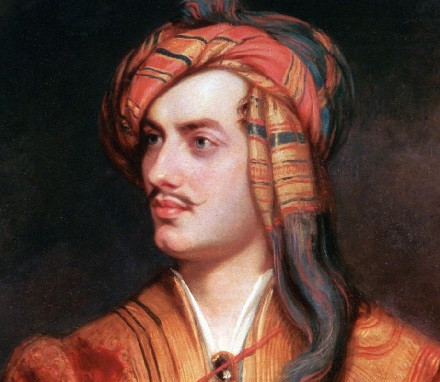
Nationality: British. Lord Byron became the living embodiment of the Byronic hero — emotionally intense, defiant, and perpetually restless — a persona he cultivated as deliberately in his public life as in his verse. His poetry channels personal freedom and rebellion with a theatrical flair that made him a genuine celebrity across Europe. Byron’s influence extended well beyond literature into fashion and cultural attitude, shaping an entire archetype of the tortured, magnetic outsider that later writers borrowed freely.
Notable Works:
- Don Juan
- Childe Harold’s Pilgrimage
- She Walks in Beauty
William Blake (1757–1827)
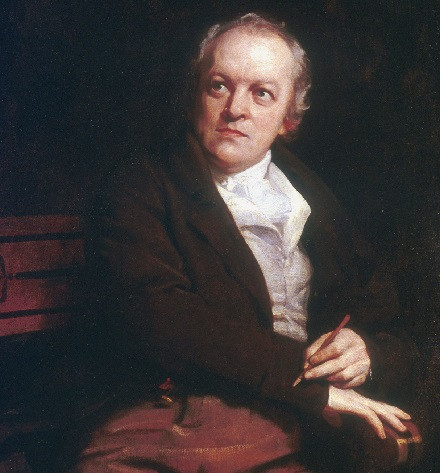
Nationality: British. William Blake approached poetry as a visionary act, rejecting institutionalized religion and rigid social convention in favor of mystical, deeply personal spiritual imagery. His work insists on the power of imagination as a near-sacred human faculty, capable of perceiving truths that rational analysis alone could never reach. Blake’s illustrations, often hand-printed alongside his verse, reinforced this fusion of visual and textual imagination that made his work genuinely unlike anything else being published in his era.
Notable Works:
- Songs of Innocence and of Experience
- The Marriage of Heaven and Hell
- The Tyger
William Wordsworth (1770–1850)

Nationality: British. Widely regarded as one of the founding architects of English Romanticism, William Wordsworth centered his poetry on nature’s emotional resonance and its capacity to shape human character through direct, contemplative experience. He argued forcefully for the imagination’s role in transforming ordinary perception into genuine insight, treating memory and landscape as intertwined sources of meaning. His collaboration with Samuel Taylor Coleridge on Lyrical Ballads is often cited as the movement’s formal English starting point.
Notable Works:
- Lines Composed a Few Miles Above Tintern Abbey
- I Wandered Lonely as a Cloud
- Ode: Intimations of Immortality
Gothic Romanticism and the Fascination with Darkness
A darker current ran alongside Romanticism’s celebration of nature and emotion, one obsessed with isolation, transgression, and the uncanny. These three writers shaped that gothic strand decisively.
Mary Shelley (1797–1851)
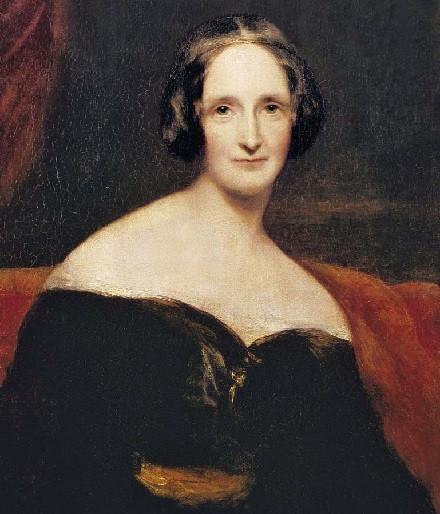
Nationality: British. Mary Shelley’s Frankenstein remains one of literature’s most psychologically prescient works, exploring ambition, isolation, and the consequences of creation gone catastrophically wrong. Written when she was barely nineteen, the novel anticipates anxieties about scientific overreach that feel strikingly current two centuries later. Shelley’s influence stretches across horror, science fiction, and philosophical fiction alike, and her creature’s tragic loneliness continues to resonate with readers grappling with questions of belonging and rejection.
Notable Works:
- Frankenstein
- The Last Man
- Mathilda
Charlotte Brontë (1816–1855)
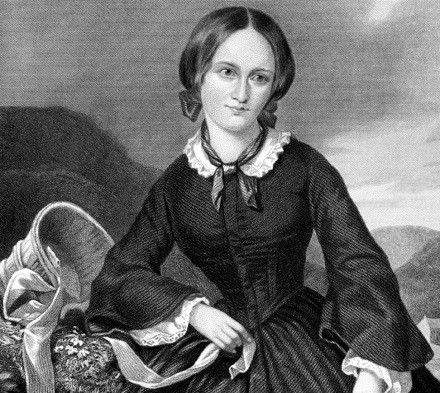
Nationality: British. Charlotte Brontë’s novels combine gothic atmosphere with sharp social critique, addressing class, gender, and personal autonomy through protagonists who refuse quiet submission to their circumstances. Jane Eyre in particular broke new ground by giving its plain, poor, morally uncompromising heroine genuine interior complexity rather than treating her merely as an object of the plot. Brontë’s insistence on emotional and intellectual equality between men and women was genuinely radical for Victorian England.
Notable Works:
- Jane Eyre
- Shirley
- Villette
Emily Brontë (1818–1848)
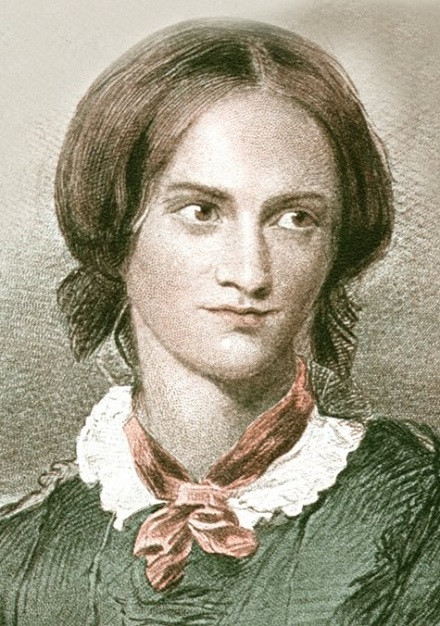
Nationality: British. Emily Brontë wrote only one novel, yet Wuthering Heights remains among the most intensely obsessive love stories in English literature, structured around a passion that destroys nearly everyone it touches. The moors surrounding her Yorkshire home become almost a character themselves, wild and indifferent, mirroring the destructive intensity between Heathcliff and Catherine. Its unflinching darkness shocked contemporary reviewers, many of whom struggled to categorize a novel this emotionally uncompromising.
Notable Works:
- Wuthering Heights
- Poems by Emily Brontë
French Romanticism: Passion, Adventure, and Political Ideals
French Romanticism paired emotional intensity with sweeping historical narrative and, often, genuine political engagement. These three figures defined that national tradition.
Victor Hugo (1802–1885)
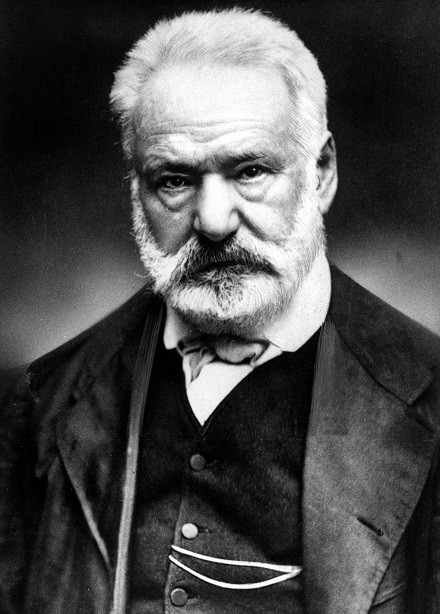
Nationality: French. Victor Hugo stands as one of French Romanticism’s most towering figures, using his fiction as a vehicle for genuine social and political advocacy around liberty and social justice. His sprawling epics tackle human misery and redemption with an ambition matched by few contemporaries, and his activism extended well beyond the page into France’s actual political life. Hugo’s belief that literature carried moral responsibility shaped how later French writers understood the novelist’s civic role.
Notable Works:
- Les Misérables
- The Hunchback of Notre-Dame
- Toilers of the Sea
Alexandre Dumas (1802–1870)
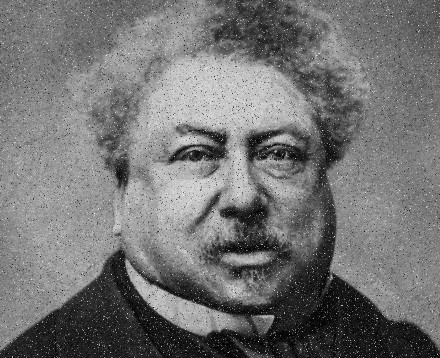
Nationality: French. Alexandre Dumas built his reputation on historical novels overflowing with adventure, betrayal, and daring reinvention, epitomizing Romanticism’s fascination with larger-than-life heroic figures. His prolific output, often produced with uncredited collaborators, made him one of the most widely read authors of his century across social classes. Dumas’s own mixed-race heritage and his father’s remarkable military career shaped themes of honor and vindication that recur throughout his fiction.
Notable Works:
- The Three Musketeers
- The Count of Monte Cristo
- The Queen’s Necklace
François-René de Chateaubriand (1768–1848)
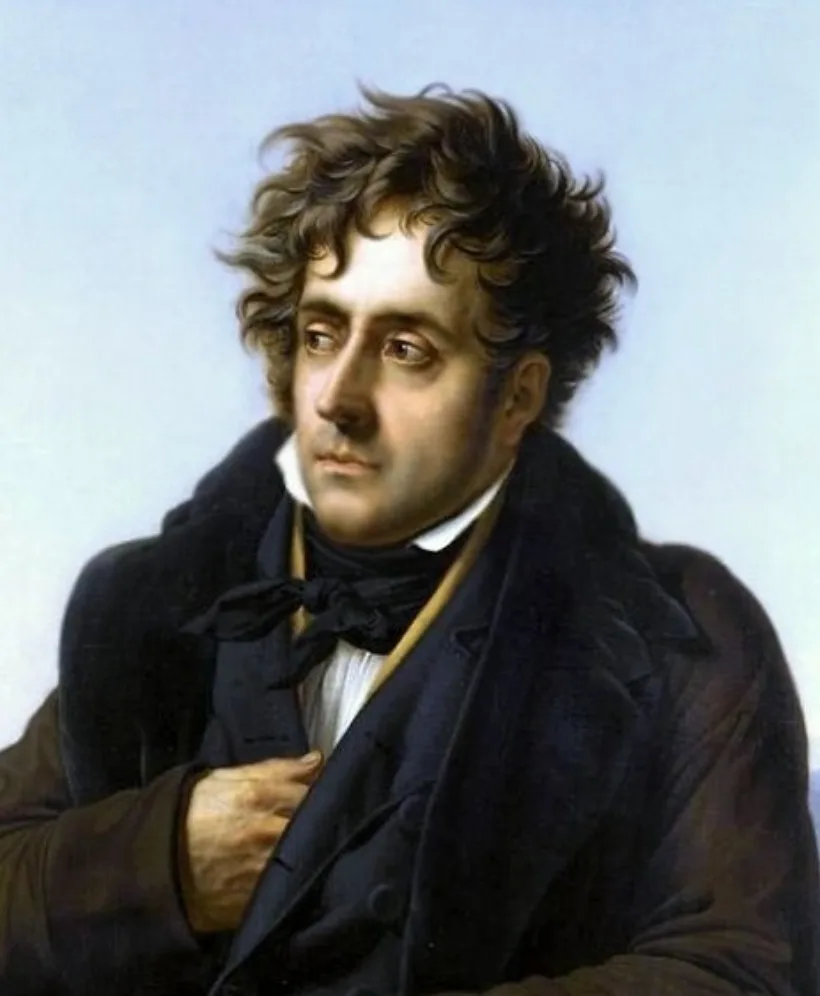
Nationality: French. François-René de Chateaubriand helped establish French Romanticism’s earliest foundations, exploring exile, spiritual longing, and the sublime through both fiction and political writing. His depictions of the American wilderness, drawn from his own travels, introduced European readers to landscapes charged with symbolic and emotional weight. Chateaubriand’s tension between religious tradition and modern doubt anticipated debates that would occupy Romantic writers for decades afterward.
Notable Works:
- Atala
- René
- Génie du Christianisme
Spanish and Galician Romanticism: National Identity and Longing
Spanish-language Romanticism developed its own distinct voice, often fused tightly with regional identity, political resistance, and a particular strain of melancholy.
José de Espronceda (1808–1842)
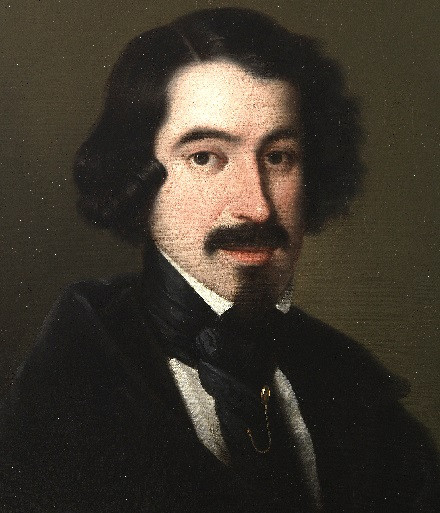
Nationality: Spanish. José de Espronceda channeled a genuinely rebellious spirit into his poetry, tackling themes of freedom and resistance against tyranny with a passion that made him a defining voice of Spanish Romanticism. His political exile during his youth sharpened his suspicion of oppressive authority, a suspicion that surfaces repeatedly across his most celebrated verse. Espronceda’s rhythmic intensity and unapologetic emotional register made him enormously popular among readers hungry for literature that matched their own political frustrations.
Notable Works:
- The Devil
- Ode to Teresa
- The Student
Gustavo Adolfo Bécquer (1836–1870)
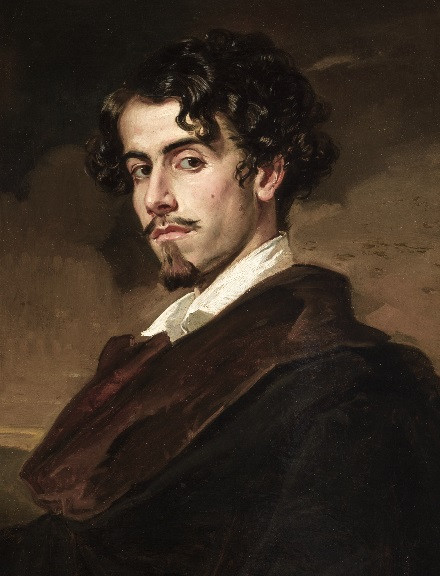
Nationality: Spanish. Gustavo Adolfo Bécquer’s intimate, understated lyricism explored love, longing, and the supernatural with a restraint that distinguished him from more theatrical Romantic contemporaries. Writing largely after Romanticism’s initial peak, Bécquer bridged the movement toward the more introspective poetic sensibilities that followed. His influence on subsequent generations of Spanish-language poets is difficult to overstate, given how many later writers cite him directly as a foundational influence.
Notable Works:
- Rimas
- Leyendas
Rosalía de Castro (1837–1885)
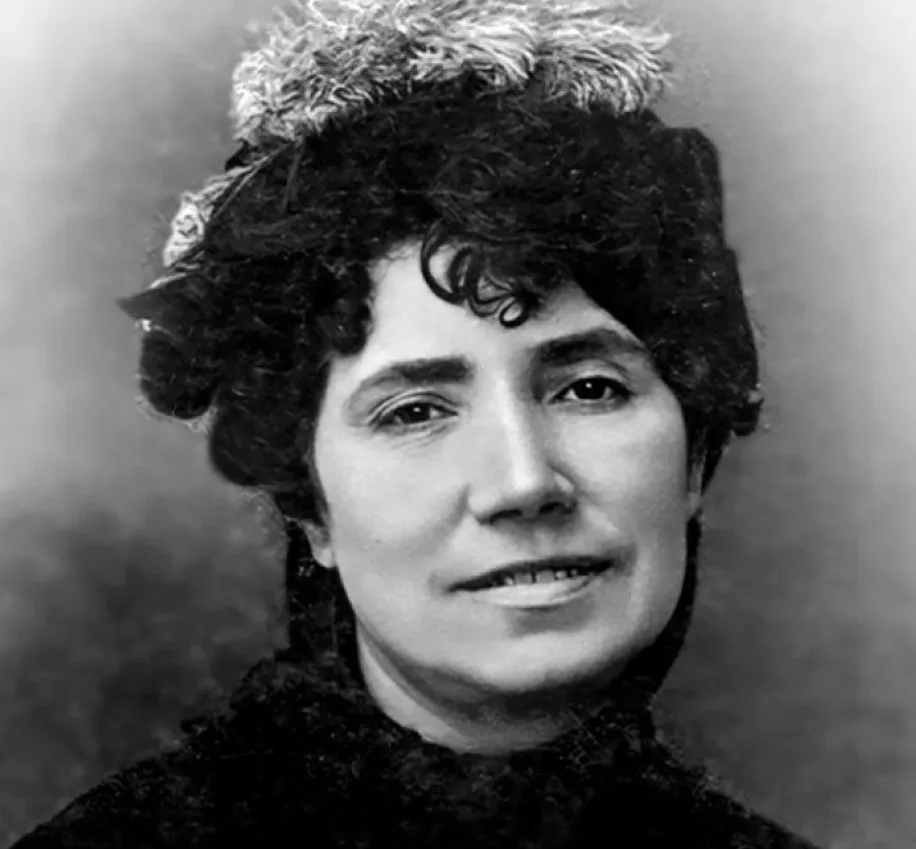
Nationality: Spanish. Rosalía de Castro wrote powerfully in the Galician language at a time when doing so carried real cultural and political risk, giving voice to exile, despair, and regional identity among the Galician people. Her poetry captures a specific, aching homesickness that resonated deeply with Galician emigrants scattered across the Americas during her lifetime. Castro’s work remains foundational to Galician national literature, and her legacy extends well beyond her immediate Romantic contemporaries.
Notable Works:
- Cantares Gallegos
- Follas Novas
German Romanticism and Its Philosophical Roots
German Romanticism leaned heavily on philosophy, treating literature as inseparable from questions about selfhood, society, and meaning. These two figures shaped that intellectual foundation, even though only one wrote primarily in German.
Johann Wolfgang von Goethe (1749–1832)
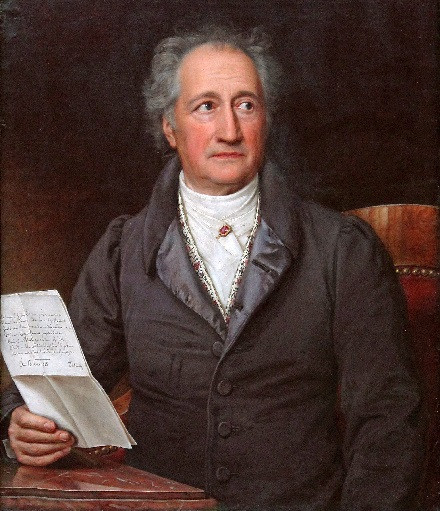
Nationality: German. Johann Wolfgang von Goethe’s influence extended so far beyond literature into science and philosophy that his fiction reads almost like philosophical inquiry disguised as narrative. His work sits at the heart of German Romanticism, wrestling repeatedly with the individual’s search for meaning and the painful friction between personal desire and social expectation. The Sorrows of Young Werther famously triggered a wave of imitative behavior among young readers across Europe, a phenomenon so striking that psychologists still reference it when discussing media influence on vulnerable audiences.
Notable Works:
- Faust
- The Sorrows of Young Werther
- Wilhelm Meister’s Apprenticeship
Jean-Jacques Rousseau (1712–1778)

Nationality: Swiss (French-speaking). Jean-Jacques Rousseau’s philosophy predates the Romantic movement proper, yet his ideas about the noble savage and humanity’s corruption by civilization shaped nearly every Romantic writer who followed him. His autobiographical Confessions modeled a new kind of unflinching self-examination that later Romantic writers adopted as a core literary technique. Rousseau’s conviction that nature offered a purer moral compass than society gave Romanticism much of its philosophical backbone.
Notable Works:
- The Social Contract
- Confessions
- Emile, or On Education
American Romanticism and the Dark Corners of the Psyche
American Romantic writers developed a distinct, often darker sensibility, preoccupied with mortality, isolation, and the mind’s hidden recesses.
Edgar Allan Poe (1809–1849)

Nationality: American. Edgar Allan Poe mastered a genuinely unsettling blend of horror and psychological precision, exploring death, madness, and guilt with a clinical attention that feels almost proto-psychiatric. His narrators often unravel from within, confessing crimes or fears in a voice too composed for the chaos it describes, a technique that profoundly shaped both horror fiction and the emerging detective genre. Poe’s insistence on tightly controlled, unified effect in short fiction became a foundational principle for writers who followed him.
Notable Works:
- The Raven
- The Tell-Tale Heart
- The Fall of the House of Usher
Emily Dickinson (1830–1886)

Nationality: American. Emily Dickinson wrote with a compressed, unconventional style that turned death, immortality, and inner solitude into some of the most psychologically dense poetry in the English language. Nearly all of her work was published posthumously, meaning she wrote almost entirely without an audience shaping her choices, which likely accounts for her poetry’s startling formal daring. Dickinson’s reclusive life has become almost as mythologized as her verse, though scholars increasingly emphasize the sharp intellect behind her seclusion rather than mere eccentricity.
Notable Works:
- Because I Could Not Stop for Death
- I Felt a Funeral in My Brain
- Hope Is the Thing with Feathers
Victorian Voices Within the Romantic Tradition
As Romanticism aged into the Victorian era, its emotional intensity gradually merged with sharper social observation and wit. These four writers occupy that transitional, overlapping space.
Charles Dickens (1812–1870)
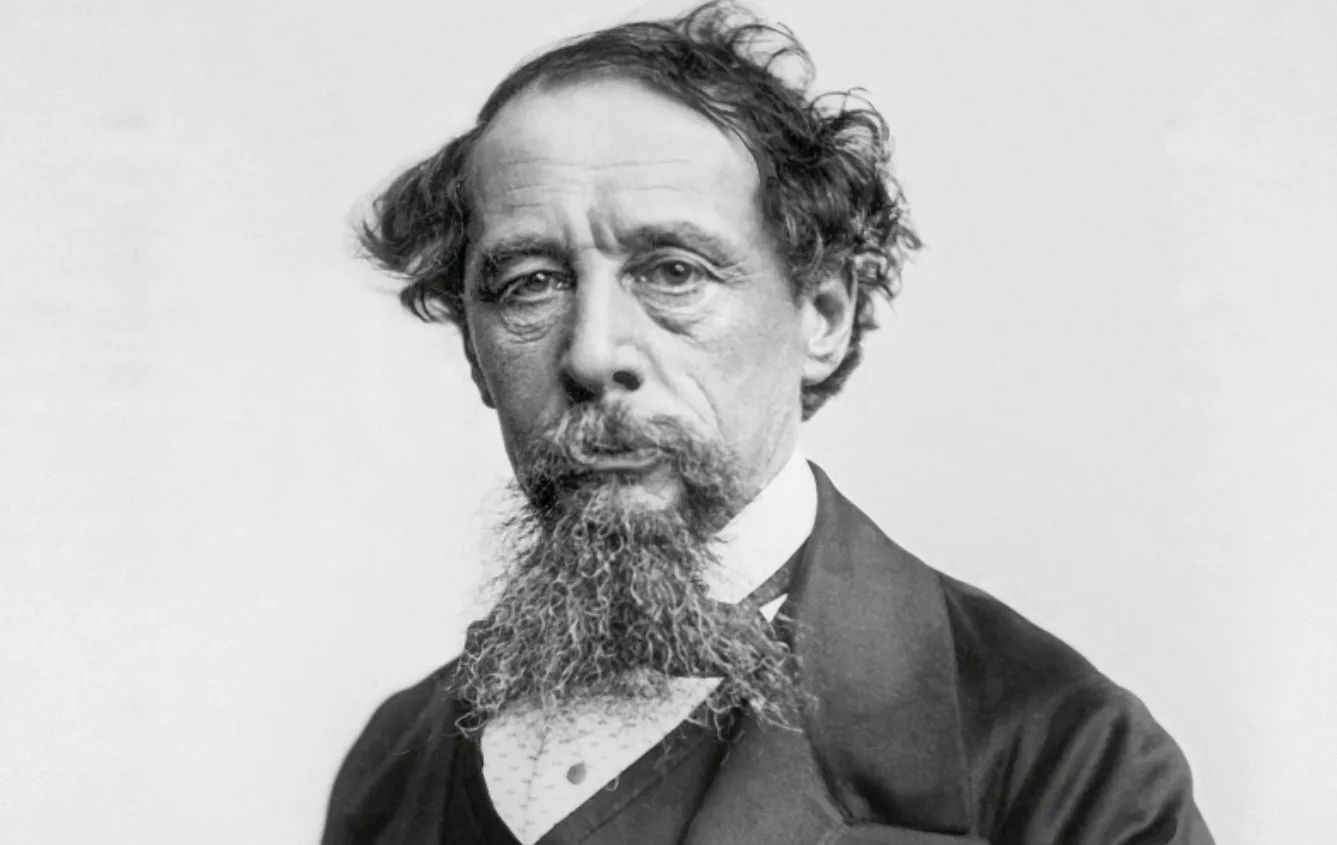
Nationality: British. Charles Dickens combined vivid, often caricatured characterization with fierce social critique, particularly regarding poverty and institutional cruelty toward children. Though his later novels lean toward realism, his earlier work retains a strong Romantic sensibility in its emotional excess and moral urgency. Dickens’s serialized publishing format also shaped his prose rhythm, since each installment needed its own emotional payoff to keep readers subscribing.
Notable Works:
- Oliver Twist
- A Tale of Two Cities
- Great Expectations
Jane Austen (1775–1817)
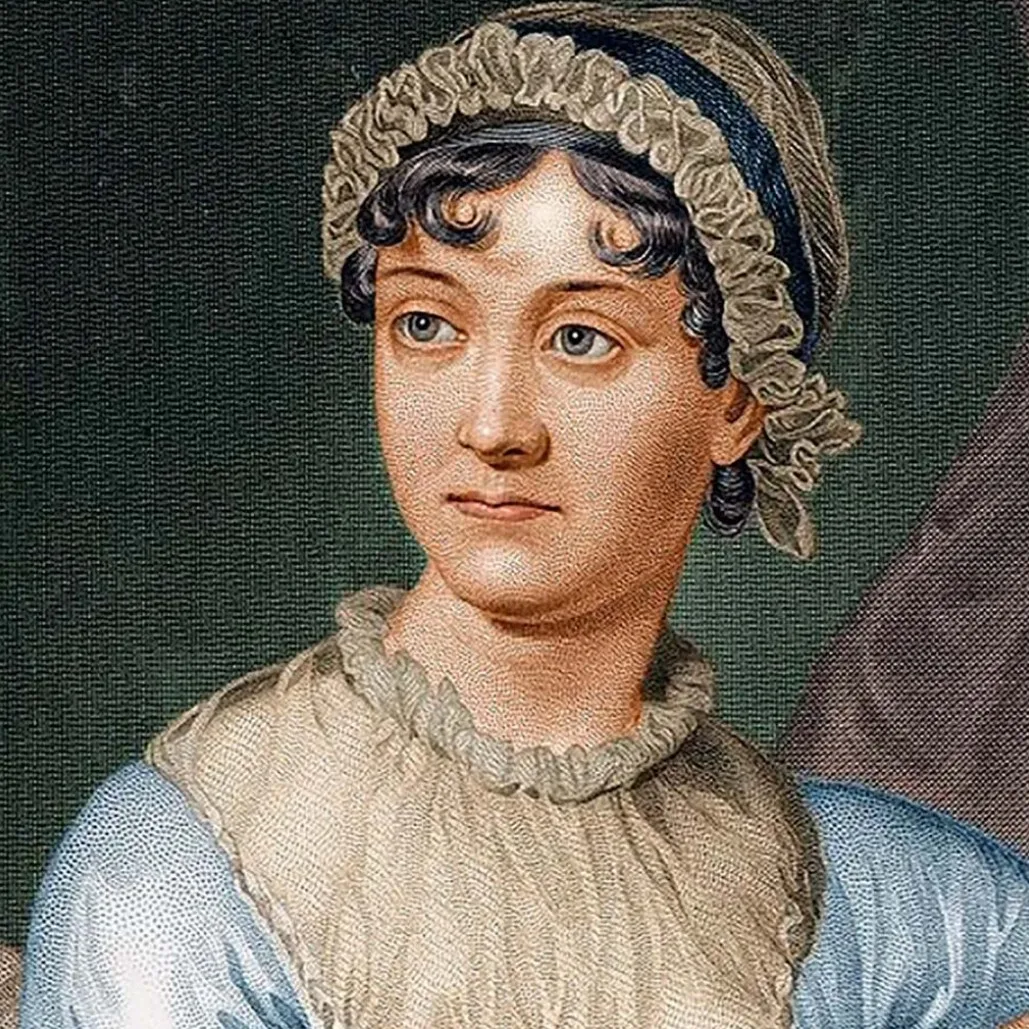
Nationality: British. Jane Austen’s novels critique the rigid social structures governing marriage, class, and gender in Regency England, delivered through a wit sharp enough to disguise how radical her observations actually were. Her heroines consistently possess more intelligence and moral clarity than the society constraining them, a pointed reversal that quietly challenged contemporary assumptions about women’s inner lives. Austen’s psychological precision regarding self-deception and social performance still feels remarkably modern.
Notable Works:
- Pride and Prejudice
- Sense and Sensibility
- Emma
Oscar Wilde (1854–1900)

Nationality: Irish. Oscar Wilde’s sharp wit and flamboyant public persona masked genuinely serious explorations of beauty, vanity, and moral corruption beneath his comic surface. The Picture of Dorian Gray, in particular, dramatizes the terrifying cost of chasing eternal youth and unchecked hedonism, structured almost like a gothic morality tale dressed in aestheticist prose. Wilde’s persecution and imprisonment for his sexuality gave later readings of his work an added layer of tragic irony he never intended but couldn’t escape.
Notable Works:
- The Picture of Dorian Gray
- The Importance of Being Earnest
- The Canterville Ghost
Lewis Carroll (1832–1898)
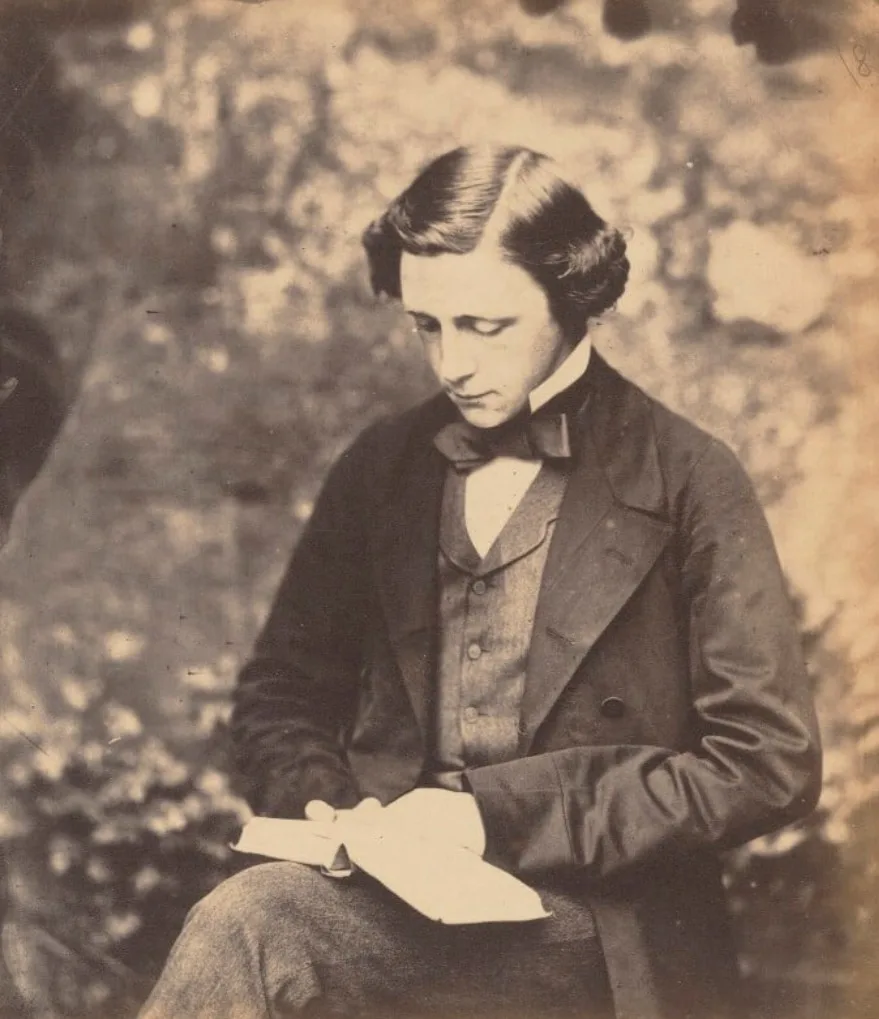
Nationality: British. Lewis Carroll’s fantastical, logic-bending fiction turned wordplay and absurdity into a genuine literary art form, creating a dreamlike world that still resists tidy interpretation more than a century later. His mathematical background subtly informs the strange internal logic governing Wonderland, where nonsense somehow follows its own rigorous, if unsettling, rules. Carroll’s work sits at the edge of the Romantic tradition, favoring imaginative freedom over the movement’s more common melancholic register.
Notable Works:
- Alice’s Adventures in Wonderland
- Through the Looking-Glass
- The Hunting of the Snark
Common Myths and Misconceptions About Romanticism
Popular culture has flattened Romanticism into shorthand for candlelit sentimentality, which misses most of what actually made the movement significant. A few persistent myths deserve direct correction.
| Common Myth | What the Movement Actually Involved |
| Romanticism means love stories and roses | It centered on emotion, imagination, and rebellion against reason |
| All Romantic writers were male poets | Women like Shelley, Austen, and the Brontës shaped the movement decisively |
| Romanticism was purely escapist fantasy | Many works directly critiqued class, politics, and industrialization |
The gender myth deserves particular pushback, since women writers across this list produced some of the movement’s most enduring and formally innovative work despite facing far steeper barriers to publication and critical recognition than their male peers. Mary Shelley wrote Frankenstein before she turned twenty. Emily Brontë’s only novel outlived critics who initially dismissed it as too dark, too strange, too much.
The idea that Romanticism was purely escapist also collapses under scrutiny. Victor Hugo’s political activism, Rousseau’s philosophy, and Dickens’s social conscience all demonstrate a movement deeply engaged with real-world injustice, using emotional intensity as a tool for moral persuasion rather than mere entertainment.
The Psychological Legacy of Romantic Literature Today
Romanticism’s emphasis on interior emotional life didn’t disappear once the movement formally ended; it fundamentally reshaped how psychology itself would later approach human experience. The movement’s insistence that subjective feeling deserves serious analytical attention anticipated, in some ways, the entire project of depth psychology that emerged decades later.
Sigmund Freud’s later theories about the unconscious mind and repressed desire find striking precedent in gothic Romantic fiction, particularly Mary Shelley’s exploration of forbidden creation and Poe’s obsessive, guilt-ridden narrators. Freud himself acknowledged literature’s role in anticipating psychological insight long before formal clinical theory caught up to it, describing poets and novelists as having intuited unconscious processes that psychoanalysis would later attempt to systematize.
Carl Jung’s concept of archetypes also maps remarkably well onto Romantic character types, particularly the Byronic hero’s recurring appearance across cultures and languages as a symbol of magnetic, self-destructive individualism. Literary theorist Northrop Frye, whose work on archetypal criticism built directly on these psychological frameworks, argued that Romantic literature essentially codified recurring symbolic patterns that continue shaping how modern audiences respond to solitary, tormented protagonists in film and fiction today.
That legacy is easy to underestimate precisely because it’s everywhere now. Every brooding antihero in contemporary film, every novel privileging emotional truth over strict realism, owes something to the writers on this list — whether the audience realizes it or not.
FAQs about the Authors of Romanticism
Who is considered the founder of the Romantic movement?
There’s no single universally agreed-upon founder, since Romanticism emerged somewhat simultaneously across different countries with distinct national characteristics. In English literature, William Wordsworth and Samuel Taylor Coleridge are often credited with launching the movement formally through their joint 1798 collection Lyrical Ballads. In Germany, Johann Wolfgang von Goethe’s earlier work, particularly The Sorrows of Young Werther, predates and arguably influenced much of what followed across Europe. Jean-Jacques Rousseau’s philosophy, though technically predating the movement’s formal literary expression, is frequently cited as its essential intellectual foundation. Because Romanticism developed as a genuinely international phenomenon rather than a single coordinated movement, scholars generally avoid crowning one definitive founder and instead describe several parallel origin points feeding into the same broader cultural shift.
Why did Romanticism reject Enlightenment values so strongly?
Romantic writers came of age during and after the French Revolution, watching a movement built on rational Enlightenment ideals descend into violence and disillusionment, which understandably shook confidence in reason as a reliable guide to human flourishing. Enlightenment thought had prized order, universal rules, and empirical detachment, but many young writers felt this approach ignored the messier, more powerful forces actually driving human behavior, namely emotion, imagination, and individual will. Industrialization added further fuel, as rapid mechanization seemed to strip away both nature’s beauty and individual craftsmanship in favor of cold efficiency. Rather than rejecting reason entirely, most Romantic writers argued for a more balanced view of human experience, one that treated feeling and imagination as equally valid, sometimes superior, paths to genuine understanding.
Were there significant female authors within the Romantic movement?
Yes, and their contributions are often underrepresented in popular summaries of the movement despite being genuinely foundational. Mary Shelley’s Frankenstein remains one of the most influential works to emerge from the entire Romantic period, shaping horror and science fiction for two centuries afterward. Charlotte and Emily Brontë each produced novels that combined Romantic emotional intensity with sharp social and psychological insight, addressing gender and class constraints their male contemporaries rarely examined as directly. Rosalía de Castro gave voice to an entire marginalized linguistic community through her Galician-language poetry, while Emily Dickinson’s radically compressed style expanded what poetry could formally accomplish. These writers frequently faced steeper barriers to publication and critical recognition than men, which makes their lasting influence all the more significant.
What’s the difference between Romanticism and the Gothic genre?
Gothic fiction is often considered a subgenre or close cousin of Romanticism rather than an entirely separate movement, sharing its interest in intense emotion, the supernatural, and dramatic atmosphere. However, Gothic fiction specifically emphasizes horror, decay, and psychological dread, often set within crumbling castles, isolated mansions, or otherwise unsettling environments designed to evoke fear rather than pure emotional catharsis. Mary Shelley, Edgar Allan Poe, and the Brontë sisters all wrote within this darker gothic register while remaining firmly part of the broader Romantic tradition. Not all Romantic literature is gothic, though; writers like Wordsworth or Rousseau focused more on nature’s restorative beauty than its capacity to terrify. The two categories overlap significantly but aren’t strictly synonymous, and many scholars treat Gothic literature as one distinct strand within Romanticism’s much broader emotional range.
Did Romanticism influence movements outside literature?
Absolutely, and its influence extended well beyond written fiction and poetry into painting, music, and political philosophy. Romantic painters like Caspar David Friedrich and J.M.W. Turner translated the movement’s fascination with nature’s sublime power into visual landscapes charged with emotional intensity. Composers including Beethoven, Chopin, and later Wagner embraced dramatic emotional expression and individualism in ways directly paralleling literary Romanticism’s core values. Politically, the movement’s emphasis on cultural identity and national feeling fed directly into nineteenth-century nationalist movements across Europe, particularly in regions seeking independence or cultural recognition. This cross-disciplinary reach is part of why Romanticism is considered less a narrow literary style and more a comprehensive cultural shift touching nearly every form of artistic and intellectual expression during its era.
Why do some of these authors, like Jane Austen or Charles Dickens, get debated as “true” Romantics?
This debate exists because both writers occupy a genuinely transitional position between Romanticism and the Realism that eventually followed it. Jane Austen wrote during the Romantic period chronologically, but her cool, ironic, socially observant style contrasts with the emotional intensity more typical of contemporaries like Byron or Shelley, leading some scholars to classify her separately under Regency literature instead. Charles Dickens, writing slightly later, blended Romantic emotional excess and moral idealism with increasingly realistic social detail, making him something of a bridge figure between the two movements. Rather than viewing these classifications as strict binary categories, most contemporary literary scholars treat them as a spectrum, acknowledging that individual writers often blended competing stylistic and philosophical influences rather than fitting neatly into a single labeled box.
How did Romanticism eventually give way to Realism?
By the mid-nineteenth century, growing skepticism toward Romanticism’s emotional idealism, combined with rapid industrialization and shifting scientific attitudes, led many writers toward a more grounded, detail-oriented approach to fiction. Realist writers wanted to depict ordinary life and social conditions with unflinching accuracy rather than filtering experience through heightened emotion or idealized nature imagery. Some writers on this list, particularly Charles Dickens in his later work, straddled both movements, gradually incorporating more realistic social detail while retaining Romantic moral urgency. This transition wasn’t abrupt or universally agreed upon; different countries and individual authors made this shift at different paces and to different degrees. Understanding Romanticism’s eventual decline helps clarify why its emotional and imaginative values still feel distinct from the grittier, more socially documentary fiction that followed it.
Which Romantic author would be considered the most influential on modern popular culture?
While influence is difficult to measure with total precision, Mary Shelley’s Frankenstein arguably holds the strongest claim to modern cultural ubiquity, having spawned countless film adaptations, cultural references, and an entire subgenre of “mad scientist” narratives still thriving in contemporary media. Edgar Allan Poe’s influence on horror and detective fiction also runs remarkably deep, shaping everything from modern psychological thrillers to true crime storytelling conventions. Lord Byron’s cultivation of the tortured, magnetic antihero persona continues echoing through countless brooding protagonists in contemporary film and television. Rather than crowning one single most influential figure, it’s more accurate to say these writers collectively established narrative and character templates so foundational that modern audiences often don’t even recognize their nineteenth-century Romantic origins.
Bibliography
- Berlin, I. (1999). The Roots of Romanticism. Princeton University Press.
- Abrams, M. H. (1953). The Mirror and the Lamp: Romantic Theory and the Critical Tradition. Oxford University Press.
- Bloom, H. (1994). The Western Canon: The Books and School of the Ages. Harcourt Brace.
- Frye, N. (1957). Anatomy of Criticism: Four Essays. Princeton University Press.
- Freud, S. (1919). The Uncanny. Imago.
- Jung, C. G. (1959). The Archetypes and the Collective Unconscious. Princeton University Press.
- Bruner, J. (1986). Actual Minds, Possible Worlds. Harvard University Press.
- Rousseau, J.-J. (1782). Confessions. Self-published posthumously.
- Encyclopaedia Britannica. (2023). Romanticism: Art and Literary Movement. Britannica Publishing.
Use this citation format to reference the article clearly and help readers find the original source.
PsychologyFor. (2026). The 20 Most Famous and Recognized Authors of Romanticism. PsychologyFor. https://psychologyfor.com/the-20-most-famous-and-recognized-authors-of-romanticism/