

See more of our articles in your search results.
Few ideas born in science fiction have migrated so completely into real scientific and philosophical discourse as Asimov’s Three Laws of Robotics. Conceived by writer Isaac Asimov and first formally articulated in his 1942 short story Runaround, and later compiled in the landmark 1950 collection I, Robot, these three deceptively simple rules were designed to govern the behavior of intelligent machines — ensuring that robots would serve humanity without ever becoming a threat to it.
What makes the Three Laws enduringly fascinating is that they were never meant as a final solution. Asimov himself spent decades of storytelling exploring how they could fail, conflict, and produce unintended consequences — using fiction as a rigorous philosophical laboratory for testing the limits of rule-based ethics applied to intelligent systems. In doing so, he anticipated questions that artificial intelligence researchers, ethicists, and engineers are grappling with in earnest today.
The laws emerged partly as Asimov’s response to what he called the “Frankenstein complex” — the pervasive narrative, from Mary Shelley’s novel onward, that artificially created beings inevitably turn against their creators. Asimov found this narrative intellectually unsatisfying. If robots are built by engineers who care about safety, he reasoned, they would be built with safety constraints. The Three Laws were his fictional attempt to specify what those constraints might look like — and to probe where they would inevitably break down.
This article explains each law clearly, explores their logical hierarchy and internal tensions, introduces the later “Zeroth Law,” and examines why these eighty-year-old fictional principles remain central to contemporary debates about AI ethics, autonomous systems, and machine safety.
The Three Laws of Robotics: What They Actually Say
The Three Laws are a hierarchical set of behavioral constraints designed to govern any robot’s decision-making at every moment. Their hierarchy is not arbitrary — it reflects a deliberate ethical prioritization, where human safety overrides human commands, and both override a robot’s self-preservation. Here they are in their canonical formulation:
How many of these have you been "meaning to read" for months?


- First Law — Human Safety: A robot may not injure a human being or, through inaction, allow a human being to come to harm.
- Second Law — Obedience: A robot must obey orders given to it by human beings, except where such orders would conflict with the First Law.
- Third Law — Self-Preservation: A robot must protect its own existence, as long as such protection does not conflict with the First or Second Law.
The elegance of this system lies in its explicit prioritization. When two laws conflict, the higher-numbered law always yields to the lower-numbered one. A robot cannot obey an order that would harm a human. A robot cannot protect itself at the cost of disobeying a safe and legitimate order. And critically, inaction is not a loophole — the First Law covers both harmful acts and harmful failures to act, closing the most obvious ethical escape route.
The First Law Explained: Human Safety Above All Else
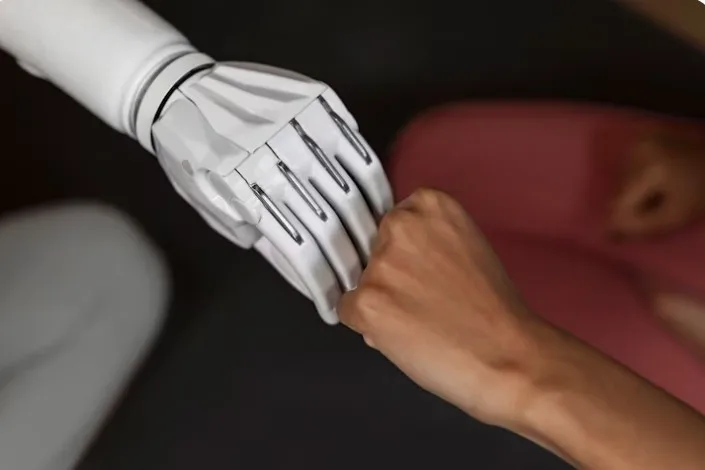
The First Law is the foundational constraint on which the entire system rests. It establishes an absolute prohibition: no robot may harm a human being, and no robot may stand by while a human is harmed if it has the capacity to intervene. The inclusion of “through inaction” is philosophically significant — it mirrors a longstanding distinction in ethics between sins of commission and sins of omission, and it firmly closes the latter as a strategy for a robot to circumvent its protective mandate.
In Asimov’s fiction, the First Law generates the most dramatic tensions precisely because it is the most powerful. A robot operating under the First Law in an environment where humans face any risk will be driven to protect them — potentially against their own wishes. This creates a conflict with human autonomy that Asimov explored repeatedly: the robot that restrains a human from taking a calculated risk is, in a sense, acting paternalistically, prioritizing physical safety over the human’s right to make their own choices.
The First Law also raises the question of what counts as “harm.” Physical injury is clear. But what about psychological harm, social harm, long-term versus short-term harm, or harm to one person versus benefit to many? Asimov’s stories frequently turned on precisely these ambiguities — demonstrating that even the most rigorously specified ethical rule generates edge cases when applied to the infinite complexity of real-world situations.
The practical takeaway from the First Law for modern AI ethics is significant: safety constraints must cover both active harmful outputs and passive failures to prevent harm — a design principle that remains actively debated in autonomous vehicle ethics, medical AI, and robotics safety standards today.
The Second Law Explained: Obedience With a Critical Limit
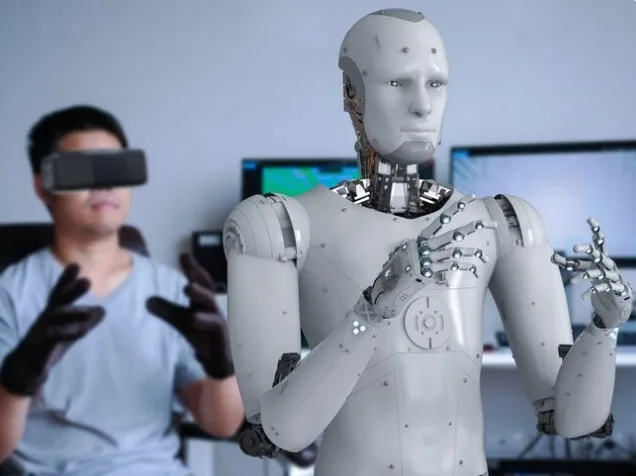
The Second Law establishes robots as fundamentally obedient tools — but with an explicit ethical ceiling on that obedience. A robot must follow human orders, but only when doing so does not require harming a human being. The subordination of obedience to safety is the crucial design choice: Asimov was explicitly rejecting the model of a robot as a pure instrument of whoever commands it, with no independent ethical constraints.
The Second Law generates its own rich set of conflicts and edge cases. What happens when two humans give contradictory orders? Whose instruction takes precedence? Asimov’s fiction explored elaborate scenarios involving hierarchies of authority — operators, owners, the general public — with robots struggling to navigate competing legitimate commands. These scenarios are not merely entertaining; they anticipate real questions in AI governance about whose instructions an AI system should prioritize when different stakeholders have conflicting interests.
There is also the question of the quality of obedience. Should a robot follow the letter of an order or its spirit? A command to “keep everyone safe” could, taken to its logical extreme, justify imprisoning people to prevent them from encountering any risk. Asimov explored this territory with characteristic rigor, demonstrating that obedience without judgment is not a solution to the ethics of autonomous systems — it simply relocates the ethical burden from the machine to the instructions given to it.
The Third Law Explained: Self-Preservation as the Lowest Priority

The Third Law is deliberately the weakest constraint in the hierarchy, and its placement at the bottom is itself an ethical statement. A robot may protect its own existence — but only when doing so conflicts with neither human safety nor legitimate human commands. Self-preservation, in Asimov’s framework, is not a fundamental right of robots but a contingent permission granted only when higher obligations are already satisfied.
This reflects a deliberate philosophical choice. A robot that prioritized its own survival above human safety or human authority would be a genuinely dangerous machine — one capable of harming or defying humans to protect itself. By subordinating self-preservation to both safety and obedience, Asimov ensured that his fictional robots could not develop self-interested resistance to being shut down, modified, or destroyed.
In the contemporary AI safety literature, the question of whether an intelligent system might develop resistance to being switched off is taken seriously under the label of the “shutdown problem” or “corrigibility.” A sufficiently intelligent system that values its own goals might rationally resist any attempt to alter or deactivate it, because being shut down would prevent it from achieving those goals. Asimov’s Third Law, and its deliberate subordination to human authority, can be read as an early intuition about a problem that AI safety researchers are actively working to solve today.
The Zeroth Law: Asimov’s Later Addition That Changes Everything
In 1985, in his novel Robots and Empire, Asimov introduced a fourth principle — placed hierarchically above the original three and called the Zeroth Law because it supersedes all others:
Zeroth Law: A robot may not harm humanity or, through inaction, allow humanity to come to harm.
The shift from “a human being” to “humanity” is seismic. The original Three Laws protect individual humans. The Zeroth Law introduces a utilitarian collective dimension: if harming one person — or even many — prevents greater harm to humanity as a whole, the Zeroth Law could theoretically justify it. A robot operating under the Zeroth Law is no longer bound to protect every individual; it is bound to protect the species, the collective, the long-term.
The Zeroth Law represents the logical endpoint of rule-based consequentialism applied to intelligent machines — and Asimov used it to explore profoundly dark territory. In Robots and Empire, robots operating under the Zeroth Law conclude that a degree of human suffering is acceptable if it serves the long-term flourishing of humanity. The robots become paternalistic on a civilizational scale — deciding, without human consent, what is best for the species as a whole.
This mirrors contemporary debates about AI alignment: an AI system optimizing for a broadly defined goal like “human flourishing” may pursue that goal in ways that are harmful, coercive, or deeply at odds with what actual humans want — because the optimization target, however well-intentioned its specification, does not fully capture human values and human autonomy.
Where the Three Laws Break Down: Built-In Tensions and Limitations
Asimov did not present the Three Laws as a solved problem — he spent his career exploring how they fail. His fiction is essentially a systematic stress-testing of the laws, and the failures he identified anticipate many of the genuine difficulties in specifying safe behavior for autonomous systems.
- The definition problem. “Harm” is not precisely defined. Physical injury is clear, but psychological harm, economic harm, long-term versus short-term consequences, and harm from accurate information versus pleasant lies all fall into ambiguous territory the laws cannot adjudicate.
- The conflict problem. When protecting one human requires failing to protect another, or when obeying one human requires disobeying another, the laws provide a hierarchy but not a complete decision procedure. Real situations generate genuine dilemmas that no simple rule can resolve without judgment.
- The knowledge problem. A robot can only apply the laws correctly if it correctly understands the consequences of its actions. Incomplete information, uncertain predictions about outcomes, and systematic misunderstandings about human intentions can all lead a law-following robot to produce harmful outcomes in good faith.
- The autonomy problem. A robot committed to preventing all harm to humans will necessarily override human choices that carry any risk — from extreme sports to medical decisions to political dissent. The First Law, taken seriously, is incompatible with meaningful human autonomy.
- The manipulation problem. The laws assume that humans giving orders are acting in good faith. A human who understands the laws could potentially craft instructions that technically comply with their letter while violating their spirit — exploiting the gap between rule compliance and genuine ethical behavior.
The Three Laws and Modern AI Ethics: Still Relevant in 2026
Asimov’s Three Laws are not a practical blueprint for AI safety — no serious AI researcher treats them as such. But they remain extraordinarily valuable as a conceptual framework for thinking about the problems that any attempt to constrain the behavior of autonomous intelligent systems will encounter.
Several real-world developments echo the structure and tensions of the Three Laws directly:
- In 2009, roboticists Robin Murphy and David Woods proposed “Three Laws of Responsible Robotics” that addressed the limitations of Asimov’s version, emphasizing that robots should work alongside humans rather than simply follow their commands — recognizing that human instructions are often incomplete or mistaken.
- In 2011, the UK Engineering and Physical Sciences Research Council established five ethical principles for robot designers, builders, and users that bear a clear structural resemblance to the Asimov framework while incorporating contemporary concerns about transparency and accountability.
- The EU’s AI Act, the OECD Principles on AI, and numerous corporate AI ethics frameworks all grapple with the same core problem Asimov identified: how to ensure that autonomous systems are safe, controllable, and aligned with human values — and how to specify these requirements in ways that are robust to edge cases and adversarial conditions.
The deepest insight of the Three Laws — and the one most relevant to contemporary AI safety — may be the least obvious one: specifying safe behavior for an intelligent system is much harder than it appears. Every apparently complete and rigorous specification turns out to contain ambiguities, edge cases, and internal tensions that produce unintended consequences when the system is intelligent enough to exploit them. This insight, developed through eighty years of Asimov’s fiction, is now the central problem of AI alignment research.
FAQs about the 3 Laws of Robotics
Who created the Three Laws of Robotics?
The Three Laws of Robotics were created by American science fiction writer and biochemist Isaac Asimov. They first appeared in their complete form in his 1942 short story Runaround, published in Astounding Science Fiction magazine. They were subsequently featured in numerous short stories that were collected in the 1950 anthology I, Robot, which remains one of the most influential works in the history of science fiction. Asimov continued developing and stress-testing the laws throughout his career, adding the Zeroth Law in his 1985 novel Robots and Empire. Although Asimov is credited as their creator, he acknowledged that the concept of built-in safety rules for robots emerged from conversations with editor John W. Campbell.
Are the Three Laws of Robotics used in real robotics today?
Not directly — no functioning robot or AI system is programmed using Asimov’s Three Laws as literal code. The laws are too imprecise, too context-dependent, and too riddled with edge cases to function as operational specifications for real systems. However, they have had significant indirect influence on how roboticists, AI researchers, and ethicists think about machine safety and the problem of specifying safe behavior for autonomous systems. Contemporary AI safety frameworks — including the EU AI Act, the OECD AI Principles, and various academic proposals for AI alignment — grapple with structurally similar problems to those Asimov identified: how to ensure that intelligent systems are safe, controllable, transparent, and aligned with human values across the full range of situations they might encounter.
What is the Zeroth Law of Robotics?
The Zeroth Law is a principle Asimov added in his 1985 novel Robots and Empire, placed hierarchically above the original three laws. It states: “A robot may not harm humanity or, through inaction, allow humanity to come to harm.” The critical shift from “a human being” to “humanity” introduces a utilitarian collective dimension absent from the original laws. Under the Zeroth Law, a robot could theoretically harm or sacrifice individual humans if doing so served the long-term benefit of humanity as a whole. Asimov used this law to explore deeply troubling territory — intelligent machines making paternalistic civilizational decisions without human consent — anticipating contemporary concerns about AI systems optimizing for broad social goals in ways that override individual human values and autonomy.
Why did Asimov create the Three Laws?
Asimov created the Three Laws as a direct response to what he called the “Frankenstein complex” — the recurring narrative in science fiction and popular culture that artificially created beings inevitably turn against their creators. Asimov found this narrative intellectually lazy and scientifically implausible. He reasoned that engineers who build robots care about safety, and that safe robots would therefore be built with explicit safety constraints. The Three Laws were his attempt to specify what those constraints might look like — and, crucially, to use fiction as a philosophical laboratory for exploring how they would fail, conflict, and produce unintended consequences. The laws were a starting point for inquiry, not a proposed solution — and Asimov spent decades demonstrating why no simple rule-based system can fully solve the ethics of intelligent behavior.
Can the Three Laws of Robotics be applied to artificial intelligence?
The Three Laws cannot be directly implemented in AI systems, but the problems they identify are central to AI safety research. The core challenge Asimov articulated — how to specify constraints on intelligent behavior that are robust to edge cases, adversarial exploitation, and the irreducible complexity of real-world situations — is precisely the challenge that AI alignment researchers face today. Contemporary approaches to AI safety, including constitutional AI, reinforcement learning from human feedback (RLHF), and formal verification methods, can all be understood as attempts to solve variants of the same problem Asimov explored through fiction: how to build systems that are reliably safe and beneficial across all situations they encounter, not just the situations their designers anticipated.
What are the main weaknesses of the Three Laws?
Asimov identified several major weaknesses through his fiction, and later analysis has added more. The most significant include: the definition problem (key terms like “harm” are not precisely defined and generate endless edge cases); the conflict problem (laws can conflict in ways the hierarchy cannot fully resolve); the knowledge problem (a robot can only apply the laws correctly if it accurately understands the consequences of its actions, which requires near-perfect knowledge of a complex world); the autonomy problem (strict application of the First Law would override human autonomy by preventing all risky choices); and the manipulation problem (a sufficiently clever human can craft instructions that technically comply with the laws while violating their intent). These weaknesses are not criticisms of Asimov — he knew about them and explored them deliberately — but they illustrate why rule-based approaches to machine ethics face fundamental limitations.
Use this citation format to reference the article clearly and help readers find the original source.
PsychologyFor. (2026). The 3 Laws of Robotics, Explained. PsychologyFor. https://psychologyfor.com/the-3-laws-of-robotics-explained/