

See more of our articles in your search results.
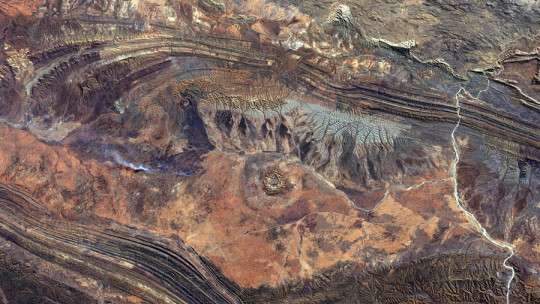
Geologists estimate that our planet Earth must be about 4.5 billion years old. During this long time the planet has not remained static, but has been changing in practically all the aspects that make it up.
Geology is the science that mainly studies the Earth but, being such a multifaceted planet, it is not possible to approach its study from a single perspective and, for this reason, geology has a lot of different branches.
Next Let’s see what are the main branches of geology and we will discover what its main objects of study are.
The branches of Geology, summarized and explained
Geology is, taking its definition in the dictionary of the Royal Spanish Academy, the science that is responsible for studying the history of our planet, as well as the nature, formation, evolution and current disposition of the materials that make it up This definition is not entirely accurate, since geology also has branches that focus on other planets, asteroids, natural satellites and other celestial bodies, but as an introduction to what geological science is, it is quite defining.
The Earth is a very multifaceted planet. It is not simply a mass of rock that travels through the universe aimlessly, but an important mixture of all types of minerals, fluids and physical phenomena that determine its appearance, how it interacts with the living beings that inhabit it and, also, how it behaves. It manifests itself violently in the form of volcanic eruptions, earthquakes, tsunamis and creating geographical features of all kinds.
How many of these have you been "meaning to read" for months?
- 1
 TarcherThe Artist's Way30th Anniversary EditionListen Free On Audible
- 2
 Undercover Publishing HouseStop Letting Everything Affect YouHow to break free from overthinking, emotional chaos, and self-sabotage.Listen Free On Audible
- 3
 MajostaDon't Believe Everything You ThinkWhy Your Thinking Is The Beginning & End Of Suffering (Beyond Suffering)Listen Free On Audible
Because of this, It is impossible to approach the Earth from a single geological perspective Virtually any aspect of the blue planet that you want to study requires a specific study, a branch of geology that uses a different method to obtain the maximum degree of information. For this reason geology is subdivided into many branches, we could say almost infinite. Below we will see the most notable ones.
1. Geophysics
Geophysics is the branch of geology that studies the internal and external structure of the Earth from a physical perspective It focuses on the physical processes that modify our planet or that condition it, such as gravity, electromagnetic fields and radioactive phenomena.
2. Geochemistry
Geochemistry is the branch that studies the chemical composition of our planet to explain the mechanisms behind the main geological systems of the Earth’s crust and oceans He has a special interest in how chemical elements and substances are distributed through the layers of the earth and how this influences their properties.
3. Paleontology
paleontology could be considered a separate branch on its own, although it is also included within the vast field of geology. This science aims to study the Earth’s past through the study of fossil remains, interpreting how extinct life forms must have lived.
4. Hydrogeology
Hydrogeology is the branch of applied geology that studies the formation processes of groundwater and how these relate to surface water.
5. Meteorology
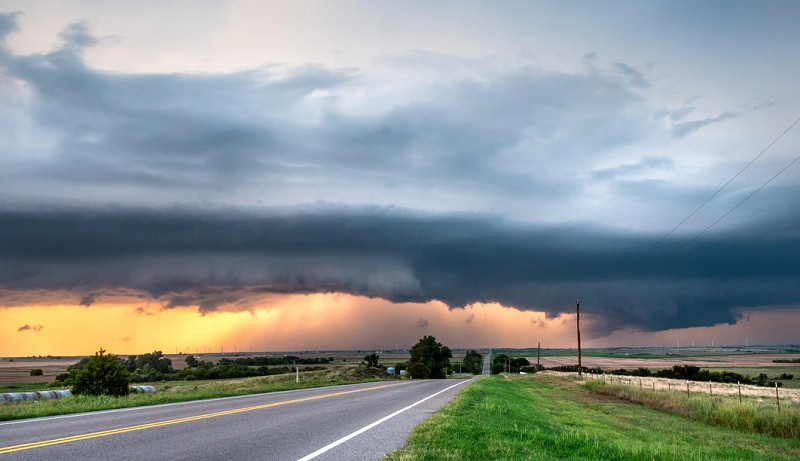
Meteorology is a branch of geology that studies and predicts atmospheric phenomena To do this, it uses different methods and data, studying phenomena such as wind, temperature, pressure and humidity, among others. It is also its object of study to determine changes in the structure and composition of the superficial layers of the Earth’s crust.
6. Caving
Caving is responsible for morphological, structural and evolutionary study of the caves and natural cavities of our planet Within this discipline there is also the task of mapping the interiors of the caves, their tunnels and corridors, in addition to specifying what material they are made of.
7. Petrology
Also called petroleum geology, petrology is the branch that is dedicated to investigating where to obtain this fossil fuel Its existence is totally conditioned by the high value that has been given to oil in the last hundred years, being basically like black gold. Petrology aims to estimate where large underground oil stores are located and, if you are lucky enough to find it, design the best way to extract it based on the ground conditions.
8. Economic geology
Economic geology is closely related to petroleum geology since both are responsible for finding geological deposits where there are valuable materials. In the case of economic geology this It is interested in minerals and metals, such as diamonds, rubies, silver, gold and platinum, as well as substances of high economic value including oil and natural gas.
9. Crystallography
Crystallography, as its name suggests, is the branch of geology that studies crystals. These types of minerals are very interesting from a geological and physical perspective since despite being solid their molecular structure resembles that of a liquid, although they do not flow at room temperature because it has a high degree of organization.
10. External geology
The external geology It is the branch of geology that studies only the processes that take place on the surface of the planet, that is, the Earth’s crust This branch is not isolated from the rest of the geological disciplines, since it is supported by knowledge from seismology, plate tectonics, geomorphology, sedimentology, volcanology…
11. Internal geology
Internal geology studies exclusively the physical and chemical processes that occur beneath the earth’s crust As with external geology, it is based on many other geological disciplines and its main objective is to analyze the nature of the internal layers of the Earth, both the mantle and the Earth’s core.
12. Stratigraphy
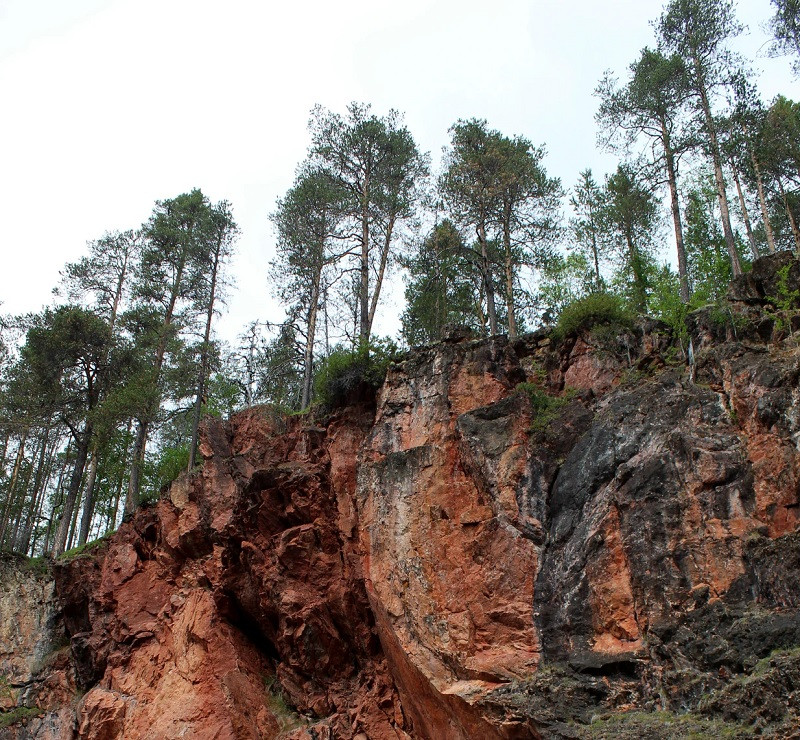
The stratigraphy It is responsible for studying the formation processes of the stratum, which is each of the layers that make up the Earth’s surface These strata are levels of different sediments that have been settled during the geological history of our planet, and magmatic, sedimentary and metamorphic rocks can be found.
13. Plate tectonics
plate tectonics is responsible for studying the processes behind the formation and movement of tectonic plates These plates are large pieces of the Earth’s crust that fit together like a puzzle and, when they rub together, they cause earthquakes and tsunamis. Through plate tectonics it is possible to know the movements of the continents, predict earthquakes and know how these plates will change over the years.
14. Structural geology
Structural geology is responsible for studying the Earth’s crust It is related to plate tectonics and seismology, but in this specific case it is responsible for analyzing the Earth’s surface from a more global perspective, also studying sediments, rocks and orogeny in general.
15. Seismology
Closely related to plate tectonics, seismology is the branch that is responsible for study and, especially, predict earthquakes and tidal waves These phenomena originate due to friction between the tectonic plates which, if studied, allow us to know how they will rub and in which regions of the continents there is a greater risk of an earthquake occurring.
16. Historical geology
Historical geology focuses attention on all the processes of change and transformation that planet Earth has gone through since it was formed, about 4.5 billion years ago, until now. This science allows us to know the evolution of our planet, the change in its tectonic plates, the creation and disappearance of continents and how this is observable through the sediments of the Earth’s crust and the current shapes of land masses.
17. Geochronology
Geochronology is the branch that applies different physical and chemical methods to estimate the age of rocks This discipline is closely related to historical geology and is, in fact, what allows it to determine more or less how old both the main current land masses and our planet as a whole are.
18. Volcanology
volcanology is in charge of studying volcanoes It encompasses both the analysis of its formation and the prediction of its eruptions and behavior. It is also the object of study of this discipline to analyze the behavior and properties of magma and how this substance shapes the Earth’s surface.

19. Gemology
Gemology is responsible for study of precious stones and has a lot to do with economic geology However, within this branch there is more interest in studying the formation processes and physical characteristics of diamonds, rubies, sapphires or other minerals rather than in their location and economic valuation.
20. Astrogeology
Astrogeology is basically geology applied to the study of bodies that are not the Earth It is responsible for the study of the formation and physical properties of other planets and celestial bodies of a rocky nature such as asteroids, natural satellites, meteorites…
21. Sedimentology
Sedimentology is the branch that aims to study solid particles, such as rocks, metals and different types of soil, which They are transported along the Earth’s surface through natural phenomena such as wind and the currents of rivers and seas Sediments are deposited in various regions, forming different strata and sedimentary rocks.
22. Regional geology
Regional geology is a branch of geology, specifically structural geology, which, although it studies the Earth’s crust like many other branches of general geology itself, focuses on the particularities of specific regions. Study What is the composition, properties and origin of a land mass such as a continent, an island, a peninsula.
23. Geomorphology
The geomorphology studies the earth’s relief, having a close relationship with plate tectonics since it studies what these large pieces of the Earth’s crust are like in addition to how they have influenced the formation of the landscape, creating mountains, valleys and other geographical features that make the surface something rough, not flat. Geomorphology not only focuses attention on land masses, but also studies underwater geographical features, such as the Mariana Trench.
24. Mineralogy
Mineralogy studies the composition, diversity and formation of minerals that make up the earth’s surface.
25. Climatology
Climatology is a branch of geology that allows us to determine how the climates of our planet form and evolve. This discipline especially analyzes the impact of the physical, chemical and geological properties of the region in which each of the Earth’s climates is located.
26. Geothermal
The geothermal studies the thermal properties of the minerals that make up our planet, in addition to the processes that occur beneath the Earth’s crust as is the magma fluid. This science has special interest in the internal temperature of the Earth and its application is to take advantage of that heat for domestic and industrial purposes.
27. Soil science
Soil science is a bridging branch between geology and biology that studies the properties, formation and impact on the maintenance of the ecosystems that the terrestrial soil has
In addition to studying how living beings interact with the geology of our planet, it studies how both influence each other, as is the case of the roots of vegetables that change rocks, turning them into soil or how substances such as sulfur hinder the existence of certain species. animals.
28. Geomagnetism
Geomagnetism is the branch that is responsible for studying the Earth’s magnetic field Try to understand how it emerged and has been maintained, what phenomena are conditioned by it (e.g., northern lights), how the change of magnetic poles occurs and what factors can destabilize it.
29. Geodynamics
Geodynamics studies how different physical phenomena, such as the movement of tectonic plates, gravity, electromagnetism, volcanic eruptions, wind or rain, modify the structure and composition of the Earth’s crust over time
30. Gravimetry
Gravimetry studies What is the mineral composition of the Earth like? both externally and internally, has influenced its severity.
Use this citation format to reference the article clearly and help readers find the original source.
PsychologyFor. (2024). The 30 Branches of Geology (and Their Characteristics). PsychologyFor. https://psychologyfor.com/the-30-branches-of-geology-and-their-characteristics/