

See more of our articles in your search results.
You stand in the grocery aisle holding two nearly identical boxes of cereal, one screaming “heart healthy” and the other “low sugar,” and genuinely have no idea which one is actually better for you. That confusion is not a personal failing. It is the predictable result of decades of conflicting nutrition advice, industry-funded studies, and diet trends that contradict each other every few years. Eating well should not require a chemistry degree, and yet for most people it somehow feels like it does.
The exhaustion runs deeper than grocery-aisle indecision. Years of being told to count calories, avoid entire food groups, or chase the latest superfood leave many people disconnected from the basic signals their own body sends about hunger and fullness. That disconnect shows up as guilt after ordinary meals, anxiety around social eating, or a nagging sense that food is something to manage rather than enjoy. Diet culture profits from that anxiety, and it rarely admits how much of standard nutrition advice actually rests on shaky, industry-influenced science rather than settled fact.
So which books actually help you eat well without turning every meal into a math problem?
This guide reviews the 6 best nutrition books to eat well, covering the research, frameworks, and named experts behind each one.
The 6 Best Nutrition Books to Eat Well
Verified Top Picks- 1
 Evelyn Tribole & Elyse Resch Intuitive Eating: A Revolutionary Anti-Diet Approach Ten evidence-based principles to make peace with food and honor internal hunger signalsCHECK TODAY'S PRICE
 - 2
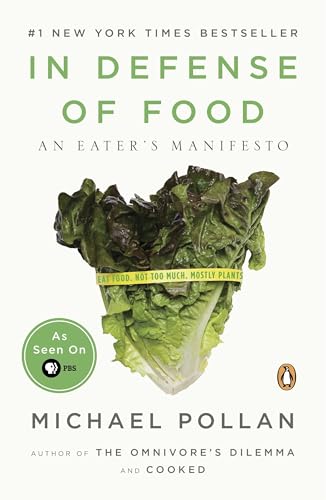 Michael Pollan In Defense of Food: An Eater's Manifesto A memorable seven-word philosophy advocating whole, real foods over reductionist nutritionismCHECK TODAY'S PRICE
 - 3
 Michael Moss Salt Sugar Fat: How the Food Giants Hooked Us Pulitzer Prize-winning investigative reporting on how food companies engineer the bliss pointCHECK TODAY'S PRICE
 - 4
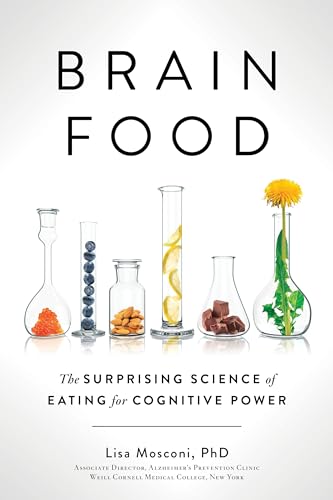 Lisa Mosconi Brain Food: The Surprising Science of Eating for Cognitive Power Neuroscience-grounded research connecting specific dietary choices to brain health and memoryCHECK TODAY'S PRICE
 - 5
 Emeran Mayer The Mind-Gut Connection A gastroenterologist explains how the microbiome shapes mood, stress, and cravingsCHECK TODAY'S PRICE
 - 6
 Michael Greger How Not to Die: Foods Proven to Prevent and Reverse Disease A comprehensive disease-by-disease review of clinical nutrition literature and plant-forward eatingCHECK TODAY'S PRICE
What Makes a Nutrition Book Actually Change How You Eat?
The strongest nutrition books share a specific trait: they translate research into concrete, sustainable behavior changes rather than short-term rules that inevitably collapse once willpower runs out.
Some books lean clinical, grounding advice in disease-specific research and structured recommendations. Others focus on rebuilding a healthier relationship with food itself, addressing the psychology of eating before ever discussing specific nutrients. Evelyn Tribole and Elyse Resch’s approach sits closer to that second category, while Michael Greger’s disease-focused research sits closer to the first. Most readers benefit from books representing both approaches rather than committing to just one lane.
- Look for books that translate research into sustainable behavior change rather than short-term rules.
- Match clinical, disease-focused titles to readers who want structured recommendations by condition.
- Expect honest books to acknowledge that nutrition science genuinely evolves and contains real uncertainty.
The 6 Best Nutrition Books to Eat Well
The following selection spans clinical disease prevention, food industry investigation, gut-brain science, and the psychology of ending chronic dieting, covering the range of angles worth understanding before changing how you eat.
1. Intuitive Eating: A Revolutionary Anti-Diet Approach (4th Edition) — Evelyn Tribole and Elyse Resch
Intuitive Eating by registered dietitians Evelyn Tribole and Elyse Resch rejects the entire framework of restrictive dieting, arguing that most eating problems stem from ignoring internal hunger and fullness cues rather than lacking willpower.
The book lays out ten specific principles, from making peace with food to respecting fullness, that together form a genuinely evidence-informed alternative to cycles of restriction and overeating that define most diet culture.
- Rejects restrictive dieting in favor of internal hunger and fullness cues.
- Outlines ten specific principles rather than vague encouragement to “listen to your body.”
- Written by two registered dietitians with decades of clinical eating disorder experience.
2. In Defense of Food: An Eater’s Manifesto — Michael Pollan
In Defense of Food by journalist Michael Pollan distills decades of nutrition science confusion into seven famously simple words: eat food, not too much, mostly plants. Pollan argues that most modern nutrition advice fixates on isolated nutrients rather than whole foods.
That fixation, he claims, has made eating well feel far more complicated than it needs to be. Pollan is not a nutrition scientist himself, but he synthesizes research from many who are, making the book a useful bridge between academic findings and daily grocery decisions.
- Reduces nutrition advice to a memorable, plain-language seven-word rule.
- Critiques nutrient-by-nutrient thinking in favor of whole, minimally processed food.
- Synthesizes academic nutrition research for readers without a science background.
3. Salt Sugar Fat: How the Food Giants Hooked Us — Michael Moss
Salt Sugar Fat by Pulitzer Prize-winning journalist Michael Moss exposes how major food companies deliberately engineer products to maximize a measurable ‘bliss point,’ the precise combination of salt, sugar, and fat that keeps people eating past genuine hunger.
Moss interviewed food scientists and industry insiders directly, which gives the book an investigative weight most nutrition titles lack. Understanding this engineering helps explain why willpower alone rarely beats a product built specifically to override it.
- Documents how food companies engineer a measurable ‘bliss point’ in products.
- Draws on direct interviews with food scientists and industry insiders.
- Explains why willpower alone often loses against deliberately engineered food.
4. Brain Food: The Surprising Science of Eating for Cognitive Power — Lisa Mosconi
Brain Food by neuroscientist Lisa Mosconi connects specific dietary choices directly to brain structure and cognitive performance, drawing on her research into how nutrition affects long-term risk for cognitive decline.
Mosconi pays particular attention to the gut-brain relationship and specific nutrients tied to memory and mood. Readers looking for a more clinical, neuroscience-grounded angle on eating well will find this considerably more rigorous than typical popular nutrition writing.
- Connects specific dietary choices to measurable cognitive performance outcomes.
- Draws on original neuroscience research into nutrition and brain aging.
- Covers specific nutrients tied to memory, mood, and long-term brain health.
5. The Mind-Gut Connection: How the Hidden Conversation Within Our Bodies Impacts Our Mood, Our Choices, and Our Overall Health — Emeran Mayer
The Mind-Gut Connection by gastroenterologist Emeran Mayer, executive director of the UCLA Center for the Neurobiology of Stress, explains how the gut microbiome communicates directly with the brain, influencing mood, cravings, and even decision-making.
Mayer’s clinical background lends real authority to claims that sometimes sound almost too strange to be true. The gut, it turns out, is genuinely capable of shaping how food choices feel from the inside, not just how they affect the body afterward.
- Explains how the gut microbiome communicates directly with the brain.
- Written by a gastroenterologist with direct clinical and research authority.
- Connects gut health to mood, cravings, and everyday decision-making patterns.
6. How Not to Die: Discover the Foods Scientifically Proven to Prevent and Reverse Disease — Michael Greger
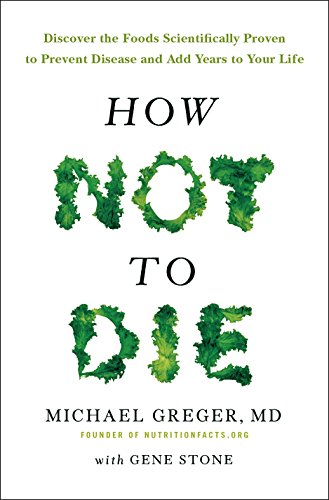
How Not to Die by physician Michael Greger reviews nutrition research disease by disease, heart disease, diabetes, certain cancers, translating dense clinical literature into a practical list of foods linked to lower risk for each condition.
The book leans heavily toward a plant-forward eating pattern, and some of its stronger claims remain debated among nutrition scientists. Even critics generally agree the underlying literature review is thorough and clearly sourced rather than casually assembled.
- Reviews nutrition research organized by specific disease risk categories.
- Translates dense clinical literature into a practical, actionable food list.
- Advocates a plant-forward pattern, though some specific claims remain scientifically debated.
How Does the Gut-Brain Connection Influence What You Crave?
Cravings are not purely psychological weakness; they are shaped by a genuine, measurable communication channel between the digestive system and the brain.
Gastroenterologist Emeran Mayer‘s research on the gut microbiome shows that bacteria living in the digestive tract produce neurotransmitters and signaling molecules that influence mood, stress response, and food preference. A gut community shaped by years of high-sugar, low-fiber eating can genuinely make sugar cravings feel stronger, not just habitual. Lisa Mosconi’s neuroscience research adds a related layer, showing that specific nutrients directly affect the brain regions involved in appetite regulation and impulse control.
This matters practically. Someone trying to reduce sugar intake through willpower alone is fighting a biological current that took months or years to establish. Gradually shifting the gut microbiome through increased fiber and fermented foods, rather than sudden restriction, tends to produce more durable change than sheer willpower ever does on its own.
- Gut bacteria produce signaling molecules that genuinely influence food cravings.
- Years of high-sugar eating can shift gut composition in ways that intensify cravings.
- Gradual dietary shifts tend to outlast sudden restriction for lasting behavior change.
Why Do Ultra-Processed Foods Hijack Normal Appetite Signals?
Ultra-processed foods are engineered, quite deliberately, to override the body’s natural signals for fullness, and understanding that engineering removes a considerable amount of unearned guilt.
Journalist Michael Moss‘s reporting in Salt Sugar Fat documents how food scientists calculate a precise “bliss point,” the exact ratio of salt, sugar, and fat that maximizes craving without triggering the sensory fatigue that normally signals “enough.” This is not accidental. Companies invest heavily in this research specifically because foods engineered this way generate more repeat purchases than foods that simply taste good and then satisfy.
Michael Pollan’s advice to favor whole foods over processed ones addresses this same problem from a different angle. Whole foods rarely hit an engineered bliss point, which means normal fullness signals function more reliably around them. That single distinction, engineered versus whole, explains more about modern overeating than most calorie-counting advice ever manages to.
- Food scientists calculate a precise “bliss point” to maximize repeat consumption.
- Engineered foods are designed to override natural fullness signals, not accidentally bypass them.
- Whole foods rarely hit an engineered bliss point, keeping appetite signals more reliable.
What Is Intuitive Eating and How Does It Differ From Dieting?
Intuitive eating, as developed by registered dietitians Evelyn Tribole and Elyse Resch, treats hunger and fullness as legitimate biological signals worth trusting rather than obstacles to override through willpower or external rules.
Dieting, by contrast, imposes external rules, calorie limits, forbidden foods, specific meal timing, regardless of what the body is actually signaling in the moment. That mismatch between external rule and internal signal is precisely what tends to produce the binge-restrict cycles so common among people with a long dieting history. Tribole and Resch’s ten principles instead rebuild trust in internal cues gradually, starting with rejecting the diet mentality itself before addressing anything about specific foods.
Critics sometimes worry this approach ignores legitimate health goals. In practice, most intuitive eating practitioners describe it as compatible with medical nutrition guidance, just without the psychological damage that comes from years of restriction and subsequent rebound eating.
- Treats hunger and fullness as legitimate biological signals rather than obstacles to override.
- Rejects external rules like calorie counts in favor of internal body signals.
- Aims to interrupt binge-restrict cycles common after years of chronic dieting.
Which Foods Do These Books Agree Support Long-Term Health?
Despite covering very different angles, from gut science to food industry investigation, these six books converge on a surprisingly consistent short list of foods worth prioritizing.
Fiber-rich plants show up prominently across nearly every title, supporting both Mayer’s gut microbiome research and Greger’s disease-prevention framework. Fermented foods, yogurt, kimchi, sauerkraut, appear specifically in Mayer’s and Mosconi’s work as directly supportive of a healthier gut-brain relationship. Minimally processed whole foods, Pollan’s central recommendation, align closely with Moss’s warning about engineered products designed to bypass normal appetite regulation.
Where the books diverge is intensity and specificity. Greger’s disease-by-disease approach recommends specific quantities and frequencies; Tribole and Resch deliberately avoid that kind of prescriptive detail, worried it recreates diet-like restriction. Both perspectives have merit depending on whether a reader wants precise guidance or a more flexible, internally guided relationship with food.
- Fiber-rich plants appear consistently across nearly every book’s recommendations.
- Fermented foods support gut-brain health according to both Mayer and Mosconi.
- Minimally processed whole foods align Pollan’s and Moss’s otherwise different arguments.
Common Misconceptions About Nutrition These Books Correct
Popular nutrition advice contains a fair amount of confusion, and several books on this list directly push back against the most persistent myths.
The most common misconception treats individual nutrients, carbs, fat, sugar, as inherently good or bad in isolation. Michael Pollan argues this nutrient-by-nutrient framing itself is part of the problem, since it ignores how foods behave differently once combined into whole, minimally processed meals. A second myth assumes willpower alone explains why some people overeat and others do not. Michael Moss’s investigative reporting complicates that considerably, documenting how engineered products are specifically designed to overwhelm ordinary self-control.
A third misconception claims all calorie-restrictive diets fail purely due to personal weakness. Evelyn Tribole and Elyse Resch’s research suggests something different: restrictive dieting itself triggers biological and psychological rebound mechanisms that make sustained restriction extraordinarily difficult for almost anyone, not a select few with poor discipline. That reframe matters. Blaming willpower alone ignores decades of research on why diets predictably fail.
- Nutrient-by-nutrient thinking ignores how foods behave differently in whole meals.
- Engineered products are designed to overwhelm ordinary self-control, not just tempt it.
- Restrictive dieting triggers rebound mechanisms that affect nearly everyone, not just weak willpower.
How Can You Apply These Books’ Advice Without Obsessing Over Food?
Reading six books about nutrition can easily produce more anxiety than clarity if you try to apply every single recommendation simultaneously.
A more sustainable approach starts small. Pick one or two of Michael Pollan’s simple heuristics, real food, mostly plants, and apply them for a few weeks before adding anything else. Layer in Tribole and Resch’s hunger-awareness practices gradually, checking in with actual physical hunger before eating rather than eating purely by the clock or by anxiety. Michael Greger’s disease-specific recommendations work best as a reference to consult occasionally, not a strict daily checklist to obsess over.
Progress here rarely moves in a straight line. Expect an easy week followed by a genuinely difficult one, and treat that unevenness as normal rather than evidence the whole approach is failing. Small, consistent shifts compound more reliably than dramatic, unsustainable overhauls ever do.
- Start with one or two simple heuristics rather than an entire nutrition overhaul at once.
- Check in with actual physical hunger before eating, rather than eating by anxiety alone.
- Treat disease-specific recommendations as an occasional reference, not a strict daily checklist.
When Should Eating Concerns Be Discussed With a Professional?
These books offer genuinely useful frameworks, but they are not designed to diagnose or treat disordered eating, and knowing that distinction protects readers from unnecessary risk.
If reading about food rules consistently produces intense anxiety, if meals feel governed by rigid rules you cannot break without significant distress, or if eating patterns have caused noticeable physical or emotional harm, that pattern deserves a conversation with a registered dietitian or licensed therapist rather than continued self-guided reading. Evelyn Tribole and Elyse Resch built their intuitive eating framework specifically because standard diet advice can worsen disordered eating patterns in vulnerable readers.
There is no shame in needing professional support alongside a good book. Seeking guidance from a qualified registered dietitian or therapist is a sign of self-awareness, not failure, particularly for anyone with a history of eating disorders or chronic dieting.
- These books do not diagnose or treat clinical eating disorders on their own.
- Intense anxiety around rigid food rules is a signal to consult a registered dietitian.
- Professional guidance is especially important for anyone with a history of disordered eating.
How Do These Books Address Weight Stigma and Body Image?
Weight stigma shapes far more of standard nutrition advice than most readers realize, and several books on this list address that influence directly rather than pretending it does not exist.
Evelyn Tribole and Elyse Resch explicitly reject the assumption that weight loss should be the primary goal of eating well, arguing instead that body respect and internal signal trust produce more sustainable outcomes than weight-focused dieting ever has historically. This stance draws on a growing body of research showing that weight cycling itself carries measurable health risks, sometimes exceeding the risks associated with stable higher body weight. Michael Greger’s disease-focused framework, by contrast, does reference weight as one relevant health marker among many, though it stays anchored primarily to specific, measurable disease outcomes rather than appearance.
Neither position is universally correct for every reader. Someone with a genuine medical need to address specific biomarkers may benefit from Greger’s more structured approach, while someone recovering from years of diet-driven shame will likely find Tribole and Resch’s framework considerably more psychologically sustainable. Recognizing that weight stigma has shaped so much of conventional nutrition advice is itself a useful, if uncomfortable, starting point.
- Some frameworks reject weight loss as the primary goal of eating well entirely.
- Weight cycling itself carries measurable health risks, independent of stable body weight.
- Matching the framework to genuine medical need versus psychological recovery matters more than picking a side.
Which Book Should You Start With Based on Your Goals?
Choosing where to begin depends heavily on whether your primary struggle is chronic dieting, general disease prevention, or simply not knowing which foods actually deserve your trust at the grocery store.
Readers exhausted by years of restriction and rebound eating should start with Intuitive Eating, since it directly addresses the psychological patterns that make sustained dietary change so difficult in the first place. Readers who want a simple, memorable philosophy without deep clinical detail should start with In Defense of Food, given how quickly Pollan’s core message can be absorbed and applied. Anyone managing a specific health condition, elevated blood pressure, prediabetes, family history of certain cancers, will likely get more immediate practical value from How Not to Die, since it organizes recommendations by exact disease risk rather than general wellness.
Readers specifically curious about why they crave certain foods, rather than simply what to eat, should prioritize The Mind-Gut Connection or Brain Food, both of which explain the underlying biology in accessible depth. And anyone who suspects the food industry itself bears some responsibility for widespread overeating, rather than individual failure, will find Salt Sugar Fat validating and genuinely eye-opening in equal measure.
| Reader Goal | Best Starting Book |
|---|---|
| Ending chronic dieting and restriction | Intuitive Eating |
| Simple, memorable everyday philosophy | In Defense of Food |
| Disease-specific prevention guidance | How Not to Die |
| Understanding cravings and gut-brain biology | The Mind-Gut Connection or Brain Food |
| Understanding food industry influence | Salt Sugar Fat |
FAQs about the Best Nutrition Books to Eat Well
What is the best nutrition book for someone tired of dieting?
Intuitive Eating by Evelyn Tribole and Elyse Resch works best for readers exhausted by cycles of restriction and rebound eating. It rejects the framework of external food rules entirely, focusing instead on rebuilding trust in the body’s own hunger and fullness signals. Readers who still want some structured, disease-specific guidance alongside that approach often pair it with Michael Pollan’s In Defense of Food, which offers simple heuristics rather than the more rigid rules found in typical diet plans. Together they cover both the psychological and practical sides of eating well without constant restriction.
Are ultra-processed foods really designed to make people overeat?
Yes, according to the investigative reporting in Michael Moss’s Salt Sugar Fat, food companies employ scientists specifically to calculate a measurable “bliss point,” the exact combination of salt, sugar, and fat that maximizes craving and repeat purchases. This is not a conspiracy theory; it reflects documented industry practices and interviews with the scientists involved. Understanding this engineering does not mean all processed food is inherently dangerous, but it does explain why willpower alone often struggles against products built specifically to override normal fullness signals.
Do gut health and mood really affect what foods I crave?
According to gastroenterologist Emeran Mayer’s research in The Mind-Gut Connection, yes, genuinely so. The gut microbiome produces neurotransmitters and signaling molecules that influence mood, stress response, and food preference in measurable ways. A gut community shaped by years of high-sugar eating can make sugar cravings feel biologically stronger, not simply habitual or psychological. Shifting the microbiome gradually through increased fiber and fermented foods tends to reduce these cravings more reliably than sheer willpower or restriction ever manages on its own.
Is it possible to eat well without tracking calories or macros?
Yes, and several books on this list argue that constant tracking can actually work against sustainable healthy eating for many people. Michael Pollan’s approach relies on simple, memorable heuristics rather than numerical tracking. Evelyn Tribole and Elyse Resch’s intuitive eating framework explicitly discourages calorie counting, arguing it disconnects people from internal hunger signals. That said, some readers with specific medical conditions genuinely benefit from more structured tracking, and Michael Greger’s disease-focused recommendations can serve that more clinical need when appropriate.
Which of these books is most scientifically rigorous?
How Not to Die by Michael Greger and Brain Food by Lisa Mosconi both lean heavily on peer-reviewed research and detailed literature review, making them the most citation-dense titles on this list. That said, some of Greger’s specific claims remain actively debated among nutrition scientists, and readers should treat strong claims with appropriate skepticism rather than accepting every recommendation as settled fact. The Mind-Gut Connection by Emeran Mayer also draws on rigorous clinical and laboratory research, particularly regarding the gut microbiome’s influence on mood and behavior.
Can these nutrition books help with emotional or stress eating?
Indirectly, yes, particularly Intuitive Eating and The Mind-Gut Connection. Tribole and Resch’s framework addresses the emotional dimension of eating directly, distinguishing between physical hunger and eating driven by stress, boredom, or difficult emotions. Emeran Mayer’s research on the gut-brain axis explains part of the biological mechanism behind stress eating, since stress hormones directly affect gut function and appetite. Neither book replaces therapy for someone struggling significantly with emotional eating, but both provide a genuinely useful starting framework for understanding the pattern.
Bibliography
- Greger, M., and Stone, G. (2015). How Not to Die: Discover the Foods Scientifically Proven to Prevent and Reverse Disease. Flatiron Books.
- Mayer, E. (2016). The Mind-Gut Connection: How the Hidden Conversation Within Our Bodies Impacts Our Mood, Our Choices, and Our Overall Health. Harper Wave.
- Mosconi, L. (2018). Brain Food: The Surprising Science of Eating for Cognitive Power. Avery.
- Moss, M. (2013). Salt Sugar Fat: How the Food Giants Hooked Us. Random House.
- Pollan, M. (2008). In Defense of Food: An Eater’s Manifesto. Penguin Books.
- Tribole, E., and Resch, E. (2020). Intuitive Eating: A Revolutionary Anti-Diet Approach (4th ed.). St. Martin’s Essentials.
Use this citation format to reference the article clearly and help readers find the original source.
PsychologyFor. (2026). The 6 Best Nutrition Books to Eat Well. PsychologyFor. https://psychologyfor.com/the-6-best-nutrition-books-to-eat-well/