

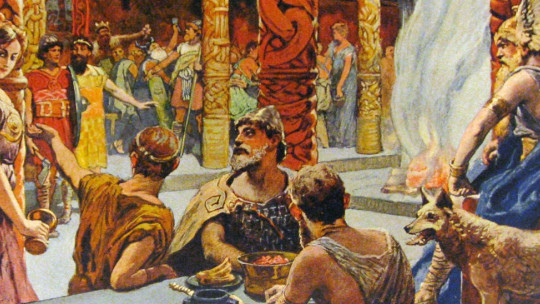
It has been about three years since the first pagan temple in Iceland was inaugurated, by the neo-pagan association Asatruarfelagid, where venerations and worship of the Viking gods are carried out. Without apparent scientific explanation, the rise of this type of religion or sect is spreading throughout the northern part of Europe, especially in the Scandinavian regions.
Returning to the data of the aforementioned associations, only the Icelandic one has tripled its number of members in its 10-year history. Wanting to get out of the controversies generated by this phenomenon, the highest authority of the Asatru association, Hilmar Örn, claims the metaphorical and poetic role that its beliefs have. Shying away from the bad image generated, the priest affirms that he does not believe in monstrous beings with mutant heads with green skin.
However, in the past The Viking gods were entities in which these Nordic people fervently believed Even today, the mythology associated with them continues to arouse fascination for many people.
The main Viking gods
Norse and Germanic mythology is full of super-powerful beings that mainly have to do with the earth and nature. Below you will find a brief explanation of the most important Viking gods.
1.Thor
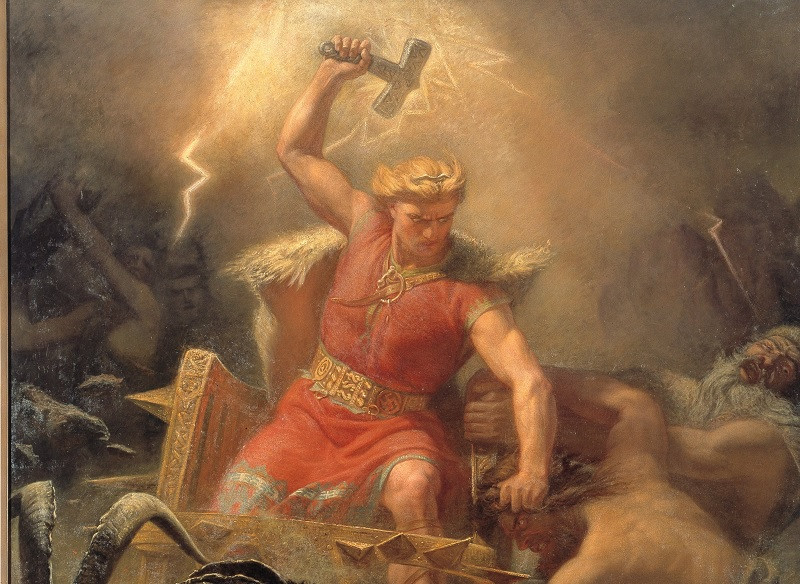
Today, it appears in movies, comics, cartoons and even on cereals. In the present, The god Thor is surely the most popular Viking mythological being worldwide Son of Odin, the god of gods, Thor represents strength, power and war. A blonde or red beard and a fierce look were part of the physical characteristics with which he was usually described, although almost as important as him was his weapon.
Thor is always depicted wielding a hammer known as Mjolnir, forged by dwarves. His means of transportation was an imposing carriage that was pulled by goats whose passage was marked by sounds that emulated lightning and thunder.
2. Odin
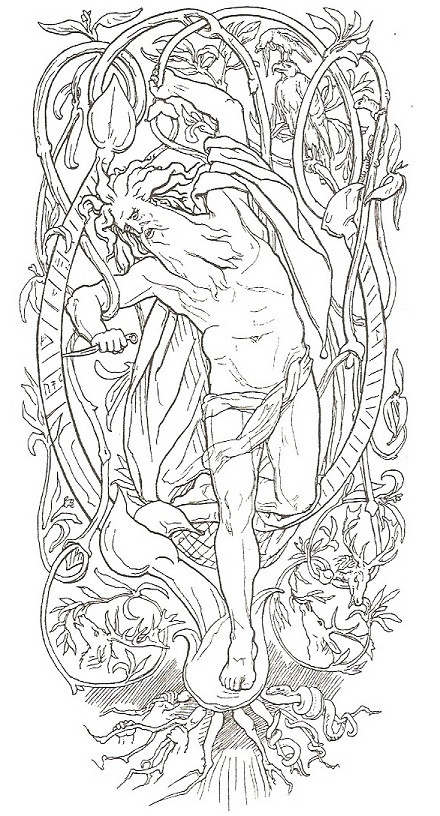
As we mentioned first, Odin was the god of gods, to whom we had to pay homage. Thor’s father, he possessed some of the characteristics that he passed on to his son: strength, skill, war, intelligence and cunning. It was his reason for being, his knowledge and wisdom. He changed his being to acquire more intellect, and He was always accompanied by crows
To increase intelligence, Odin was associated with human and animal sacrifices, which caused him to lose an eye. It is said that the English word “Wednesday”, day of the supreme god, is due to the English name: “Woden”.
3. Frigg
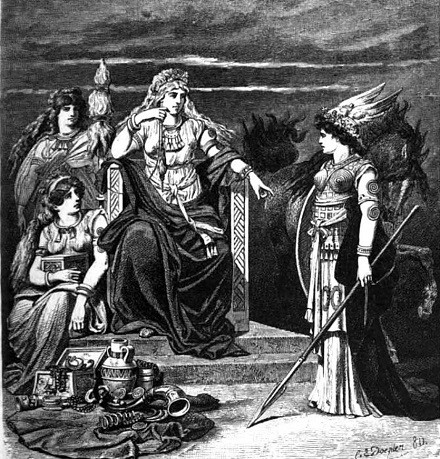
She is the wife of Odin and stepmother of Thor. This Viking deity represented love, fertility, marriage, motherhood and the art of the home. As a special power, she had the quality of prophesying, knowing and knowing the destiny of all humans, as well as the only one, after Odin, to be able to occupy the throne of the gods and observe the universe.
It is said that the origin of the word “Friday” in English, which means Friday, comes from the Germanic origin “Freitag”, whose epistemology has a lot to do with this Viking goddess.
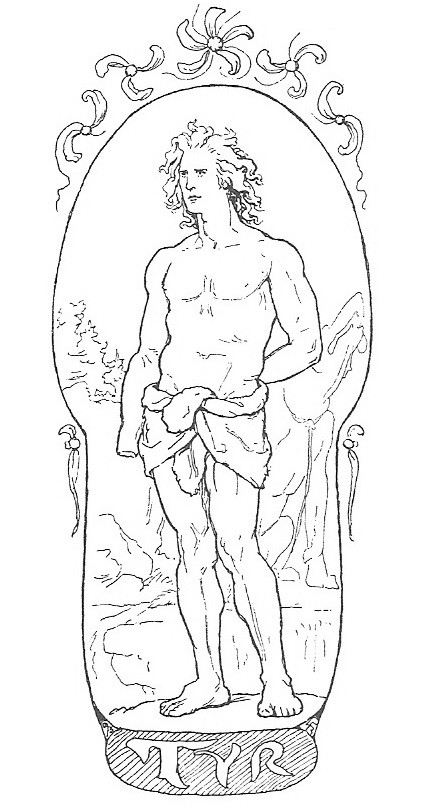
4. Tyr
Within German-Norse mythology, the god Tyr is considered the absolute warrior among all the Viking gods. Although most of his encounters, stories and narratives have to do with scenarios of war and force, he was not an exclusively brute character, but iconography associated with wisdom and laws is also attributed to him.
In the same way, he also made a self-sacrifice and He allowed his left arm to be amputated so that the gods could save the world from the wolf Fenrir It should be noted that only Thor surpassed him in terms of physical strength.
5. Freyja
She was the goddess of love and fertility, beauty and romance. She was madly in love with her husband Odr. It is said that when he walked away from her, Freyja would burst into tears and, because of how beautiful she was, she would shed golden tears between her eyelashes. For these reasons, among others, she was one of the most respected deities, although from the modern perspective she seems rather a grouping of characteristics traditionally associated with the feminine
His clothing was worthy of what he represented. Beautiful shiny and precious necklaces, hypnotic plumage that allowed her to fly between the underworlds and a float carried by wonderful felines were part of the objects with which she represented her. Although she was the least warlike deity, she accompanied soldiers and gods to war to instill security and motivation, as she was considered wise.
@image(id)
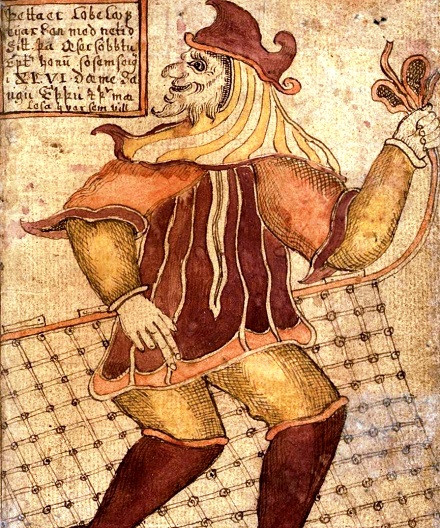
6. Loki
According to Norse mythology, Loki is the son of the giants Laufey and Farbauti, and is characterized by his ability to deceive and sow chaos In fact, he is not technically a god, but rather a mysterious entity that blends in with the gods or even poses as one.
There is very little information about Loki and it is not known to what extent he was part of the original pantheon of Norse mythology; However, his influence has been reflected in Western culture through all types of stories and even operas, films, novels, etc.
Use this citation format to reference the article clearly and help readers find the original source.
PsychologyFor. (2024). The 6 Most Famous Viking Gods. PsychologyFor. https://psychologyfor.com/the-6-most-famous-viking-gods/