

See more of our articles in your search results.
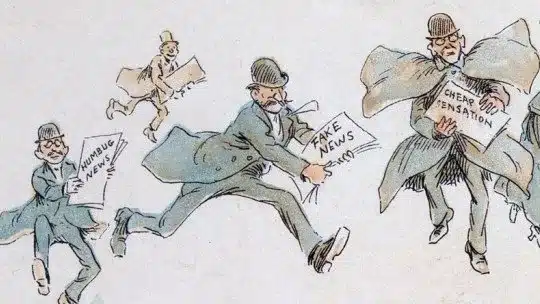
Long before Facebook, Twitter, or cable news existed to amplify misinformation at digital speed, fake news shaped the course of human history in profound and often tragic ways. Wars were started, millions were murdered, governments toppled, and entire populations manipulated through deliberately fabricated stories, propaganda campaigns, and sensationalized lies masquerading as truth. The term “fake news” may feel distinctly modern—a phrase that entered mainstream discourse primarily after 2016—but the phenomenon itself is ancient, dating back to when humans first learned that controlling information meant controlling power. What has changed is not the existence of fake news but the scale and velocity with which it spreads, transforming from pamphlets and newspapers that took days or weeks to circulate into viral posts that reach millions within minutes.
Throughout history, fake news has served multiple purposes: justifying military aggression, demonizing enemies or minorities, consolidating political power, selling newspapers, or simply sowing chaos and confusion. Sometimes the misinformation was created by governments as deliberate propaganda to manipulate their own citizens or enemy populations. Other times, it emerged from commercial interests—publishers who discovered that sensational lies sold better than mundane truths. Still other instances involved forgers and conspiracists who created elaborate hoaxes for ideological reasons, producing documents whose consequences far exceeded their creators’ intentions. The most dangerous fake news stories weren’t necessarily the most outlandish but rather those that confirmed existing prejudices, exploited current anxieties, or provided simple explanations for complex problems—making them psychologically irresistible regardless of their factual bankruptcy.
The historical examples of fake news reveal disturbing patterns that remain relevant today. False stories spread especially rapidly during times of uncertainty, fear, or social tension—whether the threat of war, economic instability, or rapid cultural change. Once planted, misinformation proves remarkably resistant to correction; even after thorough debunking, fake stories often persist for generations, continuing to influence attitudes and behaviors. The most effective fake news doesn’t present itself as obviously false but rather mimics legitimate information sources, wrapping lies in the format and language of credible journalism or official documentation. And perhaps most troubling, fake news frequently targets vulnerable minorities or out-groups, using fabricated atrocities to dehumanize them and justify discrimination or violence.
Examining history’s most scandalous fake news stories serves multiple purposes beyond historical curiosity. It demonstrates that concerns about misinformation aren’t new but represent a persistent challenge to democratic discourse and informed decision-making. It reveals the techniques propagandists and hoaxers have used across centuries—techniques that have been refined but not fundamentally changed in the digital age. It shows the real-world consequences of unchecked misinformation: wars, genocides, political upheavals, and lasting damage to social trust. And it provides perspective on contemporary struggles with fake news by showing both how the problem has evolved and how certain dynamics remain depressingly constant. These seven stories represent some of history’s most consequential, well-documented, and instructive examples of fake news—incidents where fabricated information dramatically shaped events, caused measurable harm, and left lasting impacts that historians still grapple with today.
1. Yellow Journalism and the Spanish-American War (1898)
How many of these have you been "meaning to read" for months?
- 1
 TarcherThe Artist's Way30th Anniversary EditionListen Free On Audible
 - 2
 New Harbinger PublicationsThe Dialectical Behavior Therapy Skills WorkbookPractical DBT Exercises for Learning Mindfulness, Interpersonal Effectiveness, Emotion Regulation...Listen Free On Audible
 - 3
 New Harbinger PublicationsAdult Children of Emotionally Immature ParentsHow to Heal from Distant, Rejecting, or Self-Involved ParentsListen Free On Audible
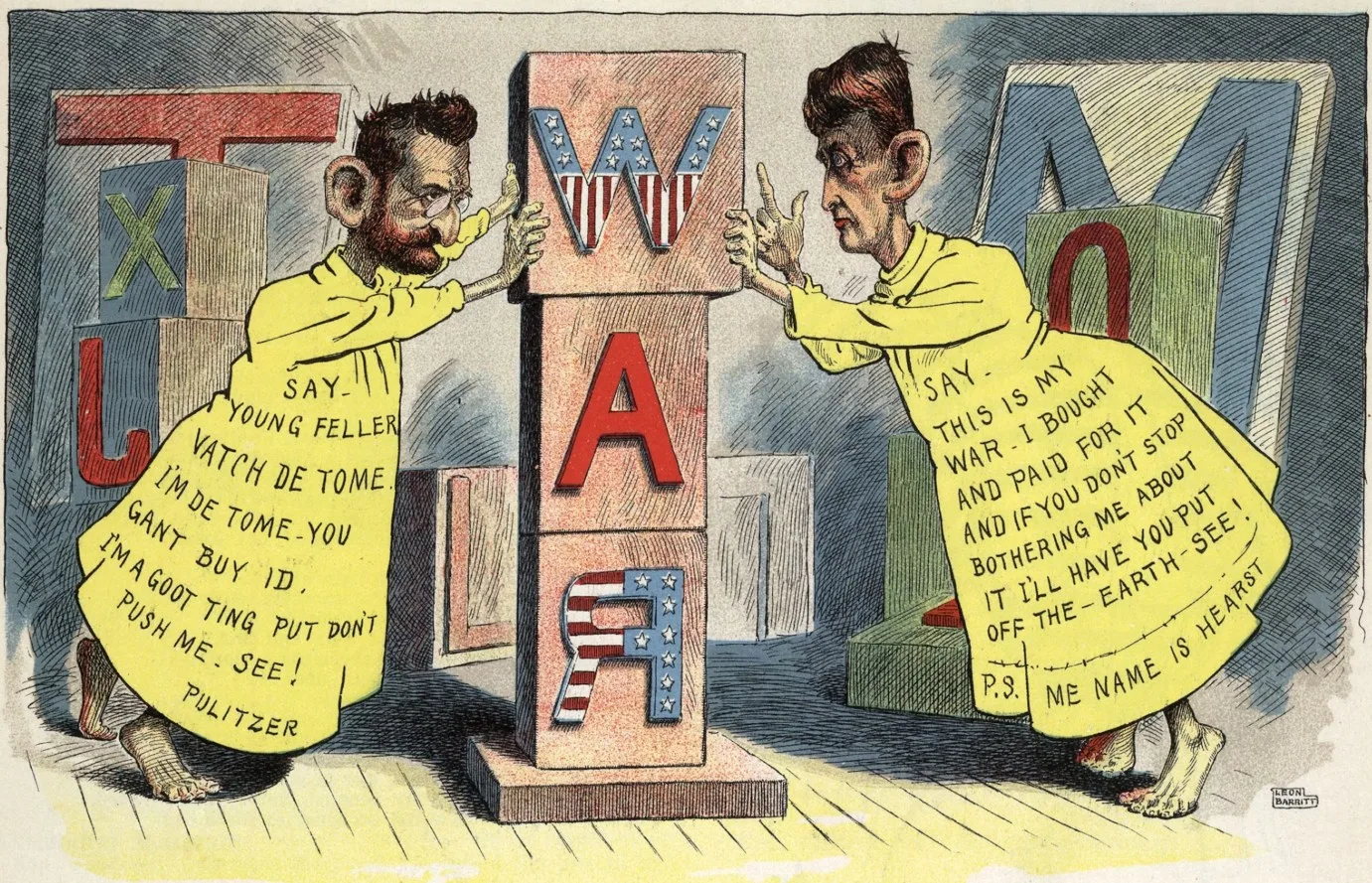
One of the most infamous examples of fake news directly precipitating war occurred in late 19th century America, when rival newspaper publishers William Randolph Hearst and Joseph Pulitzer engaged in a circulation war that relied heavily on sensationalized, exaggerated, and often completely fabricated stories about Spanish rule in Cuba. This style of journalism, known as “yellow journalism” (named after a popular comic strip character called “The Yellow Kid” that appeared in both publishers’ papers), prioritized emotional impact and sales over accuracy, truth, or journalistic ethics. Both the New York Journal (owned by Hearst) and the New York World (owned by Pulitzer) competed to publish the most dramatic, shocking stories that would drive newsstand sales in an increasingly competitive media landscape.
As Cuban revolutionaries fought for independence from Spanish colonial rule in the 1890s, Hearst and Pulitzer saw opportunity for sensational coverage that would captivate American readers. Their newspapers published lurid accounts of Spanish atrocities against Cuban civilians—stories of torture, rape, murder, and brutality that were often exaggerated beyond recognition or entirely invented. Hearst famously sent artist Frederic Remington to Cuba to provide illustrations for these stories. According to legend, when Remington cabled back that there was no war and he wished to return, Hearst responded: “You furnish the pictures, and I’ll furnish the war.” While historians debate whether this exchange actually occurred, it perfectly captures the spirit of Hearst’s approach—creating the narrative of war regardless of actual conditions on the ground.
The critical moment came on February 15, 1898, when the USS Maine, an American battleship anchored in Havana Harbor, exploded and sank, killing 266 sailors. The cause of the explosion was genuinely unknown—it could have been an accident, a mine, sabotage by Spanish forces, or even Cuban revolutionaries hoping to draw America into the conflict. Rather than waiting for investigation, Hearst’s Journal immediately blamed Spain, running sensational headlines like “The Warship Maine Was Split in Two by an Enemy’s Secret Infernal Machine!” accompanied by dramatic illustrations showing underwater mines destroying the ship—images created purely from imagination with zero evidence. The paper offered a $50,000 reward for information about the “perpetrators of the Maine outrage,” presupposing Spanish guilt.
The cumulative effect of months of anti-Spanish propaganda, combined with the inflammatory coverage of the Maine incident, inflamed American public opinion to the point where war became politically inevitable. Congress declared war on Spain in April 1898, beginning the Spanish-American War. While complex political and economic factors certainly contributed to the decision for war, historians widely acknowledge that sensationalized press coverage played a crucial role in creating the public pressure that made war politically necessary. The conflict resulted in approximately 60,000 American deaths (mostly from disease rather than combat), ended Spanish colonial power in the Western Hemisphere, and established the United States as an imperial power controlling Cuba, Puerto Rico, Guam, and the Philippines.
| Yellow Journalism Techniques | Modern Equivalents |
| Exaggerated headlines designed to provoke emotion | Clickbait headlines and sensationalized news |
| Illustrations dramatizing unverified or false events | Misleading images or edited videos presented as fact |
| Anonymous sources making unverifiable claims | Social media rumors from unidentified accounts |
| Refusing to publish contradictory evidence | Echo chambers and filter bubbles suppressing contrary information |
The Spanish-American War demonstrates how commercial interests—newspapers seeking to maximize sales—can create incentives for misinformation that have geopolitical consequences. Modern investigations suggest the Maine explosion was most likely an internal accident rather than Spanish sabotage, meaning the war was partially justified on a complete falsehood amplified by irresponsible journalism that prioritized profits over truth.
2. The Protocols of the Elders of Zion (1903)
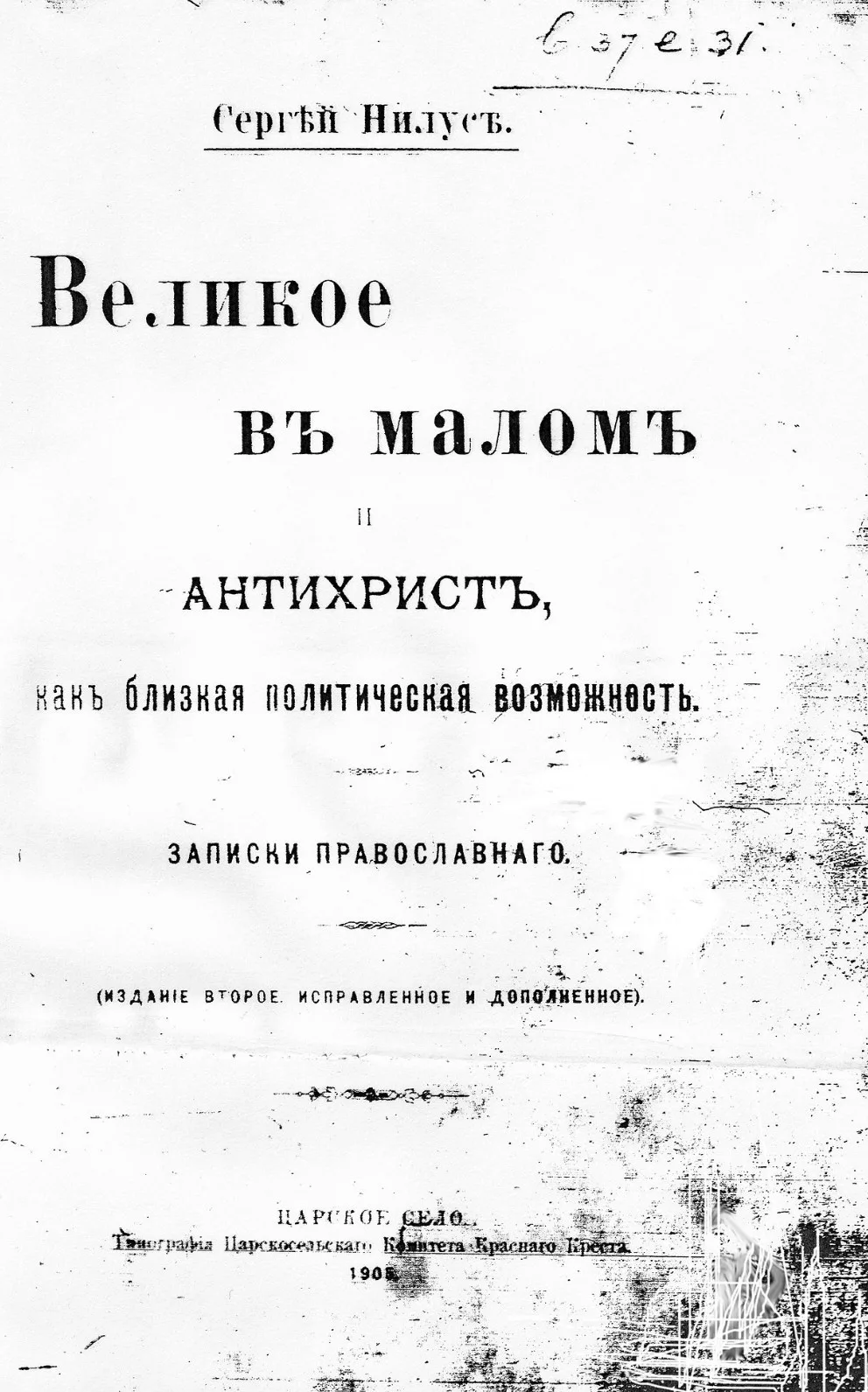
Perhaps the most consequential fake document in history, “The Protocols of the Elders of Zion” purported to be the minutes of secret meetings where Jewish leaders outlined their supposed plans for global domination through economic manipulation, media control, and social subversion. First published in Russia in 1903, this antisemitic fabrication was actually plagiarized from multiple earlier sources, including an 1864 French political satire by Maurice Joly titled “Dialogue in Hell Between Machiavelli and Montesquieu” that had nothing to do with Jews. The forgers—likely agents of the Russian secret police (Okhrana) working under Pyotr Rachkovsky—adapted Joly’s fictional dialogue between political philosophers into a fabricated Jewish conspiracy, adding antisemitic stereotypes and contemporary anxieties about modernization, capitalism, and social change.
Despite being thoroughly exposed as a forgery by The Times of London in 1921 through detailed textual analysis showing the plagiarism, and despite being legally declared a forgery by a Swiss court in 1935 after extensive testimony from experts and witnesses, the Protocols continued to circulate widely and influenced attitudes and policies that contributed to the Holocaust. Adolf Hitler referenced the Protocols in Mein Kampf, using it as “evidence” for Nazi ideology about Jewish conspiracies. Nazi propaganda minister Joseph Goebbels promoted the text extensively. The document provided a pseudo-factual foundation for antisemitic policies, helping ordinary Germans rationalize discrimination, dispossession, and eventually genocide by presenting Jews not as innocent citizens but as dangerous conspirators threatening Christian civilization.
The Protocols’ structure presented 24 “protocols” or strategies supposedly discussed at secret meetings of Jewish elders. These included plans to:
– Control the press and manipulate public opinion through media dominance
– Undermine traditional values and religious faith to weaken Christian societies
– Create economic chaos through control of gold and financial systems
– Promote liberalism, democracy, and socialism to destabilize monarchies
– Eventually establish a worldwide Jewish kingdom once Christian civilization collapsed
What made the Protocols particularly insidious was how it synthesized existing antisemitic stereotypes with contemporary anxieties about rapid modernization, creating a comprehensive explanatory framework for complex social changes. Economic disruption? Jewish financial manipulation. Cultural shifts? Jewish media control. Political instability? Jewish subversion. By providing a simple, conspiratorial explanation for complicated and frightening changes in early 20th century society, the Protocols offered psychological comfort through clarity—even if that clarity was entirely false.
The document’s influence extended far beyond Nazi Germany. It was translated into multiple languages and circulated globally, including in the United States, where automotive industrialist Henry Ford published it widely in his newspaper The Dearborn Independent and in a book titled “The International Jew.” The Protocols continues to circulate today in various forms, particularly in Middle Eastern countries and among white supremacist and conspiracy theory communities online, demonstrating how fake news can persist indefinitely despite thorough debunking. The United Nations, the U.S. Senate, and numerous scholars have officially condemned it as a fraudulent, antisemitic hoax, yet new editions continue appearing. Its death toll is incalculable but must be measured in millions, as the text helped create the ideological infrastructure that made the Holocaust psychologically possible for both perpetrators and bystanders.
3. The German Corpse Factory (1917)
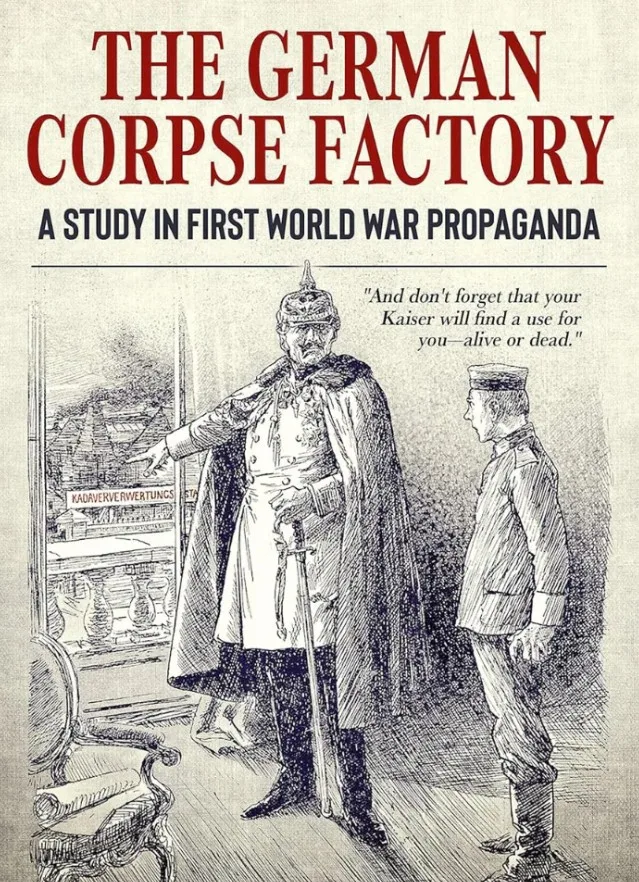
During World War I, British newspapers including The Times and the Daily Mail published shocking reports alleging that Germany had established a Kadaververwertungsanstalt—a “corpse utilization factory” where fallen soldiers from both sides were processed to extract glycerine for explosives and fat for making soap and margarine. The story claimed that Germany was so desperate for raw materials due to the Allied blockade that they had resorted to industrial-scale processing of human bodies, transporting corpses by rail to special factories where they were rendered down into useful products. The reports included supposedly credible details about the process, transport logistics, and German efficiency in managing this macabre operation.
This story achieved several propaganda objectives simultaneously. It portrayed Germans as uniquely barbaric and uncivilized—people who would desecrate the bodies of the dead, including their own soldiers, for industrial purposes. It suggested German desperation, implying the Allied blockade was succeeding and Germany was running out of resources. And it provided a moral justification for continuing the war: such inhuman enemies must be defeated at any cost. The story spread widely not just in Britain but internationally, reinforcing negative perceptions of Germany and helping maintain public support for a war that was becoming increasingly costly in lives and resources.
The problem was that the story was completely fabricated. After the war, British officials quietly acknowledged that the corpse factory never existed. The story appears to have originated from British intelligence services, particularly the department known as MI7, as a deliberate black propaganda operation designed to outrage neutral countries (particularly the United States, which hadn’t yet entered the war) and maintain morale among Allied populations. The operation was sophisticated, using multiple apparent sources and official-seeming documentation to give the story credibility. Rumors had circulated since 1915, but the 1917 reports in mainstream newspapers gave them official legitimacy.
The corpse factory hoax had unintended long-term consequences that demonstrate the danger of fabricated atrocity propaganda. When Nazi Germany actually did commit unprecedented atrocities during World War II—including the Holocaust—some people dismissed early reports as propaganda similar to the fabricated WWI stories. The boy-who-cried-wolf effect meant that genuine atrocities were met with skepticism because a previous generation had been fooled by fake atrocity stories. British diplomats and journalists who remembered being deceived by the corpse factory hoax were hesitant to believe or report on concentration camps, gas chambers, and systematic genocide, contributing to delays in Allied response to the Holocaust.
This case illustrates a crucial lesson about fake news: short-term tactical advantages from misinformation can create long-term strategic costs. The British government gained temporary propaganda benefits during WWI but undermined its own credibility for the next war, when accurate information about genuine atrocities struggled for acceptance because of prior deception. It also shows how fake news can be produced not by commercial interests or individual hoaxers but by sophisticated government intelligence operations with resources to create elaborate, multi-sourced fabrications that appear credible even to careful observers.
4. The War of the Worlds Radio Broadcast (1938)

On October 30, 1938, Orson Welles and his Mercury Theatre on the Air performed a radio adaptation of H.G. Wells’s science fiction novel “The War of the Worlds” that became one of the most famous media events in American history. The broadcast was formatted as a series of realistic news bulletins interrupting regular programming, reporting on strange explosions on Mars, a mysterious object landing in Groevers Mill, New Jersey, and ultimately a devastating Martian invasion using heat rays and poison gas to destroy cities and human resistance. While the broadcast included disclaimers at the beginning, middle, and end identifying it as fiction, many listeners who tuned in after the start missed these announcements and believed they were hearing genuine news reports of an alien invasion.
Estimates suggest that approximately one million of the broadcast’s six million listeners believed the invasion was real, though the exact numbers remain disputed by historians. Reports described widespread panic—people fleeing their homes, seeking refuge in churches, calling police stations, preparing to evacuate cities, and experiencing genuine terror. Some listeners later reported preparing weapons to fight the invaders, gathering family members, or saying prayers believing they were witnessing the end of the world. The panic spread beyond radio listeners to their families and communities as they called others to warn them, creating ripples of fear that extended the broadcast’s impact.
Several factors contributed to the broadcast’s credibility and the subsequent panic:
– Realistic format – The use of breaking news bulletins, on-location reporters, expert interviews, and official-sounding announcements mimicked actual emergency broadcasts
– Cultural context – Americans in 1938 were accustomed to real news bulletins interrupting programming with updates on the developing crisis in Europe as Hitler expanded German power
– Economic anxiety – The Great Depression had created widespread insecurity and receptiveness to narratives of catastrophe
– Media literacy – Radio was relatively new, and listeners had not yet developed sophisticated skills for evaluating broadcast credibility
– Authority signals – The broadcast featured fake interviews with “Princeton professors” and “government officials,” lending scientific and official credibility
The War of the Worlds broadcast was not technically “fake news” in the malicious sense—it was clearly intended as entertainment, not deception, and included multiple disclaimers. However, it demonstrated how realistic formatting could override explicit disclaimers, and how easily audiences could be fooled when fiction mimicked news conventions. The incident sparked serious discussions about media responsibility, audience vulnerability, and the power of broadcasting to shape public perception and behavior. It revealed that the medium itself—radio’s intimacy and immediacy—could create belief regardless of content truthfulness.
Orson Welles expressed regret about the panic, though the incident launched his career into the stratosphere, leading to his Hollywood contract and eventual creation of “Citizen Kane.” The Federal Communications Commission investigated whether regulations were needed to prevent similar incidents. The broadcast became a touchstone for discussions about media effects, demonstrating that even well-intentioned content formatted realistically could produce genuine social consequences. Modern parallels include satirical news sites whose stories are shared as real news on social media, or deepfake videos that are technically fiction but formatted so realistically that they deceive viewers.
5. The Nayirah Testimony (1990)

On October 10, 1990, a 15-year-old Kuwaiti girl identified only as “Nayirah” testified before the Congressional Human Rights Caucus about atrocities she claimed to have witnessed during the Iraqi invasion of Kuwait. In emotional testimony, Nayirah stated that she had volunteered at a Kuwaiti hospital and personally witnessed Iraqi soldiers entering the maternity ward, removing 15 premature babies from their incubators, taking the medical equipment, and leaving the infants on the cold floor to die. Her testimony, delivered with visible emotion and supported by detailed descriptions, was devastating. Representative John Porter, co-chairman of the caucus, called it the most dramatic testimony he had heard in eight years, remarking on the “brutality and inhumanity and sadism” described.
The incubator story spread rapidly through American media and political discourse. President George H.W. Bush referenced it in speeches building support for military action against Iraq, mentioning it at least ten times in public addresses. Senators cited the testimony during debates about authorizing military force. The story appeared repeatedly in newspapers, on television news, and in congressional proceedings as evidence of Iraqi barbarism that required forceful response. The incubator atrocity became one of the most powerful narratives justifying American military intervention in the Gulf War, appealing to universal human horror at harm to innocent babies and presenting Saddam Hussein’s regime as uniquely monstrous.
After the war ended, investigative journalists discovered that Nayirah’s testimony was carefully orchestrated deception. Her full name was Nayirah al-Sabah, and she was the daughter of Saud al-Sabah, the Kuwaiti Ambassador to the United States—a fact not disclosed during her testimony. She had not been working as a hospital volunteer; she had been in the United States during most of the Iraqi occupation. Her testimony had been arranged by the public relations firm Hill & Knowlton, which had been hired by Citizens for a Free Kuwait—a front group funded by the Kuwaiti government-in-exile to build American support for military intervention. Hill & Knowlton coached Nayirah’s testimony and carefully managed the Congressional Human Rights Caucus appearance, which despite sounding official was actually a gathering arranged by the PR firm rather than a formal congressional hearing.
| What Was Presented | What Was Actually True |
| Nayirah was a volunteer hospital worker | She was the Kuwaiti ambassador’s daughter, not a hospital volunteer |
| She witnessed Iraqi soldiers killing babies | No credible evidence of incubator incident emerged after war |
| Testimony before official Congressional committee | Testimony before PR-arranged caucus, not formal congressional hearing |
| Spontaneous witness coming forward | Carefully orchestrated PR campaign with coaching and media strategy |
Investigations after the war found no credible evidence that the incubator atrocity had occurred. Human rights organizations that investigated Iraqi actions in Kuwait documented genuine atrocities but could not confirm the specific incubator story. Amnesty International, which had initially reported the story, later withdrew it as unsubstantiated. The incident revealed how sophisticated PR campaigns could manufacture atrocity propaganda that shaped public opinion and political decision-making, using emotional testimony, media management, and the appearance of independent verification to sell a narrative designed to justify military intervention.
The Nayirah testimony demonstrates modern fake news sophistication—not crude fabrication but carefully constructed narratives using real emotional testimony, official-seeming venues, and professional public relations strategies. It showed that governments and their hired PR firms had learned to manipulate information environments systematically, creating stories designed to achieve specific policy outcomes. The case remains controversial, with debates about whether the broader case for intervention was justified regardless of this particular false story, but it undeniably shows how fabricated atrocity stories can be used to build support for war in the modern media era.
6. The Blood Libel (12th-20th Centuries)

While the previous examples represent specific incidents of fake news, the blood libel represents a persistent false narrative that emerged repeatedly across centuries and geographies, causing immeasurable suffering to Jewish communities throughout Europe. The blood libel falsely accused Jews of murdering Christian children—particularly around Easter—to use their blood in religious rituals, especially in the making of matzah for Passover. This grotesque fabrication had no basis whatsoever in Jewish religious practice, which actually strictly prohibits consuming blood of any kind, but it proved remarkably durable and deadly, recurring in various forms from the 12th century through the 20th century and contributing to countless pogroms, expulsions, murders, and the broader climate of antisemitism that culminated in the Holocaust.
The blood libel’s first major documented instance occurred in 1144 Norwich, England, when a young boy named William was found dead. A hagiographer named Thomas of Monmouth fabricated a story that William had been murdered by Jews in a ritual crucifixion mimicking Christ’s death. Despite no evidence and significant contemporary skepticism, the story spread and was repeated in similar accusations across England and later Continental Europe. Each time a child died mysteriously or went missing, particularly around Easter, Jewish communities faced accusations of ritual murder, often leading to arrests, torture, forced confessions, executions, and mob violence against entire Jewish quarters.
The most infamous blood libel case occurred in 1475 in Trento, Italy, when a child named Simonino (later called “Simon of Trent”) went missing on Easter Sunday. A Franciscan preacher, Bernardino da Feltre, immediately accused the local Jewish community of murdering the child for his blood. Despite weak evidence and confessions extracted under torture, fifteen Jews were convicted and burned at the stake. Simon was even beatified by the Catholic Church (though this was later revoked in 1965). The case became a template for subsequent accusations across Europe, with stories of Jewish ritual murder appearing in Italy, Germany, Spain, Poland, Russia, and other countries over the following centuries.
The blood libel’s psychological and social dynamics reveal why certain fake news stories prove so persistent:
– Confirmation of existing prejudices – The accusations reinforced pre-existing antisemitic attitudes rather than creating them from nothing
– Explanation for tragedy – When children died from disease, accidents, or crime, the blood libel provided a clear villain to blame, satisfying the human need for explanation
– Religious authority – Accusations often came from or were endorsed by religious figures, giving them credibility among Christian populations
– Scapegoating function – During times of plague, famine, or economic hardship, Jewish communities provided convenient scapegoats for suffering whose causes were actually complex and systemic
– Resistance to correction – Even when specific accusations were proven false, the broader narrative persisted, with believers simply claiming that while this particular case might be questionable, the general pattern of Jewish ritual murder was still real
The blood libel had concrete, horrific consequences throughout history. It contributed to the expulsion of Jews from England in 1290, from France multiple times during the medieval period, and from Spain in 1492. It sparked pogroms in Eastern Europe during the 19th and early 20th centuries, where mobs attacked Jewish communities following blood libel accusations. The narrative fed into Nazi propaganda, with Julius Streicher’s newspaper Der Stürmer regularly publishing updated versions of blood libel stories to dehumanize Jews and justify persecution. Historians estimate that blood libel accusations directly resulted in thousands of Jewish deaths over centuries, while contributing to a broader climate of antisemitism that facilitated far greater atrocities.
Remarkably, blood libel accusations have persisted even into the 21st century, appearing in parts of the Middle East and occasionally in Europe, demonstrating how certain fake news narratives can outlive their original contexts by centuries. The blood libel represents perhaps the longest-running fake news story in Western history, illustrating how false narratives targeting vulnerable minorities can become embedded in culture, proving nearly impossible to eradicate even with overwhelming evidence of their falsehood.
7. Octavian’s Propaganda Against Mark Antony (32-30 BCE)
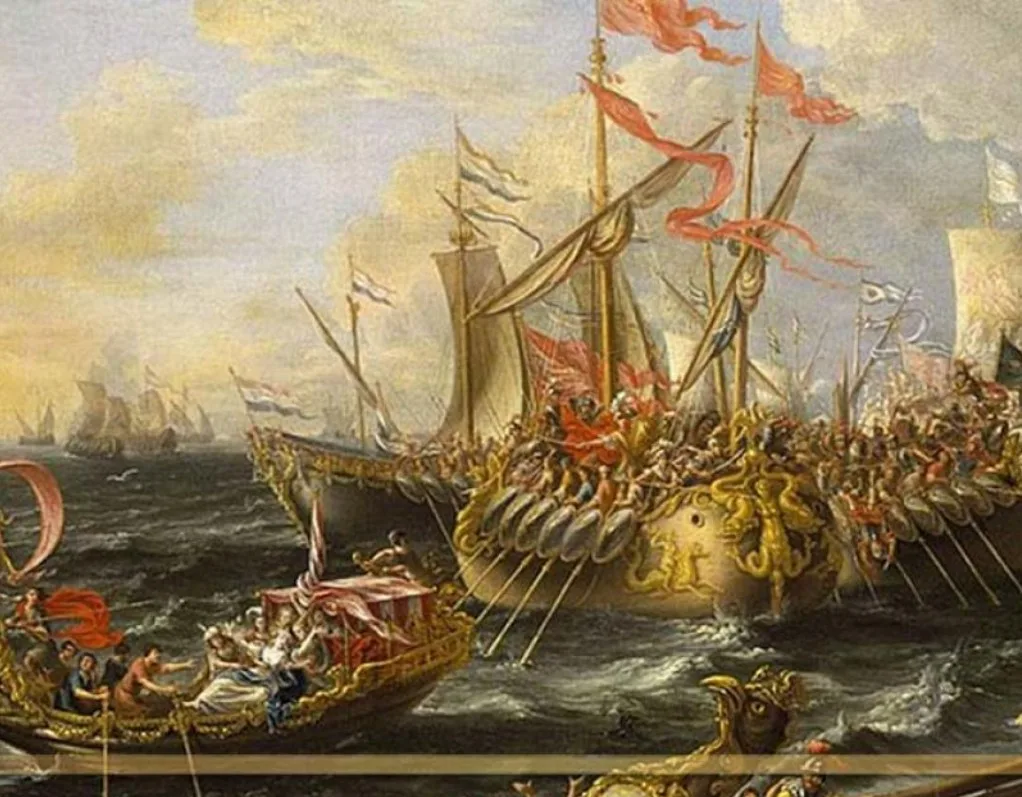
Proving that fake news predates printing presses, newspapers, and certainly the internet by millennia, one of history’s most successful propaganda campaigns occurred in ancient Rome when Octavian (later Emperor Augustus) waged an information war against his rival Mark Antony. After Julius Caesar’s assassination in 44 BCE, power in Rome was divided between Octavian (Caesar’s adopted heir) and Mark Antony (Caesar’s loyal general). This arrangement was never stable, and by 32 BCE, the two were on a collision course toward civil war. Octavian recognized that military victory alone wouldn’t secure lasting power—he needed to win the propaganda war first, destroying Antony’s reputation so completely that Romans would accept Octavian’s rule as necessary and legitimate.
Octavian launched a sophisticated disinformation campaign painting Mark Antony as having betrayed Roman values and become corrupted by foreign influences, particularly through his romantic and political alliance with Cleopatra VII of Egypt. The propaganda had several key themes:
– Sexual immorality – Octavian spread stories of Antony’s excessive sexuality, drunkenness, and loss of Roman dignity through his affair with Cleopatra
– Foreign corruption – He portrayed Antony as having “gone native,” adopting Egyptian customs and abandoning Roman identity
– Political treason – Octavian claimed Antony planned to move Rome’s capital to Alexandria and rule as an Eastern-style monarch rather than a Roman leader
– Religious violation – He suggested Antony worshipped foreign gods and rejected traditional Roman religion
– Emasculation – The propaganda portrayed Antony as dominated by a woman (Cleopatra), which was deeply shameful in Roman gender ideology
What made Octavian’s campaign sophisticated was his use of multiple media for his era. He commissioned poets to write verses mocking Antony that could be memorized and repeated orally, effectively creating viral content for a pre-literate society. He had short, catchy slogans stamped onto coins that circulated throughout Roman territories, essentially using currency as mass media. He arranged for friendly senators to give speeches denouncing Antony in the Roman Forum, creating an appearance of spontaneous public outrage rather than orchestrated propaganda. He even claimed to have obtained Antony’s will (possibly forged or selectively edited) showing that Antony planned to be buried in Alexandria rather than Rome—presented as proof of his betrayal of Roman identity.
Much of Octavian’s propaganda was exaggerated or completely fabricated. While Antony did have a relationship with Cleopatra and spent significant time in Egypt, he remained fundamentally Roman in identity and likely had no intention of abandoning Rome for Alexandria. The portrayal of him as constantly drunk and sexually debauched was caricature rather than reality—Antony was a capable military commander and administrator who couldn’t have achieved his position through mere debauchery. The claim that he was dominated by Cleopatra reflected Roman gender anxieties rather than the actual power dynamics of their relationship, which was more likely a political alliance between equals than subjugation of a weak man by a manipulative woman.
Octavian’s propaganda campaign succeeded brilliantly. By the time military conflict began in 31 BCE, Roman public opinion had turned decisively against Antony. Octavian framed the conflict not as a civil war between Romans but as a defensive war against foreign corruption, with Antony positioned as an agent of Egyptian interests rather than a legitimate Roman leader. This framing was crucial—Romans were weary of civil wars, but they could support a war against foreign threats. When Octavian defeated Antony and Cleopatra at the Battle of Actium in 31 BCE, followed by their suicides in 30 BCE, he faced no significant resistance to consolidating power. He became Augustus, the first Roman Emperor, ruling for over 40 years and establishing an imperial system that would last for centuries.
The Octavian-Antony propaganda war demonstrates that sophisticated disinformation campaigns existed long before modern technology. The techniques Octavian used—repeated slogans, multi-platform messaging, character assassination, appeals to cultural anxieties, framing complex political conflicts in simple moral terms—remain fundamental to propaganda and fake news today. The case also shows that successful fake news doesn’t need to be completely fabricated; often the most effective disinformation takes kernels of truth (Antony did have a relationship with Cleopatra, did spend time in Egypt) and distorts them through exaggeration, selective presentation, and interpretation designed to support a particular narrative. Finally, it illustrates how control of information can be more decisive than military force in determining political outcomes—Octavian won the propaganda war before the shooting war began, making his ultimate victory nearly inevitable.
FAQs About Historical Fake News
Has fake news gotten worse with social media, or has it always been this bad?
This question reveals important distinctions between fake news prevalence, velocity, and impact across different eras. In terms of raw volume and speed of spread, fake news is demonstrably worse in the social media age than at any previous point in history. A false story on Twitter or Facebook can reach millions of people globally within hours, whereas the same story in the newspaper era took days or weeks to spread beyond its initial market, and in the pre-printing press era might take months or years. The scale and velocity are unprecedented. Additionally, the barrier to creating and distributing fake news has collapsed—anyone with an internet connection can publish content that looks professionally produced and reaches global audiences, whereas historically, spreading misinformation required access to printing presses, broadcast licenses, or at minimum, significant distribution networks. However, in terms of impact and consequences, historical fake news arguably caused greater harm than most contemporary examples. The blood libel contributed to pogroms and the Holocaust. Yellow journalism helped start a war. The Protocols influenced genocide. While contemporary fake news absolutely causes harm—from individual harassment to election interference to public health crises—the body count from historical fake news measured in millions. The difference may be that while modern fake news is more prevalent, societies have also developed more robust fact-checking institutions, media literacy education, and counter-messaging capabilities that somewhat mitigate (though certainly don’t eliminate) the worst potential consequences. Historical fake news operated in environments with less institutional resistance—fewer independent fact-checkers, less diverse media ecosystem, lower general literacy, and less sophisticated understanding of propaganda techniques among the public. So the answer is: it’s both worse (in volume and velocity) and perhaps somewhat less catastrophic (due to better societal immune responses) than historical fake news, though the jury remains out on social media’s long-term impacts. What seems constant across eras is that fake news flourishes during times of uncertainty, anxiety, and social division, and targets the same human psychological vulnerabilities—our need for simple explanations, our tendency toward confirmation bias, our tribal instincts, and our emotional susceptibility to outrage-inducing stories.
Why do some fake news stories persist even after being thoroughly debunked?
The persistence of debunked fake news reveals frustrating realities about human psychology and information ecosystems. First, corrections and debunkings rarely spread as widely or as energetically as the original false claims. The fake story typically has emotional punch, simplicity, and often confirms existing beliefs—all factors that make content spread rapidly. The correction, by contrast, is complex, nuanced, less emotionally satisfying, and forces people to revise their understanding rather than confirming what they already think. Studies show that debunking articles are shared far less frequently than the original misinformation they’re correcting. Second, a cognitive phenomenon called the “continued influence effect” means that even when people consciously accept that information has been debunked, they often continue to rely on it unconsciously in their reasoning and decision-making. The false information creates a schema or mental model that persists even after its factual basis is removed. Third, for people whose identities or worldviews are tied to the false information, accepting debunking requires more than just evaluating evidence—it requires admitting error, potentially losing social standing within their group, and fundamentally revising their understanding of the world. This psychological cost is high enough that many people resist even overwhelming evidence. Fourth, the “backfire effect” means that for some people, exposure to contradictory evidence actually strengthens their original false beliefs by triggering defensive reactions. When people feel their core beliefs are threatened, they often double down rather than reconsidering. Fifth, fake news often fills psychological or social functions beyond just providing information—it explains frightening or complex phenomena, identifies enemies to blame for problems, creates group bonding through shared narratives, or provides meaning and purpose. Even after debunking, people may cling to false stories because they serve these functions regardless of truth value. Sixth, modern information ecosystems allow people to self-select into echo chambers where the debunking simply never penetrates—they consume media that reinforces the fake story while systematically avoiding sources that would correct it. The Protocols of the Elders of Zion exemplifies all these dynamics: exposed as a forgery in 1921, legally declared false in 1935, condemned by every credible scholarly and governmental body, yet still circulating a century later because it serves psychological, social, and ideological functions for antisemites regardless of its demonstrable falsehood. The lesson is sobering: truth alone is often insufficient to dislodge fake news once it’s established, especially when the false narrative serves powerful psychological or social needs. Effective debunking requires not just presenting facts but understanding and addressing the underlying functions the fake news serves for its believers.
Can we really compare historical “propaganda” to modern “fake news,” or are they fundamentally different?
This question touches on important conceptual distinctions that matter for understanding information manipulation across eras. There are meaningful differences between state propaganda, yellow journalism, individual hoaxes, and contemporary social media misinformation, but they share sufficient core characteristics to make comparison valuable. The term “propaganda” typically implies organized campaigns by states, institutions, or organized groups to systematically shape public opinion toward specific policy goals—like British WWI corpse factory stories or Nazi antisemitic campaigns. “Fake news” in contemporary usage often implies individual false stories or articles, sometimes created by lone actors, that circulate through social and traditional media. However, these distinctions blur considerably in practice. Historical fake news often combined individual hoaxers with institutional amplification (the Protocols began with forgers but was amplified by governments), while modern fake news includes both lone actors and sophisticated state-sponsored disinformation campaigns from entities like Russian Internet Research Agency or Chinese information operations. The key similarities across eras include: deliberate fabrication or distortion of information, intention to deceive audiences or manipulate their beliefs and behaviors, use of media technologies available at the time to spread false information, exploitation of existing prejudices and anxieties, and resistance to correction even when debunked. The key differences include: speed and scale (modern fake news spreads vastly faster), production barriers (historical propaganda required significant resources and institutional backing, while modern fake news can be produced by individuals with minimal resources), diversity of sources (historical fake news typically came from relatively few producers, while modern fake news has countless sources), and audience participation (modern social media allows audiences to actively spread and modify fake news, while historical audiences were more passive consumers). Probably the most useful framework is to see propaganda, yellow journalism, hoaxes, and contemporary fake news as different manifestations of the same fundamental phenomenon—deliberate information manipulation for strategic purposes—adapted to the media technologies and social contexts of their respective eras. The Octavian-Mark Antony case shows sophisticated propaganda predating any modern media; yellow journalism shows commercial entities creating fake news for profit rather than political goals; the Nayirah testimony shows PR firms producing contemporary propaganda that blurs the line with fake news; and social media fake news can be produced by individuals, organized groups, or state actors. Rather than rigid categorical distinctions, it’s more useful to understand a spectrum of information manipulation that includes individual hoaxes, commercial sensationalism, political propaganda, and state-sponsored disinformation, all of which have existed in various forms throughout history and continue today.
What responsibility do media platforms and publishers have for fake news, historically and today?
The question of media responsibility for fake news has been debated since the printing press era, with radically different answers across time and cultures. Historically, publishers like Hearst and Pulitzer faced relatively little accountability for their yellow journalism—some public criticism and professional disdain, but no significant legal or financial consequences despite their role in promoting war based on false information. Their commercial incentives (selling newspapers) overwhelmed any ethical constraints, and the regulatory environment imposed essentially no penalties for publishing sensationalized lies. In the propaganda cases like WWI corpse factory or Nayirah testimony, media outlets often acted as unwitting amplifiers of state-sponsored disinformation, failing to adequately verify official sources or question narratives that served government policy objectives. The defense “we just reported what sources told us” shifted responsibility from publishers to sources, even when basic journalistic skepticism should have raised red flags. The historical pattern suggests that media institutions typically prioritize their own interests (profit, access to official sources, ideological goals) over accuracy and social responsibility, with accountability only emerging after significant harm has been done and often incompletely. Today’s debate about social media platform responsibility echoes these historical tensions but with new complexity. Platforms like Facebook, Twitter (X), and YouTube argue they’re technology companies providing infrastructure rather than publishers making editorial decisions, thus not responsible for user-generated content beyond what’s legally required. Critics counter that algorithms that amplify engagement-baiting content (including fake news), advertising business models that profit from misinformation, and design choices that prioritize virality over accuracy make platforms complicit in fake news spread. The key tension is between competing values: free speech and open platforms versus protection from harmful misinformation; innovation and growth versus social responsibility; legal protection for intermediaries versus accountability for outcomes. Different countries have reached different answers—European regulation increasingly holds platforms accountable with fines and content moderation requirements, while U.S. law (Section 230) protects platforms from liability for user content while allowing voluntary moderation. My assessment is that both historical publishers and contemporary platforms bear significant responsibility when they: (1) design systems that systematically amplify false information, (2) profit financially from fake news engagement, (3) fail to implement reasonable verification or fact-checking mechanisms, (4) ignore evidence that their platforms cause measurable harm, and (5) resist transparency about their operations and impacts. However, the solutions aren’t simple—overly aggressive content moderation risks censorship and suppressing legitimate speech, while insufficient moderation allows harmful misinformation to spread unchecked. The historical record suggests that media institutions rarely self-regulate adequately without external pressure from regulation, market forces, professional norms, or public accountability. Hearst and Pulitzer moderated their yellow journalism only after public tastes shifted and professional journalism norms emerged emphasizing objectivity and verification. Contemporary platforms are slowly implementing stronger fact-checking and moderation, largely in response to regulatory threats and public pressure rather than voluntary ethical commitments. The pattern suggests that effective accountability requires multiple approaches: platform transparency, independent fact-checking, user education, regulatory frameworks that impose meaningful penalties for systematic failures, and journalistic and academic research documenting harms and holding platforms accountable through public pressure.
Why do people fall for fake news when the lies seem obvious in retrospect?
The obviousness of historical fake news in retrospect reflects hindsight bias rather than the information environment those people actually faced. We see the German corpse factory story as ludicrously implausible, but WWI British readers didn’t have our context—they didn’t know their own government was lying, didn’t have access to German perspectives, did have evidence of genuine German atrocities (invasion of Belgium), and were predisposed by existing anti-German sentiment to believe the worst. The story was also presented through credible channels (The Times, official sources) using apparently credible evidence, making skepticism difficult. The blood libel seems obviously absurd to us, but medieval Christians living in religiously homogenous communities with little personal contact with Jews, taught by religious authorities to view Jews as dangerous outsiders, and faced with the genuinely mysterious tragedy of child deaths (from diseases they didn’t understand), found the accusations psychologically plausible because they fit their worldview. What seems obvious now wasn’t obvious then because people operated in different information ecosystems with different background knowledge and assumptions. Additionally, several psychological factors make people vulnerable to fake news regardless of obvious red flags: Confirmation bias – People eagerly accept information that confirms existing beliefs while skeptically scrutinizing information that contradicts them. If you already distrust a group (Spanish, Jews, Iraqis), atrocity stories about them feel intuitively true regardless of evidence. Emotional override – Stories that trigger strong emotions (outrage, fear, disgust) impair critical thinking. The more emotionally activating a story, the less carefully people evaluate its credibility. Incubator babies story was designed to bypass critical evaluation through emotional impact. Authority deference – Information presented through authoritative channels (government sources, major newspapers, official-looking testimony) receives less skepticism than information from obviously dubious sources. People assume trusted institutions verify information before presenting it, which isn’t always true. Social proof – When many others believe something, individuals discount their own skepticism, assuming “all these people can’t be wrong.” The blood libel persisted partly because it was widely believed, which made any individual’s doubts seem less credible than the social consensus. Cognitive load – Careful evaluation of claims requires mental effort, and people have limited cognitive resources, especially during stressful times. Taking fake news at face value is cognitively easier than investigating thoroughly. Motivated reasoning – When believing something serves psychological or social needs (explaining tragedy, justifying war, identifying enemies, bonding with a group), people unconsciously seek confirming evidence and dismiss contradictory evidence. The lesson isn’t that people throughout history were foolish while we’re sophisticated—it’s that human psychology makes us all vulnerable to misinformation when it’s packaged correctly and delivered in contexts where our defenses are compromised. We should be humble about our own susceptibility rather than confident in our superiority to historical populations who fell for fake news. Contemporary Americans believed Nayirah’s testimony despite relatively sophisticated media environment because it pushed the right psychological buttons. We’re all susceptible to well-crafted fake news that confirms our biases, triggers emotions, comes through trusted sources, and serves our psychological needs. The difference is awareness of these vulnerabilities and development of critical media literacy skills that weren’t available historically.
What can we learn from historical fake news to combat it today?
Historical fake news offers several crucial lessons for contemporary efforts to combat misinformation. First, fake news thrives in environments of fear, uncertainty, and social division—WWI propaganda, 1930s antisemitism, post-9/11 war buildup all show that misinformation flourishes when populations are anxious and seeking simple explanations for complex, frightening realities. This suggests that addressing root causes of social anxiety, division, and uncertainty helps create less fertile ground for fake news. Second, correction and debunking are necessary but insufficient—the Protocols remained influential decades after thorough debunking, showing that truth alone doesn’t dislodge fake news once embedded. Effective responses must address not just factual errors but the psychological and social functions fake news serves for believers. Third, media literacy and critical thinking skills provide some protection but aren’t panaceas—even sophisticated audiences can be fooled by well-crafted misinformation, and even educated populations fell for historical fake news. Fourth, diversified information ecosystems with multiple independent sources make fake news harder to maintain than monopolistic or controlled information environments—the Spanish-American War escalation was partly enabled by concentration of media power in a few publishers who aligned on sensationalist approach. Fifth, institutional accountability matters—media organizations that faced no penalties for publishing misinformation continued doing so, while those facing professional, legal, or financial consequences became more careful. Sixth, fake news targeting vulnerable minorities or out-groups is particularly dangerous and requires specific protections—the blood libel and Protocols show how false narratives about Jews contributed to genocide, demonstrating that some forms of misinformation should be treated as dangerous hate speech rather than merely inaccurate information. Seventh, state-sponsored disinformation requires different responses than individual hoaxes or commercial sensationalism—combating government propaganda campaigns requires diplomatic pressure, international cooperation, and domestic resistance to official narratives, not just fact-checking. Eighth, speed matters—allowing fake news to circulate widely before correction makes it much harder to contain, suggesting that rapid response fact-checking and content moderation systems are valuable despite imperfections. Ninth, transparency about sources, funding, and methods helps audiences evaluate information credibility—many historical fake news successes depended on obscuring origins (Protocols’s unknown authors, Nayirah’s identity and preparation). Finally, no single approach suffices—effective responses require multiple complementary strategies including media literacy education, fact-checking infrastructure, platform accountability, professional journalism standards, regulatory frameworks, counter-messaging campaigns, and addressing underlying social conditions that make populations vulnerable. The most sobering lesson from history is that fake news is ultimately ineradicable—it’s a permanent feature of human information environments that can be mitigated but never eliminated. Accepting this reality helps focus efforts on harm reduction and building resilience rather than seeking impossible perfect solutions.
Use this citation format to reference the article clearly and help readers find the original source.
PsychologyFor. (2025). The 7 Most Scandalous “Fake News” in History. PsychologyFor. https://psychologyfor.com/the-7-most-scandalous-fake-news-in-history/