

See more of our articles in your search results.
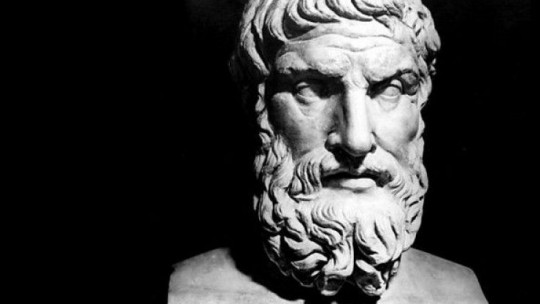
Epicurus (341 BC – 270 BC), better known as Epicurus of Samos, was an exceptional Greek philosopher and thinker, pioneer of the school that bore his name, Epicureanism.
His theories developed the postulates of atomism and rational hedonism. Always in search of pleasure, he associated this sensation with discretion, austerity and prudence.
Although most of his writings have not been preserved, his ideas reached us through the Latin poet Lucretius and some letters from Diogenes Laertius.
Famous quotes from Epicurus of Samos
In this article we are going to approach the life and work of this phenomenal Greek thinker through the best phrases of Epicurus of Samos They are famous quotes that he uttered in some of his works, or that others gave him a posteriori.
How many of these have you been "meaning to read" for months?


1. Goods are for those who know how to enjoy them.
There is no point in having wealth if you are not able to be happier.
2. The greatest fruit of self-sufficiency is freedom.
Not depending on anything or anyone guarantees us being able to be owners of our own existence.
3. Every friendship is desirable for its own sake.
A great lover of interpersonal relationships, Epicurus thus described the joy of having a good friend.
4. Do you want to be rich? So do not worry about increasing your wealth, but rather about decreasing your greed.
An ode to austerity and discretion.
5. Is God willing to prevent evil but unable to? So he is not omnipotent. Is he not willing to prevent evil, although he could do so? So he is wicked. Is he willing to prevent it and can he do it? If so, why is there evil in the world? Could it be that he is neither willing nor able to prevent it?
A reflection that has reached our days and that challenges the idea of a divine being.
6. Live hidden.
Praise for discretion, taken to the extreme.
7. Philosophy is an activity that seeks a happy life with speeches and reasoning.
His humble definition of philosophy, far from any transcendental pretension.
8. Nothing is enough for those who little is enough.
One of those phrases from Epicurus that invites us to reflect.
9. Pleasure is the first good. It is the beginning of all preferences and all aversions. It is the absence of pain in the body and restlessness in the soul.
His definition of pleasure: the absence of pain.
10. He who forgets the goods enjoyed in the past is already old today.
Memory is inherent to happiness.
11. We must look for someone to eat and drink with before looking for something to eat and drink, because to eat alone is to live the life of a lion or a wolf.
The company of good and kind people is the reason for living.
12. He who does not satisfy the small, nothing will satisfy him.
About austerity.
13. Not he who suppresses the Gods is impious, but he who conforms them to the opinions of mortals.
The human notion of God will always be poor and incomplete.
14. Gods? Maybe there are. I neither affirm it nor deny it, because I do not know it nor do I have the means to know it. But I know, because life teaches me this daily, that if they exist they neither take care of us nor care about us.
A skeptical view about the existence of divine entities.
15. We do not need help from friends so much as we need the certainty of help.
Knowing that someone is there to help us is certainly comforting.
16. He who says that everything happens by necessity can have nothing to object to whoever denies that everything happens by necessity, since this same thing affirms that it happens by necessity.
Convoluted explanation of the great Epicurus.
17. Just as the wise man does not choose the most abundant food, but the most tasty, he does not desire the longest life, but the most intense.
A great reflection on how to live life intensely.
18. We consider many pains better than pleasures because they achieve greater pleasure for us.
About pleasure and how to take advantage of it.
19. It is absurd to ask the gods for what each person is capable of providing for themselves.
Another example of his skepticism about divine miracles.
20. Philosophy is an activity that seeks a happy life with speeches and reasoning.
About the ultimate objective of this essential discipline of knowledge.
21. The fool, among other evils, has this: he always tries to start his life.
In other words, you don’t learn from experience.
22. He who does not consider what he has as the greatest wealth is unhappy, even if he owns the world.
Grateful people are the happiest.
23. Death is a chimera: because while I exist, death does not exist; and when death exists, I no longer exist.
One of Epicurus’ most famous and remembered phrases.
24. Get used to thinking that death for us is nothing, because all good and all evil reside in sensations, and death precisely consists of being deprived of sensation. Therefore, the right conviction that death is nothing to us makes the mortality of life pleasant to us; not because it adds an indefinite amount of time, but because it deprives us of an excessive desire for immortality.
Epicurus’s exceptional aphorism about non-existence.
25. The wise man will not strive to master the art of rhetoric and will not intervene in politics nor will he want to be king.
All artifice and social recognition are unnecessary, according to the Greek philosopher.
26. What is insatiable is not the belly, as the common people claim, but the false belief that the belly needs infinite satiety.
Our perception of needs is what creates the need.
27. No one, seeing evil, chooses it, but allows himself to be deceived by it, as if it were a good compared to a worse evil.
About the imperceptible seduction of evil.
28. He who one day forgets how good he had it has become old that same day.
A sample of his vitalistic hedonism.
29. Withdraw into yourself, especially when you need company.
The need to share time with other people is a symptom of weakness.
30. Everyone leaves life as if they had just been born.
Helpless, unprotected and naked. This is how our existence ends.
31. Excessive anger breeds madness.
Self-control, a basic trait for happiness, according to the great Epicurus.
32. Necessity is within evil, but there is no dianoetic cause of living in need.
Austerity made a famous quote.
33. Pleasure is the beginning and the end of a happy life.
One of Epicurus’ phrases in which he shows us the responsibility of having a carefree life.
34. The greatest fruit of justice is serenity of the soul.
When you have nothing to regret, you can sleep with all the peace of mind in the world.
35. He who needs tomorrow the least is the one who most willingly advances towards it.
Another quote about austerity, one of the great virtues a person can possess.
36. We must meditate, therefore, on the things that bring us happiness, because, if we enjoy it, we possess everything and, if we lack it, we do everything possible to obtain it.
Extract from one of his letters to Menoeceus.
37. Let us eat and drink, for tomorrow we will die.
Carpe diem: let’s enjoy the moment.
38. Thus, death is not real neither for the living nor for the dead, since it is far from the former and, when it approaches the latter, they have already disappeared.
Another reflection about death.
39. Let no one, while he is young, be reluctant to philosophize, nor, when he reaches old age, become tired of philosophizing. Because, to achieve health of the soul, you are never too old or too young.
His idea about philosophy, in a letter to Menoeceus.
40. That is why I take pleasure in remembering the egregious sayings of Epicurus because I see that those who turn to them with the vile hope of covering up their vices will understand that wherever they go they must live honestly. (Seneca)
The great Seneca, talking about the protagonist of the post: Epicurus.
41. If the bad things they say about you are true, correct yourself. If it’s a lie, laugh.
A tip that we can use against evil tongues.
42. It is not the young man who should be happy, but the old man who has lived a beautiful life.
Living fully gives us happiness in the last years of life.
43. Prudence is the highest of all goods.
A value that helps us be happier.
44. It is not possible to live happily if you do not lead a beautiful, just and virtuous life; nor lead a beautiful, just and virtuous life without being happy.
Epicurus advises us on how we can achieve happiness in life.
45. It is not what we have, but what we enjoy that constitutes our abundance.
An accurate reflection that encourages us to value the good things we have.
46. I would rather be first in a small Iberian town than second in Rome.
It’s better to be a big fish in a small pond.
47. The habit of always talking about all kinds of matters is proof of ignorance and bad education, and one of the great scourges of human treatment.
Those who tend to talk about everything usually have no idea about anything.
48. You don’t develop courage by being happy in your daily personal relationships. You develop it by surviving difficult times and defying adversity.
What makes us suffer makes us stronger.
49. Justice is the revenge of the social man as revenge is the justice of the savage man.
Justice should not seek revenge in any case.
50. The wealth required by nature is limited and is easy to acquire, but the wealth required by vain ideals extends to infinity.
Epicurus considered a lack of ambition to be valued more highly than wealth.
51. Thus, death is not real for either the living or the dead, since it is far from the former and, when it approaches the latter, they have already disappeared.
An accurate reflection on death.
52. Look for pleasure that is not followed by any pain.
One of the fundamental keys of Epicureanism.
53. To make a man happy, do not give him wealth. Take away desires.
Lack of ambition and a modest life will ensure us happiness.
54. Whoever claims that his time has not yet come or that he is past his age is as if he were saying that his time for happiness has not yet come or that he has already left it behind.
We must live each day with vitality and making the most of the time we have.
55. There will come a time when you think it’s all over. That will be the beginning.
Vital advice that we can follow in our daily lives.
56. Man is rich since he has become familiar with scarcity.
Only in this way will we be able to value what we have.
57. Skilled pilots earn their reputation from storms and tempests.
Epicurus analyzed all aspects of the society in which he lived.
58. Also in moderation there is a middle ground and whoever does not find it is the victim of an error similar to that of someone who goes too far due to wantonness.
By finding the right measure in all aspects of life, we will be happy.
59. Man is not a child of circumstances, but circumstances are the creatures of man.
A philosophical debate that has been taking place since the beginning of this discipline.
60. Of all the things that wisdom provides to make us completely happy, the greatest is the possession of friendship.
A truth that is still valid after more than 2000 years.
61. The body, in love affairs, is an indispensable part of the soul.
Soul and body were inseparable elements for this philosopher.
62. It is better to be unhappy and rational than happy and lacking reason.
An approach that the majority will agree with.
63. Wealth does not consist of having many possessions, but rather of having few wants.
Only in this way will we be happy.
64. Don’t spoil what you have by wishing for what you don’t have; remember that what you have now was once things you only wanted.
We must value what we have before we lose it.
65. Remaining hidden is of no use to the sinner; Because even if he manages to find a good hiding place, he lacks confidence.
You can only rest with a clear conscience.
66. To have true freedom you must be a slave to philosophy.
For this thinker, philosophy was liberating for man.
67. The art of living well and the art of dying well are one.
For Epicurus, both life and death were two sides of the same coin.
68. The misfortune of the wise is better than the prosperity of fools.
Epicurus also had time to talk about cultural and social elements of the time in which he lived.
69. Freedom and anarchy are the greatest fruits of autarky.
Epicurus also reflected on politics in his writings.
70. The greater the difficulty, the greater the glory in overcoming it.
We have all experienced great satisfaction after accomplishing a great feat.
Use this citation format to reference the article clearly and help readers find the original source.
PsychologyFor. (2024). The 70 Best Famous Phrases of Epicurus. PsychologyFor. https://psychologyfor.com/the-70-best-famous-phrases-of-epicurus/