

See more of our articles in your search results.
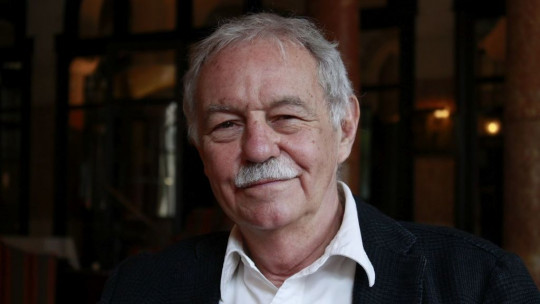
Eduardo Mendoza (Barcelona, 1943) is a famous Spanish writer. His novels, with a simple style and aimed at all audiences, have been big sellers.
Of course, the quality of his stories is always an essential requirement, and both critics and the public consider Eduardo Mendoza as one of the literary men par excellence of the late 20th century and early 21st century.
Famous quotes by Eduardo Mendoza
With works such as The Truth About the Savolta Case, No News from Gurb or The Year of the Deluge, Eduardo Mendoza’s work also encompasses essays and theater.
With today’s article we want to pay a small tribute to this author through the best phrases of Eduardo Mendoza.
1. They were days of irresponsible plenitude, of imperceptible happiness…
Poetic fragment from The Truth About the Savolta Case.
How many of these have you been "meaning to read" for months?
- 1
 S&S/Simon ElementProtocolsAn Operating Manual for the Human BodyListen Free On Audible
 - 2
 Undercover Publishing HouseStop Letting Everything Affect YouHow to break free from overthinking, emotional chaos, and self-sabotage.Listen Free On Audible
 - 3
 Grand Central PublishingIn the Shadow of EightSurviving the Reality of My ChildhoodListen Free On Audible
2. It is human nature to falter when dreams begin to materialize.
A reflection that we must take into consideration.
3. That all those locked up there clearly perceive the madness of others but none of them their own…
Fragment of The Adventure of the Ladies’ Dressing Room.
4. The small size of the premises saved cleaning and furniture costs.
Fragment of The truth about the Savolta case.
5. Ancestors and descendants are important. Past and future. Without past and future, everything is present, and present is fleeting.
About time and its limits.
6. You don’t know who Franco was, with him there were no freedoms or social justice, but it was a pleasure to watch television.
A great reflection on the time of dictatorship in Spain.
7. Do like me: take advantage of the advantages of being old. I am not old. Go practicing. The secret to becoming very old is to grow old very soon.
To keep in mind for the future.
8. He symbolized better than anyone the spirit of an era that today has died a little with him.
Fragment of The City of Wonders.
9. And that he achieved all this alone and without help, starting from scratch based on courage and will?
The Cervantes Institute, about the figure of Eduardo Mendoza.
10. You may wonder how I have been able to be so successful with men without being worth much. Does not have merit. Men are very demanding when it comes to making aesthetic judgments about women, but when it comes down to it, they will settle for anything. When I discovered this, my life became much more interesting. I don’t mind admitting that I have used men.
Another paragraph from The Adventure of the Ladies’ Dressing Room.
11. Luckily a tip solves any problem in a satisfactory way. In this country everything is fixed with a good tip. When I arrived it was difficult for me to understand it, but now it seems like a magnificent system: it allows us to keep salaries low and at the same time dramatizes the hierarchy. The worker receives half and has to thank the master for the other half by redoubling his servility.
About the city of Madrid.
12. Paquita must have been slightly over the age at which a daughter from a good family, especially one who is attractive, intelligent and generous, is married or, at least engaged. Otherwise, as was clearly the case here, the interested party tended to appear prudish or exaggerate a poise and independence that left no doubt about the voluntariness of her single status.
Another fragment of Catfight.
13. The truth is, in case any reader joins the account of these adventures without prior knowledge of my background, that in the past I was unjustly imprisoned, although this is irrelevant now, in a penitentiary center for criminals with mental disorders and that said center was run for life and with ungentlemanly methods by Dr. Sugrañes.
The struggle of the bag and the life.
14. The only thing I can assure is that on no occasion, not even in the most critical situations, have I seen, as is often said, my entire life pass before me as if it were a movie, which is always a relief, because it is quite bad It is in itself to die, and on top of that, to die watching Spanish cinema.
From the same work as the previous fragment.
15. He dedicated his entire conference to a single painting: The Death of Actaeon. It was not one of the works exhibited in the Louvre, or in any other museum. Apparently it belonged and probably still belongs to a lucky individual. (…) the professor was showing the different details of that curious mythological episode.
From the same work as the previous one, on a painting with unique details.
16. For a few years, and after some somewhat rocky beginnings, of which I left a written record at the time, I ran a ladies’ hair salon where, for some time now, only one Caixa employee attended with admirable regularity to claim the arrears of your successive credits.
The mystery of the haunted crypt.
17. Men are more obtuse: money and football have blocked their hypothalamus and their vital fluids do not circulate. On the other hand, women, as soon as they disconnect their cell phone, release the powers of the mind and, if you neglect it, they have already achieved extrasensory perception.
A portrait of today’s world.
18. Life has taught me that I have a mechanism inserted somewhere impervious to experience that prevents me from doing everything that could benefit me and forces me to follow the most foolish impulses and the most harmful natural tendencies…
Mendoza, prey to carnal desires.
19. The only thing that was not enough was the money to pay so many people or the suppliers of raw materials. Madrid, according to a phrase coined by a satirical newspaper of the time, held the strings of the bag with his teeth.
Another reflection on commercial activity in the capital of Spain.
20. Human beings, like insects, go through three phases or stages of development: children, workers and retirees. The children do what they are told, the workers do too, but they are paid for it, the retirees receive some emoluments, but they are not allowed to do anything…
About the stages of life.
21. We are more inclined to work hard and to be talkative, selfless, modest, courteous and affectionate and not unkind, selfish, petulant, rude and uncouth, as we would undoubtedly be if we did not depend so much on falling from grace to survive.
About the kind nature of human beings.
22. People were unhappy before I was born and they will be unhappy after I am dead. It is true that I have caused the misfortune of some, but: Have I been the true cause of that misfortune or a mere agent of fatality?
Another reflection from The City of Wonders.
23. The language of human beings is laborious and childish… They speak at length and shout, accompanied by horrible gestures and grimaces. Even so, his capacity for expression is very limited, except in the field of blasphemy and foul language…
Noise instead of arguments.
24. I don’t know when I fell in love with you or how such a thing happened, because I try to remember and it seems to me that I have always loved you and I try to understand and I find no reason in the world not to love you.
A beautiful declaration of love.
25. This is not a poor country. This is a country of poor people. In a poor country, everyone makes do as best they can with what they have. Not here. Here what counts is what one has or does not have.
About Spain and its miseries.
26. It was admirable to see how those potentates, so hard hit by the financial crisis as I had just learned from reading a newspaper, continued to maintain the appearance of waste and revelry with the sole purpose of not sowing discouragement in the stock markets.
About the stock market.
27. The first time I came attracted by the novelty. I read the notice in the press and I said to myself: Fulgencio, here you have a companion in misfortunes: out of her element, exposed to public ridicule for a handful of money.
Fragment of Three Lives of Saints.
28. The newspapers only talked about this. Each of the visitors, upon returning to their country, they said, is converted into an apostle and propagator of everything they have seen, heard and learned.
Another great paragraph from The City of Wonders.
29. Oh, Barcelona, he said with his voice broken by emotion, How beautiful it is! And to think that when I saw it for the first time, there was almost nothing of all this that we see now!
About his hometown, Barcelona.
30. In the end – he concluded dejectedly – he no longer knew what he was doing there. He just knew that whatever it was, it didn’t make the slightest sense. “What you just described,” I told him, “is called working.”
An absurd situation.
31. Because Catalans always talk about the same thing, that is, about work… There are no people on Earth more fond of work than Catalans. If they knew how to do something, they would be the masters of the world.
A quite stinging phrase against the mentality of the Catalan people.
32. The Spanish speak out loud. I’m doing it myself, you see. He kept a moment of silence to show that he could put a stop to the national vice and then continued, lowering his voice.
In this fragment he tells us about the Spanish idiosyncrasy.
33. An old woman with a shriveled face sat at the table, so small and warm that it was difficult to distinguish her from the cushions and quilts distributed irregularly throughout the room to hide the deterioration of the furniture.
Cat fight.
34. I prefer the barbarity of an inquisitor willing to burn a painting because he deems it sinful, to the indifference of someone who only cares about the dating, background or price of that same painting.
A question of principles.
35. Throughout my existence I have been forced to solve some mysteries, always forced by circumstances and especially by people when those were in their hands.
Autobiographical phrase.
36. (…) Westerners are bad mathematicians. Look at Europe. Out of arrogance they go from being a group of provinces at war to becoming an empire. He exchanged national currency for the euro and that is where decadence and ruin began.
One of those phrases from Eduardo Mendoza in which he explains some cultural characteristics.
37. Philosophy and religion are very good, of course, but they are for the rich, and if you are rich, why do you want philosophy and religion?
Curious reasoning.
38. Experience has taught me that, in an investigation like the one I was carrying out, little is achieved with force or audacity and much with perseverance.
Being constant is the best way.
39. Actually I am the one who lost. I believed that by being bad I would have the world in my hands and yet I was wrong: the world is worse than me.
Small fragment of The City of Wonders.
40. José Antonio is inconsistent, the party has no program or social base, and his famous eloquence consists of speaking with a salt shaker without saying anything concrete…
Madrid, 1936.
41. For centuries we had foreign domination and we were starving like shit. Now we have learned a lesson, we have known how to take advantage of the opportunity and we have become masters of half the world.
On ethical misery in The Entanglement of the Stock Market and Life.
42. Eastern rhetoric, too subtle, I admit. Often you don’t know what they are talking about and they have already screwed you up, as Sun Tzu said.
Sarcastic phrase to take into account.
43. With the same pleasure I would have eaten a portion of sardines, but I also had to give up that because spending money was not in my budget.
About the miseries of his early years.
44. He had a thick, hanging, moist lower lip that encouraged the rubberized back of the stamps to be moistened with it.
Describing one of the characters in The Truth About the Savolta Affair.
45. Spring was announced by breathing into the air that fragrance that has something of the pleasant vertigo of madness…
From the same book as the previous fragment.
46. He had unlimited confidence in his ability to overcome any setback and take advantage of any obstacle.
One of his most read works for young people: No news from Gurb.
47. (…) This fact had already been commented on in the capital’s newspapers. These same newspapers had come to the painful but unquestionable conclusion that this had to be the case. The communications between Barcelona and the rest of the world, both by sea and by land, make it more suitable than any other city on the Peninsula for attracting outsiders, they said.
Fragment of The City of Wonders.
48. María Rosa Savolta examined the contradictory figure of the maid with a severe gaze. What was that being of steppe rudeness and dolmen-like grace, flat, close-browed, toothy and mustachioed, doing in a room where each and every one of the objects competed with each other in finesse and delicacy? And who would have put on her that starched cap, those white gloves, that apron trimmed with pointed lace? The lady asked herself.
A mystery to solve.
49. This award is a sign of success, and the desire for success is crazy. Before it is achieved, success does not exist, it is only a cause of anxiety; but when it arrives it is worse: after it is obtained, life does not stop and success overshadows it; No one can constantly repeat success and after a very short time success becomes a heavy burden; it is needed again, constantly, but now knowing its uselessness.
To take into account.
50. I believed that those who wanted me badly would not dare to attack my integrity in broad daylight and in a crowded place, but would try to lure me to where they could carry out their harmful purposes with complete discretion. He had, therefore, to avoid solitude and the night. The first would have been relatively easy for me and the second absolutely impossible, unless there was a heavenly miracle that neither my beliefs nor my past behavior authorized me to request.
About enemies and how to deal with them.
51. It is difficult for all of us to recognize that in an instant that is already irretrievable, we bet everything on a single spin of the roulette wheel before learning the rules of the game. I also believed that life was something else. Then you continue playing, you win and lose alternately, but nothing is the same: the cards are already marked, the dice are loaded and the chips only change pockets for the duration of the evening. Life is like that and it is useless to describe it as unfair after the fact.
A phrase to take life easy.
52. A criminal is not a hero, but an abject being who abuses the weakness of his neighbor. I was destined to follow this path to the saddest of outcomes if the chance encounter with literature had not opened a crack through which I could emerge to a better world. I have nothing more to add. References:
can rescue dark lives and redeem terrible acts; Conversely, terrible acts and degraded lives can rescue literature by breathing into it a life that, if not possessed, would turn it into a dead letter.
References:
in its purest form, from the pen of Eduardo Mendoza.
53. (…) Velázquez painted this painting at the end of his life. Velázquez’s masterpiece and also his testament. It is a reverse-cut portrait: it represents a group of trivial characters: a girl, maids, dwarves, a dog, a couple of officials and the painter himself. In the mirror, the figure of the Kings, the representatives of power, is blurred. They are outside the painting and, consequently, our lives, but they see everything, they control everything, and they are the ones who give the painting its reason for being.
Madrid, 1936.
54. The author of this article and of those that will follow has set himself the task of revealing in a concise and accessible manner to the simple minds of workers, even the most illiterate, those facts that, because they have been presented to the public in dark and diffuse form, behind the camouflage of rhetoric and the profusion of figures more appropriate to the understanding and comprehension of the scholar than to the reader eager for clear truths and not arithmetic intricacies, they still remain ignored by the working masses who are, however, its most important victims.
Another fragment of The Truth About the Savolta Case, his magnum opus.
55. The army remains, of course. But Azaña knows him well: it is not in vain that he has been Minister of War. He knows that the military, under his terrible appearance, is inconsistent, fickle and malleable; On the one hand they threaten and criticize and on the other they whine to get promotions, assignments and decorations; They are obsessed with perks and are jealous of those of others: everyone believes that someone else with less merit has passed them by; In short, they allow themselves to be cajoled like children. (…) All weapons (Artillery, infantry, engineers) are out to kill each other, and it is enough for the Navy to do one thing for the aviation to do the opposite.
About Madrid in the first half of the 20th century.
56. They are not reliable rumors, because they come, as always, from envious or fanciful or stupid people, or all three at the same time, but the mere fact that these people have come up with such a lie indicates that the truth should not be to walk very far from lies.
You should never believe a rumor.
57. The waiter had his face painted black as a result of constantly wiping away the sweat with the cloth for drying the glassware.
Description contained in The entanglement of the stock market and life.
58. Be careful with your ears -I said as a culmination-; They always appear where one least expects them.
Extract from one of his books.
59. From that time I remember that I happily threw time overboard, in the hope that the balloon would take flight and take me to a better future.
About his younger days.
60. You always think better with a full stomach, say those who have a stomach.
Ironic phrase that invites reflection.
61. And what is the truth? Sometimes the opposite of lying; other times, the opposite of silence.
Sometimes just screaming embodies reality.
62. Feeling is the root and support of deep ideas.
Philosophical phrase about emotions.
63. No human behavior needs precedents to be possible.
Culture is everything, sometimes.
64. Early vocations are trees with many leaves, little trunk and fewer roots.
Great poetic prose.
65. In literature class they taught us some things that were not of much use to me then and have been of little use to me today.
Unfortunately, interest in art and literature cannot be explained or taught.
66. I have sometimes wondered if Don Quixote was crazy or if he pretended to be crazy to transgress the doors of a small, uncouth and closed-in society.
The limits of madness and sanity.
67. I wanted to do like Alonso Quijano: run the world, have impossible loves and undo wrongs.
Like the famous Cervantes character.
68. There is another type of humor in Cervantes’ writing, which is not so much in the writing or the dialogues as in the writer’s gaze.
Another reflection on the work of the man from La Mancha.
69. I believe I am a model of good sense and I believe that others are like a watering can, for this reason I live perplexed and afraid of how the world is.
About his vision of things.
70. A novel is what it is: neither the truth nor the lie.
Neither fiction nor reality, but a middle ground.
Use this citation format to reference the article clearly and help readers find the original source.
PsychologyFor. (2024). The 70 Best Phrases of Eduardo Mendoza. PsychologyFor. https://psychologyfor.com/the-70-best-phrases-of-eduardo-mendoza/