


See more of our articles in your search results.
You lie awake at 3 a.m. replaying a work email you probably should have phrased differently, your chest tight, your mind refusing to settle into anything resembling rest. That specific, wired exhaustion is exhausting in itself. Well-being is not a single fixed destination you arrive at once and never revisit; it is a daily practice of noticing your thoughts, tending your body, and choosing, again and again, how to respond to inevitable stress. It is not a personality trait some people simply have. Rather, it is a trainable skill set grounded in evidence-based psychological research.
Bookstores overflow with vague wellness slogans and recycled affirmations that sound comforting but rarely translate into lasting change. Genuine well-being literature, by contrast, draws on decades of clinical psychology, contemplative neuroscience, and behavioral research to explain precisely why certain habits of mind reduce suffering while others quietly deepen it. Readers searching for real relief from chronic stress, self-criticism, or emotional exhaustion deserve texts that go beyond platitudes and offer structured, testable frameworks for change. Choosing the right foundational reading transforms vague good intentions into a concrete, sustainable psychological practice. Readers who skip this step often find themselves cycling through book after book without ever building lasting momentum.
Which books actually deliver research-backed strategies rather than recycled self-help clichés?
This comprehensive guide details the 8 best books to improve your well-being, reviewing landmark texts on mindfulness, self-compassion, habit formation, trauma recovery, and the science of sustainable happiness.
8 Best Books to Improve Your Well-Being
Verified Top Picks- 1
 Martin E. P. Seligman Flourish: A Visionary New Understanding The definitive PERMA model mapping positive emotion, engagement, relationships, meaning, and achievementCHECK TODAY'S PRICE
 - 2
 Jon Kabat-Zinn Wherever You Go, There You Are An accessible, secular guide to daily mindfulness meditation for interrupting chronic stress and ruminationCHECK TODAY'S PRICE
 - 3
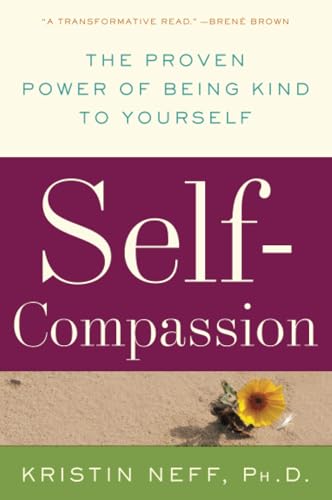 Kristin Neff Self-Compassion: The Proven Power of Being Kind to Yourself Evidence-based practices replacing harsh self-criticism with self-kindness, common humanity, and mindfulnessCHECK TODAY'S PRICE
 - 4
 James Clear Atomic Habits A practical behavioral framework for building identity-based habits and compounding small daily changesCHECK TODAY'S PRICE
 - 5
 Bessel van der Kolk The Body Keeps the Score Revealing how chronic stress and trauma are stored somatically and healed through body-based modalitiesCHECK TODAY'S PRICE
 - 6
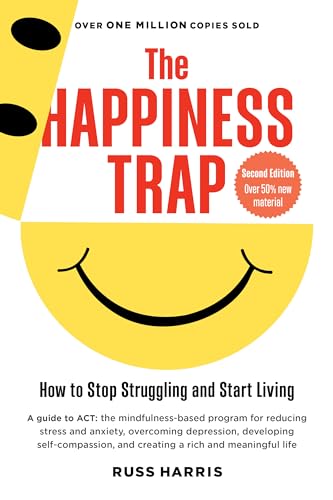 Russ Harris The Happiness Trap: How to Stop Struggling and Start Living Acceptance and Commitment Therapy (ACT) tools to stop fighting emotions and commit to valuesCHECK TODAY'S PRICE
 - 7
 Brené Brown The Gifts of Imperfection 10 research-backed guideposts for letting go of perfectionism, overcoming shame, and embracing authenticityCHECK TODAY'S PRICE
 - 8
 Michael A. Singer The Untethered Soul: The Journey Beyond Yourself Observing habitual inner chatter and cultivating contemplative emotional non-attachmentCHECK TODAY'S PRICE
What Does the Science Actually Say About Psychological Well-Being?
Psychological well-being is not simply the absence of distress; researchers define it as a multidimensional state encompassing positive emotion, meaningful engagement, healthy relationships, a sense of accomplishment, and purpose. This framework moves far beyond the outdated idea that happiness equals the mere avoidance of negative feelings.
Psychologist Martin E. P. Seligman, widely regarded as the founder of positive psychology, developed the PERMA model to capture these five measurable pillars of flourishing. Rather than chasing fleeting pleasure, Seligman’s research demonstrates that sustainable well-being requires deliberately cultivating each dimension through consistent practice. Simply feeling good in the moment, without deeper engagement or purpose, tends to produce only temporary emotional relief.
Neuroscience research on contemplative practice further confirms that well-being skills are trainable, not fixed. Structured interventions like mindfulness meditation and cognitive restructuring produce measurable changes in brain regions governing emotional regulation and stress reactivity over time. That finding alone reframes well-being from an elusive personality trait into a concrete, learnable psychological competency.
- Psychological well-being encompasses positive emotion, engagement, relationships, meaning, and accomplishment simultaneously.
- The PERMA model provides a structured, research-backed framework for cultivating sustainable flourishing.
- Contemplative neuroscience confirms that emotional regulation skills are trainable through consistent structured practice.
- Genuine well-being requires deliberate cultivation rather than passive pursuit of momentary pleasure.
The 8 Best Books to Improve Your Well-being
The following curated selection represents the eight most scientifically grounded, widely recommended books for building lasting psychological well-being, spanning positive psychology, mindfulness, self-compassion, trauma healing, habit science, and acceptance-based behavioral therapy.
1. Flourish: A Visionary New Understanding of Happiness and Well-being — Martin E. P. Seligman
Flourish by Martin E. P. Seligman expands his earlier work on learned optimism into a comprehensive theory of human flourishing built around the PERMA model: Positive emotion, Engagement, Relationships, Meaning, and Accomplishment. Seligman argues that authentic well-being requires cultivating all five pillars rather than fixating on happiness alone.
Drawing on decades of positive psychology research, Seligman provides concrete exercises for building resilience, gratitude, and purpose into daily life. It remains the definitive foundational text for understanding evidence-based positive psychology.
- Introduces the PERMA model identifying five measurable pillars of psychological flourishing.
- Provides research-backed exercises for cultivating gratitude, resilience, and life purpose.
- Challenges the narrow equation of well-being with fleeting positive emotional states.
2. Wherever You Go, There You Are: Mindfulness Meditation in Everyday Life — Jon Kabat-Zinn
Wherever You Go, There You Are by Jon Kabat-Zinn, the researcher who founded the Mindfulness-Based Stress Reduction program at the University of Massachusetts Medical School, introduces mindfulness meditation as an accessible daily practice rather than an exotic spiritual discipline. Kabat-Zinn explains how present-moment awareness interrupts the automatic rumination that fuels chronic stress.
Written in short, meditative chapters, this book has introduced millions of readers to formal and informal mindfulness practice since its original publication. It remains the most widely recommended entry point into secular mindfulness-based stress reduction.
- Introduces mindfulness meditation as an accessible, secular daily practice.
- Explains how present-moment awareness interrupts automatic rumination and chronic stress cycles.
- Provides short, meditative chapters suitable for building a sustainable daily practice.
3. Self-Compassion: The Proven Power of Being Kind to Yourself — Kristin Neff
Self-Compassion by psychologist Kristin Neff, the researcher who pioneered academic study of the construct, demonstrates that self-kindness produces better psychological outcomes than harsh self-criticism or inflated self-esteem. Neff identifies three core components: self-kindness, common humanity, and mindful awareness of suffering.
Packed with research findings and practical exercises, this book directly challenges the cultural assumption that self-criticism motivates improvement. It remains the foundational text for understanding evidence-based self-compassion practice.
- Identifies three core components of self-compassion: kindness, common humanity, and mindful awareness.
- Presents research demonstrating self-compassion outperforms harsh self-criticism for motivation and resilience.
- Provides structured exercises for replacing self-judgment with genuine self-kindness practice.
4. Atomic Habits: An Easy & Proven Way to Build Good Habits & Break Bad Ones — James Clear
Atomic Habits by James Clear synthesizes behavioral psychology and neuroscience into a practical framework for building sustainable habits through small, incremental changes. Clear introduces the concept of identity-based habit formation, arguing that lasting change begins with shifting self-perception rather than relying on willpower alone.
Structured around the four laws of behavior change—make it obvious, attractive, easy, and satisfying—this book provides genuinely actionable tools for anyone seeking to improve daily well-being through structured habit design.
- Introduces identity-based habit formation as more sustainable than willpower-dependent change.
- Presents the four laws of behavior change for building or breaking specific habits systematically.
- Provides concrete, actionable strategies grounded in behavioral psychology research.
5. The Body Keeps the Score: Brain, Mind, and Body in the Healing of Trauma — Bessel van der Kolk
The Body Keeps the Score by psychiatrist Bessel van der Kolk demonstrates that unresolved trauma is stored somatically within the nervous system, often undermining well-being long after the original event has passed. Van der Kolk synthesizes neuroimaging research with clinical case studies covering yoga, EMDR, and other body-based interventions.
Understanding how chronic stress and past trauma shape present-day emotional reactivity provides essential context for anyone whose well-being efforts feel inexplicably blocked. It remains foundational reading for trauma-informed emotional recovery.
- Explains how unresolved trauma becomes encoded within the autonomic nervous system.
- Reviews evidence supporting body-based interventions like yoga and EMDR therapy.
- Provides essential context for well-being efforts blocked by unprocessed past trauma.
6. The Happiness Trap: How to Stop Struggling and Start Living — Russ Harris
The Happiness Trap by physician and therapist Russ Harris introduces Acceptance and Commitment Therapy (ACT), a research-backed approach built on the insight that struggling against difficult emotions often intensifies suffering more than the original feeling itself. Harris teaches psychological flexibility: accepting uncomfortable thoughts while still acting in line with personal values.
Written with genuine accessibility and drawing on the foundational research of psychologist Steven C. Hayes, this book reframes the pursuit of happiness itself as a common psychological trap. It remains essential reading for understanding acceptance-based behavioral therapy.
- Introduces Acceptance and Commitment Therapy as an alternative to struggling against difficult emotions.
- Teaches psychological flexibility: accepting discomfort while pursuing meaningful personal values.
- Reframes the direct pursuit of happiness as a common psychological trap.
7. The Gifts of Imperfection: Let Go of Who You Think You’re Supposed to Be and Embrace Who You Are — Brené Brown
The Gifts of Imperfection by researcher Brené Brown distills over a decade of qualitative research on shame, vulnerability, and authenticity into ten accessible guideposts for what she calls “Wholehearted Living.” Brown argues that genuine well-being requires releasing perfectionism and embracing imperfection as the foundation of connection.
Grounded in grounded theory research methodology rather than anecdote alone, this book offers a compassionate, research-backed challenge to the cultural pressure toward flawless performance. It remains foundational reading for understanding vulnerability and authentic self-acceptance.
- Distills over a decade of qualitative research on shame and authentic vulnerability.
- Presents ten guideposts for cultivating what Brown calls “Wholehearted Living”.
- Challenges cultural perfectionism as fundamentally incompatible with genuine human connection.
8. The Untethered Soul: The Journey Beyond Yourself — Michael A. Singer
The Untethered Soul by Michael A. Singer explores the relationship between consciousness and the constant stream of inner mental chatter that often drives anxiety and emotional reactivity. Singer draws on contemplative traditions to teach readers how to observe thoughts and emotions without becoming entangled in them.
Bridging Eastern contemplative philosophy with practical daily application, this bestselling book offers a distinct complementary perspective to more clinically structured well-being approaches. It remains a widely read text for cultivating inner spaciousness and emotional non-attachment.
- Explores the relationship between consciousness and habitual inner mental chatter.
- Teaches observational awareness of thoughts and emotions without reactive entanglement.
- Bridges contemplative philosophy with practical strategies for cultivating emotional non-attachment.
How These Eight Books Complement Different Well-Being Needs
Understanding how these eight books address distinct dimensions of well-being helps readers choose where to begin rather than feeling overwhelmed by the full list at once. No single book addresses every dimension of flourishing, which is precisely why combining multiple frameworks tends to produce more durable results.
| Well-Being Dimension | Recommended Book and Core Approach |
|---|---|
| Overall Framework and Meaning | Seligman’s PERMA model for structuring flourishing across five pillars |
| Present-Moment Awareness | Kabat-Zinn’s mindfulness meditation for interrupting rumination |
| Self-Criticism and Shame | Neff’s self-compassion research and Brown’s vulnerability work |
| Behavioral Change | Clear’s identity-based habit formation framework |
| Trauma and Nervous System Regulation | Van der Kolk’s somatic trauma research |
| Emotional Acceptance | Harris’s Acceptance and Commitment Therapy approach |
| Consciousness and Inner Observation | Singer’s contemplative framework for emotional non-attachment |
As the table illustrates, readers struggling primarily with self-criticism benefit most from starting with Neff and Brown, while those facing chronic rumination might begin with Kabat-Zinn’s structured mindfulness practice. Combining a clinical framework with a contemplative one often produces a more complete and resilient well-being practice.
Building a Sustainable Daily Reading and Practice Routine
Reading about well-being provides limited benefit without consistent, deliberate application. Genuine change requires translating each book’s core insight into a concrete daily habit rather than treating these texts as passive inspirational reading.
Establishing even ten minutes of daily mindfulness practice, informed by Kabat-Zinn’s approach, creates the attentional foundation that makes other well-being interventions more effective. Pairing this practice with James Clear’s habit-stacking technique, attaching a new well-being behavior to an existing daily routine, dramatically increases the likelihood of long-term consistency. Not glamorous. Simply effective.
- Choose one specific practice from a single book and commit to it for at least three consecutive weeks.
- Stack the new well-being habit onto an existing daily routine using identity-based habit formation principles.
- Track your practice in a simple journal to notice patterns in emotional regulation and mood.
- Revisit foundational chapters periodically, since new life circumstances often reveal previously overlooked insights.
Adapting These Practices for Different Life Circumstances
Well-being practices rarely translate identically across different life stages, cultural backgrounds, and personal circumstances. Recognizing how to adapt these eight frameworks to your specific situation prevents the discouragement that comes from forcing a one-size-fits-all approach onto a genuinely individual life.
Parents of young children, for instance, often find that Kabat-Zinn’s longer seated meditation sessions feel impractical, yet informal mindfulness, simply noticing the sensation of washing dishes or holding a child’s hand, can deliver comparable benefits without requiring dedicated silent time. Similarly, individuals managing chronic illness may find that Singer’s contemplative framework for observing rather than resisting difficult sensations offers more immediate relief than habit-focused approaches that assume full physical capacity. Cultural background also matters considerably; some readers find Western frameworks like ACT more immediately accessible, while others resonate more deeply with contemplative traditions reflected in Singer’s work.
The goal is never rigid adherence to any single author’s prescribed method. Rather, it is thoughtful adaptation, extracting the underlying psychological principle and reshaping its application to fit your actual daily reality, work schedule, physical capacity, and cultural context. A practice that feels forced rarely sustains itself past the initial motivation that inspired picking up the book in the first place. That distinction may sound subtle, but it changes everything about how the practice actually feels day to day.
- Parents and caregivers can adapt formal meditation into brief, informal mindful attention during routine tasks.
- Individuals managing chronic illness may benefit more from observational, acceptance-based approaches than habit-focused frameworks.
- Cultural background shapes which frameworks feel more immediately accessible and personally resonant.
- Thoughtful adaptation of core principles matters more than rigid adherence to any single author’s exact method.
The Neuroscience Behind Why These Practices Actually Work
Understanding the underlying neuroscience behind mindfulness, self-compassion, and habit formation helps explain why these approaches produce lasting change rather than temporary relief. Neuroimaging research consistently shows that structured practices reshape neural pathways governing emotional regulation.
Studies on mindfulness meditation, building directly on Kabat-Zinn’s clinical protocols, demonstrate measurable changes in the amygdala’s reactivity to stress and increased connectivity within prefrontal regions responsible for emotional regulation. This is not a metaphorical claim about “rewiring the brain” in some vague self-help sense; it reflects genuine, replicated findings in contemplative neuroscience research. Similarly, self-compassion practices activate the same neurobiological caregiving systems that respond when we comfort another person, which explains why Kristin Neff’s exercises often feel physically soothing rather than merely intellectually convincing.
Habit formation research, central to James Clear’s framework, draws on basal ganglia circuitry that governs automatic behavior once a pattern becomes sufficiently practiced. Understanding that new habits initially require significant prefrontal effort, but gradually shift toward automatic processing, helps explain why the first few weeks of any new well-being practice feel disproportionately difficult compared to the relative ease that follows. Not a failure of willpower. Simply the normal trajectory of neural habit consolidation.
- Mindfulness meditation produces measurable changes in amygdala reactivity and prefrontal regulation circuitry.
- Self-compassion practices activate the same neurobiological systems involved in caregiving and soothing.
- Habit formation relies on basal ganglia circuitry that gradually shifts effortful behavior toward automatic processing.
- Initial difficulty with new practices reflects normal neural consolidation, not personal failure or weak willpower.
Common Obstacles That Derail Well-Being Practices
Even well-intentioned readers frequently abandon well-being practices within the first few weeks. Recognizing these common obstacles in advance helps prevent the discouragement that often follows an initial burst of enthusiastic but unsustainable effort.
- Attempting to implement all eight books’ recommendations simultaneously, leading to overwhelm and abandonment.
- Treating mindfulness or self-compassion practices as quick fixes rather than gradually developed skills.
- Judging oneself harshly for inconsistent practice, which paradoxically undermines the very self-compassion being cultivated.
- Expecting linear progress rather than the naturally uneven trajectory of genuine psychological change.
That last point deserves particular attention. Well-being work rarely moves in a straight line. Setbacks are not evidence of failure; they are simply part of the process, and returning to practice after a lapse matters more than achieving flawless consistency.
How to Choose Which Book to Start With Based on Your Current Struggle
Selecting the right starting point among these eight books depends heavily on your most pressing current struggle rather than simply picking whichever title seems most popular. Matching the book to your specific need produces faster, more meaningful engagement.
- If chronic rumination and racing thoughts dominate your days, begin with Kabat-Zinn’s structured mindfulness practice.
- If harsh self-criticism follows every mistake, start with Neff’s self-compassion framework before other interventions.
- If you feel stuck despite genuine effort to change behavior, turn to Clear’s habit formation system for practical structure.
- If past trauma seems to be blocking progress despite consistent effort, consider van der Kolk’s work alongside professional support.
When Well-Being Reading Isn’t Enough: Recognizing the Need for Professional Support
Self-help literature provides genuinely valuable tools, but it has real limits when facing significant, persistent mental health challenges. Recognizing when reading alone is insufficient represents an important form of psychological self-awareness rather than a failure of effort.
If feelings of hopelessness, persistent low mood, chronic anxiety, or emotional numbness continue for more than two consecutive weeks despite genuine engagement with well-being practices, and these symptoms interfere with work, relationships, or basic daily functioning, scheduling an evaluation with a licensed clinical psychologist or psychiatrist is the appropriate next step. Books like those by Bessel van der Kolk and Russ Harris explicitly acknowledge that self-guided reading works best alongside, not instead of, professional clinical support when symptoms are severe.
Most critically, if you or someone you know is experiencing acute suicidal ideation, intrusive thoughts of self-harm, or an overwhelming emotional crisis where safety cannot be guaranteed, do not rely on self-help reading alone. In the United States and Canada, immediately call or text 988 to reach the Suicide & Crisis Lifeline, available twenty-four hours a day, seven days a week, free and completely confidential. Seeking professional support during a crisis reflects genuine strength, not a failure of self-sufficiency.
- Persistent distress lasting more than two weeks warrants evaluation by a licensed mental health professional.
- Well-being books complement but never replace individualized clinical assessment and treatment.
- Acute suicidal ideation demands immediate emergency contact with dedicated crisis support services.
FAQs about Books to Improve Your Well-being
What is the single best book to start with if I am completely new to well-being literature?
Wherever You Go, There You Are by Jon Kabat-Zinn is widely recommended as an ideal starting point for newcomers. It introduces mindfulness meditation in short, accessible chapters that require no prior meditation experience or specialized vocabulary. Because present-moment awareness forms a foundation that makes many other well-being interventions more effective, starting here often makes subsequent reading, whether about self-compassion, habit formation, or trauma recovery, easier to understand and apply consistently in daily life.
Do I need to read all eight books to see improvements in my well-being?
No, these eight books represent a comprehensive toolkit rather than a mandatory sequential curriculum. Most readers benefit significantly from deeply engaging with just one or two books that address their most pressing current struggle, whether that involves self-criticism, chronic stress, or difficulty forming healthy habits. Treat this list as a menu of evidence-based options rather than a checklist that must be completed entirely before experiencing meaningful, measurable improvement in daily emotional well-being.
How is Acceptance and Commitment Therapy different from traditional cognitive behavioral therapy?
Acceptance and Commitment Therapy, introduced in Russ Harris’s book, focuses on accepting difficult thoughts and emotions rather than attempting to eliminate or restructure them, which distinguishes it from traditional cognitive behavioral therapy’s emphasis on challenging distorted thinking patterns. ACT encourages psychological flexibility, meaning the ability to experience discomfort while still taking meaningful action aligned with personal values. Both approaches are evidence-based and effective, but they differ in whether the primary goal is changing thought content or changing one’s relationship to that content.
Can self-compassion practices really replace self-criticism as a motivator?
Yes, extensive research summarized in Kristin Neff’s work demonstrates that self-compassion produces better long-term motivation and resilience than harsh self-criticism, despite the common cultural belief that self-criticism drives improvement. Self-critical individuals often experience heightened anxiety and avoidance behaviors that undermine performance over time, while self-compassionate individuals tend to acknowledge mistakes more honestly without the paralyzing shame that criticism often produces. This shift does not mean lowering standards; it means pursuing growth through kindness rather than punishment.
Why does The Body Keeps the Score matter for general well-being, not just trauma survivors?
Bessel van der Kolk’s research demonstrates that even subtle, unprocessed stress and difficult life experiences can affect nervous system regulation in ways that undermine general well-being, even when someone would not describe themselves as having experienced significant trauma. Understanding how the body stores stress helps explain why purely cognitive approaches to well-being sometimes feel insufficient. Many readers without formal trauma histories still find that body-based practices like breathwork or gentle movement meaningfully complement more mind-focused interventions.
How long does it typically take to notice real improvements from these well-being practices?
Most research on mindfulness, habit formation, and self-compassion interventions suggests that consistent daily practice over four to eight weeks produces measurable improvements in mood, stress reactivity, and overall life satisfaction. However, individual timelines vary considerably based on the severity of current struggles, consistency of practice, and whether underlying issues like trauma or clinical depression are also present. Sustainable well-being improvement tends to unfold gradually rather than through sudden transformation, which is why patience and consistent practice matter more than any single technique.
Bibliography
- Brown, B. (2010). The Gifts of Imperfection: Let Go of Who You Think You’re Supposed to Be and Embrace Who You Are. Hazelden Publishing.
- Clear, J. (2018). Atomic Habits: An Easy & Proven Way to Build Good Habits & Break Bad Ones. Avery.
- Harris, R. (2022). The Happiness Trap: How to Stop Struggling and Start Living (2nd ed.). Shambhala.
- Kabat-Zinn, J. (2005). Wherever You Go, There You Are: Mindfulness Meditation in Everyday Life. Hyperion.
- Neff, K. (2011). Self-Compassion: The Proven Power of Being Kind to Yourself. William Morrow.
- Seligman, M. E. P. (2011). Flourish: A Visionary New Understanding of Happiness and Well-being. Atria Books.
- Singer, M. A. (2007). The Untethered Soul: The Journey Beyond Yourself. New Harbinger Publications.
- van der Kolk, B. (2014). The Body Keeps the Score: Brain, Mind, and Body in the Healing of Trauma. Viking Press.
Use this citation format to reference the article clearly and help readers find the original source.
PsychologyFor. (2026). The 8 Best Books to Improve Your Well-being. PsychologyFor. https://psychologyfor.com/the-8-best-books-to-improve-your-well-being/