


See more of our articles in your search results.
You have run the same drill a hundred times, corrected the same technical flaw a hundred times, and the athlete still crumbles the moment the score gets close. That gap between technical skill and actual performance under pressure frustrates coaches at every level, from youth leagues to elite programs. Sports coaching is not simply about teaching mechanics. It is about understanding how minds handle pressure, failure, and repetition, and most coaching education barely touches that side of the job.
The frustration compounds because so much of what shapes performance happens invisibly, inside an athlete’s own head, long before a game ever starts. A player who “chokes” under pressure is not lacking skill; something in their mental approach is actively working against the skill they already have. Coaches without a framework for understanding that mental layer end up guessing, sometimes yelling louder when a calmer, more structured conversation would have worked better. The right books fill that gap, translating decades of sports psychology and organizational research into approaches an actual coach can use on a Tuesday practice.
So which books genuinely improve how you coach, rather than just repeating motivational clichés?
This guide reviews the 8 best sports coaching books, covering the frameworks, research, and named experts behind each one.
The 8 Best Sports Coaching Books
Verified Top Picks- 1
 W. Timothy Gallwey The Inner Game of Tennis The classic Self 1 vs Self 2 framework for eliminating overthinking and mental interferenceCHECK TODAY'S PRICE
 - 2
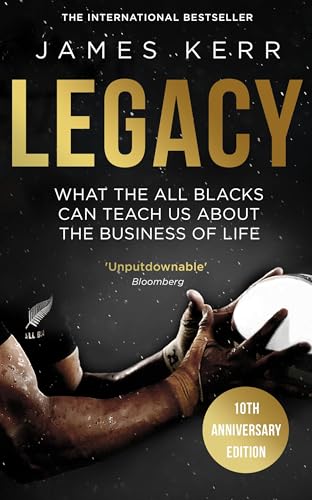 James Kerr Legacy: What the All Blacks Can Teach Us About Life Fifteen leadership and culture-building lessons from one of history's most successful teamsCHECK TODAY'S PRICE
 - 3
 Sir John Whitmore Coaching for Performance The landmark framework establishing the GROW model for transformational coaching conversationsCHECK TODAY'S PRICE
 - 4
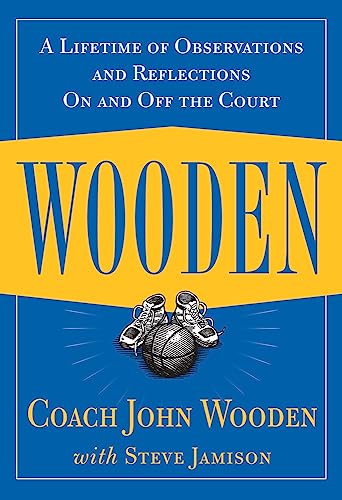 John Wooden Wooden: Observations and Reflections On and Off the Court The Pyramid of Success and character-based philosophy from a ten-time national championCHECK TODAY'S PRICE
 - 5
 Jim Afremow The Champion's Mind: How Great Athletes Think and Thrive Clinical sports psychology protocols, visualization scripts, and self-talk strategiesCHECK TODAY'S PRICE
 - 6
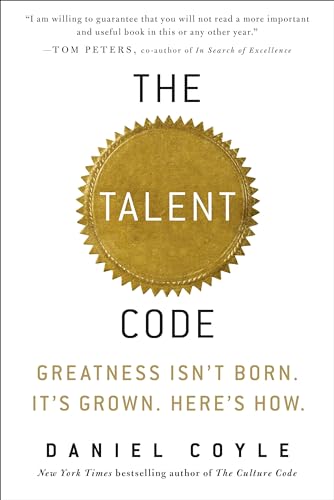 Daniel Coyle The Talent Code: Greatness Isn't Born. It's Grown. Investigating real-world talent hotbeds, deep practice, and targeted error correctionCHECK TODAY'S PRICE
 - 7
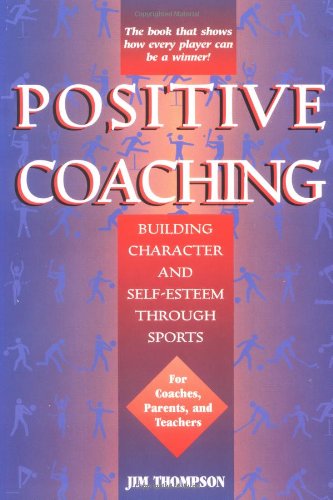 Jim Thompson Positive Coaching: Building Character and Self-Esteem The double-goal coaching framework balancing competitive success with youth character developmentCHECK TODAY'S PRICE
 - 8
 Carol S. Dweck Mindset: The New Psychology of Success How praising effort over innate talent transforms athletic resilience and responses to failureCHECK TODAY'S PRICE
What Makes a Sports Coaching Book Genuinely Useful?
The strongest coaching books share a specific quality: they translate psychological research into concrete, repeatable practices rather than relying on inspirational anecdotes alone.
Some books focus on individual mental performance, addressing how a single athlete manages pressure and self-doubt. Others focus on team culture, examining how entire organizations sustain excellence across seasons and generations of players. W. Timothy Gallwey‘s work sits closer to the individual end of that spectrum, while James Kerr’s research on the All Blacks sits closer to the organizational end. Most coaches benefit from studying both angles rather than committing to just one.
- Look for books that translate psychology into concrete, repeatable practices rather than motivational clichés.
- Match individual-focused titles to mental performance goals, and culture-focused titles to team dynamics.
- Expect honest books to acknowledge that coaching requires ongoing adjustment, not a single fixed formula.
The 8 Best Sports Coaching Books to Read This Year
The following selection spans individual mental performance, team culture, structured coaching frameworks, and the psychology of sustained motivation across an athletic career.
1. The Inner Game of Tennis — W. Timothy Gallwey
The Inner Game of Tennis by W. Timothy Gallwey introduced a distinction that still shapes sports psychology decades later: the difference between Self 1, the overthinking, judgmental inner voice, and Self 2, the body’s natural, trainable ability to perform.
Gallwey argues that most coaching focuses entirely on technical instruction while ignoring the mental interference that actually blocks performance. Quiet the mind, he claims, and the body often already knows what to do.
- Introduces the Self 1 versus Self 2 framework for understanding mental interference.
- Argues technical instruction alone rarely fixes performance problems rooted in overthinking.
- Influenced coaching far beyond tennis, including business and executive coaching models.
2. Legacy: What the All Blacks Can Teach Us About the Business of Life — James Kerr
Legacy by James Kerr studies the New Zealand All Blacks rugby team, one of the most statistically successful sporting organizations in history, to extract fifteen specific leadership and culture-building lessons.
Kerr spent time embedded with the team, and the resulting insights go well beyond typical motivational sports writing. Sweeping the sheds, a literal post-match ritual, becomes a metaphor for humility that no individual, however talented, sits above basic team responsibilities.
- Extracts fifteen specific lessons from one of history’s most successful sports organizations.
- Uses the ‘sweep the sheds’ ritual as a metaphor for enforced humility.
- Applies rugby team culture-building directly to business leadership contexts.
3. Coaching for Performance: The Principles and Practice of Coaching and Leadership (5th Edition) — Sir John Whitmore
Coaching for Performance by Sir John Whitmore introduced the GROW model, Goal, Reality, Options, Will, a structured framework for coaching conversations that remains one of the most widely taught coaching tools in the world.
Unlike sport-specific titles, Whitmore’s book applies equally to business and athletic coaching, treating the coach’s role as drawing out a person’s own answers rather than simply dictating instructions from experience.
- Introduces the GROW model as a structured framework for coaching conversations.
- Applies equally across athletic, business, and personal coaching contexts.
- Frames coaching as drawing out answers rather than dictating instructions.
4. Wooden: A Lifetime of Observations and Reflections On and Off the Court — John Wooden
Wooden by legendary UCLA basketball coach John Wooden, who won ten national championships in twelve years, distills his personal philosophy on character, preparation, and success into short, reflective essays.
Wooden’s famous Pyramid of Success ranks character traits like industriousness and enthusiasm as foundational to athletic achievement, arguing that scoreboard results follow proper preparation rather than the reverse.
- Introduces the Pyramid of Success, ranking character traits as foundational to achievement.
- Draws on a coaching record of ten national championships in twelve years.
- Argues genuine preparation, not scoreboard obsession, produces lasting athletic success.
5. The Champion’s Mind: How Great Athletes Think, Train, and Thrive — Jim Afremow
The Champion’s Mind by sports psychologist Jim Afremow translates clinical mental performance research into specific techniques elite athletes use to manage pressure, recover from setbacks, and maintain focus during competition.
Afremow has worked directly with Olympic and professional athletes, which gives the book’s recommendations, visualization scripts, self-talk strategies, genuine clinical grounding rather than motivational filler.
- Translates clinical sports psychology research into specific, usable techniques.
- Covers visualization and self-talk strategies used by elite competitive athletes.
- Draws on Afremow’s direct clinical work with Olympic and professional athletes.
6. The Talent Code: Greatness Isn’t Born. It’s Grown. Here’s How. — Daniel Coyle
The Talent Code by journalist Daniel Coyle investigates hotbeds of unusually concentrated talent, a Russian tennis club, a Brazilian soccer academy, to identify the specific practice patterns that reliably produce elite skill.
Coyle’s central concept, deep practice, involves deliberately operating at the edge of one’s ability and correcting errors immediately, a pattern that appears remarkably consistent across sports, music, and other skill domains.
- Investigates real-world ‘talent hotbeds’ to identify consistent skill-building patterns.
- Introduces deep practice as deliberately working at the edge of ability.
- Applies findings across sports, music, and other domains of skill acquisition.
7. Positive Coaching: Building Character and Self-Esteem Through Sports — Jim Thompson
Positive Coaching by Jim Thompson, founder of the nonprofit Positive Coaching Alliance, focuses specifically on youth sports, offering over two hundred practical recommendations for building character rather than purely chasing wins.
Thompson’s ‘double-goal coach’ concept balances winning with a second, equally important goal: teaching life lessons that outlast any single season’s record. That balance addresses burnout patterns common among young athletes pushed too hard too early.
- Offers over two hundred practical recommendations specific to youth sports coaching.
- Introduces the ‘double-goal coach’ concept balancing winning with character development.
- Addresses burnout risk among young athletes pushed toward early specialization.
8. Mindset: The New Psychology of Success — Carol S. Dweck
Mindset by Stanford psychologist Carol S. Dweck distinguishes a fixed mindset, believing ability is static, from a growth mindset, believing ability develops through effort, a distinction now central to how modern coaches talk about failure and feedback.
Athletes with a growth mindset interpret a lost game as useful information rather than a verdict on identity. Coaches who praise effort and strategy, rather than only talent, measurably shift how athletes respond to setbacks over a season.
- Distinguishes a fixed mindset from a growth mindset in athletic development.
- Shows how praising effort rather than talent shifts responses to failure.
- Provides the psychological foundation many coaching books on this list build upon.
What Is the Inner Game, and Why Does Mental Interference Matter More Than Skill?
The “inner game” describes the mental contest happening inside an athlete’s head, often working directly against the physical skill that same athlete has already built through countless hours of practice.
W. Timothy Gallwey‘s Self 1 and Self 2 framework explains this precisely. Self 1 is the judgmental, overthinking voice that critiques every shot before it happens; Self 2 is the trained body that, left alone, often performs better than Self 1 allows it to. Anxiety, self-criticism, and fear of failure all amplify Self 1’s interference, which is exactly why a technically skilled athlete can still crumble under pressure. The skill was never the problem.
Coaches who understand this distinction shift their language accordingly. Instead of piling on more technical corrections during a slump, effective coaches sometimes ask an athlete to simply describe what they observe, without judgment, quieting Self 1 long enough for Self 2 to take over. It sounds almost too simple. It frequently works.
- Self 1 represents the judgmental inner voice that amplifies performance anxiety.
- Self 2 represents the trained body’s natural ability, often undermined by overthinking.
- Reducing judgmental self-talk sometimes improves performance more than additional technical correction.
How Do Elite Teams Build a Winning Culture?
Elite, sustained team performance rarely comes down to raw talent alone; it comes down to specific, deliberately maintained cultural practices that reinforce shared standards over years, not single seasons.
James Kerr‘s research on the All Blacks identifies several concrete mechanisms behind their sustained success. The “sweep the sheds” ritual, where even the most celebrated players clean the locker room after a match, enforces humility structurally rather than through occasional speeches about it. Language matters too. Kerr documents how the team deliberately uses shared vocabulary and storytelling to transmit values across generations of players who never overlapped on the roster.
None of this happens by accident. Strong team cultures are built through consistent, repeated small actions rather than a single inspiring speech before a big game. That distinction matters enormously for coaches tempted to rely on motivational moments instead of structural habits that actually stick.
- Rituals like “sweep the sheds” enforce humility structurally, not just through occasional speeches.
- Shared language and storytelling transmit team values across generations of rostered players.
- Sustained culture comes from consistent small actions, not single motivational moments.
What Is the GROW Model and How Does It Structure Coaching Conversations?
The GROW model, developed by Sir John Whitmore, structures coaching conversations around four sequential stages: Goal, Reality, Options, and Will, helping athletes find their own answers rather than simply receiving instructions.
Goal establishes what the athlete actually wants to achieve, distinct from what a coach assumes they want. Reality examines the current situation honestly, including obstacles the athlete may be avoiding naming out loud. Options generates possible paths forward without judgment, and Will locks in a specific, committed next action. This structure works because it treats the athlete as the expert on their own experience, with the coach guiding rather than dictating.
Compare this to a more traditional coaching exchange, where a coach simply tells an athlete what went wrong and what to do differently. That approach works for pure technical corrections. It works considerably less well for motivation, confidence, or decisions the athlete needs to genuinely own rather than comply with under pressure.
- Establish the specific goal the athlete wants, distinct from coach assumptions.
- Examine the current reality honestly, including obstacles rarely named aloud.
- Generate options without judgment, then lock in a committed next action.
How Does a Growth Mindset Change the Way Athletes Handle Failure?
An athlete’s beliefs about whether ability is fixed or trainable directly shape how they respond to a lost game, and that response often matters more than the loss itself.
Psychologist Carol S. Dweck‘s distinction between fixed and growth mindsets explains why some athletes bounce back from a bad performance while others spiral into avoidance or self-protective excuses. An athlete with a fixed mindset treats a loss as evidence about their identity, “I am just not good at this,” which discourages the very practice that would improve performance. An athlete with a growth mindset treats the same loss as information, a specific gap to address through targeted effort.
Coaches shape this directly through feedback language. Praising effort, strategy, and improvement, rather than only innate talent, measurably shifts how athletes interpret setbacks over a season. Jim Afremow’s clinical work with elite athletes reinforces this same pattern, showing that resilience after failure predicts long-term success more reliably than raw talent alone ever does.
- A fixed mindset treats losses as identity verdicts rather than solvable problems.
- A growth mindset treats setbacks as specific information pointing toward targeted effort.
- Coaches who praise effort over talent shift how athletes interpret failure over a season.
What Does Deliberate Practice Actually Look Like According to Talent Research?
Elite skill is not primarily the product of natural gifts; it emerges from a specific kind of practice that most athletes and coaches apply inconsistently, if at all.
Daniel Coyle‘s research into talent hotbeds identifies “deep practice” as the common thread: deliberately operating just beyond current ability, making frequent errors, and correcting them immediately rather than repeating comfortable, already-mastered movements. This is uncomfortable by design. Comfort signals you are not actually pushing the edge of skill, which means comfortable practice, however extensive, produces slower improvement than shorter, more demanding sessions.
Coyle also emphasizes the role of “ignition,” the specific moment or influence that sparks sustained motivation to practice this demandingly for years. Without that spark, deep practice rarely sustains itself long enough to matter. Coaches who understand both pieces, the practice method and the motivational ignition, can design training that produces faster improvement without simply demanding more raw hours.
- Deep practice means deliberately working just beyond current ability, not comfortable repetition.
- Frequent, immediately corrected errors drive faster skill development than error-free repetition.
- “Ignition,” a specific motivational spark, sustains demanding practice over years, not weeks.
Common Misconceptions About Coaching These Books Correct
Popular coaching advice contains a fair amount of oversimplification, and several books on this list directly push back against the most persistent myths.
The most common misconception assumes louder, more intense motivation reliably produces better performance under pressure. Gallwey’s inner game research suggests the opposite in many cases; amplified pressure often increases the very mental interference that undermines performance. A second myth treats talent as largely fixed and inherited, discovered rather than built. Daniel Coyle’s talent hotbed research complicates this considerably, showing that concentrated deliberate practice produces skill development that looks remarkably similar across unrelated domains and cultures.
A third misconception assumes winning and character development are competing priorities that coaches must choose between. Jim Thompson’s double-goal coaching framework argues they are not mutually exclusive at all; teams built around genuine character development frequently sustain competitive success longer than teams built purely around short-term results. That reframe matters considerably for coaches feeling pressured to sacrifice one goal for the other.
- Amplified motivational pressure often increases mental interference rather than reducing it.
- Talent develops through deliberate practice patterns, not purely inherited, fixed ability.
- Character development and winning are not competing goals, according to double-goal coaching.
How Can Youth Sports Coaches Apply These Principles Without Burning Out Young Athletes?
Youth sports carry a specific risk that elite adult coaching literature does not always address directly: burning out kids before they ever reach the point where deliberate practice could actually pay off.
Jim Thompson’s Positive Coaching Alliance framework was built specifically to counter this pattern, emphasizing that youth coaches should prioritize intrinsic motivation and genuine enjoyment over early specialization and results-focused pressure. Applying Dweck’s growth mindset research matters especially here, since young athletes praised primarily for talent, rather than effort, tend to develop fragile confidence that collapses at the first serious setback in adolescence or beyond.
Practically, this means resisting the urge to treat every practice like an elite training session. Daniel Coyle’s deep practice principles still apply, difficulty and correction genuinely build skill, but pacing and enjoyment need deliberate protection at younger ages. A ten-year-old burned out on a sport rarely returns to it as a committed adult, regardless of natural ability.
- Prioritize intrinsic motivation and enjoyment over early results-focused pressure.
- Praise effort and strategy rather than talent alone, protecting against fragile confidence.
- Pace deliberate practice appropriately for age, protecting long-term engagement with the sport.
Which Book Should You Start With Based on Your Coaching Goals?
Choosing where to begin depends heavily on whether your immediate challenge is an individual athlete’s mental performance, team culture, structured conversations, or youth-specific concerns.
Coaches working one-on-one with an athlete struggling under pressure should start with The Inner Game of Tennis, since Gallwey’s Self 1 and Self 2 framework directly addresses performance anxiety in a way most technical coaching manuals never touch. Coaches building or repairing team culture should prioritize Legacy instead, given its concrete, replicable rituals rather than abstract culture talk. Anyone who wants a repeatable conversational structure for regular check-ins with athletes will get immediate practical value from Coaching for Performance and the GROW model specifically.
Coaches working primarily with children or teenagers should start with Positive Coaching rather than the more elite-athlete-focused titles on this list, since Jim Thompson’s framework was built specifically around the developmental needs and burnout risks unique to younger athletes. Those already comfortable with the basics might layer in Dweck’s mindset research and Coyle’s deliberate practice findings once foundational coaching habits are already in place.
| Coaching Challenge | Best Starting Book |
|---|---|
| Individual performance anxiety | The Inner Game of Tennis |
| Building or repairing team culture | Legacy |
| Structuring regular coaching conversations | Coaching for Performance |
| Coaching children or teenagers | Positive Coaching |
FAQs about the Best Sports Coaching Books
What is the best sports coaching book for a complete beginner coach?
John Wooden’s book works well as a foundational starting point, since it distills character-based coaching philosophy into short, accessible essays rather than dense theory. Coaches who want something more structured, with an actual step-by-step conversational framework, often prefer John Whitmore’s Coaching for Performance and its GROW model instead. Jim Thompson’s Positive Coaching is particularly well suited for anyone coaching youth sports specifically, since it addresses character development and burnout prevention directly rather than assuming an elite adult athlete audience.
Do these books apply to coaching in general, or only elite sports?
Most of the frameworks apply broadly, well beyond elite competition. John Whitmore’s GROW model was originally developed for business and executive coaching before becoming standard in sports settings. Carol Dweck’s mindset research applies to students, employees, and athletes alike, since it addresses a universal pattern in how people respond to setbacks. Timothy Gallwey’s inner game concept has been adapted into golf, skiing, and even music instruction. The core psychological principles transfer across domains far more readily than sport-specific technical advice ever does.
Is talent really more about practice than natural ability?
Research summarized in Daniel Coyle’s The Talent Code suggests deliberate practice plays a larger role than most people assume, though natural predisposition still matters for certain physical traits like height or specific genetic factors. What Coyle’s talent hotbed research emphasizes is that concentrated, well-structured practice produces skill development that looks remarkably consistent across very different domains and cultures. This does not mean anyone can become elite at anything with enough practice, but it does mean coaching and practice quality matter more than popular “born talented” narratives typically suggest.
How do I balance winning with building character in young athletes?
Jim Thompson’s double-goal coaching framework treats these as complementary goals rather than competing priorities. Practically, this means setting clear standards around effort and sportsmanship alongside competitive goals, rather than abandoning competitive standards entirely. Coaches can praise specific effort and strategic decisions during postgame conversations, regardless of the final score, while still coaching genuinely to win within the rules. Over multiple seasons, teams built around this balance often sustain both athlete wellbeing and competitive success better than teams built purely around short-term results.
What is the difference between the inner game concept and general sports psychology?
The inner game, as developed by Timothy Gallwey, refers specifically to the mental contest between an overthinking, judgmental inner voice and the body’s trained, natural ability to perform. General sports psychology is a much broader academic field covering motivation, team dynamics, anxiety management, and performance under pressure across many different theoretical frameworks. Gallwey’s inner game concept is one influential contribution within that broader field, particularly valuable for its simple, memorable framing that coaches without formal psychology training can apply immediately during practice.
Can adults use these coaching books to improve their own performance, not just coach others?
Yes, and many readers use these books for personal performance rather than coaching others directly. Gallwey’s inner game concepts apply just as well to an individual managing their own performance anxiety as to a coach working with an athlete. Carol Dweck’s mindset research is widely applied to personal and professional development well beyond sports contexts. John Wooden’s Pyramid of Success functions almost like a personal philosophy guide independent of any coaching role at all, making several of these titles genuinely useful even for readers with no coaching responsibilities whatsoever.
Bibliography
- Afremow, J. (2015). The Champion’s Mind: How Great Athletes Think, Train, and Thrive. Rodale Books.
- Coyle, D. (2009). The Talent Code: Greatness Isn’t Born. It’s Grown. Here’s How. Bantam.
- Dweck, C. S. (2006). Mindset: The New Psychology of Success. Random House.
- Gallwey, W. T. (1997). The Inner Game of Tennis. Random House Trade Paperbacks.
- Kerr, J. (2013). Legacy: What the All Blacks Can Teach Us About the Business of Life. Constable & Robinson.
- Thompson, J. (1995). Positive Coaching: Building Character and Self-Esteem Through Sports. Warde Publishers.
- Whitmore, J. (2017). Coaching for Performance: The Principles and Practice of Coaching and Leadership (5th ed.). Nicholas Brealey.
- Wooden, J. (1997). Wooden: A Lifetime of Observations and Reflections On and Off the Court. Contemporary Books.
Use this citation format to reference the article clearly and help readers find the original source.
PsychologyFor. (2026). The 8 Best Sports Coaching Books. PsychologyFor. https://psychologyfor.com/the-8-best-sports-coaching-books/