

See more of our articles in your search results.
When people hear the word “coordination,” they tend to picture a gymnast or a surgeon — someone whose work demands obvious physical precision. But coordination is not a single, specialized skill reserved for athletes or performers. There are 8 types of coordination, each governing a different aspect of how the brain and body work together: hand-eye coordination, bilateral coordination, oculomotor coordination, dynamic coordination, visual-manual coordination, kinesthetic coordination, spatial coordination, and rhythmic coordination. Together, they underpin virtually everything we do — from reading a line of text to parking a car to dancing at a wedding. This article explores each one in depth: what it is, how it works, why it matters, and what can be done to develop it.
What makes coordination genuinely fascinating from a psychological standpoint is how deeply it intersects with cognitive development, learning, emotional wellbeing, and social functioning. Difficulties in any of these eight areas can affect not only physical performance but also a person’s confidence, academic progress, and quality of life — often in ways that go unrecognized for years. And yet coordination skills can be trained and meaningfully improved at virtually any age, thanks to the brain’s remarkable capacity for change. Whether you are a parent noticing something different in a child’s movement, an adult who has always felt physically awkward, or simply someone curious about how the mind and body connect, this guide offers both understanding and practical direction.
One important point before we begin: coordination challenges are far more common than most people realize, and they carry no reflection whatsoever on intelligence, character, or effort. Struggling with certain types of coordination is a normal human experience, and recognizing it — and seeking support when needed — is always an act of strength.
What Coordination Actually Means in Psychology and Neuroscience
Before diving into the eight types, it helps to understand what coordination actually means at a neurological level — because it is considerably more complex than “moving well.”
How many of these have you been "meaning to read" for months?
- 1
 THOUGHT CATALOGThe Mountain Is YouTransforming Self-Sabotage Into Self-MasteryListen Free On Audible
 - 2
 New Harbinger PublicationsThe Dialectical Behavior Therapy Skills WorkbookPractical DBT Exercises for Learning Mindfulness, Interpersonal Effectiveness, Emotion Regulation...Listen Free On Audible
 - 3
 TarcherperigeeSet Boundaries, Find PeaceA Guide to Reclaiming YourselfListen Free On Audible
Coordination is the brain’s ability to integrate information from multiple sensory and motor systems simultaneously and translate that integration into synchronized, purposeful action. It is not one skill but a family of overlapping capacities, each drawing on distinct but interconnected neural pathways.
The cerebellum plays a central role in most forms of motor coordination, functioning as a precision regulator that fine-tunes movement based on continuous sensory feedback. The basal ganglia contribute to the sequencing of movements and the automation of learned motor patterns — the reason expert musicians can play without consciously directing each finger. The cerebral cortex handles planning, attention, and the higher-order cognitive dimensions of coordination. And feeding into all of this are the sensory systems — visual, vestibular, proprioceptive, and tactile — providing a constant stream of information about the body’s position, movement, and relationship to the surrounding environment.
When coordination functions well, it is largely invisible. We do not consciously think about the dozen simultaneous adjustments involved in pouring a glass of water or signing our name. It is when coordination is disrupted — through injury, developmental differences, aging, or neurological change — that we become acutely aware of how much it was doing quietly on our behalf.
1. Hand-Eye Coordination

Hand-eye coordination is the ability to integrate visual information with the precise execution of hand movements in real time — aligning what the eyes perceive with what the hands do, continuously and responsively.
It is probably the most widely recognized of the eight types, and for good reason: it shows up in an enormous range of daily activities. Writing, drawing, typing, sewing, using cutlery, playing video games, catching or throwing a ball, preparing a meal — each of these requires the visual system and the motor system to communicate fluidly and rapidly. The eyes are not passively watching; they are actively guiding, providing spatial and temporal feedback that the brain uses to adjust hand movement mid-execution, often faster than conscious thought.
Main characteristics:
- Real-time integration of visual and motor information
- Spatial and temporal perception — knowing where an object is and when to act
- Fine motor dexterity in finger and hand movements
- Rapid feedback loops between the visual system and motor output
In children, hand-eye coordination develops progressively through play, drawing, and manipulation of objects. Delays in this area can affect handwriting, reading, and many classroom tasks. In adults, it can be sharpened through deliberate practice and tends to decline gradually with age — a process that targeted activities like table tennis, crafts, or musical instruments can significantly slow.
2. Bilateral Coordination

Bilateral coordination is the ability to coordinate and synchronize the movements of both sides of the body simultaneously and harmoniously. The word bilateral simply means “two sides” — and this is the capacity that allows the left and right halves of the body to function as a coherent team.
Think about playing the piano, where each hand performs a completely different task at the same moment and yet they must synchronize perfectly. Or consider swimming, where both arms pull through the water in a precisely timed alternating sequence. Even everyday tasks like using scissors, tying shoelaces, or carrying a tray require effective bilateral coordination — one hand doing the primary work, the other providing support or opposition in complementary ways.
At a neurological level, bilateral coordination depends on interhemispheric communication — the rapid exchange of information between the left and right cerebral hemispheres via the corpus callosum. When this communication flows freely, two-sided movement feels natural. When it is disrupted or underdeveloped, tasks requiring simultaneous dual-sided action become effortful, inconsistent, or frustrating.
Main characteristics:
- Synchronized use of both hands or both sides of the body
- Fluent interhemispheric communication through the corpus callosum
- Body balance and postural stability during dual-sided movement
- Motor flexibility — shifting smoothly between symmetric and asymmetric bilateral patterns
Children who struggle with bilateral coordination may have difficulty with scissors, large-ball catching, or learning to ride a bicycle. Early identification and targeted motor activities can make a meaningful difference. Reaching out to an occupational therapist for assessment is a sensible and supportive step when these challenges persist.
3. Oculomotor Coordination

Oculomotor coordination — sometimes called eye-movement coordination — refers to the precise, controlled movement of the eyes to track, focus on, and follow objects or text fluidly and accurately. It sounds simple. It is anything but.
Each eye is moved by six muscles that must work in concert with extraordinary precision. And the way eyes move during reading, for example, is far more complex than most people imagine: rather than flowing smoothly across a line of text, the eyes make a series of rapid jumps called saccades, pausing at fixation points where the visual system actually processes the letters. Oculomotor coordination governs the precision and rhythm of these movements — determining whether text appears stable and readable or unstable and confusing.
This type of coordination is fundamental to reading, writing, driving, following a moving object, and navigating through space. It also plays a quiet but significant role in sustained attention — difficulty maintaining stable oculomotor control can feel very much like an attention problem, and the two are frequently confused.
Main characteristics:
- Precise control of saccadic movements and smooth visual pursuit
- Binocular coordination — both eyes converging accurately on the same point
- Fluid visual object tracking during motion
- Sustained selective attention during visual tasks
Oculomotor difficulties are surprisingly common and often go unrecognized, sometimes being attributed to reading disorders, inattention, or general academic difficulty. A specialized visual assessment can clarify the picture, and targeted visual therapy can produce real, lasting improvement.
4. Dynamic Coordination

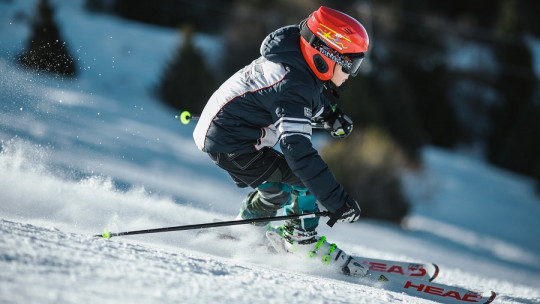
Dynamic coordination is the ability to execute fluid, controlled, and well-sequenced movements of the whole body in motion — particularly during activities that involve shifting balance, changing direction, or responding to a constantly changing environment.
Walking, running, jumping, climbing, dancing, participating in sports — all of these depend on dynamic coordination. Unlike static balance, which involves maintaining a stable position, dynamic coordination must continuously adapt to movement, momentum, and the ever-shifting relationship between the body and its surroundings. It is the difference between moving through the world with ease and moving through it with constant uncertainty and effort.
The vestibular system, housed in the inner ear, plays a crucial role here alongside the cerebellum. Together, they monitor the body’s position and acceleration in real time and generate the constant micro-adjustments that keep movement smooth rather than lurching. Dynamic coordination is also closely connected to physical confidence: people whose dynamic coordination is strong tend to move through the world with assurance, while those who struggle with it may avoid physical activities, feel self-conscious in their body, or experience anxiety in challenging terrain.
Main characteristics:
- Fluid sequencing of whole-body movements during locomotion or sport
- Rapid adaptation to changing conditions — surfaces, speeds, directions
- Integration of vestibular, visual, and proprioceptive feedback
- Postural control and balance maintenance during active movement
5. Visual-Manual Coordination

Visual-manual coordination is closely related to hand-eye coordination, but with an important distinction. Where hand-eye coordination tends to describe reactive, moment-to-moment adjustments, visual-manual coordination refers to the sustained, continuous interaction between visual perception and manual execution over time — the kind of extended, process-oriented alignment required in tasks that unfold across minutes or hours rather than fractions of a second.
Assembling fine components, sewing along a marked line, performing intricate repair work, sculpting, painting in detail, conducting laboratory procedures — all of these draw on visual-manual coordination in its fullest sense. The emphasis is on maintaining precise alignment between what the eyes see and what the hands do across a sustained duration, with ongoing adjustment and correction throughout.
Main characteristics:
- Continuous interaction between visual perception and manual movement
- Precise motor planning — thinking ahead about what the hands will need to do
- Coordinated execution of sequential manual steps guided by visual feedback
- Sustained selective attention maintained across extended task durations
This type of coordination is particularly relevant in craft, surgical, technical, and scientific contexts. Developing it rewards deliberate, patient practice, and it benefits considerably from a calm, focused attentional state — which is one reason that many people find detailed handwork genuinely meditative.
6. Kinesthetic Coordination

Of all eight types, kinesthetic coordination is perhaps the most internal — and the least visible from the outside. Kinesthetic coordination refers to the awareness of the position and movement of different parts of the body based on internal sensory signals, without relying primarily on visual feedback.
Close your eyes. Now touch the tip of your nose with your index finger. You can do it accurately — not because you can see your hand, but because an internal body sense tells you where your hand and your face are in space relative to each other. That is kinesthetic coordination working quietly and effectively. The same capacity is what allows a trained gymnast to maintain perfect form mid-air, a musician to play without looking at their fingers, or a dancer to move with precision in the dark.
Specialized receptors in muscles, tendons, and joints continuously transmit information about the body’s position and movement to the brain. Kinesthetic coordination integrates this stream of internal feedback into a continuously updated body map that guides movement from the inside out rather than from the outside in.
Main characteristics:
- Body position awareness independent of visual feedback
- Refined sensitivity to internal muscular and joint sensations
- Postural awareness — knowing how the body is aligned at rest and in motion
- Precision in executing movements guided by internal rather than external cues
Kinesthetic coordination can be meaningfully developed through yoga, Pilates, tai chi, dance, martial arts, and any movement practice that invites conscious internal body awareness. When it is disrupted — through neurological change, chronic pain, or extended inactivity — people often describe feeling disconnected from their own body, which carries real psychological weight alongside the physical effects.
7. Spatial Coordination
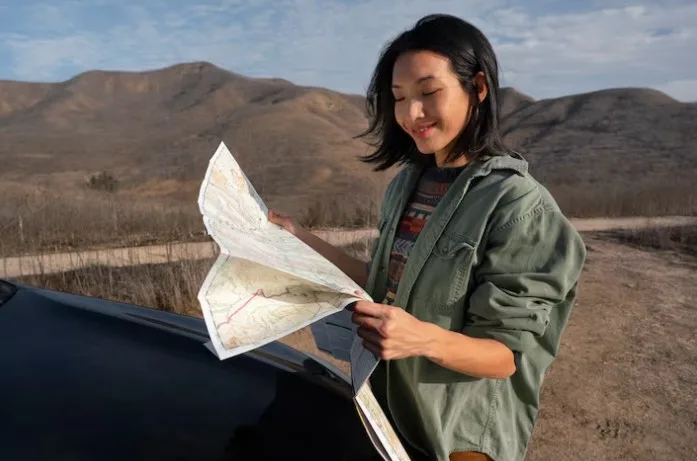
Spatial coordination is the capacity to perceive, organize, and navigate three-dimensional space — understanding where objects are in relation to each other and to oneself, and using that understanding to plan and execute movement effectively.
This type of coordination is far broader than physical movement alone. It underpins activities ranging from the practical to the deeply creative: parking a car in a tight space, packing a suitcase efficiently, following a map, designing a room, playing chess, assembling furniture, or anticipating the arc of a ball. It involves not just passive perception of space but active mental manipulation of spatial relationships — rotating objects mentally, anticipating how things will fit together, planning routes through unfamiliar environments.
Spatial coordination draws heavily on the parietal lobes, which integrate sensory information from multiple modalities to construct a coherent representation of the surrounding environment. It also intersects with working memory, since maintaining and manipulating spatial information requires holding a mental model in mind while simultaneously acting on it.
| Strong Spatial Coordination | Challenges with Spatial Coordination |
|---|---|
| Ease with navigation and map reading | Frequently getting lost even in familiar environments |
| Effortless parking and spatial maneuvering | Difficulty judging distances and spatial gaps accurately |
| Strong visualization of 3D structures | Struggles with assembly tasks or spatial instructions |
| Fluent mental rotation of objects | Difficulty reading maps, diagrams, or floor plans |
Spatial coordination can be developed through puzzles, chess, three-dimensional construction activities, origami, drawing, and navigation-based challenges. Architecture, engineering, and many visual arts rely on it heavily — which is why spatial reasoning is considered one of the most professionally relevant cognitive capacities.
8. Rhythmic Coordination

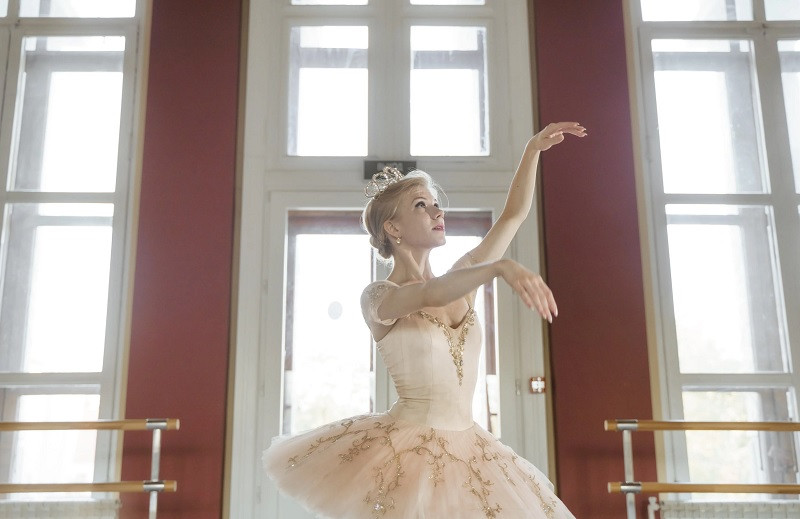
Rhythmic coordination is the ability to organize and synchronize movements according to a temporal pattern — an internal or external rhythm that structures not just how actions occur, but when. It is what separates a walk that flows naturally from one that feels mechanical, or music played with genuine feeling from music played merely correctly.
Rhythm is woven through nearly all human movement: the cadence of walking, the timing of speech, the pace of breathing, the synchrony of dance, the beat of handwriting across a page. Rhythmic coordination integrates the motor system with an internal timing mechanism — distributed across the cerebellum, basal ganglia, and supplementary motor area — that gives movement its flow, expressiveness, and social resonance.
What makes rhythmic coordination particularly compelling from a psychological perspective is its social dimension. Humans naturally synchronize with one another — walking in step, finishing each other’s sentences, clapping together at a concert. This capacity for rhythmic entrainment is thought to play a meaningful role in social bonding, empathy, and emotional regulation. Research consistently shows that rhythm-based activities — drumming circles, dance, group music-making, choir singing — can reduce anxiety, improve mood, and strengthen feelings of social connection. This is one of the reasons rhythmic interventions have found genuine application in therapeutic contexts across a wide range of mental health conditions.
Main characteristics:
- Synchronization of movement with an internal or external temporal pattern
- Temporal precision — executing actions at the right moment, not just in the right way
- Social entrainment — naturally synchronizing with the rhythms of others
- Integration of motor, auditory, and timing systems across multiple brain regions
How the 8 Types of Coordination Work Together
Here is something worth sitting with: the eight types of coordination rarely operate in isolation. Most meaningful human activities draw on several simultaneously — often without our realizing it.
Consider a child learning to write. At first glance, it looks like a simple motor task. Look closer, and you find it requires hand-eye coordination to follow the line, oculomotor coordination to track position on the page, bilateral coordination to stabilize the paper with the non-dominant hand, kinesthetic coordination to feel the appropriate pressure of the pencil, spatial coordination to organize letters on the page, and rhythmic coordination to maintain a consistent pace. That is six of the eight types, operating in concert, in a task we give to five-year-olds.
When one type of coordination is underdeveloped, it can create a cascade of difficulties across multiple areas — which is why coordination challenges are often misunderstood, misattributed to inattention or motivation, or simply overlooked entirely. A child who struggles in school, or an adult who has always felt physically awkward, may be dealing with a specific coordination difficulty that has never been properly identified. That recognition, when it comes, is often genuinely liberating — not because it changes the challenge, but because it reframes it.
Comprehensive, professional assessment by a neuropsychologist, occupational therapist, or developmental specialist is the most reliable way to understand which specific coordination capacities are involved in any given difficulty — and to design a targeted, evidence-informed approach to support.
Practical Activities for Developing Each Type of Coordination
The most encouraging thing about coordination is that building it is rarely unpleasant. Most of the activities that develop these capacities are enjoyable in their own right — which makes consistent engagement considerably easier than many therapeutic programs.
- Hand-eye coordination: table tennis, juggling, racquet sports, drawing, crafts, and building toys for children
- Bilateral coordination: swimming, musical instruments, climbing, drumming, and any activity requiring both hands in different complementary roles
- Oculomotor coordination: specialized vision therapy, reading aloud, visual tracking exercises, and sports requiring sustained focus on moving targets
- Dynamic coordination: dance, martial arts, team sports, agility training, and activities requiring fluid movement through changing environments
- Visual-manual coordination: needlework, model-building, cooking, detailed drawing, and fine assembly tasks
- Kinesthetic coordination: yoga, Pilates, tai chi, and any mindful movement practice that invites conscious internal body awareness
- Spatial coordination: puzzles, chess, origami, three-dimensional construction, navigation challenges, and architectural or design activities
- Rhythmic coordination: music-making, dance, drumming, choir singing, and group movement activities of any kind
The common thread across all of these is regular, attentive practice in a supportive environment. Coordination does not improve from passive exposure — it grows through active engagement, appropriate challenge, and the kind of patient, curious persistence that makes learning feel more like discovery than effort.
FAQs About the 8 Types of Coordination and Their Main Characteristics
What are the 8 types of coordination?
The eight types of coordination are: hand-eye coordination, bilateral coordination, oculomotor coordination, dynamic coordination, visual-manual coordination, kinesthetic coordination, spatial coordination, and rhythmic coordination. Each describes a distinct capacity through which the brain integrates sensory information and organizes purposeful, synchronized movement. Together, they underpin virtually every physical and cognitive task humans perform in daily life — from reading and writing to sports, music, navigation, and social interaction.
What is the most important type of coordination?
There is no single “most important” type — which types matter most depends entirely on the demands of a person’s daily life, work, and developmental stage. Hand-eye coordination is arguably the most broadly relevant across everyday tasks. Dynamic coordination is critical for safe, confident physical movement. Oculomotor coordination is foundational for reading and learning. And kinesthetic coordination underpins nearly all movement by providing the internal body sense that guides everything else. Most activities draw on several types simultaneously, which is why comprehensive development across all eight areas tends to produce the most meaningful gains.
Can coordination skills be improved in adults?
Absolutely. The brain’s neuroplasticity means that new motor and sensory patterns can be established and strengthened at any age. The process may require more deliberate, consistent practice in adults than in children, but meaningful improvement is genuinely achievable. Activities like dance, yoga, musical instrument learning, martial arts, table tennis, and detailed craft work have all been shown to improve specific coordination capacities in adults. Regular engagement, appropriate progressive challenge, and patience with a gradual process are the key ingredients.
What causes coordination difficulties?
Coordination difficulties can arise from a wide range of sources. Developmental coordination disorder (DCD) — sometimes called dyspraxia — is a recognized neurodevelopmental condition in which coordination challenges are present without an identifiable neurological cause. Other contributors include neurological conditions such as cerebral palsy, stroke, or multiple sclerosis; sensory processing differences; attention difficulties like ADHD, which affects motor inhibition and timing; anxiety; prolonged inactivity; and certain medications. Importantly, coordination difficulties frequently co-occur with other learning or developmental differences, which makes comprehensive professional assessment considerably more valuable than attempting to address them piecemeal.
How does coordination relate to learning and academic performance in children?
The connection runs deep and is often underappreciated. Motor development and cognitive development are closely intertwined in childhood: as children develop coordination through movement and play, they are simultaneously building neural pathways that support attention, spatial reasoning, working memory, and even language processing. Challenges in specific types of coordination can therefore affect academic performance, social participation, and self-confidence — not because of any lack of intelligence or effort, but because of how tightly the motor and cognitive systems are woven together. Early identification and appropriate support can make a meaningful, lasting difference in a child’s trajectory.
Is kinesthetic coordination the same as proprioception?
Related, but not identical. Proprioception is the specific sensory system that provides information about the body’s position, movement, and the force being exerted, through receptors in muscles, tendons, and joints. Kinesthetic coordination is the broader functional capacity built on top of that sensory input — the ability to integrate proprioceptive and other internal sensory signals into accurate, adaptive movement guidance. Proprioception is the raw sensory data; kinesthetic coordination is what the brain does with it. You can have intact proprioception and still have poor kinesthetic coordination if the integration of that information into movement planning is not working effectively.
How does rhythmic coordination affect mental health?
More than most people realize. Research into rhythm-based activities — drumming, dance, group music-making, choir singing — consistently shows meaningful effects on mood, anxiety levels, and social connection. Rhythmic movement activates reward pathways in the brain, regulates the autonomic nervous system, and promotes present-moment absorption that reduces rumination. Group rhythmic activities in particular appear to enhance social bonding and feelings of belonging. This is one reason why music therapy, dance therapy, and rhythm-based interventions have been incorporated into evidence-informed mental health treatment programs across a wide range of conditions — and why they deserve to be taken more seriously than they sometimes are.
When should someone seek professional support for coordination difficulties?
When coordination difficulties are persistent, significantly affecting daily functioning, causing distress, or appear to be worsening rather than improving with practice, professional assessment is always worth pursuing. For children, a pediatric occupational therapist or developmental psychologist can evaluate coordination across multiple domains and design targeted, evidence-based intervention. For adults, a neuropsychologist, occupational therapist, or physiotherapist — depending on the nature of the difficulty — can provide relevant assessment and support. Coordination challenges say nothing about a person’s intelligence or character, and seeking help for them is a sign of self-awareness and genuine care for one’s own wellbeing. That step is never a weakness — it is one of the most practical things a person can do.
Use this citation format to reference the article clearly and help readers find the original source.
PsychologyFor. (2026). The 8 Types of Coordination (and Their Main Characteristics). PsychologyFor. https://psychologyfor.com/the-8-types-of-coordination-and-their-main-characteristics/