

See more of our articles in your search results.
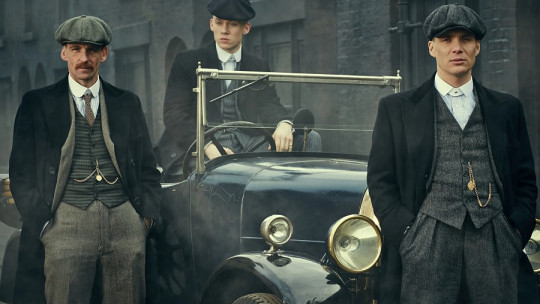
If you are looking for the best Peaky Blinders quotes, you have come to the right place. This article collects 80 of the most memorable lines from the series — sharp, haunting, and often surprisingly profound — along with reflections on what each one actually means beneath the surface. Peaky Blinders is a British period drama set in Birmingham in the aftermath of World War I, following the Shelby family as they claw their way from working-class street gang to criminal empire. But beneath the sharp suits and razor-edged caps lies something considerably more interesting than a crime thriller: a deeply psychological story about trauma, power, identity, loyalty, and what war does to the human soul.
What makes Peaky Blinders dialogue so distinctive is that its characters — even the most brutal among them — speak with a kind of bleak poetry. Thomas Shelby does not simply threaten people; he philosophizes while doing it. Aunt Polly does not just observe — she cuts through everything with surgical precision. Alfie Solomons does not warn — he meanders through moral labyrinths before arriving somewhere you did not expect. The writing treats its characters as complex human beings shaped by trauma, circumstance, and the desperate logic of survival in a world that has already shown them its worst.
From a psychological standpoint, many of these quotes touch on genuinely important themes: the weight of moral compromise, the corrosive effects of power, the tension between love and self-preservation, the particular damage that war inflicts on the people who return from it. They are worth reading not only as entertainment but as reflections on the darker corners of human experience — corners that, in one form or another, are not entirely foreign to any of us.
Thomas Shelby’s Most Powerful Quotes
Thomas Shelby is the beating, troubled heart of the series — a man of extraordinary intelligence and deep psychological damage, navigating a world that rewards ruthlessness while quietly destroying everyone who practices it, including himself. His quotes carry the weight of someone who has seen too much and thought about it too carefully.
1. “In bars, sometimes people say things, and other times it’s the whiskey talking. It is difficult to discern who is speaking.” (Thomas Shelby)
Bars can also be confessionals. Tommy understands that alcohol loosens what people normally keep locked — their fears, their truths, their intentions — and that the line between the person and their intoxication is blurrier than most are willing to admit.
How many of these have you been "meaning to read" for months?
- 1
 TarcherThe Artist's Way30th Anniversary EditionListen Free On Audible
 - 2
 New Harbinger PublicationsThe Dialectical Behavior Therapy Skills WorkbookPractical DBT Exercises for Learning Mindfulness, Interpersonal Effectiveness, Emotion Regulation...Listen Free On Audible
 - 3
 New Harbinger PublicationsAdult Children of Emotionally Immature ParentsHow to Heal from Distant, Rejecting, or Self-Involved ParentsListen Free On Audible
2. “Lies spread faster than the truth.” (Thomas Shelby)
A line that feels more contemporary with every passing year. Misinformation travels at the speed of fear, while truth requires verification, nuance, and the willingness to sit with complexity. Tommy knows how to weaponize this asymmetry.
3. “There is no rest for me in this world. Maybe in the next one.” (Thomas Shelby)
The weight of being inside the criminal world is real and cumulative. This is not melodrama — it is the psychological portrait of a man who cannot stop, who chose a path that eliminated the possibility of peace, and who carries that knowledge quietly.
4. “She is in the past. The past is not my problem. And the future is not one of my concerns either.” (Thomas Shelby)
A coping mechanism dressed as philosophy. Love has no safe place in the world Thomas inhabits — or so he tells himself. The present tense becomes a fortress against the grief of what was and the fear of what might be.
5. “Good taste is for those who cannot afford sapphires.” (Thomas Shelby)
Power bragging, Shelby-style. But there is also something sharper here — a working-class man rewriting the rules of status, turning the tables on a class system that once told him he had no place at the table.
6. “A good man sometimes needs to put up with it.” (Thomas Shelby)
Patience as strategy. The ability to endure, to wait, to absorb rather than react — in Tommy’s world, this is not passivity. It is one of the most dangerous weapons available to someone who thinks clearly under pressure.
7. “Rum is for leisure and sex, isn’t it? Now, whiskey, that’s for business.” (Thomas Shelby)
Even in pleasure, Tommy categorizes and controls. Every choice is purposeful, every substance assigned a function. It is a small line, but it reveals a mind that never fully relaxes — one that even in a bar is still running calculations.
8. “One attacks when the enemy is weak.” (Thomas Shelby)
Sun Tzu would approve. Timing is everything in conflict, and Tommy’s genius is largely a genius of patience — knowing when not to move, until the moment when moving cannot fail.
9. “You have to get what you want through your own means.” (Thomas Shelby)
Self-reliance as survival philosophy. In a world that offers Tommy nothing freely, agency becomes the only reliable currency. It is a hard lesson, but one he applies consistently.
10. “You can change what you do, but you can’t change what you want.” (Thomas Shelby)
One of the most psychologically astute lines in the entire series. Desire is stubborn and deep-rooted — behavior can be modified through discipline or circumstance, but the underlying wants persist, patient and immovable, until they are either satisfied or transformed.
11. “In France I got used to seeing men die. I never got used to seeing horses die.” (Thomas Shelby)
This line stops the viewer cold every time. The psychology of combat trauma is complex and sometimes counterintuitive — the death of innocent creatures unburdened by ideology or ambition can cut through defenses that years of human violence have failed to breach. Tommy’s humanity is not absent; it has simply relocated to unexpected places.
12. “There is only one thing that can blind a man as intelligent as you, Tommy. Love.” (Aunt Polly, about Thomas Shelby)
The one variable Tommy cannot fully calculate. Love operates outside rational control, and for a man whose survival has depended on perfect calculation, this makes it genuinely dangerous — a vulnerability he is simultaneously drawn toward and terrified of.
13. “You know, gentlemen. There is hell, and there is another place under hell.” (Thomas Shelby)
A threat that functions as a cosmology. Tommy has been to the bottom — in the trenches, in grief, in moral compromise — and he carries that knowledge as both weapon and wound.
14. “We are all prostitutes, Grace. We just sell different parts of ourselves.” (Thomas Shelby)
Bleak and uncomfortably accurate. Everyone makes transactions with the world — of labor, of time, of principle, of dignity. Tommy simply refuses to pretend otherwise, which is either honesty or cynicism depending on the day.
15. “The only way to guarantee peace is to make the expectation of war seem inevitable.” (Thomas Shelby)
A theory of deterrence that predates NATO by decades. Fear of consequence as the architecture of stability — Tommy understands power dynamics at a level that most politicians would recognize immediately.
16. “I don’t pay for the suits. My suits are paid for by the house, or the house catches on fire.” (Thomas Shelby)
An aggressive way to get what you want — wrapped in elegance. The threat is real, the delivery is immaculate, and the combination is somehow more chilling than either alone.
17. “I learned a long time ago to hate my enemies, but I have never loved any before.” (Thomas Shelby)
Courage can appear in the most unexpected places. This line reveals the depth of Tommy’s emotional isolation — a man for whom hatred was safe and familiar, and love arrived as something genuinely new and therefore genuinely threatening.
18. “If you apologize once, you will do it again and again. It’s like taking bricks out of the wall of your fucking house.” (Thomas Shelby)
Apologies disempower gangsters — and, Tommy believes, anyone who cannot afford weakness. In the logic of dominance hierarchies, concession invites exploitation. It is a dark philosophy, but one shaped by a world where showing softness could be lethal.
19. “Tomorrow one of the two will be dead. But whoever that person is, he will wake up tomorrow in hell.” (Thomas Shelby)
All injustices are paid for eventually. There is almost a theological quality to Tommy’s certainty here — a conviction that moral debt accumulates, even if the accounting is slow.
20. “I have decided. I want to earn real money. With you.” (Michael Gray, to Thomas Shelby)
There is easy money that becomes very expensive over time. Michael’s eagerness is the eagerness of someone who has not yet understood the price — a price Tommy has been paying for years and cannot stop paying now.

Aunt Polly’s Most Unforgettable Lines
Polly Gray is arguably the moral and intellectual center of the Shelby family — the one who sees everything, tolerates nothing, and speaks with a directness that cuts through the posturing of every man around her. Her quotes deserve a category of their own.
21. “Men do not have the strategic intelligence to sustain a war between families.” (Aunt Polly)
Many women are the ones who manage what men start. Polly’s observation is both a critique and a statement of fact — in the Shelby world, as in many real organizational structures, the visible leaders take the credit while someone else sustains the actual architecture.
22. “You have your mother’s common sense, but your father’s evil. I can see them fighting. Let your mother win.” (Aunt Polly)
Tommy’s biggest internal struggle, laid bare in one sentence. The tension between inherited capacity for goodness and learned capacity for harm — Polly sees it clearly, names it without flinching, and offers the only counsel that actually matters.
23. “Men and their penises never cease to amaze me.” (Aunt Polly)
Delivered with Polly’s signature dry precision. Men who let themselves be led by lust rather than judgment are, in her view, both fascinating and exhausting — and in the criminal world, this particular weakness has consequences measured in blood.
24. “When you are already dead, you are free.” (Aunt Polly)
A paradox with real psychological weight. The moment you accept the worst possible outcome, fear loses its power over you. For people who live in constant danger, this is not nihilism — it is a survival strategy.
25. “You never know with men. They go wherever their penises point them and there is no way to change their minds.” (Aunt Polly)
Lust is a weapon that knocks down men who allow themselves to be controlled by it. Polly has watched this pattern repeat itself across every man in her orbit — and she is neither surprised nor particularly sympathetic about it.
26. “Don’t mess with the Peaky Blinders.” (Aunt Polly)
A threat that made a family bigger. Delivered by Polly, it carries particular weight — this is not a performance of toughness but a statement of fact, backed by years of navigating a world that required her to be tougher than anyone in it.
27. “Sometimes women have to take charge. Like in war.” (Aunt Polly)
In the most conflictive moments, women bring out their power. The historical reality behind this line is significant — women genuinely ran industries, organizations, and households during the world wars, only to have that agency systematically walked back when the men returned.
28. “Men are less good at keeping their secrets with their lies.” (Aunt Polly)
Lies are difficult to maintain, and Polly has developed a near-perfect detector for the gaps between what men say and what they mean. It is a skill honed by years of necessity rather than choice.
29. “Instinct is a curious thing.” (Aunt Polly)
A sense that can alert us to things we cannot yet explain rationally. Polly’s instincts are one of the series’ most reliable early warning systems — she feels danger, reads people, and processes information at a speed that bypasses the logical analysis men around her are still completing.
30. “There is only one thing that can blind a man as intelligent as you, Tommy. Love.” (Aunt Polly)
Love can become an impossible dream to achieve. Polly says this not as a comfort but as a warning — the one variable that Tommy’s extraordinary strategic mind cannot fully account for is the one that will, inevitably, prove most consequential.
Alfie Solomons’ Most Memorable Speeches
Alfie Solomons operates on a philosophical frequency that is uniquely his own. His speeches meander, double back, contradict themselves, and arrive somewhere unexpectedly profound. He is simultaneously the funniest and most unsettling character in the series.
31. “Intelligence is a very valuable thing, isn’t it my friend? And it’s usually too fucking late.” (Alfie Solomons)
There is knowledge that takes time to arrive even if it does not solve anything. Alfie names the cruel timing of insight — the understanding that arrives after the decision has already been made, the regret that comes with clarity that was not available when it was needed.
32. “As an honorable man, not as a fucking citizen who doesn’t understand the twisted way our world works, friend.” (Alfie Solomons)
The moment when morality prevails over all the power achieved. Alfie’s honor is complicated, idiosyncratic, and entirely his own — but it is real, and in this world, real honor of any kind is rarer than sapphires.
33. “Every man longs for certainty.” (Alfie Solomons)
Anyone wants recognition — and beneath that, stability. The criminal world is defined by its radical uncertainty, which makes the desire for some solid ground beneath the feet even more desperate and more understandable.
34. “He will wake up. I recognize that although he will no longer have teeth, he will be a wiser man for it.” (Alfie Solomons)
The hard lessons leave lasting impressions. Alfie’s logic is perverse but internally consistent — the pain was the tuition, and the education, however brutal, was delivered.
35. “What line should I have crossed? How many parents, of course, how many children? Yes, you cut, killed, murdered, innocent and guilty to send directly to hell, right?” (Alfie Solomons)
The price to pay within the gangster world is ultimately the loss of humanity. This is one of the series’ most devastating monologues — Alfie cataloging the moral arithmetic of a life spent in violence, the question behind every count being: was it worth it?
36. “It’s much easier to deal with life when you’re dead.” (Alfie Solomons)
When death becomes a kind of relief. There is a dark, almost comic logic here that only someone who has lived as Alfie has could deliver without melodrama — the observation of someone genuinely unbothered by the prospect of his own ending.
Chester Campbell and the Voices of Authority
Inspector Chester Campbell represents the institutional face of power — and the series is remarkably honest about what that face conceals.
37. “We hate people, and in return they hate and fear us.” (Chester Campbell)
A love-hate relationship between authority and the people it claims to protect. Campbell articulates with uncomfortable clarity the dynamic of mutual contempt that defines many relationships between communities and the institutions supposedly serving them.
38. “To make sure your dog obeys you, you should show him the stick from time to time.” (Inspector Campbell)
A reference to control through fear rather than loyalty — which is, in Campbell’s philosophy, simply how authority operates. The metaphor reveals everything about how he views the people beneath him.
39. “I find that the most obvious vices are the easiest to resist.” (Chester Campbell)
All people have some kind of vice — but Campbell’s particular danger is the hidden ones, the vices he does not recognize as such because they wear the costume of duty and righteousness.
40. “Killing a man affects the heart.” (Chester Campbell)
Murder will always consume a part of us. Coming from Campbell, this line lands with particular weight — an admission of moral consequence from a man who ordered deaths behind desks and told himself it was different from pulling the trigger himself.
41. “The end of a rope has been this man’s destiny since the night he was born.” (Inspector Campbell)
Do you think destiny is written for everyone? Campbell’s determinism is the determinism of class prejudice — the comfortable belief that certain people are born to certain fates, which conveniently removes any obligation to ask whether the system itself bears responsibility.
42. “An agreement is not the same thing as a guarantee.” (Chester Campbell)
Guarantees are what allow us to ensure things. Campbell understands contracts at their most cynical level — words on paper or words between men mean nothing without the power to enforce them, and power is always the real currency.
43. “One thing I have learned is that you and I are opposites, but also equal. Like the reflection of a mirror.” (Chester Campbell)
That strange relationship of codependency that forms between detective and criminal. Each defines the other, each justifies the other’s existence — and in their reflection, the line between law and crime becomes disconcertingly thin.
44. “My fury is something to behold.” (Inspector Campbell)
People’s anger can be terrifying — especially when it comes dressed in authority. Campbell’s rage is the rage of a man who believes himself righteous, which makes it more dangerous than the openly cynical anger of the criminals he pursues.
The Shelby Family’s Most Revealing Moments
The Shelby siblings — Thomas, Arthur, John, Ada — are the family at the show’s core, bound by loyalty, violence, and a shared history that neither war nor crime could fully sever.
45. “Anyway, we’re Peaky Blinders.” (John Shelby)
The union of a family beyond barriers and justice. This line functions as both motto and explanation — a statement that simultaneously describes what they are, justifies what they do, and asserts that the bond between them supersedes every other consideration.
46. “This place is being re-managed on behalf of Peaky Blinders.” (Arthur Shelby)
A small criminal group that became the largest group. Arthur delivers these lines with the particular energy of someone who has fully committed to an identity — not calculating like Tommy, but present and total in a way that is both frightening and, in its way, honest.
47. “Who wants to be in heaven, huh? Who wants to be in heaven when you could be sending men to fucking hell?” (Arthur Shelby)
The thoughts of those who allow themselves to be blinded by power. Arthur’s psychology is one of the show’s most tragic threads — a man who found in violence a sense of agency he could not locate anywhere else, paying for it in ways he cannot fully articulate.
48. “By order of the fucking Peaky Blinders.” (Arthur Shelby)
An order that is fulfilled simply because. The phrase has become one of the series’ most quoted lines — the weight behind it is entirely a social construction, and yet by the time Arthur delivers it, that construction has become real enough to move the world.
49. “My brother Tommy helped me survive some of the worst times. Even though the circumstances of their union were tragic.” (Arthur Shelby)
With faithful devotion to the one who started it all. Arthur’s relationship with Tommy is the emotional spine of the series — complicated, painful, and held together by a loyalty that nothing, including their worst impulses, has managed to destroy.
50. “I came back for love. And common sense.” (Ada Shelby)
Love can be a weakness or a strength — Ada demonstrates that it can also be the clearest-eyed motivation in a family otherwise running on fear, ambition, and trauma. She is consistently the show’s moral compass, and she knows it.
51. “Hey! I’m a Shelby too, you know. Play my damn movie again!” (Ada Shelby)
Everyone here has the same respect — or should have. Ada’s insistence on her own standing within the family is one of the series’ more quietly radical notes: a woman claiming her seat at a table built by and for men.
52. “We are not afraid of coppers. If they come for us, we will give them a smile each.” (John Shelby)
Prepared to fight with all their weapons. John’s delivery carries a lightness that his brothers lack — bravado mixed with genuine fearlessness, the attitude of someone who has decided that anxiety is simply not worth the energy.
53. “Nobody works with me. People work for me.” (Billy Kimber)
A world where it’s kill or be killed. This distinction — with versus for — is the grammar of dominance hierarchies, and Kimber states it with the confidence of a man who has never had reason to question which side of it he belongs on.
Grace, Lizzie, and the Women Who Shaped the Story
The women of Peaky Blinders are among its richest characters — each navigating a world designed to use them, finding ways to retain dignity, agency, and identity within it.
54. “I hope you can be in heaven for a full half hour before the devil realizes you’re dead.” (Grace Burgess)
There are those who underestimate the consequences that their actions can bring. Grace delivers this as a kind of dark blessing — acknowledging that the person she is addressing has accumulated enough debt that even heaven would be a brief reprieve.
55. “What made you think I would go to bed with you after a whiskey and light conversation?” (Grace Burgess)
No commitment can be taken lightly. Grace’s intelligence was consistently underestimated by every man who encountered her, which was precisely the condition she needed to operate effectively in spaces designed to exclude her.
56. “Men always tell the waitress about their problems.” (Grace Burgess)
Waitresses are the ones who hear stories the most in bars. The invisible service worker as confessor — Grace understands that people speak freely in front of those they do not fully regard as witnesses, and she turns that asymmetry into information.
57. “I imagine that being shot by a woman hurts the same as being shot by a man. It’s just more embarrassing.” (Thomas Shelby)
A shot is lethal, whether it comes from anyone’s hands. The embarrassment Tommy references reveals the gendered assumptions of the world he inhabits — and the line’s dark humor exposes those assumptions without fully endorsing them.
58. “Your brother is ten times more of a man than you.” (Lizzie Stark)
Comparisons are always harmful between siblings — but Lizzie’s directness is one of her defining qualities. She does not soften her observations to manage feelings, which in this world is either a liability or a form of integrity, depending on who is receiving the message.
59. “I’m glad I didn’t shoot you. It would have been a kindness.” (Linda Shelby)
Death is a kindness that some do not deserve. Leaving someone to live with themselves — with their choices, their failures, their conscience — can be the more devastating verdict. Linda understands this with cold clarity.
Wisdom, Power, and Survival: More Essential Quotes
60. “Everything is for sale. All.” (Aberama Gold)
Does everyone have a price? Aberama states as fact what most people prefer to believe is an exaggeration — the discomfort of the line is that it is difficult to fully refute.
61. “I don’t need a knife to stop me from telling trusted secrets. It’s a matter of honor.” (Esme Shelby)
Honor is a fundamental element within the mafia world. Esme’s particular form of it — rooted in Romani tradition and family loyalty rather than institutional codes — is among the series’ more authentic treatments of what integrity actually looks like when it is lived rather than performed.
62. “London is just smoke and problems.” (Esme Shelby)
A dark vision of post-war London. The city as metaphor for everything that followed the war — industrialized, compromised, obscured by the residue of ambition and conflict. Esme does not romanticize it, which is a form of respect.
63. “Your gypsy half is the strongest.” (Esme Shelby)
An identity that was never lost, despite everything the Shelby brothers did to distance themselves from it. The roots that people try to leave behind have a way of remaining the truest thing about them.
64. “Around the world, violent men are the easiest to deal with.” (Irene O’Donnell)
Violent men respond to aggression or submission — and a woman who understands this has all the information she needs to navigate around them. The line is delivered with the calm of someone who learned this lesson long ago.
65. “When there are no rules, women take charge.” (Tatyana Petrovna)
There are women who have more courage and control to handle situations when the usual structures collapse. The historical and psychological truth behind this observation is substantial — crisis tends to reveal competence that hierarchy normally suppresses.
66. “Politics is when something is done deliberately, something is better for some and worse for others.” (Ruben Oliver)
Politics is not always handled cleanly. This is one of the sharpest definitions of political action in the entire series — deliberate, asymmetric, and entirely indifferent to the language of universal benefit that politicians typically use to describe it.
67. “I know ways back that take forever.” (Aberama Gold)
There are decisions that once made cannot easily be undone. The long way back is sometimes the only way available — and Aberama, who has traveled roads most people cannot imagine, knows this better than anyone.
68. “Ambition for respectability does not make you a saint.” (John Hughes)
Not all people who work for justice are good. The desire to appear virtuous is not the same as virtue — and Hughes, occupying an institutional role while serving corrupt ends, embodies this gap with particular precision.
69. “Every religion is a stupid answer to a stupid question.” (Thomas Shelby)
A phrase that dismisses religion — but one that also reveals Tommy’s inability to find comfort anywhere, in anything. His atheism is not intellectual confidence but the refusal of a man who cannot afford hope to believe in systems built on it.
70. “You’ve talked to me about her like a gentleman, now kindly behave like a gangster again.” (May Carleton)
One of Tommy’s biggest weaknesses is the part of himself that wants to be something other than what he is. May sees both versions and prefers the one that does not pretend — which is either clear-eyed or the most dangerous kind of influence over him.
71. “I put it all together, but I don’t participate.” (Michael Gray)
People who organize conflicts although they do not participate in them. Michael’s self-serving logic — the belief that arranging violence insulates you from responsibility for it — is one the series interrogates with increasing severity as his arc develops.
72. “It’s not me who is playing. I’m just taking bets.” (Linda Shelby)
Taking advantage of the opportunities that arise. Linda’s position within the family is consistently one of managed distance — present enough to benefit, distant enough to claim non-participation. The series eventually reveals the cost of that calculation.
73. “I would have buried them all. But my mother, she knows them. She said it would be worse for you if she let you live and took away everything you have.” (Luca Changretta)
A subtle warning to value his way of showing mercy. Changretta understands that death is sometimes the lesser punishment — that living with loss, with diminishment, with the knowledge of what was taken, can last considerably longer and hurt considerably more.
74. “Men like us will always be alone. And for the love we have for each other, we will have to pay.”
On the criminal path, trust is overrated and intimacy becomes a liability. This line carries the particular sadness of men who built a world that leaves no room for the connections that might have made it worth building.
75. “We are an organization of a different dimension, dress well, Mr. Shelby. But now I see, not as well as I do.” (Luca Changretta)
Bragging about the power of the Italian mafia against some working-class Birmingham gangsters — and yet the series makes clear that dimension is not always the deciding factor. Sometimes a smaller, more motivated, more personally invested force wins against the institutional weight it faces.
76. “I came back for love. And common sense.” (Ada Shelby)
Repeated here because it bears repeating. Ada’s return is the series’ most quietly radical act — choosing family over ideology, love over purity, with open eyes about what that choice costs.
77. “I hope you can be in heaven for a full half hour before the devil realizes you’re dead.” (Grace Burgess)
Again, Grace’s dark blessing deserves its moment. The humor makes it land harder than a straight pronouncement of damnation would — which is precisely why the series gives it to Grace, who always knew how to make a point land.
78. “If that were heaven, what would I be doing here?” (Charlie Strong)
Hell on earth, for this whole gang. Charlie’s line is one of the series’ most understated moments of existential honesty — a man who has seen too much to believe he is anywhere near grace, delivered with the philosophical shrug of someone who made his peace with that fact long ago.
79. “I have decided. I want to earn real money. With you.” (Michael Gray)
There is easy money that becomes very expensive over time. Michael’s eagerness is the eagerness of someone who has not yet understood what he is actually buying into — a price that will be paid in ways he cannot foresee from this particular moment of desire and ambition.
80. “Instead of sending you a black hand, I could have killed you in the night without knowing why. But I want you to know why, and I want to suggest that we fight this vendetta with honor.” (Luca Changretta)
Honor being a recurring element within this dark world — and Changretta’s version of it is perhaps the series’ most formal articulation of the code that governs these conflicts. The vendetta as ritual, the death as ceremony — there is something almost medieval in his insistence on a particular kind of dignity even within violence.
What Peaky Blinders Teaches Us About Trauma, Power, and Human Nature
Strip away the period detail, the sharp suits, and the Birmingham accents, and Peaky Blinders is fundamentally a story about what happens to human beings when they survive something they were not supposed to survive. Thomas Shelby and his brothers came back from World War I carrying wounds that the world around them had no language for — what we would now recognize as post-traumatic stress disorder, the series depicts with psychological accuracy as nightmares, dissociation, emotional flatness, risk-seeking behavior, and the compulsive forward momentum of men who cannot stop because stopping means feeling everything they have refused to feel.
The series also offers an unusually honest portrait of how power corrupts not through sudden transformation but through incremental compromise — each small crossing of a line making the next line easier to cross, until a man who wanted something better for his family has built an empire that devours everyone he loves. Tommy Shelby is not a villain. He is a study in what happens to extraordinary human capacity when the formative environment is catastrophic enough.
These are not comfortable themes. But they are deeply human ones. The struggles depicted in Peaky Blinders — with trauma, with identity, with the weight of choices made under impossible circumstances, with the gap between who we are and who we wanted to be — are not confined to fictional gangsters in 1920s Birmingham. They are experiences that many people carry in quieter forms. And if anything the series suggests, it is that carrying those experiences alone, without words for them and without support, tends to produce the same outcomes regardless of the era or the postcode.
If any of the psychological themes in this series resonate personally — trauma, cycles of violence, difficulty with emotional connection, or persistent feelings of being trapped by circumstances — reaching out to a mental health professional is always worth doing. These are not weaknesses. They are human experiences, and the support available for navigating them is genuine and effective.
FAQs About the Best Peaky Blinders Quotes
What is the most famous Peaky Blinders quote?
While many quotes from the series have achieved iconic status, the most widely recognized is probably “By order of the Peaky Blinders” — a phrase that appears across the series in various forms and has become synonymous with the show itself. Thomas Shelby’s more philosophical lines, particularly around themes of power and survival, are also widely quoted and have traveled far beyond the show’s fan community into general cultural circulation.
Who delivers the best quotes in Peaky Blinders?
Thomas Shelby is the most quoted character, which reflects both his centrality to the story and the particular style of writing given to him — philosophical, dark, precise. Aunt Polly is arguably the more consistently sharp presence: her observations are shorter, more direct, and land with a precision that Tommy’s sometimes longer speeches occasionally miss. Alfie Solomons occupies a different category — his speeches are performances as much as statements, and their cumulative effect is unlike anything else in the series.
What psychological themes does Peaky Blinders explore?
The series engages with post-traumatic stress and the aftermath of war, cycles of violence, the psychology of power and corruption, family loyalty and its costs, identity formation under extreme conditions, and the relationship between grief and self-destruction. It also explores gender dynamics with unusual depth — the ways women navigate, resist, and sometimes reinforce systems built to exclude them. For viewers interested in psychology, it functions almost as a case study in how early experience, trauma, and circumstance shape character across a lifetime.
Is Peaky Blinders based on a real gang?
Yes — the Peaky Blinders were a real Birmingham street gang active from roughly the 1890s into the early 1900s, known for their sharp dress and their association with petty crime and violence in working-class neighborhoods. The television series takes significant creative liberties with the historical record, moving the timeline forward to the post-World War I period and inventing most of its characters, but the gang’s name and its working-class Birmingham origins are rooted in historical fact. The series is best understood as inspired by rather than based on historical events.
Why do Peaky Blinders quotes resonate so strongly with audiences?
Several reasons work together. The writing gives its characters a philosophical depth unusual for crime drama — they are not merely plotting and threatening but articulating coherent, often surprisingly sophisticated worldviews. The themes the quotes engage with — belonging, power, trauma, survival, the gap between who we are and who we want to be — are universal enough to resonate across very different life experiences. And the delivery, particularly from Cillian Murphy and Helen McCrory, gives even spare lines a weight and texture that makes them stick. Great quotes need both writing and performance, and Peaky Blinders consistently provides both.
What can we learn about leadership from Thomas Shelby?
Thomas Shelby demonstrates several qualities that leadership literature consistently identifies as important: clear vision, strategic patience, emotional intelligence deployed in service of organizational goals, and the ability to remain calm under pressure. But the series is also an extended argument about the costs of a particular style of leadership — one built on fear, secrecy, and the sacrifice of personal relationships to strategic ends. What Tommy builds is real and impressive. What it costs him is the series’ actual subject. Genuine, sustainable leadership tends to look considerably different: built on trust, transparency, and the genuine wellbeing of the people involved. Tommy’s arc is less a model to follow than a cautionary study in what happens when extraordinary capability is deployed without those foundations.
Use this citation format to reference the article clearly and help readers find the original source.
PsychologyFor. (2026). The 80 Best Peaky Blinders Quotes. PsychologyFor. https://psychologyfor.com/the-80-best-peaky-blinders-quotes/