

Chile stretches along South America’s western edge like a ribbon—4,300 kilometers of coastline trapped between the Pacific Ocean and the Andes Mountains. This geography alone would make any country unique. But Chile’s cultural identity goes deeper than landscape. It’s forged from a fascinating blend of Spanish colonial influence, indigenous Mapuche heritage, and a fiercely independent spirit that declared freedom from Spain in 1810. Walk through Santiago during September’s independence celebrations and you’ll see what I mean. The entire country transforms into a sea of red, white, and blue flags. Traditional folk music fills the streets. The smell of empanadas and grilled meat drifts from every corner. And everywhere—absolutely everywhere—people are dancing the cueca, handkerchiefs twirling as they reenact an ancient courtship ritual that’s more rooster-and-hen than ballroom elegance.
What makes Chilean customs and traditions particularly interesting is how they’ve survived and evolved despite the country’s tumultuous political history. Unlike some Latin American countries where indigenous cultures were nearly erased, Chile maintains strong connections to its Mapuche roots alongside Spanish Catholic traditions. The result is a cultural tapestry that’s distinctly Chilean—not quite like anywhere else in South America. You’ve got indigenous New Year celebrations during the winter solstice in June, right alongside Christmas in the summer heat of December. Catholic saints honored with festivals that incorporate Andean rituals and devil dances. Cowboys called huasos who aren’t quite gauchos and aren’t quite anything else. And a national sport (Chilean rodeo) that has nothing to do with bull riding and everything to do with teamwork between horse and rider. These traditions aren’t museum pieces either. They’re living, breathing parts of contemporary Chilean life. Even in modern Santiago, families still gather for traditional celebrations that have been passed down for generations. Understanding these customs gives you insight into what Chileans value most: family, national pride, connection to the land, and a unique blend of indigenous and Spanish heritage that defines their identity.
1. Fiestas Patrias: The Independence Day Celebration
If you want to understand Chilean national identity, be in Chile on September 18th. That’s when Fiestas Patrias begins—the country’s most important celebration, commemorating Chile’s declaration of independence in 1810. But here’s the thing: Chileans don’t just celebrate on the 18th. They celebrate the 18th and 19th as official holidays, and honestly, many people extend it into a week-long party.
The entire country goes into what locals jokingly call an “attack of patriotism.” Chilean flags appear everywhere—hanging from windows, draped over cars, printed on clothing. Even people who aren’t normally demonstrative about national pride get swept up in it. The celebration centers around fondas and ramadas—temporary structures set up in parks and public spaces where people gather to eat, drink, and dance traditional folk music.
Food is central to Fiestas Patrias. You’ll find empanadas de pino (meat-filled pastries), anticuchos (grilled meat skewers), and choripán (chorizo sandwiches) at every fonda. People drink chicha, a fermented grape or apple drink, and pisco, Chile’s national spirit. The asado (barbecue) culture is in full force, with families grilling meat in backyards and parks.
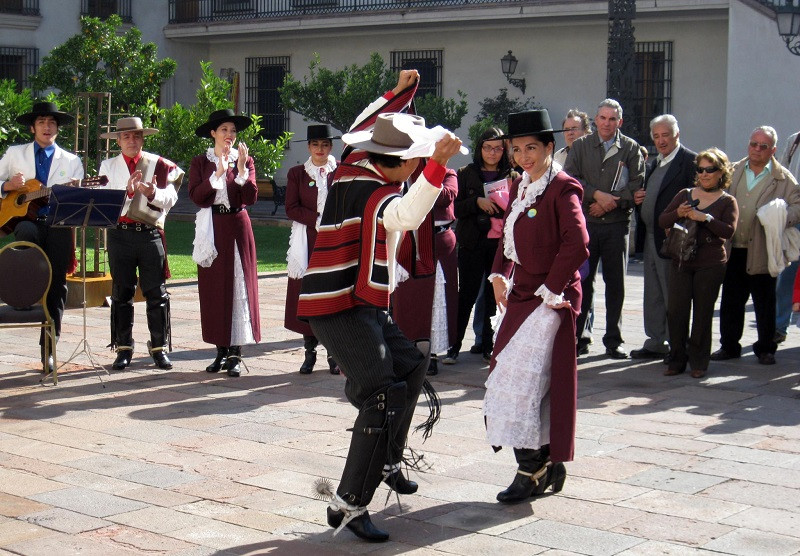
But the real highlight is the cueca dancing. This traditional folk dance becomes unavoidable during Fiestas Patrias. Schools hold competitions. Fondas feature live bands playing cueca music. Couples of all ages take to makeshift dance floors, handkerchiefs in hand. The dance itself is playful and flirtatious—the man (traditionally dressed as a huaso in poncho and spurs) pursues the woman (wearing a flowing dress) in movements that supposedly mimic a rooster courting a hen.
In rural areas, the celebration includes Chilean rodeos where skilled horsemen demonstrate their abilities. Military parades march through major cities, honoring Chile’s armed forces. And everywhere, people display fierce pride in being Chilean—a national identity that was hard-won through independence struggles and has been maintained through political challenges ever since.
2. La Cueca: The National Dance
You can’t separate Chilean identity from the cueca. This isn’t just a dance—it’s a cultural symbol that represents Chile itself. Named the national dance in 1979, the cueca has roots stretching back to Spanish colonial times, though it likely evolved from African and indigenous influences as well.
The basic structure involves a couple dancing in a circular pattern while waving white handkerchiefs. The movements are supposed to represent courtship, with the rooster (man) pursuing the hen (woman). She’s coy and evasive; he’s persistent and showy. It sounds simple, but there’s real skill involved in the footwork, the handkerchief flourishes, and the timing with the music.
Traditional cueca music features guitars, accordion, pandero (tambourine), and vocals. The rhythm is distinctive—you’d recognize it immediately after hearing it once. The lyrics often reference rural life, love, and Chilean geography. During Fiestas Patrias, you’ll hear cueca versions celebrating independence and national heroes.
What makes cueca special is that it crosses all social classes. Wealthy families in Santiago’s upscale neighborhoods dance it. Farm workers in rural regions dance it. Young people and elderly couples dance it. There’s something democratic about the cueca—when the music starts, everyone’s equal on the dance floor.
Regional variations exist throughout Chile. The cueca nortina from the north has indigenous influences. The cueca chilota from Chiloé island has its own style. But all versions maintain the core elements: the handkerchief, the circular pattern, the courtship theme. Learning to dance cueca is part of growing up Chilean. Schools teach it. Families practice it. And during national celebrations, it becomes the visual representation of Chilean culture and pride.
3. Fiesta de La Tirana: Faith Meets Folklore
Every July, a small village in Chile’s northern Atacama Desert becomes the site of one of South America’s most spectacular religious festivals. La Tirana, normally home to about 1,000 people, swells to over 200,000 during the week of July 16th for the Fiesta de La Tirana—a celebration honoring the Virgen del Carmen, Chile’s patron saint.
The festival’s name comes from a legend about an Inca princess called “La Tirana” (the tyrant) who fell in love with a Spanish conquistador and converted to Christianity, ultimately dying for her faith. Whether the legend is historically accurate matters less than what it represents: the complex blending of indigenous Andean beliefs with Catholic traditions that characterizes much of Chilean spirituality.
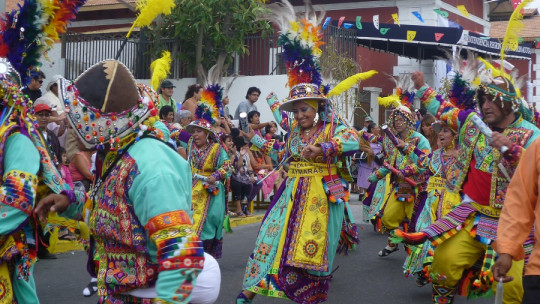
What you see at La Tirana is visually stunning and culturally fascinating. Dancers in elaborate costumes perform traditional dances including the diablada—the devil dance—where performers wear demon masks and dance to remove evil spirits. This sounds pagan, but it’s performed in honor of the Virgin. That’s the synthesis right there: indigenous ritual merged with Catholic devotion.
The festival includes religious processions where a statue of the Virgen del Carmen is carried through streets while thousands of devotees pray and sing. Many pilgrims walk considerable distances to reach La Tirana, fulfilling religious promises or seeking miracles. The atmosphere combines carnival energy with genuine spiritual devotion.
Musical groups play drums, flutes, and whistles continuously. Dancers perform choreographed routines their groups have prepared all year. Food vendors sell traditional northern Chilean dishes. And through it all, there’s this sense that you’re witnessing something ancient that’s somehow still vitally alive. The Fiesta de La Tirana demonstrates how Chilean traditions don’t exist in museums—they’re practiced, evolved, and deeply meaningful to contemporary Chileans.
4. Mapuche Traditions and We Tripantu
Long before Spanish conquistadors arrived, the Mapuche people inhabited Chile’s central and southern regions. Unlike many indigenous groups in the Americas, the Mapuche successfully resisted Inca expansion and later Spanish conquest for centuries. Their traditions remain a vital part of Chilean culture, particularly in regions like Araucanía and Los Ríos.
The most important Mapuche celebration is We Tripantu, their New Year festival, celebrated during the winter solstice around June 24th. This date marks the shortest day of the year in the Southern Hemisphere and symbolizes the return of the sun and the beginning of a new agricultural cycle. For the Mapuche, it represents renewal, hope, and the continuation of life.
We Tripantu celebrations begin at dawn when families gather near rivers or springs to cleanse themselves in cold water—a purification ritual believed to wash away the old year’s negativity and prepare for new beginnings. The ritual isn’t comfortable (it’s winter, the water is freezing), but it’s meaningful. After the cleansing, families share traditional foods including muday (a fermented drink), catuto (bread made from wheat flour), and piñón (pine nuts from the araucaria tree).
Mapuche elders share stories and wisdom with younger generations during We Tripantu, passing down oral traditions, history, and cultural knowledge. The celebration includes traditional music played on instruments like the kultrun (a ceremonial drum) and trutruka (a long horn). Dancing and singing continue throughout the night.
Beyond We Tripantu, Mapuche culture influences Chilean life through traditional crafts (particularly silver jewelry and woven textiles with distinctive geometric patterns), language (many place names and common words come from Mapudungun, the Mapuche language), and spiritual practices that emphasize connection to nature and ancestral wisdom. Visiting Mapuche communities, staying in traditional rukas (houses), and participating in their ceremonies offers deeper understanding of Chile’s indigenous heritage that coexists alongside Spanish colonial traditions.
5. Chilean Rodeo: The National Sport
Forget American-style bull riding. Chilean rodeo is completely different and deeply rooted in the country’s rural heritage. Declared Chile’s national sport in 1962, the rodeo reflects the importance of horsemanship and cattle ranching in Chilean history and the enduring cultural significance of the huaso—the Chilean cowboy.
The competition takes place in a half-moon shaped arena called amedialuna. Two mounted huasos work as a team to guide a calf around the arena and pin it against padded walls at specific marked spots. Points are awarded based on where the calf is pinned and how well the riders control it. The goal isn’t violence or spectacle—it’s demonstrating the horsemanship skills that were essential for cattle work on Chilean ranches.
What makes Chilean rodeo culturally significant is everything surrounding the competition itself. The huasos wear traditional attire: short jackets called chupallas, brightly colored ponchos, leather chaps, and ornate spurs. The clothing isn’t costume—it’s functional gear that evolved from actual ranch work but has become a symbol of rural Chilean identity.
Rodeo events are social occasions where entire communities gather. There’s traditional food, folk music, cueca dancing, and plenty of chicha and wine. The rodeo championship, held each April in Rancagua, attracts competitors and spectators from throughout Chile. Top riders achieve celebrity status.
The rodeo tradition celebrates values that many Chileans still hold important: respect for horses, skill and bravery, connection to rural life, and the huaso culture that represents a distinctly Chilean identity separate from Argentine gaucho culture or Mexican vaquero traditions. Even urban Chileans who’ve never been on a ranch feel pride in rodeo as a uniquely Chilean tradition.
6. Christmas and New Year Traditions
Christmas in Chile happens during summer, which fundamentally changes how the holiday is celebrated compared to Northern Hemisphere traditions. While European and North American Christmas involves snow and cold weather coziness, Chilean Christmas features beaches, outdoor barbecues, and warm weather activities.
Christmas Eve (Nochebuena) is more important than Christmas Day itself. Families gather for a large meal around midnight, exchanging gifts and enjoying traditional foods including pan de Pascua (Chilean fruitcake with nuts, dried fruits, and spices) and cola de mono (a creamy alcoholic drink made with milk, coffee, sugar, cinnamon, and spirits—literally “monkey’s tail”). Many families attend Misa de Gallo (midnight mass) before or after the meal.
Because it’s summer, many Chileans spend Christmas Day at the beach or in the countryside rather than staying indoors. The combination of Catholic tradition with summer recreation creates a distinctly Chilean Christmas experience. Nativity scenes are common, and Santa Claus exists but competes with Viejo Pascuero (Old Man Christmas), who essentially performs the same gift-giving function.
New Year’s Eve brings its own traditions. Many Chileans wear yellow underwear for good luck in the coming year. At midnight, people eat twelve grapes, making a wish for each month ahead. Some write down negative experiences from the past year and burn the paper symbolically at midnight—literally letting go of the past as the new year begins.
Valparaíso’s New Year’s fireworks display is legendary—reportedly one of the largest in South America. Hundreds of thousands gather in this port city to watch fireworks launched from the hills surrounding the bay, creating a spectacular show visible throughout the city. Whether you’re in Valparaíso or elsewhere, New Year’s in Chile involves gathering with family and friends, sharing a feast, and celebrating the transition from old year to new with optimism and ritual.

7. Wine Harvest Festivals
Chile’s wine industry isn’t just economically important—it’s culturally significant. Chilean wine, particularly reds like Carmenere and Cabernet Sauvignon, has gained international recognition. The country’s unique geography (trapped between ocean and mountains with diverse microclimates) creates ideal grape-growing conditions. And Chileans celebrate this with harvest festivals throughout wine regions.
The most famous wine harvest festival occurs in the Curicó Valley each March, celebrating the grape harvest with a week of festivities. The celebration includes traditional grape stomping—yes, people actually crushing grapes with their feet like you see in movies. Visitors can participate, experiencing an ancient winemaking technique that’s now mostly ceremonial but deeply traditional.
Wine harvest festivals feature folkloric music and dance, particularly the cueca. Local restaurants serve traditional Chilean cuisine paired with regional wines. There are wine-tasting competitions, vineyard tours, and the crowning of a wine queen who represents the region for the year. The atmosphere combines agricultural celebration with cultural pride in Chilean winemaking traditions.
Beyond organized festivals, many family-owned vineyards maintain traditional harvest practices where extended families and community members gather to pick grapes together, followed by shared meals and celebrations. This reflects the importance of community cooperation in agricultural life and the social bonds formed through shared work.
Wine culture in Chile extends beyond these festivals into daily life. Chileans drink wine regularly with meals, particularly lunch. Wine is shared at family gatherings, celebrations, and casual meals. Quality local wine is affordable and accessible, making it part of ordinary life rather than just special occasions. The harvest festivals celebrate not just winemaking but Chile’s agricultural heritage and the connection between land, labor, and culture that defines much of Chilean identity.
8. Religious Processions and Holy Week
Chile is a predominantly Catholic country—though religious practice has declined among younger generations, Catholic traditions remain culturally significant. Religious processions occur throughout the year, honoring various saints and religious occasions, but none are more important than Semana Santa (Holy Week) leading up to Easter.
Holy Week processions reenact the final days of Jesus’s life through the streets of Chilean cities and towns. Participants carry religious statues, particularly images of Jesus and the Virgin Mary. Some processions include penitents performing acts of devotion or penance. The atmosphere is solemn and reverent, contrasting sharply with the festive energy of independence celebrations or wine festivals.
Different regions emphasize different saints. The Virgen del Carmen receives particular devotion as Chile’s patron saint, with her feast day on July 16th marked by processions and celebrations throughout the country (including the massive Fiesta de La Tirana mentioned earlier). Naval personnel especially honor her as protector of Chilean armed forces.
What makes Chilean religious traditions interesting is how they blend Catholic orthodoxy with local customs. Indigenous Andean beliefs about Pachamama (Mother Earth) and nature spirits coexist with Catholic devotion. Saints are honored with festivals that include traditional dancing, music, and celebration alongside prayer and religious ritual. This syncretism—the blending of different belief systems—creates uniquely Chilean religious expressions that aren’t quite like Catholic traditions elsewhere.
Even Chileans who don’t regularly attend mass often participate in religious festivals and processions as cultural traditions connecting them to community and heritage. The religious dimension remains important not just spiritually but as expressions of regional identity and shared cultural practice.

9. Family Gatherings and the Sunday Asado
Perhaps the most fundamental Chilean tradition isn’t a specific festival or celebration but rather the centrality of family in daily life. Chilean culture is family-oriented in ways that might surprise people from more individualistic societies. Extended family relationships are maintained closely. Multiple generations often live near each other. And family gatherings happen regularly, not just on holidays.
The Sunday asado (barbecue) represents this family-centered culture perfectly. On Sundays, families gather for long, leisurely barbecues that can last hours. The asado isn’t just about food—though the food is important, featuring various grilled meats, chorizo, and sides. It’s about spending time together, sharing conversation, strengthening family bonds.
Extended family often attends these gatherings—grandparents, aunts, uncles, cousins. Children play together while adults talk, drink wine, and tend the grill. The pace is relaxed. Nobody’s rushing. This weekly ritual maintains family connections and provides a stable, predictable anchor in Chilean social life.
Beyond Sunday asados, Chileans prioritize family participation in all major life events. Weddings are family affairs. Funerals bring extended family together. Even casual meals often include multiple generations. The Chilean concept of family extends beyond nuclear parents and children to encompass a broader network of relatives who remain involved in each other’s lives.
This family-centered culture affects many aspects of Chilean life. Young adults often live with parents longer than in some other cultures. Business relationships frequently involve family connections. Social identity derives partly from family reputation and connections. And during difficult times—economic hardship, political upheaval, personal crisis—families provide support networks that individuals rely on.
While this emphasis on family creates strong social bonds and support systems, it can also create pressure to conform to family expectations or maintain relationships even when problematic. Like any cultural value, it has both positive and challenging aspects. But it’s undeniably central to understanding Chilean identity and social life.
FAQs About Chilean Customs and Traditions
What is the most important celebration in Chile?
Fiestas Patrias (Independence Day celebration) on September 18-19 is absolutely the most important celebration. The entire country shuts down for these national holidays, and many people extend it into a week-long celebration. During Fiestas Patrias, Chileans display fierce national pride through flag displays, traditional dancing, food, and community gatherings at fondas. Even Chileans who aren’t normally demonstrative about patriotism participate enthusiastically. The celebration reflects Chilean identity, independence history, and cultural traditions including the cueca dance, traditional foods, and community bonding that define what it means to be Chilean.
What is the cueca dance and why is it important?
The cueca is Chile’s national dance, featuring couples dancing with white handkerchiefs in a courtship pattern that supposedly mimics a rooster pursuing a hen. Named the national dance in 1979, it represents Chilean cultural identity more than any other single tradition. The cueca crosses all social classes—wealthy urbanites and rural farm workers all dance it during celebrations. It’s taught in schools, performed at festivals, and becomes ubiquitous during Fiestas Patrias. The dance blends Spanish colonial influences with indigenous and African elements, creating something distinctly Chilean. Learning to dance cueca is considered part of being Chilean, and the tradition continues strong across generations.
How do Mapuche traditions influence Chilean culture?
The Mapuche, Chile’s largest indigenous group, have maintained their culture despite centuries of colonization. Their influence appears in many aspects of Chilean life: place names and vocabulary from Mapudungun language, traditional crafts (particularly silver jewelry and woven textiles), agricultural practices, and spiritual beliefs emphasizing connection to nature. We Tripantu, the Mapuche New Year celebrated during the winter solstice in June, is observed throughout Chile alongside Spanish-origin holidays. Mapuche cosmology blends with Catholic traditions in festivals like Fiesta de La Tirana. The Mapuche successfully resisted conquest longer than most indigenous groups, maintaining cultural autonomy that allowed their traditions to survive and influence broader Chilean culture rather than being completely erased.
What are Chilean Christmas traditions?
Chilean Christmas happens during summer, fundamentally changing the celebration. Christmas Eve (Nochebuena) is more important than Christmas Day, with families gathering around midnight for a feast featuring pan de Pascua (fruitcake) and cola de mono (a creamy alcoholic drink). Many attend midnight mass. Because it’s summer, Christmas Day often involves beach trips or outdoor activities rather than staying indoors. Families exchange gifts and display nativity scenes. The combination of Catholic tradition with summer recreation creates a distinctly Chilean Christmas. Viejo Pascuero (Old Man Christmas) serves the gift-giving role similar to Santa Claus, and the holiday emphasizes family gathering and religious tradition.
What is Chilean rodeo and why is it the national sport?
Chilean rodeo differs completely from American rodeo. Two mounted huasos (Chilean cowboys) work as a team to guide a calf around a half-moon shaped arena and pin it against padded walls at marked spots. Points are awarded for control and precision, demonstrating horsemanship skills essential to cattle ranching. Named the national sport in 1962, rodeo celebrates rural Chilean heritage and the huaso culture that represents distinctly Chilean identity. The tradition includes not just competition but also traditional clothing, folk music, cueca dancing, and community gathering. Even urban Chileans take pride in rodeo as a uniquely Chilean tradition that distinguishes their culture from Argentine gaucho or Mexican vaquero traditions.
How do Chileans celebrate New Year?
Chilean New Year traditions include wearing yellow underwear for good luck, eating twelve grapes at midnight (one for each month, making wishes), and writing down negative experiences to burn at midnight symbolically. Valparaíso hosts one of South America’s largest fireworks displays, drawing hundreds of thousands to watch fireworks launched from hills surrounding the bay. Families gather for feasts, celebrating the transition from old year to new. These traditions blend European influences with uniquely Chilean customs. Additionally, the Mapuche celebrate their New Year (We Tripantu) in June during the winter solstice, showing how Chile maintains both indigenous and Spanish-origin traditions throughout the year.
What role does wine play in Chilean culture?
Wine is integral to Chilean culture, both economically and socially. Chile produces internationally recognized wines, particularly reds like Carmenere. Wine regions celebrate harvest festivals in March featuring grape stomping, tastings, folkloric music, and cultural celebrations. Beyond festivals, wine is part of daily life—Chileans regularly drink wine with meals, particularly lunch. Quality local wine is affordable and accessible, making it ordinary rather than just for special occasions. Wine is shared at family gatherings and celebrations, representing Chilean agricultural heritage and the connection between land, labor, and culture. The wine industry combines tradition with modern success, giving Chileans pride in their winemaking reputation and traditions.
Are Chilean traditions changing with younger generations?
Yes and no. While younger Chileans are less religious and more urban than previous generations, many traditions remain strong. Fiestas Patrias celebrations continue enthusiastically across all ages. The cueca is still taught and danced. Family gatherings remain central to social life. However, some changes are occurring: religious processions attract fewer young participants, indigenous languages face decline, and urban migration means fewer young people maintain rural traditions like rodeo. But Chile’s major cultural traditions show remarkable resilience, adapted to modern contexts. Young Chileans might celebrate Fiestas Patrias differently than their grandparents, but they still celebrate it. The traditions evolve while maintaining core elements that define Chilean cultural identity.
By citing this article, you acknowledge the original source and allow readers to access the full content.
PsychologyFor. (2025). The 9 Most Important Customs and Traditions of Chile. https://psychologyfor.com/the-9-most-important-customs-and-traditions-of-chile/