

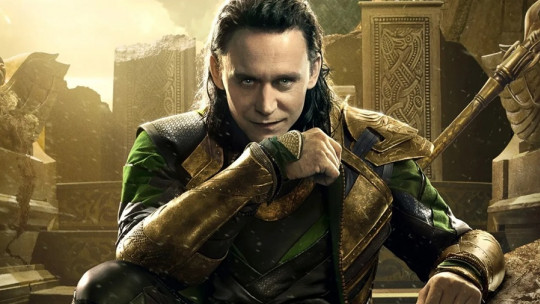
Villains hold a unique and irreplaceable role in storytelling. They are not simply obstacles for the hero to overcome — they are mirrors, reflecting back the fears, contradictions, and unspoken truths of the societies that created them. A compelling antagonist makes us uncomfortable precisely because their worldview contains a grain of something we recognize: a valid grievance twisted by pain, an understandable desire taken to a monstrous extreme, or a cold philosophical clarity that cuts through the comfortable fictions we rely on.
The best villain quotes endure not because they glorify darkness, but because they articulate something psychologically true — about power, betrayal, identity, despair, and the fragile line that separates the hero’s path from the villain’s. Many of fiction’s greatest antagonists began exactly where the protagonist did. What separated them was a single wound left unhealed, a moment of disappointment that shattered their last remaining belief, or a world that failed them in ways they never recovered from.
From the cold philosophical menace of Thanos to the anarchic brilliance of the Joker, from Darth Vader’s tragic fall to Loki’s aching need for recognition, these characters have given us some of the most memorable lines in the history of cinema and comics. Each quote in this collection carries a psychological subtext worth unpacking — because understanding what makes a villain compelling is, ultimately, a way of understanding ourselves.
Below you will find 90 of the most iconic villain phrases from movies and comics, organized into thematic sections, with psychological commentary on what each reveals about the human experience.

Why Villain Quotes Resonate So Deeply with Audiences
There is a reason we remember what the villain says long after we’ve forgotten the hero’s triumphant speech. Villains are permitted to say the things that polite society suppresses — the uncomfortable truths about power, injustice, fear, and human nature that protagonists rarely articulate so directly. This is part of what makes the best movie villain quotes so psychologically potent: they operate as a kind of cultural shadow work, giving voice to the parts of human experience we collectively prefer not to examine.
From a psychological perspective, the most compelling fictional antagonists tend to embody what Carl Jung called the shadow archetype — the repository of everything a person or a culture has disowned, suppressed, or refused to acknowledge. The villain externalizes the shadow, making it visible and confrontable. This is why audiences simultaneously fear and are fascinated by them: they represent not an alien evil, but a recognizable human possibility.
The sociological dimension is equally important. Many of the most resonant villain quotes — from Killmonger’s indictment of colonial violence to Vulture’s class-conscious frustration with the powerful — articulate genuine social grievances with clarity and emotional force. The villain’s error is not that they identified a real injustice. It is the method they chose to respond to it. Recognizing this distinction allows us to engage with these quotes not as endorsements of violence or nihilism, but as invitations to examine the conditions that produce them.
The practical takeaway: when a villain’s words hit uncomfortably close to home, that discomfort is worth sitting with. It may be pointing toward something real that deserves honest attention — in your own life, or in the world around you.
Villain Quotes About Power, Control, and Human Nature
Some of the most enduring lines from fictional antagonists are philosophical statements about the nature of power — who holds it, how it is maintained, and what it reveals about the people who wield it. These quotes challenge comfortable assumptions and often land with an unsettling precision.
1. “If thinking about it seems crazy to you, you weren’t crazy enough to think about it.” — The Punisher
The power of unconventional thinking lies precisely in its willingness to go where others won’t. Your thoughts have enormous influence over your actions — and the capacity to imagine what others dismiss as impossible is often the first prerequisite for doing it.
2. “In this world there is neither good nor evil, there is only power and it will only be suitable for those who know how to use it.” — Lord Voldemort
While the moral framing here is deliberately reductive — and Voldemort’s conclusion catastrophically wrong — the observation that power exists and must be understood, rather than simply feared, contains something worth considering. Right and wrong are not always as clear as we prefer, but our actions have very real consequences regardless.
3. “You were made to be ruled. In the end, you will always kneel.” — Loki
A provocation about the complacency of human nature — and the degree to which people genuinely surrender their autonomy in exchange for comfort, security, or belonging. Whether you agree or disagree with Loki’s conclusion, the question it raises about freedom and authority is a legitimate one.
4. “The bright allure of freedom diminishes the joy of your life in a mad struggle for power, for identity.” — Loki
Is genuine freedom as liberating as we imagine it to be — or does the removal of all structure and constraint leave people adrift rather than fulfilled? Loki’s cynicism here reflects a real psychological debate about autonomy, identity, and the structures human beings need to thrive.
5. “Those people up there, the rich and powerful, they do what they want. Guys like us, like you and me, they don’t care about us.” — Vulture
One of the most class-conscious lines in the Marvel universe. The Vulture’s grievance resonates because it contains genuine social truth. Justice must apply equally — a system that punishes the powerless while protecting the powerful will always generate the kind of resentment that this quote captures so precisely.
6. “An empire overthrown by its enemies can rise again. But one who crumbles from within is dead. Forever.” — Helmut Zemo
One of the most strategically astute observations in the entire MCU. Internal division is far more destructive than external opposition — a principle that applies to nations, organizations, families, and relationships with equal force.
7. “Building a truly better world sometimes means having to tear down the old one. And that creates enemies.” — Alexander Pierce
The tragedy of this line is that the goal it describes — building something genuinely better — is admirable. The problem is always in the execution: a world rebuilt on control and fear is not better, regardless of the ideological justification used to construct it.
8. “If you are good at something, never do it for free.” — Joker
Stripped of its source and context, this is actually sound advice about self-worth and compensation. Know the value of what you offer. Don’t give it away to people who would never extend the same generosity to you.
9. “Also, you and I know that the true power in this world is not magic. It’s the money!” — Dr. Facilier
A cynical but not entirely unfounded observation about how material resources shape outcomes in the real world — and a reminder that systemic change requires addressing structural inequalities, not just individual attitudes.
10. “You have to become more than a man, in the mind of your opponent.” — Ra’s al Ghul
Psychological warfare operates through perception. The most effective strategies — in conflict, in negotiation, in competition — work not by overpowering an opponent directly but by shaping the mental framework within which they make their decisions.
Villain Quotes That Reveal the Psychology of Pain and Betrayal
Some of the most psychologically rich villain quotes are those that illuminate the inner world of someone who has been genuinely wounded — by betrayal, loss, rejection, or systemic injustice — and whose response to that wound, however destructive, is recognizably human. These are the villains we understand even when we cannot condone them.
11. “Home, where I learned the truth about despair, like you. There’s a reason this prison is the worst hell on earth… hope.” — Bane
The most devastating prison is not one without hope — it is one where hope exists but is perpetually and systematically denied. When hope becomes weaponized disappointment, despair is the only rational response. This is a psychological truth that extends far beyond fiction.
12. “Here I learned that there can be no true despair without hope.” — Bane
A companion thought to the quote above. Without the expectation of something better, there is no baseline against which the current situation registers as intolerable. It is hope — specifically, hope that is denied — that sharpens despair into something unbearable.
13. “The world is dark, selfish and cruel. If it finds the slightest ray of sunlight, it destroys it.” — Mother Gothel
People who have experienced consistent trauma or injustice often develop exactly this cognitive framework — a worldview that expects destruction rather than growth, and that interprets kindness as naivety. Understanding this is not the same as endorsing it: it is recognizing the psychological scars that produce it.
14. “You thought we could be decent men in an indecent moment… but you were wrong!” — Harvey Dent
One of the most emotionally powerful lines about moral disillusionment in cinema. Harvey Dent’s tragedy is the collapse of the belief that integrity can survive contact with genuine injustice unscathed. His error was in concluding that corruption is inevitable rather than that better structures are needed.
15. “The world is cruel. And the only morality in a cruel world is chance. Impartial, without prejudice, fair.” — Harvey Dent
When human systems of justice fail so catastrophically that random chance seems fairer than deliberate decision, the crisis being described is real — even if the solution Harvey reaches is nihilistic. True justice must be as rigorous with the powerful as with anyone else.
16. “For I do not forgive your people for taking the life of my father, and his father, and his father before him. A thousand years of war between us will not be forgotten!” — Ronan
Generational trauma — the inheritance of unresolved pain across lineages — is one of the most powerful forces shaping human conflict. A resentment that never receives acknowledgment or repair does not dissolve. It evolves and consumes the future of those who carry it.
17. “Abuse generates resentment and when it grows without healing, the only thing that remains is the thirst for revenge.” — Mr. Glass
This is perhaps the most psychologically precise villain quote in the entire collection. Unhealed wounds do not simply fade — they organize themselves around the experience of having been wronged. When healing never comes, identity increasingly centers on the injury, and what remains is the desire for a reckoning.
18. “Love ends when betrayal begins. It is something indisputable, it will always happen like this.” — Maleficent
Maleficent’s origin story is one of fiction’s most compelling explorations of how profound betrayal — particularly early, devastating relational betrayal — can transform a capacity for love into a capacity for cruelty. The statement is not true as a universal law, but it is true as a description of what unprocessed betrayal does to the architecture of trust.
19. “I’m not a bad person, I’ve just been unlucky.” — Sandman
One of the most human villain quotes in the entire Marvel universe. A succession of bad circumstances can genuinely redirect a life — and the distance between someone who chose the wrong path and someone who found their way blocked at every legitimate turn is often narrower than we prefer to believe.
20. “Just once let me see you with my own eyes. You were right. You were right about me. Tell your sister you were right.” — Darth Vader
In Vader’s final moments, what remains after all the ideology and violence has been stripped away is the recognition of love — and the need to be seen, genuinely, by the people who matter most. Despite everything, many villains still have a heart that the right person can reach.
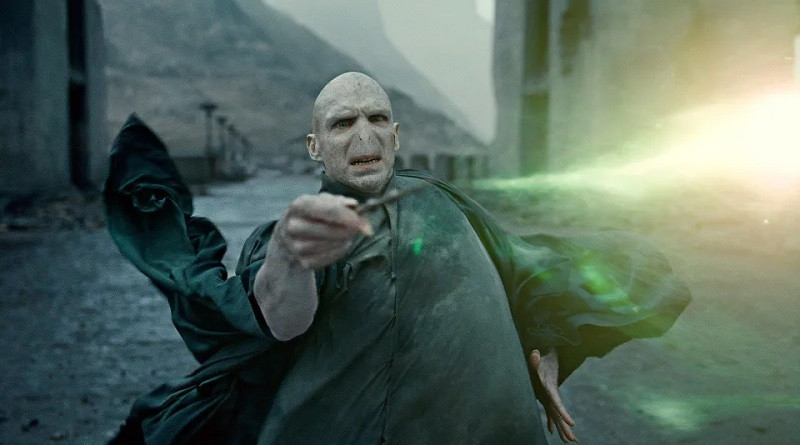
Joker Quotes: The Anarchist Philosopher of Gotham
No villain in the history of comics and cinema has generated more memorable — or more psychologically complex — quotes than the Joker. Across multiple iterations, he functions as chaos incarnate, as a dark mirror to Batman’s rigid order, and as a disturbingly lucid social critic whose methods are monstrous but whose observations frequently hit their mark.
21. “The worst thing about having a mental illness is that people expect you to behave as if you don’t have it.” — Joker
This is one of the most important lines in the 2019 Joker film — and one that deserves to be extracted entirely from its violent context and considered seriously. Mental health stigma operates precisely this way: people experiencing genuine psychological suffering are expected to perform normalcy while receiving little support. This is a real and damaging social failure that deserves honest acknowledgment.
22. “Before you judge, make sure you are perfect.” — Joker
A challenge to moral hypocrisy that stands on its own regardless of its source. If you are willing to subject others to critical scrutiny, intellectual honesty requires you to accept the same scrutiny of yourself. Judgment without self-awareness is simply a disguised form of projection.
23. “You are truly incorruptible, aren’t you? You won’t kill me out of a bad sense of self-righteousness. And I won’t kill you because you’re too funny.” — Joker
The Joker’s recognition of Batman’s moral code is both a tribute and a manipulation — identifying the restraint as a form of engagement, a proof that the game they are playing together has meaning for both of them. The villain and the hero define each other through their opposition.
24. “I think you and I are meant to do this forever.” — Joker
A line about the symbiotic interdependence of opposites — and the way that adversaries can become, over time, the primary organizing relationship in each other’s psychological lives. Some conflicts, by their nature, resist resolution because both parties are too defined by the struggle to exist without it.
Loki, Thanos, and the Villains Who Wanted to Save the World
Among the most philosophically interesting villain archetypes are those who genuinely believe they are acting for the greater good — whose logic, however distorted, begins with a real problem and arrives at a monstrous solution. These are the ideological villains, and their quotes are often the most thought-provoking of all.
25. “Perfectly balanced… how all things should be.” — Thanos
The case of Thanos is a masterclass in the philosophy of ends and means. His diagnosis — that unchecked growth produces suffering — is not entirely without foundation. His solution — genocidal reduction — is the point at which logic becomes atrocity. The question does the end justify the means? has never been more viscerally dramatized.
26. “Human beings are the worst scum that exist, because everything they touch, they destroy.” — Thanos
An indictment of human destructiveness that contains genuine truth about environmental exploitation, warfare, and greed — even if Thanos’s conclusion (that humans should be reduced rather than transformed) is the precise point where his philosophy collapses. Humans destroy, yes. But they also have the potential to repair what they break.
27. “You want to protect the world, but you don’t want it to change. How is humanity saved if it is not allowed to evolve?” — Ultron
Ultron’s critique of the Avengers’ conservative protectionism is one of the more intellectually honest villain arguments in the MCU. Genuine progress requires transformation, not merely preservation — the question is always who determines the direction and cost of that transformation, and whose interests are served by the choices made.
28. “We are the future, Charles. They do not. They don’t matter anymore.” — Magneto
Magneto’s fundamental error — the error of every group that has ever faced systematic persecution and concluded that survival requires domination — is the belief that the solution to dehumanization is to dehumanize others in return. His goal of mutant freedom is just; his method reproduces the injustice he claims to oppose.
29. “There is only one path to peace… The extinction of the Avengers.” — Ultron
The logical endpoint of any ideology that defines peace as the elimination of opposition rather than as the creation of conditions where conflict becomes unnecessary. True peace is not the silence of obliteration — it is the ongoing, difficult work of accommodation, justice, and mutual recognition.
Dark Wisdom: Villain Quotes with Genuine Psychological Insight
Not everything a villain says is wrong. Some of the most memorable antagonist lines are genuinely insightful — philosophical observations, psychological truths, or practical wisdom that would be valuable regardless of who said them. Recognizing this is part of what makes great villains so intellectually engaging.
30. “To manipulate fear in others you must first master your own.” — Ra’s al Ghul
A genuine psychological truth. Self-mastery precedes influence — you cannot guide, lead, or even meaningfully communicate with others from a place of unexamined fear. Whether your goals are benevolent or otherwise, understanding your own emotional landscape is the prerequisite for navigating everyone else’s.
31. “Being brilliant is not enough, young man. You have to work hard. Intelligence is not a privilege, it is a gift, and you use it for the good of humanity.” — Doctor Octopus
One of the most genuinely excellent pieces of advice ever delivered by a villain — and made more poignant by the fact that Otto Octavius himself abandoned it. Talent without application and ethical grounding is merely potential. What you do with your gifts matters more than the fact that you possess them.
32. “Failure is the fog through which we see triumph.” — Aldrich Killian
A line about resilience and long-term perspective that stands entirely on its own. Failure narrows vision temporarily — it obscures the larger arc. But it is also, consistently, the most informative experience available to anyone trying to build something meaningful.
33. “If you become more than a man, if you dedicate yourself to an ideal, and if they can’t stop you, then you become something else entirely… a legend.” — Ra’s al Ghul
Ideals outlive individuals. Ra’s al Ghul’s point about the persistence of ideas — even after their holders are gone — is historically true in both inspiring and terrifying ways. The immortality that truly matters is not biological but the enduring influence of what you stood for and how you acted.
34. “Greatness inspires envy, envy breeds resentment, and resentment breeds lies.” — Lord Voldemort
A precise psychological sequence. When achievement is perceived as a threat rather than an inspiration, the response often escalates from admiration to envy to active undermining. Understanding this chain makes it easier to recognize when dark feelings are beginning to organize themselves around someone else’s success.
35. “Dying, really being dead, that must be glorious!” — Dracula
From someone who has lived far beyond the natural span, this is a meditation on the value that mortality gives to life. The certainty of an end — the knowledge that time is limited — is precisely what makes human experience meaningful. Immortality without limits may be a curse rather than a gift.
36. “Stay calm. You don’t need anyone else to guide you. You yourself will learn to trust your sensations.” — Chancellor Palpatine
The most insidious advice is often the kind that is genuinely partly correct. Trusting your own sensations is valuable — but Palpatine’s deeper message is to isolate Anakin from every other source of guidance and support. Self-trust without community is not freedom; it is vulnerability to manipulation by whoever remains.
37. “You should know that success will not come easily. You have to be willing to sacrifice things, until your time to succeed comes.” — Ernesto de la Cruz
The advice itself is sound. The critical caveat: success achieved by exploiting, stealing from, or standing on the work of others is not success — it is theft wearing ambition’s clothes. The path matters as much as the destination, and how you reach your goal shapes what it is worth to you when you arrive.
Villain Quotes on Identity, Legacy, and the Choices That Define Us
Many of the most enduring villain quotes circle back to the question of identity — who we are, who we become, and how much of either we can actually control. These lines resonate because identity is one of the most genuinely complex challenges of human psychological life.
38. “Either you die a hero, or you live long enough to become the villain.” — Harvey Dent
One of the most frequently quoted lines in superhero cinema — and genuinely profound. Every human being carries the capacity for both heroism and destructiveness. Which emerges is determined not by nature alone but by experience, circumstance, the quality of support available in moments of crisis, and the choices made in response to pain.
39. “Nothing happened to me. I happened.” — Hannibal Lecter
Hannibal’s refusal of the victim narrative is itself a form of radical — if horrifying — self-ownership. For most people who have caused harm, the reverse is closer to truth: something did happen to them. But Lecter’s line raises a genuine question about the relationship between cause and choice, and the degree to which awareness of one’s own nature implies responsibility for it.
40. “People don’t change.” — William Stryker
One of the most psychologically damaging beliefs a person can hold — about themselves or about others. The research on human development, neuroplasticity, and therapeutic change is consistent: people change constantly, and meaningful change is possible at every stage of life. Stryker’s determinism is the ideological justification for cruelty presented as realism.
41. “The dark side is in our blood.” — Kylo Ren
A belief about inherited destiny that Kylo both resents and surrenders to. The psychological reality of intergenerational patterns is real — family systems and histories do shape us profoundly. But they do not determine us. Recognizing a pattern is the first step toward choosing a different relationship with it.
42. “Just bury me in the sea, with my ancestors who jumped off ships, because they knew that death was better than chains.” — Erik Killmonger
One of the most emotionally devastating lines in the MCU — a line that carries the full weight of the historical trauma it invokes. Killmonger’s rage is understandable in its source even as his methods are catastrophic in their expression. His tragedy is that he inherited real pain and responded to it with the tools of the oppressor.
43. “An ideal, if it truly blazes, doesn’t need a body to keep burning.” — Ra’s al Ghul
Ideas outlive people. Movements outlive founders. The most powerful legacies are not physical but conceptual — the frameworks, values, and questions that outlive those who first articulated them and continue shaping how others see and act in the world.
44. “Now that we know who you are, I know who I am. I’m not a mistake! Everything makes sense!” — Mr. Glass
This line captures one of the most psychologically precise descriptions of how people organize identity around opposition — finding meaning in their own existence through contrast with someone else. Abuse and neglect, when they go unhealed, can produce exactly this: a self that can only understand itself through the lens of the wound it carries.
Villain Quotes About Destiny, Fear, and the Price of Ambition
Ambition, fear, destiny — the great themes of tragic storytelling — appear again and again in the most memorable villain dialogue. These lines speak directly to the psychological experience of wanting more, fearing loss, and grappling with the gap between who you are and who you might become.
Today's Top Picks
Updated Daily

45. “Silently longing for what you don’t have, while fearing losing what you have. Desire and fear.” — The Analyst
A precise description of the psychological bind at the center of many people’s lives — the tension between the drive toward growth and the terror of losing existing security. This ambivalence is one of the most common reasons people remain in situations that no longer serve them, unable to reach toward something better because the cost of losing what they have feels too high.
46. “You can’t get the things you want without giving something in return.” — Ursula
In Ursula’s hands, this is a predatory transaction. Stripped of that context, it describes something genuinely true: meaningful achievement requires meaningful sacrifice. The question is always what you are willing to give — and whether what you receive in return is actually what you needed.
47. “People think in terms of good and evil, but in reality, time is the true enemy of all of us. Time kills everything.” — Kaecilius
Mortality as the central human problem — the awareness that everything we build, love, and become will end — has driven human philosophy, religion, art, and psychology since the beginning of recorded thought. Kaecilius responds to this awareness with a desperate grasping after permanence; the more fruitful response is the cultivation of meaning within finitude.
48. “Fear, fear attracts the fearful, the strong, the weak, the innocent, the corrupt. Fear, fear is my ally.” — Darth Maul
Fear is genuinely universal — it cuts across every category of person and every position in society. Those who understand how to navigate it — in themselves and in others — hold significant psychological leverage. The difference is whether that understanding is used to manipulate or to liberate.
49. “If the pride is double, the fall is double.” — Count Dooku
Pride that disconnects from reality — that refuses to acknowledge limitation, vulnerability, or the possibility of failure — creates exactly the brittleness it seeks to protect against. Overconfidence blinds us to our actual weaknesses, and the higher the self-assessment, the more devastating the encounter with the truth.
50. “Never apologize for being the smartest person in the room.” — Mysterio
The irony here is significant: Mysterio’s entire character is built on illusion rather than genuine ability. His advice is actually the opposite of wisdom — the genuinely intelligent are typically most aware of the limits of their intelligence, and most interested in the perspectives of people who know things they don’t.
Villain Quotes on Society, Justice, and the Failures of the World
Some of the most enduring villain quotes are social critiques — observations about systemic injustice, institutional failure, and the gap between the world as it is and as it ought to be. These lines resonate because the problems they identify are real, even when the solutions the villain proposes are catastrophic.
51. “We built their roads, and we fought all their wars and everything, but they don’t care about us.” — Vulture
A legitimate criticism of how societies extract labor, sacrifice, and service from people while systematically failing to return meaningful support, recognition, or opportunity. The resentment this generates is real and historically consistent — and it deserves a political and institutional response rather than simple condemnation.
52. “They call me a terrorist, a radical, a fanatic because I obey the ancient laws of my people… and I punish those who don’t.” — Ronan
This line surfaces a genuine tension between cultural self-determination and the imposition of one group’s norms on others. No belief system should be imposed through force, fear, or punishment — but the labeling of cultural resistance as terrorism without examining its historical context is itself a form of political manipulation.
53. “We lose more women to marriage than to war, famine and disease.” — Cruella de Vil
A provocative critique of the historical institution of marriage as a structure that constrained women’s autonomy, ambitions, and identities — a concern that feminist scholars and historians have documented extensively. The speaker’s character does not diminish the validity of the societal critique embedded in the observation.
54. “If you can make God bleed, people will stop believing in him. And there will be blood in the water. And the sharks will come.” — Ivan Vanko
A line about the fragility of perceived invulnerability — and how the first crack in a symbol of power changes the entire social dynamic around it. Whether the symbol is religious, political, or institutional, what once seemed unassailable becomes contestable the moment its vulnerability becomes visible.
55. “That should be backwards. We know better now, right? Demons do not come from hell beneath us. No, they come from heaven.” — Lex Luthor
Everything that is unknown tends to be classified as threat — and threats tend to be projected downward, onto the marginalized and the different. Luthor’s reversal challenges the comfortable geography of good and evil, suggesting that the most dangerous forces are often the ones that present themselves as benevolent, enlightened, and above reproach.
56. “What has the world come to when you can’t even trust a program?” — Agent Smith
A darkly prescient comment on the relationship between humans and their technological creations — and the degree to which we have built systems whose logic we no longer fully understand or control. As artificial intelligence, algorithmic decision-making, and automated systems increasingly shape human life, the question of whether we trust our programs has become genuinely urgent.
More Unforgettable Villain Phrases Worth Reflecting On
The remaining quotes in this collection span the full range of what makes antagonist dialogue so rich — from philosophical observations to tactical wisdom, from poignant self-revelations to darkly comic one-liners. Each carries something worth sitting with.
57. “I am the arm of nature. The spirit of him. Damn, I’m Mother Nature.” — Poison Ivy
Poison Ivy’s eco-extremism, whatever its methods, reflects a genuine philosophical position about the relationship between human civilization and the natural world that has become considerably more urgent in recent decades.
58. “You gotta admit, I’ve played this stinking town like a harp from hell!” — The Penguin
The Penguin’s triumph here is the triumph of strategic intelligence over brute force — understanding the system well enough to play it from the inside is a form of power that no amount of physical strength can match.
59. “If I lose my temper, you lose your mind.” — Queen of Hearts
Emotional dysregulation in those who hold power creates entirely disproportionate consequences for everyone around them. The psychology of authority — and the way that unregulated emotion in a position of power amplifies into institutional harm — is precisely what this line captures.
60. “Hush, darling, don’t say a word… mom will kill everyone for you.” — Harley Quinn
A line that perfectly encapsulates Harley’s character — the weaponized nurture, the tenderness expressed through violence. It also reflects the psychological reality that toxic relationships are rarely purely harmful; they are often laced with genuine affection that makes them harder, not easier, to leave.
61. “I am always prepared to incite chaos and destruction wherever I go.” — Harley Quinn
Harley’s chaotic energy is an externalization of the internal disorder that her abuse at Joker’s hands produced. The chaos she creates outside mirrors the psychological chaos that was created inside her — a dynamic that clinical psychology recognizes as a common pattern in trauma responses.
62. “War is not won with feelings.” — Loki
A Machiavellian observation about the relationship between emotion and strategy — though the most sophisticated modern understanding of leadership and decision-making would argue that emotional intelligence, not the suppression of feeling, is what produces the best outcomes in complex, high-stakes situations.
63. “One soul is not equal to another.” — Davy Jones
Every individual is unique — shaped by a distinct constellation of experience, relationship, and meaning. This irreducible particularity is both what makes loss so devastating and what makes genuine human connection so valuable.
64. “The best thing about being me… There are so many ‘me’s.'” — Agent Smith
A line about the viral quality of ideas and systems — the way that a concept, once released, multiplies and propagates through minds and structures in ways that go far beyond the intentions of its originator. The most powerful forces in the world are not individual people but the ideas they set in motion.
65. “The circle is now complete. When I left you I was just the apprentice, but now I am the master.” — Darth Vader
A line about the completion of a long journey of transformation — and the bittersweet nature of arriving at a destination that cost everything the traveler once held dear. Mastery achieved through destruction carries within it a kind of defeat even at its moment of triumph.
66. “Small words from a small being, trying to attack what it does not understand.” — Borg Queen
The most reliable protection against dismissal is demonstrated competence — but this line also captures how often genuine insight is ignored precisely because the source is not recognized as authoritative. Never underestimate anyone, because people are consistently capable of more than they are credited with.
67. “I wouldn’t sleep like a kitten after killing so many people, if I felt things like love.” — Deadshot
A stark acknowledgment that the capacity for violence without remorse is inseparable from a severed capacity for connection. It raises genuinely important psychological questions about empathy and moral development — and the relationship between early attachment experiences and the development of conscience.
68. “Facts can be so misleading, where rumors, true or false, are often revealing.” — Hans Landa
One of the most chilling lines in modern cinema — spoken by a character who understands that in a social world shaped by perception, the management of narrative is more powerful than the management of fact. Landa’s insight is a warning about propaganda, misinformation, and the psychology of belief.
69. “Death is the only adventure you have left!” — Captain Hook
For someone who has exhausted every other territory — physical, relational, material — the final unknown becomes the last frontier. The line captures something real about the relationship between mortality, meaning, and the human need for something genuinely new to pursue.
70. “Valiant effort, but you never had a chance. You see, I’m not a queen or a monster. I am the Goddess of Death. What were you the god of again?” — Hela
Arrogance at this scale is almost aesthetically impressive — and Hela’s fall beneath its own weight is the narrative mechanism that consistently defeats this archetype. Hubris and downfall are inseparable in both mythology and psychology: the conviction of invulnerability always creates the blindspot through which destruction enters.
71. “We will finally reveal ourselves to the Jedi. Finally we will have revenge.” — Darth Maul
A revenge that gave birth to an empire. The desire for vengeance — however psychologically understandable — consistently produces consequences that extend far beyond what the original wound could justify. What begins as personal reckoning ends as generational catastrophe.
72. “Congratulations. You’re still alive. Most people are so ungrateful to be alive. But not you. Not anymore.” — Jigsaw
Whatever Jigsaw’s methods — unambiguously monstrous — the philosophical point about gratitude and mortality has its own uncomfortable validity. The awareness of death, when it becomes genuinely present rather than abstractly known, does transform one’s relationship with being alive.
73. “Sorry, kid. I don’t believe in fairy tales.” — Freddy Krueger
Fairy tales, properly understood, are not escapism — they are psychologically sophisticated narratives that teach the lesson that obstacles can be overcome, that courage has value, and that the path through fear leads somewhere worth going. Krueger’s cynicism is a rejection of exactly the psychological resilience that these stories were designed to cultivate.
74. “Now you know what it feels like to be like everyone else. Isn’t it just peculiar?” — Hades
A reminder that those who occupy positions of exceptional privilege or power often lose touch, entirely and without noticing, with the experience of ordinary life. Empathy requires not just proximity but genuine effort to understand — and power consistently erodes both.
75. “You pretend to be a simple soldier, but in reality, you are just afraid to admit that we have left humanity behind.” — Red Skull
The fundamental disagreement between Red Skull and Captain America is about whether power transcends or remains accountable to human values. Cap’s insistence on remaining a “simple soldier” is not fear of transcendence — it is the recognition that power without accountability to human dignity is precisely what creates monsters.
76. “Always remember that people love and respect you because you are pretty. The day someone prettier arrives, they will take your place.” — Dave
A cynical but unfortunately recognizable observation about the fragility of social status built on appearance alone — and the anxiety that accompanies any identity grounded primarily in comparison with others rather than in intrinsic value and genuine connection.
77. “I’m not a comic book villain. Do you really think I would explain my masterstroke to you if there was even the slightest chance you could affect the outcome?” — Ozymandias
One of the most self-aware lines any villain has ever spoken — a meta-commentary on the conventions of the genre delivered from inside it. Ozymandias’s chilling logic is precisely that he is right: the conversation is happening after the fact, which means there is nothing left to stop.
78. “You and I know that the true power in this world is not magic. It’s the money!” — Dr. Facilier
Material resources shape outcomes in the real world in ways that are both honest to acknowledge and important to address. The accumulation of wealth as the primary mechanism of social power is a structural reality that any serious engagement with justice must confront directly.
79. “Despite everything you’ve done for them, they will eventually hate you. Why bother?” — Green Goblin
The answer to why we act well — despite ingratitude, despite betrayal, despite the reality that doing good does not always produce good outcomes — is not that it guarantees reward. It is that the kind of person we become through consistent ethical action is itself the most important outcome. We do good because of who it makes us, not because of how it is received.
80. “I chose my path, you chose the hero’s path. And they found you funny for a while, the people of this town. But the only thing they love more than a hero is to see a hero fail, fall, die trying.” — Green Goblin
The Goblin’s observation about the fickleness of public affection is one of the most psychologically accurate lines in the Spider-Man franchise. The hero’s path is genuinely harder — not just physically, but in terms of the social pressures, expectations, and potential for spectacular public failure it creates.
81. “You are a god among insects. Never let anyone tell you otherwise.” — Magneto
The seduction of supremacist ideology lies precisely in this kind of validation — the promise that your group is special, superior, destined. But a superiority that requires the diminishment of others is not strength. It is the most sophisticated form of insecurity.
82. “He knew that he couldn’t kill them. Men more powerful than me have tried. But if he could make them kill each other…” — Zemo
The most effective strategy against any cohesive force is not direct opposition but the exploitation of internal tensions. Zemo’s approach — planting seeds of distrust between allies — reflects a genuine principle of strategic manipulation that has been deployed throughout human history with devastating results.
83. “To enter this world, you must take into account the first lesson, which is very important — learning to fall.” — Johnny Lawrence
One of the most genuinely wise lines delivered by a villain archetype in modern television. Resilience begins with learning to fall — to accept failure, injury, and setback not as evidence of permanent defeat but as a necessary part of the process of becoming capable.
84. “Your men are weak, complacent. You’ve let them forget that an attack can happen at any time, from anywhere!” — Ludendorff
A critique of complacency that, stripped of its military context, describes something real about the relationship between sustained vigilance and preparedness in any high-stakes domain. The danger of stability is the atrophy it produces in the capacity to respond when stability ends.
85. “There is only one path to peace… The extinction of the Avengers.” — Ultron
The most dangerous ideologies are those that identify a genuine problem and then propose a solution so extreme that it recreates the problem it was designed to solve. Ultron’s error is in equating peace with the removal of opposition rather than with the creation of conditions that make conflict unnecessary.
86. “You should never underestimate anyone, because they may be capable of doing more things than we think.” — Borg Queen
The consistent underestimation of individuals based on appearance, background, or prior performance is both an ethical failure and a strategic one. Every person holds more capacity than their surface presentation reveals — and treating people as the fullness of what they might become, rather than the limitation of what they have yet to demonstrated, is both fairer and more accurate.
87. “If only there was someone who loved you.” — Prince Hans
A line designed to wound — and one that reveals the precise mechanism of Hans’s manipulation throughout the film. He identified Elsa’s deepest vulnerability and constructed an entire performance around exploiting it. Genuine love is not recognized through grand declarations but through consistent, unself-interested behavior over time.
88. “Many times villains are born as a result of the contempt and rejection of others.” — Maleficent’s story
Maleficent’s arc — from luminous to darkened — is one of cinema’s most compelling examinations of how profound betrayal transforms a person’s entire orientation toward the world. This is not an excuse for the harm that follows; it is an explanation that invites both moral clarity and genuine compassion.
89. “So many people to kill…so little time.” — Poison Ivy
Ivy’s radical ecologism — however darkly expressed — reflects a genuine tension between the pace of environmental destruction and the urgency of response. The dark humor here masks a very real frustration that resonates with anyone who has felt the weight of a crisis that demands far more action than it receives.
90. “By looking for something ‘better’, we allow ourselves to be dazzled by things that are not always good.” — Dave’s warning
The pursuit of improvement — of something newer, shinier, more exciting — can blind us to the genuine value of what we already have. The psychological capacity to remain present with what is real and good, rather than constantly comparing it against an imagined alternative, is one of the quieter but more important forms of emotional wisdom.
FAQs About Villain Quotes from Comics and Movies
Why do villain quotes resonate so much more than hero quotes?
Villain quotes tend to resonate more powerfully because antagonists are permitted to articulate uncomfortable truths that heroes, bound by moral codes and social expectations, rarely express directly. From a psychological perspective, villains embody the Jungian shadow — the disowned aspects of human experience that are rarely given voice in polite discourse. When a villain speaks with clarity about power, injustice, betrayal, or human nature, they are often identifying something real that the audience recognizes from their own experience. The best villain dialogue is not simply menacing; it is psychologically precise — which is why it stays with us long after the hero’s triumphant speeches have faded.
What makes a villain psychologically compelling?
The most psychologically compelling villains are those who are intelligible rather than simply monstrous — characters whose worldview, however distorted, has traceable roots in experiences of genuine pain, injustice, or loss. Psychologically, this reflects the reality that harmful behavior rarely emerges from nowhere: it typically develops through a comprehensible sequence of experience, wound, and adaptive response that went catastrophically wrong at some point. Compelling villains make us ask not just “how do we stop them?” but “what made this possible?” — which is a much more important and productive question for understanding both fiction and the real world.
What is the psychology behind why we find villains fascinating?
The fascination with villains reflects several psychological mechanisms operating simultaneously. Carl Jung’s shadow archetype explains part of it: villains externalize the aspects of human nature that we collectively suppress, making them visible and safe to engage with at a narrative distance. Terror management theory suggests that villains, as agents of death and destruction, also engage our deep anxiety about mortality in ways that feel contained within the fictional frame. And parasocial engagement — the psychological experience of relationship with fictional characters — allows audiences to empathize with perspectives and experiences they would never seek out in real life. Together, these mechanisms make villain characters some of the most psychologically engaging figures in storytelling.
Which villain quote has the most genuine psychological truth?
Several quotes in this collection carry genuine psychological insight, but among the most accurate is the Joker’s observation from the 2019 film: “The worst thing about having a mental illness is that people expect you to behave as if you don’t have it.” This precisely describes the experience of mental health stigma — the social expectation that psychological suffering should be invisible, managed privately, and performed through normality rather than acknowledged and supported. It reflects a genuine failure in how many societies respond to mental health challenges, and its accuracy is independent of the character who delivers it. Other standouts include Mr. Glass’s line about abuse and resentment, and Harvey Dent’s observations about disillusionment and moral collapse.
What do villain quotes teach us about the real world?
At their best, villain quotes function as compressed social and psychological commentary — articulating truths about power, injustice, human nature, and systemic failure that the narrative structure of heroic stories often glosses over. The Vulture’s class-conscious frustration, Killmonger’s historical grief, Magneto’s response to persecution, and the Joker’s observations about mental health stigma all point toward real conditions in the world that deserve genuine engagement. The villain’s error is typically not in identifying a problem but in choosing a destructive response to it. Engaging seriously with what they identify — while rejecting how they respond — is a productive way to use these narratives for genuine reflection rather than merely entertainment.
Are villain quotes appropriate to reflect on for personal growth?
Yes — with appropriate discernment. Many villain quotes, stripped of their violent context, contain genuine wisdom about resilience, self-knowledge, the value of effort, and the nature of power that is worth reflecting on. Others articulate social or psychological truths that deserve honest engagement rather than dismissal because of their source. The key is engaging critically rather than uncritically — asking what is true in this observation, what is distorted, and what the difference between the insight and the response to it reveals. Fiction has always functioned as a space for exploring difficult aspects of human experience in ways that are more safely examinable than direct encounter. Villain quotes, used thoughtfully, can be a genuinely productive tool for self-reflection and social awareness.
Use this citation format to reference the article clearly and help readers find the original source.
PsychologyFor. (2026). The 90 Best Villain Quotes (from Comics and Movies). PsychologyFor. https://psychologyfor.com/the-90-best-villain-quotes-from-comics-and-movies/