


See more of our articles in your search results.
When sudden workplace friction, personal relationship misunderstandings, or reactive emotional outbursts derail your daily peace and professional trajectory, exploring the best emotional intelligence books provides an evidence-based roadmap toward personal mastery. Many highly skilled, intellectually capable individuals struggle with career advancement or personal fulfillment because traditional education prioritizes cognitive IQ while completely ignoring the neurological architecture of emotional regulation. You might find yourself feeling overwhelmed by stressful conversations, wondering why technical expertise alone fails to resolve interpersonal tension or prevent emotional burnout.
This persistent vulnerability to emotional exhaustion is not a character flaw or an unchangeable personality trait; rather, it reflects a critical lack of formal training in psychological self-awareness and social literacy. Modern neuroscience proves that our emotional circuits operate faster than our rational prefrontal cortex, meaning that unmanaged stress triggers immediate amygdala hijacking before conscious logic can intervene. Without explicit cognitive frameworks to recognize, name, and regulate these physiological surges, individuals repeatedly fall victim to reactive communication patterns and damaged relationships. Engaging with masterfully written emotional intelligence literature bridges this developmental gap, providing you with practical psychological tools to navigate complex emotional landscapes with composure.
How can reading peer-reviewed emotional intelligence literature help you transform subconscious emotional reactivity into relational strength and executive presence?
Discovering transformative emotional intelligence books for personal growth equips you with proven frameworks to cultivate deep empathy, master non-defensive communication, and build an unshakable foundation for lifelong leadership and mental well-being.
The Best Emotional Intelligence Books
Verified Top Picks- 1
 Daniel Goleman Emotional Intelligence: Why It Can Matter More Than IQ The groundbreaking bestseller that introduced emotional quotient (EQ) to the worldCHECK TODAY'S PRICE
 - 2
 Travis Bradberry & Jean Greaves Emotional Intelligence 2.0 Sixty-six practical strategies to measure and elevate your emotional quotientCHECK TODAY'S PRICE
 - 3
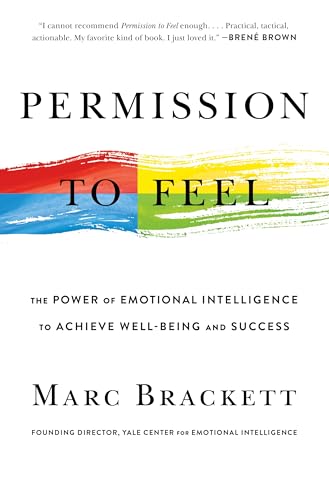 Marc Brackett Permission to Feel The Yale RULER framework to understand, label, and regulate emotions effectivelyCHECK TODAY'S PRICE
 - 4
 Susan David Emotional Agility: Get Unstuck, Embrace Change, and Thrive Unhook from self-defeating thoughts and align daily actions with core valuesCHECK TODAY'S PRICE
 - 5
 Daniel Goleman, Richard Boyatzis & Annie McKee Primal Leadership: Unleashing the Power of Emotional Intelligence How resonant leadership drives organizational culture, engagement, and performanceCHECK TODAY'S PRICE
 - 6
 Lisa Feldman Barrett How Emotions Are Made: The Secret Life of the Brain The neuroscience of constructed emotion, body budgeting, and emotional granularityCHECK TODAY'S PRICE
 - 7
 Marshall B. Rosenberg Nonviolent Communication: A Language of Life A transformative framework to express needs, resolve conflict, and connect empatheticallyCHECK TODAY'S PRICE
 - 8
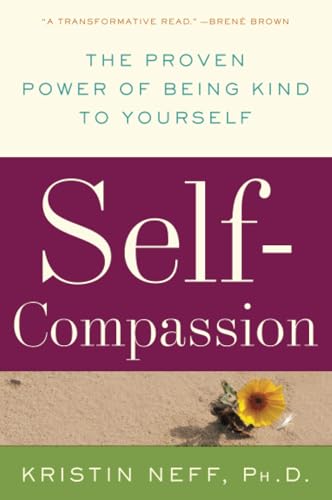 Kristin Neff Self-Compassion: The Proven Power of Being Kind to Yourself The true foundation for emotional resilience, mindfulness, and healthy self-acceptanceCHECK TODAY'S PRICE
 - 9
 Kerry Patterson, Joseph Grenny et al. Crucial Conversations: Tools for Talking When Stakes Are High Practical tools for creating safety and achieving candid dialogue during high-stakes conflictCHECK TODAY'S PRICE
 - 10
 Daniel Goleman Working with Emotional Intelligence Exhaustive corporate benchmark data proving that EQ outweighs IQ in professional excellenceCHECK TODAY'S PRICE
The Science of Emotional Intelligence: How EQ Outweighs Cognitive IQ
The concept of emotional intelligence (EQ) fundamentally altered contemporary psychology in 1990 when academic researchers John Mayer and Peter Salovey published their seminal paper defining it as the ability to monitor one’s own and others’ feelings, discriminate among them, and use this information to guide thinking and actions. While traditional psychometrics assumed that general cognitive ability ($g$) was the primary predictor of life achievement, organizational studies consistently reveal that emotional competence accounts for nearly ninety percent of what sets high performers apart from average peers in senior leadership and executive positions.
Neurobiologically, emotional intelligence bridges the evolutionary gap between the ancient limbic system and the modern neocortex. When sensory data enters the human brain, it passes through the thalamus and reaches the amygdala milliseconds before it reaches the rational prefrontal cortex. Pioneering clinical psychologist Aaron Beck demonstrated that unexamined automatic thoughts amplify this limbic reactivity, triggering cognitive distortions that sabotage interpersonal relationships. By developing emotional literacy, individuals learn to insert a conscious cognitive pause between stimulus and response, transforming raw emotional impulses into deliberate, constructive behavioral strategies.
To maximize the transformative benefit of emotional intelligence literature, readers must develop four core emotional intelligence competencies:
- Cultivating self-awareness to recognize real-time somatic emotional triggers and states.
- Developing self-management to regulate impulsive limbic fight-or-flight stress reactions.
- Enhancing social awareness through cognitive and affective interpersonal empathy.
- Mastering relationship management to navigate high-stakes collaborative conflicts constructively.
Mastering these foundational competencies enables individuals to transition from reactive emotional vulnerability to authentic psychological resilience and leadership.
Top 10 Emotional Intelligence Books for Personal and Professional Mastery
The following curated selection represents the definitive emotional intelligence bibliography, featuring groundbreaking foundational treatises, practical workplace skill manuals, neuroscience breakthroughs, and compassionate communication guides.
1. Emotional Intelligence: Why It Can Matter More Than IQ — Daniel Goleman
Emotional Intelligence: Why It Can Matter More Than IQ by psychologist and science journalist Daniel Goleman is the monumental, epoch-making bestseller that introduced the concept of EQ to the global public in 1995. Goleman synthesizes breakthroughs in neuroscience and behavioral psychology to demonstrate that our narrow cultural fixation on academic IQ leaves us ill-equipped for real-world success and relationship satisfaction. He maps out the five essential components of emotional intelligence: self-awareness, self-regulation, internal motivation, empathy, and adept interpersonal social skills.
Goleman explores the evolutionary neurobiology of the human brain, introducing the famous concept of “amygdala hijack” to explain how stress paralyzes executive functioning. He provides compelling case studies demonstrating how emotional illiteracy contributes to marital breakdown, workplace toxicity, childhood behavioral disorders, and physical illness. For anyone seeking to understand the foundational scientific architecture of human emotional competence, this timeless masterpiece remains the undisputed cornerstone of emotional intelligence literature.
- Introduces the five-part framework defining holistic human emotional intelligence competence.
- Explains the neurobiology of amygdala hijacking and prefrontal cortical self-regulation.
- Demonstrates how emotional literacy enhances physical health, academic achievement, and marital longevity.
2. Emotional Intelligence 2.0 — Travis Bradberry and Jean Greaves
Emotional Intelligence 2.0 by Dr. Travis Bradberry and Dr. Jean Greaves is the definitive, bestselling practical manual designed to systematically measure and elevate your EQ. The authors organize emotional intelligence into four distinct, highly actionable skills: Self-Awareness, Self-Management, Social Awareness, and Relationship Management. Drawing upon proprietary research from TalentSmart with over five hundred thousand individuals, the authors demonstrate that EQ is the single strongest predictor of workplace performance and the primary driver of measurable leadership earning potential.
The book’s standout feature is its collection of sixty-six practical, step-by-step strategies tailored to target specific emotional blind spots. Readers learn concrete behavioral techniques, such as leaning into discomfort, observing ripple effects, managing self-talk, and reading body language under stress. For professionals, managers, and self-directed learners seeking a direct, fluff-free action plan to boost their emotional quotient immediately, this volume provides an invaluable step-by-step skill-building handbook.
- Provides sixty-six practical strategies to increase daily emotional intelligence quotient scores.
- Breaks down the four-quadrant model of personal and social emotional competence.
- Demonstrates how targeted EQ development accelerates executive career mobility and compensation.
3. Permission to Feel: The Power of Emotional Intelligence to Achieve Well-Being and Success — Marc Brackett
Permission to Feel by Dr. Marc Brackett, founding director of the Yale Center for Emotional Intelligence, is a compassionate, scientifically grounded manifesto advocating for universal emotional literacy. Brackett introduces the RULER framework—a system developed at Yale and implemented in thousands of schools and corporations worldwide: Recognizing, Understanding, Labeling, Expressing, and Regulating emotions. He argues that our cultural tendency to judge, suppress, or ignore feelings produces epidemic levels of anxiety, depression, and social alienation.
Brackett shares moving personal stories alongside rigorous clinical research, showing how learning to become an “emotion scientist” rather than an “emotion judge” transforms human relationships and academic achievement. He explains the vital role of the Mood Meter, a diagnostic tool that maps emotional energy and pleasantness to build emotional granularity. For educators, parents, and leaders seeking to create emotionally safe environments, this book delivers an inspiring blueprint for emotional flourishing.
- Introduces the Yale RULER framework for systematic personal and institutional emotional literacy.
- Teaches emotional granularity to replace vague distress with precise emotional self-awareness.
- Provides actionable tools to transform toxic emotional judgment into empathetic scientific curiosity.
4. Emotional Agility: Get Unstuck, Embrace Change, and Thrive in Work and Life — Susan David
Emotional Agility by Harvard Medical School psychologist Dr. Susan David is a groundbreaking, evidence-based antidote to the toxic positive thinking movement. David demonstrates that psychological health is not about forcing constant happiness or suppressing negative feelings, but about developing emotional agility—the capacity to navigate life’s inevitable twists and turns with self-acceptance, clear-sightedness, and values-aligned action. She reveals how people become “hooked” by unhelpful thoughts and emotional narratives, losing their capacity for autonomous decision-making.
David outlines a transformative four-step process: Showing Up (facing thoughts and emotions with curiosity), Stepping Out (detaching from mental stories), Walking Your Why (identifying core personal values), and Moving On (making small, values-driven tweaks to daily habits). Her nuanced approach reframes difficult emotions like grief, guilt, and anger as vital signposts pointing toward what we care about most. This empowering, brilliantly written book is essential reading for anyone seeking authentic resilience over superficial positivity.
- Outlines the four-step framework for unhooking from debilitating cognitive and emotional patterns.
- Exposes the hidden psychological dangers of forced positive thinking and emotional avoidance.
- Teaches readers how to align daily micro-decisions with deep personal values and purpose.
5. Primal Leadership: Unleashing the Power of Emotional Intelligence — Daniel Goleman, Richard Boyatzis, and Annie McKee
Primal Leadership by Daniel Goleman, Richard Boyatzis, and Annie McKee is the seminal corporate leadership text exploring the profound neurobiological impact of a leader’s emotional state on organizational performance. The authors demonstrate that the leader’s emotional demeanor operates as an open-loop limbic system, broadcasting resonance or dissonance that literally synchronizes the brain circuitry of teams. A resonant leader drives engagement, innovation, and loyalty, while a toxic, dissonant leader triggers paralyzing organizational threat responses.
The authors outline six distinct leadership styles—Visionary, Coaching, Affiliative, Democratic, Pacesetting, and Commanding—explaining the specific organizational context required for each. They provide a comprehensive model for self-directed learning to help executives dismantle ingrained leadership habits and develop authentic emotional resonance. For executives, managers, and organizational consultants, this classic volume stands as the premier handbook of emotionally intelligent leadership.
- Details how open-loop limbic systems drive organizational emotional resonance and performance.
- Identifies the six leadership styles and their specific organizational cultural impacts.
- Provides a structured methodology for self-directed learning and executive leadership transformation.
6. How Emotions Are Made: The Secret Life of the Brain — Lisa Feldman Barrett
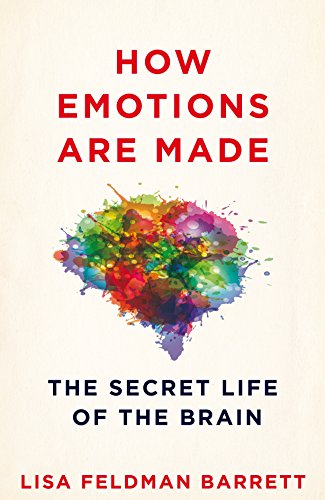
How Emotions Are Made by pioneering neuroscientist and psychologist Dr. Lisa Feldman Barrett completely overturns the classical view of universal, hardwired emotional circuitry. Synthesizing decades of neuroimaging and physiological research, Barrett introduces the Theory of Constructed Emotion, proving that emotions are not triggered by dedicated brain circuits (like an “anger center” in the amygdala), but are constructed in real time by the brain as it predicts sensory inputs and categorizes internal interoceptive signals based on past experiential concepts and language.
Barrett’s revolutionary framework demonstrates that emotional granularity—having a rich, highly specific vocabulary for subjective internal states—literally alters your brain’s predictive ability, allowing you to regulate stress responses with remarkable precision. She explores how the brain manages its “body budget” (allostasis) and shows that feeling bad is often a physiological metabolic deficit rather than a psychological crisis. For serious students of psychology, this profound book provides an indispensable paradigm shift in affective neuroscience.
- Dismantles the classical myth of universal, hardwired innate biological emotional circuits.
- Introduces the Theory of Constructed Emotion and predictive neurobiological processing.
- Proves that emotional granularity enhances physical health and autonomic allostatic regulation.
7. Nonviolent Communication: A Language of Life — Marshall B. Rosenberg
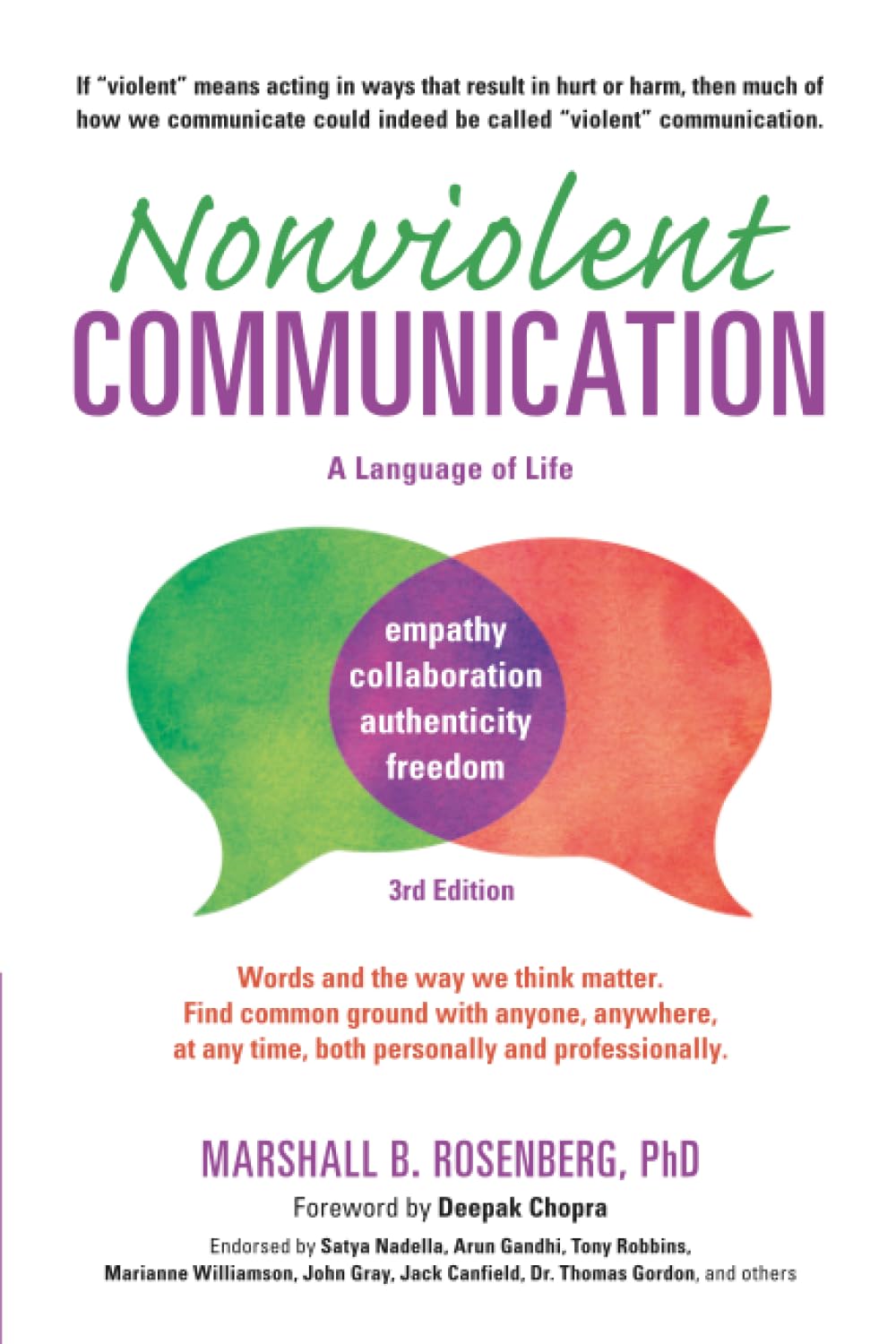
Nonviolent Communication: A Language of Life by clinical psychologist Dr. Marshall B. Rosenberg is the legendary, globally practiced manual for resolving interpersonal conflict with radical empathy and honesty. Rosenberg demonstrates that conventional language is saturated with moralistic judgments, demands, and blame that trigger defensive hostility. By replacing toxic communication with a structured four-part model—Observations, Feelings, Needs, and Requests—Rosenberg teaches readers how to express vulnerability while establishing uncompromising personal boundaries.
Rosenberg shows how to listen beneath surface-level anger to identify unmet universal human needs, transforming adversarial confrontations into opportunities for mutual understanding. The book provides profound guidance on self-empathy, resolving internal shame, and communicating effectively across diverse cultural, corporate, and family environments. For couples, parents, mediators, and corporate leaders, this transformative text serves as the ultimate practical guide to compassionate communication.
- Differentiates neutral behavioral observations from inflammatory moralistic judgments.
- Connects difficult emotional reactions directly to universal unmet psychological needs.
- Teaches actionable communication scripts for making clear, assertive, and empathic requests.
8. Self-Compassion: The Proven Power of Being Kind to Yourself — Kristin Neff
Self-Compassion by pioneering researcher Dr. Kristin Neff establishes that self-compassion, rather than fragile self-esteem, is the true engine of emotional resilience and psychological health. Neff proves that self-esteem is contingent on success, social comparison, and external validation, frequently generating narcissism, defensive ego posturing, and severe self-criticism when failure occurs. In contrast, self-compassion provides an unconditional source of safety and emotional warmth during moments of inadequacy and pain.
Neff outlines the three core components of self-compassion: self-kindness versus self-judgment, common humanity versus isolation, and mindfulness versus over-identification. She provides clinically validated exercises, journaling prompts, and guided meditations that quiet the harsh inner critic. This deeply healing, scientifically grounded book is essential for anyone struggling with perfectionism, imposter syndrome, or debilitating internal self-blame.
- Contrasts the stability of self-compassion with the narcissistic pitfalls of self-esteem.
- Outlines the three core components of self-compassion for daily emotional self-regulation.
- Provides guided somatic exercises to navigate intense shame and self-critical thoughts.
9. Crucial Conversations: Tools for Talking When Stakes Are High — Kerry Patterson, Joseph Grenny, Ron McMillan, and Al Switzler
Crucial Conversations by Kerry Patterson, Joseph Grenny, Ron McMillan, and Al Switzler is the definitive corporate communication handbook for handling high-stakes dialogue where opinions vary and emotions run strong. The authors demonstrate that when conversations turn crucial, individuals routinely default to destructive patterns of silence (masking, avoiding, withdrawing) or violence (controlling, labeling, attacking). By mastering the art of creating psychological safety, readers learn to step back from emotional reactivity and keep vital communication channels open.
The book outlines actionable protocols to separate facts from subjective stories, master emotional state management, and establish mutual purpose during intense disagreements. The authors provide the STATE methodology (Share your facts, Tell your story, Ask for others’ paths, Talk tentatively, Encourage testing) to communicate difficult truths without generating defensiveness. For executives, couples, and teams seeking to resolve chronic conflict, this volume is an essential manual of behavioral communication mastery.
- Identifies destructive defaults of silence and violence during high-stakes emotional confrontations.
- Teaches how to establish psychological safety to foster honest, non-defensive dialogue.
- Provides the STATE protocol for delivering challenging feedback with candor, empathy, and respect.
10. Working with Emotional Intelligence — Daniel Goleman
Working with Emotional Intelligence by Daniel Goleman is the authoritative corporate sequel to his original masterpiece, providing exhaustive empirical data from over five hundred organizations worldwide. Goleman analyzes the precise emotional competence framework that distinguishes star performers from mediocre employees across every industry and professional tier. He proves that while technical skills and cognitive intellect function as threshold capabilities, emotional competencies account for twice as much weight in predicting exceptional workplace performance.
Goleman deconstructs twenty-five specific emotional competencies across five clusters: self-awareness, self-regulation, motivation, empathy, and social skills. He details how organizational cultures can be systematically redesigned to promote emotional intelligence in hiring, performance evaluations, and leadership pipelines. For corporate executives, human resources leaders, and ambitious professionals, this rigorous volume stands as the definitive blueprint for organizational excellence.
- Provides exhaustive benchmark data proving that EQ outweighs IQ in corporate performance metrics.
- Deconstructs twenty-five distinct workplace emotional competencies for targeted professional development.
- Offers guidelines for designing corporate training programs that produce lasting behavioral change.
The Neurobiology of Affect: Amygdala Hijacking, Allostasis, and the Body Budget
To master emotional intelligence in daily life, one must understand the underlying neurobiological machinery that generates emotional experience. When an external threat or interpersonal confrontation occurs, sensory inputs travel rapidly through the thalamus to the amygdala—the brain’s ancient emotional alarm system. If the amygdala perceives a threat to physical survival or social status, it initiates an immediate surge of adrenaline and cortisol, a phenomenon Daniel Goleman famously termed an amygdala hijack, effectively overriding the rational executive functions of the prefrontal cortex.
Modern neuroscience expands this view through the concept of allostasis—the process by which the brain anticipates future physiological needs and regulates the body budget to maintain survival. Neuroscientist Lisa Feldman Barrett demonstrates that the brain constantly monitors visceral interoceptive signals from the heart, lungs, and gut. When your body budget is depleted by chronic sleep deprivation, poor nutrition, or unrelenting stress, the brain misinterprets this physical fatigue as emotional distress, generating sensations of intense anxiety, irritability, and despair.
Understanding allostatic regulation and amygdala dynamics yields several critical emotional management insights:
- Recognizing that physical exhaustion directly compromises the prefrontal cortex’s emotional regulation capacity.
- Treating sudden emotional volatility as a potential signal of metabolic body budget depletion.
- Implementing physiological resets—such as diaphragmatic breathing—to down-regulate sympathetic nervous system arousal.
- Practicing interoceptive awareness to distinguish between raw physical sensations and constructed cognitive emotional narratives.
Managing your physiological body budget ensures that your nervous system maintains the metabolic resilience required for calm, emotionally intelligent decision-making.
Developing Emotional Granularity and Cognitive Reframing
A central pillar of advanced emotional intelligence is emotional granularity—the ability to construct and identify highly specific emotional concepts rather than using broad, undifferentiated terms like “feeling bad” or “stressed.” Research proves that individuals who can distinguish between feeling frustrated, humiliated, disappointed, resentful, or exhausted demonstrate superior emotional regulation, lower rates of clinical depression, and reduced reliance on maladaptive behavioral coping mechanisms.
Complementing emotional granularity, cognitive reframing allows individuals to systematically alter the subjective meaning of an event by challenging automatic cognitive distortions. Pioneering cognitive psychologist Aaron Beck proved that emotional suffering is not caused directly by external events, but by our cognitive appraisals of those events. When you learn to identify catastrophic thinking, mind reading, and black-and-white labeling, you can intentionally reframe situations to align with objective reality and personal values.
Mastering emotional granularity and cognitive reframing involves several essential psychological disciplines:
- Expanding your emotional vocabulary using tools like the Yale Mood Meter to identify precise affective internal states.
- Questioning automatic negative thoughts by demanding empirical evidence before accepting catastrophic mental stories.
- Reframing physiological stress arousal as adaptive excitement designed to enhance cognitive performance.
- Separating objective external facts from the subjective, self-critical narratives constructed by your mind.
Cultivating a rich emotional vocabulary and active cognitive reframing transforms how you experience daily challenges, fostering deep psychological agility and peace.
Practical Exercises to Elevate Your Emotional Quotient Daily
Reading emotional intelligence literature produces lasting personal transformation only when theoretical frameworks are integrated into consistent, daily behavioral practices. As psychiatrist Viktor Frankl eloquently observed, between stimulus and response there is a space, and in that space lies our freedom and power to choose our growth. By establishing structured daily mindfulness and communication routines, individuals bridge the gap between cognitive understanding and embodied emotional mastery.
To integrate the core lessons from these top 10 emotional intelligence books into your life, practice these five evidence-based psychological disciplines:
- Practice the six-second pause when emotionally triggered to allow the prefrontal cortex to override immediate limbic reactivity.
- Conduct a daily body budget audit each morning to assess sleep, hydration, and autonomic nervous system recovery.
- Use the four-part Nonviolent Communication framework to state observations, feelings, needs, and concrete interpersonal requests.
- Take a three-minute self-compassion break during moments of failure, acknowledging pain and offering soothing, non-judgmental self-talk.
- Practice active empathic listening in conversations by summarizing the speaker’s feelings and needs before formulating your own response.
Consistently practicing these actionable emotional exercises empowers you to master self-awareness, cultivate unshakeable empathy, and achieve long-term personal and professional flourishing.
FAQs about the Best Emotional Intelligence Books
What is the best emotional intelligence book for a complete beginner?
For a complete beginner, Emotional Intelligence: Why It Can Matter More Than IQ by Daniel Goleman is the quintessential starting point. Goleman introduces the foundational scientific concepts of EQ, explains how the emotional brain works, and demonstrates why emotional literacy is vital for career success, physical health, and personal relationships. If you prefer a highly practical, step-by-step handbook focused on quick behavioral strategies and self-assessment, Emotional Intelligence 2.0 by Travis Bradberry and Jean Greaves serves as an ideal companion guide to start developing your skills immediately.
Can reading emotional intelligence books actually improve my EQ?
Yes, reading evidence-based emotional intelligence books can significantly increase your EQ, provided that you actively practice the behavioral exercises they outline. Unlike cognitive IQ, which remains relatively stable across adulthood, emotional intelligence is a flexible set of skills grounded in neuroplasticity. By learning to identify emotional triggers, expand your emotional vocabulary, practice cognitive reframing, and implement active listening techniques, you literally rewire the neural pathways connecting your limbic system to your prefrontal cortex, leading to measurable improvements in self-control and empathy.
What is the difference between cognitive IQ and emotional intelligence (EQ)?
Cognitive IQ measures general intellectual capabilities, logical-mathematical reasoning, abstract spatial processing, and working memory capacity. In contrast, emotional intelligence (EQ) measures your ability to recognize, understand, express, and manage your own emotions, as well as perceive and respond empathetically to the emotions of others. While IQ remains relatively fixed throughout life and acts as a baseline threshold for technical competence, EQ is highly trainable and serves as the primary differentiator of leadership effectiveness, relationship stability, and life satisfaction.
How does emotional intelligence help prevent burnout and workplace stress?
Emotional intelligence prevents burnout by cultivating acute self-awareness of early physiological stress signals and emotional exhaustion before full-blown depletion occurs. Books like Emotional Agility by Susan David teach professionals how to unhook from toxic workplace narratives, set healthy psychological boundaries, and align daily tasks with core values. Furthermore, understanding the neurobiology of allostasis and body budgeting helps individuals recognize when emotional fatigue is caused by physical deficits, allowing them to proactively recharge their nervous systems and maintain sustainable high performance.
What is the RULER framework developed at Yale University?
The RULER framework is an evidence-based approach to social and emotional learning developed by Dr. Marc Brackett and his colleagues at the Yale Center for Emotional Intelligence. RULER is an acronym representing five key emotional skills: Recognizing emotions in oneself and others, Understanding the causes and consequences of emotions, Labeling emotions with a nuanced vocabulary, Expressing emotions appropriately across social contexts, and Regulating emotions effectively using helpful strategies. Implemented globally, RULER fosters healthier school climates, reduces workplace toxicity, and elevates academic and professional performance.
Which emotional intelligence book is best for improving romantic relationships?
For transforming romantic relationships, Nonviolent Communication: A Language of Life by Marshall B. Rosenberg and Crucial Conversations by Kerry Patterson and colleagues are the two most impactful titles. Rosenberg’s four-part framework teaches partners how to express vulnerable feelings and unmet core needs without blaming or criticizing each other, dissolving defensive arguments. Crucial Conversations provides concrete tools for maintaining emotional safety during high-stakes marital disagreements, helping couples resolve recurring conflicts and deepen mutual trust.
Bibliography
- Barrett, L. F. (2017). How Emotions Are Made: The Secret Life of the Brain. Houghton Mifflin Harcourt.
- Beck, A. T. (1979). Cognitive Therapy of Depression. Guilford Press.
- Brackett, M. (2019). Permission to Feel: The Power of Emotional Intelligence to Achieve Well-Being and Success. Celadon Books.
- Bradberry, T., & Greaves, J. (2009). Emotional Intelligence 2.0. TalentSmart.
- David, S. (2016). Emotional Agility: Get Unstuck, Embrace Change, and Thrive in Work and Life. Avery.
- Frankl, V. E. (1959). Man’s Search for Meaning. Beacon Press.
- Goleman, D. (1995). Emotional Intelligence: Why It Can Matter More Than IQ. Bantam Books.
- Goleman, D. (1998). Working with Emotional Intelligence. Bantam Books.
- Goleman, D., Boyatzis, R., & McKee, A. (2002). Primal Leadership: Unleashing the Power of Emotional Intelligence. Harvard Business Review Press.
- Mayer, J. D., & Salovey, P. (1990). Emotional intelligence. Cognition and Personality.
- Neff, K. (2011). Self-Compassion: The Proven Power of Being Kind to Yourself. William Morrow.
- Patterson, K., Grenny, J., McMillan, R., & Switzler, A. (2002). Crucial Conversations: Tools for Talking When Stakes Are High. McGraw-Hill.
- Rosenberg, M. B. (1999). Nonviolent Communication: A Language of Life. PuddleDancer Press.
Use this citation format to reference the article clearly and help readers find the original source.
PsychologyFor. (2026). The Best Emotional Intelligence Books. PsychologyFor. https://psychologyfor.com/the-best-emotional-intelligence-books/