

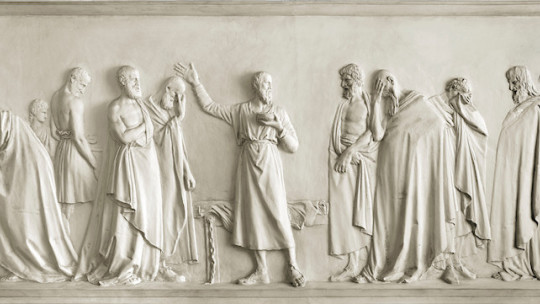
Socrates never published a treatise, ran a laboratory, or offered a clinical manual—yet his imprint on how we think about the mind, learning, ethics, and behavior change is unmistakable. As an American psychologist writing for general readers, this article explores why a fifth‑century BCE Athenian still matters for today’s evidence‑based practice and everyday mental health. Socrates’ great innovation was method: a disciplined, dialogical way of asking questions that draws out hidden assumptions, tests beliefs against experience, and refines them through collaborative reasoning. That method—known as the Socratic method or elenchus—prefigures core moves in modern clinical interviewing, cognitive behavior therapy, motivational interviewing, and critical‑thinking pedagogy. Just as importantly, Socrates placed inner life at the center of human flourishing. He insisted that self‑knowledge, reflective integrity, and ethical discernment are not luxuries but necessities; that people suffer when they live at odds with their own examined values; and that sustainable change rarely comes from coercion but from insight, choice, and practice. The aim of this guide is practical and clear: to map Socratic ideas to today’s psychological science, show how his questioning style becomes a scaffold for cognitive change, and offer ready‑to‑use prompts, vignettes, and micro‑skills that help readers think more clearly, feel more regulated, and act more in line with what matters. Rather than canonizing an ancient figure, the goal is to reclaim a toolkit—curiosity, humility, and ethical dialogue—that helps people and communities learn faster, suffer less, and grow wiser in real life.
Why Socrates Still Matters for Psychology
Socrates reframed knowledge as something discovered through dialogue rather than delivered by authority, shifting learning from passive reception to active co‑construction. This move anticipates today’s emphasis on collaborative empiricism in therapy, where client and clinician test beliefs together and privilege lived data over dogma. He placed “care of the psyche” at the center of a good life, arguing that the examined life is essential for well‑being—an intuition echoed by research linking metacognition, values clarity, and meaning to resilience and health. Finally, Socrates linked beliefs, values, and behavior, showing that what people hold true shapes what they feel and choose; modern psychology operationalizes this with frameworks where thoughts influence emotions and actions, and where value‑aligned plans turn insight into change.
The Socratic Method as a Prototype for Cognitive and Clinical Inquiry
The Socratic method is disciplined questioning used to surface definitions, test claims, and refine conclusions without humiliation or coercion. In practice, it follows a sequence that maps closely to cognitive restructuring: identify a belief, examine evidence for and against it, generate alternatives, and choose the most accurate and useful stance. What makes this powerful is ownership—insights discovered, not dictated, tend to stick. In therapy, this looks like guided discovery; in coaching, like performance debriefs; in classrooms, like guided inquiry that fosters critical thinking and transfer. Below is a practical scaffold readers can adapt now.
- Clarify the target belief: “What exactly am I concluding?” Ambiguity sustains distress; precision opens options.
- Gather evidence: “What supports this? What contradicts it? What’s the base rate?” Balanced data weaken catastrophizing.
- Generate alternatives: “What else could explain this? What would a wise friend say?” Flexibility counters all‑or‑nothing thinking.
- Assess utility: “If I hold this belief, where does it take me? Does it fit my values and goals?” Pragmatism guides choice.
- Run a real‑world test: “What small, safe experiment would inform this?” Behavior consolidates new learning.
Used ethically, Socratic questioning is collaborative and warm—more like co‑piloting than cross‑examining. It protects dignity while sharpening accuracy, helping people shift from reflex to reflection without losing momentum.
Know Thyself: Self‑Knowledge as a Psychological Imperative
“Know thyself,” the maxim associated with Socrates, functions as a modern mental health skill: self‑knowledge enables self‑regulation. In clinical terms, it means identifying core beliefs, mapping triggers and patterns, noticing body cues that precede escalation, and recognizing strengths, limits, and needs. Socrates’ distinctive twist is epistemic humility—admitting what one does not know—which reduces defensiveness, invites learning, and supports a growth mindset. Practically, self‑knowledge is less navel‑gazing than navigation: it lets people anticipate friction, align choices with values, and pivot faster after mistakes. When paired with daily reflection (for example, a brief “What did I believe? What did I learn? What changes now?” routine), it becomes a low‑cost, high‑yield practice for steadier mood and better decisions.
Virtue as Knowledge: Ethics Meets Behavior Change
Socrates taught that virtue—excellence of character—is tightly bound to knowledge; people act poorly not because they love the bad but because they misjudge the good or confuse short‑term relief with long‑term benefit. Modern therapies echo this through values clarification: clarifying what matters, then installing skills and environments that make value‑congruent behavior likely. In practice, helping someone live better means correcting misconceptions (for example, “If I feel anxious, I must avoid”), challenging cognitive distortions, and designing supports that make wise choices easier than impulsive ones. The intervention is two‑sided: refine beliefs and build behavioral scaffolds (prompts, routines, friction management) so insight translates into action.
Akrasia and Self‑Control: Closing the Intention–Action Gap
Socrates questioned whether people knowingly choose worse over better; apparent weakness of will often reflects mistaken judgments about benefit. Today, we describe the intention–action gap: people mean to exercise, study, or apologize, then don’t. The fix is part cognitive (update mistaken beliefs), part behavioral (shape context), and part emotional (tolerate discomfort without quitting). Socratic tools help at each step: examine beliefs (“Does this really help?”), anticipate traps (nighttime scrolling, ambiguous goals), and commit to tiny, testable actions that build self‑efficacy. Over time, these micro‑repairs strengthen identity (“I’m someone who follows through”), making future adherence easier.
Dialogue as a Therapeutic Tool: Alliance, Curiosity, and Change
Socratic conversation aims at shared truth, not victory. That stance—curious, respectful, collaborative—underpins a strong therapeutic alliance. Techniques like reflective listening, open questions, and gentle challenges embody this ethos. Importantly, change tends to last when people generate their own reasons for it—a principle central to motivational interviewing and to Socratic teaching. Practically, this means asking more than telling; pacing questions so they regulate rather than agitate; and validating emotion as data while steering toward clearer, more workable beliefs. Done well, dialogue becomes both assessment and intervention.

Intellectual Humility: A Safeguard for Reason and Relationships
“All I know is that I do not know” is not a shrug; it is a posture that keeps learning alive. Intellectual humility protects against common biases (overconfidence, confirmation bias), reduces interpersonal defensiveness, and encourages courteous disagreement—skills essential for therapy, teams, and civic life. In practice, humility sounds like: “Here’s my best read; what am I missing?” It looks like updating quickly when data shift. It feels like the relief of not having to be right to be valuable. For mental health, humility lowers the stakes of being wrong, which makes exploration—and healing—possible.
The Care of the Psyche: Meaning, Virtue, and Flourishing
Socrates argued that caring for the psyche is the center of a life well‑lived. Modern well‑being research converges: purpose, character strengths, and prosocial values predict resilience, health, and life satisfaction. Socratic care marries meaning (why this matters) with method (how to move toward it): regular reflection, honest dialogue, and practice under feedback. In clinical and everyday settings, this looks like articulating a personally compelling “why,” aligning weekly choices with it, and repairing quickly when off course. The result is less drift, more coherence, and a steadier sense of self across roles.
Education and Learning: Socratic Pedagogy for Deep Understanding
Socratic pedagogy invites learners to think aloud, test assumptions, and co‑build concepts—an approach aligned with cognitive science. Question‑first instruction fosters retrieval, transfer, and metacognitive awareness; errors become information, not indictment. In classrooms and coaching, this means designing sequences of tiered questions, using frequent low‑stakes checks, and anchoring abstractions in lived examples. The payoff is deeper understanding and autonomy: students (and clients) become authors of their knowledge, more resistant to misinformation and more capable of self‑directed growth.

From Socrates to Stoicism to CBT: A Lineage of Cognitive Change
Socrates influenced the Stoics, who crystallized a central cognitive insight: people are disturbed less by events than by their judgments about events. Centuries later, cognitive‑behavioral therapies operationalized this principle into structured methods—identifying automatic thoughts, testing them, and practicing alternative appraisals to shift emotion and behavior. While modern approaches are empirical and manualized, their spirit is recognizably Socratic: change the lens and the landscape changes; align belief with reality and action becomes freer, kinder, and more effective.
Emotion and Reason: Integrating Feeling with Thought
Socrates privileged reason, yet his method treats feeling as information pointing to underlying beliefs and values. Modern practice integrates both: validate emotion to reduce threat, then examine the beliefs that shape it, and finally choose actions that honor both meaning and consequences. This integration is the core of emotion regulation through understanding, not suppression—making room for anger without aggression, anxiety without avoidance, sadness without collapse, and joy without denial.
Community and Ethics: Dialogue for Teams, Families, and Cities
Socratic inquiry is social; it happens in the marketplace, the home, the assembly. Psychology now underscores how belonging, norms, and communication shape cognition and behavior. A Socratic culture—where questions are welcomed, disagreements are curious, and revising beliefs is a strength—reduces error, builds trust, and sustains learning. In organizations, this looks like meeting hygiene (clear purpose, open questions, decision logs), in families, like repair rituals after conflict, and in communities, like forums that model respectful dissent. Ethics becomes lived practice, not mere rule‑keeping.
Socratic Questioning: A Practical Guide You Can Use Today
Adapt this seven‑step, ethics‑first template for therapy, coaching, teaching, or self‑reflection. Keep tone warm and collaborative; avoid “gotcha” moments; and pause when distress rises.
- Set the frame: “Let’s explore this together.” Establish partnership and psychological safety.
- Clarify the belief: “What exactly are you concluding?” Name it precisely; specific beliefs are testable.
- Seek balanced evidence: “What supports this? What doesn’t?” Invite disconfirming data to counter bias.
- Generate alternatives: “What else might explain this? How would your future self see it?” Broaden perspective.
- Assess helpfulness: “If you hold this belief, where does it lead? Is it workable?” Align with values and goals.
- Design a micro‑experiment: “One small, safe test to learn more?” Action beats rumination.
- Reflect and revise: “What did the test teach? What changes now?” Consolidate learning and update plans.

Mini Case Vignettes (Composite, Illustrative)
Performance panic: Dana believes, “If I stumble once, the talk is ruined.” Reviewing evidence reveals prior recoveries and positive feedback. An experiment—planned pause and reset—proves that recovery is possible. She updates the belief to “Mistakes are manageable,” anxiety drops, and delivery steadies.
Relationship mind‑reading: Chris thinks, “No reply means rejection.” Generating alternatives (busy schedule, lost notification) and a behavioral test (clear, kind check‑in) update the story. Rumination eases; communication improves; the relationship gains resilience.
Self‑criticism loop: Priya’s core belief is “I’m lazy.” A data review shows heavy workload and poor sleep. She reframes to “I’m depleted, not defective,” sets recovery boundaries, and tracks energy. Self‑respect returns; productivity improves as rest becomes strategic, not shameful.
Limits and Misuses of the Socratic Method
Powerful tools can harm when misused. Socratic questioning can feel invalidating if used as debate rather than discovery, or if deployed before safety is established. It must not be a vehicle for superiority or cultural insensitivity. In acute distress, regulation skills (grounding, paced breathing, co‑regulation) may precede inquiry. And because reasoning itself can be biased, collaboration and humility are essential. Think of Socratic method as a scalpel: when used with care and consent, it refines; when used bluntly, it wounds.
Applying Socratic Habits in Daily Life
Readers can build a small, consistent practice that compounds over time. Try this five‑minute, five‑step routine once a day: write one stressful thought, list two facts for and two against, brainstorm two alternative views, choose one value‑aligned action, and note one lesson learned. This lightweight loop trains clarity, cognitive flexibility, and self‑trust—the very muscles that Socrates strengthened in conversation. Pair it with a weekly values check (what mattered this week, what drifted, what to adjust) to keep life coherent and responsive.

From Marketplace to Method: Socrates’ Lasting Gifts
Across millennia, three Socratic gifts still advance psychological health. First, method: a humane way to examine beliefs that lets people change their minds without losing face. Second, ethos: humility, courage, and care for the psyche—qualities that make inquiry safe and change durable. Third, community: a model of dialogue that makes groups smarter, kinder, and more resilient. At their best, therapists, teachers, coaches, and leaders carry these forward—helping people think clearly, feel deeply, and live closer to what they most value.
FAQs about The Contributions of Socrates the Greek to Psychology
Did Socrates practice psychology in the modern sense?
No. Socrates was a philosopher, not a clinician or experimental scientist. Yet his method of inquiry, focus on self‑knowledge, and commitment to ethical reflection anticipate practices now used in therapy, coaching, and education.
How does the Socratic method relate to cognitive‑behavioral therapy?
Both rely on structured questions to identify thoughts, test evidence, and adopt more adaptive beliefs. The lineage runs from Socratic dialogue through Stoic insight to modern cognitive restructuring.
Is Socratic questioning the same as arguing?
No. Socratic questioning is collaborative and curious. The aim is clarity and growth, not winning. Grounded in empathy and humility, it helps people discover insights they trust because they reasoned them out.
Can Socratic questioning backfire in therapy?
Yes—if used prematurely, aggressively, or without consent. Safety and validation come first. When someone is dysregulated, grounding and support may precede inquiry; questions should be gentle, paced, and client‑led.
What did Socrates contribute to moral psychology?
He linked virtue to knowledge, suggesting harmful acts often reflect mistaken judgments about the good. That frames behavior change as clarifying values, correcting beliefs, and practicing congruent actions—core to values‑based therapies.
How does “Know thyself” translate into skills?
As metacognition: name thoughts and feelings, map patterns and triggers, and align choices with values. Self‑knowledge supports self‑control, boundaries, and better decisions under pressure.
Did Socrates undervalue emotion?
He emphasized reason, but his method integrates emotion as data. Modern practice validates feeling, examines beliefs that shape it, and chooses responses that are both compassionate and wise.
Where does humility fit into psychological health?
Intellectual humility reduces defensiveness, invites learning, and strengthens relationships. It guards against bias and fosters growth across therapy, education, and leadership.
How can educators use Socratic principles?
Use guided discovery: pose clear, progressive questions, invite evidence and counterexamples, and connect answers to lived experience. This builds critical thinking, autonomy, and confidence.
What’s one Socratic habit to start today?
Try a daily “belief check”: write one stressful thought, list evidence for and against, generate two alternatives, and choose one small test. Over time, it strengthens clarity, flexibility, and self‑trust.
Use this citation format to reference the article clearly and help readers find the original source.
PsychologyFor. (2025). The Contributions of Socrates the Greek to Psychology. PsychologyFor. https://psychologyfor.com/the-contributions-of-socrates-the-greek-to-psychology/