


See more of our articles in your search results.
Many of us suffer from this syndrome without even noticing it, since it is a silent syndrome that we develop throughout our lives, which begins in our childhood and we only notice it when it becomes more acute as adults, that is, it passes when we start to limit ourselves, We feel pressure and that heavy social burden that continually afflicts and torments us in our daily lives.
The beginnings of this syndrome come when, as children, we are asked what a good child does and does not do, that is where our beliefs about what we should and should not do begin to be created, but under a perception of corresponding to the other, it is say, we begin to continually consider what I should or should not do so that the other does not get uncomfortable and continues to validate me as good, thus achieving acceptance, and it is at that precise moment where we lose our authenticity and begin to abandon ourselves due to the attempt to correspond/please our environment, forgetting about our needs and essence to prioritize social acceptance.
What is good boy syndrome?
We often hear adults telling children that: “Good children don’t cry.” Under this construct we begin to see crying, which is the expression of sadness, from a tone of discomfort, because if they see me crying they will not consider me as good, which is why I should not or it is not okay to express my emotions, having to let go. my feelings aside to be politically accepted by the rest, basing our development under an approach of continuous doubt for our actions, constantly questioning ourselves with the question: What will they say? This being a motivator to regulate our behavior, forgetting that sadness is a basic emotion that we have as human beings, whose expression through tears is a cleaning mechanism that our body has.
And that is where instead of welcoming crying and learning from it, its function and how to regulate it, we begin to repress and this happens with all our emotions, since the main objective becomes fitting correctly into the environment, with the false image that we must be “good”, not bother and above all be socially accepted, which leads us to have unhappy, frustrated, stressed, angry adults, with problems of confidence, self-esteem and self-control, because of so much repressing our emotions instead of knowing how to manage them, we have the famous emotional explosions, which manifest themselves both behaviorally (we come to act in a hurtful way either with others or with ourselves), emotionally (we cry inconsolably, we begin to show disappointment or continuous discouragement above all), cognitive (we continually judge and recriminate ourselves) or even physical (we begin to suffer from pain such as headaches, stomach, muscle, etc.).
How do we get out of this syndrome that pigeonholes, imprisons and limits us?
The main thing is to make the decision to get to know ourselves, discover what we like, what we are passionate about, what our emotions are and how they manifest themselves, well let me tell you that we are UNIQUE beings, which is why we do not necessarily express our emotions like others, for By knowing our behaviors and thoughts we move towards where we want to go, that is, WE AWAKEN OUR OWN VOICE, being able to direct ourselves correctly, allowing us to flow from freedom towards a destiny suitable for us, where we do not harm ourselves and others, since this balance is what allows us to truly live in harmony.
How many of these have you been "meaning to read" for months?
- 1
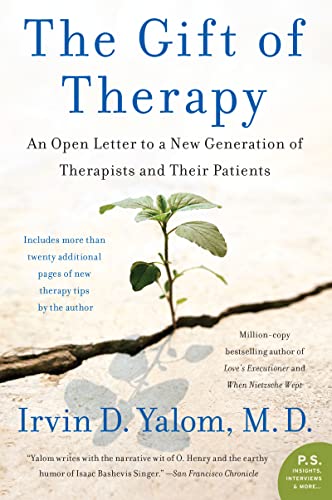 Irvin D. YalomThe Gift of Therapy85 practical, warm clinical insights from a master therapistListen Free On Audible
- 2
 Lori GottliebMaybe You Should Talk to SomeoneA bestselling memoir on the shared humanity of therapist and clientListen Free On Audible
- 3
 Oliver SacksThe Man Who Mistook His Wife for a HatUnforgettable clinical case studies on perception and identityListen Free On Audible
Beliefs are a construct that, although they are built in our childhood by our environment, we can modify them as we develop. Therefore, it is important to remember that going to therapy is not just about solving problems, it is a space to get to know ourselves and learn to grow from what we are and what we want, allowing us to know our beliefs, limitations, wounds, not only allows us to heal our current self. If not, we begin to heal our life history to direct our future in the correct way, with tools that are appropriately adapted to our way of being.
It is important to remember that we are human beings in the process of growth so we will always have difficulties to face and if we learn to know ourselves and work from the whole that we are (what we think, feel, do, our physical and energetic body) we can act from coherence, having better results, healing and motivating us to continue knowing ourselves to continue advancing on our life path.
Remember; It is never too late to begin the path of healing yourself and the inner child that you carry inside. If you do not like what you are reaping in your life, going to therapy will allow you to learn to consciously sow what you want to reap.
Use this citation format to reference the article clearly and help readers find the original source.
PsychologyFor. (2024). The Good Child Syndrome: How Does it Affect Us When We Are Adults?. PsychologyFor. https://psychologyfor.com/the-good-child-syndrome-how-does-it-affect-us-when-we-are-adults/