


See more of our articles in your search results.
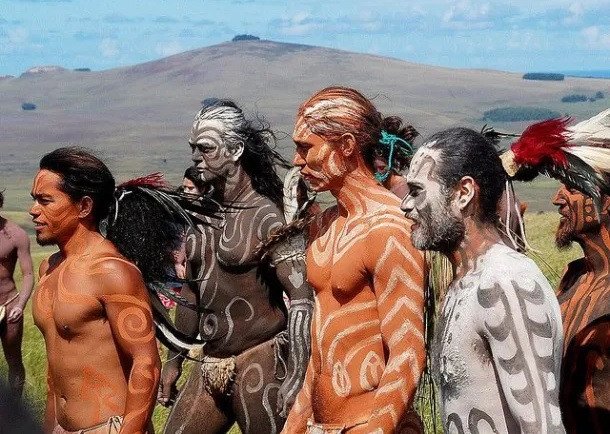
The Rapanui people make up one of the most interesting ethnic groups in Polynesia; As inhabitants of Easter Island, their history has been linked to social dynamics halfway between Oceania and America.
In this article we will delve into who the Rapanui are and what are its most relevant cultural characteristics.
Who are the Rapanui?
On Easter Day 1722, the Dutch explorer Jakob Roggeveen (1659-1729) entered the beaches of an enigmatic island located in the middle of the Pacific Ocean, 3,500 kilometers from the American coast and 2,000 kilometers from the nearest inhabited land. That is, a paradise isolated from the rest of the world. The navigator believed he had found the mythical Davis Island, described by the English privateer Edward Davis at the end of the 17th century.
But no, it wasn’t Davis Island. Nor was it the legendary Terra Australis, the lost continent that appeared on some maps of the 15th and 16th centuries, and that Roggeveen also longed to find. So where had the explorer reached, that morning of April 5, 1722?
The new arrivals baptized that little piece of land abandoned in the sea as Easter Island, in reference to the day they had arrived on its shores Later, in 1770, Spanish expeditionaries arrived at the same site; Ignoring that, fifty years earlier, the Dutch had already set foot on that land, they baptized the island as Isla de San Carlos, in honor of the Spanish monarch Carlos III. Furthermore, in a pompous celebration during which three crosses were nailed, they “annexed” the territory to the crown of Spain.
How many of these have you been "meaning to read" for months?
- 1
 Irvin D. YalomThe Gift of Therapy85 practical, warm clinical insights from a master therapistListen Free On Audible
- 2
 Lori GottliebMaybe You Should Talk to SomeoneA bestselling memoir on the shared humanity of therapist and clientListen Free On Audible
- 3
 Oliver SacksThe Man Who Mistook His Wife for a HatUnforgettable clinical case studies on perception and identityListen Free On Audible
Currently, Easter Island or San Carlos Island belongs to Chile, and is known worldwide for containing the mysterious moais, the impressive volcanic stone sculptures that populate the island. What was the culture that shaped those wonders?
The origins of the Rapanui
This is how the ethnic group that currently lives on the island is known. However, it seems that the word is not native to this town: According to some historians, the name Rapa Nui would come from the Tahitian sailors who, in the 19th century, approached Easter Island.
The island of Rapa, located in French Polynesia, is known to Tahitians as Rapa Iti, that is, “Little Rapa”. Thus, these navigators named the island of the moais as Rapa Nuithat is, “Big Rapa”.
The natives know their island as I whistle or you Henuathat is, “the navel of the world” It is likely that the phrase refers to the tremendous isolation in which Easter Island is (or was) before the arrival of Westerners. The indigenous people also describe it as Mata ki te rangi“eyes that look at the sky”, in allusion to the look of their moais.
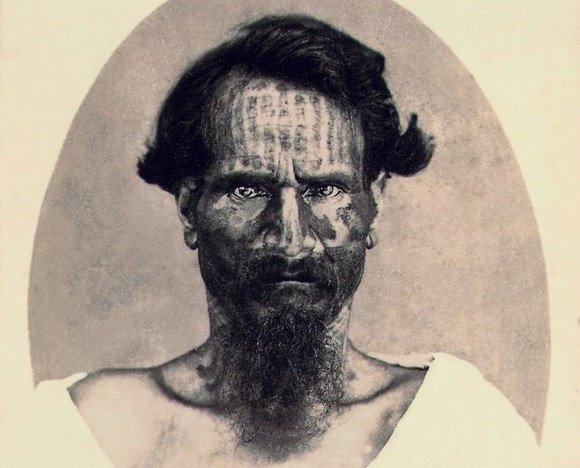
But where and when did the Rapanui come from? There are multiple theories about this. If we stick to the legend, the first king or ariki of the ethnic group, Hotu Matu’a, led his people from the island of Hiva, which many identify with the aforementioned Rapa Iti. That is According to Rapanui mythology itself, their people would come from the inhabitants of Polynesia, a fact that has been scientifically proven It seems that Hotu Matu’a lived around 1200 AD and that, having recently arrived on Easter Island, he divided the people into tribes, all under his command and influence.
Good; Legends aside, historians believe that the first settlers arrived on the island around the 5th century, although this fact has not been sufficiently proven. It seems, indeed, too early a date; However, the presence of some moais dated to the 5th and 6th centuries may corroborate this theory. What is historically confirmed is the presence of a human population on the island starting in the 13th century, when, precisely, these gigantic statues began to proliferate, which we will talk about below.
The moais: statues of the deceased?
First, we must specify what we are referring to. The moais are enormous volcanic stone sculptures that are spread throughout the island and that were built by the Rapanui ethnic group. About 900 have been catalogued, 400 of which are found on the slopes of the Rano Raraku volcano, the most important on the island and where the quarry where the sculptures were made is located.
Volcanic stone allows greater malleability, since it is a porous and relatively light rock. The moais were carved directly on the rock of the volcano (the tuff), and were later moved to their current locations. We will talk about how this displacement was carried out in another section, although there are many theories and none are definitive.

Most of the moais are found on the ahustone platforms that serve as support, and look towards the interior of the island, which reinforces the theory that they are elements created for the protection of the tribe. Only 8 moai look at the sea, and one of them points his eyes at the winter solstice.
What do these mysterious and gigantic sculptures symbolize? The original native name of these effigies, Moai Aringa Ora, sheds some light on the mystery. The expression would come to mean “living face of our ancestors”, which points to a possible representation of deceased ancestors to protect the people and their crops.
The fact that in some of the wars between clans, part of some moais have been destroyed reinforces the theory, since, by mutilating the effigy, the protection was also “mutilated.” Specifically, one of the most abused parts are the eyes, made with white coral and volcanic stone, which were torn from some of the moais, perhaps to avoid the surveillance and help of the ancestors.
However, since nothing has been written down nor do we have oral literature on the matter, we can only make conjectures. According to other hypotheses, the moais would be indicators of drinking water sources, so rare on the island and so important for survival. In fact, it has been proven that where there is no drinking water, there are no moais.
A final theory, supported by a recent study led by archaeologist Anna van Tilburg, maintains that the moais would be fertility enhancers The fact that two moais have been found buried on the slope of the Rano Raraku volcano suggests that they were left there intentionally to preserve crops. Van Tilburg supports his hypothesis that the slopes of the volcano are highly rich in nutrients; In fact, evidence of banana and sweet potato cultivation has been found in the area. Thus, according to this expert, the moais that remained in their quarry of origin would have been expressly buried in a highly fertile place to guarantee the harvest.
The only one moai feminine
All the moais represented are, invariably, men, which can give us an idea of the patriarchal structure of the tribes that inhabited the island in the golden age of sculptures (13th-19th centuries). However, in one part of the island, the Rapanui culture had a surprise in store for the team of ethnographer Thor Heyerdahl (1914-2002) who, in 1955, made an interesting discovery.
Seated on the side of the hill was a sculpture. This was nothing special; We have already said that the moais are scattered throughout the island. But the effigy in question did not present the typical characteristics of the moai: it appeared in full body (instead of just presenting the bust), it was sitting on its legs, kneeling, and it had its hands on its thighs instead of resting them on the belly, like the other moais.
This position, together with the face raised to the sky, gave this mysterious moai an absolutely unusual attitude of prayer. But the most mysterious thing of all was that the figure seemed feminine (breasts were suggested on the thorax, although they were not clear). If true, we would be facing the only moai representation of a woman.
The Tukuturi moai, as it is called, has received several dates; Some experts maintain that it is one of the first manifestations of this type of sculpture on the island, which would explain its formal differences with the rest of the moais. Other theories, however, point to the opposite: that the enigmatic woman of Tukuturi was made in the 19th century, precisely by the Tahitian visitors who named the island Rapa Nui. The theory would be based on the resemblance of the Tukuturi moai to the tiki, the typical totems of Polynesia.
The great mystery: how were the moais moved?
Beyond their ultimate meaning, there is still another enigma: how they were located in their current location. Despite being a rather small island (it is less than 25 km long), the difficulty of transporting these sculptures (with an average height of 4.5 meters and an average weight of 5 tons) is evident. Some moais are located more than 15 kilometers from the Rano Raraku volcano-quarry; How could the Rapanui displace them?
Some theories point to transportation based on sleds built with tree trunks. Later, when they arrived at the indicated place, the moais were raised using ropes, which made them swing and finally place themselves in the holes, where they remained stuck.
To confirm the different theories, projects that imitate Rapanui technology have been launched over the years. One of them, carried out in 2011 by a team from the National Geographic Society, demonstrated that with only 18 people armed with several ropes a 5-ton moai could be moved. On the other hand, in 1986, the aforementioned Thor Heyerdahl carried out a similar experiment; Together with the engineer Pavel Pavel (1957) and 17 other people, they moved a 9-ton moai.
Therefore, in the light of the different experiments, we can conclude that, to drag a moai, only “practice” and minimal technology are required. However, moving one of these figures several meters (which is what these scientists achieved) is not the same as relocating them several kilometers away, as the Rapanui did.
Anyway; This enigmatic civilization continues to remain in the shadows in many aspects. Why did a handful of men and women set out to sea from Polynesia and sail, in unstable boats, 2,000 kilometers towards nowhere? How did they know they were going to find an island in the middle of the Pacific? What do the mysterious moais mean? The unknowns remain open.
Use this citation format to reference the article clearly and help readers find the original source.
PsychologyFor. (2024). The Rapanui: Origins and Characteristics of This Enigmatic Civilization. PsychologyFor. https://psychologyfor.com/the-rapanui-origins-and-characteristics-of-this-enigmatic-civilization/