

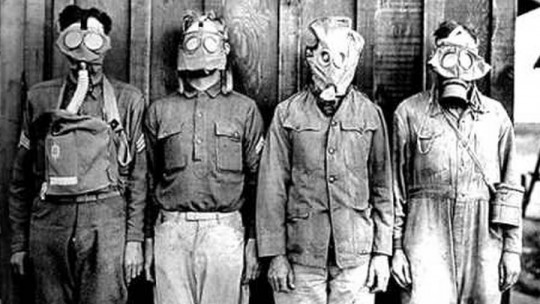
A horrifying tale circulates across the internet about five prisoners subjected to an inhumane experiment in Soviet Russia. Locked in a sealed chamber for fifteen days, kept awake by a mysterious gas, these men allegedly descended into madness, violence, and grotesque self-mutilation. The story ends with a chilling philosophical twist about the nature of human evil. Thousands of people have read this account, shared it, debated its authenticity, and wondered: could this have actually happened? The Russian Sleep Experiment has become one of the most infamous horror stories on the internet, blurring the line between historical atrocity and digital fiction in ways that reveal something profound about human psychology.
What makes this particular story so compelling isn’t just its graphic horror—though that certainly captures attention. It’s the way it taps into our knowledge of real historical atrocities, legitimate scientific concerns about sleep deprivation, and our deep-seated fears about what governments might do in the name of research. The story feels plausible because we know that unethical experiments have happened. We’re aware that sleep deprivation causes serious psychological damage. We understand that authoritarian regimes have committed unspeakable acts. The Russian Sleep Experiment weaves these factual threads into a tapestry of fiction so convincing that major news outlets have felt compelled to debunk it. As a psychologist who studies both the effects of sleep loss and the psychology of belief, I find this phenomenon fascinating on multiple levels. This article will examine the origins of this urban legend, explore the real science of sleep deprivation, investigate why we’re drawn to such horrifying stories, and ultimately answer the question: fact or fiction? More importantly, we’ll discover what this story reveals about human nature, the power of narrative, and our relationship with fear itself.
The Story Behind the Russian Sleep Experiment
According to the tale, Soviet researchers in the late 1940s developed a stimulant gas designed to eliminate the need for sleep. Five political prisoners were promised freedom if they agreed to stay awake for thirty days while exposed to this experimental compound. The men were sealed in a chamber with books, basic amenities, and enough food and water to survive. For the first five days, everything proceeded normally—the subjects talked, read, and went about their confined existence.
Then things began to deteriorate. The prisoners stopped communicating with the researchers observing them through one-way glass. They ceased talking to each other. By day nine, one subject began screaming continuously for hours, running around the chamber until his vocal cords ruptured. The others showed no reaction. When the researchers finally looked through the viewing port after fifteen days, they discovered a scene of unimaginable horror. The subjects had torn pages from their books and used them to cover the observation windows. They had smeared their own feces across the glass.
When the chamber was finally opened, the researchers found that the prisoners had mutilated themselves extensively, tearing flesh from their bodies, breaking bones, and removing internal organs—all while remaining eerily silent and functional. Most disturbing of all, when offered the chance to leave the chamber, the subjects begged to be kept inside with the gas still flowing. They claimed they needed to stay awake because sleep would bring something worse than death. The story concludes with the last surviving subject declaring that he represents the darkness that lurks inside all humans, the madness that awakens when we silence our conscious minds through sleep.
Origins of the Creepypasta
Here’s where we can definitively separate fact from fiction. The Russian Sleep Experiment originated as a piece of online horror fiction posted to a website in August 2010 by an anonymous user known as OrangeSoda. The story was published on what would become the Creepypasta Wiki, a platform dedicated to sharing scary stories in the tradition of campfire tales and urban legends, but adapted for the digital age.
Creepypasta—a play on the internet term “copypasta” (copied and pasted text)—refers to horror-related legends or images that spread across the internet. These stories are designed to be shared, to blur the lines between truth and fiction, and to exploit our uncertainties about what might be real. The format often mimics authentic documentation: scientific reports, declassified government files, found footage transcripts. This pseudo-realistic framing makes them feel credible even when the content stretches belief.
Within months of its original posting, the Russian Sleep Experiment went viral. It appeared on Reddit forums, particularly the popular NoSleep subreddit where users share horror stories. The tale spread across social media platforms, accumulated millions of views on YouTube narration channels, and inspired artwork, short films, and even a feature-length movie adaptation. What distinguished this particular creepypasta from thousands of others was its sophisticated construction—the way it wove together plausible historical context, legitimate scientific concepts, and visceral horror into a package that felt disturbingly authentic.
Why It Feels So Real
Several psychological and contextual factors make the Russian Sleep Experiment feel believable despite its fictional origins. First, the historical setting exploits our knowledge of actual Soviet-era atrocities. During the Cold War, both the USSR and the United States conducted experiments that we now recognize as deeply unethical. The Soviet Union did use psychiatric hospitals to imprison political dissidents. They did experiment with mind control techniques, psychological torture, and pharmaceutical manipulation. When we encounter a story set in this context, our brains don’t immediately reject it because we know that similar things actually happened.
Second, the story incorporates real scientific concerns about sleep deprivation. We understand that lack of sleep causes psychological deterioration, hallucinations, paranoia, and behavioral changes. The story takes these factual effects and amplifies them to horrific extremes, but the foundation is grounded in reality. This technique—taking a kernel of truth and extending it into the realm of impossibility—is exactly how effective horror works. It doesn’t ask us to believe in something completely alien to our experience; it asks us to imagine something familiar taken several steps further.
Third, the narrative structure mimics authentic documentation. The clinical, detached tone of the narrator creates psychological distance that paradoxically makes the story feel more real. Rather than an emotional, first-person account filled with subjective reactions, we get what reads like an objective scientific report. Our brains associate this tone with credibility because it’s how actual research and historical documentation are typically presented.
Fourth, the story has been shared alongside disturbing images—most notably a photograph of a grotesque, emaciated figure that’s supposedly one of the test subjects. This image is actually a Halloween prop called “Spazm,” but when paired with the narrative, it provides visual “evidence” that our brains interpret as confirmation. Humans are highly visual creatures, and seeing is believing, even when what we’re seeing has been deliberately miscontextualized.
The Real Science of Sleep Deprivation
While the Russian Sleep Experiment is fiction, the effects of sleep deprivation on the human mind and body are very real and extensively documented. Understanding what actually happens when we’re deprived of sleep helps us appreciate which elements of the story have factual grounding and which venture into pure horror fantasy.
After just 24 hours without sleep, cognitive function begins to deteriorate. Attention span shrinks, reaction times slow, and decision-making becomes impaired. Studies comparing 24-hour sleep deprivation to alcohol intoxication have found similar levels of cognitive impairment to having a blood alcohol content of 0.10 percent—legally drunk in most jurisdictions.
By 36 to 48 hours without sleep, the effects intensify dramatically. People begin experiencing microsleeps—brief moments where the brain essentially shuts down for a few seconds, regardless of what the person is doing. Memory consolidation fails, making it difficult to form new memories or retrieve existing ones. Emotional regulation breaks down, leading to mood swings, irritability, increased anxiety, and in some cases, paranoia. The prefrontal cortex—the part of the brain responsible for executive function, judgment, and impulse control—shows significantly reduced activity.
After 72 hours, hallucinations become common. These aren’t typically the organized, narrative hallucinations depicted in movies, but rather perceptual distortions—seeing movement in peripheral vision, hearing sounds that aren’t there, or experiencing tactile sensations on the skin. The brain begins to blur the line between waking consciousness and dream states, producing experiences that feel real but have no external basis. Individuals become increasingly disoriented, with difficulty distinguishing reality from imagination.
Studies on extreme sleep deprivation beyond 72 hours are rare for ethical reasons, but we do have some data. The most famous case is Randy Gardner, who stayed awake for 11 consecutive days (264 hours) in 1964 as part of a high school science project. He experienced significant cognitive impairments, mood disturbances, paranoia, and hallucinations, but he recovered completely after sleeping for 14 hours. His brain showed evidence of “local sleep”—portions of his brain entering sleep states while he remained technically conscious. Importantly, despite popular misconceptions, Gardner did not become violent, did not self-mutilate, and did not experience permanent psychological damage.

Actual Historical Sleep Experiments
While no experiment resembling the Russian Sleep Experiment ever occurred, researchers have conducted legitimate studies on sleep deprivation that provide valuable insights into its effects. These studies, conducted under ethical oversight with willing participants and medical monitoring, paint a very different picture than the creepypasta narrative.
Maria Mikhailovna de Manacéine, a Russian physician, conducted early animal experiments on sleep deprivation in 1894. She kept puppies awake by constantly stimulating them and found that they died within four to six days. This demonstrated that sleep is physiologically necessary for survival, at least in mammals. However, these experiments bore no resemblance to the fictional Russian Sleep Experiment and involved no mysterious gas or human subjects.
In the 1980s, Allan Rechtschaffen at the University of Chicago conducted controlled sleep deprivation studies on rats using a specialized apparatus. Rats completely deprived of sleep died within two to three weeks, while those deprived only of REM sleep survived slightly longer. These animals showed dramatic increases in energy expenditure, weight loss despite increased food consumption, and eventually multi-system failure. Importantly, they didn’t exhibit the violent, manic behavior depicted in the Russian Sleep Experiment story. They became progressively weaker and sicker until death.
Human studies have been far more conservative. Beyond Randy Gardner’s 1964 experiment, researchers have used controlled short-term sleep deprivation to study its effects on various aspects of cognition, emotion, and health. These studies consistently show that sleep loss impairs functioning across multiple domains but that humans don’t transform into violent, self-mutilating monsters after a few days without sleep. The changes are significant and concerning from a health perspective, but they’re nothing like what the creepypasta describes.
Psychological Effects of Sleep Loss
From my perspective as a psychologist, one of the most interesting aspects of the Russian Sleep Experiment story is how it exaggerates real psychological phenomena. The narrative takes legitimate effects of sleep deprivation and amplifies them into something unrecognizable, yet the core elements have basis in fact.
Sleep deprivation does increase anxiety. Studies show that just one night of poor sleep can significantly elevate anxiety levels in otherwise healthy individuals. This occurs because sleep loss increases activity in the amygdala—the brain’s fear center—while simultaneously decreasing connectivity with the prefrontal cortex, which normally helps regulate emotional responses. The result is heightened emotional reactivity and reduced ability to manage anxiety. However, this manifests as increased worry, nervousness, and stress responses—not the screaming madness depicted in the fictional experiment.
Emotional regulation becomes significantly impaired with sleep loss. People who are sleep-deprived have more difficulty interpreting others’ emotions accurately, especially from facial expressions. They also struggle to express their own emotions appropriately. This can lead to interpersonal conflicts, misunderstandings, and social difficulties. Research has linked sleep deprivation to increased aggression, impulsivity, and irritability. But again, these are matters of degree—someone might snap at a coworker or have a shorter temper, not descend into homicidal rage.
The relationship between sleep deprivation and depression is complex and bidirectional. Chronic sleep problems increase the risk of developing depression, while depression frequently causes sleep disturbances. Sleep loss disrupts neurotransmitter systems, particularly serotonin and dopamine, which play crucial roles in mood regulation. Individuals experiencing prolonged sleep deprivation often report feelings of hopelessness, decreased motivation, and anhedonia—the inability to experience pleasure. These are serious clinical concerns, but they don’t match the philosophical horror of the experiment’s conclusion.
Cognitive functions deteriorate across the board. Attention, working memory, long-term memory formation, processing speed, and executive function all show measurable impairment. Creativity and problem-solving abilities decline. The ability to learn new information becomes significantly compromised. After several days without sleep, people perform basic cognitive tasks at levels comparable to individuals with moderate traumatic brain injuries. Yet even in this severely impaired state, they remain recognizably human, capable of communication, and responsive to social norms.
Why We Believe Horror Stories
The enduring popularity and believability of the Russian Sleep Experiment reveals something fascinating about human psychology: our relationship with fear, our trust in narrative, and our sometimes fragile grip on distinguishing fact from fiction. Several psychological mechanisms explain why people not only enjoy such stories but sometimes accept them as potentially true.
Controlled fear provides a safe way to experience intense emotions. Psychologists call this “protective frame theory”—when we engage with scary content, we know at some level that we’re not in actual danger, which allows us to experience the adrenaline rush of fear without real consequences. Reading the Russian Sleep Experiment in the safety of your home, on your phone or computer, lets you explore extreme scenarios that would be traumatic if encountered in reality. This is fundamentally why horror as a genre exists and thrives.
The neurochemistry of fear creates its own reward system. When we experience fear, our bodies release adrenaline, which increases heart rate and sharpens senses. Simultaneously, dopamine and endorphins flood our system, creating feelings of excitement and even pleasure. This chemical cocktail can become mildly addictive, explaining why people seek out increasingly frightening content. The Russian Sleep Experiment delivers a powerful dose of this response, with its graphic imagery and escalating horror providing sustained activation of our fear circuits.
Humans have a deep-seated attraction to the mysterious and unexplained. The story deliberately leaves key questions unanswered: What exactly was the gas? What did the subjects mean by their final statements? What “darkness” were they referring to? This ambiguity exploits our brain’s desire for cognitive closure—the need to resolve uncertainty and find patterns. When a story denies us complete understanding, our minds continue working on it even after we’ve finished reading, trying to fill in the gaps and make sense of the mystery.
The familiarity of the narrative framework matters enormously. The Russian Sleep Experiment follows the structure of countless real historical events—unethical medical experiments conducted by authoritarian governments. We know about Nazi medical experiments, the Tuskegee syphilis study, CIA mind control programs like MKProject, and Soviet psychiatric abuses. These real atrocities create a mental category that the fictional Russian Sleep Experiment slots into perfectly. Our brains use pattern recognition to make quick judgments about plausibility, and this story matches the pattern of things we know to be true, even though this specific instance is false.
The Power of Urban Legends
The Russian Sleep Experiment represents a modern evolution of the urban legend—those persistent stories that circulate in culture, always happening to “a friend of a friend,” always containing just enough plausibility to seem potentially true. Understanding urban legends helps explain why this particular creepypasta has achieved such remarkable cultural penetration.
Urban legends serve important psychological and social functions. They express collective anxieties about the world we live in. Classic urban legends like “the hook” or “the kidney heist” reflected fears about sexual promiscuity, stranger danger, and vulnerability. The Russian Sleep Experiment expresses contemporary anxieties about government overreach, the ethics of scientific research, and the potentially dark aspects of human nature. It resonates because it articulates fears that many people genuinely hold.
These stories also create social bonds. Sharing a scary story is a form of social currency—it provides something interesting to talk about, generates emotional responses in listeners, and creates shared experiences. Before the internet, urban legends spread through word of mouth, often changing slightly with each retelling. The digital age has accelerated this process while also freezing the narrative in place. The same version of the Russian Sleep Experiment that was posted in 2010 is still circulating, shared by millions, creating a collective cultural reference point.
The deliberate ambiguity about truth serves a purpose in urban legends. The best urban legends never completely confirm or deny their own veracity—they exist in a liminal space between possible and impossible. The Russian Sleep Experiment perfectly occupies this space. It’s presented as historical fact, contains elements that are factually grounded, references a time and place known for secrecy and atrocity, yet stretches credulity with its most extreme claims. This ambiguity is actually more engaging than a story clearly labeled as fiction would be.
Soviet Era Experiments: Fact and Fiction
Part of what makes the Russian Sleep Experiment feel plausible is our knowledge that the Soviet Union did conduct unethical experiments on human subjects. Separating the facts of Soviet scientific practices from fiction helps clarify why this story resonated so strongly while also confirming its fictional status.
The Soviet psychiatric system was indeed used as a tool of political repression. Dissidents were frequently diagnosed with fabricated mental illnesses like “sluggish schizophrenia” and involuntarily committed to psychiatric hospitals where they were subjected to powerful antipsychotic medications, isolation, and psychological torture. This wasn’t experimental science in the research sense, but it was absolutely a form of human experimentation in terms of testing how far psychiatric tools could be used for political control. These abuses were real, well-documented, and horrifying in their own right.
Soviet sleep research did exist, but it bore no resemblance to the creepypasta. Russian scientists made legitimate contributions to sleep science, studying sleep cycles, dreams, and the effects of disrupted sleep on health and performance. Some of this research may have had military applications—understanding how soldiers could maintain alertness during extended operations, for example—but there’s no evidence of anything approaching the scenario described in the fictional experiment.
The Soviet Union, like other nations during the Cold War, did conduct research into psychological manipulation, interrogation techniques, and behavioral control. The KGB and military intelligence agencies explored how to extract information, break down resistance, and influence behavior. Sleep deprivation was used as an interrogation tactic, as it has been by many governments throughout history. However, this was used as a coercive tool, not as a scientific experiment with mysterious gases and monitored chambers. The real abuses were different in character from the fictional narrative, though no less disturbing from an ethical standpoint.
What definitively disproves the Russian Sleep Experiment as a historical event is the complete absence of documentation. Stories about secret Soviet experiments have surfaced over the decades as archives have been opened, defectors have spoken, and historians have investigated. We’ve learned about biological weapons research, radiation experiments, and various intelligence programs. If an experiment as dramatic as the Russian Sleep Experiment had occurred, especially one that ended with the deaths of both subjects and researchers, some evidence would have emerged—internal documents, witness testimony, physical evidence from the facility. The complete absence of any such documentation, combined with the story’s clear origin as internet fiction, definitively establishes its fictional status.

What Really Happens Without Sleep
Having established what doesn’t happen when humans are deprived of sleep—they don’t become philosophical demons or supernatural entities—it’s worth examining what does actually occur. The real effects are serious enough to warrant concern without any need for horror movie embellishment.
Fatal familial insomnia is a rare genetic disorder that provides insight into what happens when the human body loses the ability to sleep. This prion disease progressively destroys the brain’s ability to initiate sleep. Patients experience complete insomnia, cognitive decline, hallucinations, panic attacks, and rapid physical deterioration. Death typically occurs within 12 to 18 months of symptom onset, not from lack of sleep per se, but from the extensive brain damage that both causes the insomnia and produces multiple system failures. This condition is tragic and frightening in its own right, but it doesn’t involve violence toward others or philosophical transformations—just progressive neurological breakdown.
The longest scientifically documented period of sustained wakefulness is Randy Gardner’s 264 hours (11 days), mentioned earlier. By the end of his experiment, Gardner experienced severe cognitive impairment, memory problems, paranoia, and hallucinations. He became convinced that a street sign was actually a person. He struggled with simple arithmetic. His speech became slurred and he had difficulty completing sentences. Yet he never became violent, never harmed himself, and never exhibited the superhuman endurance described in the creepypasta. After sleeping for about 14 hours, he woke up essentially normal, suffering no permanent damage. His brain had been “micro-sleeping” throughout the experience—portions entering sleep states while others remained active, a protective mechanism that prevented more severe damage.
Chronic sleep deprivation, even at less extreme levels, has serious long-term health consequences. People who regularly sleep less than six hours per night show increased risk for cardiovascular disease, obesity, diabetes, immune system dysfunction, and certain cancers. Cognitively, chronic sleep loss accumulates what researchers call “sleep debt”—a cumulative deficit that impairs function even when people don’t feel particularly sleepy. This sleep debt affects judgment, emotional regulation, and decision-making in ways that people often don’t recognize in themselves. The effects are real and significant, but they manifest as health problems and decreased functioning, not transformation into something other than human.
The Psychology of Fear and Belief
The Russian Sleep Experiment’s success as both a horror story and a piece of misinformation that some people genuinely believe reveals important truths about how our minds process fear and evaluate truth claims. As a psychologist, I find these mechanisms as fascinating as the story itself.
Confirmation bias plays a significant role in sustained belief in stories like this. When people are predisposed to distrust governments or believe in widespread conspiracies, stories that confirm these worldviews feel true regardless of evidence. The Russian Sleep Experiment provides “proof” that governments conduct horrific secret experiments, which confirms pre-existing beliefs, which then reinforces acceptance of the story. This creates a self-reinforcing cycle where believers interpret any attempt to debunk the story as further evidence of cover-up.
The availability heuristic—our tendency to judge the likelihood of events based on how easily examples come to mind—contributes to the story’s credibility. Because we can easily recall actual unethical experiments (Tuskegee, Nazi medical experiments, MKUltra), we judge it more likely that the Russian Sleep Experiment could be real. The vivid, memorable nature of the story itself also makes it “available” in memory, which our brains can mistake for reliability or frequency.
Emotional reasoning sometimes overwhelms logical analysis. The story provokes strong emotional responses—disgust, fear, fascination—and these emotions can feel like evidence. If something makes us feel strongly, our brains sometimes conclude that it must be important or true. This is why effective propaganda often relies on emotional manipulation rather than logical argument. The Russian Sleep Experiment doesn’t convince through reasoned evidence; it convinces through visceral impact.
The illusion of explanatory depth tricks us into thinking we understand complex phenomena better than we actually do. When presented with a story that seems to explain something—in this case, what extreme sleep deprivation might do—we feel like we’ve gained genuine knowledge, even if the source is unreliable. The Russian Sleep Experiment provides a complete narrative arc with a beginning, middle, end, and even philosophical conclusion. This narrative completeness feels like understanding, which our brains often mistake for truth.
FAQs About The Russian Sleep Experiment
Is the Russian Sleep Experiment a true story?
No, the Russian Sleep Experiment is definitively fiction. It originated as a creepypasta posted online in August 2010 by an anonymous user. Despite its realistic framing and incorporation of historical context, no such experiment was ever conducted. There are no Soviet documents, witness accounts, or historical records of any experiment resembling this story. Multiple fact-checking organizations have confirmed that it is a work of horror fiction, not a historical event.
What actually happens if you don’t sleep for 15 days?
No human has been documented staying awake for 15 consecutive days under controlled observation. The longest verified period is Randy Gardner’s 11 days in 1964. Based on what we know from shorter-term sleep deprivation studies, someone awake for 15 days would experience severe cognitive impairment, hallucinations, paranoia, complete inability to form memories, emotional instability, and physical deterioration. They would not develop superhuman strength, deliberately harm themselves in the manner described in the story, or undergo philosophical transformations. The body would likely force microsleeps, and without medical intervention, there would be serious risk of death from accidents, cardiovascular events, or system failures.
Were there real unethical Soviet experiments?
Yes, the Soviet Union did conduct unethical human experiments, though none resembling the Russian Sleep Experiment. Soviet psychiatric institutions were used to imprison and “treat” political dissidents with powerful drugs and other abusive methods. Various intelligence agencies explored interrogation techniques, including sleep deprivation as a coercive tool. Soviet scientists conducted radiation experiments and tested biological weapons. These real abuses were horrifying in their own right but were different in character from the fictional creepypasta narrative.
Why do people believe the Russian Sleep Experiment is real?
Several psychological factors contribute to belief in the story. It’s framed in a documentary style that mimics authentic historical accounts. It references a time period and government known for secrecy and human rights abuses, making it seem plausible. It incorporates real scientific concepts about sleep deprivation. Confirmation bias leads people who already distrust governments to accept it as evidence of conspiracy. The vivid emotional impact of the story can override logical analysis, and the lack of direct personal knowledge about Soviet history makes it difficult for many people to definitively rule out.
What was the image associated with the story?
A disturbing image of an emaciated, skeletal figure is often shared alongside the Russian Sleep Experiment story and claimed to be a photo of one of the test subjects. This image is actually a photograph of “Spazm,” a life-size Halloween animatronic prop created for haunted house attractions. The image has no connection to any actual experiment or medical case but has been deliberately paired with the fictional narrative to provide false “evidence” that reinforces the story’s credibility.
Can sleep deprivation cause hallucinations?
Yes, sleep deprivation can definitely cause hallucinations, though typically not until after 72 hours or more without sleep. These hallucinations are usually simple perceptual distortions—seeing movement in peripheral vision, hearing indistinct sounds, or feeling tactile sensations. They tend to be brief and fragmentary rather than the coherent, sustained experiences depicted in fiction. The hallucinations result from the brain beginning to enter dream states while a person is technically still awake, blurring the boundary between sleeping and waking consciousness.
What is a creepypasta?
Creepypasta is a genre of horror-related content that spreads across the internet, typically in the form of short stories, images, or videos. The term combines “creepy” with “copypasta” (internet slang for copied and pasted text). These stories are designed to be shared and often presented in ways that blur the line between fiction and reality. Famous examples include Slender Man, Jeff the Killer, and the Russian Sleep Experiment. While some readers understand them as fiction, the ambiguous framing sometimes leads others to believe they’re true accounts.
Why are we attracted to horror stories like this?
Horror stories fulfill several psychological needs. They provide controlled fear—allowing us to experience intense emotions in a safe environment. The neurochemical response to fear includes release of adrenaline and dopamine, which can be pleasurable. Horror stories let us explore dark possibilities and extreme scenarios without real danger. They can also serve as a form of emotional rehearsal, helping us mentally prepare for potential threats. Stories that blend reality with fiction, like the Russian Sleep Experiment, add an extra dimension of engagement by challenging us to determine what’s true and what isn’t.
Use this citation format to reference the article clearly and help readers find the original source.
PsychologyFor. (2025). The Russian Sleep Experiment: Fact or Fiction?. PsychologyFor. https://psychologyfor.com/the-russian-sleep-experiment-fact-or-fiction/