

See more of our articles in your search results.
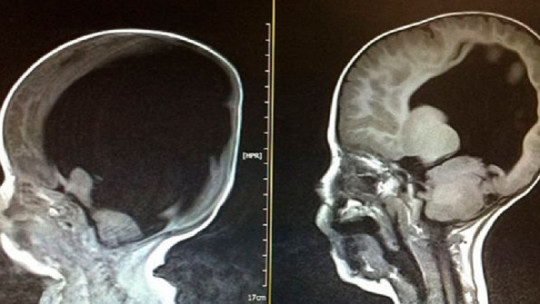
Imagine being told, while still pregnant, that the child growing inside you would likely die within days of being born, and that if he somehow survived, he would never speak, see, or recognize your face. Now imagine watching that same child, years later, sit up on his own, laugh at cartoons, count to ten, and start school. This isn’t a hypothetical thought experiment; it’s the real, documented story of Noah Wall, a boy born with a brain so severely compressed by fluid that doctors described him, almost unbelievably, as having 2 percent brain function. His case has become one of the most striking real-world illustrations of the brain’s capacity to change that modern neuroscience has ever recorded.
For parents facing a devastating prenatal diagnosis, stories like Noah’s carry enormous emotional weight, sometimes offering fragile hope, other times feeling impossibly distant from their own family’s reality. It’s important to hold this story with care: Noah’s outcome doesn’t mean every child with severe hydrocephalus or spina bifida will experience the same trajectory, and treating his case as a universal promise risks doing real harm to families navigating their own uncertain diagnoses. At the same time, his story offers genuinely important scientific insight into neuroplasticity, the brain’s ability to reorganize and adapt, particularly during the critical early years of childhood development. Understanding what actually happened to Noah, medically and scientifically, offers something more useful than blind hope: a grounded, evidence-informed picture of what the developing brain is capable of under extraordinary circumstances.
So how does a brain compressed to a small fraction of its expected size manage to grow and function at all?
This article examines the medical facts behind Noah Wall’s case, the neuroscience of brain plasticity it illustrates, and what his story does and doesn’t tell us about human brain development.

How many of these have you been "meaning to read" for months?
- 1
 THE LOST SKILLS ACADEMYThe Lost Skills of IndependenceBe Ready for Anything Life Throws at You - Hardcover-SpiralListen Free On Audible
 - 2
 A Navy SEALs Bug-In GuideA Navy SEAL's Bug-In GuideHow to Turn Your House into the Safest Place on EarthListen Free On Audible
 - 3
 Clarkson PotterHomemaking with BabsTips and Tricks for Making a House a HomeListen Free On Audible
Who Is Noah Wall and What Happened to Him?
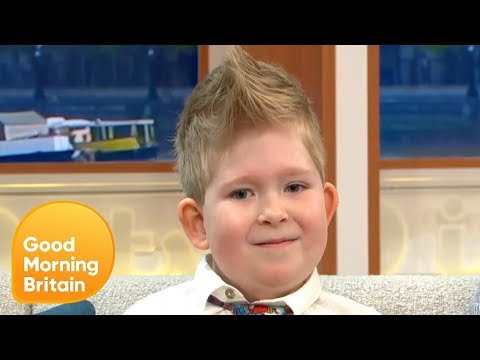
Noah Wall is a boy from Cumbria, England, born with severe hydrocephalus and spina bifida, conditions that left him with only a small fraction of typical brain tissue at birth. His case gained international attention after being documented in medical evaluations and later featured in television documentaries examining his extraordinary development.
During his mother Shelly Wall’s pregnancy, doctors identified spina bifida, a birth defect in which the spine doesn’t close completely, along with severe hydrocephalus, a buildup of cerebrospinal fluid within the skull. This fluid buildup placed such significant pressure on his developing brain that doctors recommended termination of the pregnancy multiple times, citing an extremely poor prognosis and warning that survival itself was unlikely. Shelly and her husband Rob chose to continue the pregnancy despite these repeated warnings.
After birth, imaging confirmed doctors’ worst fears in some respects: Noah’s skull contained far more fluid than brain tissue, with his functional brain mass measured at roughly 2 percent of what would typically be expected. Medical teams immediately performed surgery to repair the spinal defect and inserted a shunt, a small device designed to drain excess cerebrospinal fluid away from the brain and relieve the damaging pressure it had been under throughout gestation.
What happened next is what transformed Noah’s case from a tragic prognosis into a subject of genuine scientific interest, as his condition began to shift in ways doctors had not anticipated.

What Did Doctors Initially Predict for Noah’s Development?
Medical professionals initially gave Noah’s parents an exceptionally grim prognosis, warning that survival was unlikely and that severe, permanent disability was almost certain if he did survive. This prediction was based on the extent of brain compression visible on prenatal and early postnatal imaging.
Doctors told the family that if Noah survived birth, he would likely be unable to see, hear, speak, or eat independently, and that any surviving brain tissue would be insufficient to support meaningful cognitive or physical development. This kind of prognosis, while devastating to hear, reflected genuine medical uncertainty rather than negligence; severe hydrocephalus of this magnitude is exceptionally rare, and predictions in such cases are necessarily based on limited comparable data.
Neurosurgeon Dr. Claire Nicholson, who treated Noah at the Royal Victoria Infirmary in Newcastle, later explained that the fluid buildup had been actively compressing and thinning his brain tissue throughout development, which is why initial scans showed so little apparent brain mass. This compression, rather than a failure of the brain to form in the first place, turned out to be a crucial distinction for understanding what happened afterward.
A practical takeaway for families facing a similarly severe prenatal diagnosis: seeking a second specialist opinion and asking detailed questions about whether a diagnosis reflects tissue compression versus tissue absence can provide meaningfully different information about long-term possibilities, even though outcomes remain genuinely uncertain in either case.
How Did Noah’s Brain Actually Change Over Time?
Follow-up imaging performed as Noah grew revealed a striking and medically significant change: his measurable brain volume increased dramatically, from an estimated 2 percent shortly after birth to approximately 80 percent by around three to four years of age. This progression was documented through repeated MRI scans conducted by his medical team.
Dr. Greg Scott, a neuroscience researcher at Imperial College London who studied Noah’s case, proposed that the shunt placed shortly after birth played a central role in this change by relieving the fluid pressure that had been compressing his brain tissue throughout gestation and early infancy. Once that pressure was reduced, existing brain tissue that had been compacted and thinned appeared to have room to expand and develop more normally, rather than the brain generating substantial new tissue from virtually nothing.
This distinction matters enormously for accurately understanding what happened. Noah’s case is often sensationalized in media coverage as a brain “growing back” from near-total absence, but the more medically grounded interpretation, supported by his treating physicians, is that compressed, less visible brain tissue gradually decompressed and became more functionally apparent on imaging as pressure was relieved and normal growth processes resumed. Alongside this structural change, Noah also received intensive, consistent developmental stimulation from his parents, which many of his clinicians believe meaningfully supported this progression.
A grounded takeaway from this specific mechanism: relieving physical pressure on the developing brain, combined with early, consistent intervention, appears to create conditions that allow existing neural tissue significantly greater opportunity to develop, even after a genuinely alarming initial presentation.
What Is Neuroplasticity and How Does It Relate to Noah’s Case?
Neuroplasticity refers to the brain’s capacity to reorganize itself by forming new neural connections and adapting existing ones throughout life, a capacity that is especially pronounced during early childhood. Noah’s case is frequently cited as a dramatic illustration of just how powerful this capacity can be under the right conditions.
Neuroscientist Michael Merzenich, whose extensive research on brain plasticity has significantly shaped modern understanding of this concept, has long argued that the developing brain retains a remarkable degree of flexibility, particularly in early childhood, allowing surviving or previously compressed neural tissue to adapt and take on functions that might otherwise seem impossible given the extent of initial damage. This concept of a heightened window of plasticity during early development helps explain why interventions and stimulation introduced early in a child’s life, as occurred with Noah, can sometimes produce outcomes that significantly exceed initial medical expectations.
It’s important to note that neuroplasticity, while genuinely remarkable, is not limitless or guaranteed; the degree of possible recovery or development depends heavily on the specific underlying cause, the extent and location of tissue involvement, and numerous individual factors that current science cannot fully predict in advance for any given child. Noah’s case represents a documented, real example of significant plasticity, not proof that similar outcomes will occur in every case involving severe early brain compression or injury.
A practical, appropriately cautious takeaway: while neuroplasticity offers genuine grounds for hope in cases of early brain injury or compression, families should approach individual prognoses with realistic expectations set by their own child’s specific medical team, rather than assuming Noah’s specific trajectory as a predictable outcome.
How Did Early Intervention and Brain Training Support Noah’s Development?
Beyond the medical intervention of the shunt itself, Noah’s parents pursued an intensive, sustained program of developmental stimulation and structured physical activity, which his medical team credits as a meaningful contributor to his progress. This combination of medical treatment and consistent behavioral intervention illustrates an important principle in early childhood development.
Rob and Shelly Wall engaged Noah in consistent, structured activities designed to stimulate physical and cognitive development, including specialized programs focused on movement, sensory engagement, and communication. Later reporting on Noah’s continued progress described the family traveling for specialized therapeutic programs specifically aimed at building foundational motor skills, such as independent sitting and eventually more complex physical activities, reflecting a sustained, long-term commitment to intervention rather than a single treatment event.
This pattern aligns with broader developmental psychology research showing that early intervention during critical developmental windows can meaningfully influence outcomes for children with a wide range of neurological differences and disabilities, even though the degree of impact varies significantly by individual circumstance. The consistent theme across pediatric neurodevelopmental research is that structured, repeated stimulation appears to support the brain’s capacity to form and strengthen new neural pathways, particularly during the early years when plasticity is at its highest.
A practical takeaway for families supporting a child with significant developmental challenges: consistent, structured engagement, guided by qualified pediatric specialists rather than improvised alone, appears to offer genuine developmental value, even in cases involving significant initial impairment.
What Does Noah’s Case Reveal About the Brainstem’s Role in Survival?
Noah’s ability to survive and perform basic life functions from birth, despite the severe compression of his higher brain structures, highlights the critical, distinct role of the brainstem in sustaining fundamental physiological processes. This distinction between brainstem function and higher cortical function is central to understanding his case accurately.
Dr. Scott’s analysis of Noah’s early scans indicated that his brainstem, the structure responsible for regulating essential functions like breathing, heart rate, and basic reflexes, was significantly less damaged by the fluid compression than the structures above it. This relative preservation explains how Noah was able to breathe, eat, and maintain basic bodily functions immediately after birth, even while imaging showed such dramatic compression of the brain tissue responsible for more complex cognitive processing.
This distinction matters for broader public understanding of brain injury and function generally; the brain is not a single, uniform structure but a collection of distinct regions with different, specialized responsibilities, and damage or compression affecting one region doesn’t necessarily eliminate function in others. Noah’s case offers a genuinely instructive real-world example of this principle, since his survival depended heavily on the relative preservation of brainstem function even amid extraordinary compression elsewhere in the brain.
Recognizing this distinction can help correct oversimplified media narratives suggesting Noah was born with “no brain at all,” when the more medically accurate picture involves severe compression and thinning of specific brain structures alongside relative preservation of the essential brainstem.

How Has the Medical Community Responded to Noah’s Case?
Noah’s case has generated genuine scientific interest, prompting ongoing monitoring, academic presentations, and ongoing follow-up by specialists studying pediatric brain development and plasticity. This level of sustained clinical attention distinguishes his case from many anecdotal medical stories that circulate in media without rigorous documentation.
Dr. Chris Chandler, a pediatric neurosurgeon who has followed Noah’s ongoing development, has continued monitoring his shunt function and overall neurological progress well beyond the initial dramatic changes documented in early childhood. Dr. Scott invited Noah’s mother to speak about his case directly to neuroscience students and researchers, reflecting genuine academic interest in what his development might reveal about the outer boundaries of brain plasticity in young children specifically.
It’s worth noting that Noah’s case remains a single, extensively documented example rather than a large-scale clinical study, meaning firm scientific conclusions about broader treatment implications require caution. Nonetheless, his case has contributed meaningfully to ongoing academic conversations about the relationship between physical brain compression, shunt intervention timing, and the developmental window during which early plasticity appears most pronounced.
A practical takeaway: individual medical case studies like Noah’s, while genuinely valuable for generating research questions and hypotheses, differ importantly from larger controlled studies, and families should discuss how, if at all, findings from cases like his might reasonably apply to their own child’s specific situation.
What Are the Limitations and Cautions in Interpreting Noah’s Story?
While Noah’s case is genuinely remarkable and medically documented, it’s important to interpret it with appropriate scientific caution rather than treating it as a universal template for what’s possible after severe early brain compression. Several important limitations deserve careful consideration.
- Individual variability in brain injury and compression outcomes remains substantial, meaning Noah’s specific trajectory cannot be reliably generalized to other children.
- Single-case documentation, however thorough, differs scientifically from large-scale, controlled research capable of establishing broader treatment guidelines.
- Ongoing physical challenges remain part of Noah’s life, including mobility limitations related to his spina bifida, illustrating that his story involves genuine complexity rather than a simple, complete “cure.”
- Media coverage has occasionally oversimplified the underlying medical mechanism, sometimes describing his brain as regrowing from nothing rather than the more accurate picture of decompression and continued development of existing tissue.
Approaching Noah’s story with this level of nuance doesn’t diminish how extraordinary his progress genuinely is; it simply ensures the story is understood accurately, honoring both the real scientific significance of his case and the ongoing, complex reality of his continued medical needs.
A practical takeaway for anyone sharing or discussing this story, particularly with a family facing a similar diagnosis: emphasizing the documented medical facts, alongside honest acknowledgment of uncertainty and individual variability, offers more genuine support than presenting the story as a guaranteed path to a similar outcome.

What Broader Lessons Does Noah’s Case Offer About Brain Development?
Noah’s case offers several genuinely valuable, evidence-grounded lessons about early brain development, even as it remains an extraordinary outlier rather than a typical case. These broader lessons extend meaningfully beyond his specific individual story.
Neuroscientist Michael Merzenich’s broader body of research on plasticity emphasizes that the developing brain’s capacity for reorganization is most pronounced during specific early developmental windows, underscoring why early identification and intervention for a wide range of pediatric neurological conditions carries genuine, evidence-supported value. Noah’s case also illustrates the importance of distinguishing between different types of brain compromise, since compression, which may be at least partially reversible with appropriate intervention, differs fundamentally from tissue loss or absence, which does not respond to intervention in the same way.
Additionally, Noah’s story highlights the genuine, documented value of sustained, structured early intervention alongside necessary medical treatment, reinforcing a broader principle well established in pediatric developmental research: medical intervention and consistent behavioral or developmental support often work most effectively in combination rather than as substitutes for one another.
A grounded, practical takeaway: for families and clinicians navigating any severe early neurological diagnosis, Noah’s case reinforces the value of pursuing thorough, ongoing specialist evaluation, appropriate medical intervention when available, and sustained developmental support, while maintaining honest, individualized expectations rather than assuming any single case predicts another child’s outcome.
FAQs about Noah Wall’s Brain Development
Who is Noah Wall and why is his case significant?
Noah Wall is a boy from Cumbria, England, born with severe hydrocephalus and spina bifida, conditions that left him with an estimated 2 percent of typical brain tissue at birth according to early medical imaging. His case became scientifically significant because follow-up imaging documented his measurable brain volume increasing to approximately 80 percent by early childhood, a change medical specialists attribute primarily to decompression following shunt placement combined with the brain’s natural developmental plasticity. His story has been featured in medical documentaries and discussed by researchers studying early childhood brain development. It remains one of the most extensively documented individual cases of significant neurological change following severe early brain compression.
Did Noah Wall’s brain actually grow back from nothing?
The more medically accurate explanation is that Noah’s brain tissue was severely compressed and thinned by fluid pressure before birth, rather than largely absent altogether. Once a shunt was placed to relieve this pressure, the existing, compacted brain tissue appeared to have room to expand and develop more normally, becoming more visible and measurable on subsequent imaging. This distinction matters because it reflects decompression and continued development of existing tissue, rather than the brain generating substantial new tissue from virtually nothing. Media coverage has sometimes oversimplified this mechanism, but his treating physicians have described the more nuanced, medically grounded explanation.
What is hydrocephalus and how did it affect Noah?
Hydrocephalus is a condition involving the buildup of excess cerebrospinal fluid within the skull, which can place significant pressure on the developing brain. In Noah’s case, this fluid buildup during pregnancy compressed his brain tissue severely, resulting in dramatically reduced measurable brain mass on early imaging. Treatment typically involves surgically placing a shunt, a device that helps drain excess fluid and relieve pressure on the brain, which is exactly what Noah’s medical team did shortly after his birth. This intervention is believed to have played a central role in allowing his brain tissue subsequent room to develop.
What role did neuroplasticity play in Noah’s development?
Neuroplasticity, the brain’s capacity to reorganize and adapt throughout life, is considered central to understanding Noah’s developmental progress, particularly given how pronounced this capacity is during early childhood. Researchers studying his case have pointed to the combination of reduced physical pressure on his brain tissue, following shunt placement, and this heightened early developmental plasticity as key factors supporting his progress beyond initial medical expectations. However, neuroplasticity is not unlimited or guaranteed to produce similar outcomes in every case, and the extent of possible recovery depends heavily on the specific underlying cause and individual circumstances of each child.
Can other children with severe hydrocephalus expect a similar outcome to Noah’s?
Not necessarily, and it’s important to approach Noah’s case as a single, extraordinary documented example rather than a predictable outcome for other children with similar diagnoses. Individual variability in brain compression severity, underlying cause, timing of intervention, and numerous other factors means outcomes can differ substantially between children, even with comparable initial diagnoses. Families facing a similar diagnosis should work closely with their own child’s specialized medical team to understand realistic possibilities specific to their situation, rather than assuming Noah’s particular trajectory will be replicated. His case is scientifically valuable for generating research questions, but it doesn’t establish a guaranteed template for treatment outcomes.
What ongoing challenges does Noah face despite his brain development progress?
Despite the remarkable progress in his measurable brain volume, Noah continues to live with ongoing challenges related to his spina bifida, including mobility limitations that have required the use of a wheelchair. His medical team continues to monitor his shunt function and overall neurological development well beyond his early childhood years, reflecting the genuinely complex, ongoing nature of his medical needs. This nuance is important for accurately understanding his story, since his progress, while extraordinary, hasn’t eliminated every medical or physical challenge associated with his original diagnosis. His case illustrates both genuine resilience and the continued complexity that often accompanies significant early neurological conditions.
Bibliography
- Wellcome Collection. (2016). The Boy With No Brain. Documentary archival record.
- CBN News. (2019). Boy With No Brain Defies Expectations.
- New York Post. (2019). Boy Born Without Brain Defies Odds to Live.
- Merzenich, M. M. (2013). Soft-Wired: How the New Science of Brain Plasticity Can Change Your Life. Parnassus Publishing.
- National Institute of Neurological Disorders and Stroke. Hydrocephalus Fact Sheet. National Institutes of Health.
- Spina Bifida Association. Understanding Spina Bifida: Causes and Care.
Use this citation format to reference the article clearly and help readers find the original source.
PsychologyFor. (2026). The Strange Case of Noah, the Brainless Boy. PsychologyFor. https://psychologyfor.com/the-strange-case-of-noah-the-brainless-boy/