

See more of our articles in your search results.
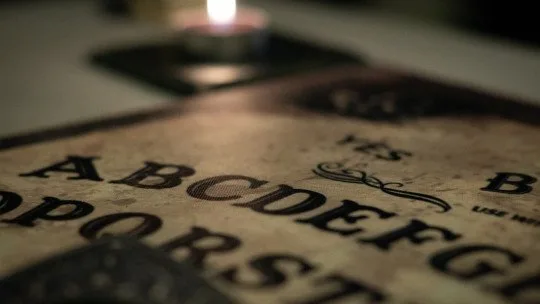
You sit alone at 2 a.m. scrolling through forum threads about a novel supposedly dictated by a dead man’s spirit through a wooden pointer sliding across printed letters, and something about the claim refuses to let you close the tab. That pull toward the impossible is universal. Since the late nineteenth century, ordinary people have claimed to receive entire manuscripts, epic poems, and theological treatises from beyond the grave using nothing more than a talking board and a willing hand. It is not merely superstition. Rather, it exposes a profound, recurring human need to explain creative inspiration as something arriving from outside the self.
The phenomenon of Ouija-derived literature sits at a fascinating intersection of psychology, literary history, and spiritualist culture. During the Ouija board’s explosive popularity between roughly 1890 and 1930, several mediums produced full-length novels, sprawling religious cosmologies, and philosophical dialogues that they insisted were not their own invention, but the communications of discarnate authors speaking letter by letter through the planchette. Skeptics point to the well-documented psychological phenomenon called the ideomotor effect, in which unconscious muscle movements guide the pointer without any supernatural intervention whatsoever. Yet these books remain genuinely compelling literary artifacts regardless of their true authorship, revealing as much about the human unconscious as they claim to reveal about the afterlife. Understanding this strange literary tradition offers a unique window into dissociative creativity and automatic writing.
How did an ordinary parlor game produce entire published novels credited to the dead?
This comprehensive guide explores the world of books written from the Ouija, examining the most famous examples, the psychological mechanisms behind automatic writing, and what these strange literary artifacts reveal about the creative unconscious.
8 Famous Books Written from the Ouija
Verified Top Picks- 1
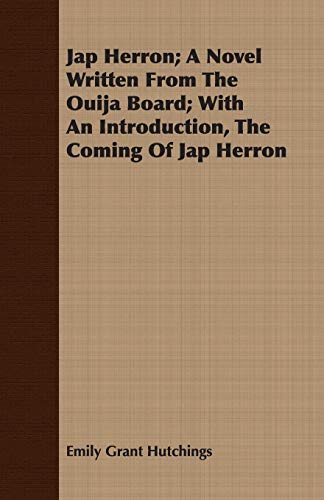 Emily Grant Hutchings Jap Herron: A Novel Written from the Ouija Board A controversial 1917 novel claimed to be dictated letter-by-letter by the spirit of Mark TwainCHECK TODAY'S PRICE
 - 2
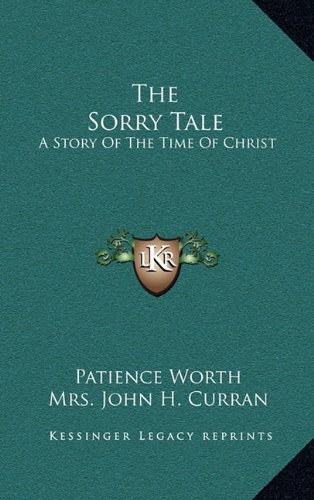 Patience Worth (Pearl Curran) The Sorry Tale: A Story of the Time of Christ A critically acclaimed 600-page historical novel dictated in archaic prose through a talking boardCHECK TODAY'S PRICE
 - 3
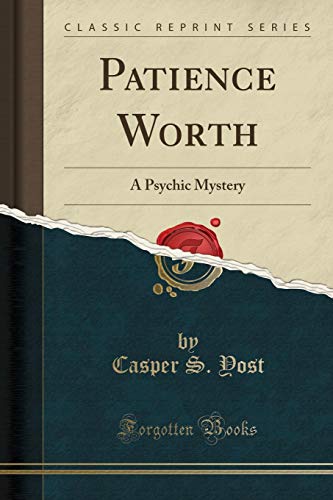 Casper S. Yost Patience Worth: A Psychic Mystery The definitive journalistic investigation cataloging Pearl Curran's documented psychical outputCHECK TODAY'S PRICE
 - 4
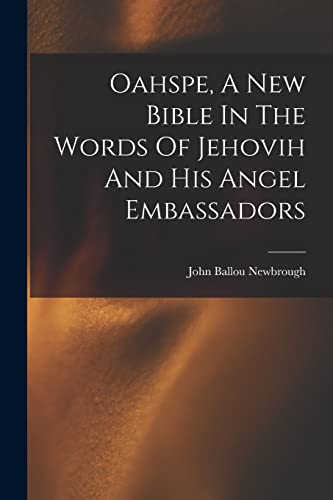 John Ballou Newbrough Oahspe: A New Bible A sprawling 900-page channeled cosmology and alternative history that inspired the Faithism movementCHECK TODAY'S PRICE
 - 5
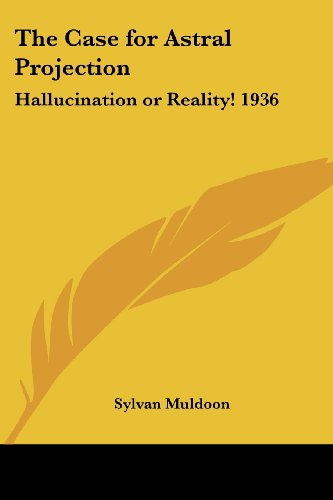 Sylvan Muldoon The Case for Astral Projection Systematic case material recording out-of-body episodes through automatic writing and astral cord theoryCHECK TODAY'S PRICE
 - 6
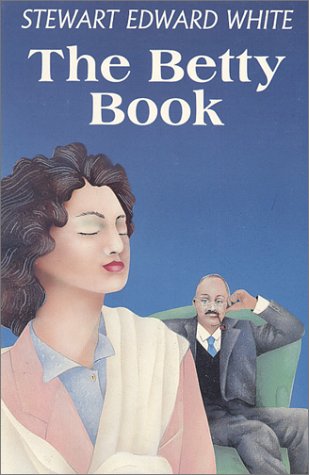 Stewart Edward White The Betty Book: Other-Consciousness A novelist's meticulous record of his wife's channeled communications, evolution, and spiritual theoryCHECK TODAY'S PRICE
 - 7
 Darby and Joan (Elsa Barker) Our Unseen Guest Documenting post-WWI Ouija board sessions exploring wartime bereavement, grief, and spiritual philosophyCHECK TODAY'S PRICE
 - 8
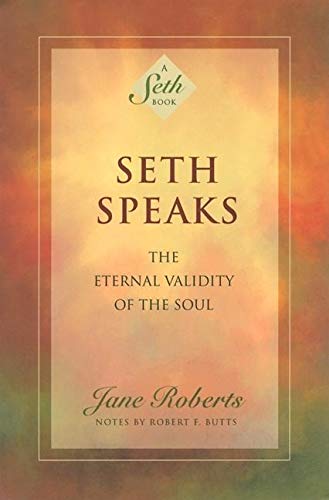 Jane Roberts Seth Speaks: The Eternal Validity of the Soul The foundational text of modern trance channeling, originating from 1963 Ouija board sessionsCHECK TODAY'S PRICE
What Exactly Is a Book “Written from the Ouija”?
A book “written from the Ouija” refers to a published text that its creator claims was dictated, letter by letter or word by word, through a talking board rather than composed through ordinary conscious authorship. The medium typically rests their fingers on a planchette while the pointer spells out messages attributed to a spirit communicator or discarnate personality.
These works emerged predominantly during the height of the Spiritualist movement, when talking boards transitioned from parlor novelty items into serious tools for supposed communication with the deceased. Unlike a simple séance transcript, Ouija-derived books were often lengthy, structurally complex literary works: full novels with plot and characterization, epic historical narratives, or extended philosophical and theological systems. The authors credited on the title page frequently listed both the human medium and the claimed spirit source, creating an unusual dual-authorship convention that reflects the era’s genuine belief in mediumistic communication.
Literary scholars studying this genre note that the psychological process behind these works closely resembles what modern researchers call dissociative or automatic writing, a state in which content emerges without the conscious sense of deliberate authorship. Whether one interprets the source as genuinely paranormal or as an expression of the medium’s own suppressed creative unconscious, the resulting texts remain a remarkable case study in creative psychology.
- Ouija-derived books are credited to both a human medium and a claimed discarnate spirit communicator.
- These works flourished during the peak of the Spiritualist movement between roughly 1890 and 1930.
- Many examples are lengthy, structurally sophisticated novels or theological systems rather than brief séance transcripts.
- The underlying psychological process closely resembles documented forms of dissociative automatic writing.
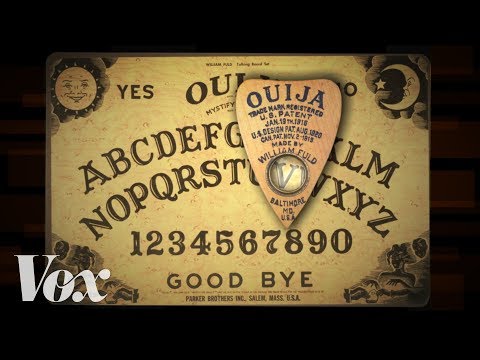
The Most Famous Books Claimed to Be Written from the Ouija Board
The following curated selection presents the most historically significant and widely documented books that their creators claimed were dictated through Ouija board communication, spanning novels, religious cosmologies, and philosophical spirit dialogues.
1. Jap Herron: A Novel Written from the Ouija Board — Emily Grant Hutchings
Jap Herron, published in 1917, is perhaps the most audacious book in this genre: medium Emily Grant Hutchings claimed the novel was dictated directly by the spirit of Mark Twain, seven years after his death, through a Ouija board she operated with a friend. The novel tells a folksy, sentimental tale of a Missouri newspaperman, echoing Twain’s regional style and small-town settings.
The claim provoked such outrage from Twain’s estate and publisher that they threatened legal action over the fraudulent attribution, and the book was quickly withdrawn from circulation. It remains the most notorious example of disputed posthumous literary channeling.
- Claimed direct authorship by the deceased Mark Twain through Ouija board dictation.
- Provoked a formal legal threat from Twain’s estate over fraudulent literary attribution.
- Remains a landmark case study in disputed posthumous spirit-channeled authorship.
2. The Sorry Tale: A Story of the Time of Christ — Patience Worth (Pearl Curran)
The Sorry Tale, a six-hundred-page novel set during the time of Christ, was dictated word by word through a Ouija board by Pearl Curran, a St. Louis homemaker with limited formal education, beginning in 1913. Curran attributed the entire text to a seventeenth-century spirit calling herself Patience Worth, who reportedly composed in archaic English at astonishing speed.
Literary critics of the time, including reviewers at major publications, praised the novel’s prose as genuinely accomplished, deepening the mystery of how an unschooled medium produced such sophisticated historical fiction. It remains one of the most studied examples of documented automatic writing productivity.
- Dictated letter by letter through a Ouija board beginning in 1913.
- Attributed to a seventeenth-century spirit persona named Patience Worth.
- Received genuine critical acclaim for its prose despite Curran’s limited formal education.
3. Patience Worth: A Psychic Mystery — Casper S. Yost
Patience Worth: A Psychic Mystery, written by journalist Casper S. Yost, serves as the definitive investigative account of Pearl Curran’s Ouija-derived literary output. Yost, who witnessed many of Curran’s sessions firsthand, documents the phenomenon with genuine journalistic skepticism while cataloging the sheer volume and stylistic consistency of the Patience Worth material.
This book functions less as literature itself and more as essential historical documentation, providing context that transforms Curran’s novels from isolated curiosities into a coherent, decades-long documented psychical research case.
- Provides firsthand journalistic documentation of Pearl Curran’s Ouija board sessions.
- Catalogs the stylistic consistency across years of the Patience Worth literary output.
- Serves as the primary historical source for understanding this documented psychical case.
4. Oahspe: A New Bible in the Words of Jehovih and His Angel Ambassadors — John Ballou Newbrough
Oahspe, first published in 1882, is a sprawling nine-hundred-page cosmological text that dentist and spiritualist John Ballou Newbrough claimed was produced through automatic writing sessions using a specially built mechanical typewriter device, closely related to Ouija-style communication. The text presents an entirely original theology, cosmology, and revised human history spanning tens of thousands of years.
Oahspe eventually inspired an actual religious movement called Faithism, with small communities forming around its teachings well into the twentieth century. It remains the most theologically ambitious work in the entire spirit-channeled literature tradition.
- Presents an entirely original cosmology and revised human history spanning millennia.
- Produced through automatic writing using a specialized mechanical dictation device.
- Inspired an actual religious movement called Faithism that persisted for decades.
5. The Case for Astral Projection: Hallucination or Reality! — Sylvan Muldoon
The Case for Astral Projection, published in 1936 by Sylvan Muldoon, documents his lifelong experiences of spontaneous out-of-body episodes alongside automatic writing sessions he used to record and interpret these events. Muldoon presents his projections not as random hallucinations, but as evidence of a genuine “astral body” connected to physical consciousness through a subtle energetic cord.
Collaborating with paranormal researcher Hereward Carrington, Muldoon organized decades of personal case material into one of the earliest systematic frameworks for understanding out-of-body experience phenomena. It remains a foundational text bridging automatic writing practice with the broader psychical research tradition.
- Documents decades of personal out-of-body episodes recorded through automatic writing techniques.
- Proposes the “astral cord” model linking projected consciousness to physical bodily awareness.
- Established one of the earliest systematic frameworks within psychical research literature.
6. The Betty Book: Excursions into the World of Other-Consciousness — Stewart Edward White
The Betty Book, published in 1937, records novelist Stewart Edward White’s documentation of his wife Betty’s channeled communications, which began through automatic writing techniques closely related to Ouija board practice before evolving into direct trance speech. The book presents a detailed philosophical system describing consciousness, the afterlife, and spiritual development.
White, an established professional author before these sessions began, brought genuine literary craft to organizing decades of channeled material into a coherent philosophical framework. It remains an influential text within the broader channeled literature tradition.
- Documents decades of channeled communications beginning through automatic writing techniques.
- Presents a detailed philosophical system addressing consciousness and spiritual development.
- Organized by an established professional novelist bringing genuine literary structure.
7. Our Unseen Guest — Darby and Joan (Elsa Barker)
Our Unseen Guest, published in the early 1920s under the pseudonyms “Darby and Joan,” recounts months of Ouija board sessions during which a couple claimed to receive an entire philosophical framework from an entity identifying itself as Stephen, an American soldier killed during the First World War. The book documents grief, wartime loss, and the couple’s evolving belief system session by session.
Contemporary with Stewart Edward White’s Betty material, this work reflects the specific historical moment when mass wartime bereavement fueled widespread interest in spiritualist communication and grief processing.
- Documents Ouija sessions with an entity claiming to be a World War I casualty.
- Reflects the historical link between mass wartime bereavement and spiritualist practice.
- Presents an evolving philosophical framework developed across months of recorded sessions.
8. Seth Speaks: The Eternal Validity of the Soul — Jane Roberts
Seth Speaks, published in 1972, originated when Jane Roberts and her husband Robert Butts began using a Ouija board in 1963 as part of extrasensory perception research, eventually receiving what they described as coherent messages from an entity identifying himself as Seth. Roberts soon abandoned the board entirely, transitioning to direct trance dictation for this and subsequent volumes.
The resulting Seth Material became foundational to the modern New Age movement, influencing decades of channeled literature that followed. It represents the clearest documented evolution from Ouija board origin to trance channeling practice.
- Originated through Ouija board sessions conducted as part of ESP research in 1963.
- Transitioned from board-based communication to direct trance dictation over time.
- Became foundational to the modern New Age movement and subsequent channeled literature.
The Psychology Behind Automatic Writing and the Ideomotor Effect
The dominant scientific explanation for Ouija-derived writing centers on the ideomotor effect, a well-documented phenomenon in which small, unconscious muscle movements occur in response to expectation or suggestion, entirely without deliberate intent. Participants genuinely feel that the board is moving independently, even though their own hands are subtly guiding the planchette.
Psychological research on automatic writing suggests that the technique can access material stored in implicit or procedural memory that ordinarily remains outside conscious awareness during deliberate composition. This may explain why mediums like Pearl Curran, despite limited formal education, produced texts with vocabulary and stylistic sophistication that seemed to exceed their conscious verbal repertoire. Not necessarily paranormal. Simply less conscious than everyday speech.
Dissociation researchers note that automatic writing shares structural similarities with other dissociative phenomena, including the sense of authorial distance that some people experience during highly absorbed creative states, sometimes called flow. The felt experience of “not writing it myself” may reflect a genuine shift in the subjective sense of authorship rather than evidence of external spiritual intervention.
- The ideomotor effect explains board movement through unconscious muscle activity rather than supernatural intervention.
- Automatic writing may access implicit memory content outside ordinary conscious verbal awareness.
- Dissociative states during automatic writing resemble flow states studied in creative psychology research.
- The subjective sense of “not writing it myself” reflects altered authorship perception, not necessarily external agency.
How These Books Reflect Their Historical and Cultural Moment
Most Ouija-derived literature emerged during a specific historical window shaped by mass bereavement, religious upheaval, and rapid social change. Understanding this context explains why so many talented, otherwise unremarkable individuals suddenly produced substantial literary and theological works through claimed spirit communication.
| Historical Factor | Connection to Ouija Literature |
|---|---|
| World War I mass casualties | Fueled widespread grief and demand for communication with deceased soldiers, as seen in Our Unseen Guest |
| Decline of traditional religious authority | Created openness to alternative cosmologies like Oahspe and new spiritual frameworks |
| Rise of Spiritualist movement | Normalized séances and mediumship as legitimate topics for serious publication |
| Limited outlets for women’s creative expression | Provided socially acceptable channels for literary ambition, as seen with Pearl Curran |
As illustrated in the table above, the timing of these books is rarely coincidental. Women in particular, often excluded from formal literary or academic institutions, found in mediumship a socially sanctioned pathway to produce and publish substantial creative work, since the credited authorship belonged nominally to a discarnate spirit rather than themselves.
Evaluating the Literary Merit of Ouija-Derived Texts
Setting aside questions of paranormal authenticity, several Ouija-derived books hold genuine, independently assessed literary value. Evaluating these texts purely as literature, separate from their claimed supernatural origin, reveals surprising craft and stylistic consistency.
Patience Worth’s material received praise from literary critics of its era for prose quality that many considered superior to typical popular fiction of the period. Independent of whether readers accept the spirit-communication framing, the sustained archaic dialect, narrative pacing, and thematic coherence across hundreds of pages represent a genuine creative achievement. Oscar Wilde’s channeled epigrams, similarly, demonstrate remarkable stylistic mimicry even if one attributes the wit entirely to Hester Travers Smith’s own unconscious creative capacity.
- Assess the prose quality independently of authorship claims, focusing on narrative structure and consistency.
- Compare stylistic elements to the claimed spirit’s documented historical writing for authenticity evaluation.
- Consider the medium’s documented educational and cultural background when evaluating vocabulary sophistication.
- Read multiple works from the same medium to assess stylistic consistency over time.
How to Approach These Books as a Modern Reader
Reading Ouija-derived literature today requires a different interpretive lens than the one its original audience brought to the page. Approaching these texts with genuine curiosity rather than either credulous acceptance or dismissive mockery reveals far more about human creativity and belief formation than a simple debunking exercise would provide.
Consider reading these works alongside contemporaneous accounts of their production, such as Casper Yost’s documentation of Pearl Curran’s sessions, to understand the social and psychological conditions that shaped their creation. Pay attention to what each medium’s biography suggests about suppressed creative ambition, educational background, and the era’s constraints on personal expression, particularly for women. That context transforms a supernatural curiosity into a genuinely rich case study in psychological history and creative expression. Some scholars go further, arguing that dismissing these works outright forecloses genuinely interesting questions about where creative material originates in any writer’s mind, spirit-derived or otherwise.
It also helps to resist binary thinking about authenticity. Many researchers occupy a middle position: acknowledging that no verifiable evidence supports literal spirit communication, while still recognizing that something psychologically remarkable occurred in these mediums’ unconscious minds. Holding both facts simultaneously, without rushing to a tidy conclusion, tends to produce a more honest and intellectually satisfying reading experience. This is not a fringe position; it reflects a genuinely open question within cognitive science about the nature of authorial intention itself.
- Read primary Ouija-derived texts alongside contemporaneous documentation like Yost’s investigative account.
- Consider each medium’s biography and social constraints when evaluating suppressed creative ambition.
- Resist binary thinking that forces a choice between literal belief and dismissive skepticism.
- Approach these works as genuine case studies in psychological history rather than settled supernatural fact.
When Fascination with the Paranormal Becomes a Cause for Concern
Curiosity about Ouija boards, automatic writing, and channeled literature is a normal expression of human interest in mystery, creativity, and mortality. However, when engagement with these practices begins to intensify pre-existing psychological vulnerability, this shift deserves careful attention rather than dismissive judgment.
Individuals experiencing dissociative symptoms, psychotic-spectrum conditions, or severe anxiety may find that automatic writing practices exacerbate rather than soothe underlying distress, since these techniques deliberately encourage altered states of consciousness and reduced executive control. If engaging with a Ouija board or similar practice triggers persistent derealization, intrusive thoughts, or an inability to distinguish internally generated content from external reality for more than a brief session, this warrants consultation with a licensed mental health professional. Psychiatric researchers studying dissociation, including work informed by trauma specialists like Bessel van der Kolk, note that dissociative experiences deserve clinical attention when they interfere with daily functioning.
Most critically, if you or someone you know is experiencing acute psychological crisis, severe dissociation accompanied by thoughts of self-harm, or an inability to distinguish reality from altered states in a way that threatens safety, do not rely on further exploration of these practices. In the United States and Canada, immediately call or text 988 to reach the Suicide & Crisis Lifeline, available twenty-four hours a day, seven days a week, free and completely confidential. Seeking professional support reflects genuine self-awareness, not a failure of curiosity or open-mindedness.
- Automatic writing practices can exacerbate dissociative or psychotic-spectrum symptoms in vulnerable individuals.
- Persistent derealization or intrusive thoughts following these practices warrant evaluation by a licensed mental health professional.
- Acute psychological crisis demands immediate contact with dedicated crisis support services.
FAQs about Books Written from the Ouija
Is Jap Herron actually written in Mark Twain’s authentic literary style?
Literary scholars who have examined Jap Herron generally conclude that while the novel echoes some superficial elements of Twain’s regional settings and folksy tone, it lacks the sharp satirical edge, precise comic timing, and structural sophistication of his authenticated work. Twain’s own publisher and family strongly rejected the attribution at the time, threatening legal action against Emily Grant Hutchings. Most literary historians today view the novel as a sincere but ultimately unconvincing attempt at stylistic imitation rather than genuine posthumous authorship by Twain himself.
What is the ideomotor effect, and how does it explain Ouija board movement?
The ideomotor effect describes small, unconscious muscle movements that occur in response to expectation, suggestion, or anticipated outcomes, without any deliberate intention on the part of the person moving. When someone rests their fingers lightly on a Ouija board planchette while genuinely believing the board might move independently, subtle unconscious hand movements can guide the pointer toward specific letters, creating the subjective experience of external control. This well-documented psychological phenomenon provides the leading scientific explanation for how Ouija boards produce seemingly coherent messages without requiring any paranormal source.
Why did so many Ouija-derived books emerge specifically between 1890 and 1930?
This period coincided with the peak popularity of the Spiritualist movement, widespread grief following the enormous casualties of World War I, and significant social changes that created cultural openness to alternative spiritual frameworks. Mass bereavement drove many people to seek communication with deceased loved ones through mediums and talking boards. Additionally, mediumship offered some individuals, particularly women with limited access to formal literary or academic institutions, a socially acceptable avenue for producing and publishing substantial creative work under an ostensibly spiritual rather than personal authorial identity.
Did Pearl Curran ever admit that she wrote the Patience Worth material herself?
Pearl Curran never publicly recanted her belief that Patience Worth was a genuine discarnate spirit communicating through her, maintaining this position throughout her life until her death in 1937. She continued producing Patience Worth material for over two decades, eventually developing the ability to dictate without the Ouija board at all. Skeptical researchers and psychologists who studied her case generally attribute the phenomenon to an unusually productive unconscious creative process rather than genuine spirit communication, though Curran herself never accepted this alternative explanation.
Are any of these Ouija-derived books still considered valuable literature today?
Yes, several works in this genre retain genuine scholarly and literary interest independent of their supernatural claims. The Sorry Tale and other Patience Worth material continue to be studied by literary historians and psychologists interested in automatic writing and creative psychology. Oahspe remains historically significant within American religious history as the foundational text of the Faithist movement. While these books are rarely read as mainstream literature today, they occupy an important niche in the history of spiritualism, psychology, and unconventional literary production.
Can practicing automatic writing or using a Ouija board improve my own creativity?
Some people report that automatic writing techniques help bypass self-critical inner censorship, allowing creative material to surface more freely than during deliberate, self-conscious composition. This effect likely stems from the relaxed, reduced-executive-control state the practice induces rather than any external or paranormal source of inspiration. However, individuals with a history of dissociative symptoms, psychosis, or severe anxiety should approach such practices cautiously, since deliberately inducing altered states of consciousness can sometimes destabilize rather than enhance psychological well-being.
Bibliography
- Hutchings, E. G. (1917). Jap Herron: A Novel Written from the Ouija Board. Mitchell Kennerley.
- Newbrough, J. B. (1882). Oahspe: A New Bible in the Words of Jehovih and His Angel Ambassadors. Oahspe Publishing Association.
- Roberts, J. (1972). Seth Speaks: The Eternal Validity of the Soul. Prentice-Hall.
- Travers Smith, H. (1924). Psychic Messages from Oscar Wilde. T. Werner Laurie.
- van der Kolk, B. (2014). The Body Keeps the Score: Brain, Mind, and Body in the Healing of Trauma. Viking Press.
- White, S. E. (1937). The Betty Book: Excursions into the World of Other-Consciousness. E. P. Dutton.
- Worth, P., & Curran, P. L. (1917). The Sorry Tale: A Story of the Time of Christ. Henry Holt and Company.
- Yost, C. S. (1916). Patience Worth: A Psychic Mystery. Henry Holt and Company.
Use this citation format to reference the article clearly and help readers find the original source.
PsychologyFor. (2026). The World of Books Written from the Ouija. PsychologyFor. https://psychologyfor.com/the-world-of-books-written-from-the-ouija/