

See more of our articles in your search results.
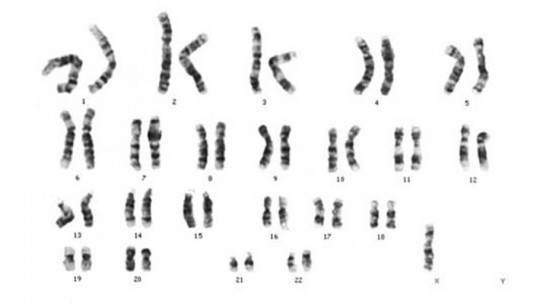
Monosomies are a type of chromosomal alteration in which some or all of the body’s cells contain a single pair of chromosomes that should be duplicated. One of the few human monosomies compatible with life is Turner syndrome, in which the defect occurs in the female sex chromosome.
In this article we will describe Symptoms and causes of the main types of Turner syndrome as well as the therapeutic options that are commonly used in these cases.
What is Turner syndrome?
Turner syndrome is a genetic disorder that appears as a consequence of random alterations in the X chromosome It does not usually affect intelligence, so people with this disorder generally have a normal IQ.
It is related to the presence of a single X chromosome in cases where there should be two, which is why Turner syndrome is diagnosed almost exclusively in girls, although there is a subtype that appears in boys. It occurs in approximately 1 in every 2,000 female births.
This alteration affects physical development, especially because of its inhibitory effects on sexual maturation: Only 10% of girls with Turner syndrome show some signs that they have reached puberty, while only 1% have babies without medical intervention.
How many of these have you been "meaning to read" for months?
- 1
 PenguinThe Body Keeps the ScoreBrain, Mind, and Body in the Healing of TraumaListen Free On Audible
 - 2
 Undercover Publishing HouseStop Letting Everything Affect YouHow to break free from overthinking, emotional chaos, and self-sabotage.Listen Free On Audible
 - 3
 American Psychiatric AssociationDiagnostic and Statistical Manual of Mental Disorders, Text Revision Dsm-5-trGeneric jeufunListen Free On Audible
Main symptoms and signs
Girls and women with this disorder have two characteristic features that are the core of the diagnosis: Your height is shorter than normal and your ovaries are not fully developed so they present amenorrhea or menstrual irregularity and cannot become pregnant.
Because the basic signs of Turner syndrome are related to biological maturation and sexual development, it is not possible to definitively identify the presence of this disorder at least until puberty, a period in which these signs begin to manifest clearly.
The rest of the common symptoms of Turner syndrome vary depending on the case. Some of the most common are the following:
Types and causes of this disease
Turner syndrome is due to the absence of one of the two X sex chromosomes in people of the biological female sex, although it sometimes also appears in men who have an incomplete Y chromosome and who therefore develop as women.
Three types of Turner syndrome have been described depending on the specific genetic causes of the symptoms. These chromosomal alterations occur at fertilization or during the initial stage of intrauterine development.
1. Due to monosomy
In the classic variant of this syndrome, the second X chromosome is completely absent in all the cells of the body; due to defects in the egg or sperm successive divisions of the zygote reproduce this basic anomaly.
2. With mosaicism
In mosaic-type Turner syndrome, it is possible to find an additional X chromosome in most cells, but it is not completely complete or has some defect.
This subtype of the syndrome develops as consequence of altered cell division from a certain point in early embryonic development: the cells that arise from the defective lineage do not have the second X chromosome, while the rest do.
3. With incomplete Y chromosome
In some cases, individuals who are male from a genetic point of view do not develop in a normative way because the Y chromosome is absent or has defects in part of the cells, so their appearance is female and they may also have the symptoms that we have described. This is a rare variant of Turner syndrome.
Treatment
Although Turner syndrome cannot be “cured” because it consists of a genetic variation, there are different methods that can be used. resolve or at least minimize the main symptoms and signs
Morphological alterations and other similar associated defects tend to be difficult to modify, although this depends on the specific alteration. Depending on the case, the intervention of specialists such as cardiologists, endocrinologists, otolaryngologists, ophthalmologists, speech therapists or surgeons, among others, may be necessary.
In cases where this disorder is detected early, growth hormone injection therapy favors the achievement of a normal height in adulthood. Sometimes they are combined with low doses of androgens in order to enhance the effects of this treatment.
With great frequency hormone replacement therapies are applied to girls with Turner syndrome when they reach puberty to enhance their biological maturation (eg to promote the onset of menstruation). Treatment usually begins with estrogen and progesterone is administered later.
Use this citation format to reference the article clearly and help readers find the original source.
PsychologyFor. (2024). Turner Syndrome: Symptoms, Types, Causes and Treatment. PsychologyFor. https://psychologyfor.com/turner-syndrome-symptoms-types-causes-and-treatment/