

See more of our articles in your search results.
Epileptic seizures are complex phenomena, especially considering that there are different types of epilepsy.
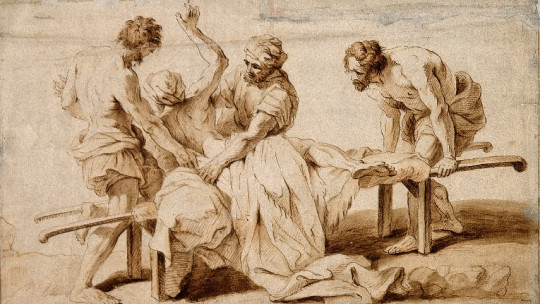
Already in the Bible, even in older Babylonian documents, there are references to epilepsy, called at that time morbus sacer or sacred disease, through which people lost consciousness, fell to the ground and They suffered major convulsions while foaming at the mouth and biting their tongues.
As you can imagine from the name that was originally given to it It was associated with elements of a religious or magical type considering that those who suffered from it were possessed or were in communication with spirits or gods.
As the centuries passed, the conception and knowledge of this problem expanded, and it was found that the causes of this problem lie in the functioning of the brain. But the term epilepsy does not refer only to the type of seizure mentioned above, but actually includes different syndromes. Thus, we can find different types of epilepsy.
A disorder of neurological origin
Epilepsy is a complex disorder whose main characteristic is the presence of repeated nervous crises over time in which one or more groups of hyperexcitable neurons are activated suddenly, continuously, abnormally and unexpectedly, causing excess activity in the hyper-excited areas that lead to loss of control of the body.
How many of these have you been "meaning to read" for months?


It is a chronic disorder that can be caused by a large number of causes, some of the most common being head trauma, stroke, hemorrhages, infections or tumors. These problems cause certain structures to react abnormally to brain activity. which can lead to the presence of epileptic seizures secondarily.
One of the most common and recognizable symptoms are seizures, violent and uncontrollable contractions of the voluntary muscles, but despite this they only occur in some types of epilepsy. And the specific symptoms that the epileptic person will present depend on the hyperactivated area where the crisis begins. However, broadly speaking, epileptic seizures are similar, since their action extends to almost the entire brain.
Types of epilepsy according to whether its origin is known
When classifying the different types of epilepsy we must take into account that not all cases are known to cause them. In addition, they can also be grouped depending on whether their causes are known, with three groups in this sense: symptomatic, cryptogenic and idiopathic.
A) Symptomatic crises
We call symptomatic crises of which the origin is known. This group is the best known and most frequent, being able to locate one or more epileptoid brain areas or structures and a damage or element that causes said alteration. However, at a more detailed level, it is not known what causes this initial alteration.
B) Cryptogenic crises
Cryptogenic seizures, currently probably called symptomatic, are those epileptic seizures of which They are suspected of having a specific cause, but whose origin cannot yet be demonstrated by evaluation techniques. current. It is suspected that the damage is at the cellular level.
C) Idiopathic crises
Both in the case of symptomatic seizures and cryptogenic seizures, epilepsy results from the hyperactivation and abnormal discharge of one or several groups of neurons, activation coming from a more or less known cause. However, it is sometimes possible to find cases in which the origin of the epileptic seizures does not seem to be due to recognizable damage.
This type of crisis is called idiopathic, which is believed to be due to genetic factors. Despite not knowing exactly its origin, people with this type of crisis generally tend to have a good prognosis and response to treatment.
Types of epilepsy according to seizure generalization
Traditionally, the presence of epilepsy has been associated with two basic types called grand mal and petit mal, but research carried out over time has shown that there is a wide variety of epileptic syndromes. The different syndromes and types of epileptic seizures They are mainly classified depending on whether the discharges and neural hyperexcitation occur only in a specific area or at a generalized level.
1. Generalized crises
In this type of epileptic seizures, electrical discharges from the brain are caused bilaterally in a specific area to end up generalizing to all or a large part of the brain. It is common for a prior aura to appear in these types of epilepsy (especially in grand mal seizures). that is, some prodromes or previous symptoms such as obtundation, tingling and hallucinations at the beginning of the crisis that can prevent the person who is going to suffer from its occurrence. Some of the most well-known and iconic within this type of epileptic seizure are the following.
1.1. Generalized tonic-clonic seizure or grand mal seizure
The prototype of an epileptic seizure, In grand mal crises, a sudden and sudden loss of consciousness appears, causing the patient to fall to the ground. and is accompanied by constant and frequent convulsions, biting, urinary and/or fecal incontinence and even screaming.
This type of seizure is the most studied, having found three main phases throughout the seizure: firstly, the tonic phase in which loss of consciousness and falling to the ground occur, to then begin the clonic phase in which seizures appear (starting at the ends of the body and progressively generalizing) and finally culminating the epileptic crisis with the recovery phase in which consciousness is gradually regained.
1.2. Absence crisis or petit mal
In this type of epileptic seizure the most typical symptom is loss or alteration of consciousness such as small stops in mental activity or mental absences accompanied by akinesia or lack of movement, without other more visible alterations occurring.
Although the person temporarily loses consciousness, It does not fall to the ground nor does it usually have physical alterations (although sometimes there may be contractions in the facial muscles).
1.3. Lennox-Gastaut syndrome
It is a subtype of generalized epilepsy typical of childhood, in which mental absences and frequent seizures appear in the first years of life (between two and six years of age) that generally occur together with intellectual disability and cognitive problems. personality, emotional and behavioral. It is one of the most serious childhood neurological disorders, which can cause death. in some cases either directly or due to complications associated with the disorder.
1.4. Myoclonic epilepsy
Myoclonus is a jerky and sudden movement that involves the displacement of a part of the body from one position to a different one.
In this type of epilepsy, which actually includes several sub-syndromes such as juvenile myoclonic epilepsy, It is common for seizures and fever to appear more frequently with some focal seizures in the form of jerks upon awakening from sleep. Many people with this disorder end up having grand mal seizures. It frequently appears as a reaction to light stimulation.
1.5. West syndrome
A subtype of childhood generalized epilepsy with onset in the first semester of life West Syndrome is a serious and rare disorder in which children have disorganized brain activity (visible by electroencephalogram).
Children with this disorder suffer bursts of spasms that mostly cause the limbs to bend inward, fully extend, or both. Its other main characteristic is the degeneration and psychomotor disintegration of the infant, losing physical, motivational and emotional expression abilities.
1.6. Atonic seizures
They are a subtype of epilepsy in which loss of consciousness appears and in which the individual usually falls to the ground due to an initial muscle contraction, but without seizures appearing and recovering quickly. Although it produces brief episodes, it can be dangerous, since falls can cause serious damage due to trauma.
2. Partial/focal seizures
Partial epileptic seizures, unlike generalized seizures, occur in specific and specific areas of the brain. In these cases, the symptoms vary greatly depending on the location of the hyperactivated donut, limiting the damage to that area, although in some cases the crisis can become generalized. Depending on the area, the symptoms can be motor or sensory, causing everything from hallucinations to seizures in specific areas.
These seizures can be of two types, simple (it is a type of epileptic seizure located in a certain area, and which does not affect the level of consciousness) or complex (which does alter psychic abilities or consciousness).
Some examples of partial seizures may be the following:
2.1. Jacksonian crises
This type of actuarial crisis is due to hyperexcitation of the motor cortex, causing seizures located at specific points that in turn follow the somatotopic organization of said cortex.
2.2. Benign partial epilepsy of childhood
This is a type of partial epileptic seizure that occurs during childhood. They generally occur during sleep, not producing a serious alteration in the development of the subject. They normally disappear on their own throughout development, although in some cases it can lead to other types of epilepsy that are serious and affect the quality of life in many of its areas.
One last consideration
In addition to the types mentioned above, there are also other convulsive processes similar to those of epileptic seizures, as occurs in cases of dissociative and/or somatoform disorders, or seizures during fever. However, although in some classifications they are included as special epileptic syndromes, there is some controversy, with some authors not agreeing that they are considered as such.
Bibliographic references:
Use this citation format to reference the article clearly and help readers find the original source.
PsychologyFor. (2024). Types of Epilepsy: Causes, Symptoms and Characteristics. PsychologyFor. https://psychologyfor.com/types-of-epilepsy-causes-symptoms-and-characteristics/