

Why do I have problems in my family? Maybe you ask yourself that question and don’t know how to answer it. There are different types of family with which we can identify. Discover them.

See more of our articles in your search results.
The concept of family has evolved over time, adapting to cultural, social, and economic changes. While the traditional nuclear family model was once dominant, today, various family structures exist, each with its own affective dynamics and emotional characteristics.
Understanding the different types of family helps us recognize the diversity of human relationships and the way they influence individual development and well-being. In this article, we will explore the six main family models, their affective characteristics, and how they shape emotional bonds.
1. The Nuclear Family
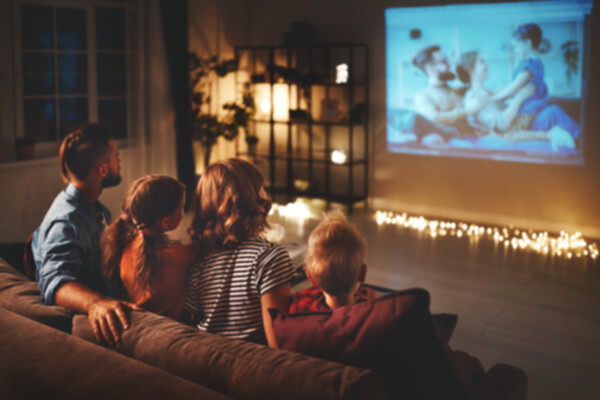
The nuclear family is the most recognized model in Western societies. It consists of:
- Two parents (biological or adoptive).
- One or more children living together in the same household.
Affective Characteristics of the Nuclear Family
- Emotional stability: The presence of both parents can provide a sense of security for children.
- Defined roles: Parents typically share responsibilities related to work, home, and child-rearing.
- Supportive environment: Encourages emotional and psychological development through structured relationships.
Although this model remains common, modern variations include same-sex parents, single working parents, and different parenting dynamics.
How many of these have you been "meaning to read" for months?
- 1
 THOUGHT CATALOGThe Mountain Is YouTransforming Self-Sabotage Into Self-MasteryListen Free On Audible
 - 2
 New Harbinger PublicationsThe Dialectical Behavior Therapy Skills WorkbookPractical DBT Exercises for Learning Mindfulness, Interpersonal Effectiveness, Emotion Regulation...Listen Free On Audible
 - 3
 TarcherperigeeSet Boundaries, Find PeaceA Guide to Reclaiming YourselfListen Free On Audible
2. The Extended Family
The extended family includes not only parents and children but also grandparents, uncles, aunts, cousins, and other relatives living together or maintaining close relationships.
Affective Characteristics of the Extended Family
- Strong intergenerational support: Grandparents and other relatives often play a key role in raising children.
- Emphasis on tradition: Cultural and family values are passed down through generations.
- Collective responsibility: Decision-making and problem-solving tend to be more community-oriented rather than individual.
This type of family is more common in collectivist cultures, where family ties are prioritized over individualism.
3. The Single-Parent Family
A single-parent family consists of one parent raising one or more children due to separation, divorce, death, or personal choice.
Affective Characteristics of the Single-Parent Family
- Close parent-child bond: Often, the child develops a strong emotional connection with the single parent.
- Resilience and adaptability: Both parent and child learn to overcome challenges independently.
- Potential emotional stress: The parent may experience economic or emotional strain, affecting the child’s well-being.
Despite challenges, single-parent families can provide a nurturing and loving environment when emotional needs are met.
4. The Reconstituted or Blended Family
A reconstituted family, also known as a blended family, forms when one or both partners bring children from previous relationships into a new family unit.
Affective Characteristics of the Reconstituted Family
- Adaptation and flexibility: Children must adjust to new parental figures and siblings.
- Potential conflicts: Differences in parenting styles and loyalty bonds can create emotional tensions.
- Expanded support system: Over time, children can develop strong relationships with stepparents and step-siblings.
Blended families require patience, open communication, and emotional work to build strong connections.
5. The Child-Free Family
A child-free family consists of a couple who chooses not to have children. This decision can be based on personal, financial, or medical reasons.
Affective Characteristics of the Child-Free Family
- Focus on partnership: The emotional connection is centered on the couple’s relationship and personal fulfillment.
- Greater independence: Without children, couples often have more financial and lifestyle flexibility.
- Potential societal pressure: Some child-free couples experience criticism or misunderstanding from others.
Despite societal norms, child-free families emphasize companionship, mutual growth, and shared life experiences.
6. The Chosen or Intentional Family
A chosen family is formed by people who are not biologically related but who establish strong emotional bonds and function as a family unit. This model is common among LGBTQ+ communities, close friend groups, and individuals who lack biological family support.
Affective Characteristics of the Chosen Family
- Deep emotional commitment: Relationships are built on trust, love, and shared experiences.
- Support beyond genetics: Members provide emotional and practical assistance without traditional family ties.
- Flexibility in roles: There are no predefined structures—each person plays a role based on emotional connection and support needs.
Chosen families highlight the importance of love, care, and companionship over genetic ties.

Toxic family types
Besides types of family that may exist in society, there are also some signs that indicate that we are facing a toxic attitude within our relationships with our relatives. Mainly we can identify the following.
1. Families in uniform
They are those in which the paternal role is absolutist and authoritarian. Thus, the rest of the family is submitted in a certain way to the father and the interaction that exists in the family. It is rigid and unsatisfactory, since it is imposed and not consensual. Generally there is a lack of a sense of freedom and excess of rules in addition to communication problems with the children, especially on an emotional level, although there can be communication problems in many aspects and there tends to be little family unity and repression when it comes to facing problems. There is a great hierarchy between the father, who is the top of the pyramid, and the rest of the members. This toxicity can occur both in a homoparental family and in other types of families or family models that we have seen in this article.
2. Isolated families
The members of the family function in an isolated, distant and rigid manner. Everyone goes on their own and consequently, there is no cohesion or group identity. As everyone lives their own life, norms and values are unimportant, they inhibit the problems that may appear, each member has their own values and communication is also empty on an emotional and affective level. On many occasions these relationships, which are emotionally non-existent, perhaps would not fall within the definition of family if it were not only for the blood relationship that exists between its members.
3. Grouped families
This kind of family seems to be held together with glue. They usually have individuation difficulties and generally the maternal role is the one that prevails with a tendency to overprotect the children while the paternal role takes a backseat and can be considered weakened. Affective and emotional communication is common and in fact, this type of communication is prioritized in a way that can affect the individuality and identity of each member. They tend to deny the problems that appear and the family relationship is as if they were a clan; as extremities of the same body and therefore, they usually have difficulty assimilating what is new since they experience it as something strange. Thus, they prioritize the family so much that they do not resort to the social area when it would be necessary.
Although there is no family of 10. Since no one is perfect, the reality is that these types of families can wreak a lot of havoc on the personality of each of their members. Therefore, families who identify with these attitudes require the help of a mental health professional.
What is the type of family with the healthiest attitude?
It seems evident that the ideal family model is that of integrated family. In this type of family there is flexibility in roles and the relationship is more stable and comfortable. There is good communication, so they are able to contain and face the problems that arise as well as express and reflect. Communication is free on an emotional and affective level and importance is given to each of the family members. Therefore, there is usually a great sense of group cohesion. In the rest of the models there are usually difficulties in communication, problem solving and roles that are either very marked or very lax.
How does belonging to types of toxic families affect you emotionally?
As we see the family concept has evolved a lot in recent years. In each of them, when the family structure or family models have a toxic base, there is much damage to the people who belong to them.
Intimate or superficial social relationships
Parents are usually considered friends, and therefore, they do not need as much intimacy in friendship. That does not mean that they are unsociable people, they can be very open when it comes to meeting people, but it does mean that they may have reservations or certain limitations when it comes to becoming more intimate with someone. They already have their friends in the family and they know they don’t need more.
Relationships with conflicts
The relationship can be idyllic, have similar values, share hobbies and enjoy time together. The problem is that the relationship is not two, but at least four. People who belong to united families cannot conceive of routine without parents, so problems may arise in the couple due to the time dedicated to the family of origin. Thus, conflicts are common because weekends are mainly used for family activities and little to couple activities or when children appear, grandparents stick like limpets and do not allow parents to do their job without interference or multiple pieces of advice.
Low self-esteem and difficulty solving problems
People who are part of a united family are usually used to being a clan. Therefore, if someone has a difficulty, it is denied that it exists and another member resolves it. This would not be a problem if everything were done in family, but it turns out that we don’t go everywhere with our parents. So when the person is at work (for example) and has a difficulty, they may be overwhelmed by not feeling capable of solving the problem. In this way, they tend to be people dependent on others; They look for someone to solve their problem and make little effort to improve.
Fear of loneliness and death of parents
These fears usually lead to the problem that it is difficult for them to become independent and if they do, they spend more time at their parents’ house than at their own home. In addition, this person tends to fill free time spaces with people and usually has difficulties being alone at home, causing fears such as robberies or constantly checking that parents are okay through phone calls.
What to do if you have one of the toxic family types?
It is necessary to work on self-esteem, individuality and problem-solving skills on one’s own. Regarding the relationship, it is necessary to open your mind and understand that perhaps the person who will accompany you in life does not think the same as you and you have to be flexible to accept that he or she does not want to spend all the time with your parents. It’s about reaching middle ground and striving to do things for yourself and with your partner. After all, the parents will not be there at some point. On the other hand, we must work on those fears of being alone by learning to enjoy solitude and the death of loved ones, since we must accept that sooner or later this will happen.
If you are not able to work on all these aspects on your own, the support of a psychological therapy can help you improve your situation. The basis of any happiness with others is in our family structure.
The definition of family has expanded beyond the traditional nuclear model, embracing diversity in emotional connections and living arrangements. Each type of family offers unique affective characteristics that shape individuals’ experiences, self-esteem, and emotional security.
Ultimately, what defines a healthy and loving family is not its structure, but the quality of relationships, communication, and emotional support shared among its members.
FAQs About Family Models and Their Emotional Characteristics
What is the most common type of family today?
The nuclear family remains the most widespread model, but there is increasing diversity, with single-parent and blended families becoming more common.
How does family structure affect a child’s emotional development?
Each family model provides different emotional experiences. Stability, love, and communication are the most important factors in a child’s well-being, regardless of structure.
Are extended families better for raising children?
Extended families offer intergenerational support and cultural continuity, but they can also create conflicts over authority and independence.
Can a chosen family replace a biological family?
Yes, a chosen family can provide the same (or even stronger) emotional security and support as a biological family, especially in cases of estrangement.
How do blended families build strong emotional bonds?
Blended families succeed when they prioritize open communication, respect, and patience, allowing new relationships to develop naturally.
Use this citation format to reference the article clearly and help readers find the original source.
PsychologyFor. (2025). Types of Family: The 6 Family Models and Their Affective Characteristics. PsychologyFor. https://psychologyfor.com/types-of-family-the-6-family-models-and-their-affective-characteristics/