

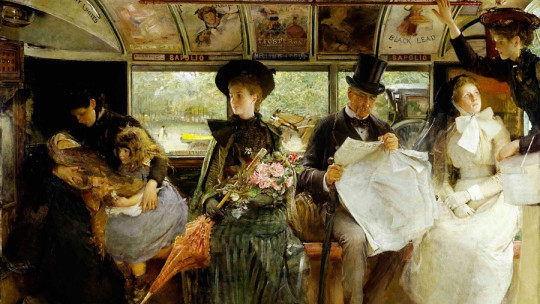
In 1837, Victoria I ascended the English throne. Her reign, in addition to being one of the longest in the country (only surpassed by that of Elizabeth II), gave its name to an entire period: the Victorian era.
Victorian morality defined the ethical and social framework of the Victorian era, named after Queen Victoria’s reign in the United Kingdom from 1837 to 1901. It was characterized by strict codes of conduct, a focus on family values, and a deep emphasis on societal norms. While these ideals shaped the era profoundly, they were also riddled with contradictions and hypocrisies.
What characterized this time? What did the famous Victorian morality consist of? Below, we offer you a summary of the characteristics of this period.
What is Victorian morality?
Victorian morality refers to the prevailing principles and attitudes that governed behavior, culture, and thought during Queen Victoria’s reign. It was deeply influenced by religion, industrialization, and the hierarchical structure of Victorian society.
“Victorian morality” is known as the set of ideas and opinions regarding conduct and morality that prevailed in the United Kingdom during the 64 years of the reign of Queen Victoria I (1837-1901).
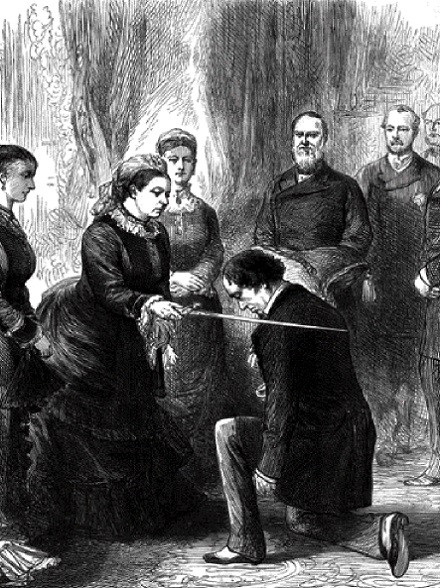
Some authors place the beginning a little earlier, with the reform act of 1832 (Reform Act 1832), which introduced very important changes in the English electoral system.
The queen has often been held responsible for the emergence of this new morality. And although, as we will see, its origins can be traced back several centuries, it is true that Victoria, and especially her husband Prince Albert, did much to exploit the image of the perfect family that was to be the pillar of English society.
In general, Victorian morality was characterized by being very strict and having very rigid guidelines that dictated the behavior of citizens. For example, sexuality was an eminently taboo subject (despite the fact that London became one of the cities with the most brothels in Europe) and gender roles were rigorously constituted.
Although Victorian morality is limited to the reign of Victoria I, we find some antecedents in previous centuries, such as the rise of Puritanism in England and its particular “fight” with the more “flexible” ideological and behavioral currents. We see it below.
Background and context of Victorian morality
At the beginning of the 19th century, the United Kingdom is a nation in full expansion. At the end of the 18th century, the so-called Industrial Revolution had begun, which had placed the country at the European economic forefront. The constant supply of raw materials from the increasingly numerous British colonies supported unprecedented industrial development, and the rapid development of railway infrastructure greatly facilitated their transfer and distribution.
The economic apogee inevitably led to a strong entrenchment of the values of individualism and work. Anyone who worked hard could become rich. There was no longer time for leisure and debauchery; Duty and sobriety emerged as the pillars of the new morality that would last for a century. Of course, and as we will see in more detail in another section, the weight of work and economic responsibility fell solely on the man the only one in charge of carrying such an “extraordinary” mission on his shoulders.
The foundations of this rigorous morality had been built two centuries earlier, when the English Puritan movement, led by Oliver Cromwell, confronted the monarchy. The Puritans intended to “purge” the Church of England of all Catholic residue, which they considered it had not yet completely gotten rid of. Rigid Puritan morals slowly seeped into English society and, although during the 18th century customs relaxed (probably influenced by the hedonism of the French court), in the 19th century these values re-emerged strongly.
- Industrial Revolution: Rapid advancements in technology and industry brought new wealth but also highlighted class divisions. Victorian morality often justified these inequalities.
- Religious Influence: Christianity, particularly evangelical movements, played a significant role in shaping moral standards.
- Colonial Expansion: The British Empire’s global dominance introduced Victorian ideals to other parts of the world.
Key Characteristics of Victorian Morality
1. Emphasis on Family Values
The family was seen as the cornerstone of society.
- The Role of Women: Women were expected to be the moral guardians of the home, embodying virtues like modesty and piety.
- Children: Strict discipline and moral education were emphasized to ensure children grew up with proper values.
2. Strict Social Etiquette
Victorian society placed immense importance on manners and decorum.
- Public Behavior: Politeness, modesty, and self-restraint were highly valued.
- Dress Codes: Clothing was a reflection of one’s status and moral character, with modest attire being the norm.
3. Focus on Sexual Restraint
Sexuality was a taboo topic, with strict expectations of chastity before marriage and fidelity afterward.
- Double Standards: Men often had more freedom than women, reflecting the era’s patriarchal norms.
- Prostitution: Despite the moral emphasis on purity, prostitution was widespread, highlighting the hypocrisy of Victorian morality.
4. Philanthropy and Social Reform
Victorian morality encouraged helping the less fortunate, though this was often tied to religious duty.
- Charity Work: Many upper-class individuals supported charitable causes, often as a way to demonstrate their virtue.
- Workhouses: Institutions for the poor were established but often operated under harsh and demeaning conditions.
5. Strong Religious Influence
Religion played a central role in defining moral standards.
- Evangelical Movements: Encouraged personal piety and societal reforms, such as the abolition of slavery.
- Sunday Observance: Sundays were strictly reserved for rest and worship, with recreational activities discouraged.
6. Rigid Class Hierarchies
Victorian morality reinforced social stratification.
- Upper Class: Seen as the moral and cultural leaders of society.
- Working Class: Often viewed as needing moral guidance and improvement.
7. The Rise of Science and Intellectual Contradictions
While morality emphasized tradition and religion, the Victorian era also saw significant scientific advancements.
- Darwin’s Theory of Evolution: Challenged traditional religious beliefs, creating tension within society.
- Industrial Progress: Highlighted the gap between moral ideals and the realities of factory life.
Criticisms of Victorian Morality
Hypocrisy
The public emphasis on purity and virtue often masked private indulgences and vices.
Oppression of Women
The idealization of women as moral guardians restricted their roles and opportunities.
Class Bias
Victorian morality often justified the exploitation of the working class while glorifying the wealth and status of the elite.
Legacy of Victorian Morality
Positive Aspects
- Encouraged philanthropy and social reforms.
- Promoted the importance of family and education.
Negative Aspects
- Reinforced gender and class inequalities.
- Created unrealistic moral expectations that led to widespread hypocrisy.
“The Angel of the Home”
In this new Victorian society, The man stands as the pillar on which the family is supported At least, in economic terms. The man is the one who takes the reins of the business, the one who gets involved in politics, the one who speaks, the one who acts, the one who decides. All of this is a consequence of this new social notion, which separates the male and female spheres in a very pronounced and strict way.
Man’s terrain is business and politics. Men’s clubs proliferate, where men meet to smoke, play pool and discuss current affairs. Instead, the Victorian woman is relegated exclusively to the home environment
In effect, the only roles contemplated for women are the roles of wife and mother. She is what the poet Coventry Patmore called “the angel of the home”, the true definition of the Victorian woman. Within the very conservative society of the time, there is a belief that this is enough for a woman to feel full and satisfied. Or, at least, that’s what men think. Most women go with the flow, often afraid to stand out or protest, which would mean their social death. However, towards the end of the century, feminism and the demand for women’s rights gained strong momentum, especially the right to vote. What happened so that, in a society with such strict roles, women became aware of their situation and their rights?
Some authors maintain that women’s dedication to various charitable and social welfare tasks (the only ones that were considered suitable for them) led to a gradual awareness of their power and capacity. It must also be taken into account that, in the working classes, women worked the same as men. The factories were full of wives and mothers (and even girls, since child labor was rife) who worked from dawn to dusk to supplement the salaries of their colleagues. This, by necessity, had to influence the new feminine mentality.
To get a slight idea of what was considered “the ideal woman” in Victorian times, just read the statements made by the Reverend J. Goodby, from a parish in Leicestershire, regarding the death of his wife in 1840. From Mrs. Goodby He is said to have carried out his “duties” with mercy and patience “Duties,” of course, are restricted to caring for family and home.
A new fashion for a new morality
As we can see, the qualities that a Victorian “good woman” was supposed to have are highlighted in Mrs. Goodby. The morality of the time, strongly puritan, gave great value to qualities such as modesty, prudence and work, in both men and women.
This new frugal and modest morality is perfectly illustrated in the fashion that began to prevail after Victoria’s accession to the throne. The “standard” male suit was limited to pants, vest and frock coat, preferably in dark colors, in absolute contrast to the dandyism of the previous reign. No more strident colors, no more impossible combinations. A respectable man dresses modestly and modestly.
And if this was the case with men, what can we say about women’s fashion. Some fashion historians have called it “mousy fashion”, with some humor of course, but the truth is that they are right. Women moved from the extravagant and often outrageous fashion of the turn of the century to an extremely modest style of dress. Even her bonnets lengthen her brims to hide part of her face, as if the Victorian woman felt ashamed of being seen outside her family sphere. Her colors, like her male namesakes, fade and darken.
A hypocritical society
As you might imagine, Victorian society displayed a delicate hypocrisy. Because while Christian virtues were praised, child exploitation was rampant in the United Kingdom. Working-class families often lived in a state of alarming poverty. The disease took its toll on a poorly nourished population, which lived overcrowded in the new neighborhoods born with industrialization. In London, the waters of the Thames were unhealthy: they stank and oozed toxic miasmas that facilitated the spread of evils such as cholera, which decimated the population. Infant mortality was very high, and few children exceeded the age of 5 years. This chilling reality was portrayed by many authors, especially by Charles Dickens, the great chronicler of English Victorian society.
Likewise, while sex was censored in public, in private it was the driving force of an inhibited and obsessed society. Prostitution was censored, but tolerated; London was one of the cities with the most brothels in Europe. In society, husbands faithfully played their role as loving husbands and fathers; However, they maintained numerous lovers. Women could do it too, but, of course, they had to be much more discreet.
Victorian morality and sex
Talking about sex was unthinkable. Nothing was said to the young people about it. Evidently, the sexual act was absolutely restricted to marriage (or, at least, in theory). Consequently, Victorian society was eminently inhibited. So much so that authors such as Rosa Aksenchuk, from the University of Buenos Aires, maintain that Freud’s psychoanalysis and advances in psychiatry were extraordinarily facilitated by society’s inhibition.
And of course, women were expected to be heavenly creatures who didn’t need sex. The roles of wife and mother already had to be sufficiently “satisfying” for them. Furthermore, let us remember that, in a world in which the majority of marriages were still of convenience, there was little room for sex for pleasure.
As a result, and spurred by the difficulty they found in finding lovers, female sexual dissatisfaction grew. Her time baptized it with a curious name: “hysteria.” Doctors worked hard to alleviate the symptoms of this “disease” through “pubic massages,” which were nothing more than masturbation. Thus, through vaginal and clitoral stimulation, the dissatisfied wives found pleasure and an escape valve from their constraint.
As a curiosity, we can point out that this was the origin of female dildos. At first they were designed as “medical solutions” for hysteria, and were viewed as something strictly medicinal. Eventually, women got used to using them, and then society woke up: they were using it for their own pleasure! Puritan Victorian society had created the female dildo. Seeing is believing.
Victorian morality profoundly influenced the social and cultural fabric of the 19th century, blending strict ethical codes with glaring contradictions. While its emphasis on family and charity left a lasting impact, its restrictive norms and inherent hypocrisies remain a topic of debate and critique. Understanding Victorian morality provides valuable insights into the complexities of this transformative era in history.
FAQs about Victorian Morality
Was Victorian morality applied globally?
Victorian morality influenced British colonies but often clashed with local traditions and cultures.
How did Victorian morality affect women’s roles?
It idealized women as moral guardians while limiting their social and professional opportunities.
What role did religion play in Victorian morality?
Religion was central, shaping moral codes and societal expectations through evangelical movements.
Why is Victorian morality criticized?
It is criticized for its hypocrisy, gender inequalities, and class biases.
Is any part of Victorian morality still relevant today?
Aspects like the emphasis on family values and philanthropy continue to resonate, though modern interpretations are more inclusive and flexible.
Use this citation format to reference the article clearly and help readers find the original source.
PsychologyFor. (2025). Victorian Morality: What it Was and What Were Its Characteristics. PsychologyFor. https://psychologyfor.com/victorian-morality-what-it-was-and-what-were-its-characteristics/