


You wake up with a tight jaw, a dull headache, and the vague sense that you were working all night even though you were asleep. Or maybe it happens in daylight: you answer emails, drive through traffic, or sit in a tense conversation and suddenly notice your teeth are pressed together so hard your face aches. Bruxism is the habit of grinding, clenching, or bracing the jaw, and for many people it becomes part of daily life long before they learn its name.
So, what is bruxism in simple terms? It is repetitive jaw-muscle activity that can happen while you are awake, while you sleep, or both. Some people grind their teeth. Others mainly clench without grinding. Some feel it in the jaw; others notice headaches, tooth sensitivity, neck tension, or a sense that their whole face is “on guard.” The causes are not always identical from one person to the next. Sleep quality, dental factors, medication effects, nervous-system arousal, stress, and learned muscle habits can all play a role.
That last part matters. Bruxism is not “just a dental problem,” and it is not simply a bad habit you should be able to stop through willpower. Very often, the jaw becomes a storage place for pressure. Stress settles there. Anger settles there. Uncertainty, perfectionism, hurry, and emotional restraint settle there too. The body braces, sometimes so quietly that the person does not notice until pain arrives later.
This is why psychological techniques can be genuinely useful. They do not replace dental care, medical care, or professional mental health support when those are needed. But they can reduce the internal pressure that keeps the jaw activated. They can help you notice the pattern earlier, respond more skillfully, and create conditions that make clenching less necessary. In that sense, psychological strategies are not “extra.” They are often one of the most practical ways to influence a stubborn mind-body loop.
This article explains what bruxism is, why it often gets worse under stress, and how seven psychological techniques can help interrupt the cycle. Everything here is educational and informational only. It is not a diagnosis, not a substitute for treatment, and not emergency care. Still, if you have been feeling trapped in a pattern of clenching, soreness, or frustration, understanding the psychology behind it can be the first real relief.
What Is Bruxism and How Does It Usually Show Up?
Bruxism is repeated clenching, grinding, or bracing of the jaw muscles, often without full awareness. It may happen during wakefulness, during sleep, or across both. Some people hear the grinding. Others never do, and only discover the pattern after a dentist points out wear on the teeth or a partner comments on nighttime noises.
There are two broad forms. Awake bruxism usually shows up as quiet clenching, pressing the teeth together, tightening the jaw during concentration, or holding tension in the mouth without realizing it. Sleep bruxism happens during sleep and may involve grinding, jaw thrusting, or rhythmic muscle activity that the person cannot consciously monitor. The two can overlap. In fact, many people spend the day tightening and the night continuing the pattern in a different form.
Common signs of bruxism include:
- Jaw pain or stiffness, especially in the morning or after stressful tasks.
- Headaches that begin around the temples or behind the eyes.
- Tooth sensitivity or the feeling that the bite is slightly “off.”
- Clicking, popping, or discomfort around the jaw joint area.
- Neck and shoulder tension that seems to travel with facial tightness.
One reason bruxism feels so frustrating is that it is partly automatic. The jaw may be reacting to tension before the conscious mind catches up. Over time, the pattern can become learned. The muscles get used to guarding. The nervous system starts to treat clenching like a familiar solution. That does not mean the habit is fixed forever. It means effective change usually involves more than telling yourself to relax. It requires awareness, regulation, and a better understanding of what the jaw is doing for you psychologically.
Why Stress, Anxiety, and Hyperarousal Can Make Bruxism Worse
Bruxism often becomes more intense when the nervous system stays stuck in a state of stress or overactivation. Not every case is caused by anxiety, but many cases are clearly aggravated by it. The jaw is one of the body’s favorite places to hold pressure, especially when tension becomes chronic rather than occasional.
Think about how the body responds when you feel overloaded. Breathing gets shallower. Shoulders rise. The stomach tightens. The forehead contracts. And for many people, the jaw begins to brace almost instantly. This is especially common in people who are highly conscientious, perfectionistic, conflict-avoidant, or emotionally self-controlled. The outer self may look composed while the inner body is clenching like it is preparing for impact.
From a cognitive-behavioral angle, stress creates predictable pairings. Emails, deadlines, conflict, multitasking, or self-criticism become linked with jaw tension through repetition. From an ACT lens, people may grip physically while trying to avoid uncomfortable thoughts and feelings. From a polyvagal or nervous-system perspective, bruxism can be part of a broader pattern of hyperarousal: the body remains mobilized, guarded, and ready, even when there is no immediate physical threat.
This is why treatment focused only on the teeth can feel incomplete for some people. If the body still believes daily life is dangerous, demanding, or unrelenting, the jaw may keep doing what it has learned to do. Psychological strategies help because they work with the system underneath the symptom. They reduce the pressure load, soften learned muscular guarding, and teach the body that it does not need to stay clenched just to get through an ordinary day.

Awake Bruxism vs Sleep Bruxism: Why the Difference Matters
Awake bruxism and sleep bruxism are related, but they do not behave in exactly the same way. Knowing which pattern is more prominent can help you choose better strategies. Daytime clenching offers more opportunities for real-time interruption. Nighttime grinding often needs more indirect support through sleep regulation and environmental changes.
People often assume all bruxism is the same because the symptoms overlap. But the underlying rhythm can differ. Daytime clenching is more likely to be tied to concentration, stress, frustration, emotional inhibition, or habitual postures. Nighttime grinding may reflect accumulated arousal, poor sleep quality, substances, medication effects, or a body that has not fully disengaged from daytime tension by bedtime.
| Awake Bruxism | Sleep Bruxism |
|---|---|
| Often appears as silent clenching or jaw bracing during the day. | Often appears as grinding or forceful jaw activity during sleep. |
| Common triggers include stress, concentration, anger, and time pressure. | Common triggers include sleep disruption, evening arousal, and unresolved daytime tension. |
| Can be interrupted with awareness, reminders, and behavioral techniques. | Usually responds better to bedtime decompression and broader nervous-system calming. |
| You have more direct influence because it happens in waking life. | You often need indirect strategies because it happens outside awareness. |
Many people have both forms, which is why the most effective plan is often layered. You reduce daytime clenching as much as possible, lower overall stress load, and improve the conditions under which sleep begins. The more precisely you understand your pattern, the less helpless it tends to feel. Clarity itself can be calming, because it turns a vague problem into something you can observe and work with.
1. Increase Awareness of Your Clenching Triggers Before the Pain Starts
The first psychological technique for bruxism is awareness training. You cannot interrupt a pattern you never notice until after the damage is done. For many people, jaw tension happens so automatically that it fades into the background, like a sound you stop hearing after a while. The body keeps working hard while the mind stays busy elsewhere.
The goal is not to monitor yourself with anxiety. It is to become curious about the pattern. Start asking practical questions. When do you clench most? During work? In traffic? While reading difficult messages? During emotionally tense conversations? When you are trying not to cry, not to react, or not to disappoint someone? These are not minor details. They are the map.
A short awareness log can help. Several times a day, pause and note:
- What you are doing.
- What emotion is present.
- Whether your teeth are touching.
- Where else tension is showing up in the body.
- What thought is running through your mind.
Over a week or two, patterns usually emerge. You may discover that you clench when you rush, when you feel judged, when you concentrate intensely, or when you are trying to stay composed. That insight matters because it changes bruxism from a random nuisance into a sequence with predictable triggers.
A simple daytime posture cue can also help: lips together, teeth apart, tongue resting gently. Many people benefit from reminders on a phone, laptop, or watch. The purpose is not to catch every episode. It is to increase the number of moments where the habit becomes visible enough to shift. Once you can notice the pattern early, other techniques suddenly have somewhere to land.

2. Calm the Nervous System With Breathing and Progressive Relaxation
Bruxism often reflects a body that does not fully come down from activation, so relaxation skills are not superficial tools. They are direct ways of signaling safety to the nervous system. When done consistently, they reduce the physiological pressure that keeps the jaw prepared for action.
Two of the most useful methods are diaphragmatic breathing and progressive muscle relaxation. Diaphragmatic breathing slows the breath and lengthens the exhale, which helps shift the body away from fight-or-flight. Progressive relaxation restores something many people with chronic clenching have lost: the felt difference between muscular effort and muscular release. If the jaw is always tight, relaxation can start to feel strangely unfamiliar. Practice rebuilds that contrast.
Try this short sequence:
- Sit with both feet grounded and let your shoulders drop.
- Place one hand on the chest and one on the abdomen.
- Inhale through the nose so the lower hand rises gently.
- Exhale slowly for slightly longer than the inhale.
- After several breaths, tense the shoulders for five seconds and release.
- Then tighten the jaw very lightly for a second or two and soften completely.
- Let the tongue rest and the teeth separate.
You are not aiming for a dramatic transformation in one attempt. You are teaching the body a new reflex. Each time you pair awareness with softening, you weaken the old link between pressure and clenching. Repetition matters more than intensity. A few minutes done regularly will usually help more than one heroic attempt done only when pain is severe.
This exercise can be especially helpful before bed, before meetings, after conflict, or anytime you notice yourself getting mentally rigid. The more often the nervous system experiences safe deactivation, the less it needs the jaw as a constant brace.
3. Use CBT to Challenge the Thought Patterns That Tighten the Jaw
Many people with bruxism are not only clenching their teeth; they are clenching around pressure, urgency, and self-demand. Cognitive behavioral therapy, or CBT, is useful because it helps identify the thought patterns that keep the body on alert even in ordinary situations.
CBT looks at how thoughts, emotions, body sensations, and behaviors reinforce one another. Imagine a person thinking, “I cannot mess this up,” or “I have to stay on top of everything.” Those thoughts create pressure. Pressure increases muscle tension. The jaw tightens. Pain appears. Pain adds irritability and anxiety, which then strengthens the original thoughts. A loop forms. The issue is not that the person is thinking irrationally all the time. It is that the internal language is harsh enough, urgent enough, or rigid enough to keep the body in a near-constant brace.
Common thought patterns linked to clenching include:
- Catastrophizing: “If this goes wrong, everything will fall apart.”
- Perfectionism: “I should handle this without needing a break.”
- Over-responsibility: “It is all on me.”
- Suppression rules: “Do not react. Do not show stress. Just hold it together.”
Once you identify the pattern, practice a more balanced response. Not empty positivity. Just accuracy with less punishment. “This matters, but I do not need to grip my body to do it well.” Or, “I feel pressure right now, and I can respond without tightening.” These statements may sound small, but the body often follows the tone of the mind. A softer internal voice often creates a softer jaw. That is one reason cognitive work can be surprisingly physical in its effects.
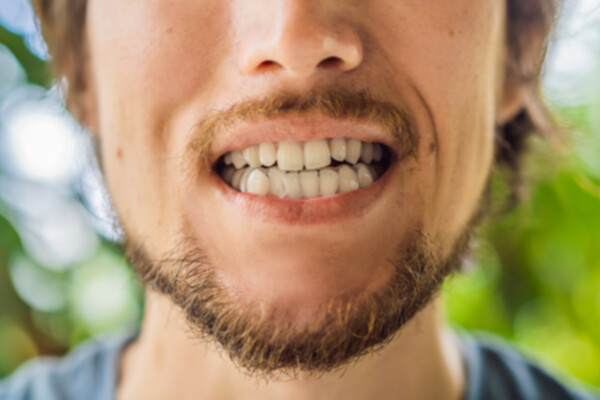
4. Reduce Emotional Suppression and Set Boundaries So the Body Does Less Silent Work
For some people, bruxism is closely connected to unspoken tension rather than obvious stress. The jaw braces around what the voice does not say. Anger gets swallowed. Needs stay unspoken. Resentment simmers quietly beneath politeness. The person appears composed while the body carries the cost of that composure.
This pattern is common in people who are conflict-avoidant, highly responsible, accommodating, or habitually self-controlled. They often do not think of themselves as “angry” because they are not explosive. But the body may still be holding a constant message: endure, adapt, do not burden anyone, keep going. The jaw becomes one of the places where that message turns physical.
Psychological techniques here involve expression and boundary-setting, not just relaxation. Helpful practices include:
- Naming emotions more precisely than “fine” or “stressed.”
- Practicing assertive language, such as “I cannot take that on” or “I need more time.”
- Journaling honestly about resentment, fear, sadness, or frustration.
- Noticing where you agree while internally resisting.
- Reducing chronic people-pleasing that leaves the body holding what the mouth will not.
This does not mean all bruxism is repressed anger. Human beings are more complex than that. But emotional inhibition clearly matters for many people. When feelings have no pathway out, muscles often become the pathway. Sometimes the most effective jaw-relaxation technique is a clear boundary. Saying no, asking directly, or expressing frustration honestly may reduce more clenching than another round of stretching ever could.
5. Practice Mindfulness and ACT Skills to Interrupt Automatic Clenching
Mindfulness helps with bruxism by catching tension earlier and reducing the second layer of struggle that usually follows it. Many people notice jaw clenching and immediately react with frustration: “I am doing it again. Why can’t I stop?” That reaction adds more tension to a body that is already tense. Mindfulness offers another route.
Instead of treating clenching as proof of failure, mindfulness treats it as information. The moment becomes observational rather than judgmental. “My jaw is tight.” “My tongue is pressing upward.” “I am bracing because I feel pressured.” That tone matters. A nervous system is far more likely to soften under awareness than under attack.
ACT, or acceptance and commitment therapy, adds another helpful piece. It suggests that people often tighten physically while trying to control inner discomfort. They brace against anxiety, anger, uncertainty, embarrassment, or sadness. ACT does not ask you to like those feelings. It asks whether fighting them with your body is actually helping.
Try a brief check-in:
- Where is my tongue right now?
- Are my teeth touching?
- What feeling is here that I may be resisting?
- What am I trying to control in this moment?
- Can I soften the jaw by 10% instead of demanding total relaxation?
That 10% question is especially useful. It reduces perfectionism around relaxing. You do not need to drop all tension instantly. You only need to create a little more space. Mindfulness works because it turns clenching from an invisible reflex into a visible choice point. That small gap is where change begins.
6. Improve Sleep and Build a Bedtime Decompression Routine
Sleep bruxism often worsens when the body reaches bedtime still carrying the momentum of the day. If your evening is full of screens, unfinished work, stimulation, conflict, or rumination, the nervous system may enter sleep partially activated. The jaw does not always get the message that the day is over.
This does not mean poor sleep habits explain every case. Dental factors, medication effects, substances, breathing issues, and other physical contributors can matter too. But bedtime regulation is one of the most modifiable parts of the picture. For many people, it becomes an important pressure valve.
Think of the last hour before bed as a transition chamber. If the body is expected to go straight from stimulation to deep rest, it may resist. A more psychologically supportive routine could include:
- Regular sleep and wake times to reduce nervous-system unpredictability.
- Less screen exposure and less emotional stimulation before bed.
- A brief written brain dump for unfinished tasks and looping thoughts.
- Gentle stretching or breathing to release facial, neck, and shoulder tension.
- Lower evening intensity in conversations, media, and multitasking.
If you tend to wake sore after emotionally heavy days, that pattern is worth trusting. It suggests the body is carrying unresolved activation into the night. A wind-down routine is not decorative self-care; it is a way of helping the nervous system exit performance mode. The calmer and more predictable the descent into sleep becomes, the less likely the jaw is to keep working long after the rest of you has gone to bed.
7. Build a Daily Stress-Recovery Plan Instead of Waiting for Flare-Ups
One of the most effective psychological techniques for bruxism is not a single exercise but a daily rhythm of recovery. If your only response comes after pain spikes, the body never gets enough consistent practice in coming down from activation. Recovery has to become regular, not occasional.
Many people live in a pattern of continuous micro-stress: rushing, scanning, multitasking, sitting tense, ignoring body signals, and then wondering why the jaw hurts by evening. In that context, clenching is not random. It is logical. The body has been trained to stay ready. A daily stress-recovery plan teaches the opposite.
A workable plan can be simple:
- Morning reset: one minute of breathing, jaw awareness, and a slower start than usual.
- Midday interruption: a short walk, stretch, hydration break, or a phone-free pause before tension builds too high.
- Evening downshift: reduced stimulation, honest emotional unloading, and a clear signal that performance is over for the day.
You can add other restorative practices as appropriate: therapy, journaling, gentle movement, time outside, calming music, or scheduled breaks between demanding tasks. The right plan is not the most impressive one. It is the one you can repeat on ordinary days, when life is busy and motivation is average.
A helpful reframe is to stop asking, “How do I eliminate this symptom immediately?” and start asking, “What kind of life makes this level of clenching less necessary?” That question shifts the focus from suppression to sustainability. Stress recovery is not a luxury. For many people with bruxism, it is part of the basic logic of getting better.
When Psychological Techniques Are Helpful but Not Sufficient on Their Own
Psychological techniques can reduce bruxism, but they are not the whole answer in every case. Persistent pain, significant tooth damage, jaw locking, sleep disruption, or rapidly worsening symptoms deserve professional attention. Teeth grinding is a mind-body issue, but it is not only a mindset issue.
A dentist may notice patterns you cannot see, such as enamel wear, cracked fillings, flattened tooth surfaces, or changes in the bite. A physician may help assess medication effects, sleep concerns, pain issues, or other medical contributors. A therapist may be useful when anxiety, trauma, perfectionism, chronic stress, or emotional suppression clearly feed the cycle. In many cases, the most sensible path is collaborative: one professional helps protect the teeth, another helps regulate the stress system, and the person gradually feels less trapped between symptom and cause.
It can also be worth seeking help simply because the habit feels demoralizing. People often interpret bruxism as proof that they are failing to cope well enough. That is usually not true. The body is responding in a learned way to pressure, and learned patterns often need structured support to shift.
General signs that professional evaluation may be especially important include:
- Frequent jaw pain or stiffness that interferes with daily life.
- Morning headaches that happen regularly.
- Noticeable tooth wear or sensitivity.
- Jaw clicking, locking, or difficulty opening comfortably.
- Poor sleep quality or suspicion that more than stress is involved.
Psychological tools are valuable, but they work best when used realistically. Sometimes self-help is enough to start meaningful change. Sometimes it works best as one part of a broader care plan. Either way, seeking support is not overreacting. It is often the most grounded response to a pattern that has been asking for attention for a long time.
FAQs about Bruxism
What is bruxism in simple language?
Bruxism is the repeated habit of grinding, clenching, or tightening the jaw muscles. It can happen while you are awake, while you are asleep, or in both states. Some people hear grinding sounds, but many do not. They only notice jaw soreness, tooth sensitivity, headaches, or tension in the face and neck. In simple language, bruxism means the jaw is working harder than it needs to, often in a repetitive and partly automatic way. It is not always caused by the same thing in every person. Stress, sleep quality, emotional tension, medication effects, and other physical factors may all contribute. The helpful part is that once the pattern is understood, there are often several ways to reduce it.
Is bruxism always caused by stress or anxiety?
No. Stress and anxiety can clearly worsen bruxism, but they are not the only possible explanation. Some people mainly clench when they are under pressure, emotionally overloaded, or mentally overfocused. Others may have contributors related to sleep quality, jaw mechanics, substances, medication effects, or other physical factors. It is more accurate to think of bruxism as a pattern with multiple possible drivers rather than a single-cause problem. That said, stress is an important piece for many people because the jaw is a common place for the body to hold tension. Even when stress is not the only cause, reducing nervous-system activation can still make the habit less intense. A broad view is usually more helpful than assuming it is either “all psychological” or “not psychological at all.”
Can psychological techniques really help reduce teeth grinding?
Yes, especially when the pattern is linked to stress, perfectionism, emotional suppression, or chronic muscle guarding. Psychological techniques can help you notice the habit earlier, reduce the internal pressure that drives it, and teach the body a new response to stress. Awareness training, mindfulness, CBT, breathing exercises, relaxation skills, and boundary-setting can all reduce the frequency or intensity of clenching for some people. These approaches are often most effective for awake bruxism because the person has more conscious access to the behavior. They can also support sleep bruxism by improving bedtime regulation and lowering overall arousal. Still, these techniques are best viewed as part of a bigger picture. They do not replace dental or medical evaluation when symptoms are significant.
How do I know if I have sleep bruxism?
Sleep bruxism can be hard to identify because it happens outside awareness. Common clues include waking with a sore jaw, tight facial muscles, morning headaches, tooth sensitivity, or a sense that the jaw feels “worked” before the day even begins. A partner may notice grinding sounds at night. A dentist may also spot signs such as worn tooth surfaces or cracked dental work. None of these signs proves the whole story by itself, but together they can point toward a meaningful pattern. If you suspect sleep bruxism, it can help to track symptoms for a couple of weeks and notice whether soreness is worse after stressful days, poor sleep, or stimulating evenings. That information can be useful when discussing the pattern with a qualified professional.
What is the best psychological technique for awake bruxism?
There is rarely one single best technique for everyone, but awareness training is often the most important starting point. If you do not notice the clenching while it is happening, you cannot interrupt it. Once awareness improves, the most helpful next step usually depends on why your jaw is tightening. If self-pressure is central, CBT may be especially useful. If the habit is highly automatic, mindfulness can help catch it sooner and reduce the frustration around it. If the tension is tied to emotional inhibition, clearer boundaries and more honest expression may matter more than breathing exercises alone. In practice, the strongest results often come from combining methods. The best technique is the one that matches the role clenching is playing in your particular nervous system and daily life.
Can bruxism go away on its own?
Sometimes it improves on its own, especially if it was linked to a temporary stressful period or a short-term disruption in sleep. But bruxism can also become a learned body pattern that continues after the original trigger has passed. The muscles get used to guarding. The nervous system starts to treat clenching as familiar. That is why some people keep tightening long after the difficult season is technically over. Waiting passively is not always the most helpful approach. It is usually more useful to address the conditions that maintain the pattern, such as daytime stress, poor sleep routines, self-pressure, emotional bottling, or lack of awareness. Early attention can prevent the habit from becoming more deeply ingrained. Improvement is often gradual, but gradual change is still real change.
Should I see a dentist, a doctor, or a therapist for bruxism?
The answer depends on what seems most prominent, and sometimes the best answer is more than one. A dentist is often the clearest starting point if you have tooth sensitivity, visible wear, pain while chewing, or concern about jaw strain. A doctor may be useful if you suspect medication effects, sleep problems, or broader pain issues. A therapist can be especially helpful when stress, trauma, anxiety, perfectionism, or chronic emotional suppression appear to be strongly involved. Bruxism often sits at the intersection of physical and psychological factors, which means collaborative care can make a great deal of sense. You do not need to solve the whole puzzle alone before asking for help. The goal is not to choose perfectly. The goal is to start getting informed support.
What should I remember most if I am dealing with bruxism right now?
The most important thing to remember is that bruxism is not a personal failure. Your jaw is not acting against you out of nowhere. It is responding in a patterned way to pressure, habit, sleep, tension, or some combination of those forces. That means the situation is understandable, and what is understandable can usually be influenced. Start with awareness rather than self-blame. Notice when the clenching happens, what seems to trigger it, and what helps even a little. Small shifts matter: softer jaw posture, better recovery breaks, more honest boundaries, calmer evenings, less punishing self-talk. You do not need to fix everything in a week. What helps most is often a steady, compassionate approach that treats the symptom as useful information rather than proof that something is wrong with you.
Bibliography
- Lobbezoo, F., Ahlberg, J., Glaros, A. G., Kato, T., Koyano, K., Lavigne, G. J., de Leeuw, R., Manfredini, D., Svensson, P., & Winocur, E. (2013). Bruxism defined and graded: An international consensus. Journal of Oral Rehabilitation, 40(1), 2–4.
- Manfredini, D., & Lobbezoo, F. (2009). Role of psychosocial factors in the etiology of bruxism. Journal of Orofacial Pain, 23(2), 153–166.
- Svensson, P., Jadidi, F., Arima, T., Baad-Hansen, L., & Sessle, B. J. (2008). Relationships between craniofacial pain and bruxism. Journal of Oral Rehabilitation, 35(7), 524–547.
- Lavigne, G. J., Khoury, S., Abe, S., Yamaguchi, T., & Raphael, K. (2008). Bruxism physiology and pathology: An overview for clinicians. Journal of Oral Rehabilitation, 35(7), 476–494.
- Winocur, E., & Lobbezoo, F. (2021). Bruxism: A Clinical and Research Update. Quintessence Publishing.
- Beck, A. T., Rush, A. J., Shaw, B. F., & Emery, G. (1979). Cognitive Therapy of Depression. Guilford Press.
- Hayes, S. C., Strosahl, K. D., & Wilson, K. G. (1999). Acceptance and Commitment Therapy: An Experiential Approach to Behavior Change. Guilford Press.
- Porges, S. W. (2011). The Polyvagal Theory: Neurophysiological Foundations of Emotions, Attachment, Communication, and Self-Regulation. W. W. Norton & Company.
- Bernstein, D. A., & Borkovec, T. D. (1973). Progressive Relaxation Training: A Manual for the Helping Professions. Research Press.
- Kabat-Zinn, J. (1990). Full Catastrophe Living: Using the Wisdom of Your Body and Mind to Face Stress, Pain, and Illness. Delacorte Press.
- Glaros, A. G., & Rao, S. M. (1977). Bruxism: A critical review. Psychological Bulletin, 84(4), 767–781.
- van der Kolk, B. A. (2014). The Body Keeps the Score: Brain, Mind, and Body in the Healing of Trauma. Viking.
Use this citation format to reference the article clearly and help readers find the original source.
PsychologyFor. (2026). What is Bruxism? 7 Psychological Techniques to Combat it. PsychologyFor. https://psychologyfor.com/what-is-bruxism-7-psychological-techniques-to-combat-it/