

See more of our articles in your search results.
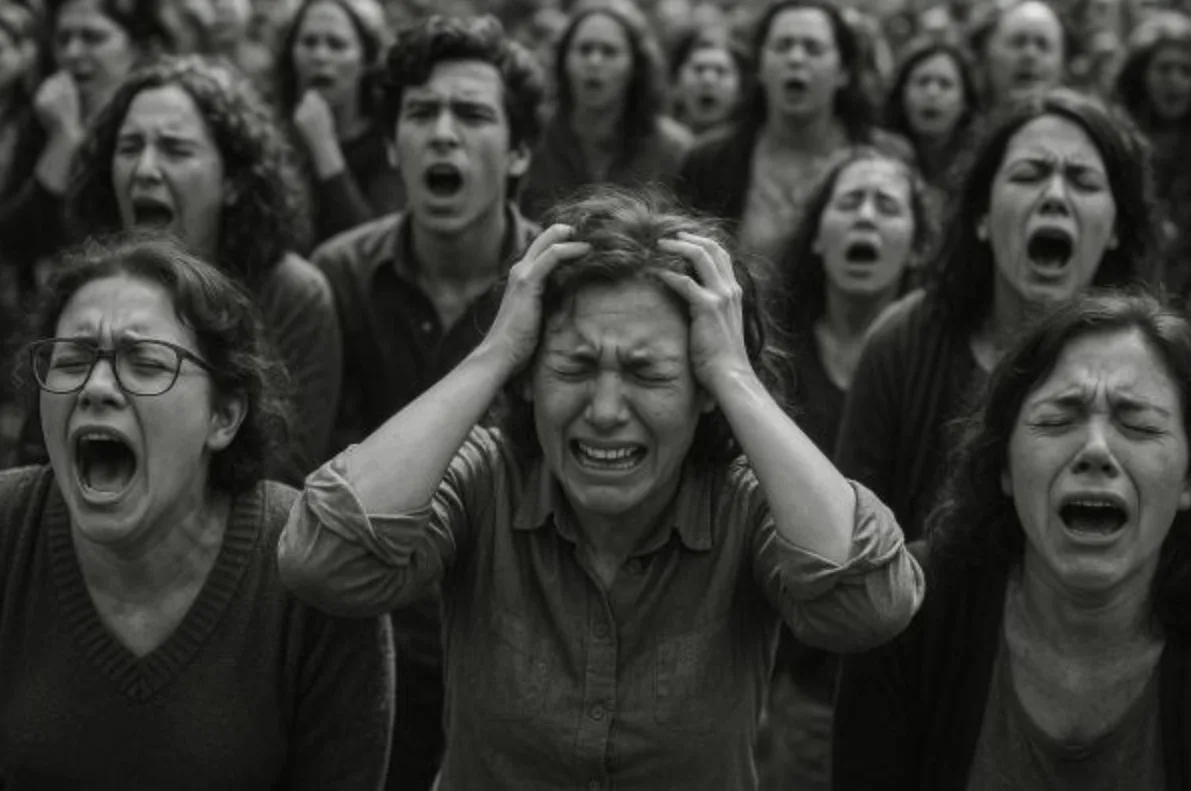
Twelve high school students collapsed within thirty minutes during what should have been an ordinary assembly. The paramedics rushed in, searching frantically for the cause. Gas leak? Carbon monoxide? Some unknown toxin? They found nothing. Every test came back normal. Yet the fear spreading through that building was unmistakable, affecting students who hadn’t even witnessed the initial collapse. This wasn’t a scene from a horror movie—this was a real case that landed on my desk as a consulting psychologist, and it perfectly illustrates one of the most misunderstood phenomena in mental health.
Mass hysteria doesn’t fit neatly into our modern understanding of illness. We expect symptoms to have clear physical causes, so when dozens of people suddenly develop identical complaints without any identifiable medical trigger, it challenges everything we think we know about health and disease. But here’s what makes this phenomenon so compelling from a psychological standpoint: the symptoms are real. These aren’t people faking illness or seeking attention. Their hearts truly race, their heads genuinely ache, and their bodies actually tremble. The origin, however, lies not in a virus or toxin, but in the complex interplay between individual psychology, social dynamics, and our deeply wired need to belong and protect ourselves from perceived threats. Throughout history, from medieval dancing plagues to modern workplace outbreaks, mass hysteria has repeatedly demonstrated that the boundary between mind and body is far more permeable than we’d like to admit. In this article, I’ll walk you through everything I’ve learned about this remarkable phenomenon—not just from textbooks, but from real cases, real people, and real psychological mechanisms that reveal profound truths about human nature.
The Psychology Behind Collective Illness
When we talk about mass hysteria in clinical terms, we’re really discussing what specialists call mass psychogenic illness or MPI. Think of it as a conversion disorder that happens to spread through a group rather than affecting just one person. Conversion disorders occur when psychological distress transforms itself into physical symptoms, and in mass hysteria, this transformation becomes contagious in a sense.
What fascinates me most is how this isn’t about weakness or gullibility. I’ve seen it affect intelligent, rational people who would never consider themselves susceptible to suggestion. The mechanism operates below conscious awareness. Your nervous system perceives a threat—real or imagined—and responds with genuine physiological changes. When you’re surrounded by others experiencing the same symptoms, your brain interprets this as confirmation that the threat is real, which amplifies your own response.
The phenomenon sits at this remarkable intersection of psychology and sociology. It’s simultaneously an individual mental health response and a collective behavior. You can’t fully understand it by looking at just one person, nor can you grasp it by only examining group dynamics. You need both lenses.
How many of these have you been "meaning to read" for months?
- 1
 TarcherThe Artist's Way30th Anniversary EditionListen Free On Audible
 - 2
 New Harbinger PublicationsThe Dialectical Behavior Therapy Skills WorkbookPractical DBT Exercises for Learning Mindfulness, Interpersonal Effectiveness, Emotion Regulation...Listen Free On Audible
 - 3
 New Harbinger PublicationsAdult Children of Emotionally Immature ParentsHow to Heal from Distant, Rejecting, or Self-Involved ParentsListen Free On Audible
Two Distinct Forms of Mass Psychogenic Illness
Not all mass hysteria looks the same, and recognizing the difference matters enormously for treatment. Mass anxiety hysteria strikes suddenly and resolves quickly. Picture a crowded space where someone smells something unusual, collapses, and within minutes, others start experiencing dizziness, nausea, and difficulty breathing. This type typically affects close-knit, sometimes isolated groups. The symptoms spread rapidly—almost explosively—but they also tend to dissipate once the perceived threat is removed or explained.
Mass motor hysteria operates differently. This variant develops gradually over weeks or even months among people experiencing chronic, prolonged stress. The symptoms involve movement disturbances—tremors, twitches, difficulty walking, weakness in limbs—and they’re remarkably persistent. I once consulted on a case at a textile factory where workers developed progressive tremors over six weeks. The conditions there were oppressive: constant surveillance, mandatory overtime, fear of job loss. The stress had been building for months before the first symptom appeared.
This distinction isn’t just academic. It tells us something crucial about prevention and intervention. Sudden, acute stressors produce one pattern; chronic, grinding pressure produces another. Both are real, both are valid psychological responses, but they require different approaches.
Why Our Brains Create These Symptoms
The honest answer? We don’t know with complete certainty. But several compelling theories have emerged from decades of research, and in my experience, they all contain pieces of the truth. Extreme anxiety and stress appear to be the foundation. Every outbreak I’ve studied or witnessed involved significant psychological pressure—sometimes obvious, sometimes hidden beneath the surface.
Your body doesn’t distinguish well between different types of threats. Whether you’re facing a genuine physical danger or an overwhelming psychological stressor, your nervous system activates similar alarm systems. Adrenaline surges, your heart rate increases, your breathing changes, your muscles tense. Now imagine experiencing this while surrounded by others showing the same signs. The social confirmation amplifies everything.
The nocebo effect plays a fascinating role here. You’ve probably heard of the placebo effect, where believing a treatment will help actually makes you feel better. The nocebo effect is its sinister twin. If you expect to experience symptoms, you often will. When media reports or rumors spread word about a mysterious illness, people begin monitoring their bodies for signs. That slight headache you’d normally ignore suddenly becomes significant. That vague nausea transforms into proof that you’ve been affected.
I think of it as a kind of collective stage fright, though that term doesn’t capture the full complexity. Before a feared event—an exam, a performance, a confrontation—anxiety produces real physical symptoms. When an entire group faces the same stressor, those symptoms can spread through observation and unconscious mimicry. Your brain is constantly scanning your environment for threats and taking cues from those around you.
Common Triggers and Risk Factors
Certain environments seem to breed mass hysteria more readily than others. Schools, particularly boarding schools or strict religious institutions, appear especially vulnerable. The combination of adolescence, hierarchical authority structures, physical proximity, and limited autonomy creates a pressure cooker.
Isolated communities that follow rigid belief systems show elevated risk. When deviation from norms brings punishment and outside information is limited, psychological pressure builds. Add a sudden stressor—a death, a scandal, an external threat—and symptoms can erupt.
Workplaces with poor conditions, constant surveillance, and job insecurity also create fertile ground. I’ve reviewed cases from factories, call centers, and medical facilities where employees developed mysterious collective symptoms that investigations could never link to environmental causes. The real toxin was chronic stress and powerlessness.
Pandemics and disease outbreaks paradoxically increase mass hysteria even as they represent real threats. The fear, uncertainty, and constant media coverage create exactly the conditions where psychogenic symptoms flourish. People become hypervigilant about their bodies, interpreting normal sensations as signs of illness.

Physical Manifestations That Feel Completely Real
Let me be absolutely clear about something: these symptoms are not imaginary. When someone experiencing mass hysteria reports a racing heart, that heart is actually racing. When they describe difficulty breathing, their breathing pattern has genuinely changed. The symptoms are real; the cause is psychological rather than pathophysiological.
The most common complaints include severe headaches that throb and persist. People report nausea and vomiting that can be severe enough to cause dehydration. Dizziness, lightheadedness, and fainting episodes happen frequently, especially in mass anxiety hysteria. Trembling or shaking that the person cannot control appears in many outbreaks.
Breathing changes are particularly common. Hyperventilation—rapid, shallow breathing—often appears early and can trigger a cascade of other symptoms. When you hyperventilate, you expel too much carbon dioxide, which changes your blood chemistry and causes tingling in the extremities, more dizziness, and a sensation of suffocation. This creates a vicious cycle: the symptoms of anxiety provoke more anxiety, which worsens the symptoms.
Chest discomfort and palpitations terrify people, understandably. Many individuals experiencing mass hysteria genuinely believe they’re having a heart attack. Sensory disturbances can include tingling, numbness, temporary vision problems, or muffled hearing. Some people develop weakness or paralysis in specific muscle groups, unable to move a limb despite having no neurological damage.
Who Is Most Susceptible
This is where things get interesting and somewhat controversial. Children and teenagers, particularly adolescent girls, appear in mass hysteria outbreaks disproportionately often. Multiple factors likely contribute: the social dynamics of adolescence, hormonal changes, developing stress response systems, and the intense pressure to conform that peaks during these years.
Does this mean females are somehow more prone to hysteria? I reject that outdated notion entirely. What it more likely reflects is that girls and women often face different stressors, have fewer acceptable outlets for expressing distress, and exist within social structures that may dismiss or minimize their concerns. When you cannot express psychological pain directly, your body may express it for you.
That said, mass hysteria affects people across all demographics. I’ve seen outbreaks among adult men in military units, factory workers of all genders, and mixed-age communities. The common thread isn’t gender or age—it’s shared stress, close social bonds, and a triggering event that activates collective fear.
People who are already anxious or dealing with other psychological stressors may be more vulnerable. Those who’ve experienced trauma, particularly if it’s unresolved, sometimes respond more intensely to new perceived threats. But here’s what I want to emphasize: susceptibility doesn’t equal weakness. It reveals the normal, human capacity for our psychological states to produce physical responses.
The Powerful Role of Media and Information Spread
We need to talk about how media coverage can transform a small incident into a full-blown outbreak. This isn’t about blaming journalists—it’s about understanding mechanisms. Vivid, detailed reporting of symptoms can actually trigger those same symptoms in audiences.
After September 11th and the subsequent anthrax scares, researchers documented significant increases in psychogenic symptoms across populations that had no direct exposure to either threat. What they did have was extensive exposure to graphic media coverage. Television replays, detailed descriptions, constant updates—all of this activated anxiety and vigilance.
One study found that every anniversary of 9/11, when media outlets replay footage and recount details, there’s a measurable spike in stress-related symptoms, PTSD manifestations, and anxiety complaints. Vicarious trauma is real. You don’t have to experience an event directly for it to affect you psychologically and physically.
Social media has added an entirely new dimension. Information—and misinformation—spreads at unprecedented speed. Rumors about contaminated water, toxic gases, mysterious illnesses can reach thousands of people in minutes. Each person who shares the information adds their own anxiety and interpretation. The signal amplifies as it spreads, often becoming more alarming with each iteration.
But here’s the flip side: media can also help. Thoughtful, measured reporting that provides accurate information, puts risks in context, and avoids sensationalism can actually reduce anxiety and prevent mass hysteria. Journalists who understand psychological principles can be part of the solution rather than amplifiers of the problem.

Historical Examples That Illuminate the Pattern
Throughout history, mass hysteria has taken forms that reflect the fears and beliefs of each era. Medieval dancing plagues saw people dance uncontrollably for days, sometimes until they collapsed. In the context of their time—rigid religious structures, poverty, disease, little understanding of mental health—this made a kind of psychological sense.
The Salem witch trials contained elements of mass hysteria. Young girls developed strange symptoms, and the community’s explanation involved supernatural evil because that fit their worldview. The symptoms were real; the interpretation was shaped by culture and belief.
More recently, we’ve seen outbreaks in schools worldwide. In 2012, nearly 200 girls in New York developed tics and verbal outbursts. Extensive medical investigation found no environmental cause, no infection, no toxin. What they did find was significant social stress and extensive social media coverage that likely spread symptoms through observation and anxiety.
Industrial settings provide numerous examples. Workers exposed to a strange smell or experiencing one person’s collapse can develop widespread symptoms within hours. Investigations consistently find no harmful exposure, but the symptoms persist until the psychological mechanism is addressed.
How We Diagnose Mass Psychogenic Illness
Diagnosis requires ruling out every possible physical cause first. You cannot diagnose mass hysteria until you’ve eliminated actual toxins, infections, environmental hazards, and medical conditions. This means testing air quality, checking for gas leaks, analyzing water and food, conducting medical examinations, and reviewing the environment thoroughly.
Certain patterns point toward psychogenic illness. The symptoms spread through visual or auditory contact rather than through the mechanisms we’d expect with infectious disease or toxin exposure. People who saw or heard about others’ symptoms develop them, while those who weren’t exposed to that information remain unaffected.
The symptoms don’t match known medical syndromes. They may combine elements from different conditions in ways that don’t make physiological sense. Medical tests come back normal despite significant reported symptoms.
The affected population shares psychological or social characteristics—they’re from the same tight-knit group, they’re under similar stressors, they have strong social bonds. The outbreak often follows a precipitating stressor or threat, even if that threat proves to be unfounded.
Recovery patterns also provide clues. Symptoms resolve when people are separated from the group, when the perceived threat is convincingly addressed, or when psychological intervention is provided. This recovery doesn’t follow the trajectory we’d expect from physical illness.
Treatment Approaches That Actually Work
Here’s the tricky part: telling someone their symptoms are “all in their head” is not only unhelpful, it’s potentially harmful. These individuals are experiencing real distress. They need validation, not dismissal.
The most effective approach combines several elements. First, remove the affected individuals from the triggering environment. This separation alone often reduces symptom intensity. Second, provide calm, authoritative reassurance from trusted medical or authority figures. When people feel safe and believe they’re no longer in danger, their nervous systems can begin to settle.
Cognitive-behavioral therapy techniques work remarkably well for mass hysteria. Teaching people to recognize the connection between thoughts, physical sensations, and emotions gives them tools to interrupt the anxiety cycle. Breathing exercises and relaxation techniques address the hyperventilation and tension that often drive symptoms.
For persistent cases, individual counseling helps address underlying anxiety, trauma, or stress. Sometimes the mass hysteria event reveals deeper psychological issues that need attention. Treating the individual while also addressing the group dynamics produces the best outcomes.
What doesn’t work? Overly detailed medical testing that reinforces the belief in physical illness. Extensive media coverage that spreads anxiety to new populations. Dismissive attitudes that shame people for their symptoms. Focusing on proving the symptoms aren’t “real” rather than helping people recover.

Prevention Strategies for High-Risk Environments
If you’re responsible for a school, workplace, or community with risk factors, prevention becomes paramount. Reducing baseline stress is the single most important intervention. This means addressing bullying, improving working conditions, providing adequate support, and creating environments where people feel heard and valued.
Open communication matters enormously. When people feel they can express concerns and be taken seriously, they’re less likely to manifest distress through physical symptoms. Create channels for reporting problems and ensure those reports lead to action.
Mental health education helps people recognize and manage stress before it reaches critical levels. Teaching emotional regulation skills, providing access to counseling, and normalizing help-seeking all contribute to prevention. Communities with good mental health infrastructure show lower rates of mass hysteria.
If an incident does occur, respond quickly with calm competence. Have a plan for managing outbreaks that includes medical evaluation, psychological support, and communication strategies. Control rumors through accurate information from trusted sources. Avoid media sensationalism by providing a designated spokesperson who can convey facts without drama.
What Mass Hysteria Reveals About Human Psychology
Every outbreak of mass hysteria teaches us something profound about how human minds work. We are not isolated individuals processing information independently. We are deeply social creatures whose thoughts, emotions, and even physical sensations are influenced by those around us.
The phenomenon demonstrates that the mind-body connection isn’t some vague, mystical concept—it’s a fundamental feature of human physiology. Your psychological state directly affects your physical health. Stress, fear, and anxiety don’t just make you feel bad emotionally; they produce measurable, observable changes in your body.
Mass hysteria also reveals the power of expectation. What you believe will happen influences what actually happens, sometimes profoundly. This principle operates in both helpful and harmful ways. Understanding it gives us tools for healing as well as insights into vulnerability.
Perhaps most importantly, these outbreaks show us that rational, intelligent people can experience symptoms without any physical cause, and this doesn’t make them weak or foolish. It makes them human. Our species evolved to be exquisitely sensitive to threat signals from our group. That sensitivity kept us alive for millennia. Sometimes, in our modern world, that ancient wiring produces responses that look bizarre but made perfect sense in ancestral environments.
FAQs About Mass Hysteria and Its Psychological Effects
Can mass hysteria happen to anyone or only certain personality types?
Mass hysteria can affect anyone regardless of intelligence, personality type, or psychological strength. While certain factors like existing anxiety or stress may increase susceptibility, the phenomenon primarily depends on social and environmental factors rather than individual personality traits. Being affected by mass hysteria doesn’t indicate weakness—it demonstrates normal human psychological and social responsiveness.
How long do symptoms from mass hysteria typically last?
Duration varies significantly between the two types. Mass anxiety hysteria typically resolves within hours to days once the perceived threat is removed or explained. Mass motor hysteria, developing from chronic stress, can persist for weeks or even months and usually requires more intensive intervention. Individual symptoms often improve rapidly once people are separated from the triggering environment and receive appropriate psychological support.
Is mass hysteria the same as panic attacks?
Mass hysteria and panic attacks share some symptoms but differ fundamentally. Panic attacks are individual experiences of intense anxiety with physical symptoms, while mass hysteria involves symptoms spreading through a group via social observation and shared perception of threat. However, panic attacks can occur within mass hysteria outbreaks. The key distinction is the collective nature and social spread of mass psychogenic illness.
Why are schools and workplaces common settings for mass hysteria?
These environments combine several risk factors: close physical proximity, shared stressors, hierarchical power structures, and limited autonomy. Schools add the developmental vulnerability of adolescence and intense social dynamics. Workplaces often involve job insecurity and chronic pressure. When people spend extensive time together under stress with limited control over their environment, conditions favor mass psychogenic illness.
Can someone fake mass hysteria or are the symptoms always genuine?
The symptoms in true mass hysteria are genuine, not faked or consciously produced. The individuals experiencing symptoms truly feel ill and are not seeking attention or malingering. This is a crucial distinction—mass hysteria involves unconscious conversion of psychological distress into physical symptoms. The person isn’t choosing to create symptoms; their nervous system is producing them automatically in response to perceived threat.
What’s the difference between mass hysteria and mass delusion?
Mass hysteria involves physical symptoms spreading through a group, while mass delusion involves shared false beliefs. Someone experiencing mass hysteria has real bodily symptoms (racing heart, nausea, trembling) triggered by psychological factors. Mass delusion involves groups believing something false—like conspiracy theories—without necessarily having physical symptoms. The two can overlap, but mass hysteria specifically refers to collective physical manifestations of psychological distress.
How do doctors tell the difference between mass hysteria and actual toxic exposure?
Medical teams conduct thorough environmental testing for toxins, gas leaks, and contaminants while simultaneously evaluating patients. Pattern recognition is crucial: toxic exposure typically affects people based on proximity to the source and exposure duration, while mass hysteria spreads through social contact and observation. Normal test results combined with symptom spread through visual or auditory channels rather than environmental exposure patterns suggest psychogenic origin.
Does social media make mass hysteria more common today?
Research strongly suggests social media amplifies both the frequency and reach of mass hysteria events. Information spreads faster and reaches larger audiences than ever before. Vivid descriptions and videos of symptoms can trigger similar responses in viewers. The constant connectivity and rapid information spread that characterize modern digital life create ideal conditions for collective psychological responses to proliferate.
Use this citation format to reference the article clearly and help readers find the original source.
PsychologyFor. (2025). What is Mass Hysteria and how does it affect us psychologically?. PsychologyFor. https://psychologyfor.com/what-is-mass-hysteria-and-how-does-it-affect-us-psychologically/