


See more of our articles in your search results.
There is a proven relationship between the intake of certain foods and their impact on health As an example, whole grain intake has been linked to a reduced risk of cardiovascular disease. But not only what we eat is important but also how it is prepared or processed.
Grinding grains to obtain refined cereals eliminates the germ and bran from the endosperm and this protective effect is lost. It has been suggested that the fiber content of whole grains helps reduce the glucose/insulin response after meals, also reduces the concentration of total cholesterol and low-density lipoproteins (LDL, the so-called ‘bad cholesterol’) and improves functional properties of the digestive tract.
Likewise, although meat consumption provides proteins and amino acids, necessary for proper growth and maintenance of the body; High consumption of processed meat, regardless of the type (beef, pork or chicken), has been associated with an increased risk of cardiovascular disease and type II diabetes. In this case, it seems that the presence of sodium (table salt), nitrates and nitrites, as well as advanced glycation end products (AGEs) found in this type of products, could explain this increased risk on cardiovascular health.
Of course the balance between health and illness does not depend exclusively on diet, but is influenced by numerous factors. Although diet plays a relevant role and many chronic diseases They could be prevented to a large extent by taking care of the diet and promoting healthy habits In fact, most of the common diseases in our environment are due to following inappropriate diets and this results in a significant loss of years of healthy life in Westernized societies like ours.
-omics Technologies and Nutrigenomics
The effect of foods and their ingredients on health is due to their specific action on cell function Nutrients, directly or indirectly, are substrates of metabolic pathways and their contribution through the diet can modulate cellular metabolism, activate some metabolic pathways and slow down others. For example, a diet rich in carbohydrates and low in fat stimulates the ‘de novo’ synthesis of fatty acids in the liver. The body tries to compensate, to the extent of its possibilities, the deficits or excesses that we commit in the diet. Illness arises when your efforts have not been sufficiently effective.
How many of these have you been "meaning to read" for months?
- 1
 HarperCollinsPete the CatI Love My White Shoes: A Groovy Story About Pete the Cat and His Colorful Shoes on a School Day A...Listen Free On Audible
 - 2
 HarvestTo Die ForA Cookbook of Gravestone RecipesListen Free On Audible
 - 3
 CrosswayDust to DustAging Wisely in an Anti-Aging WorldListen Free On Audible
In the last 20 years, there have been important advances in the techniques for studying metabolism, associated with the development of what is called high-performance post-genomic technologies. These new tools are able to characterize in great detail the molecules of our cells, their interrelationship and their regulation. –omics technologies have specific names depending on the molecule under study.
So, Mass genotyping, together with functional genomics, has made it possible to know the sequence of the human genome and begin to understand its function; It is complemented by transcriptomics, which studies the expression and function of genes, proteomics, which studies different proteins, and metabolomics, which studies metabolites, substrates, and products of metabolic pathways. Together, these -omic technologies help us understand, to a level of detail that was not possible before, the functioning of metabolism and its regulation.
In this context, Nutrigenomics emerges as the discipline that addresses the study of the effect of nutrients on metabolism using -omic technologies. In particular, Nutrigenomics studies changes in gene expression in response to diet. When we can understand the interaction that occurs, we are closer to designing more effective nutritional strategies to combat or prevent diet-related diseases.
We know that Not all people respond the same way to a diet Obesity is difficult to treat and, in part, this is due to the fact that not all individuals present the same metabolic response when following a specific diet. There are molecular differences between individuals, some encoded in DNA, in our genome, and which are responsible for the interindividual variability that occurs when faced with certain stimuli, such as diet. This specific part of Nutrigenomics is studied by the discipline we call Nutrigenetics.

SNPs and Nutrigenetics
Although the genome is almost identical in all individuals of the human species, there are small differences, inter-individual variations in the DNA sequence of different people. These different sequences are called polymorphisms and can affect our appearance, our metabolism and health and also the way we respond to a diet or strategy to counteract obesity.
There are several types of genetic differences, and the simplest consist of specific variations of one nucleotide by another in specific positions of the DNA; This is what we call single nucleotide polymorphisms (or SNPs, which we pronounce Snips, from the English single nucleotide polymorphism).
SNPs constitute the simplest and most common form of genetic variation, representing around 90% of all human DNA polymorphisms and it has been estimated that in total, there are approximately 10 million SNPs. Other genetic variations consist of deletions or insertions of fragments of hundreds of nucleotides. The impact of the SNPs and the different variations that we can find depends on their position, the function that this DNA sequence performs and can be from notable to almost negligible.
Let’s see the relevance that SNPs may have in the genetic predisposition to obesity with the example of the FTO gene The presence of polymorphisms in this gene favors intake, even without hunger, since it affects the sensation of appetite and satiety. The risk variant predisposes to greater intake of refined flours, sugar and sweets; Likewise, it promotes an increase in calorie and fat intake and there is a greater susceptibility to obesity than in individuals who do not have the risk variant.
Finally, mention that SNPs of the FTO gene show interaction with diet composition, so that they can modulate the response to weight loss depending on the type of diet followed, achieving better weight loss when a diet adapted to the variant one has is proposed. Genetic information, based on the characterization of SNPs that we have, together with nutrigenetic information, that is, the interaction that occurs between said SNPs and nutrients, is one of the tools of Personalized Nutrition.

Personalized nutrition
Advances in the knowledge of metabolism and its relationship with food, as well as the complex interactions that are generated between genotype and nutrients but also its relationship and adaptation according to the lifestyle we follow and the environment that surrounds us, are crucial aspects to produce personalized nutritional recommendations that promote health and contribute to the well-being of people.
True personalized nutrition aims to integrate scientific knowledge with the peculiarities of people (genetic and metabolic), adjusting to your preferences and lifestyle. Today this is feasible thanks to mathematical tools, defined by experts on the subject, that codify these specifications and help prioritize the best options. This helps when making decisions (type of diet, dietary pattern, preferred foods, etc.), choosing the most appropriate ones at a given time and adapting them as progress is made in the proposed objective (weight loss, weight gain). muscle mass, bone mass, etc.) according to the individual uniqueness that each person presents.
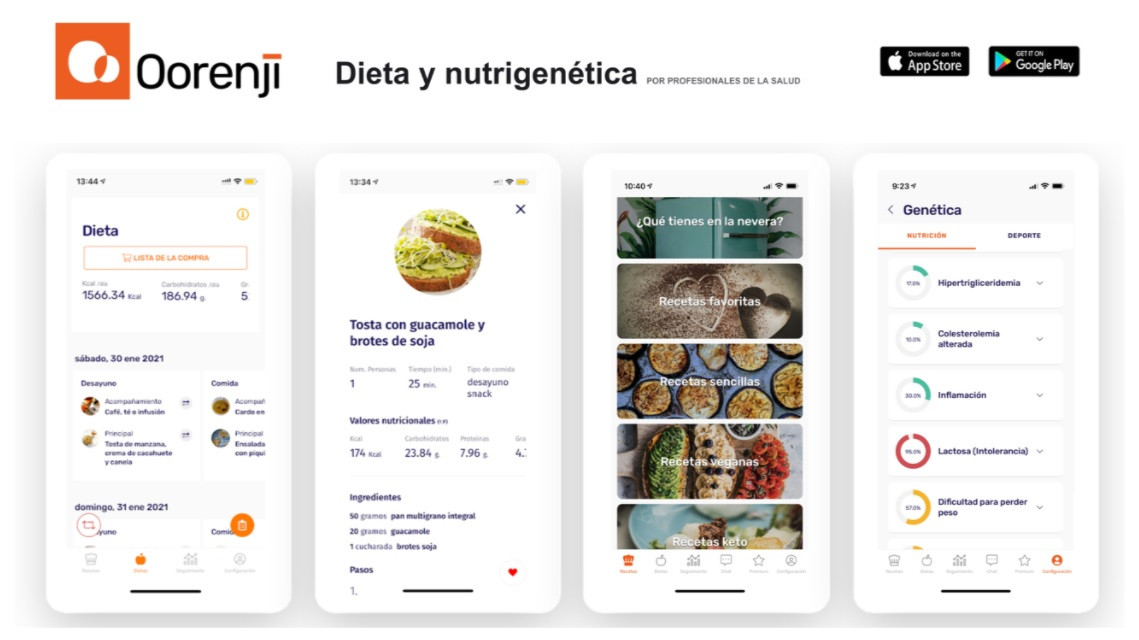
Oorenji: Precision Nutrition and Nutrigenetics
Oorenji is a personalized nutrition app designed so that, by using it, you can easily plan your personalized weekly menu by knowing the recommended servings of each food.
Ooreji’s artificial intelligence algorithm takes into account the user’s general and biomedical variables (age, sex, physical activity or physical condition of the person) and genetic variables (this information is obtained through an analysis of a saliva sample). You can download Oorenji in the official Android and Apple stores.
Author: Dr. Francisca Serra Vich, Professor at the University of Nutrition and Bromatology, has taught at the University of the Balearic Islands (UIB) since 1990.
Use this citation format to reference the article clearly and help readers find the original source.
PsychologyFor. (2024). What is Precision Nutrition and How to Bring it Into Your Daily Life?. PsychologyFor. https://psychologyfor.com/what-is-precision-nutrition-and-how-to-bring-it-into-your-daily-life/