


See more of our articles in your search results.
You know that quiet, nagging voice that tells you who you are before you even walk into a room, the one that whispers “you’re not good enough at this” or “you’ve always been the shy one” or “you’re just not the kind of person who succeeds”? That voice is your self-concept in action: the overall mental picture you hold of who you are, built from your traits, abilities, values, and roles, and formed gradually through early relationships, feedback from others, and lived experience starting in childhood. It’s built from decades of tiny moments: a teacher’s offhand comment, a parent’s praise or silence, a breakup, a promotion you didn’t get, a compliment you brushed off because it didn’t match the story you already believed about yourself. Most people never stop to ask where that story came from or whether it’s even accurate, yet it quietly steers nearly every decision they make, from the jobs they apply for to the relationships they allow themselves to have. Over time, this internal narrative becomes so automatic that it starts to feel like an unquestioned fact rather than a story shaped by circumstance.
This matters more than it might seem, because the way you see yourself doesn’t just sit in the background of your mind, it actively shapes your behavior, your emotional reactions, and even your physical health. When that internal picture is distorted or overly harsh, you might avoid opportunities you’re actually capable of handling, stay in relationships that confirm a painful narrative, or feel a persistent sense of not measuring up no matter how much you achieve. This isn’t a character flaw or something to feel ashamed of; it’s simply how human psychological development works, and it means the inner narrative can be rewritten. Many people carry beliefs about themselves that were formed passively, shaped by circumstances rather than chosen deliberately, and that disconnect between who they are now and who their inner story says they are can create real emotional distress, showing up as chronic self-doubt, perfectionism, or a fear of being “found out” as inadequate.
So where does this internal self-portrait actually come from, and more importantly, can it be changed?
This article breaks down exactly what self-concept means in psychology, walks through how it forms across childhood and adulthood, and offers concrete, research-informed strategies for building a healthier, more accurate sense of self.
What Does Self-Concept Mean in Psychology?
Self-concept refers to the total collection of beliefs, perceptions, and knowledge a person holds about themselves, essentially the answer to the question “Who am I?” The APA Dictionary of Psychology defines it as one’s description and evaluation of oneself, including psychological and physical characteristics, qualities, skills, and social roles. It is broader than self-esteem, which is specifically about how positively or negatively you judge yourself, and broader than self-image, which usually refers to a narrower, moment-to-moment perception.
How many of these have you been "meaning to read" for months?
- 1
 TarcherThe Artist's Way30th Anniversary EditionListen Free On Audible
 - 2
 New Harbinger PublicationsThe Dialectical Behavior Therapy Skills WorkbookPractical DBT Exercises for Learning Mindfulness, Interpersonal Effectiveness, Emotion Regulation...Listen Free On Audible
 - 3
 New Harbinger PublicationsAdult Children of Emotionally Immature ParentsHow to Heal from Distant, Rejecting, or Self-Involved ParentsListen Free On Audible
Self-concept typically includes several interconnected dimensions. Understanding these components helps explain why self-concept feels so multifaceted and sometimes contradictory:
- The physical self: how you perceive your body, appearance, and physical abilities.
- The social self: how you believe others see you and the roles you occupy in relationships, family, and community.
- The emotional self: your awareness of your own feelings, moods, and emotional patterns.
- The psychological or intrapersonal self: your values, desires, needs, and inner motivations.
- The ideal self: the version of yourself you aspire to become, which can create tension when it clashes with your actual self-perception.
Psychologist Carl Rogers, a pioneer of humanistic psychology, argued that psychological distress often arises from a gap between one’s actual self and one’s ideal self. When that gap is large, people can experience chronic dissatisfaction, anxiety, or a persistent feeling of falling short, even when their external achievements suggest otherwise. Rogers believed that unconditional positive regard from others, particularly during childhood, was essential for developing a self-concept that feels stable and authentic rather than contingent on constant approval. He also distinguished between the “real self,” which reflects who a person actually is, and the “self as experienced,” which reflects how that person interprets their own existence, arguing that psychological health depends on narrowing the gap between the two.

How Does Self-Concept Develop Over Time?
Self-concept begins forming in early childhood and continues evolving throughout the entire lifespan, shaped by cognitive development, social feedback, and lived experience. It is not fixed at any single point; rather, it is a dynamic construct that gets revised as new information and relationships enter a person’s life.
Early Childhood: The Foundations
Self-recognition, one of the earliest markers of a developing self-concept, typically emerges around 18 to 24 months, famously demonstrated through mirror self-recognition tasks. Developmental psychologist Susan Harter, whose work is considered foundational in this field, describes how children begin building self-representations through concrete, observable traits before gradually developing more abstract and psychological self-descriptions as their cognitive abilities mature. A four-year-old might describe themselves in terms of what they can do (“I can run fast”), while a ten-year-old starts incorporating comparisons to peers and internal traits (“I’m more patient than my brother”). At this stage, children rely heavily on concrete, black-and-white categories, and they tend to accept adult feedback about themselves almost without question, which is part of why early messages from caregivers carry such lasting weight.
Childhood and Adolescence: Social Feedback Takes Over
During school-age years and adolescence, self-concept becomes heavily influenced by social comparison and feedback from parents, teachers, and peers. Sociologist Charles Cooley’s concept of the “looking-glass self” captures this well: we come to see ourselves largely through how we imagine others perceive us. A child repeatedly labeled “the smart one” or “the difficult one” often internalizes that label as a core part of their identity, sometimes long after it stops being accurate or useful. School environments add another layer, since academic performance, athletic ability, and peer acceptance all become measurable, comparable domains that children start using to rank themselves against others.
Adolescence adds another layer of complexity because teenagers juggle multiple, sometimes conflicting self-concepts across different contexts, such as who they are with friends versus family versus online. This is also when identity exploration intensifies, a process psychologist Erik Erikson described as central to the “identity versus role confusion” stage of psychosocial development. Erikson proposed that failing to resolve this stage successfully can lead to a diffuse or unstable identity that persists well into adulthood, making the teenage years a particularly sensitive window for self-concept formation.
Adulthood: Consolidation and Continued Change
By adulthood, self-concept generally becomes more stable, but it never becomes entirely fixed. Major life transitions, such as career changes, parenthood, illness, or relationship shifts, can prompt significant revisions. Psychologists distinguish between self-concept clarity, meaning how stable and clearly defined your self-knowledge feels, and a more fluctuating self-concept, which research links to higher rates of rumination, low self-esteem, and even depressive symptoms when clarity is chronically low. Interestingly, self-concept clarity tends to increase gradually with age for many people, partly because accumulated life experience provides more consistent evidence about one’s actual patterns, preferences, and values, reducing the guesswork that often characterizes younger adulthood.

What Factors Shape Self-Concept the Most?
Several overlapping forces combine to build self-concept, and no single factor works in isolation. Recognizing these influences can help you understand why certain beliefs about yourself feel so deeply rooted.
- Early attachment relationships: Psychiatrist John Bowlby’s attachment theory shows that the quality of early bonds with caregivers shapes a child’s core beliefs about their own worthiness of love and their trust in others, beliefs that often persist into adult relationships and self-view.
- Parental and caregiver feedback: Consistent praise, criticism, or comparison from caregivers during formative years leaves a lasting imprint on self-worth and expectations.
- Social comparison: People constantly, often unconsciously, measure themselves against peers, siblings, and cultural benchmarks, which can either bolster or erode self-concept depending on the direction of comparison.
- Cultural context: Individualist cultures tend to emphasize a self-concept built around uniqueness and personal achievement, while collectivist cultures often emphasize interdependence and relational identity.
- Significant life experiences: Trauma, achievement, failure, illness, and major transitions all act as data points the mind uses to update its running narrative about who you are.
- Media and social platforms: Constant exposure to curated images of others’ lives has become a modern, powerful influence on self-perception, particularly around body image and perceived success.
Psychiatrist Bessel van der Kolk’s work on trauma and the body demonstrates how deeply distressing experiences can become embedded not just in memory but in physical and emotional self-perception, sometimes leading people to develop a self-concept organized around survival, hypervigilance, or unworthiness rather than safety and value. His research on the somatic imprint of trauma suggests that healing self-concept after adverse experiences often requires body-based approaches, not just cognitive reframing, since the nervous system itself can hold onto outdated survival narratives long after the danger has passed.
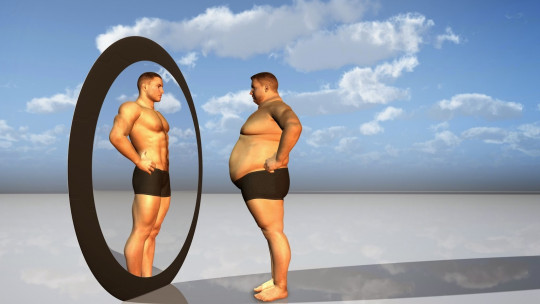
What Psychological Theories Explain Self-Concept?
Several major theories in psychology attempt to explain how the self is structured and maintained, and together they offer a fuller picture than any single model alone. Understanding these frameworks helps clarify why different therapeutic approaches target self-concept in different ways.
Self-discrepancy theory, developed by psychologist E. Tory Higgins, proposes that emotional distress often results from discrepancies between different versions of the self: the actual self, the ideal self, and the “ought self,” which represents who you believe you should be based on duty or obligation. Large gaps between these versions are associated with specific emotional patterns, such as sadness when the actual self falls short of the ideal self, and anxiety when it falls short of the ought self.
Self-schema theory, associated with psychologist Hazel Markus, describes self-concept as organized around cognitive structures called self-schemas, which are mental frameworks that help people process information relevant to their identity quickly. A person with a strong “athletic” self-schema, for instance, will notice and remember athletic-related information about themselves far more readily than someone without that schema, which explains why self-concept can feel so selectively reinforced over time.
Social identity theory, developed by psychologist Henri Tajfel, adds a group dimension, suggesting that part of self-concept comes from the social groups we belong to, such as nationality, profession, or community, and that people derive part of their self-worth from how favorably those groups compare to others. This theory helps explain why threats to a group identity, such as one’s profession being devalued, can feel like a personal attack on self-concept itself.

Self-Concept vs Self-Esteem: What Is the Difference?
Self-concept is the descriptive picture of who you believe you are, while self-esteem is the evaluative judgment of how much you like or value that picture. You can have a very clear self-concept (“I am introverted, analytical, and creative”) paired with either high or low self-esteem depending on whether you view those traits favorably. Understanding this distinction matters because improving self-esteem alone doesn’t always fix a distorted or overly narrow self-concept, and vice versa.
| Self-Concept | Self-Esteem |
|---|---|
| Descriptive: “Who am I?” | Evaluative: “How do I feel about who I am?” |
| Includes traits, roles, values, and abilities | Reflects overall self-worth and confidence |
| Relatively broad and multidimensional | Can fluctuate more with situational success or failure |
| Shaped by identity and experience over time | Shaped heavily by social comparison and feedback |
How Can You Tell If Your Self-Concept Needs Attention?
A distorted or fragile self-concept often shows up as a persistent mismatch between how you see yourself and how you actually behave or achieve in the world. This mismatch can quietly fuel anxiety, self-sabotage, or chronic dissatisfaction even when life circumstances look objectively fine from the outside.
- You dismiss compliments or achievements as flukes rather than evidence of ability.
- You describe yourself using rigid, absolute labels like “I’m just bad at relationships” or “I’m not a leader type.”
- Your self-view changes drastically depending on who you’re around or how the day is going.
- You feel a strong, uncomfortable gap between your ideal self and your actual daily experience.
- You struggle to name your own values, preferences, or strengths without referencing what others expect of you.
- You notice yourself performing different, almost contradictory personalities across different social settings, and it leaves you feeling unsure which one is “real.”
None of these signs indicate a disorder; they simply suggest your internal narrative may have been shaped more by outside circumstances than by honest self-reflection, and that it might be time to actively revise it.

What Are Practical Ways to Improve Self-Concept?
Improving self-concept involves deliberately gathering more accurate, compassionate evidence about who you are rather than relying on old, unquestioned narratives. This is gradual work, not an overnight fix, but the strategies below are grounded in established psychological approaches.
1. Challenge Distorted Self-Beliefs Using Cognitive Techniques
Psychiatrist Aaron Beck’s foundational work on cognitive behavioral therapy, later expanded by psychologist Judith Beck, shows that many negative self-beliefs are actually cognitive distortions rather than accurate facts. Techniques like identifying evidence for and against a belief (“I always fail”) can reveal that the belief is exaggerated or outdated, opening space for a more balanced self-concept. Keeping a simple written log of moments that contradict a negative core belief can be surprisingly powerful, since the mind naturally tends to notice confirming evidence and overlook disconfirming evidence unless it’s actively tracked.
2. Practice Self-Compassion Instead of Self-Criticism
Psychologist Kristin Neff’s research on self-compassion demonstrates that treating yourself with the same kindness you’d offer a friend, rather than harsh self-judgment, is strongly associated with greater psychological resilience and a more stable self-concept. This doesn’t mean lowering standards; it means separating your inherent worth from your performance. Neff’s model breaks self-compassion into three components: self-kindness, common humanity, and mindfulness, all of which can be practiced through small daily habits like noticing self-critical thoughts without immediately believing them.
3. Diversify Your Sources of Self-Definition
People whose self-concept rests entirely on one role, such as a career title or a relationship, are especially vulnerable to identity crises when that role changes. Deliberately cultivating multiple sources of identity, such as hobbies, friendships, values, and personal growth, creates a more resilient and multidimensional self-concept. This concept, sometimes called “self-complexity” in psychological research, suggests that people with more varied self-aspects tend to recover faster from setbacks in any single domain, because a failure in one area doesn’t threaten their entire identity.
4. Reflect on Values, Not Just Achievements
Ask yourself what genuinely matters to you, independent of external validation. Values clarification, a core tool in Acceptance and Commitment Therapy developed by psychologist Steven Hayes, helps people build a self-concept anchored in personal meaning rather than approval or comparison. A simple exercise involves listing the qualities you admire most in others and asking which of those you already embody, even in small ways, which often reveals a more generous self-view than the one you default to.

5. Seek Corrective Relational Experiences
Because much of self-concept forms through relationships, healing often happens through new relationships too. Supportive friendships, mentorships, or therapeutic relationships can offer the kind of consistent, honest feedback that gradually revises old, inaccurate self-narratives. This is one reason therapy itself can be so effective for self-concept work, since the therapeutic relationship provides a safe, low-stakes space to test out new, more accurate beliefs about oneself.
6. Set Small, Achievable Goals
Accomplishing realistic goals gives your brain concrete evidence to update its self-assessment, rather than relying on abstract self-talk alone. Each small success becomes a data point that challenges an outdated negative narrative and reinforces a more capable self-view. Psychologist Albert Bandura’s concept of “self-efficacy,” referring to one’s belief in their own capability to succeed at specific tasks, is closely tied to this process, since small wins accumulate into a broader sense of competence over time.
7. Limit Harmful Comparison Triggers
Reducing exposure to environments or platforms that consistently trigger unfavorable social comparison, particularly heavily curated social media content, can protect self-concept from unnecessary erosion. Awareness of when and why comparison spikes is often the first step toward managing it, and simple habits like unfollowing accounts that consistently trigger inadequacy can make a measurable difference over time.
How Does Self-Concept Show Up in the Digital and Social Media Age?
Social media has introduced a uniquely modern challenge to self-concept formation by constantly exposing people to curated, idealized versions of others’ lives. Unlike traditional social comparison, which was limited to one’s immediate community, online comparison is essentially limitless, drawing from thousands of carefully selected images and updates that rarely reflect ordinary daily reality.
This constant comparison can distort self-concept in specific ways, particularly around body image, career success, and relationship satisfaction, since people tend to compare their unfiltered internal experience to someone else’s filtered external presentation. Adolescents and young adults appear especially vulnerable to this effect, given that their self-concept is still consolidating during these years. A practical response involves treating social media consumption the way you might treat any other input that shapes self-perception: with intentional limits, periodic breaks, and active reflection on how a given platform or account makes you feel about yourself afterward, rather than passively absorbing its effects.

How Does Self-Concept Affect Mental Health and Relationships?
A distorted or overly negative self-concept is closely linked to higher risk of anxiety, depression, and relationship difficulties, largely because it colors how ambiguous situations and feedback get interpreted. Someone with a self-concept organized around unworthiness might interpret a neutral comment from a partner as confirmation of rejection, triggering conflict that wasn’t actually warranted by the situation itself.
Neuroscience research referenced by organizations studying self-esteem and brain function suggests that healthier self-evaluation is associated with structural differences in brain regions tied to stress regulation and reward processing, indicating that this isn’t just “positive thinking” but something with measurable biological correlates. Beyond mental health, self-concept also shapes relationship patterns; people with clearer, more stable self-concepts tend to communicate needs more directly and tolerate conflict without it threatening their entire sense of identity. Building a more accurate self-concept is therefore not just an internal exercise but a relational one, with benefits that extend outward to how you connect with others, negotiate boundaries, and recover from interpersonal conflict without spiraling into global self-judgment.
FAQs About Self-Concept
What is the simplest definition of self-concept?
Self-concept is the overall mental picture a person holds of themselves, covering their traits, abilities, roles, values, and physical characteristics. It functions as the internal answer to the question “Who am I?” and is distinct from self-esteem, which is the evaluative judgment of that picture. Self-concept includes multiple dimensions, such as the physical self, social self, emotional self, and ideal self, and it develops gradually starting in early childhood through social interaction and personal experience. Unlike a fixed personality trait, self-concept is considered a dynamic construct that continues to be revised throughout adulthood based on new relationships, achievements, and life circumstances, meaning it always remains open to change rather than being permanently locked in place by early experiences alone.
At what age does self-concept begin to form?
Self-concept begins forming remarkably early, with self-recognition typically emerging around 18 to 24 months of age, often demonstrated through mirror self-recognition experiments. From there, children build increasingly complex self-descriptions, starting with concrete traits like physical abilities and gradually incorporating more abstract psychological and social characteristics as cognitive development progresses through childhood and adolescence. Developmental psychologist Susan Harter’s research shows this progression is closely tied to broader cognitive maturation, with each stage building on the last rather than replacing it entirely. While the foundation is laid in early childhood, self-concept remains far from finished at that stage and continues evolving significantly throughout adolescence and adulthood as new roles and relationships are added.
Can self-concept change in adulthood?
Yes, self-concept can absolutely change in adulthood, though it typically becomes more stable and resistant to change compared to childhood and adolescence. Major life events such as career transitions, parenthood, illness, therapy, or significant relationships often prompt meaningful revisions to how people see themselves. Psychologists note that self-concept clarity, meaning how stable and well-defined one’s self-knowledge feels, can fluctuate even in adulthood, and low clarity is linked to increased rumination and lower well-being. Deliberate practices like therapy, self-reflection, and values-based goal setting can actively support healthy change in adult self-concept, and many people report their most significant self-concept shifts happening well into their thirties, forties, or beyond.
How is self-concept different from self-image?
Self-image usually refers to a narrower, more momentary perception of oneself, often centered on physical appearance or how one appears in a specific situation, while self-concept is the broader, more enduring collection of beliefs about identity, abilities, values, and roles. Think of self-image as a snapshot and self-concept as the fuller life story built from many snapshots over time. Self-concept incorporates self-image as one component among several, alongside the social self, emotional self, and psychological self. Confusing the two can lead people to think that fixing one aspect, such as appearance-related self-image, will automatically resolve a more deeply rooted self-concept issue, which is often not the case, since deeper identity questions usually require more than surface-level changes.
Does culture influence how self-concept forms?
Culture plays a significant role in shaping self-concept, particularly around whether identity is framed as independent or interdependent. Individualist cultures, common in much of Western society, tend to encourage a self-concept built around personal uniqueness, autonomy, and individual achievement. Collectivist cultures, more common in many Asian, African, and Latin American societies, tend to emphasize relational and group-based identity, where self-concept is more deeply tied to family, community roles, and social harmony. These cultural frameworks influence not only how people describe themselves but also how they respond to praise, criticism, and social comparison, meaning strategies to build a healthy self-concept may need cultural sensitivity rather than a one-size-fits-all approach, especially for people navigating multiple cultural identities at once.
What is the connection between self-concept and mental health conditions?
A distorted, overly negative, or unstable self-concept is strongly associated with increased vulnerability to anxiety, depression, and low self-esteem, partly because it shapes how ambiguous events and feedback get interpreted. When someone’s core self-narrative is organized around unworthiness or failure, neutral or even positive experiences can get filtered through that lens and reinforce the negative belief rather than challenge it. Conversely, a stable and reasonably accurate self-concept tends to buffer against psychological distress and supports healthier coping during difficult life events. It’s important to note that a difficult self-concept is a normal part of human development rather than a diagnosis, though when it significantly disrupts daily functioning, speaking with a licensed mental health professional can be genuinely helpful.
Can therapy help change a negative self-concept?
Yes, therapy is one of the most effective structured ways to address a negative or distorted self-concept, particularly approaches like cognitive behavioral therapy, acceptance and commitment therapy, and psychodynamic therapy that directly explore identity and core beliefs. A therapist can help identify where certain self-beliefs originated, test whether they still hold up against real evidence, and practice new, more balanced ways of relating to oneself in a supportive setting. This process often takes time, since self-concept beliefs formed over years or decades don’t shift instantly, but consistent therapeutic work has been shown to meaningfully improve self-concept clarity and reduce associated symptoms of anxiety and depression. If you’re considering this route, look for a licensed therapist experienced in identity-focused or cognitive-based approaches.
Bibliography
- American Psychological Association. (2020). Self-Concept. APA Dictionary of Psychology.
- Bandura, A. (1997). Self-Efficacy: The Exercise of Control. W.H. Freeman.
- Beck, J. S. (2020). Cognitive Behavior Therapy: Basics and Beyond. Guilford Press.
- Bowlby, J. (1969). Attachment and Loss. Basic Books.
- Harter, S. (2012). The Construction of the Self: Developmental and Sociocultural Foundations. Guilford Press.
- Hayes, S. C., Strosahl, K. D., & Wilson, K. G. (1999). Acceptance and Commitment Therapy: An Experiential Approach to Behavior Change. Guilford Press.
- Higgins, E. T. (1987). Self-Discrepancy: A Theory Relating Self and Affect. Psychological Review.
- Neff, K. (2011). Self-Compassion: The Proven Power of Being Kind to Yourself. William Morrow.
- Rogers, C. R. (1961). On Becoming a Person: A Therapist’s View of Psychotherapy. Houghton Mifflin.
- Van der Kolk, B. (2014). The Body Keeps the Score: Brain, Mind, and Body in the Healing of Trauma. Viking.
Use this citation format to reference the article clearly and help readers find the original source.
PsychologyFor. (2026). What is Self-Concept, How is it Formed and How to Improve it. PsychologyFor. https://psychologyfor.com/what-is-self-concept-how-is-it-formed-and-how-to-improve-it/