

See more of our articles in your search results.
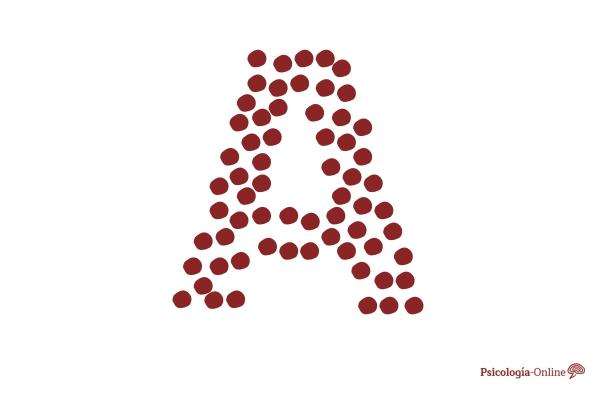
In psychology, at the beginning of the 20th century, the Gestalt movement set out to understand how individuals perceive the order of the surrounding world. What this school has managed to formulate are the principles of visual perception, recognized even today, and that define how human beings interact with visual stimuli, creating orders from them. With this PsychologyFor article we will analyze one of these principles with some examples, to understand what is the Gestalt law of proximity<
Gestalt Laws
Gestalt psychology tries to understand psychological phenomena by showing them as organized and structured wholes, rather as the sum of their constituent parts, thus dissociating from structuralism (with its tendency to analyze mental processes in elementary sensations) and accentuates concepts such as properties emerging, olism and context.
In Berlin in the first half of the 20th century, Max Wertheimer and other psychologists (including Wolfgang Köhler and Kurt Koffka) continued their studies on human visual perception, giving life to the famous Gestalt Theory. Their goal was to investigate the global and holistic processes involved in the perception of a standard form in the environment; In particular, they have tried to explain how human beings perceive groups of objects as a whole and how they instead perceive parts of objects, simple and coherent forms endowed with a precise meaning. Furthermore, they stated that it is impossible to understand perceptual experience by composing it into a set of simpler physical units: everything is different from the sum of its parts.
How many of these have you been "meaning to read" for months?
- 1
 TarcherThe Artist's Way30th Anniversary EditionListen Free On Audible
 - 2
 New Harbinger PublicationsThe Dialectical Behavior Therapy Skills WorkbookPractical DBT Exercises for Learning Mindfulness, Interpersonal Effectiveness, Emotion Regulation...Listen Free On Audible
 - 3
 New Harbinger PublicationsAdult Children of Emotionally Immature ParentsHow to Heal from Distant, Rejecting, or Self-Involved ParentsListen Free On Audible
Gestalt offers us a series of laws that clarify how people categorize the items they see and how they develop their ideas about the events happening around them. These laws of perception are autonomous from experience and present from birth; They are, therefore, called autochthonous factors. With special reference to visual perceptions, main rules or Gestalt laws of organization of perceived data are:
- Proximity: the elements come together in forms with greater cohesion the greater their proximity. This is the Gestalt law that we will talk about in this article.
- Likeness: the elements are joined together with greater cohesion the greater their similarity (by color, shape, dimension, etc.).
- common destiny: Elements with movement equal to each other and different from other elements are grouped.
- Direction continuity: by superimposing two elements, their lines are joined according to continuity of direction.
- Closing: some unrelated elements can be interpreted as a single figure.
- Pregnancy: The simpler and more stable an element is, the more “impactful” it appears.
- Past experience: The brain tends to create already seen shapes where there are only simple separated or interrupted lines.
- Figure background: It is the classic scheme on which optical illusions are based, when a figure is immediately understood as such thanks to its contours, but then we realize that the background can also be a figure.
What is the Gestalt law of proximity
The Gestalt law of proximity says that When objects are physically close to each other, we tend to think that they belong to a group< Other conditions being equal, therefore, the variable that guarantees the appearance of a unitary figure is represented by the relative distance of the elements that compose it, or the area delimited by the margins closest to each other assumes the role of figure. The proximity in space of two or more elements most likely induces them to be considered as a single figure.
Let’s look at some everyday examples of the Gestalt law of proximity. We all use the principle of proximity, and this happens every day unconsciously. An example? You’re reading it right now! This article uses the principle of proximity in the subdivision of the text into paragraphs: As long as the lines of text are close to each other, we perceive them as a single element, whether a paragraph or a column of text; When, on the other hand, we insert too much space between lines, the lines will begin to appear different from each other and not like part of the same text. Each paragraph, being a different topic from the previous and the next, is divided among the others, but is perceived as a unit because the individual words and letters are close.
The principle of proximity is also very useful to make the usability of products more intuitive in the field of design. This is another example of the Gestalt law of proximity.
Difference between law of proximity and law of similarity
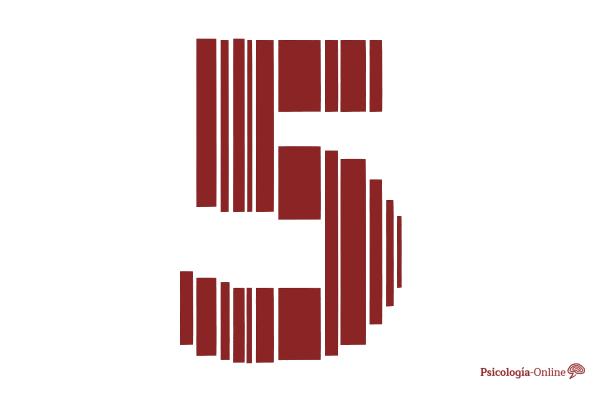
The law of similarity say what objects similar to each other in color, shape, size or orientation, are perceived as in relation to each other or belonging to the same group. Elements that have some type of similarity tend to be unified among themselves by observing their vision at a distance in terms of color and objects, movement and positioning (or orientation).
This principle is also important in the world of design; In fact, it allows us to recognize elements that belong to the same family of products even when their shape and functions vary, as long as there are formal characteristics that make them similar. All patterns and textures, for example, are based on this principle, but not only, even when building a series of icons. Icons must be similar to each other to function within a set that is visually coherent; Although each icon has a different shape, it has similar characteristics to the others: it has the same color, the same thickness of the lines and the same graphic style, which makes us perceive them as a whole.
The same principle applies to brandingto the design of a coordinated image: when the coordinated image of a brand is going to be built, in effect, certain elements are going to be used, repeating them in each application of that logo or coordinated material of the company, creating rhythm and consistency.
This article is merely informative, at PsychologyFor we do not have the power to make a diagnosis or recommend a treatment. We invite you to go to a psychologist to treat your particular case.
If you want to read more articles similar to What is the Gestalt law of proximity we recommend that you enter our Cognitive Psychology category.
Bibliography
- By Sandro Salvati, R. (2015). The main legs of the Gestalt
- Miglietta, L. (2019). What is the Gestalt? How does it apply to Graphic Design? Retrieved from: https://www.grafigata.com/gestalt-e-grafica/
- Necronomicon (2013). The legs of the Gestalt
- Nussbaumer Knaflic, C. (2015). Data storytelling. Generate value from the presentation of information. Milan: Apogee.
Use this citation format to reference the article clearly and help readers find the original source.
PsychologyFor. (2023). What is the Gestalt Law of Proximity. PsychologyFor. https://psychologyfor.com/what-is-the-gestalt-law-of-proximity/