

See more of our articles in your search results.
The Renaissance has gone down in history as one of the most brilliant periods of humanity. Leaving aside whether this statement involves clichés (there are some), it is very true that, During the 15th and 16th centuries, Europe experienced an unprecedented revaluation of classical culture, adapted, of course, to Christian doctrine.
It is the era of Humanism at its maximum expression, which left an indelible mark on all areas of human life: politics, literature, philosophy, society, art. The human being stands as the epicenter; It is the time of travel, discoveries, great princes and the gestation of what, later, would be the great absolutist monarchies.
The topic we propose in this article may seem curious, but it is a basic idea of the Renaissance: Fame and its victory over Death, a completely Renaissance theme. If you are interested, do not hesitate to continue reading. We propose a review of the idea of Fame during the era of Humanism.
Fame in the Renaissance or the will to survive Death
In reality, the desire to overcome the abandonment that comes with death has been present in many cultures. In Ancient Egypt, for example, it was considered that pronouncing the name of the deceased prolonged their existence in the afterlife. Destroying statues and names meant, therefore, condemning the deceased to the most absolute nothingness, to the most feared and terrifying oblivion.
However, despite the human will to survive, the concept takes on a special aspect in the Renaissance. So, While in the medieval period there was hardly any personalization (a person was something as long as he belonged to the great universal mechanism of God), in the Renaissance era a will to individual memory that transcends death begins to be seen. In this way, the tombs begin to recreate the exact features of the deceased, while the clients of the works of art begin to appear (with their specific faces, of course), thus expressing the new desire not to be forgotten.
How many of these have you been "meaning to read" for months?


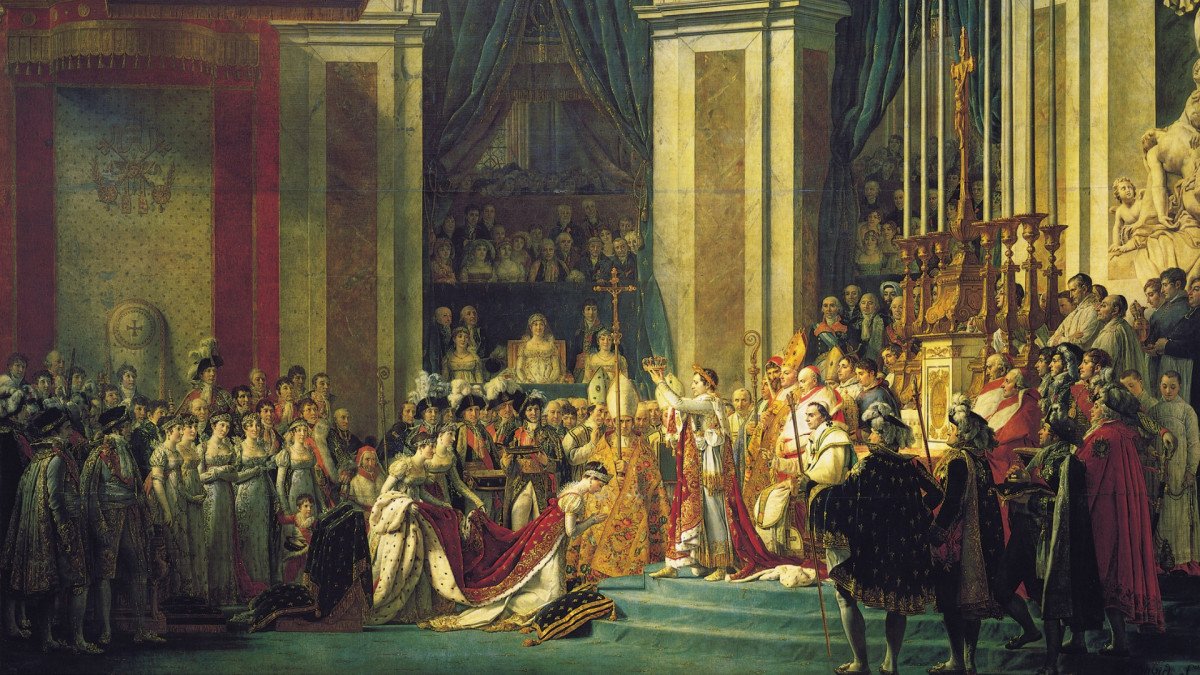
The Triumph of Fame on the death of Petrarch and its influence on the Renaissance
In this sense, one of the works that had the most influence on the mentality of the time and, therefore, on its artistic expression, was The Triumph of Fame over Death, by Francesco Petrarca (1305-1375). The poem is part of the poetic collection Los Triunfos, and, in essence, explores the concept that Fame grants its possessor a kind of immortality and, therefore, is one of the ways to “overcome” Death.
Petrarch’s poem was reflected, mainly, in funerary art, which, especially from the 15th century onwards, made conscientious efforts to reflect the defining characteristics and personality of the deceased individual, as well as his work and legacy.
Petrarch, the “first great humanist”
Historical borders are just mere academic concretions, as we already know. In this sense, we should not imagine that Humanism emerged in a single block when Renaissance culture began to spread throughout Europe. In reality, during the Middle Ages there had already existed a rich pre-humanist culture (that’s what we could call it), which had its greatest epicenter in 14th century Florence.
Among the outstanding intellectuals of the Florentine Trecento period, in addition to Dante Alighieri (1265-1321), it is worth highlighting the aforementioned Petrarch, author of a profuse poetic and philosophical work that influenced many later generations. In his famous poem The Triumph of Fame, the poet presents a complex vision of this concept that would notably imbue the culture of the Modern Age.
On the one hand, the poet presents it as one of the ways to become immortal, since fame transcends the body and life and leaves the memory of oneself and one’s works in subsequent generations. However, at the same time, Petrarch warns about the dangers that it entails: it is about the ever-present vanitas, vanity, an obvious sin that can lead the most virtuous man to the most abominable crimes just to be remembered.
Petrarch’s magnificently complex vision of Fame, to which he gave double-edged power, deeply penetrated Renaissance society. This dual concept especially permeated art (specifically, funerary art), which was filled with representations about Fame and, at the same time (and paradoxically), the glory and corruption that it entailed.
Fame in Renaissance funerary art
Starting with Petrarch’s ideas of immortality, the funerary art of the Renaissance became the vehicle for mortals to achieve Fame and, therefore, immortality. Funeral monuments are beginning to proliferate that honor their deceased and trumpet their qualities and achievements to the four winds.
The mausoleum thus becomes a way to perpetuate the memory of the deceased. Consequently, a kind of formal and artistic “competition” begins. In other words: Every lord, every prince wishes to present to the world a unique funerary monument. As an example, we could cite the magnificent Malatestian Temple, a formidable funerary complex that Sigismundo Malatesta had built in Rimini (commissioned by none other than León Battista Alberti).
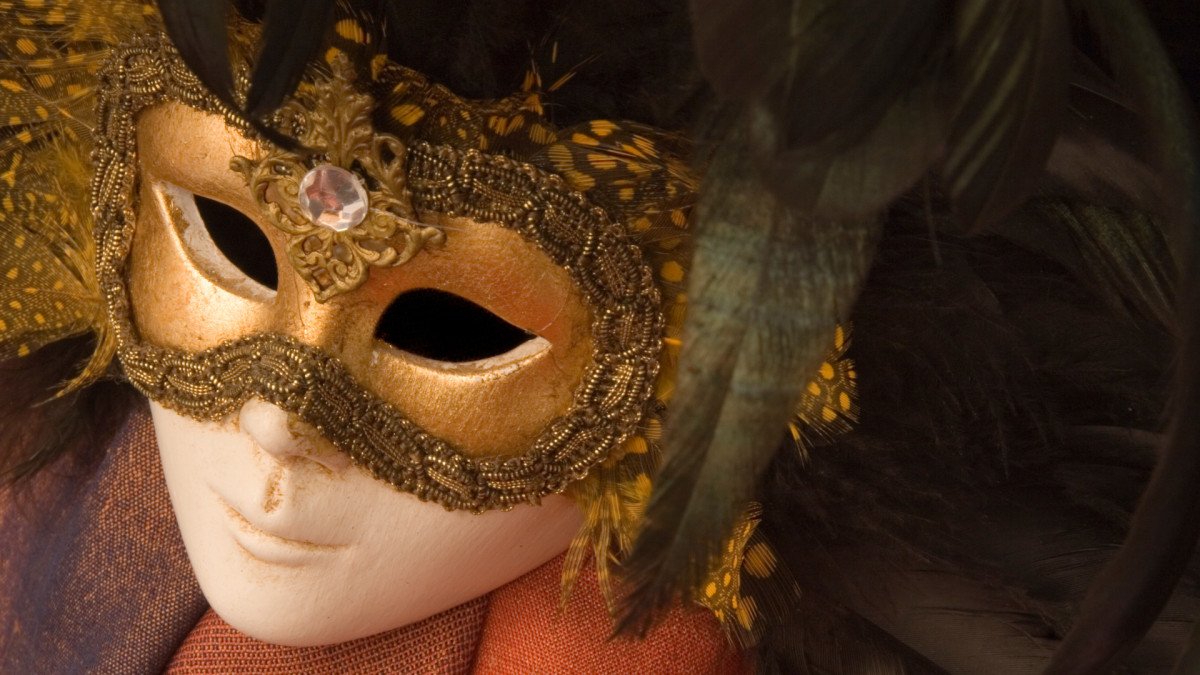
familiar faces
We return for a moment to what we mentioned in the introduction. Indeed, in the Middle Ages there were royal tombs; and yes, its owner was often depicted on the sarcophagus, generally as a sleeper. However, most of these effigies are not real portraits. The features of the deceased are not shown in your copy, so, in truth, what you want to reproduce is the symbol of the deceased, his status (a religious, a king…) and, therefore, the place he had. in society. This concept is actually very medieval. The individual as part of the mechanism of the world; a tiny piece, indispensable, yes, but a piece, after all.
Nothing to do with the idea that arose in the 14th and 15th centuries. It is from the 15th century and, especially, in the 16th century, when we began to find effigies that accurately reproduce the physical characteristics of the deceased, in addition to their status and condition. What is intended is not to make a symbol, but rather a copy (magnified, of course) of the man or woman in question. With name and surname.
Death is just a dream
Another of the Renaissance ideas about Death is the vision of it as if it were a “dream.” Many of those represented appear asleep, with no element that indicates that they have died. Again, a transcendence beyond Death.
The recumbent is often accompanied, under the influence of classical antiquity, by the gods Hypnos and Thanatos, brothers who, in Greek mythology, represented sleep and death, respectively. Everything is confused; The deceased only sleeps, and death does not exist.
In short, we could say that, although throughout history human beings have desired to transcend Death and “survive” it, individual transcendence is characteristic of the 15th and 16th centuries in Europe, which coincide with the Renaissance. Unlike medieval times, human beings begin to see themselves as something separate from the rest, a being with a name and surname that has a unique and specific mission in the world. In this way, the concept of man and woman as simple pieces in the great machine of the world had ended.
It is logical that, after this process of individualization, the desire to transcend individual death and, therefore, oblivion arose. Portraits that reproduce the features of the portrayed character begin to proliferate, as is the case of the clients who appear in the paintings, and as is also the case of the sculptures that decorate the sarcophagi of the deceased. They are effigies, often life-size, that attempt to reproduce the individuality of the deceased, as well as his achievements and legacy. A true battle against oblivion.
The Triumph of Fame over Death, by Francesco Petrarca, had a lot to do with all of this. The idea put forward by the poet was that fame could be a vehicle of transcendence with respect to death and, therefore, of immortality. But Petrarch and his concept of fame were not only influential in the Renaissance centuries. His idea penetrated deeply (and forever) into all Western funerary art, which was never separated from individualism again.
Use this citation format to reference the article clearly and help readers find the original source.
PsychologyFor. (2024). What Was the Concept of Fame Like in the Renaissance?. PsychologyFor. https://psychologyfor.com/what-was-the-concept-of-fame-like-in-the-renaissance/