


See more of our articles in your search results.
You wake up and the last twenty minutes of the night are simply gone, not blurry, not distant, just missing. Maybe a friend mentions something you said at the bar and your stomach drops because you have zero memory of saying it. This experience, often called an alcohol-induced blackout, is far more common than most people admit out loud. It isn’t a character flaw or a sign that you’re “bad at drinking.” It’s a specific, well-documented neurological event, and understanding why it happens is the first step toward feeling less ashamed and more informed.
If you’ve ever felt a wave of panic trying to reconstruct a night from secondhand accounts, you already know how disorienting this can be. The shame that follows often runs deeper than the confusion itself, because losing hours of your own life can feel like losing a piece of your identity. Researchers at the National Institute on Alcohol Abuse and Alcoholism have found that roughly half of drinkers report experiencing at least one blackout in their lifetime, which means this is a shared, human vulnerability rather than a rare malfunction. Recognizing that the mechanism is biological, not moral, tends to be the moment people finally stop white-knuckling their way through hangover-fueled guilt.
So what is actually breaking down inside your skull during those lost hours?
This article walks through the neuroscience of alcohol blackouts, the difference between forgetting and never remembering in the first place, who is most vulnerable, and what current clinical frameworks suggest for reducing the risk going forward.
What Actually Happens in Your Brain During an Alcohol Blackout?
An alcohol blackout occurs when rising blood alcohol concentration disrupts the hippocampus so severely that new experiences are never converted into long-term memory in the first place. It is not that you forgot; the memory was never recorded. This distinction matters because it explains why blackout memories cannot be jogged, coaxed, or hypnotized back into view.
How many of these have you been "meaning to read" for months?
- 1
 TarcherThe Artist's Way30th Anniversary EditionListen Free On Audible
 - 2
 New Harbinger PublicationsThe Dialectical Behavior Therapy Skills WorkbookPractical DBT Exercises for Learning Mindfulness, Interpersonal Effectiveness, Emotion Regulation...Listen Free On Audible
 - 3
 New Harbinger PublicationsAdult Children of Emotionally Immature ParentsHow to Heal from Distant, Rejecting, or Self-Involved ParentsListen Free On Audible
Dr. Aaron White, senior scientific advisor at the NIAAA and one of the most cited researchers on this phenomenon, describes blackouts as creating a temporary void in the brain’s record-keeping system. Short-term memory, oddly enough, stays functional during a blackout. You can hold a conversation, order a drink, or even drive, because those actions rely on working memory that lasts only a few seconds at a time. What fails is the transfer step, the biological process that would normally move that fleeting experience into durable, retrievable storage.
Once that transfer step breaks, the moment simply evaporates.
Neurobiologically, this is best classified as a form of anterograde amnesia, a temporary inability to form new memories going forward in time, as opposed to losing memories you already had. Your brain during a blackout is still awake, still processing sensory input, and still capable of complex behavior. It has just lost its ability to file any of it away. This is precisely why witnesses insist you seemed “totally fine” moments before you have no recollection at all.
How Does Alcohol Disrupt the Hippocampus and Memory Formation?
Alcohol impairs memory primarily by overstimulating inhibitory GABA receptors and blocking excitatory NMDA glutamate receptors in the hippocampus, which together prevent a cellular process called long-term potentiation from taking place. Without long-term potentiation, new neural connections cannot strengthen, and no lasting memory trace can form.
Yukitoshi Izumi, a research professor of psychiatry at Washington University in St. Louis, helped identify the molecular chain behind this. His team showed that alcohol interferes with NMDA receptors that transmit glutamate, the neurotransmitter responsible for carrying the electrical signals between neurons that underlie learning. That interference triggers the production of certain neurosteroids, which then further suppress long-term potentiation. The result is a hippocampus that is technically active but functionally blind to new information.
It’s a bit like a security camera that keeps recording but never saves the footage.
- GABA-A receptors get flooded with inhibitory signaling, producing the sedated, slowed-down feeling most people associate with heavy drinking.
- NMDA receptor blockade prevents the calcium influx needed to strengthen synaptic connections between neurons.
- CA1 pyramidal cells in the hippocampus, the specific cells responsible for encoding autobiographical events, become disproportionately suppressed.
- Disrupted theta rhythm activity in the septohippocampal circuit further scrambles the timing signals memory formation depends on.
Notably, this cellular disruption does not appear to kill neurons outright during a single episode, which runs counter to older assumptions about alcohol “burning brain cells.” Instead, the damage is functional and, in isolated instances, reversible once blood alcohol concentration drops. Repeated heavy exposure, however, is a different story, and that distinction matters for anyone trying to gauge their actual risk.
What’s the Difference Between an En Bloc and a Fragmentary Blackout?
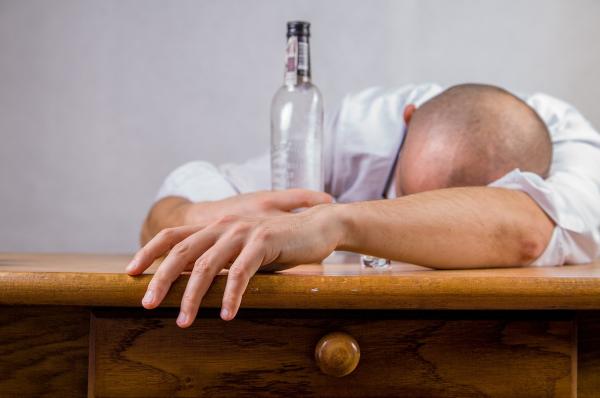
Researchers distinguish two distinct types of alcohol blackout: en bloc blackouts, where a stretch of time is completely and permanently unrecoverable, and fragmentary blackouts, where pieces of the night can sometimes be jogged loose by a cue or reminder. The two feel different from the inside, and only one of them tends to respond to prompting.
A fragmentary blackout, sometimes nicknamed a “greyout,” leaves partial traces. You might not remember getting into a cab, but hearing the driver’s name later triggers a flicker of recognition. This happens because encoding was incomplete rather than fully blocked, so some weak associative traces survived the disruption. An en bloc blackout offers no such flicker, no matter how many photos or witness accounts you’re shown, because nothing was ever encoded to retrieve.
| En Bloc Blackout | Fragmentary Blackout |
|---|---|
| Complete, permanent memory loss for the period | Partial memory loss with retrievable fragments |
| No response to cues, photos, or reminders | Memories can sometimes be triggered by prompts |
| Associated with sharply rising blood alcohol concentration | Associated with high but less rapid intoxication |
| Often described as a “black hole” in time | Often described as a “fuzzy” or patchy memory |
Clinicians increasingly use this distinction to gauge severity and risk, since en bloc episodes tend to correlate with faster binge drinking and higher peak blood alcohol levels. If you consistently experience en bloc rather than fragmentary blackouts, that’s a meaningful signal worth paying attention to, not a trivial quirk of your particular hangover.
Why Does Drinking Speed Matter More Than Total Alcohol Consumed?
The rate at which blood alcohol concentration rises is the single strongest predictor of whether a blackout occurs, more so than the total volume of alcohol consumed over an entire evening. Two people can drink the same total amount and only one blacks out, purely because of pacing.
This happens because the hippocampus responds to the steepness of the intoxication curve, not just its eventual peak. Slamming several drinks in twenty minutes on an empty stomach spikes blood alcohol far faster than sipping the same amount across three hours with food in your system. The faster spike overwhelms the brain’s compensatory mechanisms before they can adjust, whereas a slower rise gives neural systems more time to partially adapt. That’s why “pre-gaming” before a night out is disproportionately linked to blackout risk compared with steady, paced drinking later in the evening.
Sudden binge episodes are simply harder on the encoding machinery than gradual ones.
Body composition, hydration, and stomach contents all interact with this speed effect. An empty stomach allows alcohol to reach the bloodstream, and then the brain, dramatically faster than a meal-buffered one does. Carbonated mixers also appear to accelerate absorption slightly, which is one reason certain cocktails feel deceptively strong. None of this means slow drinkers are immune, but pacing genuinely changes the odds in measurable ways.
Are Some People Biologically More Prone to Alcohol Blackouts?
Yes. Individual differences in genetics, body composition, and baseline alcohol sensitivity make some people far more susceptible to blackouts than others, even at similar blood alcohol levels. This is not simply a matter of willpower or tolerance in the way it’s often assumed to be.
Dr. Marc Schuckit, a longtime researcher at the University of California San Diego, developed influential work on what he termed the “low level of response” to alcohol, showing that people who feel less impaired at a given dose often paradoxically face higher long-term risk, partly because they unknowingly drink more before subjective warning signs kick in. Genetics account for a substantial portion of this variability, shaping everything from enzyme efficiency to hippocampal sensitivity. Family history of heavy drinking is one of the more reliable predictors clinicians look for when assessing blackout vulnerability.
Sensitivity, in other words, is not something you can simply train your way out of.
Sex differences add another layer. Women tend to experience blackouts at lower total drink counts than men, partly due to differences in body water percentage and enzyme activity that affect how alcohol distributes through tissue. This isn’t a minor footnote; it’s a clinically consistent pattern that shows up across multiple independent studies. Anyone assuming “I only had four drinks, that shouldn’t have caused a blackout” may be underestimating how differently their particular body metabolizes alcohol compared with a friend’s.
How Is a Blackout Different From Just Being Very Drunk?
Being drunk describes impaired judgment, coordination, and mood while memory formation may still be functioning. A blackout specifically describes the failure of memory encoding itself, which can occur even in someone who doesn’t appear especially impaired to onlookers at the time.
This is the part that surprises people most: cognitive and memory functions are impaired by alcohol before motor coordination is. Someone deep in an alcohol-induced blackout can walk in a straight line, hold a coherent conversation, and seem entirely present, all while their hippocampus has essentially stopped saving new files. That mismatch between apparent function and actual memory encoding is exactly why friends often insist “you seemed totally normal” right before a stretch of total memory loss.
It’s a genuinely unsettling gap between how a person looks and what their brain is actually doing.
This also explains why blackouts are so dangerous from a decision-making standpoint. A person can still drive, argue, send messages, or make choices with real consequences during a blackout, even though none of it will be retrievable afterward. The behavior is real; only the record of it disappears. That combination, intact action paired with erased memory, is what makes blackouts uniquely risky compared with ordinary intoxication.

Can You Trust What Other People Say Happened During Your Blackout?
Generally, yes, secondhand accounts of your blackout are typically accurate, because the people describing your behavior were not the ones with impaired encoding. Their memories formed normally while yours did not.
That said, context still matters. Friends recounting events after their own drinking may misremember details, exaggerate for effect, or fill gaps with assumption rather than observation. Cross-referencing multiple sources, texts you sent, a rideshare receipt, security footage if available, tends to produce a more reliable reconstruction than relying on a single retelling. This kind of triangulation is often what clinicians recommend when a patient is trying to piece together the scope of a blackout for safety reasons, such as figuring out whether they drove a vehicle.
There’s no shortcut around the fact that the memory itself simply won’t return.
It’s worth noting that repeatedly asking others to fill in blackout gaps, while sometimes necessary for practical reasons like safety or apologies, can also reinforce anxiety if it becomes a compulsive post-drinking ritual. If you notice yourself doing this after most nights out rather than occasionally, that pattern itself is informative, separate from whatever specific events get uncovered.
What Are the Real Risks of Having Repeated Blackouts?
Repeated alcohol blackouts are associated with a significantly elevated risk of injury, risky sexual encounters, drunk driving, violence exposure, and the later development of an alcohol use disorder. Blackouts aren’t just an embarrassing inconvenience; they’re a measurable marker of danger.
- Increased likelihood of unintentional injury, since decision-making and self-protective instincts are compromised even while the body keeps moving.
- Higher rates of unprotected or non-consensual sexual experiences, a pattern documented extensively in college drinking research.
- Greater probability of driving under the influence, precisely because the person often believes, incorrectly, that they seemed fine.
- Stronger long-term correlation with progressing toward alcohol use disorder, particularly when blackouts begin occurring frequently rather than rarely.
Frequent blackout history has also been linked in neuroimaging studies to subtle changes in brain chemistry, including altered GABA and NAA levels in binge drinkers who report a history of blacking out compared with those who don’t. This doesn’t mean permanent damage is inevitable after a handful of episodes, but it does suggest the brain is registering the repeated insult in ways that show up on scans, not just in memory gaps. Treating occasional blackouts as harmless because “nothing bad happened this time” tends to underestimate the cumulative pattern researchers are tracking.

How Can You Reduce Your Risk of Blacking Out Again?
Reducing blackout risk mainly comes down to controlling how fast blood alcohol concentration rises, since speed of intoxication is the dominant risk factor identified across the research. A handful of concrete habit changes make a measurable difference.
- Pace your drinks to roughly one standard drink per hour, giving your liver time to metabolize alcohol before the next one arrives.
- Eat a substantial meal beforehand, since food slows gastric emptying and blunts the speed of alcohol absorption into the bloodstream.
- Avoid pre-gaming or shot-heavy starts, which are strongly associated with the sharp intoxication spikes that trigger en bloc blackouts.
- Alternate with water between alcoholic drinks to slow overall consumption and reduce dehydration-related impairment.
- Track your drink count deliberately rather than relying on subjective feeling, especially if you have a genetically lower perceived response to alcohol.
- Set a hard stopping point before you start drinking, ideally shared with a sober or designated friend who can hold you to it.
Dr. Kim Fromme, a psychology professor at the University of Texas at Austin whose research has focused extensively on blackout prevalence among young adults, has emphasized that awareness of personal blackout history is itself a protective factor. People who recognize their own pattern of vulnerability tend to make more deliberate pacing choices than those who assume blackouts are random bad luck. That single shift in mindset, from randomness to pattern recognition, is often the most actionable insight to come out of this entire body of research.
When Do Blackouts Signal a Deeper Problem With Drinking?
Blackouts that occur frequently, escalate in severity, or happen at lower drink counts over time can signal a developing alcohol use disorder rather than an isolated bad night. Frequency and trajectory matter more than any single incident.
Dr. Mary Larimer, director of the Center for the Study of Health and Risk Behaviors at the University of Washington, has spent decades developing harm-reduction approaches for college and young adult drinkers, arguing that blackout frequency is one of the most useful early warning signs available to clinicians. Her BASICS intervention model treats a rising pattern of memory loss not as a moral failing but as actionable clinical data, worth discussing openly rather than hiding. That reframing tends to lower the shame barrier that otherwise keeps people from mentioning blackouts to a doctor at all.
Waiting until things feel catastrophic before asking for help is unnecessary.
Dr. Kristen Witkiewitz, a clinical psychologist known for her work on mindfulness-based relapse prevention and harm reduction in addiction treatment, has similarly argued that framing changes in drinking as a spectrum of goals, rather than an all-or-nothing choice between total abstinence and unchanged behavior, makes it far easier for people to actually engage with treatment. Someone experiencing repeated blackouts doesn’t necessarily need to label themselves as having a severe disorder to justify seeking support; the frequency and pattern alone are reason enough to talk to a professional.

What Should You Do If You Keep Losing Memories When You Drink?
If blackouts are becoming a recurring pattern rather than a rare event, the most useful next step is an honest conversation with a doctor, therapist, or addiction specialist about your drinking pattern, not just the blackouts themselves. Memory loss is a symptom, not the whole picture.
Bringing concrete details to that conversation helps enormously: how many episodes in the last few months, roughly how much and how fast you were drinking each time, and whether the pattern is getting more frequent or more severe. Clinicians trained in motivational interviewing, an evidence-based counseling style that avoids confrontation in favor of collaborative goal-setting, tend to find these conversations far more productive when patients arrive with specifics rather than vague guilt. There’s no need to have already “hit rock bottom” to justify bringing this up; early pattern recognition is exactly when intervention tends to be most effective.
A single conversation rarely fixes everything, and that’s fine.
For some people, the right response is a structured reduction plan; for others, it’s exploring whether abstinence feels more sustainable; and for a smaller subset, formal treatment for alcohol use disorder becomes appropriate. None of these paths require shame to justify pursuing them. Recognizing that memory loss during drinking is a biological signal worth listening to, rather than an embarrassing secret to bury, is itself a meaningful act of self-respect.
FAQs about Alcohol Blackouts and Memory Loss
Why don’t I remember anything when I drink heavily?
Heavy drinking disrupts a brain region called the hippocampus, which is responsible for converting short-term experiences into long-term memories. When blood alcohol concentration rises quickly, this transfer process breaks down almost entirely, meaning the events you lived through were never actually saved to memory in the first place. This is different from ordinary forgetting, where a memory exists but becomes hard to access over time. During a blackout, there’s nothing to access because encoding failed at the moment it happened. The severity depends heavily on how fast you drank, how much you drank, your body weight, whether you’d eaten, and individual genetic differences in alcohol sensitivity. Some people experience this after a handful of drinks consumed quickly, while others might drink the same amount over several hours without any memory disruption at all. It’s a real physiological event, not a sign of weak character or poor discipline.
Is it normal to black out from drinking sometimes?
It’s common, which is different from saying it’s harmless or something to shrug off entirely. Surveys suggest roughly half of people who drink report having experienced at least one blackout at some point, particularly during young adulthood when binge drinking patterns tend to peak. Occasional blackouts, especially isolated incidents tied to unusual circumstances like drinking on an empty stomach at a celebration, don’t automatically indicate a serious problem. However, frequency matters a great deal. If blackouts are happening most times you drink, occurring at lower amounts than they used to, or becoming longer and more complete over time, that pattern moves well beyond “normal” into territory worth discussing with a healthcare provider. Treating blackout frequency as a health metric, similar to tracking blood pressure, tends to be a more useful mental frame than treating each incident as an isolated embarrassing accident.
Can stress make alcohol blackouts worse?
Stress doesn’t directly cause blackouts on its own, but it interacts with drinking behavior in ways that increase risk. People under high stress often drink faster, drink more, or drink on an empty stomach because eating and pacing feel like lower priorities in the moment, and all three of those factors independently raise blackout likelihood. Sleep deprivation, which frequently accompanies stressful periods, also appears to compound alcohol’s impact on memory-related brain regions, though this area is less thoroughly studied than blood alcohol concentration itself. There’s also a psychological layer: some people drink specifically to escape stressful thoughts, which can lead to less mindful pacing and a higher tolerance for feeling extremely intoxicated before stopping. If you notice that your worst blackouts tend to cluster around your most stressful weeks, that’s a pattern worth mentioning to a therapist, since it may point toward using alcohol as a coping mechanism rather than purely social drinking.
Do blackouts mean I have an alcohol use disorder?
A single blackout doesn’t meet clinical criteria for alcohol use disorder on its own, but a recurring pattern of blackouts is one of several warning signs clinicians consider when assessing drinking behavior. Diagnostic criteria typically look at a broader cluster of symptoms, including tolerance, unsuccessful attempts to cut down, continued drinking despite negative consequences, and time spent recovering from drinking, alongside memory loss. Frequent blackouts often co-occur with several of these other criteria, which is why researchers treat blackout frequency as a useful early flag rather than a standalone diagnosis. If you’re blacking out regularly and also noticing that drinking is interfering with work, relationships, or your ability to stop once you start, it’s worth having a full conversation with a professional rather than trying to self-diagnose based on memory loss alone.
Why do some people never black out no matter how much they drink?
Individual variation in alcohol sensitivity is significant, and some people genuinely appear more resistant to blackouts even at high drink counts, though this resistance isn’t necessarily protective in the way it seems. Genetic differences in enzyme activity, body composition, and baseline neural sensitivity all influence how vulnerable someone’s hippocampus is to alcohol’s disruptive effects at a given blood alcohol level. Ironically, people who report rarely blacking out sometimes have a lower subjective sense of impairment, meaning they may drink more overall before feeling “too drunk,” which can actually increase their risk for other alcohol-related harms even without memory loss. Blackout resistance shouldn’t be read as a sign that heavy drinking is safe for that individual; it simply means one particular consequence is less likely to show up compared with someone else drinking an identical amount.
How long does a blackout memory gap usually last?
The duration varies enormously depending on how high blood alcohol concentration rose and how quickly it got there. Some blackouts cover only twenty or thirty minutes, often the window during which drinking accelerated most sharply, while others span several hours of an evening. Fragmentary blackouts tend to leave scattered pockets of memory rather than one continuous gap, so a person might recall arriving somewhere and leaving but nothing in between. En bloc blackouts, by contrast, often produce one uninterrupted void that doesn’t respond to cues or reminders no matter how much time passes afterward. There’s no fixed formula linking specific drink counts to specific gap lengths, since individual metabolism, food intake, and drinking pace all shift the equation. What’s consistent is that once the gap forms, no amount of trying to remember will recover it, because the information was never stored to begin with.
Is there any way to get blackout memories back?
For a true en bloc blackout, no, because the memory was never encoded in the first place, meaning there’s nothing stored to retrieve regardless of technique, effort, or time passed. This is fundamentally different from typical forgetting, where a memory trace exists somewhere in the brain but becomes difficult to access; hypnosis, sleep, or concentration exercises can sometimes help with ordinary forgetting but do nothing for a true blackout gap. Fragmentary blackouts are a partial exception, since some weak associative traces may have formed, and specific sensory cues, a smell, a song, a photograph, occasionally trigger a flicker of recognition. Piecing together what happened during a blackout usually relies on external sources instead: texts, receipts, witness accounts, or security footage. If reconstructing the timeline matters for safety reasons, like determining whether you drove, gathering outside information is far more reliable than trying to force the memory to surface.
Should I be worried if I blacked out only once?
A single isolated blackout, especially one tied to an unusual circumstance like an empty stomach, an unfamiliar drink strength, or drinking faster than usual at a celebration, is not automatically a red flag requiring urgent intervention. Many people experience exactly one or two blackouts across their entire drinking history without it reflecting a broader pattern of risk. That said, it’s still worth treating the experience as useful information rather than dismissing it entirely, since it reveals something real about how your particular body responds to a certain pace or volume of alcohol. Reflecting honestly on what led to that specific episode, and adjusting pacing or food intake going forward, is a reasonable response. The concern escalates specifically when a first blackout becomes a second, third, and fourth in relatively quick succession, since that trajectory is what research associates with elevated long-term risk.
Bibliography
- White, A. (2018). Blackouts—Drowning Memories With Alcohol. NIAAA ScienceBlog, National Institute on Alcohol Abuse and Alcoholism.
- White, A. M. (2003). What Happened? Alcohol, Memory Blackouts, and the Brain. Alcohol Research and Health, National Institute on Alcohol Abuse and Alcoholism.
- Wetherill, R. R., & Fromme, K. (2016). Alcohol-Induced Blackouts: A Review of Recent Clinical Research With Practical Implications and Recommendations for Future Studies. Alcoholism: Clinical and Experimental Research.
- Lee, H., Roh, S., & Kim, D. J. (2009). Alcohol-Induced Blackout. International Journal of Environmental Research and Public Health.
- Ryback, R. S. (2010). Alcohol-Induced Blackout: Phenomenology, Biological Basis, and Gender Differences. Journal of Addiction Medicine.
- Izumi, Y., et al. (2011). Study on the neurosteroid and NMDA receptor basis of alcohol-induced blackouts. Washington University School of Medicine, published in The Journal of Neuroscience.
- Schuckit, M. A. (1994). Low Level of Response to Alcohol as a Predictor of Future Alcoholism. American Journal of Psychiatry.
- Larimer, M. E., & Cronce, J. M. (2007). Brief Alcohol Interventions for College Student Drinking: Research from the BASICS Program. University of Washington, Center for the Study of Health and Risk Behaviors.
- Witkiewitz, K., & Marlatt, G. A. (2004). Relapse Prevention for Alcohol and Drug Problems: That Was Zen, This Is Tao. American Psychologist.
- National Institute on Alcohol Abuse and Alcoholism. (2012). National Advisory Council on Alcohol Abuse and Alcoholism Meeting Minutes.
- Marino, E. N., & Fromme, K. (2018). Binge Drinking and the Young Brain: A Mini Review of the Neurobiological Underpinnings of Alcohol-Induced Blackout. Frontiers in Psychology.
Use this citation format to reference the article clearly and help readers find the original source.
PsychologyFor. (2026). Why Don’t I Remember Anything When I Drink?. PsychologyFor. https://psychologyfor.com/why-dont-i-remember-anything-when-i-drink/