


Some feelings are difficult to explain directly. Grief can arrive as silence, shame can become anger, loneliness can look like detachment, and love can appear in the smallest act of care. Emotionally meaningful short films are powerful because they do not need a long runtime to make a feeling visible. A few carefully chosen images, a brief conversation, or one quiet moment can help viewers recognize experiences they may have carried for years without fully naming.
Short films do not replace therapy, psychiatric care, crisis support, or a conversation with someone who knows your life. They can, however, create a useful emotional distance from which to reflect. Film-based emotional learning lets us observe fear, family connection, grief, disability, prejudice, vulnerability, and resilience through someone else’s story before considering how those themes may connect to our own experience.
Which short films about feelings offer a deeper understanding of the emotional lives we often struggle to explain?
This guide presents 10 short films that help us better understand our feelings, using official YouTube trailers or official distributor releases wherever available, alongside psychology-informed reflections on the themes each work explores.
Why Short Films Can Teach Us About Emotions
Short films are effective emotional teaching tools because they focus attention on one relationship, one decision, or one internal conflict rather than spreading meaning across a long story. Condensed emotional storytelling often makes a feeling more visible precisely because there is less distraction around it.
Psychologist Albert Bandura explained that people learn through observation as well as direct experience. When viewers watch a fictional character face fear, loss, rejection, shame, or connection, they can develop a form of vicarious understanding without having to disclose their own experience immediately. This is not therapy. Still, vicarious emotional learning can make difficult experiences easier to discuss, especially for people who find direct emotional conversation uncomfortable.
How many of these have you been "meaning to read" for months?
- 1
 Summer, JadeStress ReliefAdult Coloring Book with Animals, Flowers, Fantasy, and More for Mindfulness and RelaxationListen Free On Audible
 - 2
 HarperOneMere Christianity (Deluxe Edition)Listen Free On Audible
 - 3
 MajostaDon't Believe Everything You ThinkWhy Your Thinking Is The Beginning & End Of Suffering (Beyond Suffering)Listen Free On Audible
A powerful short film also leaves room afterward. It does not always resolve every question. Reflective discomfort can be useful when it invites curiosity rather than forcing a quick answer or a tidy emotional conclusion.
| What Short Films Can Offer | What Short Films Cannot Replace |
| Emotional reflection, empathy, discussion prompts, and a language for complex feelings. | Individual therapy, crisis intervention, personal diagnosis, or professional mental health care. |
| Safe narrative distance from which to observe grief, fear, vulnerability, and connection. | Practical support when someone is experiencing severe distress, danger, or inability to stay safe. |
1. The Silent Child: Being Heard Beyond Words
The Silent Child follows Libby, a deaf young girl whose experience changes when a caring social worker begins communicating with her through sign language. The film explores isolation, communication, belonging, and the emotional difference between being physically present and being genuinely understood.

The short is emotionally powerful because it shows how adults can unintentionally exclude a child when they fail to understand the child’s way of communicating. Emotional attunement is the central psychological theme: people need more than practical care; they need to feel that their thoughts, needs, frustration, joy, and identity can reach another person.
For viewers, the film can prompt an important question: do we assume we understand someone because they are nearby, or do we actively make space for their communication style? Inclusive empathy begins when we stop expecting everyone to express emotion, need, or intelligence in the same familiar way.
2. Hair Love: Family Care and Emotional Security
Hair Love tells the story of a father learning to style his daughter’s hair. The animation is warm, funny, and tender, but its emotional meaning reaches far beyond the practical task shown on screen. It explores identity, grief, cultural pride, persistence, and the everyday actions through which children learn they are loved.
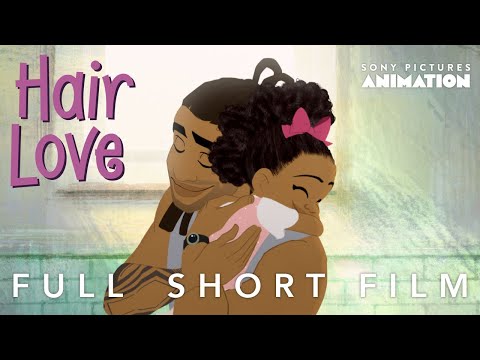
The father does not begin as an expert. He makes mistakes, becomes frustrated, tries again, and gradually learns what his daughter needs. Persistent caregiving is presented as an active emotional practice rather than an effortless instinct. That matters because meaningful care is often built through repeated attention, patience, repair, and willingness to learn.
Psychologist John Bowlby emphasized that secure attachment develops through reliable, responsive care over time. Hair Love illustrates this beautifully. Attachment security is often built through small rituals that say, “You matter enough for me to keep trying, even when I do not get it right immediately.”
3. Kitbull: Trust After Fear
Kitbull, part of Pixar’s SparkShorts program, follows a guarded stray kitten and a pit bull who has experienced mistreatment. Their unlikely connection develops gradually, through caution, play, boundaries, and small moments of safety. It is a short film about friendship, but it is also about trauma.

The kitten initially behaves with self-protection and suspicion, responding to unfamiliar closeness as though it may bring danger. This response makes emotional sense. Defensive behavior can look like hostility, coldness, or avoidance from the outside, while internally functioning as a learned survival strategy after repeated fear or unpredictability.
Trust develops slowly in the story. Neither character forces the other into closeness. Instead, safety is built through repeated, non-threatening interactions. Gradual trust-building is one of the most important lessons the short offers, especially for viewers who have experienced relationships where safety was inconsistent or difficult to believe.
4. The Present: Perspective, Difference, and Self-Acceptance
The Present follows a boy who initially rejects a puppy because the animal has a visible physical difference. The story shifts perspective in a way that challenges the viewer’s assumptions about disability, shame, identity, and the tendency to judge others based on surface-level impressions.

The emotional impact comes from the realization that the boy’s reaction may reflect something unresolved in himself, rather than simple cruelty toward the puppy. Projection and self-acceptance are key themes: people sometimes reject a difference in someone else because it reflects a part of their own experience they have not yet accepted.
This short can be useful for discussing visible and invisible disability, shame, belonging, and empathy. Perspective-taking means pausing before deciding what another person’s behavior or appearance tells us about their life, especially when we have only a small piece of their story.
5. If Anything Happens I Love You: Grief and Absence
If Anything Happens I Love You follows two grieving parents after the death of their daughter in a school shooting. It is an emotionally intense animated short that uses shadows, silence, music, memory, and empty spaces to portray the psychological reality of bereavement. Viewers affected by traumatic loss may find it especially difficult.

The film does not portray grief as a series of neat stages. Instead, it shows grief as an ongoing relationship with memory, absence, anger, love, guilt, numbness, and the ordinary household objects that suddenly become emotionally unbearable. Complicated grief is not a sign of weakness. It reflects the difficulty of adapting to a loss that fundamentally changes someone’s internal world.
Psychiatrist Elisabeth Kübler-Ross helped bring public attention to grief, but contemporary psychology recognizes that grief rarely unfolds in a universal sequence. Non-linear mourning allows people to move between sadness, rage, tenderness, disbelief, and exhaustion without assuming they are grieving incorrectly.
6. The Long Goodbye: Belonging, Fear, and Social Identity
The Long Goodbye, created by Riz Ahmed and Aneil Karia, blends music, family life, social commentary, and sudden violence to explore belonging, racism, prejudice, fear, and collective trauma. The short begins with the warmth of a family gathering before moving abruptly into a deeply threatening social reality.
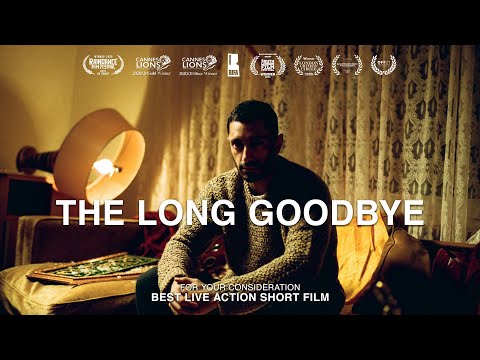
The film is unsettling because it shows how quickly ordinary safety can collapse for people whose identity makes them vulnerable to prejudice or violence. Collective vulnerability is not simply a political idea; it affects the nervous system, family life, trust, belonging, and a person’s ability to move through public spaces without fear.
Watching this short can prompt meaningful discussion about bias, moral responsibility, social identity, and empathy. Witnessing another person’s fear cannot fully reproduce their lived experience, but it can interrupt defensive assumptions and create room for more careful attention to the realities other people face.
7. The Neighbors’ Window: Envy, Intimacy, and Perspective
The Neighbors’ Window follows a mother who becomes fascinated by a younger couple living across the street. At first, she sees their life as more exciting, romantic, and free than her own. Gradually, the story reveals that every life contains private complexity invisible from a distance.

This short speaks directly to social comparison. It is easy to look at another person’s relationship, body, career, family, or social media presence and assume they possess a kind of ease or happiness that has been denied to us. Upward comparison can become emotionally painful when we compare our unfiltered inner life with someone else’s visible highlight reel.
Psychologist Leon Festinger developed social comparison theory to explain how people evaluate themselves against others, often without realizing how selective or distorted the comparison is. Emotional perspective changes when we remember that other people’s most difficult experiences may remain entirely hidden from our view.
8. Stutterer: Shame, Courage, and Authentic Communication
Stutterer follows Greenwood, a young man with a pronounced speech impediment and a rich internal life, as he prepares to meet someone he has connected with online. The short explores anxiety, shame, self-presentation, communication, and the emotional cost of fearing that another person will reject the real version of you.

Greenwood’s experience illustrates how people can become highly articulate internally while feeling unable to express themselves freely in social situations. Communication anxiety is not always a lack of ideas or intelligence. It can emerge from fear of judgment, past humiliation, self-consciousness, or the exhausting effort of anticipating another person’s reaction before speaking.
The short’s emotional value lies in its treatment of vulnerability. Authentic connection does not require flawless self-presentation. It requires enough courage to let another person encounter the version of you that you may have spent years trying to hide.
9. The Phone Call: Listening, Loneliness, and Human Contact
The Phone Call follows a quiet helpline worker who receives a call that changes how she understands her own loneliness, empathy, and capacity for connection. The short film uses a simple structure—one person speaking with another unseen person—to explore the emotional power of being listened to during a moment of crisis.

Its central theme is not rescue in the dramatic sense. It is presence. Sometimes a person cannot solve another person’s pain, but they can remain attentive, compassionate, and non-judgmental while the other person speaks. Active listening can reduce isolation because it communicates that someone’s inner experience matters enough to be heard without interruption or immediate correction.
The film also highlights the emotional demands placed on helpers. Compassion fatigue can affect people who work in helplines, healthcare, teaching, social work, caregiving, and other emotionally intense roles. Supporting others requires boundaries, supervision, rest, and meaningful support for the helper as well.
10. The Astronomer: Love, Grief, and Existential Meaning
The Astronomer is a short film about a man confronting grief, love, loss, and the vastness of the universe after receiving devastating news. Its visual and philosophical style invites reflection on mortality, connection, and the strange tension between the ordinary details of human life and the enormous scale of existence.

The story is useful because grief often makes the world feel both intensely personal and impossibly large. A person may be devastated by one private loss while the rest of the world continues as usual. Existential grief can involve sadness, fear, wonder, anger, longing, and questions about meaning that do not have one final answer.
Psychiatrist Viktor Frankl wrote that meaning is not usually discovered through avoiding pain, but through the stance people take toward suffering, responsibility, love, and the possibility of contributing to something beyond themselves. Meaning-making does not erase grief. It can help people carry it without allowing loss to erase every possibility for connection or future purpose.
How to Use Short Films for Emotional Reflection
Watching an emotionally meaningful short film becomes more useful when you leave a small space after it ends instead of immediately moving into another video, notification, or task. Reflective viewing can help a feeling become more recognizable before it disappears into the usual pace of the day.
Psychologist James Pennebaker has studied expressive writing and the value of putting emotional experiences into language. You do not need to write an essay. A few honest sentences can be enough: What scene stayed with me? What emotion did I notice? Did the story make me think of someone? What did it reveal about the way I cope, connect, avoid, or care?
- Pause after the film rather than immediately opening another video, app, or social media feed.
- Name one emotion that stayed with you, even if it is mixed, confusing, or difficult to explain.
- Choose one scene that felt meaningful, uncomfortable, familiar, or unexpectedly powerful.
- Write a brief reflection about what the story revealed regarding grief, fear, identity, belonging, or connection.
- Share the experience carefully with a trusted person if the film raises a memory or question that feels important.
There is no correct emotional response to a film. Emotional curiosity is often more useful than trying to force a lesson or decide immediately what a story was supposed to mean.
When Emotionally Intense Short Films Feel Overwhelming
Short films may be brief, but they can still create intense reactions. A story about bereavement, disability, racism, trauma, loneliness, abuse, or family loss may trigger panic, anger, numbness, cravings, intrusive memories, or grief. Emotional safety matters more than finishing any film.
Psychologist Marsha Linehan, creator of Dialectical Behavior Therapy, developed distress tolerance skills for moments when emotion becomes too intense to process clearly. If a film feels overwhelming, pause it. Look around the room, notice five things you can see, take slow breaths, drink water, stretch, step outside, or contact someone supportive. Grounding techniques help the nervous system reconnect with the present rather than remaining trapped in the emotional reality of the scene.
If a short film raises persistent thoughts of self-harm, severe hopelessness, traumatic memories, or inability to stay safe, seek immediate professional support or contact local emergency services. In the United States and Canada, call or text 988 for the Suicide and Crisis Lifeline. Crisis support is available for moments that go beyond what a reflection exercise, a movie list, or a private journal can safely hold.
FAQs about Short Films and Emotional Understanding
Can short films really help people understand difficult feelings?
Yes, short films can support emotional awareness by creating a safe narrative distance from difficult themes such as grief, fear, shame, belonging, family conflict, disability, and connection. They may help viewers recognize a feeling they have struggled to name or make it easier to begin a conversation with someone else. However, a short film is not therapy and cannot diagnose a mental health condition or replace professional support. Its greatest value is often as a prompt for reflection, empathy, discussion, or further learning rather than as a complete answer to a complex emotional problem.
Which short film is best for discussing grief?
If Anything Happens I Love You and The Astronomer are two especially strong choices for discussing grief, loss, memory, and the emotional aftermath of devastating change. If Anything Happens I Love You is more directly focused on bereavement after violence and may be especially intense for viewers affected by child loss, school violence, trauma, or anxiety. The Astronomer approaches grief through love, memory, and existential reflection. Both can create meaningful discussion, but neither will be suitable for every emotional state. Checking content warnings and watching with support may be helpful.
Are these short films suitable for children and teenagers?
Some are more suitable than others. Hair Love, Kitbull, and The Present can be appropriate for many children, although adults may still want to discuss themes of family, animal mistreatment, disability, difference, and empathy afterward. The Silent Child and Stutterer may be especially useful for older children and adolescents when paired with conversation about communication and inclusion. If Anything Happens I Love You and The Long Goodbye involve traumatic loss and violence, so parents, teachers, and caregivers should review them in advance and consider the age, experiences, and emotional readiness of viewers.
What should I do if a short film brings up a painful memory?
Pause the film and give yourself permission to step away. You can use grounding techniques such as slow breathing, noticing objects around you, moving your body, drinking water, or contacting someone you trust. Writing briefly about what the film brought up may help, but you do not need to force yourself to process everything immediately. If the reaction becomes intrusive, affects sleep, causes prolonged distress, or connects to trauma you have not been able to discuss safely, speaking with a licensed mental health professional can provide compassionate and structured support.
Can educators use short films to teach emotional intelligence?
Yes, short films can be useful in educational settings when they are introduced thoughtfully, selected for the age group, and followed by guided discussion. Teachers can ask students what emotions they noticed, what characters may have needed, how communication changed the story, and what different choices may have meant. It is important not to pressure students to disclose personal trauma or private experiences. Offering content warnings, allowing students to step out, and making discussion optional can help create a safer learning environment, especially for films involving loss, disability, prejudice, or violence.
Why can animated short films feel emotionally powerful?
Animation can use color, movement, sound, silence, facial expression, metaphor, and visual symbolism to communicate feelings without requiring extensive dialogue or realistic imagery. A shadow, an empty chair, a changing color palette, or a small gesture can suggest grief, loneliness, hope, fear, or love in a way that viewers understand immediately. Animation also provides a degree of emotional distance from realism, which can make difficult themes feel safer to approach while still allowing the emotional meaning of the story to remain strong and memorable.
Bibliography
- Ainsworth, M. D. S., Blehar, M. C., Waters, E., & Wall, S. (1978). Patterns of Attachment: A Psychological Study of the Strange Situation. Erlbaum.
- Bandura, A. (1977). Social Learning Theory. Prentice Hall.
- Bowlby, J. (1988). A Secure Base: Parent-Child Attachment and Healthy Human Development. Basic Books.
- Festinger, L. (1954). A theory of social comparison processes. Human Relations, 7(2), 117-140.
- Frankl, V. E. (1959). Man’s Search for Meaning. Beacon Press.
- Kübler-Ross, E., & Kessler, D. (2005). On Grief and Grieving: Finding the Meaning of Grief Through the Five Stages of Loss. Scribner.
- Linehan, M. M. (1993). Cognitive-Behavioral Treatment of Borderline Personality Disorder. Guilford Press.
- Pennebaker, J. W., & Evans, J. F. (2014). Expressive Writing: Words That Heal. Idyll Arbor.
Use this citation format to reference the article clearly and help readers find the original source.
PsychologyFor. (2026). 10 Short Films That Help Us Better Understand Our Feelings. PsychologyFor. https://psychologyfor.com/10-short-films-that-help-us-better-understand-our-feelings/