


See more of our articles in your search results.
The human brain remains one of the most fascinating and complex subjects in modern science, containing approximately 100 billion neurons and 100 trillion synapses that work together to create consciousness, memory, emotion, and behavior. For anyone interested in understanding how the mind works, the field of neuroscience offers unparalleled insights into human psychology, cognitive processes, and neurological disorders. Whether you’re a psychology student, healthcare professional, educator, or simply someone curious about the inner workings of the brain, studying neuroscience can transform your understanding of human behavior and mental processes. The intersection of neuroscience and psychology is particularly compelling, as it provides scientific evidence for psychological phenomena that were once purely theoretical. Modern neuroscience research has revolutionized our understanding of depression, anxiety, learning disabilities, memory formation, and decision-making processes. Today, thanks to prestigious universities and online learning platforms, you can access world-class neuroscience education without the financial barriers that traditionally limited access to this specialized knowledge. These free courses offer comprehensive curricula taught by leading experts from institutions like Harvard, Duke, Johns Hopkins, and Yale. From basic neuroanatomy to advanced computational modeling, these programs provide structured learning paths that can enhance your professional credentials, deepen your understanding of human psychology, or prepare you for advanced study in neuroscience or related fields.
The Growing Importance of Neuroscience Education
Neuroscience has emerged as one of the most interdisciplinary and rapidly expanding fields in modern science, integrating elements of psychology, biology, chemistry, physics, computer science, and medicine. This multidisciplinary approach makes neuroscience education valuable for professionals across numerous fields, from educators seeking to understand how students learn to marketing professionals exploring consumer behavior and decision-making processes.
The practical applications of neuroscience knowledge extend far beyond academic research. Clinical applications include understanding neurological disorders, developing therapeutic interventions, and improving diagnostic techniques for conditions ranging from Alzheimer’s disease to depression. In the business world, neuromarketing has become a significant field, helping companies understand consumer behavior at a neurological level. Educational neuroscience is revolutionizing teaching methods by providing insights into how the brain learns and retains information.
For psychology professionals, neuroscience provides the biological foundation for understanding mental health conditions, cognitive processes, and behavioral patterns. This knowledge is essential for developing evidence-based therapeutic approaches and understanding the neurological basis of psychological phenomena. Mental health professionals increasingly rely on neuroscientific research to inform their practice and treatment decisions.
The accessibility of free online neuroscience courses has democratized this field, allowing learners worldwide to gain expertise that was previously available only to university students. These courses often feature interactive elements, virtual laboratory experiences, and real-world case studies that provide practical learning opportunities without the need for expensive laboratory equipment or facilities.
How many of these have you been "meaning to read" for months?
- 1
 TarcherThe Artist's Way30th Anniversary EditionListen Free On Audible
 - 2
 Atria BooksThe Courage to Be DislikedThe Japanese Phenomenon That Shows You How to Change Your Life and Achieve Real HappinessListen Free On Audible
 - 3
 Hay HouseBecoming SupernaturalHow Common People Are Doing the UncommonListen Free On Audible
Top University-Sponsored Free Neuroscience Courses
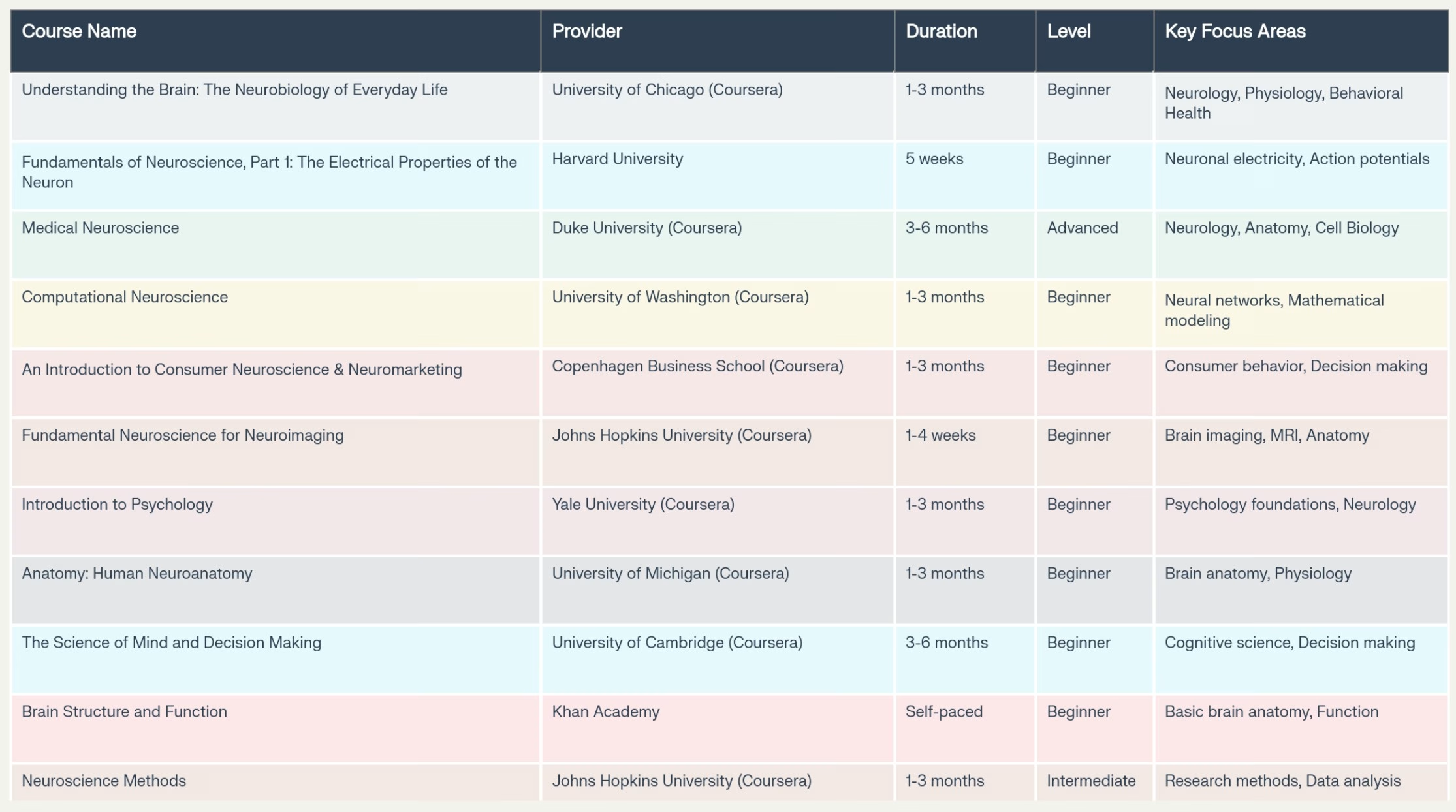
Understanding the Brain: The Neurobiology of Everyday Life
Offered by the University of Chicago through Coursera, this beginner-friendly course provides an excellent introduction to how the brain controls everyday behaviors and experiences. You can search for this course on Coursera by searching for “Understanding the Brain Neurobiology”. The curriculum covers fundamental concepts including neuronal communication, brain development, sensory processing, and the neurobiological basis of learning and memory. Students explore how the brain processes information from the environment and translates it into conscious experiences.
The course is particularly valuable for its practical approach to neuroscience, connecting abstract neurological concepts to real-world experiences that students can relate to. Topics include the neurobiology of vision, hearing, movement, and higher cognitive functions like language and decision-making. The course materials include interactive simulations and case studies that help students understand complex neurobiological processes.
This course is ideal for psychology students, educators, healthcare professionals, or anyone curious about the biological basis of behavior. The self-paced format allows learners to progress through the material at their own speed, making it accessible for working professionals or students with busy schedules.
Fundamentals of Neuroscience Part 1: The Electrical Properties of the Neuron
Harvard University offers this comprehensive introduction to cellular neuroscience, focusing on how neurons generate and transmit electrical signals. You can find this course series on edX by searching for “Harvard Fundamentals of Neuroscience”. This course is part of a larger series that covers the complete spectrum of neuroscience from molecular to systems levels. The curriculum emphasizes the biophysical properties of neurons, including membrane potential, action potential generation, and synaptic transmission.
Students learn about the mathematical models that describe neuronal behavior, including the famous Hodgkin-Huxley equations that explain how action potentials are generated and propagated. The course includes virtual laboratory exercises where students can manipulate neuronal parameters and observe the effects on electrical activity.
This course is particularly valuable for students planning to pursue advanced study in neuroscience or related fields. The rigorous academic approach provides a solid foundation for understanding more complex neuroscience concepts and prepares students for research-oriented careers in neuroscience.
Medical Neuroscience
Duke University’s Medical Neuroscience course represents one of the most comprehensive free neuroscience programs available online. Search for this course on Coursera under “Duke Medical Neuroscience”. This advanced-level course covers neuroanatomy, neurophysiology, and the neurological basis of behavior and disease. The curriculum is designed to provide the same depth of knowledge as a medical school neuroscience course.
Students explore the organization of the nervous system from cellular to systems levels, including detailed study of brain regions, neural pathways, and their functional significance. The course covers sensory systems, motor control, higher cognitive functions, and neurological disorders. Case studies of neurological patients help students understand how brain damage affects behavior and cognitive function.
The course includes detailed anatomical materials, including virtual dissection tools and high-quality brain imaging data. Students learn to interpret neuroanatomical structures and understand their functional relationships. This course is particularly valuable for pre-medical students, healthcare professionals, or anyone seeking a thorough understanding of medical neuroscience.
Computational Neuroscience
The University of Washington’s Computational Neuroscience course introduces students to mathematical and computational approaches to understanding brain function. Find this course on Coursera by searching for “Computational Neuroscience Washington”. This course bridges the gap between theoretical neuroscience and practical applications by teaching students how to model neural processes using mathematical equations and computer simulations.
Students learn to create mathematical models of individual neurons and neural networks, understand how neural circuits process information, and explore how computational principles might explain cognitive functions like learning and memory. The course covers topics including neural coding, network dynamics, and machine learning applications in neuroscience.
This course is particularly valuable for students with backgrounds in mathematics, computer science, or engineering who want to apply their quantitative skills to neuroscience. The skills learned in this course are increasingly important as neuroscience becomes more data-driven and computational in its approach to understanding brain function.
Specialized Neuroscience Applications
An Introduction to Consumer Neuroscience and Neuromarketing
Copenhagen Business School offers this unique course that applies neuroscience principles to understanding consumer behavior and marketing effectiveness. Search for “Consumer Neuroscience” or “Neuromarketing” on Coursera. Students explore how the brain processes advertising messages, makes purchasing decisions, and responds to different marketing stimuli. This course demonstrates the practical applications of neuroscience in business and marketing contexts.
The curriculum covers neuroimaging techniques used in consumer research, including functional magnetic resonance imaging (fMRI) and electroencephalography (EEG). Students learn how these tools can measure brain activity in response to marketing materials and consumer experiences. The course also addresses ethical considerations in neuromarketing research.
This course is particularly valuable for marketing professionals, business students, or researchers interested in the intersection of neuroscience and consumer behavior. The knowledge gained can be applied to improve marketing strategies, product design, and consumer experience optimization.
Fundamental Neuroscience for Neuroimaging
Johns Hopkins University provides this specialized course focusing on the neurobiological foundations necessary for understanding brain imaging techniques. Look for “Neuroimaging” courses from Johns Hopkins on Coursera. Students learn about brain anatomy, physiology, and the principles underlying neuroimaging methods like MRI, fMRI, and PET scanning. The course emphasizes how different imaging techniques reveal different aspects of brain structure and function.
The curriculum includes detailed coverage of neuroanatomy from an imaging perspective, teaching students to identify brain structures in neuroimaging data and understand their functional significance. Students learn about the physics and biology underlying different imaging modalities and how to interpret neuroimaging results.
This course is essential for students planning careers in neuroimaging research, clinical neuroscience, or radiology. The knowledge gained provides the foundation for understanding advanced neuroimaging techniques and their applications in both research and clinical settings.
Psychology and Cognitive Science Integration
Introduction to Psychology
Yale University’s Introduction to Psychology course, while not exclusively focused on neuroscience, provides excellent coverage of the biological basis of behavior and mental processes. Find this popular course on Coursera by searching for “Yale Introduction to Psychology”. This course covers fundamental psychological concepts including perception, learning, memory, and social behavior, with emphasis on their neurobiological foundations.
Students explore how neuroscience research has informed our understanding of psychological phenomena, including the neural basis of mental disorders, cognitive development, and individual differences in behavior. The course integrates classical psychological theories with modern neuroscientific findings.
This course is particularly valuable for students seeking to understand the relationship between psychology and neuroscience. The comprehensive coverage makes it an excellent foundation for further study in either psychology or neuroscience.
Anatomy: Human Neuroanatomy
The University of Michigan’s Human Neuroanatomy course provides detailed coverage of brain structure and organization. Search for anatomy courses from University of Michigan on Coursera. Students learn to identify brain regions, understand their functional relationships, and appreciate how anatomical organization supports neural function. The course uses high-quality anatomical materials and virtual dissection tools to provide comprehensive neuroanatomical education.
The curriculum covers both gross neuroanatomy and microscopic structure, including detailed study of neural circuits and their functional significance. Students learn about the development of the nervous system and how anatomical organization emerges during embryonic development.
This course is essential for students planning careers in healthcare, neuroscience research, or any field requiring detailed knowledge of brain structure. The anatomical knowledge gained provides the foundation for understanding neurological disorders and their anatomical basis.
The Science of Mind and Decision Making
University of Cambridge offers this interdisciplinary course that explores how neuroscience informs our understanding of cognitive processes and decision-making. Look for Cambridge psychology and neuroscience courses on FutureLearn. Students examine the neural mechanisms underlying attention, memory, executive function, and social cognition. The course integrates findings from cognitive psychology, neuroscience, and behavioral economics.
The curriculum covers advanced topics including neural plasticity, the development of cognitive abilities, and individual differences in cognitive function. Students explore how neurological disorders affect cognitive abilities and decision-making processes.
This course is particularly valuable for students interested in cognitive science, educational psychology, or behavioral economics. The interdisciplinary approach provides insights into how different fields contribute to our understanding of mind and behavior.
Accessible Learning Platforms and Resources
Brain Structure and Function
Khan Academy provides an accessible introduction to basic neuroscience concepts through their Brain Structure and Function course. Access these completely free materials at Khan Academy under their biology and health sections. This self-paced program covers fundamental topics including neuronal structure, brain anatomy, and basic physiological processes. The course uses clear explanations and visual animations to make complex neuroscience concepts accessible to learners without extensive scientific backgrounds.
The curriculum emphasizes practical understanding over advanced mathematical concepts, making it ideal for high school students, early undergraduate students, or adult learners seeking to understand basic neuroscience principles. The course includes interactive exercises and quizzes that reinforce learning.
This course serves as an excellent starting point for students who want to explore neuroscience before committing to more advanced coursework. The accessible format and comprehensive coverage make it suitable for diverse learning styles and backgrounds.
Advanced Research and Methodological Training
Neuroscience Methods
Johns Hopkins University offers this intermediate-level course focusing on research methodologies used in neuroscience research. Search for “Neuroscience Methods” from Johns Hopkins on Coursera. Students learn about experimental design, data collection techniques, statistical analysis, and interpretation of neuroscience research findings. The course covers both classical and modern research methods used in neuroscience laboratories.
The curriculum includes coverage of electrophysiological techniques, behavioral testing methods, neuroimaging analysis, and molecular neuroscience approaches. Students learn to critically evaluate neuroscience research and understand the strengths and limitations of different methodological approaches.
This course is essential for students planning to pursue research careers in neuroscience or related fields. The methodological knowledge gained provides the foundation for designing and conducting neuroscience research projects.
Neuroscience of Leadership
The University of Colorado Boulder’s Neuroscience of Leadership course applies neuroscience principles to understanding leadership effectiveness and organizational behavior. Find this course on Coursera by searching for “Neuroscience Leadership Colorado”. Students explore how the brain processes social information, makes decisions under uncertainty, and responds to leadership challenges. The course integrates neuroscience research with practical leadership applications.
The curriculum covers topics including emotional intelligence, stress management, team dynamics, and organizational change from a neuroscientific perspective. Students learn how understanding brain function can improve leadership effectiveness and organizational outcomes.
This course is particularly valuable for business professionals, managers, educators, or anyone in leadership roles. The practical applications of neuroscience knowledge can enhance leadership skills and improve understanding of human behavior in organizational contexts.
Additional Free Resources and Platforms
MIT OpenCourseWare
MIT OpenCourseWare offers several free neuroscience courses with complete lecture materials, assignments, and readings. Visit MIT OpenCourseWare and search for “neuroscience” or “brain and cognitive sciences”. These courses provide university-level content without the need for enrollment or registration.
Stanford Online
Stanford University provides free online courses through various platforms. Check Stanford Online for current neuroscience and psychology offerings that may be available at no cost.
Career Development and Professional Applications
Completing these free neuroscience courses can significantly enhance your professional credentials and open up new career opportunities. The knowledge gained from these programs is valuable across numerous fields, from healthcare and education to business and technology. Many students use these courses as stepping stones to more advanced study in neuroscience, psychology, or related fields.
For healthcare professionals, neuroscience knowledge enhances understanding of neurological conditions, improves patient care, and provides insights into the biological basis of mental health disorders. Educators benefit from understanding how the brain learns and develops, enabling them to create more effective teaching strategies and better support students with learning differences.
In the business world, neuroscience knowledge is increasingly valuable for roles in human resources, marketing, product development, and organizational leadership. Understanding how the brain processes information and makes decisions provides competitive advantages in these fields.
The completion certificates from these prestigious institutions add credibility to your professional profile and demonstrate commitment to continuous learning. Many employers value this evidence of self-directed professional development and specialized knowledge acquisition.
Students planning to pursue graduate study in neuroscience, psychology, or related fields will find these courses provide excellent preparation for advanced coursework. The foundational knowledge gained helps students succeed in competitive graduate programs and research environments.
Learning Strategies for Online Neuroscience Education
Successfully completing online neuroscience courses requires effective learning strategies and self-discipline. The complexity of neuroscience material demands active engagement and regular practice to master challenging concepts. Students should plan to dedicate consistent time to coursework and take advantage of interactive elements and supplementary resources.
Visual learning techniques are particularly important in neuroscience education. Students should create concept maps, draw neural circuits, and use anatomical diagrams to reinforce their understanding of complex structures and processes. Many courses provide virtual laboratory experiences that should be fully utilized to gain practical experience with neuroscience concepts.
Connecting course material to real-world examples and personal experiences enhances retention and understanding. Students should look for opportunities to apply neuroscience concepts to everyday situations, current events, or professional contexts. Discussion forums and peer interaction enhance learning through collaborative exploration of challenging topics.
Regular review and practice are essential for mastering neuroscience vocabulary and concepts. Students should create flashcards for neuroanatomical terms, practice identifying brain structures, and test their understanding through course quizzes and assessments.
Taking notes by hand, when possible, enhances retention and understanding compared to typing notes on a computer. The active process of writing helps consolidate learning and provides better reference materials for review and study.
FAQs About 12 Free Online Neuroscience Courses
Do I need any prerequisites to take these free neuroscience courses?
Most beginner-level courses require no formal prerequisites, though a basic understanding of high school biology and chemistry is helpful. Courses like Harvard’s “Fundamentals of Neuroscience” and Duke’s “Medical Neuroscience” assume some college-level science background. The University of Washington’s “Computational Neuroscience” course benefits from mathematics and programming experience. Each course description provides specific prerequisite information to help you choose appropriately challenging coursework.
Can I earn college credit or professional certification from these courses?
While the courses themselves are free, most platforms offer optional verified certificates for a fee (typically $50-100). These certificates don’t provide college credit but demonstrate course completion to employers or graduate programs. Some universities have arrangements for transferring MOOC credits, but this varies by institution. The primary value lies in the knowledge gained and skills developed rather than formal academic credentials.
How much time should I expect to invest in these courses?
Time commitments vary significantly by course complexity and individual learning pace. Beginner courses typically require 3-5 hours per week for 4-8 weeks, while advanced courses like Duke’s “Medical Neuroscience” may require 8-12 hours per week for 12 weeks. Self-paced courses allow you to accelerate or slow down based on your schedule and learning needs. Most students find that consistent, regular study sessions are more effective than intensive cramming.
What technical requirements do I need to access these courses?
Most courses require only a reliable internet connection and standard web browser. Some courses with interactive simulations or virtual laboratory components may require specific browser plugins or software downloads. Neuroimaging courses might require more powerful computers for data analysis software. Mobile apps are available for most platforms, allowing study on tablets or smartphones, though complex visual content is best viewed on larger screens.
Are these courses suitable for high school students interested in neuroscience?
Several courses are excellent for motivated high school students, particularly Khan Academy’s “Brain Structure and Function” and Yale’s “Introduction to Psychology.” The University of Chicago’s “Understanding the Brain” course is also accessible to advanced high school students. These courses can help students explore their interest in neuroscience before choosing college majors or career paths. Parental guidance may be helpful for younger students to maintain motivation and understanding.
How do these free courses compare to traditional university neuroscience courses?
Many of these courses are taught by the same professors who teach at prestigious universities and cover similar material to traditional courses. The main differences are the lack of direct professor interaction, laboratory components, and formal assessment methods. However, the convenience, self-paced learning, and global accessibility make them excellent alternatives for many learners. The quality of content is generally equivalent to traditional university courses.
Can completing these courses help me get into graduate school or medical school?
While these courses won’t replace formal undergraduate coursework, they demonstrate genuine interest and self-motivation in neuroscience fields. Admissions committees value evidence of intellectual curiosity and preparedness for advanced study. The knowledge gained can enhance performance in graduate school interviews and provide background for research projects. Many students use these courses to explore their interests before committing to formal degree programs in neuroscience or related fields.
Use this citation format to reference the article clearly and help readers find the original source.
PsychologyFor. (2025). 12 Free Online Neuroscience Courses. PsychologyFor. https://psychologyfor.com/12-free-online-neuroscience-courses/