


See more of our articles in your search results.
You finish graduate school clutching a diploma, yet you sit across from your very first client feeling an unmistakable jolt of imposter syndrome, wondering whether textbook theory can survive contact with a real human being in genuine distress. That gap between academic training and clinical reality is jarring. Formal coursework teaches diagnostic categories and research methodology, yet it rarely prepares emerging clinicians for the messy, improvisational, deeply human work of sitting with someone’s pain session after session. It is not a personal failing. Rather, it reflects a universal transition every competent clinician eventually navigates: the shift from academic psychological theory into embodied clinical wisdom.
Becoming a genuinely skilled psychology professional requires far more than memorizing the DSM criteria or passing a licensing exam. It demands continuous exposure to foundational texts that model therapeutic presence, evidence-based technique, trauma sensitivity, and the humility to keep learning decades into a career. Many practitioners quietly struggle with burnout, rigid technique application, or a nagging sense that something essential is missing from their clinical toolkit despite years of supervised practice. Building a genuinely excellent practice means returning again and again to the seminal works that shaped the entire field, absorbing not just protocols but the underlying philosophy of change. Curating the right reading list transforms scattered clinical instincts into a coherent, evidence-based therapeutic identity.
Which foundational psychology manuals actually separate a competent technician from a truly transformative clinician?
This comprehensive guide details 12 psychology manuals to become a great professional, reviewing landmark texts on cognitive behavioral therapy, trauma treatment, humanistic presence, motivational interviewing, and the diagnostic and ethical foundations every practitioner must master.
12 Essential Psychology Manuals
Verified Top Picks- 1
 Judith S. Beck Cognitive Behavior Therapy: Basics and Beyond The gold-standard clinical training manual for structured CBT case conceptualization and cognitive restructuringCHECK TODAY'S PRICE
- 2
 Bessel van der Kolk The Body Keeps the Score The definitive masterwork revealing how trauma reshapes brain circuitry and somatic bodily tissuesCHECK TODAY'S PRICE
- 3
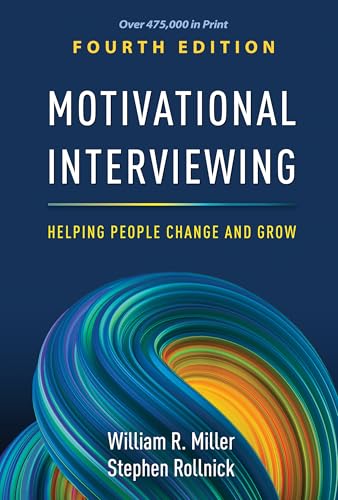 William R. Miller & Stephen Rollnick Motivational Interviewing: Helping People Change and Grow The authoritative guide to collaborative, client-centered communication for resolving ambivalenceCHECK TODAY'S PRICE
- 4
 Judith Lewis Herman Trauma and Recovery: The Aftermath of Violence The foundational text introducing the three-stage model: safety, mourning, and reconnectionCHECK TODAY'S PRICE
- 5
 Carl R. Rogers On Becoming a Person: A Therapist's View of Psychotherapy The landmark humanistic text proving that unconditional positive regard and empathy drive changeCHECK TODAY'S PRICE
- 6
 Viktor E. Frankl Man's Search for Meaning A psychiatrist's timeless memoir on logotherapy, purpose, and existential resilience in extreme sufferingCHECK TODAY'S PRICE
- 7
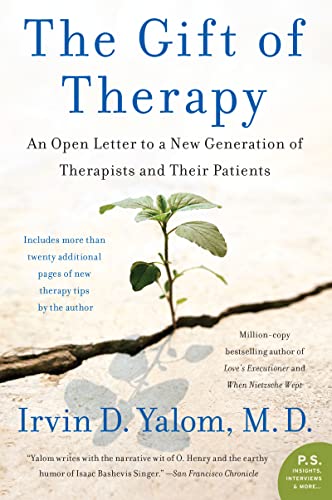 Irvin D. Yalom The Gift of Therapy 85 practical clinical lessons from a master therapist on presence, transparency, and the here-and-nowCHECK TODAY'S PRICE
- 8
 American Psychiatric Association DSM-5-TR The essential diagnostic classification manual providing standardized criteria and ICD-10-CM codesCHECK TODAY'S PRICE
- 9
 Robert B. Cialdini Influence: The Psychology of Persuasion Identifying six universal principles of persuasion, rapport building, and compliance psychologyCHECK TODAY'S PRICE
- 10
 Martin E. P. Seligman Learned Optimism: How to Change Your Mind and Your Life Explanatory style theory and strength-based positive psychology to overcome pessimistic attributionCHECK TODAY'S PRICE
- 11
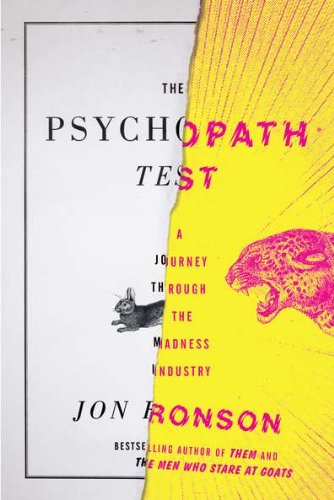 Jon Ronson The Psychopath Test An investigative critique exploring the Hare checklist, psychiatric labeling, and diagnostic overreachCHECK TODAY'S PRICE
- 12
 Aaron T. Beck Cognitive Therapy: Basics and Beyond The historical foundational text establishing the original cognitive model and core clinical theoryCHECK TODAY'S PRICE
Why Do Foundational Psychology Texts Still Matter in Clinical Training?
Foundational psychology manuals remain essential because they translate decades of controlled research and clinical trial-and-error into transmissible frameworks that a single supervisor could never fully convey in a practicum. Graduate programs compress enormous bodies of theory into survey courses, but genuine clinical fluency requires returning to primary texts repeatedly across a career, each time extracting new layers of nuance.
Cognitive psychologist and CBT pioneer Aaron T. Beck demonstrated that structured, manualized interventions consistently outperform vague eclecticism when treating depression and anxiety. Yet manuals alone cannot substitute for the relational attunement that master clinicians describe as the true engine of change. Reading widely across theoretical orientations, rather than clinging to a single school of thought, cultivates the flexible clinical judgment that evidence-based practice genuinely requires.
Humanistic psychologist Carl R. Rogers insisted that unconditional positive regard, empathy, and congruence form the necessary and sufficient conditions for therapeutic change, regardless of technique. Integrating Rogers’s relational wisdom alongside modern cognitive and trauma-informed protocols equips professionals to move fluidly between structure and presence, cultivating authentic clinical versatility.
- Foundational manuals translate decades of controlled trials into transmissible clinical frameworks.
- Structured, evidence-based protocols consistently outperform unstructured eclectic approaches in treating depression and anxiety.
- Relational qualities like empathy and congruence remain essential even within highly manualized treatment models.
- Reading across theoretical schools cultivates flexible judgment rather than rigid technique dependence.
12 Psychology Manuals to Become a Great Professional
The following curated selection represents the twelve most essential psychology manuals spanning cognitive behavioral therapy, trauma treatment, humanistic psychology, diagnostic reference, motivational interviewing, and clinical ethics and existential practice.
1. Cognitive Behavior Therapy: Basics and Beyond — Judith S. Beck
Cognitive Behavior Therapy: Basics and Beyond by clinical psychologist Judith S. Beck is the definitive training manual for learning structured CBT case conceptualization, session planning, and core cognitive restructuring techniques. Beck, drawing on her father Aaron T. Beck’s original framework, walks readers through engaging patients, identifying automatic thoughts, and preventing relapse.
Packed with session transcripts and troubleshooting guidance, this manual remains the gold standard training text used in graduate programs worldwide. It is an indispensable resource for structured cognitive behavioral technique.
- Provides a step-by-step framework for CBT case conceptualization and structured session planning.
- Details core techniques for identifying and restructuring automatic negative thoughts.
- Includes extended transcripts illustrating real-world application of relapse prevention strategies.
2. The Body Keeps the Score: Mind, Brain and Body in the Transformation of Trauma — Bessel van der Kolk
The Body Keeps the Score by psychiatrist Bessel van der Kolk revolutionized how clinicians understand trauma, demonstrating that overwhelming experiences are stored somatically and often resist purely verbal processing. Van der Kolk synthesizes decades of neuroimaging research with clinical case studies covering EMDR, yoga, neurofeedback, and theatrical role-play.
This landmark text pushed the entire field toward body-based, sensorimotor interventions rather than relying exclusively on talk therapy. It is an essential foundation for trauma-informed clinical practice.
- Explains how traumatic memory becomes encoded somatically within the autonomic nervous system.
- Reviews neuroimaging evidence supporting body-based interventions like EMDR and yoga therapy.
- Advocates for integrating movement and sensory approaches alongside traditional talk therapy.
3. Motivational Interviewing: Helping People Change and Grow — William R. Miller & Stephen Rollnick
Motivational Interviewing by William R. Miller and Stephen Rollnick is the authoritative guide to the collaborative, client-centered conversational style designed to strengthen a person’s own motivation for change. Originally developed for addiction treatment, MI now informs healthcare, education, and general mental health practice.
Miller and Rollnick detail the core spirit of MI—partnership, acceptance, compassion, and evocation—alongside concrete techniques like reflective listening and rolling with resistance. It is the essential manual for collaborative behavior change counseling.
- Introduces the four core processes of engaging, focusing, evoking, and planning for change.
- Details reflective listening techniques designed to strengthen client-driven ambivalence resolution.
- Demonstrates practical applications across addiction, healthcare, and general mental health settings.
4. Trauma and Recovery: The Aftermath of Violence — Judith Lewis Herman
Trauma and Recovery by psychiatrist Judith Lewis Herman is the foundational text that first connected the psychological aftermath of domestic abuse, sexual violence, and political terror under a unified theoretical framework. Herman introduced the three-stage recovery model: establishing safety, remembrance and mourning, and reconnection.
This rigorously researched, deeply humane classic remains required reading for any clinician treating survivors of interpersonal violence. It is a cornerstone text of modern trauma theory.
- Establishes the influential three-stage model of safety, remembrance, and reconnection in trauma recovery.
- Connects domestic violence, sexual assault, and political terror within a unified psychological trauma framework.
- Provides historical context for the development of modern post-traumatic stress disorder diagnosis.
5. On Becoming a Person: A Therapist’s View of Psychotherapy — Carl R. Rogers
On Becoming a Person by Carl R. Rogers is the landmark text of humanistic psychology, establishing person-centered therapy as a rigorous clinical alternative to psychoanalysis and behaviorism. Rogers argues that genuine empathy, unconditional positive regard, and therapist congruence constitute the necessary conditions for psychological growth.
Decades before “therapeutic alliance” became standard vocabulary, Rogers demonstrated empirically that the relationship itself drives outcomes. It remains foundational reading for cultivating authentic therapeutic presence.
- Establishes unconditional positive regard, empathy, and congruence as the necessary conditions for change.
- Provides empirical grounding for the centrality of the therapeutic relationship and alliance.
- Challenges directive, diagnosis-driven approaches in favor of client-centered collaborative growth.
6. Man’s Search for Meaning — Viktor E. Frankl
Man’s Search for Meaning by psychiatrist and Holocaust survivor Viktor E. Frankl recounts his concentration camp survival while introducing logotherapy, a psychotherapeutic approach centered on the human drive to discover meaning rather than merely pleasure or power. Frankl demonstrates that even under unimaginable suffering, individuals retain the freedom to choose their attitude.
This slim, profound volume remains essential reading for clinicians working with existential despair, grief, and chronic illness. It is a cornerstone of existential psychotherapy practice.
- Introduces logotherapy as a meaning-centered alternative to pleasure-driven psychoanalytic models.
- Demonstrates the psychological mechanisms of resilience under extreme existential suffering.
- Provides a foundational framework for treating grief, terminal illness, and existential crisis.
7. The Gift of Therapy: An Open Letter to a New Generation of Therapists and Their Patients — Irvin D. Yalom
The Gift of Therapy by psychiatrist Irvin D. Yalom distills eighty-five practical, hard-won lessons from a lifetime of clinical practice into an intimate mentorship for emerging therapists. Yalom emphasizes transparency, the here-and-now relationship, and confronting existential concerns like death, isolation, and freedom directly within sessions.
Written in accessible, story-driven prose filled with real clinical vignettes, this book bridges existential philosophy and everyday therapeutic technique. It is an invaluable mentorship text for developing clinical authenticity.
- Distills eighty-five practical clinical lessons drawn from decades of real-world therapeutic experience.
- Emphasizes therapist transparency and here-and-now relational focus over rigid technical distance.
- Integrates existential themes of death, freedom, and isolation into everyday clinical practice.
8. Diagnostic and Statistical Manual of Mental Disorders, Fifth Edition, Text Revision (DSM-5-TR) — American Psychiatric Association
DSM-5-TR, published by the American Psychiatric Association, remains the essential diagnostic reference for classifying mental disorders across clinical settings in the United States. This text revision updates diagnostic criteria, adds prolonged grief disorder, and refines cultural considerations for accurate assessment.
While diagnostic manuals should never replace clinical judgment or humanistic understanding, fluency with DSM-5-TR criteria remains a non-negotiable competency for insurance billing, treatment planning, and interdisciplinary communication. It is the indispensable diagnostic classification reference.
- Provides updated diagnostic criteria and ICD-10-CM codes for accurate clinical classification.
- Introduces refined cultural formulation guidance to reduce diagnostic bias across populations.
- Serves as the standard reference required for insurance billing and interdisciplinary treatment communication.
9. Influence: The Psychology of Persuasion — Robert B. Cialdini
Influence by social psychologist Robert B. Cialdini identifies six universal principles that drive human compliance and persuasion: reciprocity, commitment, social proof, authority, liking, and scarcity. Though written for a general business audience, this research-grounded classic offers clinicians critical insight into how clients form trust, resist change, and respond to authority within the therapeutic relationship.
Understanding these persuasion mechanisms helps practitioners recognize both ethical rapport-building and the manipulative tactics clients may encounter elsewhere. It is an essential text on social influence and compliance psychology.
- Identifies six universal principles of persuasion including reciprocity and social proof mechanisms.
- Explains how perceived authority and liking shape client trust within the therapeutic relationship.
- Equips clinicians to recognize manipulative influence tactics clients encounter in abusive relationships.
10. Learned Optimism: How to Change Your Mind and Your Life — Martin E. P. Seligman
Learned Optimism by Martin E. P. Seligman, widely regarded as the founder of positive psychology, presents over twenty years of research on explanatory style—the habitual way individuals interpret negative events. Seligman demonstrates that pessimistic explanatory patterns predict depression, while learned optimism techniques can be taught and measurably improve resilience.
This research-driven volume bridges clinical depression treatment with strength-based, preventive intervention. It is a foundational text for integrating positive psychology into clinical practice.
- Introduces explanatory style theory linking pessimistic attribution patterns to clinical depression risk.
- Presents evidence-based techniques for teaching learned optimism and building psychological resilience.
- Bridges preventive positive psychology with traditional depression treatment protocols.
11. The Psychopath Test: A Journey Through the Madness Industry — Jon Ronson
The Psychopath Test by journalist Jon Ronson investigates the diagnostic criteria for psychopathy, the influence of the DSM on psychiatric classification, and the ethical hazards of over-labeling human behavior as clinical pathology. Ronson interviews clinicians, patients, and controversial figures across the mental health industry with wit and investigative rigor.
While not a clinical training manual, this accessible narrative forces practicing professionals to critically examine diagnostic overreach and the social power embedded in labeling. It is a valuable counterbalance encouraging diagnostic humility and ethical reflection.
- Investigates the Hare Psychopathy Checklist and its use in forensic clinical assessment.
- Critically examines diagnostic overreach and the social consequences of psychiatric labeling.
- Encourages practicing clinicians to maintain humility regarding the limits of diagnostic categorization.
12. Cognitive Therapy: Basics and Beyond — Aaron T. Beck
Cognitive Therapy: Basics and Beyond, the original text by Aaron T. Beck (the founder of cognitive therapy), laid the theoretical and clinical foundation later expanded by his daughter Judith Beck. Beck’s cognitive model proposes that distorted thinking patterns directly generate emotional distress, and that identifying and restructuring these distortions produces measurable symptom relief.
Reading this original source text alongside the modern edition reveals how the field has evolved while remaining anchored to Beck’s core insight. It is the historical foundation of modern cognitive therapy practice.
- Establishes the original cognitive model connecting distorted thinking to emotional and behavioral symptoms.
- Provides the historical foundation later expanded into modern structured CBT protocols.
- Demonstrates Beck’s original case conceptualization approach to depression and anxiety treatment.
Comparing Major Therapeutic Orientations Represented in These Manuals
Understanding how these twelve manuals map onto distinct theoretical orientations helps clinicians identify gaps in their own training. No single orientation adequately addresses every presenting concern, which is precisely why integrative competence across schools of thought defines truly excellent practice.
| Therapeutic Orientation | Representative Manual and Core Contribution |
|---|---|
| Cognitive Behavioral Therapy | Judith Beck and Aaron Beck’s manuals on structured cognitive restructuring and case conceptualization |
| Trauma-Informed Care | Van der Kolk’s somatic trauma framework and Herman’s three-stage recovery model |
| Humanistic and Person-Centered | Rogers’s emphasis on unconditional positive regard and therapeutic congruence |
| Existential Psychotherapy | Frankl’s logotherapy and Yalom’s here-and-now relational transparency |
| Motivational and Behavioral | Miller and Rollnick’s collaborative approach to ambivalence and behavior change |
| Positive Psychology | Seligman’s explanatory style research and strength-based resilience building |
As illustrated in the comparison table above, mastering multiple orientations rather than committing exclusively to one prevents the rigidity that limits many well-intentioned clinicians. Blending structured protocols with relational depth produces the most durable clinical outcomes.
Building a Sustainable Professional Reading Practice
Reading these manuals once during graduate training is insufficient for lasting clinical growth. Genuine mastery requires revisiting foundational texts periodically throughout a career, since the same passage often reveals entirely new meaning after several years of accumulated clinical experience and case complexity.
Establishing a structured professional reading habit prevents stagnation and protects against the narrowing of technique that occurs when practitioners rely solely on continuing education requirements. Scheduling even thirty minutes weekly for deliberate re-reading, paired with peer consultation discussions, transforms passive reading into active clinical skill consolidation.
- Re-read one foundational manual annually, focusing specifically on sections relevant to current caseload challenges.
- Join or form a peer consultation group to discuss how theoretical concepts apply to anonymized case material.
- Maintain a clinical reading journal documenting insights and questions for ongoing supervision discussions.
- Alternate between dense theoretical texts and accessible narrative works to sustain long-term reading motivation.
Common Pitfalls When Applying Manualized Techniques in Real Practice
Even the most rigorously validated manual can produce poor outcomes when applied rigidly without clinical judgment. Recognizing these common pitfalls helps professionals avoid the trap of technique without genuine relational attunement.
- Following a CBT protocol so literally that genuine emotional attunement is sacrificed for procedural compliance.
- Applying trauma-informed language without actually adjusting pacing or session structure to client-specific readiness.
- Overusing DSM diagnostic labels in casual conversation, inadvertently reinforcing client self-stigmatization.
- Treating motivational interviewing as a scripted routine rather than a genuine collaborative spirit of engagement.
Avoiding these pitfalls requires ongoing supervision, honest self-reflection, and a willingness to deviate from protocol when clinical intuition suggests a different path. That flexibility, grounded in solid theoretical knowledge, is precisely what separates competent technicians from masterful clinicians.
How Supervision and Consultation Deepen Manual-Based Learning
Reading a psychology manual cover to cover teaches theory, but clinical supervision transforms that theory into embodied skill through real-time feedback on actual case material. Supervisors routinely catch subtle relational missteps, missed diagnostic nuances, or countertransference reactions that a solitary reader would never notice in their own work.
Structured supervision models often pair directly with the manuals discussed above. A supervisor trained in Beck’s cognitive framework, for instance, can review session recordings and pinpoint exactly where a clinician drifted from structured case conceptualization into unfocused conversation. Similarly, supervisors familiar with Herman’s trauma recovery stages help trainees recognize when a client remains stuck in the safety-establishment phase despite premature attempts at deeper processing. This kind of applied correction accelerates learning far faster than solitary textbook study ever could.
Peer consultation groups extend this benefit beyond formal supervision hours. Presenting a challenging case to trusted colleagues, then mapping the discussion back to specific manual concepts, reinforces theoretical knowledge while normalizing the uncertainty every clinician experiences. Consultation groups work best when members deliberately reference shared readings, creating a common vocabulary for discussing clinical dilemmas and technique selection.
- Clinical supervision provides real-time correction that solitary manual reading cannot replicate alone.
- Supervisors trained in specific frameworks help trainees recognize subtle deviations from structured treatment models.
- Peer consultation groups reinforce theoretical concepts through shared discussion of anonymized case material.
- Building a common professional vocabulary around foundational texts strengthens collaborative clinical reasoning.
When Professional Burnout Signals the Need for Personal Support
Even highly trained psychology professionals are not immune to compassion fatigue, vicarious traumatization, and clinical burnout. Recognizing early warning signs protects both the clinician and the quality of care extended to clients, since an exhausted practitioner cannot sustain the relational presence these manuals describe.
If you notice persistent emotional numbness toward clients, chronic dread before sessions, declining empathy, or intrusive thoughts related to client trauma material, these are signals that professional consultation or personal therapy may be warranted. Many licensing boards now explicitly recommend that clinicians maintain their own therapeutic relationships, recognizing that unprocessed countertransference compromises clinical judgment over time.
Most urgently, if you or a colleague is experiencing severe depressive symptoms, substance misuse, or thoughts of self-harm related to professional strain, do not wait for symptoms to resolve independently. In the United States and Canada, immediately call or text 988 to reach the Suicide & Crisis Lifeline, available twenty-four hours a day, seven days a week, free and completely confidential. Seeking support during moments of professional crisis reflects the same courage clinicians ask of their clients, not a failure of competence.
- Compassion fatigue and vicarious trauma require proactive monitoring throughout a clinical career.
- Licensing boards increasingly recommend personal therapy to manage unprocessed countertransference.
- Severe burnout symptoms or self-harm ideation demand immediate contact with crisis support resources.
FAQs about Psychology Manuals and Clinical Development
What is the single most important book for a new psychology professional to read first?
Cognitive Behavior Therapy: Basics and Beyond by Judith S. Beck is widely recommended as the ideal starting point for new clinicians. It provides an exceptionally clear, structured framework for case conceptualization, session planning, and core cognitive techniques that transfer across many treatment settings. Because CBT remains one of the most extensively researched and widely applicable therapeutic approaches, mastering its fundamentals early in a career gives new professionals a reliable structural foundation before branching into more specialized or integrative approaches later in training.
Do I need to read all twelve manuals before I start practicing?
No, these manuals represent a lifelong professional library rather than a prerequisite checklist. Most graduate programs already introduce foundational CBT and diagnostic training before licensure. The remaining texts, particularly those on trauma, existential practice, and persuasion psychology, are best absorbed gradually throughout early career years as clinical experience creates the context needed to fully appreciate their insights. Treat this list as a long-term reading companion rather than an academic requirement to complete immediately.
How is the DSM-5-TR different from earlier editions of the manual?
The DSM-5-TR is a text revision of the original DSM-5, published by the American Psychiatric Association in 2022. It updates diagnostic criteria based on current research, refines cultural formulation guidance to reduce diagnostic bias, adds prolonged grief disorder as a new diagnosis, and includes updated ICD-10-CM billing codes. While the core diagnostic categories remain largely consistent with DSM-5, the text revision reflects incremental scientific and clinical refinements rather than a complete structural overhaul.
Why do trauma-informed books emphasize the body rather than just talk therapy?
Trauma-informed literature emphasizes the body because overwhelming experiences are often encoded in implicit, sensorimotor memory systems that verbal processing alone cannot fully access. Bessel van der Kolk’s research demonstrated that traumatized individuals frequently exhibit measurable changes in brain regions governing threat detection and emotional regulation, which explains why purely cognitive interventions sometimes produce limited symptom relief. Incorporating body-based approaches like yoga, EMDR, or somatic experiencing alongside traditional talk therapy addresses trauma at both the cognitive and physiological level.
Can humanistic and cognitive behavioral approaches be combined in practice?
Yes, integrating humanistic relational principles with cognitive behavioral technique is not only possible but increasingly considered best practice. Carl Rogers’s emphasis on empathy, unconditional positive regard, and genuine therapeutic presence provides the relational foundation upon which structured CBT interventions become more effective. Research on therapeutic alliance consistently shows that technique alone, absent a strong relational bond, produces weaker outcomes, meaning most skilled clinicians naturally blend humanistic presence with evidence-based structured protocols.
How often should practicing clinicians revisit foundational psychology manuals?
Most experienced clinicians benefit from revisiting foundational texts at least once every one to two years, ideally timed around case complexity or supervision needs. Early career professionals may find monthly re-reading of specific chapters helpful as they build confidence, while veteran clinicians often return to these manuals when encountering an unusually challenging case that requires refreshing core theoretical principles. Treating foundational literature as a living reference rather than a one-time academic requirement supports sustained clinical growth throughout an entire career.
Bibliography
- American Psychiatric Association. (2022). Diagnostic and Statistical Manual of Mental Disorders (5th ed., text rev.). American Psychiatric Association Publishing.
- Beck, A. T. (1995). Cognitive Therapy: Basics and Beyond. The Guilford Press.
- Beck, J. S. (2020). Cognitive Behavior Therapy: Basics and Beyond (3rd ed.). The Guilford Press.
- Cialdini, R. B. (2006). Influence: The Psychology of Persuasion (Revised ed.). Harper Business.
- Frankl, V. E. (2006). Man’s Search for Meaning. Beacon Press.
- Herman, J. L. (1997). Trauma and Recovery: The Aftermath of Violence—From Domestic Abuse to Political Terror. Basic Books.
- Miller, W. R., & Rollnick, S. (2023). Motivational Interviewing: Helping People Change and Grow (4th ed.). The Guilford Press.
- Rogers, C. R. (1961). On Becoming a Person: A Therapist’s View of Psychotherapy. Houghton Mifflin.
- Ronson, J. (2011). The Psychopath Test: A Journey Through the Madness Industry. Riverhead Books.
- Seligman, M. E. P. (1998). Learned Optimism: How to Change Your Mind and Your Life. Free Press.
- van der Kolk, B. (2014). The Body Keeps the Score: Mind, Brain and Body in the Transformation of Trauma. Viking Press.
- Yalom, I. D. (2017). The Gift of Therapy: An Open Letter to a New Generation of Therapists and Their Patients. Harper Perennial.
Use this citation format to reference the article clearly and help readers find the original source.
PsychologyFor. (2026). 12 Psychology Manuals to Become a Great Professional. PsychologyFor. https://psychologyfor.com/12-psychology-manuals-to-become-a-great-professional/