


See more of our articles in your search results.
You can receive praise, accomplish something difficult, and still hear a private voice insisting that it was luck, that someone else could have done it better, or that you will eventually be exposed as inadequate. That voice is exhausting. Low self-esteem is not simply a lack of confidence; it is often a learned pattern of interpreting yourself through criticism, comparison, and conditional worth.
The problem gets worse because most confidence advice tells people to “believe in yourself” without explaining what to do when belief feels unavailable. Real self-esteem develops less through repeating flattering statements and more through building evidence: acting according to your values, responding to mistakes with proportion, and learning to distinguish a difficult moment from a verdict about your entire identity. The right book can give this process structure, language, and practical exercises rather than another vague demand for positive thinking.
So which books offer more than temporary motivation for building confidence and security?
This guide reviews 9 books about self-esteem, including cognitive behavioral therapy, self-compassion, attachment, shame resilience, and practical confidence-building tools.
9 Books About Self-Esteem to Improve Confidence
Verified Top Picks- 1
 Nathaniel Branden The Six Pillars of Self-Esteem A foundational practice-based framework linking self-worth to responsibility and conscious livingCHECK TODAY'S PRICE
 - 2
 Brené Brown The Gifts of Imperfection Letting go of perfectionism, comparison, and shame to cultivate wholehearted living and self-worthCHECK TODAY'S PRICE
 - 3
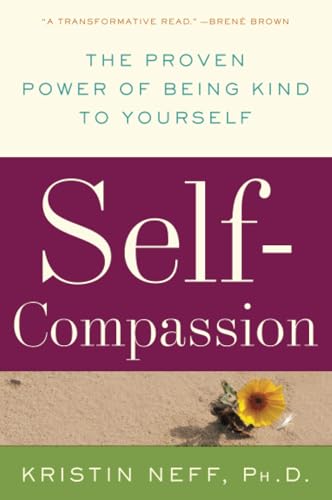 Kristin Neff Self-Compassion: The Proven Power of Being Kind to Yourself Replacing the fragility of self-evaluation with self-kindness, common humanity, and mindfulnessCHECK TODAY'S PRICE
 - 4
 David D. Burns Feeling Good: The New Mood Therapy Cognitive behavioral techniques to dismantle negative self-talk, all-or-nothing thinking, and distortionsCHECK TODAY'S PRICE
 - 5
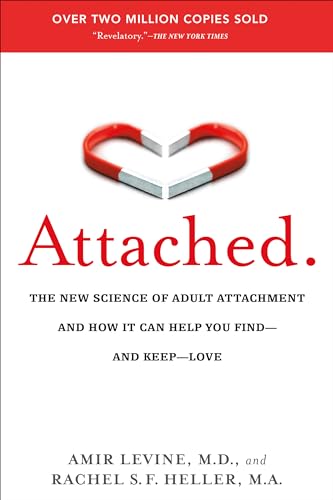 Amir Levine & Rachel Heller Attached: The New Science of Adult Attachment Understanding how relationship attachment styles shape self-worth and interpersonal securityCHECK TODAY'S PRICE
 - 6
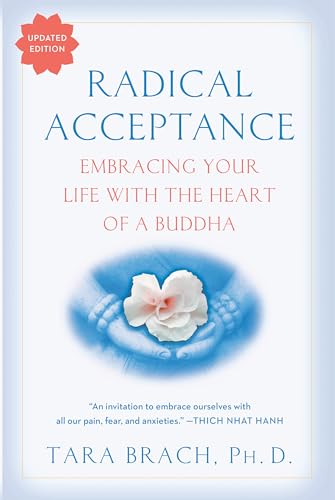 Tara Brach Radical Acceptance Mindfulness practices to awaken from the trance of unworthiness and habitual self-judgmentCHECK TODAY'S PRICE
 - 7
 Russ Harris The Confidence Gap Using Acceptance and Commitment Therapy (ACT) to take values-aligned action despite self-doubtCHECK TODAY'S PRICE
 - 8
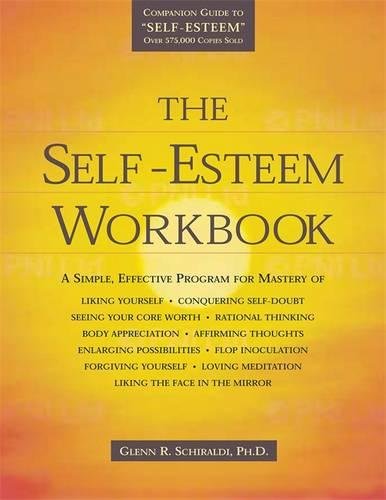 Glenn R. Schiraldi The Self-Esteem Workbook Guided exercises for identifying core negative beliefs, recognizing strengths, and daily self-evaluationCHECK TODAY'S PRICE
 - 9
 Brené Brown Daring Greatly How the courage to be vulnerable transforms the way we live, love, parent, and leadCHECK TODAY'S PRICE
What Is Healthy Self-esteem?
Healthy self-esteem is not believing that you are superior to everyone else or feeling confident in every situation. It is the ability to see yourself realistically, respect your inherent worth, and recover from mistakes without collapsing into global self-condemnation.
Psychologist Kristin Neff distinguishes stable self-compassion from fragile self-esteem based on comparison and achievement. A person with stable self-regard can acknowledge failure without treating it as proof that they are unlovable, incompetent, or permanently behind everyone else.
- Healthy self-esteem includes realism, not constant confidence
- It differs from superiority, perfectionism, and comparison
- It grows through values-based action and self-respect
9 Essential Books About Self-esteem and Confidence
These books offer different approaches to confidence, from challenging self-critical thoughts to understanding shame, attachment, boundaries, and the practical habits that reinforce a more secure sense of self.
1. The Six Pillars of Self-Esteem — Nathaniel Branden
The Six Pillars of Self-Esteem by psychotherapist Nathaniel Branden presents self-esteem as a practice built through conscious living, self-acceptance, responsibility, assertiveness, purpose, and personal integrity.
Branden’s framework is direct and structured. Rather than treating confidence as a feeling you wait to receive, he treats it as the cumulative result of repeated self-respecting actions.
- Defines six concrete pillars of self-esteem
- Links confidence to personal responsibility
- Offers sentence-completion exercises for reflection
2. The Gifts of Imperfection — Brené Brown
The Gifts of Imperfection by researcher Brené Brown explores shame, vulnerability, belonging, and the cost of organizing life around what other people might think.
Brown’s central idea is that wholehearted living requires letting go of perfectionism and the exhausting attempt to earn worthiness through performance.
- Explores shame and vulnerability through research
- Addresses perfectionism and comparison directly
- Encourages authentic self-expression
3. Self-Compassion — Kristin Neff
Self-Compassion by psychologist Kristin Neff argues that kindness toward yourself during failure produces a more stable foundation than self-esteem based on winning, comparison, or approval.
Neff introduces three elements: self-kindness, common humanity, and mindfulness. Together, they help interrupt the internal attack that often follows mistakes or rejection.
- Introduces self-kindness as an alternative to self-criticism
- Explains common humanity and mindful awareness
- Builds resilience after failure and rejection
4. Feeling Good — David D. Burns
Feeling Good by psychiatrist David D. Burns teaches cognitive behavioral techniques for recognizing distorted thoughts such as all-or-nothing thinking, mind reading, and overgeneralization.
For readers whose confidence collapses after a single mistake, Burns’s worksheets offer a practical way to test fearful beliefs against evidence instead of treating them as objective facts.
- Identifies common cognitive distortions
- Uses structured thought records
- Useful for self-critical and catastrophic thinking
5. Attached — Amir Levine and Rachel Heller
Attached by psychiatrist Amir Levine and psychologist Rachel Heller explains how anxious, avoidant, and secure attachment styles shape adult relationships and self-worth.
Understanding an attachment pattern can reduce shame around reassurance-seeking, fear of rejection, or emotional withdrawal by showing that these reactions often follow learned relational scripts.
- Explains anxious, avoidant, and secure attachment
- Links relationships to self-worth
- Offers a framework for healthier partner choices
6. Radical Acceptance — Tara Brach
Radical Acceptance by psychologist Tara Brach examines the trance of unworthiness, the habitual belief that something is fundamentally wrong with you.
Brach combines mindfulness, compassion, and clinical insight to help readers meet shame and fear without escalating the internal struggle. Her work is especially useful for chronic self-judgment.
- Addresses shame and feelings of unworthiness
- Introduces mindful self-acceptance
- Supports a less punitive internal voice
7. The Confidence Gap — Russ Harris
The Confidence Gap by physician Russ Harris explains why waiting to feel confident before acting often traps people in avoidance, procrastination, and missed opportunities.
Using acceptance and commitment therapy, Harris shows how people can take meaningful action while anxiety, uncertainty, or self-doubt are still present.
- Challenges the myth that confidence must come first
- Uses acceptance and commitment therapy
- Encourages values-guided action despite fear
8. The Self-Esteem Workbook — Glenn R. Schiraldi
The Self-Esteem Workbook by psychologist Glenn R. Schiraldi provides structured exercises for identifying negative self-beliefs, recognizing strengths, and building more balanced self-evaluation.
The workbook format suits readers who prefer direct practice over theory. It turns abstract confidence goals into specific daily exercises.
- Uses guided self-esteem exercises
- Targets negative self-beliefs directly
- Suitable for structured self-reflection
9. Daring Greatly — Brené Brown
Daring Greatly by Brené Brown explores how fear of shame and exposure can make people avoid risk, creativity, intimacy, and visible participation in life.
Brown reframes vulnerability as a necessary condition for courage. This can help readers see that emotional risk is often part of building real confidence, not proof that something is wrong.
- Connects vulnerability with courage
- Explores shame and emotional exposure
- Encourages fuller participation in life
Why Does Low Self-esteem Feel So Convincing?
Low self-esteem often feels convincing because it repeats familiar thoughts in a confident internal voice, using old criticism, comparison, and painful experiences as evidence that negative conclusions are simply true.
Psychologists describe this as a negative self-schema: a deeply learned pattern for interpreting events through assumptions of inadequacy, rejection, or failure. A neutral facial expression becomes proof that someone dislikes you. A missed deadline becomes proof that you are incompetent everywhere.
The thought feels automatic because it is practiced. That does not make it accurate. Books based on CBT and self-compassion help create distance between a passing thought and a fixed identity judgment.
- Negative self-schemas shape how events are interpreted
- Automatic thoughts are not automatically true
- Practice can weaken identity-based self-criticism
How Does Self-compassion Support Real Confidence?
Self-compassion supports confidence by making mistakes survivable. It allows people to fail, learn, and try again without turning a difficult experience into proof of permanent inadequacy.
Kristin Neff emphasizes that self-compassion is not self-pity or lowered standards. It means responding to your own pain with the same fairness you might offer a friend facing a comparable problem.
This matters because harsh self-criticism can make people afraid to attempt difficult things. A more compassionate response creates enough psychological safety to take the risks required for growth.
- Self-compassion differs from self-pity
- It supports learning after failure
- It creates safety for healthy risk-taking
How Can You Build Confidence Through Action?
Confidence usually follows action rather than preceding it. Small experiences of keeping commitments, practicing a skill, setting a boundary, or tolerating discomfort provide evidence that you can handle more than you assumed.
Russ Harris and Nathaniel Branden both emphasize that confidence grows through behavior. You do not need to wait until fear disappears before making a call, applying for an opportunity, or expressing a preference. The action itself becomes evidence.
Start small. Choose one action that matches your values and is mildly uncomfortable but realistic. Repetition builds self-trust more effectively than occasional dramatic declarations.
- Choose one values-based action
- Expect discomfort without treating it as failure
- Record evidence of self-trust after acting

Common Misconceptions About Self-esteem
Self-esteem is often misunderstood as constant confidence, high achievement, or believing you are more talented than other people. None of these definitions is stable or especially healthy.
Healthy self-esteem allows room for realistic self-evaluation. You can acknowledge a weakness, receive criticism, or fail at something without deciding that your entire self is worthless. This is the difference between self-respect and fragile ego protection.
Another misconception is that self-esteem improves through compliments alone. Praise can feel good, but durable confidence grows from competence, values, supportive relationships, and repeated experiences of coping successfully.
- Healthy self-esteem is not superiority
- Confidence does not require perfection
- Compliments alone rarely create durable self-worth
When Should Low Self-esteem Be Discussed With a Professional?
Low self-esteem can be addressed through books and reflection, but persistent self-hatred, major depression, trauma symptoms, disordered eating, self-harm thoughts, or severe anxiety deserve direct professional support.
A licensed therapist can help identify whether self-criticism is connected to depression, trauma, obsessive thinking, relationship abuse, or another mental health concern requiring an individualized approach. If you are in the United States and feel at risk of harming yourself, call or text 988 for immediate crisis support.
Seeking help reflects self-respect. It is not proof that you have failed to become confident enough on your own.
- Persistent self-hatred warrants professional care
- Self-harm thoughts require immediate support
- Therapy can address the roots of chronic self-criticism
FAQs about Books on Self-esteem
What is the best book for low self-esteem and self-criticism?
Self-Compassion by Kristin Neff is often a strong starting point because it addresses the harsh internal voice directly without requiring readers to pretend they feel confident already. The Self-Esteem Workbook by Glenn Schiraldi is another useful option for people who want practical exercises and measurable progress. For readers whose low self-esteem is connected to negative thoughts such as catastrophizing or all-or-nothing thinking, Feeling Good by David Burns provides a cognitive behavioral framework. The best choice depends on whether you prefer research, structured worksheets, or thought-challenging exercises.
Can self-esteem improve as an adult?
Yes. Self-esteem is shaped by experience, habits, relationships, and interpretation, not permanently fixed in childhood. Adults can improve self-regard by challenging harsh thoughts, developing practical competence, setting boundaries, and building relationships that reinforce healthy respect. Change is usually gradual rather than dramatic, especially when self-criticism has been present for many years. Books and workbooks can provide useful structure, while therapy can help if low self-worth is tied to trauma, depression, abusive relationships, or persistent anxiety.
What is the difference between self-esteem and self-compassion?
Self-esteem often involves evaluating yourself positively, sometimes in comparison with others, while self-compassion involves treating yourself kindly when you suffer, fail, or feel inadequate. Self-esteem can become fragile if it depends entirely on achievement, appearance, approval, or being better than someone else. Self-compassion remains available during failure because it does not require proving worth. Many psychologists recommend developing both realistic confidence and self-compassion, since they serve different purposes and can work together to create a more stable sense of self.
Can positive affirmations improve self-esteem?
Affirmations can be helpful for some people, especially when they are believable and connected to real action. However, overly positive statements that strongly contradict how someone feels may trigger resistance or make them feel more fraudulent. Cognitive behavioral approaches usually work better by identifying the exact thought, examining evidence, and developing a balanced alternative rather than forcing a slogan. For example, replacing “I am perfect” with “I made a mistake, but I can learn from it” tends to feel more credible and useful.
Why does comparison make my confidence worse?
Comparison often directs attention toward someone else’s visible strengths while hiding their struggles, context, and uncertainty. Social media intensifies this by presenting curated moments rather than ordinary reality. When self-worth depends on ranking above others, confidence becomes unstable because there will always be someone who appears more successful, attractive, wealthy, or accomplished. Books like The Gifts of Imperfection encourage values-based self-evaluation instead: asking whether you are living in a way that feels honest and meaningful, rather than whether you are winning an impossible comparison.
Should I read self-esteem books instead of going to therapy?
Books can be excellent tools for insight and practice, but they are not a replacement for therapy when low self-esteem is severe or linked to trauma, depression, eating disorders, self-harm, or abusive relationships. A therapist can identify patterns that a general book cannot observe and provide tailored support as you practice new skills. Many people benefit from combining both: using a book for structured exercises between sessions and therapy for individualized guidance, accountability, and a safe space to explore deeper experiences.
Bibliography
- Boyes, A. (2015). The Anxiety Toolkit. Perigee.
- Branden, N. (1994). The Six Pillars of Self-Esteem. Bantam.
- Brown, B. (2010). The Gifts of Imperfection. Hazelden.
- Brown, B. (2012). Daring Greatly. Gotham Books.
- Burns, D. D. (1999). Feeling Good. William Morrow.
- Harris, R. (2011). The Confidence Gap. Trumpeter.
- Levine, A., and Heller, R. (2012). Attached. TarcherPerigee.
- Neff, K. (2011). Self-Compassion. William Morrow.
- Schiraldi, G. R. (2016). The Self-Esteem Workbook. New Harbinger.
Use this citation format to reference the article clearly and help readers find the original source.
PsychologyFor. (2026). 9 Books About Self-esteem: Learn to Improve Your Confidence and Security. PsychologyFor. https://psychologyfor.com/9-books-about-self-esteem-learn-to-improve-your-confidence-and-security/