

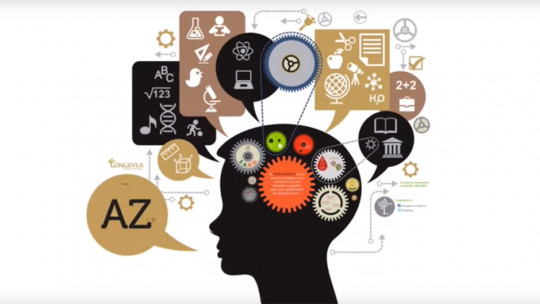
“There is no doubt that human beings live longer and longer. How can we ensure that this longevity is not an accumulation of ailments and diseases, but rather a life stage full of experiences and personal development?”
For Dr. Juan Hitzig, emotional management is key. That is why he developed the “emotional alphabet.” which helps us to be aware of our own emotions and understand what happens in our brain when we make “bad blood”. For example, some emotions begin with “s”, such as serenity, which helps us release serotonin, a neurotransmitter that promotes tranquility, improves mood, improves quality of life, prevents disease and slows the speed of cellular aging.
To understand Dr. Hitzig’s ideas, you can watch the video shown below.

Understanding the emotional alphabet
This week, the team at the Mensalus Psychological and Psychiatric Assistance Institute helps us understand the importance of managing emotions and what the emotional alphabet means.
How can the “emotional alphabet” help us?
How many of these have you been "meaning to read" for months?
- 1
 American GirlThe Care and Keeping of You 1The Body Book for Younger Girls (American Girl® Wellbeing)Listen Free On Audible
 - 2
 A Better You Everyday PublicationsThe Ancient Herbalist & Healer Natural Remedies. 4 Books in 1 The Mega Apothecary Encyclopedia500+ Remedies for Daily Wellness, Beauty, Hormonal ... Home, Inspired by Natural Health TeachingsListen Free On Audible
 - 3
 &HPete the CatI Love My White Shoes: A Groovy Story About Pete the Cat and His Colorful Shoes on a School Day A...Listen Free On Audible
Dr. Hitzig’s work is an intelligent way of summarizing information beneficial for the physical and emotional balance of the individual. The speed and clarity offered by the explanation helps the viewer remember the value/cost of their management of thoughts and emotions.
In reality, we all know the behaviors and attitudes described in the video, we know which ones suit us and which ones don’t. Even so, it is not always easy to move away from the “Rs” to soak up the “S”. To increase awareness about our way of approaching life, we can ask ourselves questions that function as a “meter.” Let’s look at some examples:
The video highlights a phrase from the Hindu poet Rabindranath Tagore: “If there is a remedy, what do you complain about?…And if there is no remedy, what do you complain about?” How can we apply it?
At the outset, reflection reminds us that, if we leave complaints and negative thoughts aside, it will be easier to direct attention to those positive aspects that we are not considering; From any situation, we can always take advantage.
Complaint has a finite function: to express discomfort. Once expressed, what does the complaint derive from? The problem appears when we feed it back and move away from its first objective. Getting stuck in complaining translates, as we have seen, into a pit of stress. This leads to an increase in cortisol levels and a decrease in serotonin levels (we stop investing vital energy in what brings us well-being). This is what the video presents as the “recipe” for becoming “bad blood.”
Thus, the “S” are those that increase serotonin through attitudes that promote positive thinking. How can we enhance the connection with these behaviors?
Exact. The video presents the “S” behaviors (serenity, silence, wisdom, flavor, sex, sleep, smile, sociability and seduction) as the driving force of love, encouragement and rapprochement, among others. If we review our own “emotional alphabet”, we will surely find a multitude of behaviors that we associate with type “S”, behaviors that generate positive thoughts.
Even so, we often tend to think “what went wrong” since “what went well” is taken for granted. Well, the famous “taken for granted” is the one that deprives us of self and other people’s recognition. Without recognition it is difficult to generate thoughts related to what works, what we do daily and what others do well. In short, it is difficult for us to increase the levels of this neurotransmitter which, for many scientists, is one of the basic hormones of well-being.
Specifically, serotonin as a neurotransmitter in the central nervous system plays an important role in the inhibition of different states related to depression. Precisely, antidepressants are responsible for modifying serotonin levels in the individual.
What are the other “well-being hormones”?
Dopamine and endorphins play a fundamental role. Dopamine is the pleasure hormone. The role of dopamine in the experience of pleasure has been associated with anticipatory desire and motivation (what is commonly called “wanting”). Endorphins are hormones that promote calm, reduce pain and improve mood, among others. Likewise, they counteract the high levels of adrenaline associated with anxiety and delay aging.
Today we opened this article with a phrase from Dr. Hitzig associated with aging.
Yes. The Doctor asks a great question:
“There is no doubt that human beings live longer and longer. How can we ensure that this longevity is not an accumulation of ailments and illnesses, but rather a vital stage, full of experiences and personal development?”
Reflection encourages us to review our levels of “well-being” or discomfort hormones (such as cortisol) by increasing self-awareness about our behavior and attitude. We are what we think. Therefore, the more flexible our thinking is, the more faces and ways of acting we will reflect, and the more opportunity we will have to connect with positive thinking.
Flexibility of thought is what makes us decisive people. This opens the doors to the world in a safe way; The more decisive we are, the less alerts and stress we will generate.
That said, we end the article with the question at the beginning: “R” or “S”… And you, whose are you?
Use this citation format to reference the article clearly and help readers find the original source.
PsychologyFor. (2024). Know the “emotional Alphabet” That Should Be Memorized. PsychologyFor. https://psychologyfor.com/know-the-emotional-alphabet-that-should-be-memorized/