


See more of our articles in your search results.
For some reason, we tend to associate opportunities for personal development with youth. However, knowing that personal growth is the ability to develop one’s potential with a purpose or meaning as a goal, why should older people be left out of such a definition? More and more older adults are deciding to embark on the goal of building a life full of meaning, aligned with their personal values, their specific desires and their possibilities.
For this reason, in this article We will describe what personal development is, what are the specific challenges that older people must face in relation to this topic and what are the opportunities for personal development in this population.
What is personal development?
Personal development is an extremely comprehensive concept, which has been defined by different disciplines, schools and authors. Therefore, there is no univocal definition to which we inevitably refer when referring to personal development. However, we could agree that personal development involves the acquisition of a series of tools, skills and habits that allow a subject to feel greater satisfaction with their own life
Personal development involves, in some way or another, a transformation. It is impossible to pursue a life aligned with what matters most to us without being willing to change and be exposed to new situations, which are often uncomfortable or even painful.
Personal values and goals
The transformation of those who “grow” on a personal level is based on the pursuit of a purpose that guides and directs their actions. Such purpose is not reduced to a specific objective, but extends beyond it; Technically, it would be correct to call it value. For example, a value could be “living a creative life,” which can include a host of specific goals, from coming up with new ways to teach classes at a high school to taking up ceramics classes.
How many of these have you been "meaning to read" for months?
- 1
 Mary PipherLetters to a Young TherapistWarm wisdom on boundaries, longevity, and clinical self-careListen Free On Audible
- 2
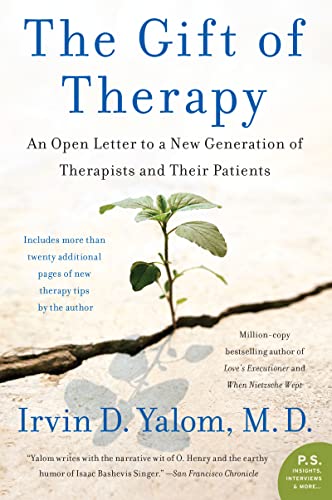 Irvin D. YalomThe Gift of Therapy85 practical, warm clinical insights from a master therapistListen Free On Audible
- 3
 Lori GottliebMaybe You Should Talk to SomeoneA bestselling memoir on the shared humanity of therapist and clientListen Free On Audible
Values can be discovered by reflecting on the kind of person I want to be, even if that has little to do with the life I lead today or with my current circumstances. What is important for our lives can also be one or more significant people. Values have no limits and cognitive, emotional and behavioral growth is based, in part, on the pursuit of those values. It is, in short, the following of a meaning.
Although personal development is not a concept specific to the scientific theory about which he disseminates in his books, Steven Hayes points out in A liberated mind that “there is no more important desire for human beings than that of the freedom to choose and undertake their own course in life. Having the feeling that it is (…) a meaning chosen by ourselves is an inexhaustible source of motivation.”
From psychology we can also conceive personal development as progress towards a life with higher levels of self-realization. Even today, Maslow’s pyramid, proposed in the mid-20th century, is very popular, in which the author prioritizes the basic needs of human beings, placing self-realization at its peak. Self-realization includes the pursuit of a life goal, the fulfillment of one’s desires, the development of spirituality, etc
Maslow assumed that it was necessary to have other types of needs—physical, security, affiliation, and recognition—to subsequently cultivate self-actualization. However, in research with greater scientific rigor, the theoretical constructs postulated by Maslow have been empirically tested and it was concluded that self-actualization was perhaps as important for the development of greater well-being than the fulfillment of other needs located further down the pyramid. , such as safety or physical needs. The need to pursue meaning with the actions we carry out is fundamental for our happiness and personal development.
The challenges of personal development in old age
However, in our imaginations the idea still persists that the search for a life based on values, in the pursuit of self-realization and, ultimately, personal development, is a table reserved for young people. Several investigations conclude that in today’s societies the stigmatization of old age prevails: it is believed that older adults should not get involved in economic and work activities, they are seen as more inflexible individuals, less committed and less capable of adapting to technological changes. In some cases, this biased view of the elderly translates into discriminatory practices based on ageism.
The greatest challenge of personal development in old age is overcoming these sociocultural prejudices, which are often internalized by the older adult. Therefore, you might mistakenly believe that “it is too late” to embark on simple day-to-day endeavors, projects, or activities that are linked to the life you want to live. Fortunately, there are more and more seniors who decide to pursue active aging. This is the development of one’s own interests to promote one’s personal values by accepting the new challenges, challenges and circumstances that this vital stage has to offer them.
Personal development opportunities in old age
The opportunities for personal development in old age are broad and vary depending on what is valuable for the person’s life. It is not necessary to make momentous decisions to begin cultivating one’s own values. Small behaviors and their constant repetition—that is, the development of new habits—are fundamental to start walking the path of self-realization
Below we propose a series of habits or practices that represent small opportunities to improve the subjective well-being of the elderly and increase their quality of life. However, we emphasize that what gives great levels of satisfaction to one person might not generate the same in another, so in the end it is necessary to carry out introspection work to discover which activities are worth starting and which ones. others don’t. Some suggestions are the following:
Practice of a leisure or recreational activity
Many people find high levels of gratification in hobbies or leisure activities It is common for older adults to have abandoned their favorite hobbies for various reasons in their lives. However, taking them back could be extremely significant for their lives. Some ideas are writing, painting, reading novels, going to pottery classes, attending a choir, etc.
Start a physical activity
The physical and mental health benefits of physical activity are widely proven, but beyond this, a personal value can become tangible in some specific goal linked to sport. For example, it might be of great value to someone to have enough vitality to accompany their grandchildren on activities like playing ball or going for a bike ride in the park
Starting a physical activity can be a daunting task at first. Therefore, to facilitate adherence, it would be ideal to choose a group activity with fixed schedules or in the company of close friends or family (although it is not a necessary condition). Some ideas are: walking outdoors, dancing, Zumba, yoga, swimming, cycling or strength training.
Maintain an active social life
As we said, taking care of our ties with those people who are important to us is essential. Spending time with those we love is a meaningful activity in itself; an opportunity to express one’s own needs, projects and concerns, but also to listen carefully to what the other has to say, to empathize and to learn of him or her.
Commit to a cause
Finally, commitment to a cause—charitable, spiritual, community—can be a valuable opportunity for seniors (as well as adults, children, and adolescents). Participating in this type of assistance or service activities can create in a person a strong sense of usefulness that, in the end, ends up transforming not only the reality of other people, but also that of the person who motivates this change with their actions.
Use this citation format to reference the article clearly and help readers find the original source.
PsychologyFor. (2024). Personal Development Opportunities in Senior Citizens. PsychologyFor. https://psychologyfor.com/personal-development-opportunities-in-senior-citizens/